Retail News CRM

Tag: Telecommunication

  • SK Telecom announces plan to take on KakaoTalk

    SK Telecom announces plan to take on KakaoTalk

    SK Telecom introduced a new messaging service on Tuesday in an attempt to compete with Korea’s dominant chat app, KakaoTalk. The new service will look a lot like Apple’s iMessage. Users won’t have to download a separate app. It is offered to SK Telecom subscribers only. Messages will be sent on data networks. Group chat and check whether your message has been read will also be offered.

    Later in the year, SK Telecom promises more features so that users can share mobile gift coupons and transfer money. These are all services already offered by KakaoTalk.

    SK Telecom is trying to make its service competitive by offering freebies. Transfers of picture or video files of less than five megabytes will be free from data charges. It is also running promotions through June that will allow sharing of files up to 100 megabytes for free.

    The carrier is also preparing to launch a dedicated message service targeting business customers within the first half of this year.

    That service is based on Rich Communication Services (RCS), a communication protocol developed by the Global System for Mobile Communication Association better known as GSMA, to replace SMS messages.

    The telecom said it is planning on making the message service compatible for customers of different carriers in Korea.

    In December, KT introduced a message service dubbed Chatting based on the same RCS specifications. Basic features are identical for the two services, but they differ in some features depending on what telecom a person uses.

    Last year, KT promoted a chatting bot service on the new message service. Simple inquiries about the company’s products and services could be handled by the chat bot. In the future, it is planning to linking shopping services to the chat bot.

    Luring customers away from KakaoTalk will not be easy. Chat app users are resistant to change because all their friends use the same app.

    In the initial stage, SK Telecom’s chat service will only be offered to owners of Samsung Electronics’ flagship smartphones Galaxy Note9, S9, S9+. By February, Galaxy Note8, S8, S8+ users will also get in through an update.

    The upcoming Galaxy S10 smartphone will come with the RCS-based message app pre-installed.
  • Vietnam wants to excel in IT, telecom

    Vietnam wants to excel in IT, telecom

    Vietnam, which is in a lowly 108th place in the International Telecommunication Union’s ICT Development Index, wants to improve its status. Speaking at a Ministry of Information and Communications (MoIC) conference Tuesday, Prime Minister Nguyen Xuan Phuc emphasized the need for the country to improve its ranking in ICT, one of country’s strengths alongside agriculture and service.

    MoIC Minister Nguyen Manh Hung said the country must use the International Telecommunication Union’s rankings as a guideline and strive to improve to no lower than 50th latest by 2022.

    He stressed that to take the lead in the digital revolution, the country needs to popularize smartphones by licensing 4G and testing 5G technologies to increase capacity, data usage per user and the quality of the mobile network.

    “Vietnam must be on the same line with the world in new technologies. We will not be eight and 10 years behind like we were with 3G and 4G.”

    According to the minister, Vietnam’s development in telecommunications must remain sustainable by shifting resources to explore new markets once the phone market saturates instead of continuing to compete unhealthily on old markets.

    “Mobile money,” which the ministry is trialing now, allows users to transfer money and make purchases through their telecom accounts, and would help bring e-payment to everyone in the country and stimulate economic growth, he said.

    Digital transformation, e-governance and smart cities would be the big stories of 2019, he said.

    “National digital transformation, digital economy and digital society would be the overarching story for decades to come. We need to develop strategies and projects in 2019 to clarify what must be done for each field in the digital economy and the Fourth Industrial Revolution.”

    Speaking about cyber security and safety, he said the Internet, on which the country’s prosperity depends, is itself an unsafe environment.

    “In 2019 there will be no incidents of government agencies’ websites being hacked and having information stolen. Vietnam must become ASEAN’s center for cybersecurity.”

    Vietnam has an opportunity to become one of the world’s major manufacturers of electronic and telecom equipment, he said.

    Globally there are only four major telecom infrastructure and equipment manufacturers — Ericsson, Nokia, Huawei and ZTE – and while China’s Huawei and ZTE enjoy a market share of 60 percent, they are encountering difficulties with the U.S., he pointed out.

    “Vietnam is currently capable of manufacturing 70 percent of telecom equipment [used globally]. With effort, we could become the fourth nation in the world capable of manufacturing and exporting all types of telecom equipment. This must be achieved by 2019-2020.”

    “Vietnamese network operators must use Vietnamese-made equipment if the price and quality are similar.”

    The ministry has set a target of  20-30 percent of operators’ revenues coming from digital content this year instead of the current 6-8 percent, saying the digital content industry is capable of expanding by three or four times to achieve revenues of $3-4 billion.

    “The key to the digital content industry’s growth is that policies must promote it,” said the minister.

  • Telenor Pakistan hosts “The future of Machine Leaning & Artificial Intelligence”

    Telenor Pakistan hosts “The future of Machine Leaning & Artificial Intelligence”

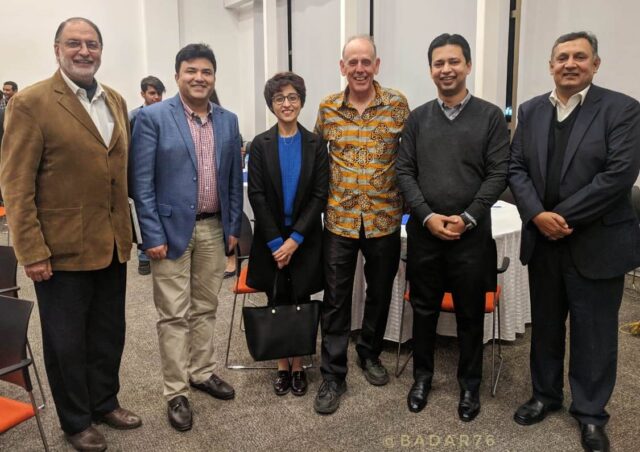
    Stephen Brobst, CTO of Teradata, conducted an enlightening session on the future of Machine Learning (ML) &Artificial Intelligence (AI) at Telenor Pakistan headquarters ‘345’ in Islamabad. The session was attended by Telenor Pakistan employees and executives from across industries including Irfan Wahab Khan, CEO Telenor Pakistan and President OICCI, Haroon Bhatti, Chief Business Officer (CBO) at Telenor Pakistan, BadarKhushnood, Cofounder & VP at Bramerz, QazafiQayyum, Country Manager Teradata, Khimde Ando, CEO Mitsubishi Corporation, Brig. Tahir Mehmood, Director ISPR, AVM Faaiz Amir, Vice Chancellor Air University, Barkaan Saeed, Ex-Chairman PASHA and Retd. Brig. Saleem Ahmed Moeen, CEO SecureTech.

    The participants learned about the future of artificial intelligence, the role of emerging technologies, differences between deep and shallow learning and their application techniques, and the opportunities of using advanced analytics to create high-value outcomes.

    “We have entered a new era of analytics with machine learning and artificial intelligence algorithms beginning to deliver on the long-promised advancement into self-learning systems,” Brobst told the audience. “These approaches allow us to solve previously intractable problems with completely new attack plans.  The appetite of deep learning algorithms for vast amounts of data and the ability to derive intelligence from diverse sets of noisy data allows us to go far beyond previous capabilities in what we used to call advanced analytics,” he added.

    Brobstinformed that in order be successful with the use of new technologieswe need to fully understand their capabilities and limitations. He also stressed the need to develop new skill sets in order to harness the power of deep learning to create business value in an enterprise.

    “In our times of Siri, Alexa, and Google, Machine Learning & Artificial Intelligence are not a part of science fiction anymore; they are our reality,” remarked Irfan Wahab Khan. “For tech companies like Telenor and Terada, the real charm of AI and ML technologies is their ability to recognize patterns and synthesize large amounts of data. Telenor is not only harnessing the strength of AI and Advance Analytics for its own commercial use but is also enabling other organizations to benefit from the technology by offering incisive Market Research insights and ability to run targeted campaigns on its diverse Advertising  assets. The fact that these technologies get smarter with time as increased amounts of data is fed to them makes them acornerstone for all future technologies,” he added.

    Impressive progress is being made in ML & AI technologies globally. From self-driving and learning cars to flying drones circling the skies, the technological advancements of today could already be perceived as something out of a futuristic novel. Gartner, the world’s leading research and advisory company,also predicts that by 2020, AI will become one of the top five investment priorities for at least 30 percent of Chief Information Officers. Being the country’s technology leader, Telenor Pakistan is keeping its people abreast of the latest technological developments to realize its ambition of digitally empowering Pakistan.

  • Korea’s KT 5G bus hits the road

    Korea’s KT 5G bus hits the road

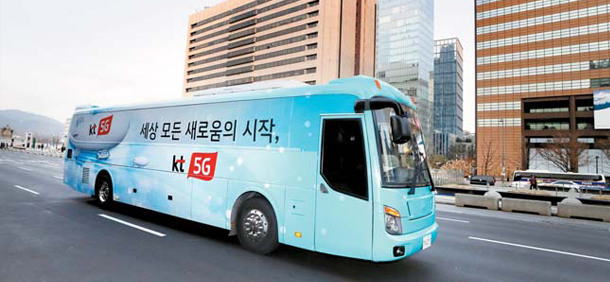
    Are you curious about all the hype over 5G? A ride on a 5G-powered bus may answer some questions. Mobile carrier KT announced Tuesday that people can sign up for free rides on its 5G bus. The bus will be connected to its ultra-fast 5G wireless network and will demonstrate devices that can be used to enjoy new media services like KT’s GiGA Live TV. GiGA Live is a head-mounted display – thick goggles with a screen embedded inside. GiGA Live supports virtual reality (VR) media services, including live sports broadcasts, as well as 360-degree films.

    VR and augmented reality (AR) are commonly cited as the technologies that have the most to benefit from 5G network. Because 5G promises up to 20 times faster speeds than LTE, it can transfer large volumes of data quickly in real-time, which is integral to the proper operation of VR and AR services.

    Those who want to take 30-minute sojourns on the 5G bus can apply online at www.kt5Gbus.com. The bus will run in the Gwanghwamun area from Jan. 15 to 24, and Gangnam Station from Jan. 25 to Feb. 2. Rides will be offered five times a day, excluding Sundays and Mondays.

    “5G network makes it possible to transfer huge volumes of information safely and in real-time,” said Park Hyun-jin, head of KT’s 5G business. “We will continue to offer innovative 5G services that can provide new experiences and value to consumers.”

    Earlier this month, KT added 5G-capabilities to its barista robot B;eat in Samsung Life Insurance’s Seocho District office. The robot, which looks like an advanced vending machine, can now recognize customers’ presence and send real-time footage of orders to human managers.

  • Huawei’s woes in U.S. give pause to Korea, too

    Huawei’s woes in U.S. give pause to Korea, too

    The arrest of Huawei’s Chief Financial Officer Meng Wanzhou in Canada has triggered alarms in the Korean telecommunications industry, especially after LG U+ moved onto a fifth-generation (5G) network this month that uses Huawei network devices.

    The Chinese telecommunications giant has maintained a sizeable influence since it first entered the Korean market in 2002. While it was originally focused on the cable infrastructure business, Huawei moved on to offering wireless telecommunications devices in 2007 as local telecommunications companies introduced third-generation wide-band code-division multiple access services.

    In 2013, Huawei received orders for fourth-generation 4G long-term evolution (LTE) wireless base stations from LG U+ for services in Seoul, Incheon, and areas in Gyeonggi and Gangwon.

    The 5G equipment market in Korea is estimated to be worth 10 trillion won ($8.89 billion).

    While Huawei is a leading supplier to the telecommunication industry, concerns about the security of its devices has held the company back. Only LG U+ decided to use Huawei equipment for 5G. Huawei has claimed that it had no such security problems in the 170 countries that it operates in and would follow inspection requests by the Korean government.

    LG U+ signed a deal with Huawei to introduce around 30,000 base stations in the Seoul, Incheon, and the Gyeonggi and Gangwon regions by next March. The deal is reportedly worth around 300 billion won, not including maintenance fees.

    The decision by Korea’s smallest telecommunications company made business sense as it used Huawei equipment for its 4G network.

    Huawei’s equipment, however, will not be installed in areas occupied by United States Forces Korea (USFK) such as in Pyeongtaek, Dongducheon, Yongin in Gyeonggi. The U.S. government has requested that Huawei equipment not be used out of concerns about a Chinese cyberattack. USFK has been suspicious about Huawei equipment. When LG U+ chose Huawei equipment for its 4G network, around 10,000 USFK soldiers switched carriers.

    The current situation has left LG U+ in a difficult position. Its deal with Huawei is already inked, and the 5G service works in sync with the existing 4G system, so it is impossible for the company to simply not use Huawei equipment.

    The recent banning of Huawei equipment by Britain, Australia, Canada, New Zealand and Japan, along with growing worries in Korea, places more pressure on the telecommunications unit.

    A senior LG U+ official expressed frustration at the current situation and the Korean government’s inaction.

    “Our government is just trying to not upset either China or the United States,” said the official. “Shouldn’t the government come forward and clear things up?”

    Meanwhile, the government maintains its stance that the selection of telecommunications equipment is an issue for companies to decide.

    “Inspecting security is the responsibility of the business operator. It is not appropriate for the government to take part in an area that a company should make a decision on,” said Park Jun-guk, an official at the Cyber Security Industry Bureau in the Ministry of Science and ICT.

    “[We] will, however, strengthen security inspections in the form of a technology advisory conference.”

    While 5G has stirred controversy, Huawei has an even stronger presence in the country with its cable and optical transmission equipment businesses. In the cable business, all three telecommunications companies, SK Telecom, KT and LG U+, are customers of Huawei.

    Huawei has also won orders from Koscom, a state-run financial IT solution company, and from electric utility Kepco.

    Last month, the Chinese company won an order with KT to connect the sales network of the National Agricultural Cooperative Federation and the National Livestock Cooperatives Federation worth around 120 billion won.

    According to market researcher IHS Markit, Huawei is the biggest global telecommunications equipment maker, with a market share of 22 percent. While Samsung Electronics holds a strong position in the Korean market, a 45 percent market share, it commands a paltry 4 percent share of the global market.

  • Who will dominate Korea’s mobile payment market?

    Who will dominate Korea’s mobile payment market?

    South Korean heavyweights ranging from Internet to retail to tech companies are all paying keen attention to preoccupy the mobile payment system market, which hasn’t yet taken off.

    Since Daum Kakao first ignited the competition by rolling out its mobile payment Kakao Pay last year with its 4 million subscribers. Korea’s largest portal operator Naver unveiled Naver Pay this July, by joining hands with 50,000 partner stores.

    Retail giants are also following suit. Lotte and Shinsegae are currently developing L Pay and SSG Pay respectively in order for consumers to more conveniently buy goods with retail technologies. They plan to let customers to save all the information of credit cards, gift cards, cash and coupons on smartphones to easily pay for things. Membership points will be accumulated on smartphone apps.

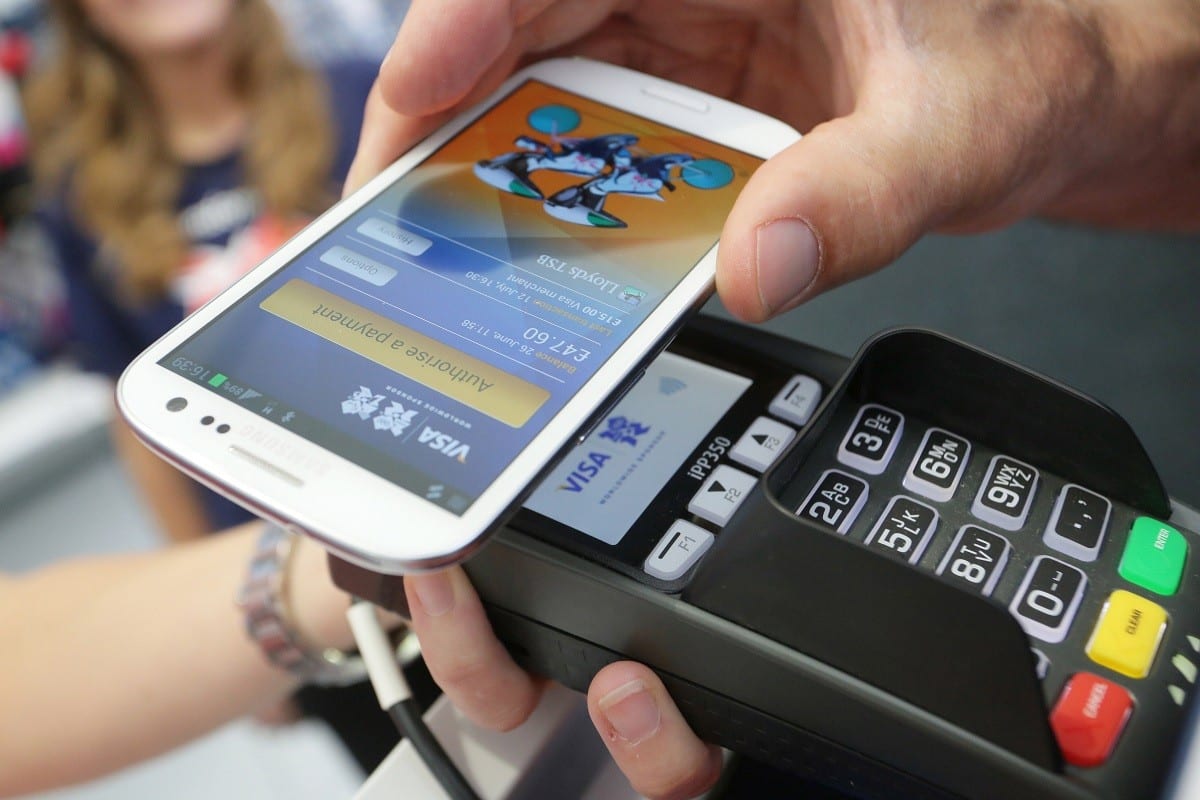
    Smartphone conglomerates are no exceptions here. Korea’s largest smartphone maker Samsung Electronics is set to unveil its new mobile payment system Samsung Pay in September. It is expected to be embedded in its latest smartphones like Galaxy S6 and Galaxy S6 Edge. As the tech giant recently acquired Boston startup LoopPay, which has magnetic secure technology, Samsung Pay will be compatible with existing magnetic card readers. This way, stores do not have to change their readers separately to use the service.

    In the smartphone market, Samsung has to compete with its global rivals Apple and Google. American search giant Google unveiled Android Pay at its I/O Conference 2015 late in April at San Francisco. Samsung’s arch rival Apple unveiled Apple Pay last October, and is now in discussion with China’s biggest e-commerce company Alibaba in a bid to make forays into the China’s market.

    Market watchers say the mobile payment system, which heralds the opening of the Fintech market – a combination of finance and technology – will have a great impact on the local financial market. Commercial banks have so far been in charge of small sum transaction but it is likely to be shifted to non-financial institutions if the mobile payment service takes off.

    Daum Kakao’s Kakao Pay, which is the first mobile payment service in Korea, already saw more than 4 million subscribers last month. Though it still does not have a great impact on the market with a limited number of partner stores, analysts say they have secured a meaningful number of clients.

    Korea’s financial watchdog said when the number of Kakao Pay’s subscribers reach 2 million, it will have a significant meaning as a financial transaction tool. Currently, no official figure of daily transaction has been unveiled.

    The local mobile payment market is expected to continue to grow, according to market observers. In a nation dubbed as IT powerhouse, many users still find it difficult to buy goods online as they have to install various programs such as Active X and keyboard security programs. Also, they have to type in their credit card information or personal information every time they pay.

    However, the emergence of the mobile payment system is removing all the hassles and only requires simple authentications such as smartphone numbers or password.

    According to research firm Gartner, the local mobile payment service market came to around 3.8 trillion won in the fourth quarter of last year, up 65 percent during the same period of the previous year. The global mobile payment service market also continued to grow around 30 to 40 percent annually for the past years. It would reach around 721 trillion won by 2017.

    “There is not yet a dominant player in the local mobile payment service market. Thus, fierce competition among tech firms hoping to preoccupy the market is expected in the second half of this year,” according to a market observer.

  • PLDT, Rocket Internet create JV for mobile payment in emerging markets

    PLDT, Rocket Internet create JV for mobile payment in emerging markets

    Looking to drive the massive adoption of online and mobile payment solutions in emerging markets, the Philippine Long Distance Telephone Company (PLDT) Internet platform Rocket Internet AG are establishing a global Joint Venture for payment services.

    Under the agreement, PLDT will contribute the intellectual property, platforms and business operations of its mobile-first payment platform Smart e-Money Inc., a pioneer in mobile banking and mobile wallet services in the Philippines, which has handled transactions valued at approximately EUR3.4 billion (USD4 billion) in 2013.

    With over 5 million active customers and 300.000 trade accounts, SMI owns and manages the Philippines’ biggest “branchless banking” network, certified at the highest global security and governance standards as a financial service platform.

    “We look forward to continuing the long-term success story of Smart Money and optimizing the synergies between e-commerce and innovative mobile-first payment solutions,” said Napoleon L. Nazareno, President and CEO of PLDT.

    Rocket, on the other hand, will contribute its participations in Paymill Holding GmbH and Payleven Holding GmbH, two of its payment platforms for high growth, small-and-medium-sized e-commerce businesses across Europe.

    Oliver Samwer, Founder and CEO of Rocket Internet, said its network of companies combined with PLDT’s 14 years of experience in the mobile payment industry will allow the partnership to deliver world-class innovations in mobile money and micro-payments around the world.