Tag: telecommunications

  • Five Firms Sign Agreement to Develop Satellite Mega-Constellation

    Five Firms Sign Agreement to Develop Satellite Mega-Constellation

    NTT DOCOMO BUSINESS signed an agreement with four major corporations to explore developing and operating a satellite mega-constellation for commercial communications and space-based computing.

    The five-company partnership unites NTT DOCOMO BUSINESS, Mitsubishi Electric Inc., NTT Inc., MUFG Bank, Ltd., and Development Bank of Japan Inc. To pool technology, customer networks, and financing.

    Under the memorandum of understanding, the group is evaluating the commercial and technical viability of orbital network infrastructure. Target services include telecommunications, Earth observation, positioning, navigation, and timing (PNT), alongside space data centers designed to process data directly in orbit.

    Splitting Infrastructure Across Five Balances

    The consortium divides responsibilities along established corporate lines. NTT and NTT DOCOMO BUSINESS handle end-to-end network architecture, routing satellite traffic into ground facilities, and testing NTT’s proprietary Innovative Optical and Wireless Network optical technology against international specifications.

    The alliance aims to sell services to domestic and overseas enterprise clients across manufacturing operations.

    In order to turn the vast amounts of data collected in space into value for industry and society, it is essential to ensure smooth coordination between the communications networks that deliver the data and the ICT infrastructure used to process and analyze the data. Using the expertise we have developed through our IOWN® initiative and our AI-Centric ICT Platform® concept for a next-generation ICT platform optimized for the AI era, NTT DOCOMO BUSINESS looks forward to working with the other participating companies to explore commercial opportunities in areas including satellite communications and space-based data centers. By creating communications and data-utilization infrastructure that connect space and Earth, we hope to support AI adoption by enterprises for new business development.

    What Orbital Computing Changes for Operators

    Telecom operators face flattening domestic mobile average revenue per user and rising terrestrial infrastructure expenses. Building an independent sovereign satellite network allows NTT to bypass foreign constellation operators for enterprise backhaul, maritime fleet monitoring, and rural redundancy.

    For logistics operators, space-based data centers offer lower-latency observation feeds for trade flows and factory asset tracking without depending on fragmented local fiber routes across developing markets. The central commercial risk rests on unit launch economics, where Western constellation operators hold cost advantages through reusable rocket fleets that heavy industry has yet to match at scale.

    From Ground Fiber to Orbital Routing

    NTT had already mapped its optical network architecture toward low-power data center routing, making space payloads a natural technical extension rather than a pivot.

    The five companies are now formulating technical baselines and enterprise partner frameworks, with initial feasibility studies for constellation communications and Earth observation services to follow.
  • Huawei Sets 10 Gbps Microwave Backhaul Target to Support Mobile AI

    Huawei Sets 10 Gbps Microwave Backhaul Target to Support Mobile AI

    Huawei targeted a 10 Gbps capacity standard for microwave backhaul networks in Kuala Lumpur to handle an expected tenfold surge in mobile artificial intelligence traffic.

    The equipment maker projects AI tokens and autonomous agent connections will expand cellular data volumes five to ten times across regional carrier links over the next few years.

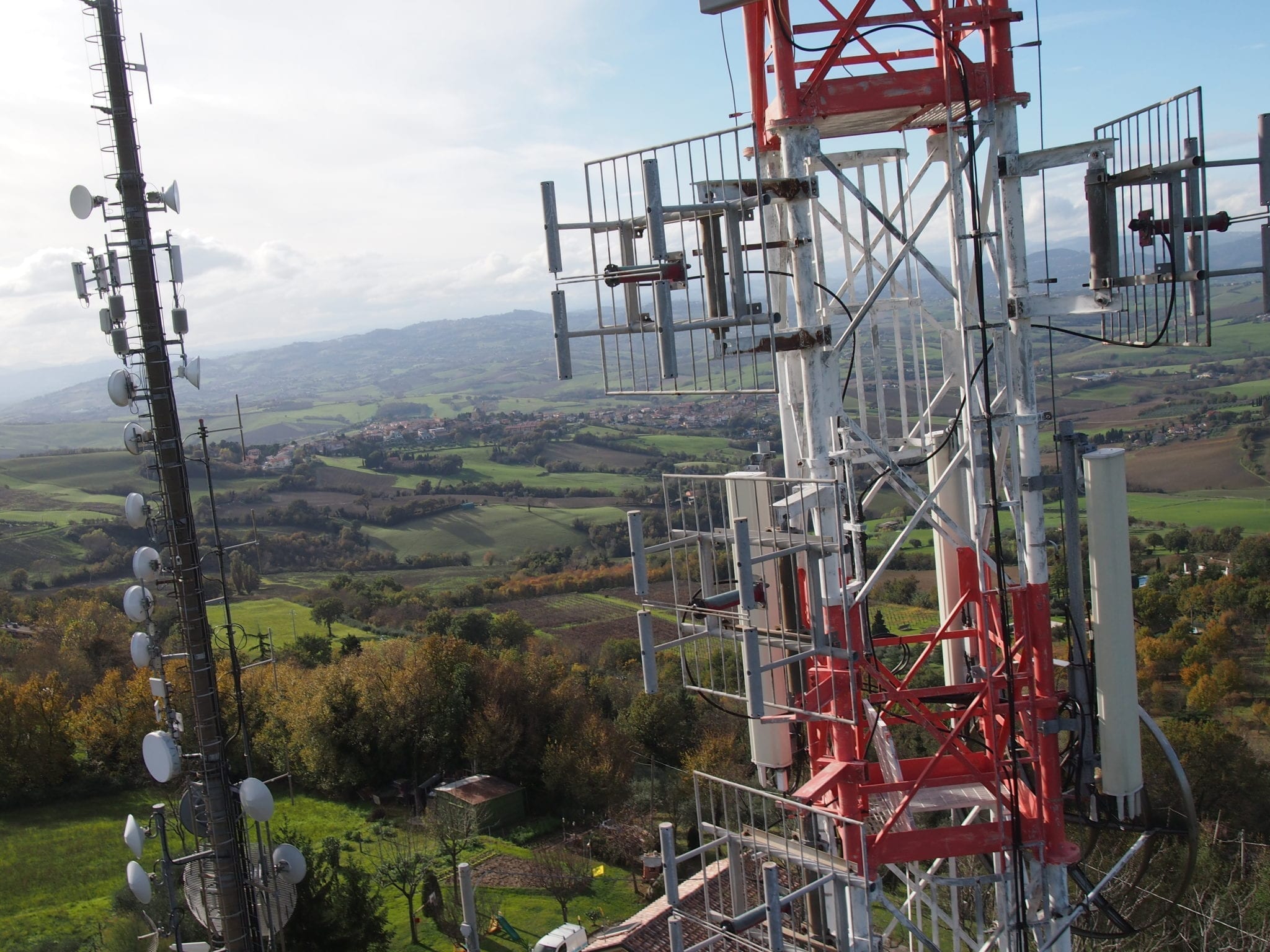
    Jason Wang, president of the Huawei Microwave Product Line, detailed the architecture during the 5th Global Microwave Industry Forum on October 14-15, 2026. Meeting that volume requires upgrading backbone links to 10 Gbps while pushing suburban transmission over traditional K-band frequencies from single-channel 1TR to dual-channel 2TR configurations, delivering up to 5 Gbps across distances reaching 10 kilometers. In metropolitan centers, 5G deployments on 100 MHz blocks of C-band spectrum require aggregation hubs that exceed tens of gigabits per second.

    Backup Links for Constant Fiber Cuts

    Physical cable vulnerabilities dictate the push toward dual-media redundancy. Telecommunications operators across Asia record thousands of fiber cuts each month from construction accidents, utility strikes, and weather disruptions. When multiple mobile base stations rely on a solitary severed optical line, entire districts lose coverage, causing instant commercial transaction drops and subscriber defection.

    Microwave transport bridges those physical breaks without requiring civil excavation permits. Pairing wireless links directly with terrestrial glass allows commercial traffic to switch paths immediately when a line fails. For enterprise campuses, ports, and automated logistics warehouses, Huawei is rolling out point-to-point and point-to-multipoint links using unlicensed spectrum, allowing private industrial networks to bypass carrier license auctions entirely.

    Operator Margins and Spectrum Economics

    Asian mobile operators run thin operational margins and cannot easily fund universal deep-fiber trenching across fractured archipelago geographies. Competitors like Ericsson and Nokia have long promoted hybrid fiber-wireless topologies across Southeast Asia, but Huawei remains the dominant volume supplier across developing regional corridors. Bypassing spectrum licensing fees on private industrial campuses gives enterprise clients a faster deployment timeline than public carrier fiber, cutting installation lead times from quarters to days.

    The friction sits in operating expenditure. Adding microwave backup preserves service uptime for mobile commerce and automated logistics hubs, yet managing dual transmission systems inflates routine maintenance budgets. Automation software must handle fault diagnosis, network tuning, and power management autonomously, or the personnel cost of supervising parallel networks will erase the operational savings.

    The Trajectory of High-Band Backhaul

    Regional carriers spent the past four years expanding 5G radio coverage across major metropolitan districts, initially routing suburban base stations through lower-capacity microwave dishes built for basic mobile internet. As autonomous driving pilots, telemedicine platforms, and mobile checkout systems scaled across Malaysia, Thailand, and Indonesia, existing multi-hundred-megabit backhaul links reached saturation during peak commercial hours.

    Equipment vendors responded by shifting development toward integrated multi-band solutions that pair standard high-frequency dishes with automated beam-tracking algorithms. The rollout of 5G-Advanced services across East and Southeast Asia now makes those capacity upgrades mandatory for operators defending their enterprise service contracts.

    Parameters to Track Next

    Carrier uptake across Southeast Asia now hinges on how quickly regional spectrum regulators allocate contiguous high-frequency microwave bands for commercial backhaul. Operators must balance the capital expense of replacing legacy 1TR outdoor units against the recurring revenue generated by guaranteed low-latency service contracts. The pace at which carriers achieve complete 10 Gbps link readiness on core suburban corridors through 2027 will reveal whether commercial mobile AI traffic delivers genuine enterprise returns.

  • Telcos Struggle to Scale AI as Only 13 per Cent Reach Production

    Telcos Struggle to Scale AI as Only 13 per Cent Reach Production

    Communications service providers have deployed artificial intelligence across dozens of operational trials, but only 13 per cent of operators have successfully scaled those deployments into full production environments.

    The deployment bottleneck persists even though nearly 75 per cent of companies report positive results during initial pilot phases, exposing structural friction inside legacy telecom IT stacks.

    Industry consortium TM Forum and regional operators will address the operational divide on November 5 during a joint technical briefing on autonomous network infrastructure and agentic customer experience. The session brings together Joann O’Brien, vice president of composable IT and ecosystems at TM Forum, alongside Seetha Gurunathan, global head of strategy and transformation at Vodafone, Shekhar Kulkarni, chief IT architect at Deutsche Telekom, and Seshan Krishnamurthi, vice president for Africa and Central Europe at Covalense Digital.

    The Bottleneck in Monolithic Billing Systems

    Legacy business support systems remain the central roadblock for carrier monetization. Traditional billing architectures were engineered for static monthly invoicing rather than real-time micro-transactions, non-terrestrial satellite network access, or dynamic algorithmic pricing.

    When carriers attempt to bolt generative or agentic intelligence onto these rigid systems, integration costs surge and transaction speeds falter. The industry push now centers on replacing monolithic enterprise software with modular, cloud-native components communicating through standardized application programming interfaces.

    Moving from Reactive Chatbots to Agentic Systems

    Customer service operations represent the initial testing ground for carrier autonomy. Early deployments relied on basic script-based chatbots that answered recurring billing queries, but network operators are now testing autonomous software agents capable of executing account modifications and diagnosing network faults without human intervention.

    Giving software agents execution authority introduces operational liabilities. Carriers must balance automated problem resolution against transactional accuracy, data compliance, and consumer trust across diverse regulatory jurisdictions.

    Standardizing Open Architecture Across Vendors

    Multi-vendor integration requires common software standards across global supply chains. TM Forum is pushing its Open Digital Architecture framework to establish interoperable, plug-and-play IT components that prevent telecom operators from locking themselves into single-vendor software suites.

    Standardized interfaces allow operators to deploy machine-learning models from independent software vendors directly into existing network workflows. Without open architecture standards, every software upgrade requires bespoke systems integration that slows time-to-market.

    Measuring Returns on AI Capital Expenditures

    Telecom operators face mounting investor pressure to justify heavy capital allocations to digital transformation projects. Evaluating returns requires a metrics framework that tracks real operational expenditure cuts, customer churn rates, and service provisioning speeds alongside headline revenue gains.

    Network operators will test whether these modular architectures can deliver measurable financial returns when the industry reviews production deployments in the upcoming operational cycle.

  • Singtel Launches AI Token-as-a-Service for Singapore Enterprises

    Singtel Launches AI Token-as-a-Service for Singapore Enterprises

    Singtel has launched its AI Token-as-a-Service (TaaS) platform this week, offering Singapore enterprises access to multiple artificial intelligence models through a managed token-based consumption model.

    Operated by RE:AI, the sovereign AI cloud business of Singtel Digital InfraCo led by CEO Bill Chang, the service combines model access, scalable infrastructure, orchestration, and governance for enterprise applications.

    How Token Billing Works

    The platform provides access to 5 open-weight models from Qwen, Mistral, GLM, Kimi, and MiniMax, alongside selected frontier models and custom enterprise workloads.

    Customers can run open-weight models from developers including Qwen, Mistral, GLM, Kimi and MiniMax alongside selected proprietary frontier models. Companies can also import proprietary algorithms into the environment for private internal tasks.

    An automated routing engine distributes incoming workloads across different models depending on task complexity. Simpler coding and document search queries run on cheaper open-source models, reserving expensive frontier computing for demanding jobs.

    Sovereignty and Local Data Rules

    Data residency forms the core commercial pitch. Workloads processed through the sovereign environment remain entirely inside Singapore’s borders, matching local regulatory standards for financial institutions, healthcare providers and public agencies.

    Enterprises running low-risk applications can choose non-sovereign routes to reduce processing costs. The platform links directly into Singtel’s Paragon orchestration engine, its local data centre footprint and its regional subsea cable network.

    The AI opportunity is about scale. Enterprises are seeking a simpler, more integrated way to deploy AI across their organizations rather than procuring, integrating, and managing separate AI models.

    The Regional Pivot from Pipes to Compute

    Billing by token represents a fundamental shift in how Asian telecommunications groups monetize their networks. Traditional voice minutes and data traffic yield shrinking margins. Regional carriers are now converting spare network capacity into enterprise computing hubs.

    Singtel follows Chinese state operators including China Telecom, which previously introduced token subscription packages for business clients. Chinese carriers rely on vast domestic volume. Singtel is targeting multinational headquarters in Southeast Asia that require strict compliance guarantees.

    Commercial risk sits in capacity pricing. If inference costs fall faster than corporate consumption expands, operators face margin compression on server hardware installed across their facilities.

    Building Out the Infrastructure Division

    Singtel established Digital InfraCo to carve out data centres, satellite networks and subsea cables into an independent growth driver. The division launched a GPU-as-a-Service product earlier to rent raw server clusters before introducing higher-margin software services.

    Enterprise adoption of autonomous agentic systems will serve as the immediate operational test for the unit. Corporate token consumption across Southeast Asia will dictate whether carrier-led AI infrastructure delivers durable returns.

  • DCPH Upgrades Philippine Data Centers to Support Executive Order 119

    DCPH Upgrades Philippine Data Centers to Support Executive Order 119

    In September 2026, member operators in the Data Center Operators of the Philippines alliance began accelerating infrastructure upgrades to support domestic digital resilience.

    Local facilities are moving from single-digit kilowatt densities toward higher-density, AI-ready configurations to support mobile banking, telecommunications, e-commerce platforms, and government services.

    Colocation Model vs Massive Training Campuses

    Domestic operators in the Data Center Operators of the Philippines are investing in enterprise colocation instead of multigigawatt training hubs. Their sites serve commercial banks, retail platforms, telecommunications routing, and public sector administrative portals. These clients require local compute capacity rather than hyperscale training estates.

    The buildout focuses on multitenant sites in business hubs and industrial zones. Active operators include AFlow, Digital Halo, Digital Edge, ST Telemedia Global Data Centres, VITRO, and YCO Cloud.

    Upgraded Power and Cooling Infrastructure

    Server racks now pull more power per square meter, changing engineering requirements inside local halls. Operators are installing closed-loop chilled water cooling systems. These systems recirculate water internally to curb intake and ease municipal utility pressure.

    Power delivery bypasses residential distribution lines entirely. Commercial facilities buy electricity through Retail Electricity Suppliers under national retail competition rules. They connect directly to subtransmission voltage lines to keep heavy industrial loads off household networks.

    Sovereignty Mandates Drive Local Compute

    State policy is accelerating colocation adoption across Manila and adjacent provinces. Executive Order No. 119 mandates that restricted-access government records remain within national borders. Public agencies and affiliated vendors must now contract local data halls.

    Keeping workloads onshore cuts transit latency, prevents foreign exchange exposure, and satisfies financial regulatory standards. Colocation providers offering high power density in existing footprints will secure the largest share of this sovereign traffic.

    Expansion Along Luzon Industrial Corridors

    Data center construction previously concentrated in central business districts like Makati and Taguig. Grid congestion and tight real estate markets have since pushed new projects into Laguna, Cavite, and Batangas.

    Moving outward places compute capacity closer to regional logistics hubs and manufacturing plants. It also gives operators larger plots with direct subtransmission access.

    Attention now turns to delivery schedules for multi-tenant builds breaking ground across Greater Manila, alongside upcoming state compliance audits under Executive Order 119.

  • NBTC Board Resolves to Clear Backlog in 30 Days

    NBTC Board Resolves to Clear Backlog in 30 Days

    Six commissioners of Thailand’s National Broadcasting and Telecommunications Commission met without chairman Sarana Boonbaichaiyapruck on Friday. They pledged to clear an accumulated regulatory backlog within 30 days.

    It was the board’s first formal gathering since July. Twelve previous attempts had collapsed without a quorum because commissioners boycotted proceedings over the chairman’s disputed legal standing.

    Twice-weekly schedule to tackle stalled files

    Five commissioners attended the Friday session in person, while one joined by videoconference. Rather than voting on specific policy measures, the group established an operating schedule to process pending industry cases. Members agreed to meet twice a week throughout October. They targeted Wednesdays and Thursdays to work through accumulated files.

    Board members appointed Suphat Suphachalasai to preside over Friday’s meeting. For future sessions, they plan to select a presiding officer meeting by meeting. The members scheduled their next two gatherings for Oct. 6 and Oct. 8.

    Legal dispute surrounding the board chairmanship

    Dr Sarana, a cardiologist, has contested his removal since July. That was when an NBTC selection panel determined he lacked the qualifications to serve. An investigation concluded he continued to receive compensation for external medical work after joining the regulatory agency. That violated statutory prohibitions against commissioners holding outside paid employment or engaging in conflicting commercial activities. The commission’s chairmanship pays 450,000 baht a month in salary and official allowances.

    Citing a Central Administrative Court ruling, the selection panel ordered Dr Sarana to cease performing official functions within seven days of receipt. The panel transmitted that directive to the regulator’s offices on Sept. 30.

    Enforcement risks for commercial operators

    Sarana rejected the validity of separate board sittings. He argued that regulatory meetings must strictly adhere to administrative rules so subsequent rulings remain legally enforceable. An NBTC official speaking on condition of anonymity warned that resolutions approved without the official chairman could face challenges in administrative courts, given that Dr Sarana still claims statutory authority to convene formal meetings.

    For mobile network operators, broadband providers and digital media groups in Thailand, split leadership at the regulator prolongs uncertainty over licensing approvals, spectrum allocation and merger compliance monitoring. Corporate compliance officers must now balance the risk of implementing decisions that opposing factions may challenge in court.

    Administrative pressure on internal staff

    Commissioner Pirongrong Ramasoota defended the board’s independent action, stating that the regulator operates on collegial authority where royal appointment grants all six members equal legal weight. Meeting minutes from Friday’s session will head directly to the NBTC administrative office for execution.

    Pirongrong said: Everyone has equal rights under the law. She added that agency personnel who refuse or fail to carry out administrative instructions under the governing statute could face disciplinary or legal penalties.

    Agency staff must now decide whether to execute the resolutions submitted from the Oct. 6 and Oct. 8 sessions while Dr Sarana’s seven-day response window under the Sept. 30 panel directive elapses.

  • NTT and Cailabs Sign MoU to Link Space Optics with Terrestrial Data Centers

    NTT and Cailabs Sign MoU to Link Space Optics with Terrestrial Data Centers

    NTT and French photonics company Cailabs signed a Memorandum of Understanding this month to explore optical connectivity between satellite networks, ground stations, and terrestrial data infrastructure.

    The partnership will examine how NTT’s All-Photonics Network technologies can integrate with Cailabs optical ground stations to connect directly into data centers under the NTT C89 space business.

    Routing Lasers from Orbit to Data Centers

    Engineers from the 2 companies will combine NTT’s digital coherent transmission and network control software with Cailabs ground station hardware. The project connects selected ground sites to nearby NTT data centers across Japan and international hubs, allowing optical signals from orbit to pass directly into terrestrial networks without converting them into standard electrical data streams first.

    Satellite operations have traditionally depended on radio-frequency bands, which face bandwidth congestion and regulatory spectrum caps. Optical laser links carry substantially higher data volumes across orbital paths, but transmitting them through Earth’s atmosphere requires specialized ground receivers capable of correcting beam distortion.

    Technical Hurdles in Laser Communications

    For network operators and data center landlords across the Asia-Pacific region, orbital laser links offer a way to bypass terrestrial backhaul bottlenecks and connect remote facilities directly to core processing hubs. Direct fiber-to-space links reduce latency for high-throughput cloud workloads and artificial intelligence processing clusters that require massive, uninterrupted data feeds.

    Operational risk remains concentrated in atmospheric weather conditions such as heavy cloud cover, rain, and turbulence, which scatter laser signals. NTT plans to manage this vulnerability by orchestrating a distributed grid of optical ground stations, routing orbital data to alternative terrestrial reception nodes when local weather degrades line-of-sight laser performance.

    Expanding the Space Communications Portfolio

    This initiative builds on earlier steps by the Japanese carrier to secure optical hardware for orbital networks. In June 2026, NTT established a joint venture with Irish photonics manufacturer Mbryonics to develop space-grade optical transceivers, establishing proprietary hardware pipelines across Europe and Asia.

    Connecting optical ground stations directly to terrestrial optical networks is a critical step toward making satellite optical communications operational at scale. Our shared objective is to help turn high-capacity optical communications into scalable infrastructure for future satellite services.

    Minako Tsumenaga, Senior Vice President and Head of the Alliance Division at NTT’s Research and Development Marketing Headquarters, confirmed the project aims to establish standardized operational infrastructure across both orbital and terrestrial segments.

    Next Steps for Commercial Space Links

    The immediate operational phase focuses on testing orchestration protocols between Cailabs ground terminals and NTT core optical switches. Once integration trials finish, NTT plans to roll out commercial space-data transport services under its NTT C89 space enterprise division.

  • Over 1,500 Telecom Leaders Gather in Bangkok for Telecoms World Asia 2026

    Over 1,500 Telecom Leaders Gather in Bangkok for Telecoms World Asia 2026

    More than 1,500 telecommunications executives gathered in Bangkok on 27 October 2026 for Telecoms World Asia 2026 to address how operators can turn network scale into profit.

    The two-day conference, held at the Centara Grand and Bangkok Convention Center at CentralWorld, brings together mobile network operators, MVNOs, wholesalers, regulators, and technology companies from across Asia and international markets.

    Terrapinn Managing Director (Asia) Paul Clark noted that the region’s industry has reached a critical inflection point, with more than 130 leaders speaking across five tracks and over 120 exhibitors showing network platforms and infrastructure solutions.

    Monetising Generative AI and Advanced Networks

    Day One opened with an executive panel assessing whether generative artificial intelligence can generate direct commercial returns for carriers rather than inflating software costs. Speakers included Telekom Malaysia Group Chief Executive Amar Huzaimi Md Deris, XLSMART President Director and Chief Executive Rajeev Sethi, Circles.Life Chief Revenue Officer Sanjay Kaul, and Jazz Chief AI Officer Hamza Khokhar. EQator Director Jayanth Nagarajan moderated the session.

    Network evolution remains a major operational challenge across Southeast Asia. Average revenue per user remains compressed across the region, even with heavy capital outlays on spectrum and fiber backhaul. Vodafone Business International President Bhupinder Singh delivered an address examining execution gaps on the path from standalone 5G to 5G-Advanced deployments.

    APAC’s telco industry is at a critical inflection point. The operators, regulators, and technology leaders gathering in Bangkok this week know it better than anyone, and Telecoms World Asia 2026 is where the most senior voices in Asian telco come to move beyond the conversation and into action.

    Autonomous Networks and Executive Reorganisation

    Sessions on Day Two address structural operating changes required to integrate automated tools into network management. Telkom Indonesia President Director and Chief Executive Dian Siswarini, True Corporation Head of Corporate Strategy Tarit Nimmanwudipong, Axiata Group Head of Cyber Security Suresh Srinivasan, and Deutsche Telekom Managing Director Asia George Aprane join a keynote panel on executive restructuring models. APTelecom Co-Founder Sean Bergin moderates.

    China Telecom Chief Engineer Xinhua Shao presents technical frameworks for self-evolving autonomous networks. These architectures handle dynamic traffic routing and automated maintenance at scale. Title sponsor China Telecom leads regional carrier participation alongside Gold sponsors CommScope, China Mobile International, Equinix, NTT DATA, Plume, Tejas Networks, and Yango Tech, with lanyard sponsorship from China Unicom Global.

    Read-Across for Asian Carriers and Enterprise Tech

    Regional operators face a structural margin squeeze. Consumer mobile broadband yields are flattening, while enterprise cloud migration demands ongoing infrastructure spending. Thai host operator True Corporation and regional groups Axiata and Telkom Indonesia are reallocating capital away from pure base-station density. They are pivoting toward enterprise software integrations and wholesale managed services.

    This shift alters the commercial balance for enterprise technology suppliers and data center operators across Southeast Asia. Carriers demand clear payback periods on AI compute integration before committing to large-scale vendor licenses. That forces enterprise suppliers to structure contracts around verifiable operational cost cuts rather than speculative consumer revenue growth.

    Shifting Capital Deployment Strategies

    Debates in Bangkok follow two years of regional operator consolidation. Major carrier mergers in Thailand and Indonesia aimed to curb destructive price competition. Those balance-sheet combinations provided short-term cash-flow relief. However, carriers now face the reality that consolidated market share alone cannot offset the high capital costs of next-generation infrastructure.

    Mobile operators from Bangladesh, Cambodia, India, Indonesia, Japan, Laos, Malaysia, Myanmar, Pakistan, the Philippines, Singapore, Sri Lanka, Taiwan, and Thailand are reviewing commercial terms for shared wholesale infrastructure and enterprise private networks. The key metric to watch across participating carriers through the next reporting cycle will be non-mobile enterprise revenue as a share of total corporate earnings.

  • SUBCO Unveils 24,000-Kilometre Indo-Pacific Subsea Cable Network for AI Traffic

    SUBCO Unveils 24,000-Kilometre Indo-Pacific Subsea Cable Network for AI Traffic

    Australian digital infrastructure operator SUBCO will build three subsea cable systems spanning 24,000 kilometres across the Indo-Pacific by 2029. The network will carry surging artificial intelligence data traffic.

    Each of the three links will feature 24 fiber pairs connecting Australia, Japan, Guam, the United States, Singapore, and Indonesia.

    Three routes across 24,000 kilometres

    The build program divides into three lines named APX North, APX East-2, and APX West. Together, they create a multi-point transit web across Asian commercial centres and trans-Pacific landing points.

    APX North runs 9,500 kilometres from Sydney to Japan by way of Guam. It is the first hypercable connecting Australia directly to the Guam interconnection hub. It also provides the first direct commercial line between Australia and Japan.

    Connecting Guam and Los Angeles, APX East-2 spans 10,000 kilometres. SUBCO designed the link to carry trans-Pacific traffic between Asian markets and the United States, while routing data into Australia and Japan via APX North.

    Across Southeast Asia, APX West covers 4,600 kilometres between Perth and Singapore. The system includes dedicated branches into Jakarta and Batam in Indonesia.

    Direct links bypass traditional hubs

    On APX North, switched branching units sit along the deep-sea route. This equipment allows operators to direct selected fiber pairs straight between Australia and Japan without landing traffic on Guam. That cuts transit latency for direct users.

    Similar switching architecture runs across APX West in Southeast Asia. Customers can route traffic in and out of Batam and Jakarta to tap local compute clusters, or bypass them entirely when routing directly into Singapore data centres.

    “People have been slow to understand that AI factories are dead without massive subsea connectivity to carry tokens from factory to customers. Hundreds and hundreds of terabits per second,” Slattery said.

    Bandwidth race shifts to artificial intelligence

    Hyperscale cloud operators and Asian enterprise tech groups are realigning their balance sheets toward dedicated AI processing clusters. Those computational facilities require continuous, high-volume data pipes to exchange training datasets and model outputs across regions.

    Retail networks, regional logistics platforms, and financial institutions across Southeast Asia rely on cloud-hosted algorithmic models for daily inventory, pricing, and fraud detection. Any bottleneck in trans-Pacific or Southeast Asian trunk capacity directly caps how fast those platforms process transactions.

    Adding 24-fiber-pair capacity along routes that previously relied on older cables reduces reliance on congested transit corridors through the South China Sea and Luzon Strait. The primary operating risk sits in naval installation logistics. Specialized cable-laying vessels face tight global scheduling constraints.

    Vessel deals and contract milestones

    The three cables form the core of SUBCO’s broader target to lay more than 40,000 kilometres of subsea fiber across the Indo-Pacific in just over three years. The company previously built the 9,800-kilometre Oman Australia Cable, establishing direct connectivity between Perth and Muscat.

    Management is finalizing cable manufacturing contracts and vessel charter agreements. SUBCO targets Contract in Force status for APX North, APX East-2, and APX West by early 2027 ahead of the planned 2029 operational launch.

  • Hong Kong Fast-Tracks 6G Network Strategy and Satellite Licensing Rules

    Hong Kong Fast-Tracks 6G Network Strategy and Satellite Licensing Rules

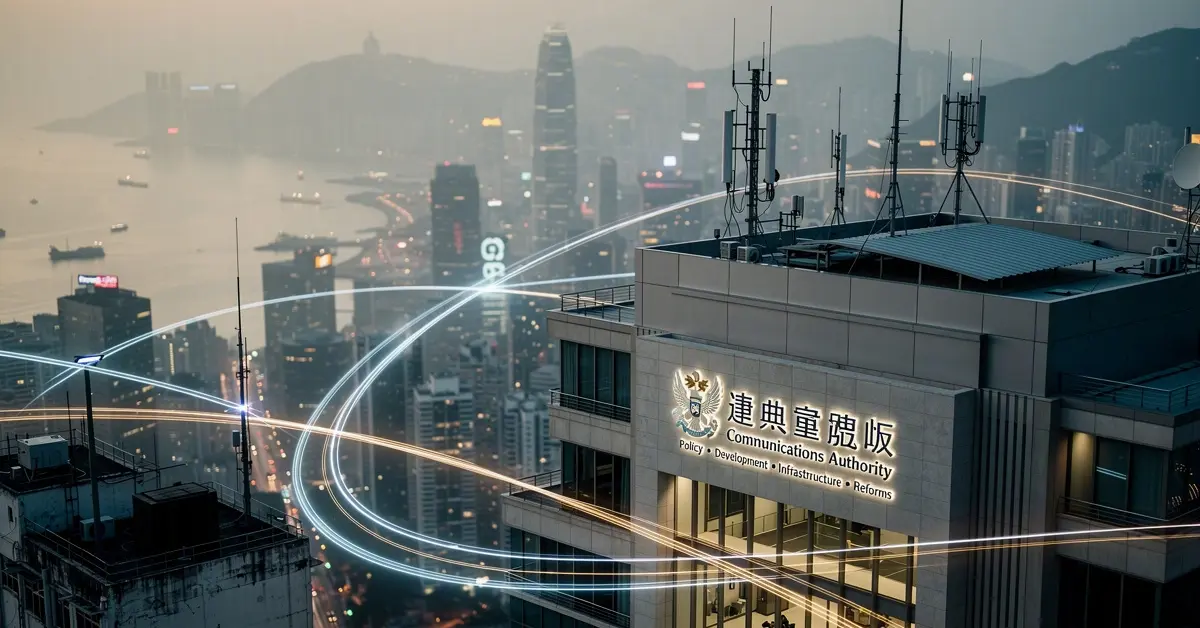
    Hong Kong’s Communications Authority backed regulatory reforms on Sept. 16, 2026. The package covers regional 6G network deployment, fast-track satellite licensing, and revisions to commercial television codes under the city’s 2026-2030 economic blueprint.

    These changes tie the territory’s telecommunications roadmap directly to China’s National 15th Five-Year Plan and the Chief Executive’s 2026 Policy Address.

    Aligning Greater Bay Area Communications Infrastructure

    Officials will speed up cross-border infrastructure upgrades across the Guangdong-Hong Kong-Macao Greater Bay Area for 6G networks. Spectrum planning, core transmission links, and next-generation mobile protocols will align with mainland network authorities. This prevents technical divergence across regional boundaries.

    Communications Authority Chairman Jenkin Suen outlined the direction. “To proactively align with the National 15th Five-Year Plan in accelerating the development of next-generation information technology and fostering the growth of emerging and future industries, Hong Kong’s First Five-Year Plan has included the promotion of the development of 6G network in the Guangdong-Hong Kong-Macao Greater Bay Area and the construction and upgrading of new communications infrastructure,” Suen stated.

    Streamlining Low-Earth Orbit Satellite Approvals

    Satellite communications face an immediate overhaul. The authority will simplify vetting for commercial low-Earth orbit constellations. The goal is faster processing times for operators seeking gateway or downlink rights in the city.

    Regulators will offer direct support to help satellite operators set up local operations. The policy targets transport logistics, maritime operations, and remote corridors where terrestrial base stations cost too much to build.

    Broadcast Code Reviews and Domestic Media Policy

    Traditional broadcasters face statutory reviews under the same package. The authority will open a public consultation on amendments to the Generic Codes of Practice for Television. The review takes aim at legacy limits on content, commercials, and operations.

    Local film and television producers face stiff competition from global streaming platforms. These adjustments aim to widen their distribution. Domestic studios can then expand their cross-border footprint without legacy rules designed for analog broadcast.

    Commercial Exposure and Cross-Border Network Risks

    Mobile operators and tech vendors in Hong Kong face heavy early capital spending for 6G coordination. Commercial revenue remains years away. Carriers must also run costly 5G enterprise networks while assigning spectrum engineers to regional synchronization.

    Constellation operators gain the fastest commercial advantage. Standardized vetting cuts months of delay for companies selling enterprise redundancy and logistics tracking across Pearl River Delta shipping lanes.

    Both initiatives arrived with the release of the First Five-Year Plan for Economic and Social Development of the Hong Kong Special Administrative Region (2026-2030) alongside the Policy Address on Sept. 16, 2026. The simultaneous filings mark the first formal alignment between Hong Kong’s medium-term regulatory targets and Beijing’s national five-year planning cycle.

    Next, the Communications Authority will release its consultation paper on the Generic Codes of Practice for Television, spelling out which rules will go.

  • XLSmart Begins Work on 8,000-Kilometer Subsea Cable Linking Southeast Asia to Japan

    XLSmart Begins Work on 8,000-Kilometer Subsea Cable Linking Southeast Asia to Japan

    Indonesian operator XLSmart has started construction on Candle, an 8,000-kilometer subsea fiber network. The route links Indonesia to Singapore, Malaysia, the Philippines, Taiwan, and Japan. Commercial operations will begin across all six markets in 2028.

    Consortium partners backing the system include Meta, SoftBank, Telekom Malaysia through its TM Technology Services unit, the Philippines’ Globe Telecom, and Japan’s IPS Inc. NEC Corporation will supply the marine transmission equipment. It will deploy 24 fiber pairs along the seabed.

    The Route Through Batam

    Candle lands in Indonesia at Tanjung Bemban on Batam island. That puts the cable directly opposite Singapore’s main data exchanges. Batam serves as a spillover hub for data centers and cross-border transit links while Singapore limits domestic power allocations.

    Crews have finished initial marine work and landing preparations at the site. The route gives carriers a fresh corridor for cloud, enterprise, and artificial intelligence traffic between Southeast Asian cities and East Asia.

    PT XLSMART Telecom Sejahtera Tbk is handling local operations and Indonesian regulatory filings. This is one of the operator’s major capital programs following the merger of PT XL Axiata Tbk and PT Smartfren Telecom Tbk.

    Wholesale Capacity and Route Diversity

    For regional enterprises and cloud platforms, Candle adds physical diversity away from congested legacy routes. Extra subsea lines protect against cable cuts and geopolitical friction across the South China Sea and Luzon Strait.

    Wholesale buyers gain dedicated capacity instead of leasing space on older multi-party systems. The link also expands Meta and SoftBank’s owned transmission assets between Southeast Asian hubs and Japanese internet exchanges.

    Enterprise demand across Jakarta, Manila, and Kuala Lumpur continues to drive direct subsea investment into domestic carriers. XLSmart Director and Chief Enterprise Business Officer Andrijanto Muljono said: “Candle represents a strategic investment to prepare for Indonesia’s long-term connectivity needs.”

    Consortium Lineup and Build Steps

    Planning for Candle began in late 2025 with founding members Meta, SoftBank, IPS, Telekom Malaysia, XLSmart, and NEC. Globe Telecom joined the group in April 2026 as an equity investor and the landing partner for the Philippines.

    Each landing partner oversees shore-end work, territorial water permits, and domestic terminal stations. Teams have moved from desktop studies to physical landing milestones, while NEC manufactures the cable.

    With 24 fiber pairs, Candle ranks among the highest-capacity regional systems in Asian waters. Most older subsea infrastructure in the corridor operates on 8 to 16 fiber pairs.

    Regulatory Hurdles and Timelines

    Permit applications are advancing across all six landing jurisdictions. Marine surveys, cable-laying contracts, and deep-water work must clear national maritime agencies before installation vessels lay the main trunk lines.

    On Batam, the landing station must connect directly with domestic terrestrial backbones across Java and Sumatra to carry traffic inland. Consortium engineers will run dry testing and wet plant commissioning through late 2027 before opening the system to commercial traffic in 2028.

  • India Backs Data Centers with Billions of Rupees Amid Job Concerns

    India Backs Data Centers with Billions of Rupees Amid Job Concerns

    India is pouring billions of rupees in incentives into data centers for the likes of Google and Amazon, even as the drive is not expected to directly create much employment.

    Industry reports show the country generates about 20 per cent of the world’s data but accounts for only 4 per cent of global data center capacity.

    State Subsidies and Tech Builders

    Key developments include a Google-Adani data center construction site in Vizag, Andhra Pradesh, seen on Aug. 3, alongside a Hewlett Packard Enterprise data center in Bengaluru pictured in May.

    These facilities require heavy capital expenditure for land acquisition, high-voltage electrical grid hookups, advanced cooling units, and high-end server racks. Yet once construction finishes, the facilities run on automated management software and minimal human supervision. A multi-megawatt campus that costs hundreds of millions of dollars to erect often requires fewer than 100 permanent technicians, security personnel, and facility managers.

    The Automation Reality in Digital Infrastructure

    For industrial real estate developers and infrastructure funds across Asia, the asset class offers reliable long-term yields backed by top-tier credit tenants. Power and land availability dictate project viability rather than access to deep labor pools. The economic return flows to landlords, power utilities, and equipment vendors rather than local payrolls.

    Retailers and enterprise software platforms across the region gain faster cloud compute speeds and lower network latency from local server farms. However, government planners expecting large-scale white-collar employment from data centers face a structural mismatch. The sector builds digital backbone capacity, not mass employment.

    Shifting Focus to Component Supply Chains

    Earlier policy frameworks treated digital infrastructure investments as equivalent to traditional technology services campuses that once absorbed thousands of engineering graduates. Experience across major Asian hubs from Singapore to Johor shows that high-density computing clusters generate indirect jobs primarily during site preparation and electrical civil works.

    State authorities are now monitoring whether downstream server assembly and electrical manufacturing can capture additional domestic value. The gap between India’s 20 per cent data generation share and its 4 per cent physical capacity ensures building will continue, with power procurement contracts serving as the next major performance metric.

  • Axiata Reports Stronger 1H26 Earnings and Declares 5.5 Sen Dividend

    Axiata Reports Stronger 1H26 Earnings and Declares 5.5 Sen Dividend

    Axiata Group Berhad posted higher earnings in the first half of the fiscal year. The company declared an interim cash dividend of 5.5 sen per share.

    Operational gains drove the payout across core markets. Network rationalisation and tighter cost controls helped lift regional performance.

    Regional Markets Drive Operating Momentum

    The Kuala Lumpur-based telecommunications conglomerate manages digital telcos and digital businesses across ASEAN and South Asia. Its portfolio spans frontier and emerging markets including Indonesia, Bangladesh, Sri Lanka, and Cambodia, alongside digital infrastructure provider EDOTCO.

    Strong cash generation across operating units supported the distribution. Institutional funds and retail shareholders receive direct returns after sustained capital expenditure on regional network infrastructure.

    Asset Consolidation and Capital Allocation

    Regional operators continue adjusting balance sheets following large-scale consolidation across Southeast Asian mobile markets. Axiata restructured operations over recent quarters to cut debt exposure, streamline holding structures, and focus capital on cash-generating assets.

    For enterprise suppliers and telecom equipment vendors, steady cash flow at group level keeps network maintenance and connectivity contracts on schedule. Frontier market foreign exchange volatility and inflation remain the primary risks. Both pressures compress margins when earnings convert back into Malaysian ringgit.

    Balancing Debt and Shareholder Returns

    Balance sheet pressure drove management to prioritise structural repairs, selective asset monetisation, and strict capital allocation across all operating subsidiaries. Earlier quarters saw earnings tempered by currency depreciation in South Asian markets and rising interest financing costs.

    Investors now look to the group’s full-year earnings release and subscriber growth metrics in Indonesia and frontier markets to confirm dividend sustainability.

  • Unresolved Scams Hit 45% Across Southeast Asia as Losses Mount

    Unresolved Scams Hit 45% Across Southeast Asia as Losses Mount

    Nearly half of all reported scam cases across Southeast Asia remain unresolved, leaving consumers without financial recovery and triggering account churn for digital service providers. Research from the GSMA released in Kuala Lumpur shows 82 per cent of victims who lost money recouped nothing, while only 10 per cent recovered their funds in full.

    The findings, drawn from the GSMA ASEAN Consumer Scam Report 2026, cover Indonesia, Malaysia, the Philippines, Singapore, Thailand and Vietnam. Across these six economies, eight per cent of surveyed consumers fell victim to scams during the previous 12 months. When fraud occurred, 68 per cent of targets suffered direct monetary losses.

    Financial Losses and Platform Churn

    Unresolved fraud is creating direct commercial consequences for digital operators. Consumers who suffered a scam incident were more than twice as likely to switch accounts or abandon service providers compared to unaffected users. The research revealed that 96 per cent of consumers in the region actively worry about fraud and unauthorized account breaches.

    For consumer brands, e-commerce marketplaces and digital banks, this churn represents an unbudgeted retention cost. When fraud dispute mechanisms fail, the merchant or carrier bears the brand damage, regardless of where the vulnerability originated. Retailers relying on app-based checkouts and instant digital payments face the immediate threat of shoppers retreating to cash on delivery or narrowing their transaction volumes.

    Network operators face a parallel squeeze on connectivity revenue. As subscribers associate incoming communications with financial danger, answer rates collapse and push marketing loses value. The commercial risk sits with consumer-facing platforms that fail to isolate malicious actors before transactions clear.

    Access alone is no longer enough. As ASEAN’s digital economies become more sophisticated, people must have confidence that digital services are secure, reliable and accountable.

    Messaging Apps Drive Fraud Encounters

    Messaging applications now serve as the primary channel for fraudulent outreach in Southeast Asia, accounting for 41 per cent of all recorded scam interactions. Fraud patterns have shifted away from crude automated calls toward targeted investment schemes, cryptocurrency pitches, bogus job offers and fake online shopping storefronts where victims transfer funds voluntarily.

    Artificial intelligence tools are accelerating these schemes. Nearly nine in ten surveyed consumers recognized at least one form of AI deployed in fraudulent attempts, ranging from deepfake media and voice cloning to automated phishing scripts. While 69 per cent of affected individuals reported the incidents to authorities or service providers, 45 per cent of those complaints concluded without resolution.

    A companion report, Digital Nations 2026: Building Trusted Digital Ecosystems in ASEAN, identifies four structural requirements to counter the surge: identity verification, authenticated communications, resilient network infrastructure and shared fraud intelligence across commercial borders.

    Cross-Border Identity Enforcement

    The spike in digital deception follows five years of rapid mobile wallet adoption and instant payment integration across ASEAN member states. National real-time payment links between Singapore, Malaysia, Thailand and Indonesia lowered transaction frictions for commerce, but also allowed illicit funds to move faster across jurisdictions before local compliance teams could freeze beneficiary accounts.

    Industry discussions on unified digital identity frameworks and mandatory scam reimbursement guidelines continue on September 10 at the M360 ASEAN summit. Delegates will review regional enforcement strategies during sessions with Malaysian Minister of Communications Fahmi Fadzil, ASEAN Secretary-General Kao Kim Hourn, and GSMA Director General Vivek Badrinath.

  • Southeast Asia Targets USD 11 Billion Subsea Cable Expansion for Route Redundancy

    Southeast Asia Targets USD 11 Billion Subsea Cable Expansion for Route Redundancy

    Telecommunications operators and infrastructure investors are committing USD 11 billion between 2026 and 2035 to build new subsea cable systems across Southeast Asia. The spending will expand the number of active intra-Asian cable lines from 14 in 2025 to 19 by 2035, securing international data bandwidth for regional digital economies and hyperscale cloud providers.

    Submarine cables handle more than 99 per cent of international communications traffic in hubs such as Singapore. Under the city-state’s Digital Connectivity Blueprint, authorities plan to double the volume of subsea cable landings over the next decade, backed by an estimated SGD 10 billion (USD 7.4 billion) in predominantly private sector capital.

    Rerouting Around Maritime Chokepoints

    Engineering plans for newly announced trans-Pacific and regional cables increasingly avoid traditional, direct passages through the South China Sea. Systems including Apricot, Echo, and Bifrost run alternative paths through Indonesian and Philippine territorial waters to connect Southeast Asia directly with North America, Japan, and South Korea. Taking longer perimeter paths increases capital costs and latency, but operators accept the trade-off to shield data links from geopolitical exposure and congested straits.

    For enterprise users and cloud operators across Asia-Pacific, these southern corridors remove single-point failure risks that have historically disrupted regional supply chains. Financial platforms, retail marketplaces, and cloud providers gain lower downtime risks during localized outages, while secondary telecom operators in Jakarta and Manila secure direct wholesale access without routing entirely through Singapore.

    Equipment Supply and Infrastructure Competition

    The supply chain for physical infrastructure remains divided among a handful of global manufacturers. Japan’s NEC and France’s ASN maintain strong market positions in island networks across Indonesia and the wider archipelago, while Chinese suppliers have expanded cable contracts in Cambodia and selected Indonesian domestic systems.

    This supplier spread gives regional governments room to balance national security requirements against procurement costs. At the same time, physical reliability remains a constant operational bottleneck. International Telecommunication Union data indicates that human activity, mainly commercial fishing and vessel anchoring, causes 86 per cent of all subsea cable faults, requiring more than 200 offshore repair operations worldwide each year.

    Coordinated Regional Master Plans

    The push for network redundancy builds on policy commitments laid out in the ASEAN Digital Master Plan 2030, which directs member countries to coordinate subsea repair approvals and landing permits. Previous repair timelines often stretched for months due to overlapping maritime jurisdictions and strict cabotage restrictions in archipelagic waters.

    Attention now turns to the planned commissioning of major multi-terabit links, including the Apricot and Bifrost systems, which are scheduled to land initial capacity phases before 2027.