Tag: Telecoms

  • AWS Plans 420 Tbps Sta’O’Nuk Subsea Cable Linking the US and Japan by 2029

    AWS Plans 420 Tbps Sta’O’Nuk Subsea Cable Linking the US and Japan by 2029

    Amazon Web Services will build a 420 Tbps subsea cable connecting the United States and Japan, scheduled to begin commercial operations in 2029.

    The system, named Sta’O’Nuk, will run 20 fiber pairs across the Pacific Ocean, linking a new landing station in Washington state to an undisclosed site in Japan. It represents the first international subsea cable to land in Washington state in nearly three decades.

    Landing station and tribal partnership

    AWS partnered with Toptana Technologies to develop the American cable landing station and backhaul network in Ocean Shores, Washington. Founded in 2022 by the Quinault Indian Nation, Toptana is the only Indigenous-owned cable landing station operator on the US West Coast.

    Construction has begun on the Ocean Shores facility, designed to support up to four subsea cable systems. Assured Communications serves as program manager and operational service provider for the station, while the Quinault Indian Nation granted AWS permission to use the name Sta’O’Nuk, which translates to “lightning serpent” in the Quinault language.

    Washington state last saw international subsea arrivals in 1999, when Pacific Crossing-1 landed at Harbour Pointe and Alaska United East connected in Lynnwood. Toptana previously outlined a 17,700-square-foot, 1 MW station footprint when it first announced site plans in 2022.

    Transpacific cloud capacity

    Hyperscale cloud providers have shifted from purchasing capacity on shared consortium routes to financing and constructing dedicated private pipes across Asia-Pacific corridors. Direct cable ownership provides AWS with lower latency, predictable operating costs, and dedicated bandwidth between its data center regions in North America and East Asia without reliance on third-party commercial carriers.

    The Japanese landing location and local terminal partners remain unannounced as construction advances toward the 2029 target.

  • Philippine Telcos Commit over USD 2.2 Billion in 2026 Capital Spending

    Philippine Telcos Commit over USD 2.2 Billion in 2026 Capital Spending

    Philippine telecommunications operators have budgeted more than USD 2.2 billion in capital expenditure for 2026 to expand mobile networks, fiber connectivity and digital infrastructure across the country.

    Filings and guidance compiled by the Department of Information and Communications Technology put the combined baseline for the three largest networks at USD 2.21 billion. Total industry spending will rise to between USD 2.4 billion and USD 2.45 billion once DITO Telecommunity figures are added.

    Carrier Budgets and Network Expansion

    Globe Telecom leads the spending group with a guidance ceiling set below PHP 59.4 billion for 2026. PLDT has committed approximately PHP 55 billion to fund its mobile and fixed-line networks, while Converge ICT Solutions plans to deploy between PHP 17 billion and PHP 20 billion for fiber rollout.

    DITO Telecommunity plans to scale back outlays from its 2025 level of PHP 15 billion to PHP 18 billion. DICT did not release a specific 2026 allocation for the third major mobile operator, but department officials confirmed the group will maintain active network expansion.

    “Crossing the USD 2 billion mark sends a clear message: the telecommunications industry believes in the Philippines,” said DICT Secretary Henry Aguda. He noted that the capital programmes will direct resources toward data centers, cloud platforms, e-commerce support and artificial intelligence capacity.

    Policy Shifts and Network Competition

    For consumer brands and retailers across Southeast Asia, sustained telecommunications spending underpins the shift toward digital payments, omnichannel commerce and last-mile logistics. Carriers in Manila spent heavily over the past five years to establish basic 5G footprints, and the 2026 budgets shift capital toward data density, subsea links and enterprise connections rather than speculative coverage builds.

    The investment cycle aligns with market reforms under the Konektadong Pinoy Act alongside public investment in the National Fiber Backbone. The next milestone for the sector comes with third-quarter company earnings reports in November, when operators will release finalized 2026 project timelines and vendor procurement contracts.

  • Nifty Opens Pre-Orders for 4.2Gbps WiMAX 5G Mobile Broadband in Japan

    Nifty Opens Pre-Orders for 4.2Gbps WiMAX 5G Mobile Broadband in Japan

    Japanese internet service provider Nifty opened pre-orders for its @nifty WiMAX +5G broadband package, delivering theoretical download speeds of up to 4.2Gbps across Japan.

    The service operates as both fixed-wireless home internet and portable mobile connectivity without requiring physical fiber installation in the premises.

    Network Speeds and Usage Limits

    Users receive unmetered monthly data allowances across the WiMAX network footprint. Nifty maintains standard network controls, reserving the ability to throttle throughput during periods of severe network congestion or exceptionally heavy data consumption.

    The Push for Fixed-Wireless Access

    Japanese broadband operators increasingly pitch high-speed 5G fixed-wireless access as a friction-free alternative to traditional fiber connections in urban apartments and rental properties. Eliminating technician visits and wall drilling cuts consumer onboarding times to the arrival of the hardware, intensifying competition against fixed-line incumbents.

    Pre-orders are open now, with commercial service activation and device shipments scheduled to begin in late October.

  • SK Telecoms New Venture SK Hyper Powers South Koreas AI Infrastructure Expansion

    SK Telecoms New Venture SK Hyper Powers South Koreas AI Infrastructure Expansion

    SK Telecom, a prominent South Korean telecommunications company, has recently announced the formation of a new subsidiary, SK Hyper. This initiative aims to advance the company’s artificial intelligence data center (AIDC) division, and expedite South Korea’s AI infrastructure objectives. The communications company has earmarked an investment of up to KRW 750 billion for SK Hyper, extending until 2030.

    Roles and Responsibilities of SK Hyper

    The newly established subsidiary will be tasked with leading the evolution of hyperscale AI data centers. This includes a wide range of responsibilities such as securing locations, establishment and management of substations, customer acquisition, and the commercialization of AIDC projects. SK Telecom will maintain complete ownership of SK Hyper, and is committed to providing capital contributions in phases, as and when required, within the preapproved investment budget.

    The inception of SK Hyper follows the creation of SK Telecom’s AIDC Integrated Development Division. This division brings together the operator’s comprehensive AI capabilities to bolster the deployment of large-scale AI infrastructure.

    In line with its objectives, SK Hyper aims to foster the development of 15 GW of AI data center capacity. The first phase involves achieving a target of 5 GW of capacity by 2029, with an expansion plan to reach 15 GW by 2035. The development will commence with a gigawatt-scale AI data center cluster in Ulsan, subsequently extending to additional facilities in the Chungcheong and Honam regions.

    Leadership and Future Plans

    SK Telecom has appointed Chung Suk-geun as the first CEO of SK Hyper. In addition to this role, Chung also holds the position of Head of the operator’s AI Company-in-Company (AI CIC) and leads the AIDC Integrated Development Division. He is responsible for coordinating SK Group’s AI data center initiatives.

    According to Chung Suk-geun, the primary role of SK Hyper is to materialize SK Group’s vision of becoming Asia’s AI Infrastructure Hub. By implementing a systematic and swift execution plan, SK Hyper will secure essential infrastructure and customers, thereby contributing to Korea’s progression in the AI sphere.

    Reinforcing its broader AI strategy, SK Telecom will continue expanding its partnerships and investments in cutting-edge technologies. Earlier this year, the company entered into an agreement with Ericsson to work on AI-powered radio access networks, autonomous and open network technologies, cybersecurity, and 6G research, including strategies related to spectrum, energy efficiency, integrated sensing and communication, and advanced MIMO technologies.

    Questions & Answers

    What is the main objective of SK Hyper?
    The main objective of SK Hyper is to lead the development of hyperscale AI data centers and support the expansion of South Korea’s AI infrastructure.

    Who has been appointed as the CEO of SK Hyper?
    Chung Suk-geun has been appointed as the inaugural CEO of SK Hyper.

    What future plans does SK Telecom have regarding AI?
    SK Telecom plans to consistently enhance its AI strategy by expanding partnerships, investing in next-generation technologies, and continuing its collaboration with Ericsson on various technological fronts.

  • The role of telecoms in a growing big data analytics market

    The role of telecoms in a growing big data analytics market

    In today’s data-driven world, more organizations are investing in big data analytics to improve business performance and build business resiliency as the world experiences unprecedented digitalization.

    According to IDC, big data and analytics (BDA) spending in the Asia-Pacific region, has been on the rise. In 2020, revenue for BDA solutions reached US$22.6 billion, representing a growth of 12% from the preceding year. IDC predicts that this revenue will grow with a five-year CAGR of 15.6% for the period from 2019 to 2024.

    Banking is the top vertical leading the overall BDA market, followed by the telecommunications sector, where big data analytics has been applied to predictive customer churn analysis, for instance.

    Since telecom operators handle billions of records every day, the use of big data converts raw data into meaningful insights that are valuable to enterprises and the government.

    In the region, China accounts for the largest share of the BDA solutions market, driven by banking and state and local government. Even Chinese factories have turned to big data to focus on the domestic market when exports were disrupted last year. When overseas demand dropped and China was at the height of the pandemic, factories turned to e-commerce giants like Alibaba and JD.com to track consumer behaviors. Within just three months, Alibaba successfully helped 300,000 Chinese export factories to focus on local consumers.

    To secure tech supremacy, China is investing heavily in emerging innovations. Last month, China’s state media announced a US$3 billion plan to build a supercomputing center to analyze data obtained from space by the end of the year. The center will provide big data services for industries such as the aerospace and marine sectors as early as next year.

    Taking cues from the central government, companies are also investing in big data. Last month, tech giant Tencent and venture capital firm Sequoia China led a US$25 million funding round in a Chinese big data startup to capitalize on global digitalization efforts.

    In Malaysia, where big data analysis is still in its early stages, IDC has forecasted that the BDA market will grow from US$1.1 billion in 2021 to US$1.9 billion in 2025. In this research commissioned by Malaysia Digital Economy Corporation (MDEC), findings show that the services sector will dominate the BDA market, contributing 64% of total spending, followed by banking and telecommunications, with both contributing to a third.

    Malaysia has plans to become a regional data hub leader, with capabilities such as big data, IoT and AI. Last month, Microsoft announced that it is establishing its first data center in Malaysia’s Greater Kuala Lumpur area. Estimated to cost US$1 billion, this investment is expected to create 19,000 jobs and generate US$4.6 billion in revenue for Malaysia.

    New revenue sources across sectors
    Amid big data growth and advances in big data analytics, global telecom operators are well-positioned to take advantage to compete. Apart from transforming customer experiences within to reduce customer churn and improve operational efficiency, the telecommunications industry is in a unique position to mine the sheer volume of data for other sectors as data becomes a key differentiator to stand out among competition.

    Insights into big data present telecom operators monetization opportunities when offered to organizations across increasing industries that are recognizing its perks. Such industries include logistics and shipping, as well as the retail industry.

    In the logistics industry, for instance, historic data and pattern analysis that take into consideration seasons and cycles can be used for predictive analytics. Insights from data can be used to predict future volumes, route planning using real-time analytics on weather and traffic conditions for route optimization, and more efficient dispatch of transportation vehicles to prevent delays. Predictive analysis also enables robotic systems to scale inventory management in warehouses as needed. Essentially, big data analytics offers visibility and transparency throughout the supply chain so that firms can better respond to immediate real-time information for smoother operations.

    Big data also promotes client segmentation and target marketing to attract and retain existing clients in the retail sector. For example, telecom operators can run analytics on consumer data that are sought after by retailers to enhance existing targeted marketing campaigns. More specifically, behavior analytics carried out by telecom operators can help retailers connect with their buyers both online and offline and decide if it is worthwhile opening a store or franchise in a particular precinct.

    Given that the telecommunications industry is inextricably linked to organizations in today’s digital age, data-driven insights are an important driver for the continued relevance and prosperity of organizations across diverse sectors. The onus is on telecommunications operators to tap on this growth area.

  • 22 5G devices announced to date

    22 5G devices announced to date

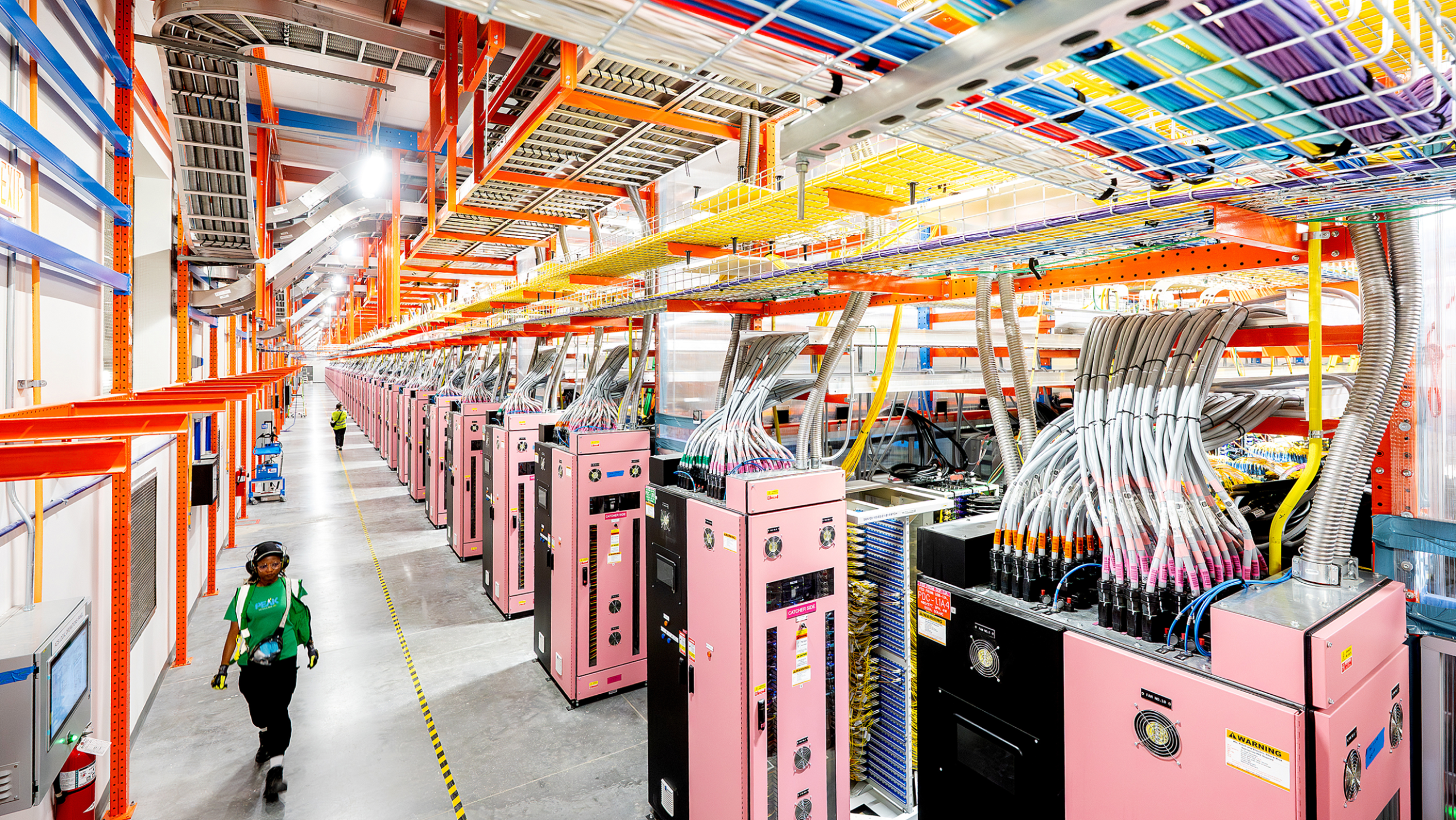
    A total of 22 5G user devices from 14 manufacturers have been announced to date, according to figures from mobile industry consultant Hadden Telecoms.

    The devices span a number of form factors, including smartphones, customer premises equipment, MiFi devices and USB models, and include the new category of foldable phones.

    These devices are expected to launch this year to support early 5G launches, with some announced devices being carrier or market specific.

    According to Hadden Telecoms’ research, as of this month 5G smartphones have been announced from Huawei, LG, Motorola, OnePlus, Oppo, Samsung, TCL, Xiaomi, and ZTE.

    Meanwhile Huawei has announced the largest number of CPE products at four. D-Link, HTC, Inseego, Netgear, Nokia, Samsung, and TCL have also unveiled 5G CPE.

  • India consulting on next spectrum auction

    India consulting on next spectrum auction

    The Telecommunications Regulatory Authority of India (Trai) has launched a public consultation on details of the next round of spectrum auctions, including for spectrum to be used for 5G.

    The regulator is seeking views on the timing, pricing and amount of spectrum to be sold during the next auctions.

    Trai is seeking views on the valuation methodology for 5G spectrum in the 3.3-GHz to 3.6-GHz bands. According to the regulator, the government plans to auction spectrum in the range of 700-MHz to 3.6-GHz in the next auction to be held later this year.

    But with operators struggling with high debts accrued from the previous auctions and intense competition triggered by the entry of a new operator, the telecoms industry is opposing any sale of new airwaves before 2019.

    Industry body COAI is arguing that the auction should wait until the current wave of consolidation triggered by this new competition draws to a close, and until the 5G technical and regulatory standards are settled.

    The consultation also covers proposals on spectrum caps and rollout obligations for 5G spectrum, as well as views on the pricing of the 700-MHz 4G spectrum left unsold during the most recent auction.

  • Telcos should follow teenagers’ digital lifestyle

    Telcos should follow teenagers’ digital lifestyle

    Only 12% of teenagers feel service providers understand their lifestyle and offer services to match it, according to a study from Amdocs.

    Conducted by Vanson Bourne , the study surveyed 4,250 respondents aged 15-18 from the United Kingdom, United States, Canada, Brazil, India, Germany, Russia, Mexico, Philippines, and Singapore.

    Among those polled, 30% report experiencing bad customer service from their CSP over the past year, and 46% say they will not use that CSP again. A third of respondents then shared this information with families and friends.
    Findings also show that 43% of teenagers believe their smartphone makes them smarter and “cooler”; 52% check their social media accounts first thing in the morning; and over 30% say they would probably not meet someone again if they lacked a Facebook or WhatsApp account.

    Almost half of respondents say they prefer using emojis (47%) and posting photos (45%) to sending emails as emojis express how they feel more clearly than words.

    Teens require constant internet connectivity, with respondents saying they are more likely to feel anxious and alone if separated from the internet (56%) than when separated from their family (52%. The value of internet access is so significant that the majority (55%) strongly believe fast internet access to be a human right.

    A majority stream movies (53% streaming; 17% downloading), TV (51% versus 11%) and music (47% versus 29%); and they are typically doing so for free with less than a third saying they ever pay for any content.