Retail News CRM

Tag: Temasek Holdings

  • E-commerce firm Zilingo bags US$226m in funding

    E-commerce firm Zilingo bags US$226m in funding

    Singapore online fashion market Zilingo has achieved capital investment of $226 million in a Series D funding round. The investments were made by the firm’s existing backers, including Sequoia Capital, as well as newcomers Temasek Holdings and EDBI, and will support the business’s expansion into fresh markets in the Philippines, Indonesia and Australia, as well as build new infrastructure and modernise its supply chains.

    A report in DealStreetAsia last January suggested that Zilingo was considering listing an IPO with a view to developing offline retail.

    “Sequoia’s investment in Zilingo dates back to when the company wasn’t even yet incorporated and the name wasn’t finalised,” said Sequoia Capital (India) Singapore MD Shailendra Singh.

    “Ankiti and team have rapidly transformed their original ideas about Zilingo into a platform company that serves fashion consumers, merchants, retailers, brands and manufacturers, collectively representing a multi-hundred billion dollar market size.”

    Zilingo serves more than 20,000 merchants and retailers across Southeast Asia. It is currently valued at an estimated $1 billion.

  • Watsons Vietnam opens first store this month

    Watsons Vietnam opens first store this month

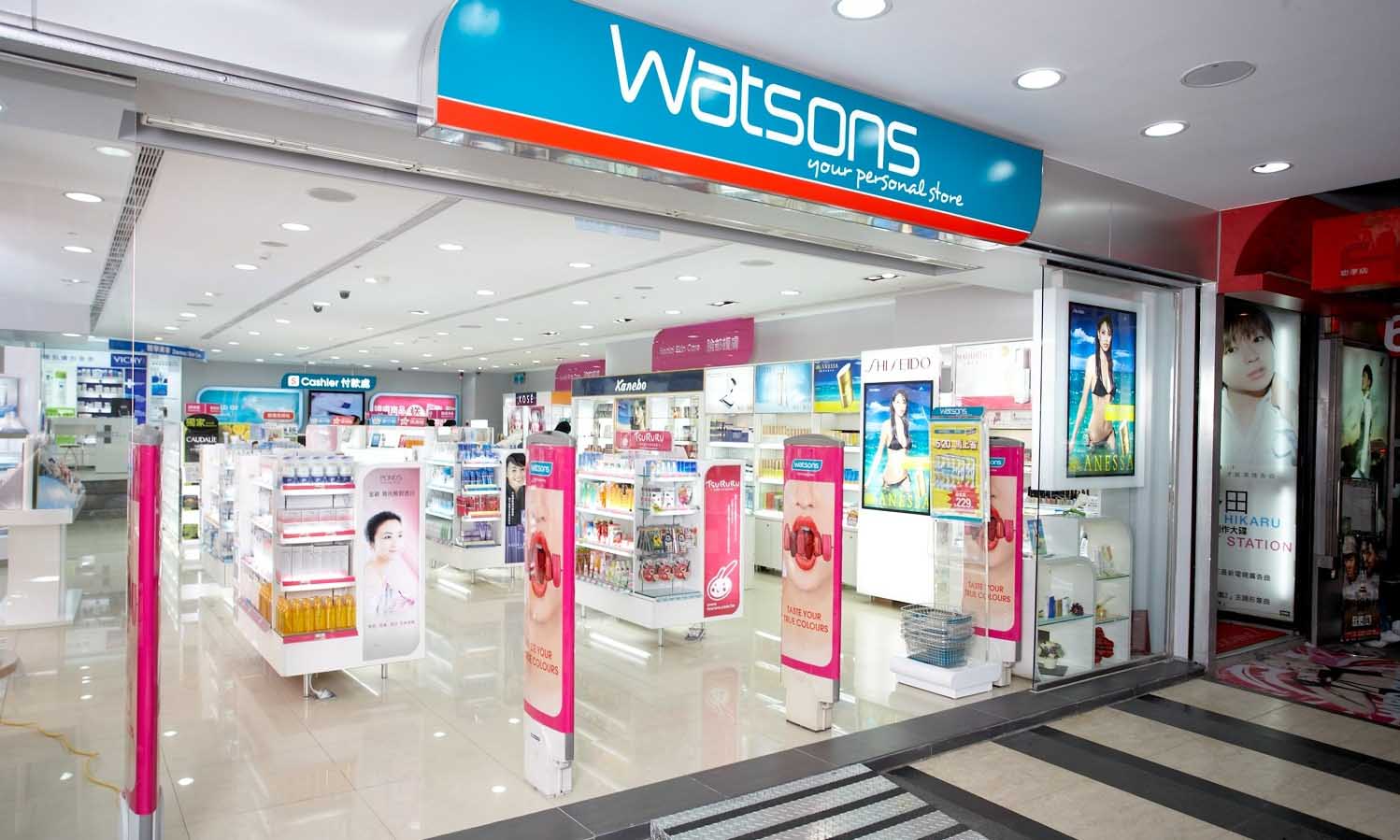
    Hong Kong-headquartered healthcare and beauty retailer Watsons is to launch in Vietnam. The first Watsons Vietnam store will open on January 17, in the lower floors of the high-profile Bitexco tower in downtown Ho Chi Minh City. The store will take up at least one floor of a two-storey space recently vacated by Topshop. Teasing the launch, a huge backdrop with the slogan “Look good, Feel great” has been built outside the space, attracting many Vietnamese youngsters to take selfies and check in on social media.

    On its LinkedIn page, Watsons Vietnam has been recruiting staff for the store and featuring the same artwork as on the Bitexco backdrop.

    Watsons Vietnam will compete with rival Hong Kong healthcare and beauty chain Guardian, owned by Dairy Farm International, which launched in Ho Chi Minh City in 2011 and now claims to have more than 60 stores in four cities.

    Watsons is operated by AS Watson, a subsidiary of retail and telecommunications giant CK Hutchison which is quarter-owned by Singapore sovereign investment fund Temasek Holdings. AS Watson has some 6800 Watsons health and beauty stores in 12 markets in Asia and Europe, including Hong Kong, Mainland China, Taiwan, Macau, Thailand, Singapore, Malaysia, the Philippines and Indonesia. The broader AS Watson group has 14,500 stores, including electrical retailers and grocery stores.

    Watsons has just celebrated the opening of its 500th store in Bangkok, Thailand. The store photo accompanying this story is of Watson’s new-generation store at IconSiam in Bangkok.

  • Google, Temasek Coming in as New Investors in Indonesia’s Go-Jek

    Google, Temasek Coming in as New Investors in Indonesia’s Go-Jek

    Google, Singapore state investor Temasek Holdings and Chinese online platform Meituan-Dianping are investing in a fundraising round of Indonesian ride-hailing startup Go-Jek, sources familiar with the matter said.

    Go-Jek’s existing investors, such as global private equity firms KKR & Co and Warburg Pincus, are also participating in the funding round, which is raising about $1.2 billion in total, the sources said.

    They said the funding round opened last year and is expected to close in a few weeks.

    The funding by prominent investors including Google gives Go-Jek greater firepower to tackle competition at home from Grab and Uber Technologies, which are viewing Indonesia, Southeast Asia’s most populous country, as a large potential market.

    “As a strategic investor, Google can add a lot to Go-Jek’s business,” said one source.

    It was not immediately clear how much the investors are pumping in individually.

    Google, KKR, Warburg and Temasek declined to comment. Meituan-Dianping and Go-Jek did not immediately respond to requests for comment. The people declined to be identified as they were not authorized to speak to the media.

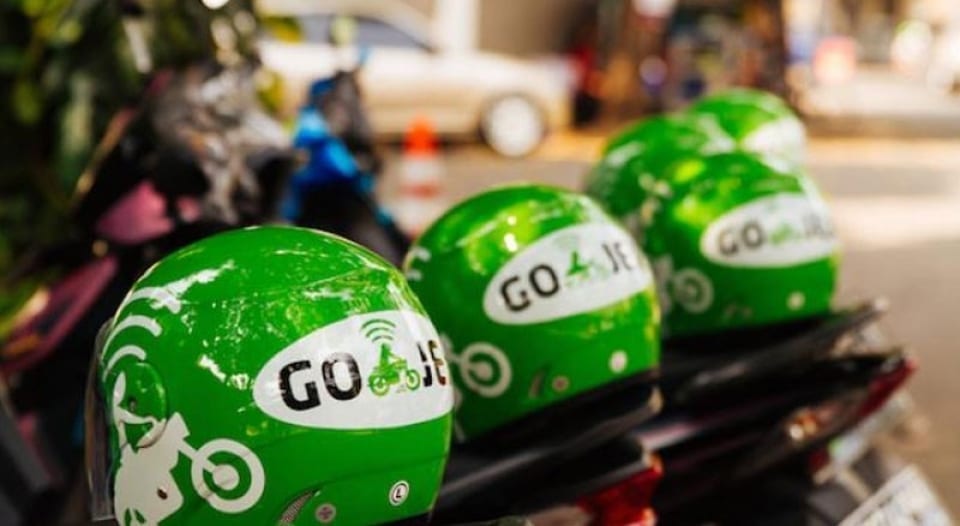
    Go-Jek, which began as a ride-hailing app for motorcycle taxis, operates mainly in Indonesia but is developing a food delivery business. Its mobile payment business, Go-Pay, is also growing rapidly.

    Reuters reported last year that JD.com was investing about $100 million in Go-Jek. This followed an investment by Chinese social media and online entertainment firm Tencent Holdings, which is also an investor in JD.com.

  • Temasek Holdings to enter online fashion

    Temasek Holdings to enter online fashion

    Singapore state investor Temasek Holdings has led a new round of equity funding for US second-hand fashion marketplace Poshmark.

    Poshmark plans to use the cash to expand its footprint across Asia, broaden its product categories and develop data-driven shopping experiences. It will also introduce its voice-enabled Stylist Match service. Accessed via Amazon Alexa, this aims to offer shoppers a personalised experience through engaging with seller stylists on its platform.

    Founded in 2011, Poshmark hosts about 5000 brands and sells up to 7 million items daily.

    The latest funding round raised US$87.5 million, led by Temasek, with support from GGV Capital, Inventus Capital, Mayfield, Menlo Ventures, Uncork Capital and Union Grove Venture.

    That takes the aggregate equity investment in the business to date to $160 million.

  • Indonesia’s Lippo & Korea’s Lotte form e-commerce JV

    Indonesia’s Lippo & Korea’s Lotte form e-commerce JV

    Indonesia’s Salim Group is planning a major foray into e-commerce this year in partnership with South Korea’s Lotte.

    Indo Lotte Makmur, a 50-50 JV by the two conglomerates, will launch the iLotte online shopping platform as soon as July, putting US$88 million into the project initially. The service will be geared primarily toward women in their 20s and 30s, and feature name-brand cosmetics sold in South Korea as well as offerings from Lotte’s online mall.

    A robust infrastructure built up over the course of years will let Salim achieve economies of scale for the e-commerce business, says Indo Lotte CFO Dani Sumarsono, who is overseeing online business at Indonesia’s largest conglomerate.

    “E-commerce is not only about digital technology but about moving physical products,” he says. “We have been investing in infrastructure for a long time.”

    Indo Lotte president, a former executive at Lotte’s e-commerce business in South Korea, says Salim has a lot of infrastructure, while Lotte can bring know-how and technology.

    Indonesia’s e-commerce market is expected to grow to $46 billion in 2025 from just $1.7 billion a decade earlier, according to research by Google and Singapore’s Temasek Holdings. Under this scenario, Indonesia would make up more than half of the total Southeast Asian e-commerce market and would follow China and India as the third-largest national market in Asia, excluding Japan. A doubling of internet users, from 92 million to 215 million, is seen as the driver of this expansion.

    Expensive market

    With chronic congestion of its major cities and a lack of basic infrastructure on its islands, Indonesia is an expensive market to service. Logistics costs are 27 per cent of GDP, compared with 20 per cent in Thailand and 13 per cent in Malaysia, according to the World Bank.

    However, Salim’s 13,000-plus Indomaret convenience stores across Indonesia can be used as places to pay for and pick up goods ordered online. Meanwhile, a shipping unit that delivers instant noodles made by group member Indofood Sukses Makmur to more than 30,000 small towns nationwide can help bolster efficiency.

    Salim has also created a JV with Tokyo-based startup Liquid to explore payments using fingerprint authentication, with credit-card ownership of less than one in every 10 adults in Indonesia. Liquid’s system allowing pre-registered shoppers to pay via fingerprint scanner has been deployed at Japanese convenience stores. The JV will test the system for 500,000 Salim employees initially and targets commercial application within the year.

    Meanwhile, another Indonesian conglomerate, Lippo Group, is developing an electronic payment service for use on MatahariMall.com, which Lippo launched in 2015.

  • Business giants eye Singapore as springboard into South-east Asian e-commerce market

    Business giants eye Singapore as springboard into South-east Asian e-commerce market

    With South-east Asia’s Internet economy set to rocket to hundreds of billions of dollars by 2025, international business giants are eyeing Singapore’s strategic location to gain access into the region’s e-economy, in particular, e-commerce.

    In recent months, the Republic has seen several big names pump billions worth of investments into local e-commerce companies, including one investment by Chinese e-commerce giant Alibaba in Singapore online shopping website Lazada.

    This comes as brick-and-mortar retail giants pump up efforts to take their offerings online to ride the digital retail wave.

    The potential for growth, government assistance and Singapore as an entry point into South-east Asia make the Republic attractive, experts say.

    “If you compare the overall share of e-commerce in Singapore to its overall economic development level, it is quite low. (But) Singapore has the potential because it is a hub for the South-east Asian economy. (And) because there is market potential for Singapore, of course foreign companies will come here, either independently or in collaboration with local companies. They can acquire local companies, just like Alibaba did,” said e-commerce and online retail expert Chu Junhong, associate professor of marketing, National University of Singapore Business School.

    “E-commerce is a trend, (retailers) cannot avoid it. They must take advantage of this trend; it is good for them. The good news is that if retailers go online, they can open their market to the whole of South-east Asia. However, they have to be ready for the increased global competition when they go online,” Ms Chu added.

    According to a report by Internet giant Google and Singapore state investment firm Temasek Holdings in May, South-east Asia’s Internet economy is expected to surge to nearly US$200 billion (S$273 billion) by 2025, up from US$31 billion last year.

    The e-commerce segment alone is expected to make up almost half of the entire Internet economy in the region, with its value estimated to jump to US$88 billion by 2025, a 16-fold increase from US$5.5 billion last year.

    Filtering down to Singapore, the e-commerce market here is expected to grow more than five times to about US$5.4 billion, the report showed.

    Singapore has plans to increase that figure even further.

    Last month, at the launch of the retail industry transformation map (ITM), the Government said it would look at e-commerce as a key enabler for retail businesses to transform, with the aim of growing the e-commerce share of total retail receipts from the current 3 per cent to 10 per cent by 2020.

    Some brick-and-mortar retailers are embracing the digital wave in bold moves.

    Local tech retailer Challenger opened its online store hachi.tech in April, saying that the new portal would deliver 50 per cent of its revenue in just three to five years.

    It also set up a unit — Challenge Ventures — last year with a budget of S$20 million to invest in online companies and enable the firm to expand its e-commerce strategy.

    International companies are also investing or participating in Singapore’s local e-commerce platforms, as a means to tap into both the local and SEA markets.

    In April, Alibaba agreed to buy a controlling stake in privately owned Singapore company Lazada for US$1 billion. Lazada is a pioneer of e-commerce in many South-east Asian countries, with a presence in Indonesia, Malaysia, the Philippines, Singapore, Thailand and Vietnam.

    This month, Chinese gadgets company Lenovo launched an e-store on Qoo10, a Singapore-based e-commerce platform. With the opening of the e-store, customers will be able to browse Lenovo’s range of mobiles, tablets, PCs and accessories on Qoo10’s platform.

    Other than Singapore, Qoo10 has marketplaces in Indonesia, Malaysia, Hong Kong, Japan, Korea and China.

    Mr Max Bittner, CEO of Lazada Group said in an interview: “We believe that there are still significant opportunities for online shopping in South-east Asia and the six markets that we are in. Our focus remains on these six markets where we are raising the customer experience and becoming the leading one-stop online shopping and selling destination of choice for consumers.

    “Alibaba’s partnership is helping us in this goal by providing the know-how, systems and processes to enhance the online experience for our customers and sellers in these markets.”

    Mr Bittner added that the deal with Alibaba would help Lazada accelerate its goal of providing 560 million consumers in the region with access to the broadest and most unique assortment of products, bringing significant synergies that would enhance the online experience for both buyers and sellers.

    Mrs Kee Ai Nah, group director (industry & enterprise), Spring Singapore, said: “For both sellers and buyers, e-commerce has opened up options that were not possible in the physical world. To grow topline and stay competitive, businesses have to reach new customers through multiple channels. As e-commerce platforms allow businesses to internationalise without a physical footprint, and since this channel is already well-developed, Spring encourages all enterprises to explore the possibilities of selling online.”

  • Takeover bid of $196m. for Eu Yan Sang

    Takeover bid of $196m. for Eu Yan Sang

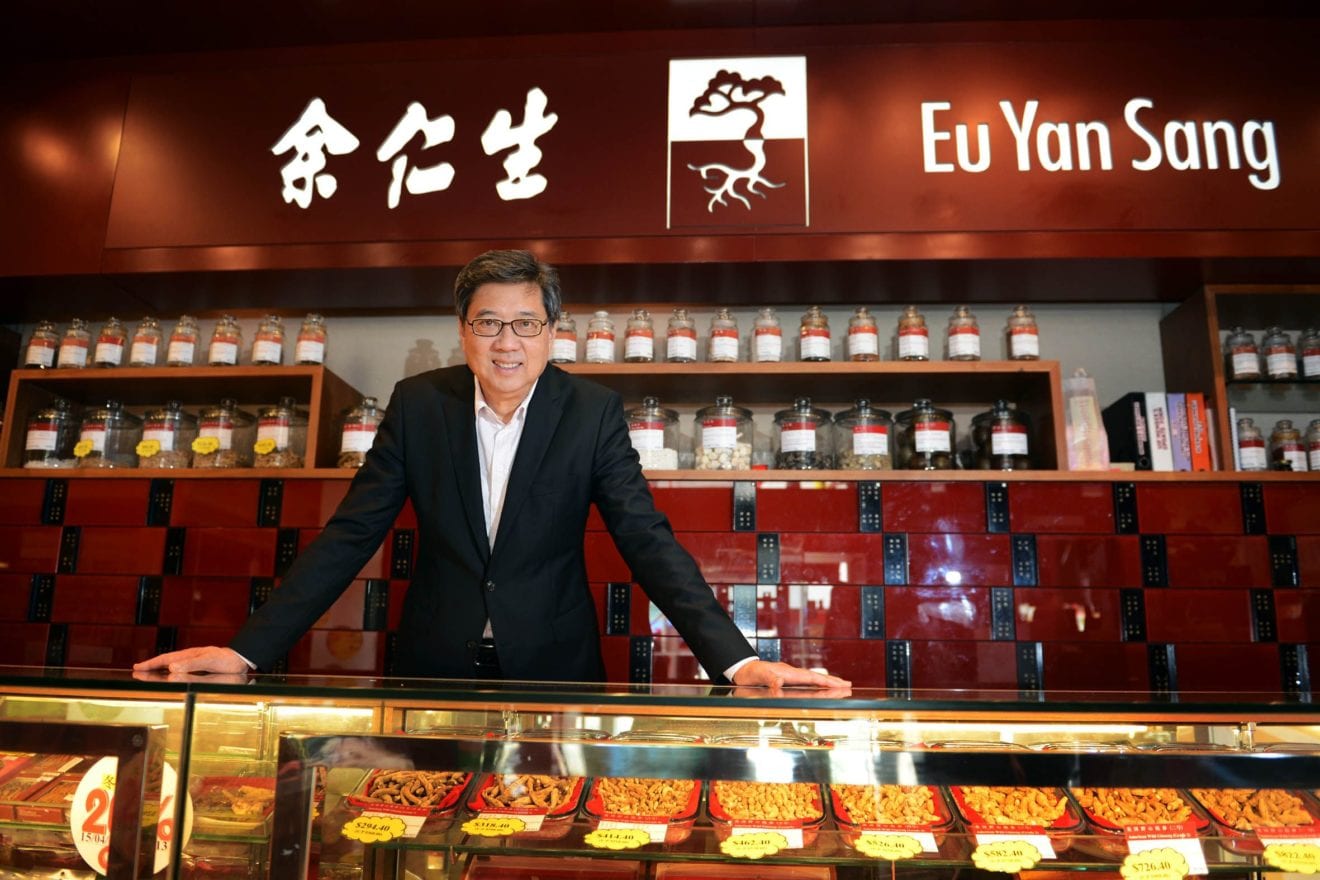
    A takeover bid for Singapore-based Eu Yan Sang has valued the traditional Chinese medicine retailer at about S$269 million (US$196 million).

    A consortium comprising Singapore state investment company Temasek Holdings’ unit Blanca, Tower Capital TCM Holdings and some members of the founding Eu family have made the final offer of 60c Singapore a share.

    About 63.2 per cent of shareholders have committed to accept the offer, including members of the Eu family, Aberdeen Asset Management Asia and First State Investment Management (UK), says Eu Yan Sang.

    Tower Capital founder Danny Koh says the consortium’s offer is attractive “considering the company’s recent financial performance and the current challenging environment”.

    Eu Yan Sang launched in Malaysia in 1879, expanding to more than 250 outlets in China, Hong Kong, Macau and Australia.

    Its third-quarter net income slumped to S$286,000 from S$5.45 million a year earlier, and its slide became evident in August when it lost US$3.6 million.

  • Singapore investors buy record US$26.3b of overseas properties in 2015

    Singapore investors buy record US$26.3b of overseas properties in 2015

    Singapore-based investors purchased a record US$26.31 billion (S$37.83 billion) in overseas real estate in 2015, up 49 per cent from US$17.63 billion in 2014, going by preliminary data compiled by real-estate data and analytics firm Real Capital Analytics (RCA) as at Jan 12.

    The increase reflects Singapore investors’ strategy of targeting the world’s most liquid markets to diversify and grow their portfolios in the low-interest-rate environment.

    Last year’s record level of deals was boosted by big-ticket purchases by heavyweights such as GIC and Global Logistic Properties (GLP); however, mid-sized and smaller property purchases were also made by Singapore developers and family offices increasingly turning overseas in the face of a dour outlook for real estate at home, with the imposition of property cooling measures.

    RCA’s numbers may be updated as more transactions come to light.

    Globally, Singapore ranked as the fourth-largest cross-border property investor in 2015, the same as in 2014.

    US buyers were the most active in 2015, pouring US$58.74 billion in capital outside their borders; they were followed by their counterparts in Canada (US$32.17 billion) and Hong Kong (US$31.44 billion). China was in fifth position, at US$23.35 billion.

    Marc Giuffrida, executive director of global capital markets (Asia) at CBRE, said it was not surprising that Singapore-based investors emerged the fourth largest cross-border investors of real estate: “Singapore is a relatively small country, but has a relatively large wealth pool to invest – not just sovereign wealth, but corporates, families and private wealth. So there are only so many opportunities for them to put that money to work in Singapore.”

    The overseas property investment brigade from Singapore last year was led by bigwigs GIC, GLP, Temasek Holdings, Mapletree, ARA Asset Management Group and Ascendas Real Estate Investment Trust.

    RCA’s database covers only transactions above US$10 million in various asset classes, including development sites, office, industrial, retail, apartment, hotel and serviced apartments.

    The US$26.31 billion that Singapore investors ploughed into overseas real estate last year was six times the US$4.24 billion figure for 2009, when central banks embarked on the first round of quantitative easing, noted Petra Blazkova, senior director of analytics for the Asia-Pacific at RCA.

    The firm’s analysis also showed that the US$26.31 billion comprised 126 completed transactions, compared with 139 deals in 2014 and 26 in 2009. RCA also noted that there were 68 Singapore-based investors active overseas in 2015, almost double the 33 five years ago.

    Ms Blazkova said: “As more Singaporean investors look abroad to diversify a growing pool of domestic wealth, they have been drawn to offshore opportunities in real-estate markets that offer stable fundamentals, regulatory support and market transparency.”

    Historically, Singapore investors have been interested in the familiar Chinese property market. It was the top destination for Singaporean capital, attracting about US$25.87 billion of investment from 2009 to 2015. The next most popular destination was the US, which drew US$20.29 billion from the island-state’s investors during the same period, followed by Australia (US$15.35 billion), the UK (US$10.80 billion) and Japan (nearly US$7.1 billion).

    For 2015 itself, the US was the top investment destination for Singapore investors in search of overseas property; the US$14.76 billion they invested there was boosted by mega acquisitions by the likes of GIC and GLP in the industrial property sector. This resulted in industrial property being the most sought-after property class overseas among Singapore investors, drawing US$13.92 billion last year.

    A joint venture between GLP and GIC purchased Blackstone’s Indcor portfolio of 117 million sq ft across the US for slightly over US$8 billion; GLP also paid US$4.52 billion for a portfolio of industrial properties in the US which it acquired from Industrial Income Trust.

    In Australia, Ascendas Real Estate Investment Trust picked up a portfolio of 26 logistics properties for A$1.01 billion from GIC and Frasers Property Australia.

    Office and retail property remained popular among Singapore investors; they bought US$5.45 billion worth of office property and US$3.15 billion in retail property overseas last year.

    Of note was GIC’s purchase of a US retail portfolio comprising five malls from Macerich, said RCA.

    While Singapore’s overseas property investments have expanded over the past few years, the inflow of foreign capital into the Singapore property market remained stable at US$3.51 billion last year. This was in line with most of the previous years, with the exception of 2014, when the figure fell to US$1.22 billion.

    Ms Blazkova said: “Chinese investors maintained their lead as the largest source of foreign capital investing in Singapore property, accounting for US$1.03 billion of properties and development sites purchased in 2015.

    “That said, one of the largest sales of Singapore property to a foreign entity also took place in 2015, when a development site in Paya Lebar was acquired for total of US$1.28 billion by a joint venture between Abu Dhabi’s sovereign wealth fund Abu Dhabi Investment Authority and the Australian developer Lend Lease.”

    Apart from this transaction, China’s MCC (China Metallurgical) and Hao Yuan Investment group were the most active foreign investors in Singapore’s real estate market last year.

    Ms Blazkova noted that between 2011 and last year, the preferred route for foreign investors looking to access real estate in Singapore was by purchasing a development site. During the period, they picked up almost US$8 billion of development sites, accounting for 58 per cent of inward investment into Singapore real estate.

    Market watchers said this is partly due to the ease and transparency of the tender process when it comes to buying land at state tenders as well as a dearth of completed investment-grade properties available for sale, as most owners are long-term holders. Moreover, profit margins from property development are typically higher than rental yields.

    Mr Giuffrida of CBRE highlighted a recent trend of more transactions in the lower price bracket of, say, below US$100 million. This segment is starting to attract keen interest from smaller developers, family offices and private wealth on the lookout for opportunities, particularly for yield plays.

    For this year, he predicts two key trends for global cross-border property investments:

    The first is heightened interest in smaller-ticket deals from Asian investors, including Singaporean investors. The second trend is that more investors will move outside core locations. “In the Australian context, if they were previously looking at downtown CBD office buildings, now they are prepared to look at city-fringe locations.

    “In Europe, they might have previously focused on Central London office buildings, development sites and hotels; now they are looking at regional UK and branching into continental Europe.”

    Greg Hyland, head of capital markets, Singapore at JLL, said: “London is still a very important market, but there is an element of caution because of price appreciation; so investors may see better value in continental Europe – for example, Germany, Portugal, Italy, Spain and France.”