Tag: temple

  • Deepinder Goyal Defends 30 Million Dollar Wearable Brand Temple

    Deepinder Goyal Defends 30 Million Dollar Wearable Brand Temple

    Zomato founder Deepinder Goyal has poured $20 million of his own capital into Temple, an Indian consumer tech hardware venture that has absorbed $30 million in total development costs.

    Goyal, who stepped away from his role as Eternal chief executive to focus on the business, defended the wearable brand after medical practitioners and online reviewers questioned its scientific backing.

    Unacademy co-founder Gaurav Munjal gave the product high-profile backing this week, reporting that he wore the head-mounted monitor for roughly 30 to 40 nights. Munjal found the hardware stayed secure during workouts and sleep, while outperforming rival fitness bands such as Whoop in comfort and automatic chewing detection.

    Hardware design and jaw tracking

    Temple tracks sleep stages, mental strain through an entropy metric, and jaw motion to record food consumption. The hardware monitors chewing patterns directly, sending prompt notifications after meals to log nutrition without requiring manual initial entries from the wearer.

    Hardware comfort remains the central pitch for the headpiece. Munjal noted the unit is light enough that users forget they are wearing it, though he cautioned that the current companion software lags behind competitors on interface design. The industrial design also draws attention in public settings, frequently forcing users to explain the headpiece during business meetings.

    Return windows against scientific doubts

    Goyal countered public scepticism by offering a 14-day return policy without conditions, contrasting the retail guarantee directly against stricter hardware sales policies in India. The refund term gives consumers immediate recourse while the venture readies its initial research findings for wider release.

    Early stage hardware development carries steep cash-burn risks for Asian tech executives stepping away from established software platforms. Building a proprietary consumer electronics business out of India requires sustained testing and clinical validation that fast-moving e-commerce businesses rarely face. Goyal maintains that the business model depends entirely on immediate utility, stating the company would collapse before clawing back a tenth of its research investment if users discover the hardware fails to deliver on its tracking claims.

    Wearable competition and retail positioning

    Consumer health hardware across Asia remains dominated by wristbands and smart rings from international players like Apple and Whoop. Convincing shoppers to adopt a noticeable forehead sensor presents a heavy retail hurdle, regardless of how accurate its chewing sensors prove to be.

    Retail buyers and consumer technology investors will judge Temple on whether it can convert tech founders into ordinary retail buyers across Asian cities. Most wellness devices struggle to retain users past the first three months once the novelty of biometric readouts wears off, making app updates and software clarity critical to customer retention.

    Backing from domestic founders

    Munjal framed the venture as a necessary push to build international hardware brands out of India rather than relying solely on packaged food exporters. The domestic tech sector has historically excelled in platform software and logistics networks, while advanced sensor engineering and biometric manufacturing remained concentrated in East Asian supply hubs.

    Temple plans to publish academic preprints detailing its sensor mechanics ahead of peer-reviewed journals, alongside unreleased software modules still under development.

  • Temple & Webster posts strong Sales during First half of the Year.

    Temple & Webster posts strong Sales during First half of the Year.

    Temple & Webster’s revenue grew by around 40 percent to roughly $32 million in the first four months of the year, the online furniture and homewares business said in a trading update to analysts.

    With two months still go in the second half of fiscal 2019, the retailer indicated it has seen the continued uptake of online furniture shopping due to demographic changes, something chief executive Mark Coulter previously explained when the business revealed its $3 million profit during the first half of its 2019 financial year.

    “The trend to online actually accelerated during a tougher retail environment, and I think we’re benefiting from that trend,” Coulter told.

    “Irrespective of any macro-economic trend, there’s still that shift toward online. Millennials are still growing up, and are still moving out of home and are buying their first or second property. That’s going to happen regardless of any downturn.”

    The business’s focus on improving and increasing its range has allowed it to sell across multiple demographics, and the number of active customers grew 36 percent to approximately 260,000 as of April 30, 2019.

    In the first four months, the company also launched its first by-appointment trade and commercial showroom in Sydney.

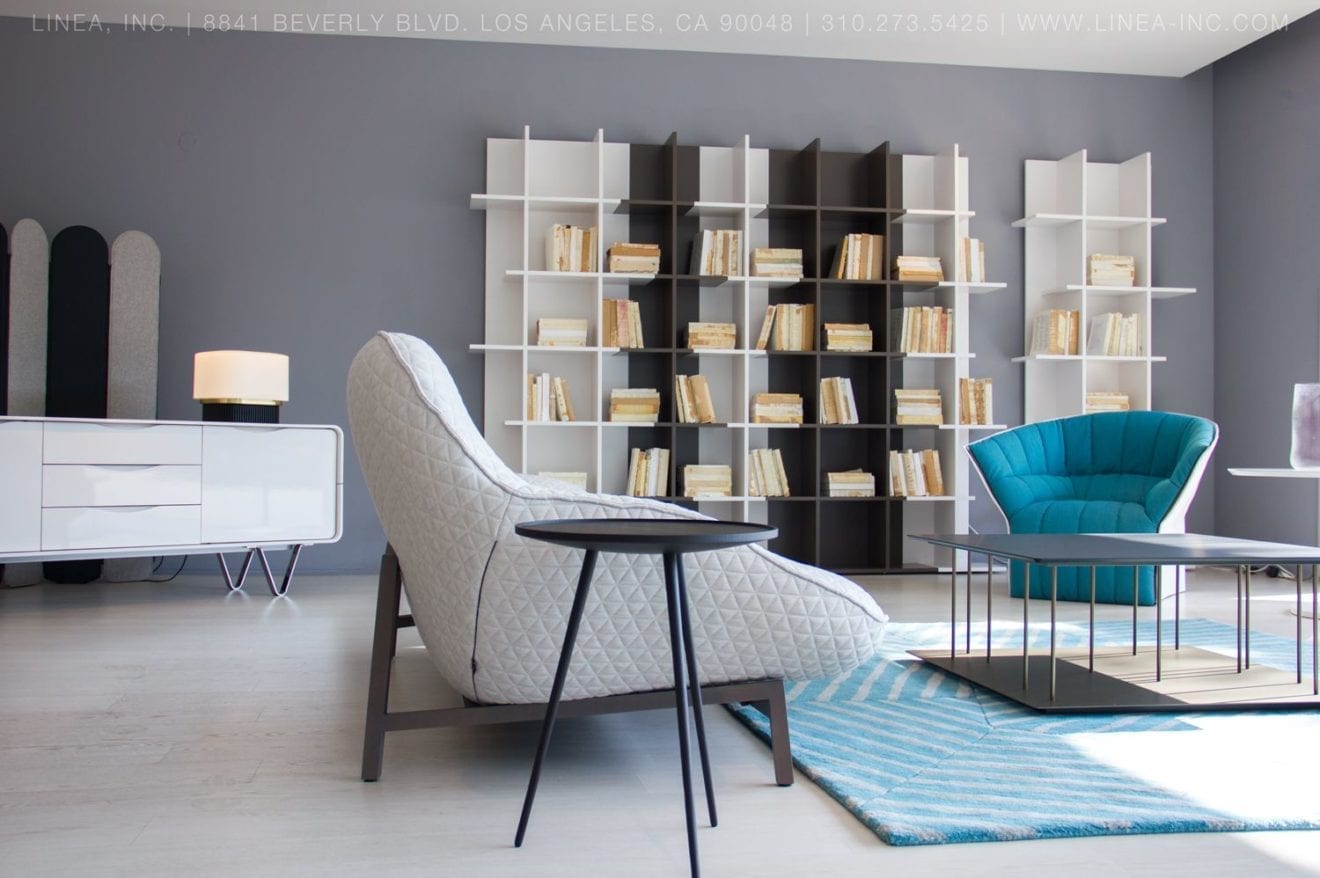
    The showroom is described as the brand’s first permanent physical experience, offering customers the ability to touch and feel products, view samples, and review designs prior to large scale purchases.

    “I think as the order value gets bigger and as the order gets more complicated, having a physical space for someone to meet an account manager will help,” Coulter previously told.

    “From a customer point of view, we don’t envisage having many showrooms around the country… I think the main game for us is going to online for a very long time.”

  • Red Bull apologises to Indonesia over offensive ad

    Red Bull apologises to Indonesia over offensive ad

    Red Bull has publicly apologised for shooting a commercial in which an athlete performed acrobatic stunts across one of Indonesia’s ancient holy temples, an official said Thursday.

    Red Bull has issued an apology in Indonesia’s national newspapers admitting it shot an advert at the 9th-century Borobudur temple “without permission from the appropriate authorities”

    The energy drink manufacturer issued an apology in national newspapers admitting it shot the video at the 9th-century Borobudur temple “without permission from the appropriate authorities”.

    The video — in which a famous “free running” athlete is shown jumping between the temple’s stone stupas — triggered outrage in Indonesia, where Borobudur is a revered Buddhist site and national icon.

    In one scene, the athlete is seen walking past a sign clearly stating “No Climbing” in both English and Indonesian before performing acrobatics throughout the UNESCO-listed heritage site.

    The video was shot secretly despite the crew having been issued a warning by temple guards, Borobudur Conservation Agency head Marsis Sutopo told AFP.

    “They must have shot again while our guards were not looking,” he said.

    The video, uploaded online on March 18, sparked outrage within Indonesia and prompted the government to threaten a legal suit against Red Bull.

    Authorities later issued a warning to the drink company after determining no physical damage had been incurred.

    Red Bull met with government officials in early June and agreed to place formal apologies in national newspapers.

    “We want to set an example because we painstakingly try to conserve this historical site,” education ministry official Hilmar Farid told AFP.

    “It was obvious as there was a “No Climbing” sign there too.”

    Red Bull have also been asked to shoot a new video explaining the importance of protecting holy sites, Farid added.