Tag: Tenpay

  • How UK Retailers Can Embrace The Chinese Ecommerce Opportunity

    How UK Retailers Can Embrace The Chinese Ecommerce Opportunity

    Within the next two years, China’s e-commerce market will top $1 trillion, making it bigger than the e-commerce markets of the US, UK, Japan, Germany, and France combined. Fuelled by greater internet and smartphone penetration, an expanding middle class with higher disposable income, and greater consumer confidence, over half of Chinese internet users having now made a purchase on the web.

    Surely then, UK retailers should be fighting tooth and nail for the loyalty and spend of these Chinese shoppers?

    Surprisingly, this is not the case. While over half of UK retailers (55%) ship to China, our research – into the international shopping experience offered by the UK’s top 150 online retailers – shows a massive variation in the quality of shopping experiences offered to Chinese shoppers.

    UK e-tailers are failing to accommodate a great number of Chinese shopping preferences and reducing the likelihood of conversions. For example, just over a quarter (26%) of retailers that ship to China offer shoppers the ability to pay in Yuan and present prices in local currency.

    The remainder are leaving shoppers in China to estimate for themselves how much products will cost to buy, which means shoppers could be hit by sudden currency exchange fluctuations or fees from their bank.

    Similarly, only 22% of retailers that ship to China offer shoppers the ability to pay using local payment methods, such as e-wallets and bank transfers like Alipay or Tenpay, which account for more than 80% of ecommerce payments, or Chinese payments cards such as UnionPay.

    Of retailers that do accept Chinese payment methods, 42% offer a single option, barring some prospective customers from making a purchase.

    Added to this, just one in ten (10%) retailers that ship to China offer shoppers a Mandarin-language shopping experience. Since the majority of people living in China don’t speak English fluently, shoppers are likely to feel unconfident about making a purchase if they are expected to use an English-language checkout.

    It’s clear from these customer experience shortcomings that the majority of UK retailers are failing to exploit the burgeoning Chinese ecommerce market fully. This puts them on the back foot when it comes to winning long term loyalty and purchasing preference.

    Retailers simply can’t afford to offer shoppers a second rate experience, especially when failing to localise the online store can make shoppers nervous and can quickly sour a great online experience.

    So, how can retailers rectify this and improve the customer experience to grow sales in China?

    Here are our top tips-

    •       Improve the experience for Chinese shoppers. The first rule of international trade is that, in order to be successful, customers must enjoy the same experience regardless of where they are in the world. Retailers should offer shoppers in China the same, high quality experience that shoppers in the UK and elsewhere expect to receive.

    •       Offer multiple shipping options at reasonable rates. To give Chinese shoppers the confidence to buy, retailers must offer greater choice as well as competitive prices. This is especially critical in China where clearance processes can be very lengthy for non-experienced carriers. Moreover, it’s important to have a simple and transparent returns process in place, so if something goes wrong, shoppers will be confident that it will be resolved quickly and easily.

    •       Display prices in Chinese Yuan. There are few things more off-putting than exchange rate uncertainty when buying from a retailer in another country, and this is particularly disconcerting at times of high currency fluctuation. Retailers should present shoppers in China with prices in the local currency, so that shoppers can feel confident about how much they are paying.

    •       Try to put the customer’s mind at ease. Most shoppers in China expect and prefer to pre-pay customs charges or handling fees when shopping online, so retailers should avoid any potential for nasty surprises, by being upfront about these charges and offering pre-payment.

    With e-commerce sales in China set to exceed $1 trillion next year, retailers must pay more attention to China in the years ahead. However, delivering a localised shopping experience doesn’t have to require a dedicated Chinese website or months spent negotiating with the local supply chain.

     

  • UK retailers fail to capitalise on burgeoning e-commerce in China

    UK retailers fail to capitalise on burgeoning e-commerce in China

    ‘Retailers are falling short in serving both Chinese shoppers and others overseas by not providing the seamless shopping experience they offer here in the UK’

    Although 71% of the UK’s largest online retailers are selling internationally, almost half (45%) are completely ignoring China’s burgeoning e-commerce market, new research has found.

    China’s total e-commerce market is expected to increase by 50% to $6.5 trillion by 2020, with online transactions accounting for nearly half of that growth.

    China’s Centre for International Economic Exchanges predicts the nation’s international online retail will account for 30% to 40% of total world trade by 2025.

    Meanwhile, recent research by Worldpay revealed that 44% of people in China shop on overseas websites.

    But while many UK retailers, such as Selfridges and John Lewis, have taken steps to make the shopping experience in-store more welcoming for high-spending visitors from China, relatively few retailers have made similar improvements online.

    Just 55% offer shipping to China – and among those that do, the shopping experience offered to shoppers varies wildly.

    New research by Global-e, which assessed more than 150 of the UK’s largest online retailers, found that just one in ten (10%) retailers that ship to China offer shoppers a Mandarin language option.

    Across all retailers, just under a fifth (17%) offer non-English language options, with retailers that offer international language options offering 5.7 languages on average.

    And while more than a third (36%) of retailers offer prices in other currencies, just 26% of UK retailers that ship to China present prices in Chinese Yuan, and only 22% accept Chinese local payment methods, such as AliPay, UnionPay and TenPay.

    Of retailers that do accept Chinese payment methods, 42% offer a single option, barring some prospective customers from making a purchase.

    Furthermore, almost all (98%) retailers that ship to China do not provide full duties calculations and prepayment, which means that shoppers may be stung by unexpected charges or taxes.

    Not only does this put the retailer’s reputation at risk, but these companies will also be unlikely to generate brand loyalty in China.

    “Shoppers expect more from the online retail experience but very few retailers can claim to offer ‘global shopping’,” said Nir Debbi, co-founder and CMO at Global-e. “Our research shows that retailers are falling short in serving both Chinese shoppers and others overseas by not providing the seamless shopping experience they offer here in the UK.

    “To boost conversions abroad and harness untapped opportunities, retailers need to remove the frictions in the customer experience by providing effective shipping and returns, localised pricing, local currencies, and payment methods with guaranteed landed cost.”

  • New rules will ‘wipe out’ Chinese online payment agents

    New rules will ‘wipe out’ Chinese online payment agents

    New regulations proposed by the Chinese government will deliver an immediate boost to state-ownedChina UnionPay, potentially forcing its smaller Chinese online payment agents out of business.

    The ‘Method of Network Payment Service Management for Third-Party Payment Agents’, proposed in August 2015, is set to restrict consumers’ daily and annual spending on online purchases through private third-party payment agents such as Alipay and Tenpay. But the new law exempts China UnionPay, giving it a clear market advantage.

    According to Timetric, the new law will present serious challenges for small private third-party agents trying to get a foothold in the online retail market.

    Under the draft law, the transaction amount made through third-party payment agents will be determined on the level of security measures incorporated within the online platform. Furthermore, all private third-party payment agents will be forbidden from offering financial services such as deposits, loans, financing or currency exchange services to consumers.

    Chinese regulators say the law aims to protect consumer interest and privacy and clamp down on counterfeit products and poor customer service offered by online private third-party payment agents.

    But in practice it appears on the surface to be a tool to protect UnionPay’s market dominance in the short term and protect the government’s interests, rather than those of consumers.

    “If implemented, the new legislation is anticipated to wipe out smaller private third-party agents, due to the increased operational costs of implementing multiple security measures”, said Kartik Challa, an analyst at Timetric.

    In China, UnionPay (CUP) is the sole scheme provider of payment cards. According to central bank regulations, all banks and card issuers operating in the country are required to route their Yuan-based transactions through CUP’s electronic payment network. However, following a complaint filed by the US against China via the WTO with regards to discriminating against foreign companies in 2012, the WTO directed the Chinese government to open up its payment cards market to foreign operators. Consequently in October 2014, the Chinese government announced its decision to allow foreign companies to set up their own payment card clearing businesses, effective from June 1, 2015.

    Ultimately, says Challa, the move will open the way to stronger competition for CUP – but not in the short term.

    “This move by the Chinese government is anticipated to intensify competition in the Chinese payment cards market, and end CUP dominance as the country’s only authorised card clearing organisation. However, Visa and MasterCard have a long way to go before they can make a dent in CUP’s market share, as they need to build up infrastructure from scratch”, comments Challa.

    China is one of the largest and most mature eCommerce markets in the world, increasing at a CAGR of 56.99 per cent over the last four years, from US$68.7 billion in 2010 to $417.3 billion in 2014.

    Factors, such as the rapid adoption of smartphones, growing internet penetration as well as availability of secure online payment mechanisms and a growing preference for online shopping – especially among the rural population– contributed to this growth.

    Timetric is a provider of online data, analysis and advisory services on key financial and industry sectors. It provides integrated information services covering risk assessments, forecasts, industry analysis, market intelligence, news and commentary.a

  • Luxury shoppers in China spending 28 per cent more per online purchase than in 2014, study shows

    Luxury shoppers in China spending 28 per cent more per online purchase than in 2014, study shows

    Unfazed by the country’s economic slowdown, luxury shoppers on the Chinese mainland have increased their purchases online as a range of e-commerce options provide attractive deals – from cosmetics and clothes to cars and property.

    That trend was uncovered from a joint survey of 10,150 luxury consumers in China by global professional services giant KPMG, online luxury retailer Mei.com and Chinese media firm Sina’s Nasdaq-listed micro-blogging service Weibo. The survey was called China’s Connected Consumers 2015.

    “The pace of change in today’s marketplace in China is taking retailers and brands by surprise,” Egidio Zarrella, the clients and innovation partner for China at global professional services giant KPMG, said on Tuesday.

    The new KPMG-led study found that the average spending by mainland luxury shoppers has increased 28 per cent to 2,300 yuan (US$362) for each single e-commerce purchase, up from 1,800 yuan average in last year’s survey.

    It also found that 45 per cent of respondents in the latest survey said they have bought many luxury items online.

    While only 1 per cent said they have bought domestic and overseas properties and cars online, about 50 per cent of those surveyed said they have not ruled out making those purchases online in the future.

    “China’s luxury consumers are looking for something beyond the physical shopping experience,” Zarrella said.
    “They are moving from just owning a luxury product to experiencing luxury, including gourmet dining, fine wines, private flights, bespoke safaris, luxurious travel tours, spa treatments, art auctions and an ever increasing range of investment services.”
    In a report early this year, management consulting firm Bain & Company estimated that China’s luxury market reached 115 billion yuan last year, down 1 per cent from the previous year, as Beijing cracked down on lavish spending by government officials.

    The country’s luxury market was largely expected to remain under pressure because of the slowing economy. Mainland China’s gross domestic product growth was exactly 7 per cent in the first and second quarters of this year, compared with close to 8 per cent last year.

    Zarrella, however, pointed out that e-commerce spending in the world’s second-largest economy shows a completely different picture.

    The survey, which had respondents from 90 Chinese cities, found an increase in the average amount spent on luxury purchases in most product categories.

    It showed that a higher amount was being spent on average for popular categories such as bags at 109 per cent, women’s apparel at 58 per cent and cosmetics at 18 per cent. There was also a significant increase in spending on categories such as watches at 126 per cent and jewellery at 65 per cent.

    The top-selling product categories in China’s e-commerce market are cosmetics, women’s shoes, bags and leather goods, women’s apparel and accessories.

    “Price is becoming less of a driver [for online sales],” said Thibault Villet, the chief executive at Mei.com. “But value remains important as customers are well informed about global prices since most of them travel.”

    The study found that Chinese luxury online shoppers prefer to buy on so-called online-shopping platforms, such as e-commerce giant Alibaba Group’s Tmall.com.

    “Tmall controls over 50 per cent of the total business-to-consumer e-commerce market in China,” Villet said.

    That preference was attributed to the multiple online merchants in such platforms, the extensive information on products and pricing, peer ratings of sellers, regular promotional activities and payment gateways like Alipay and Tencent Holdings’ Tenpay.

    Villet said Mei.com plans to open its own e-commerce platform dedicated to luxury goods by next year to better compete on the mainland.

    He said the exponential growth of smartphone adoption on the mainland has also helped boost mobile e-commerce purchases. “We expect Mei.com to be fully mobile by the end of 2016,” he added.

    Mobile e-commerce sales will account for more than half of online retail shopping in mainland China by next year, according to New York-based research firm eMarketer.

    It forecast mobile e-commerce would make up 10.9 per cent of all retail sales in the country next year and 55.5 per cent of online retail shopping as the sector grew to a record US$505.74 billion, up from an estimated US$333.99 billion this year.

    The government-backed China Internet Network Information Centre has reported the number of users who accessed the internet through mobile devices reached 594 million in June, up from 557 million in December last year, while the overall number of internet users rose to 668 million from 649 million.

    Andrew Taylor, a co-founder of Juwai.com, which connects Chinese buyers to overseas property, said mobile browsing by consumers in China was a major driver of brand awareness for his company.

    “We see that many of the more affluent customers who look for luxury properties use [Tencent’s instant messaging service] QQ and call us,” Taylor said.

    “The younger consumers contact us through [Tencent social mobile messaging platform] WeChat and Sina Weibo.”

    So-called online-to-offline activities is a trend that will continue. Zarrella said that physical stores have a role to play in triggering e-commerce purchases of luxury goods.

    “We see a growing number of online platforms launching pop-up shops in malls, or have tie-ups with physical stores to give buyers an opportunity to inspect these products,” Zarrella said.

    Thomas Crampton, the global managing director at Social@Ogilvy, the worldwide practice of marketing group Ogilvy & Mather involved in social media, said an online-only approach in China is not sustainable for brands.

    “At some point, each brand will need a face-to-face touchpoint,” Crampton said.

    “We helped an automotive brand, analyse, interpret and optimise the shopper journey,” he said as an example. “From a traditional purchase cycle of over 200 days, the brand managed to sell over 300 cars in a matter of three minutes through WeChat.”

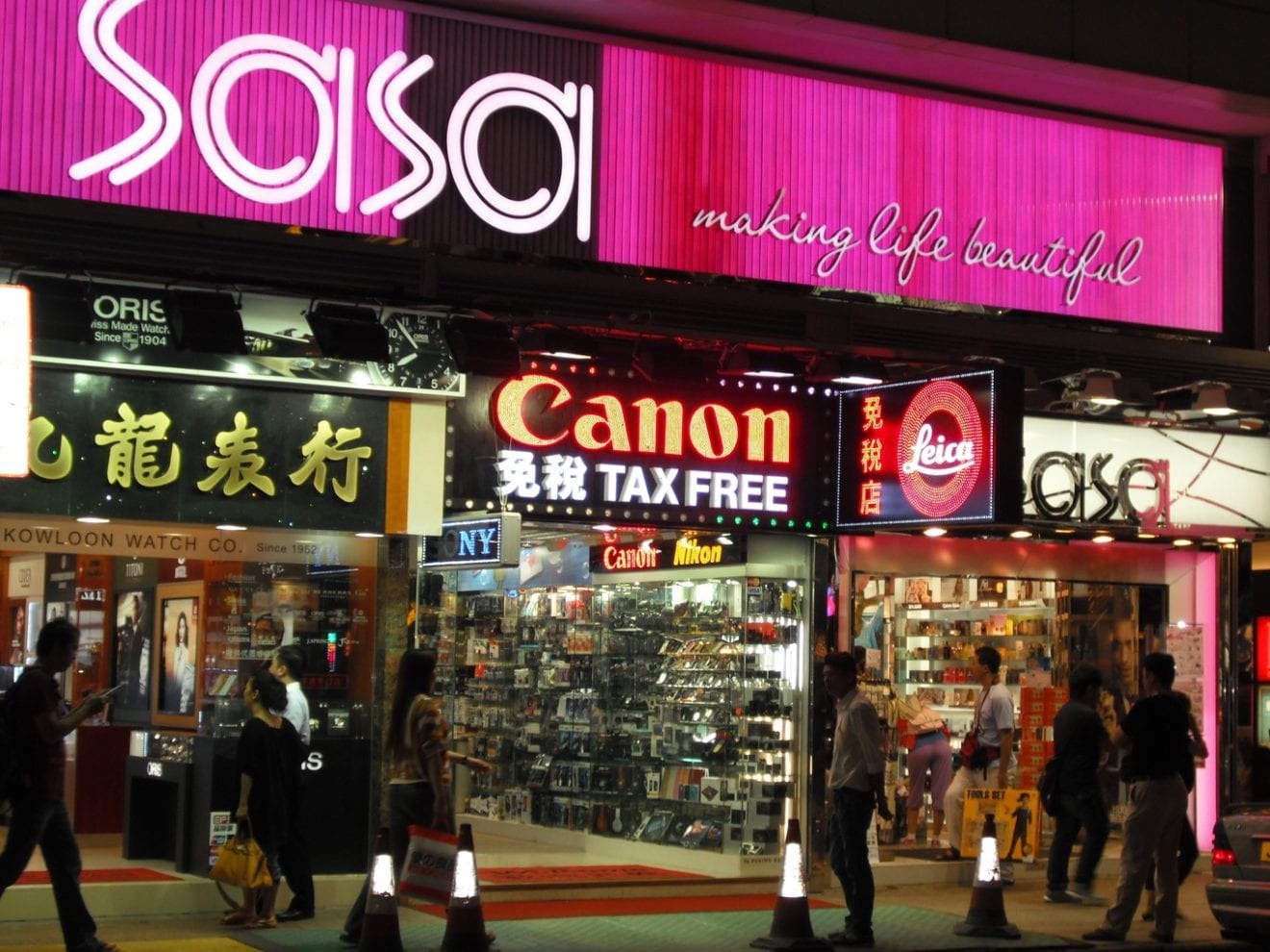
  • Sa Sa to simply accept WeChat funds instore

    Sa Sa to simply accept WeChat funds instore

    Magnificence merchandise retailer Sa Sa is to simply accept Tencent’s WeChat funds in 100 Hong Kong shops.

    Sa Sa thus turns into the primary international retail companion of tencent’s new offline WeChat-based cross-border cost service, TenPay.

    WeChat’s Tenpay permits account holders, principally Chinese language mainlanders, to scan the QR Code on their cell phone utilizing the WeChat app, and shortly make a cost on-line. Now the service is being rolled out offline permitting funds to be made in bodily shops, by comparable means. Each WeChat account holder has a singular QR code inside the app – which may also be used to scan different QR codes to entry web pages, particular presents and an entire vary of different providers and knowledge.

    Sa Sa says the transfer to simply accept TenPay demonstrates its dedication to exploring on-line to offline (O2O) enterprise alternatives.

    “The pioneering act is predicted to show over a brand new leaf within the improvement of offline cellular cost,” Sa Sa stated in a press release.

    “The group has been dedicated to selling O2O enterprise within the final yr, with the purpose of offering clients with a extra complete buying expertise involving a number of channels and touchpoints. The launch of cross-border offline WeChat Cost doesn’t solely show the group’s dedication in enhancing the usual of its providers, but in addition lays a key milestone within the improvement of the group’s O2O enterprise. The group will proceed to introduce new O2O experiences which are handy to clients in order that the group will be capable of seize alternatives and increase its enterprise underneath progressive deployment of various O2O purchasing experiences,” stated Sa Sa.

    “We hope to offer mainland customers of WeChat with a extra handy cost technique for purchasing in Hong Kong by means of our partnership with Sa Sa. In the meantime, Sa Sa’s in depth retail community all through Hong Kong in addition to its numerous buyer base will allow us to successfully promote WeChat Cost, with the goal of extending such revolutionary cellular cost to different retailers and ultimately gaining reputation in Hong Kong. The appliance of WeChat Cost shall be expanded to the remainder of the world following the footprint of Chinese language vacationers. ”

    A Tencent spokesman stated the transfer would supply added comfort for mainland WeChat customers.  “In the meantime, Sa Sa’s in depth retail community all through Hong Kong in addition to its numerous buyer base will allow us to successfully promote WeChat Cost, with the goal of extending such revolutionary cellular cost to different retailers and ultimately gaining reputation in Hong Kong. The appliance of WeChat Cost shall be expanded to the remainder of the world following the footprint of Chinese language vacationers. ”

    Sa Sa launches its WeChat Cost acceptance by giving clients a WeChat Pink Envelope of RMB10 upon a purchase order of HK$100 settled by WeChat Cost on smartphones throughout a promotion interval.

    Stated Dr Man Look, CFO and government director of Sa Sa: “Making good use of know-how is the important thing for native retailers to successfully improve providers and meet the purchasing wants of consumers underneath the ever-changing development of Web and cellular communications know-how. As Tencent’s first companion in introducing cross-border offline WeChat Cost, we consider that extra clients will undertake this progressive cellular cost upon full launch of such service. Clients can take pleasure in a extra handy and nice purchasing expertise with out the necessity to carry money or bank cards.”