Retail News CRM

Tag: tensions

  • Global Tensions Fuel Surge in Vietnam’s Gasoline Prices

    Global Tensions Fuel Surge in Vietnam’s Gasoline Prices

    On Thursday, petrol prices in Vietnam saw a significant hike due to a surge in global fuel prices. The country’s most widely consumed fuel, E10 RON95, experienced a 4.28% price rise, bringing its cost to VND21,430 (US$0.81) per litre.

    There were similar increases across other types of fuel. Biofuel E5 RON92 saw a 5.35% increase, raising its price to VND20,880. Diesel prices saw the most substantial jump, with a 10.5% increase taking the cost to VND25,760 per litre.

    Global Market Trends

    These price hikes have been attributed to the shifting conditions of global fuel markets, which have been trending higher in recent times. The surge in global fuel prices has been exacerbated due to escalating political tensions and conflicts, including those between the U.S. and Iran. In addition, the maritime blockade declared by the Houthi movement in the Red Sea has also contributed to the upward price trends.

    The rise in international fuel prices has had a global impact. For instance, RON95 gasoline prices rose by 11.4% to $115.5 per barrel, while diesel saw a 10.8% increase, taking its price to $150.9 per barrel. Fuel oil, also known as mazut, also experienced a significant increase, climbing by 12.3% to a staggering $546.3 per ton.

    Questions & Answers

    What led to the increase in Vietnam’s fuel prices?
    The increase in fuel prices in Vietnam was a direct result of the surge in global fuel prices, which has been driven by escalating political tensions and conflicts.

    How much did the price of the most popular fuel in Vietnam increase?
    The price of E10 RON95, the most popular fuel in Vietnam, increased by 4.28% to VND21,430 (US$0.81) per litre.

    What are the current global market trends for fuel prices?
    Fuel prices are currently trending higher globally, mainly due to escalating political tensions and conflicts, including the U.S. and Iran conflict, and the maritime blockade declared by the Houthi movement in the Red Sea.


  • Thailand Auto Industry Braces as Car Exports Skid amid Middle East Tensions and EV Competition

    Thailand Auto Industry Braces as Car Exports Skid amid Middle East Tensions and EV Competition

    In May, Thailand’s automotive industry experienced a sharp decline in vehicle production, which fell 17.94% year-on-year to 114,214 units. The slump was primarily due to decreased exports amidst political tensions in the Middle East and reduced demand in key markets. Consequently, the combined production for the first five months of the year fell by 1.13% to 587,759 units, as reported by the Federation of Thai Industries.

    Factors Influencing the Decline

    According to Surapong Paisitpattanapong, an advisor to the federation’s Automotive Industry Club chairperson, production for exports decreased by a staggering 36.20% in May. Completely built-up (CBU) vehicles saw a significant drop, down 26.69% year-on-year to 59,434 units in the same month.

    The federation identified two major contributors to this downturn. The first was the political instability in the Middle East, which resulted in a 66.14% plunge in exports due to the conflict between the U.S. and Iran. The second was the Australian and Oceania market, where exports slipped 37.18% due to stricter carbon control regulations and increased competition from Chinese electric vehicles. Consequently, exports of CBUs fell 24.36% year-on-year to 41.72 billion baht (approximately US$1.28 billion) in May.

    Growth in Domestic Sales and Electric Vehicles

    Contrary to the declining exports, domestic vehicle sales in Thailand increased by 10.6% year-on-year to 57,765 units in May. This was majorly driven by the increasing popularity of battery electric vehicles (BEVs). Electric passenger car sales surged by 61.19% to 18,034 units as consumers sought to mitigate higher fuel costs.

    Over 150 billion baht was invested in the industry in the first five months of the year. Government economic stimulus measures also helped to increase confidence. However, growth in the pickup truck market, a significant segment of Thailand’s automotive industry, was minimal at 0.21%.

    Despite mixed production figures, Thailand’s EV industry remained optimistic. New registrations for BEVs hit 21,619 units in May, marking an increase of 55.14%. The total registered BEVs in Thailand reached 468,757 units as of May 31. Meanwhile, motorcycle production also saw an uptick in May, growing 9.67% year-on-year to 230,691 units.

    Questions & Answers

    What led to the decline in vehicle production in Thailand?
    The reduction was primarily due to a decrease in exports, fuelled by geopolitical tension in the Middle East and lower demand in major markets.

    Which segment of the automotive industry in Thailand saw an increase despite the overall decline?
    Domestic sales and the electric vehicle segment experienced growth, with the latter seeing new registrations rise to 21,619 units in May.

    What is the outlook for the electric vehicle industry in Thailand?
    Despite mixed production numbers, the electric vehicle industry in Thailand is showing positive signs of growth, with increasing new registrations and consumer interest.

  • Vietnam’s Gold Prices Tumble to 8-Month Low Amid Rising Dollar and US-Iran Tensions

    Vietnam’s Gold Prices Tumble to 8-Month Low Amid Rising Dollar and US-Iran Tensions

    Gold prices in Vietnam continued on a downward trend on Wednesday morning, reaching the lowest point since October 5. The Saigon Jewelry Company reported that gold bars fell by 2.64%, now valued at VND140 million (US$5,318.74) per tael. In Vietnam, a tael is equivalent to 37.5 grams or 1.2 ounces.

    The price of gold rings also experienced the same decline, priced at VND140 million per tael. So far this year, gold prices in Vietnam have decreased by 8%.

    Global Gold Market Trends

    On a global scale, gold fell by over 1% on Wednesday, plunging to an 11-week low. This drop in value could be attributed to the rising dollar and oil prices, amid renewed tensions between the United States and Iran. These factors fueled concerns about potential inflation and possible interest rate hikes.

    Spot gold suffered a 1.8% loss, falling to $4,187.59 per ounce, the lowest it has been since March 23. Meanwhile, U.S. gold futures for August delivery were down 1.7% at $4,213.40.

    The rise of the dollar has made bullion priced in the greenback more costly for holders of other currencies. Additionally, the 1% increase in oil prices stoked inflation worries, solidifying the expectation that interest rates would remain high for an extended period.

    Ilya Spivak, head of global macro at Tastylive, noted that the shift in Federal Reserve policy expectations, the rise in yields, and the increase in the dollar have all contributed to the decline in gold prices.

    Questions & Answers

    Why have gold prices in Vietnam decreased?
    The decline in gold prices in Vietnam is part of a global trend, influenced by factors such as the rising dollar and oil prices, as well as geopolitical tensions.

    What factors are influencing global gold prices?
    Global gold prices are being affected by policy expectations from the Federal Reserve, rising yields, and the strengthening of the dollar. Inflation worries and anticipated interest rate hikes also play a significant role.

    How is the rise in oil prices related to gold prices?
    The increase in oil prices can stoke inflation concerns. When inflation is expected to rise, interest rates typically follow suit. Higher interest rates can negatively impact gold prices because they increase the opportunity cost of holding non-yielding bullion.

  • Dollar Gains Momentum Against Dong Amid Rising Global Tensions and Strong US Jobs Data

    Dollar Gains Momentum Against Dong Amid Rising Global Tensions and Strong US Jobs Data

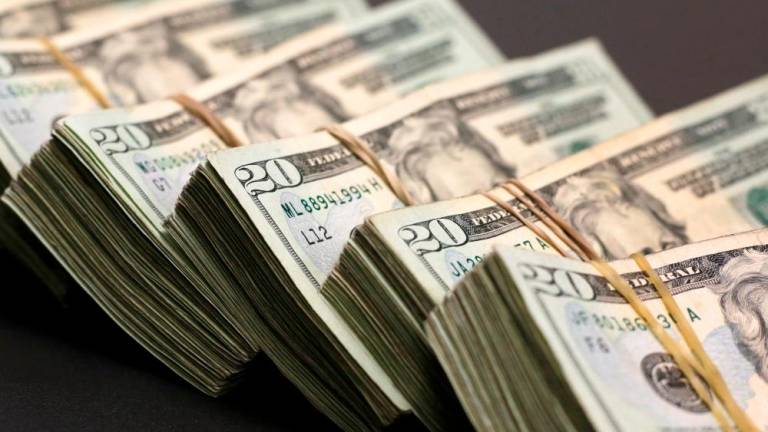
    The U.S. dollar started the week on a strong note, gaining against the Vietnamese dong as well as several other major global currencies. Vietcombank, one of Vietnam’s leading banks, experienced an increase in the value of the dollar, selling it at 26,373 VND, a 0.02% rise from its previous weekend rate. The currency also saw a significant increase in the black market, where it rose by 0.18% to around 26,569 VND.

    Global Market Trends

    The strengthening of the U.S. dollar was not limited to Vietnam but was observed globally, thanks to strong U.S. employment data released the week prior. This, coupled with the precarious U.S.-Iran ceasefire, increased the demand for the dollar as a safe-haven currency.

    In the early Asia trade on Monday, the dollar index, which gauges the strength of the U.S. dollar against a basket of six major currencies, was trading at 98.001. Other major currencies saw a slight decrease in their value against the U.S. dollar. The euro dropped 0.2%, trading at $1.1767, while the yen and the British pound slipped 0.1% and 0.3% to trade at 156.905 yen per dollar and $1.3597 respectively.

    Risk-sensitive currencies like the Australian dollar and its New Zealand counterpart, also known as the kiwi dollar, experienced a dip as well, falling by 0.2% and 0.3% to $0.7234 and $0.5948 respectively.

    This trend was seen amid growing geopolitical tensions, with U.S. President Donald Trump rejecting Iran’s response to a U.S. peace talk proposal. This has cast a shadow over the possibility of a swift end to the ongoing 10-week conflict.

    Questions & Answers

    What contributed to the strengthening of the U.S. dollar?
    The U.S. dollar’s strength was bolstered by strong employment data from the U.S. and the increasing demand for the dollar as a safe-haven currency due to the uncertain U.S.-Iran ceasefire.

    How did other major global currencies perform against the U.S. dollar?
    Several global currencies saw a slight decrease in their value against the U.S. dollar. The euro dropped 0.2%, the yen and the British pound slipped 0.1% and 0.3% respectively. The Australian and New Zealand dollars also fell by 0.2% and 0.3%.

    What are the implications of U.S. President Donald Trump rejecting Iran’s response to a U.S. peace talk proposal?
    The rejection has heightened geopolitical tensions and created uncertainty in global financial markets, thereby increasing the demand for the U.S. dollar as a safe-haven asset.

  • Vietnams Gold Market Slumps as Global Tensions Stoke Inflation Fears

    Vietnams Gold Market Slumps as Global Tensions Stoke Inflation Fears

    On Monday afternoon, there was a further decline in the gold prices in Vietnam, following a nearly 1% decrease earlier in the day. The gold bar prices offered by Saigon Jewelry Company experienced a drop of an additional 0.42% from the morning’s price, settling at VND165.2 million (US$6,276.26) per tael, marking a total loss of 1.37% for the day.

    Local bullion prices currently stand at around VND17 million per tael higher than the global gold prices.

    Changes in Gold Ring Prices

    Similarly, the cost of gold rings experienced a decrease in price, dropping at roughly the same rate and settling at VND164.7 million per tael. In Vietnam, a tael is equivalent to 37.5 grams or 1.2 ounces.

    On a global scale, gold prices experienced a 1% decrease on Monday. This was triggered by President Donald Trump’s rejection of Iran’s recent peace proposal, aimed at ending the ongoing conflict in the Middle East. This rejection has led to a heightened fear of inflation and a prolonged period of high interest rates.

    Spot gold saw a decrease of 1% to $4,667.99 per ounce, following a rise of approximately 2% during the previous week. U.S. gold futures for June delivery experienced a loss of 1.1% to stand at $4,677.80.

    The Impact of the Middle East Conflict on Gold Prices

    The failure to reach an agreement to end the Middle East conflict has led to sustained inflation risks and expectations of high-interest rates. This in turn has put pressure on the non-yielding bullion, which has seen a drop of over 11% since the inception of the war in late February.

    According to Han Tan, chief market analyst at Bybit, there could be more downward pressure on gold prices if the U.S. Consumer Price Index (CPI) prints prove to be hotter than anticipated tomorrow. This could force the Federal Reserve to maintain high benchmark rates for an extended period.

    Questions & Answers

    **What is the current price of gold bars offered by Saigon Jewelry Company?**
    The current price per tael is VND165.2 million (US$6,276.26).

    **How much has the price of non-yielding bullion dropped since the start of the war in the Middle East?**
    The price of non-yielding bullion has dropped more than 11% since the war began in late February.

    **How might the U.S. Consumer Price Index impact the price of gold?**
    If the U.S. Consumer Price Index prints come in hotter than expected, it could result in more downward pressure on gold prices, with the Federal Reserve being forced to maintain high benchmark rates for a longer period.

  • HSBC Profit Falters Amid UK Fraud Charge and Rising Middle East Tensions

    HSBC Profit Falters Amid UK Fraud Charge and Rising Middle East Tensions

    HSBC Holdings Plc recently announced financial results that fell short of projections, impacted by unexpected fraud-related charges in the UK and escalating economic uncertainties due to the Middle East conflict.

    Financial Outcome Below Expectations

    In the first quarter, HSBC’s pretax profit plummeted to $9.4 billion, falling short of the anticipated $9.6 billion. Despite the disappointing results, resilience was observed in the bank’s wealth and Hong Kong sectors. The bank’s net interest income outlook also experienced an upswing, which provided some balance to the outcome.

    The London-headquartered bank reported $1.3 billion in anticipated credit losses for the quarter, a major component of which was a $400 million charge associated with a fraudulent securitization exposure involving a UK financial sponsor. Furthermore, HSBC had to manage a $400 million fallout related to the collapsed mortgage lender MFS.

    The bank also noted a $300 million augmentation in allowances due to a worsening global economic forecast triggered by the initiation of strife in the Middle East.

    Revenue and Net Interest Income Experience Growth

    Despite the challenges, HSBC’s revenue observed a 6% increase year-on-year to $18.62 billion, surpassing estimates. This was largely due to robust wealth fees and other income. Simultaneously, net interest income also experienced an 8% growth year-on-year, reaching $8.9 billion. However, operating expenses mirrored this increase, also growing by 8% as a result of inflation, forex, increased planned expenditure, and performance-related pay.

    The bank flagged potential risks associated with the Middle East conflict such as surging oil prices, heightened inflation, and a significant GDP slowdown. Should these factors transpire, the bank warned of a “mid-to-high single digit percentage” negative impact on its pre-tax profit.

    Although HSBC maintained its target return on tangible equity (RoTE) of 17%, it cautioned that the negative repercussions of the Middle East crisis, if realized, could potentially push RoTE, excluding significant items, below this target in 2026. The annualized RoTE for the reported quarter, excluding items, was 18.7%.

    HSBC expressed confidence in its commitment to deliver $1.5 billion in annualized cost reduction by the end of June 2026. The board also approved its first interim dividend for 2026 of 10 cents per share.

    Questions & Answers

    What was the pretax profit for HSBC in the first quarter?
    HSBC’s pretax profit for the first quarter was $9.4 billion.

    What financial impact was caused by the Middle East conflict on HSBC?
    HSBC noted a $300 million increase in allowances related to a worsening global economic forecast due to the conflict in the Middle East.

    What is HSBC’s target return on tangible equity (RoTE)?
    HSBC has maintained its targeted return on tangible equity of 17%.

  • U.S. Dollar Flexes Strength Against Vietnamese Dong Amid Global Tensions and Anticipation Over Federal Reserve Decision

    U.S. Dollar Flexes Strength Against Vietnamese Dong Amid Global Tensions and Anticipation Over Federal Reserve Decision

    On Wednesday, the U.S. dollar experienced an increase against the Vietnamese dong while maintaining its strength against major global currencies. The Vietnamese commercial bank, Vietcombank, ended up selling the U.S. dollar at VND26,368, marking a 0.008% increase from the previous day. Simultaneously, the dollar posted a 0.27% gain in the black market, where it traded around VND26,737.

    The State Bank of Vietnam’s Role

    In response to these fluctuations, the State Bank of Vietnam raised its reference rate by 0.008% to VND25,113.

    Global Dollar Performance

    Internationally, the dollar strengthened on Wednesday. This shift was in anticipation of an important rate decision by the Federal Reserve. It’s worth noting that this decision was expected to be the last major action under the leadership of Chair Jerome Powell. This decision coincided with ongoing conflict in the Middle East and diminishing optimism for a swift resolution.

    The Impact of Geo-Political Situations

    Efforts to cease the conflict in Iran hit a stalemate, evoking dissatisfaction from U.S. President Donald Trump. His contention is primarily with Tehran’s recent proposal which, in his view, should have addressed nuclear issues from the beginning. This situation made market sentiments volatile, leading to the dollar being positioned as a safe haven.

    Asian currency markets exhibited modest variations due to the public holiday in Japan and impending decisions from several key central banks.

    Performance against Other Currencies

    The U.S. dollar saw a modest overnight gain against a basket of currencies, steadying at 98.57. The Canadian dollar showed a slight uptick to C$1.3676, while the Japanese currency didn’t show significant changes, resting at 159.55.

    Regarding the euro and sterling, both marginally retreated from their highs earlier this month, with the former trading at $1.1716 and the latter at $1.3523. On the other hand, the Australian dollar remained close to a four-year peak, trading at $0.7187. The New Zealand dollar also experienced a slight appreciation of 0.05% to $0.5888.

    Questions & Answers

    How did the U.S. dollar perform against the Vietnamese dong?
    The U.S. dollar increased against the Vietnamese dong, with Vietcombank selling it at VND26,368, marking a 0.008% rise from the previous day.

    What external factors influenced the strength of the U.S. dollar?
    Global factors such as the Federal Reserve’s rate decision and geopolitical tensions in the Middle East, particularly the unresolved conflict in Iran, contributed to the dollar’s strength.

    How did major global currencies fare against the U.S. dollar?
    The Canadian dollar and the New Zealand dollar showed slight appreciation, while the euro, sterling, and the Japanese currency remained largely unchanged. The Australian dollar stayed near its four-year high.

  • US Implements Anti-Dumping Duties Targeting Vietnamese Shrimp Exporters Amid Trade Tensions

    US Implements Anti-Dumping Duties Targeting Vietnamese Shrimp Exporters Amid Trade Tensions

    In a recent decision that has sent ripples through the seafood industry, the U.S. Department of Commerce (DOC) released its 19th administrative review of frozen warmwater shrimp imports from Vietnam. This review, covering shipments between February 1, 2023, and January 31, 2024, has raised eyebrows among exporters, revealing surprising outcomes that are reshaping trade dynamics.

    Unexpected Outcomes for Vietnamese Shrimp Exporters

    The Vietnam Association of Seafood Exporters and Producers (VASEP) announced that the DOC found Thong Thuan Co.—including its Cam Ranh branch—has not sold shrimp below fair value, resulting in a commendable zero dumping margin for the company. However, the situation turned grim for STAPIMEX, which was slapped with a staggering preliminary dumping rate of 35.29%. This hefty rate was also assigned to 22 other companies with separate rate status that were not selected as mandatory respondents, diverging from the customary practice of using a weighted average of the mandatory respondents’ rates.

    VASEP and the affected companies expressed astonishment and concern over the unexpectedly high preliminary rate. “In the 19 years that Vietnam has participated in the administrative reviews of the anti-dumping case, no company has ever been subjected to a double-digit preliminary duty,” the association stated in frustration. This sentiment is compounded by memories of the 12th review, when a preliminary rate of 25.76% assigned to FIMEX was later revised to a mere 4.58% due to calculation errors.

    The possibility of miscalculations looms large as VASEP and the affected enterprises call for a review of the current findings. Confident in its meticulous accounting records, STAPIMEX plans to submit supplementary evidence in a bid to sway the outcome. Both VASEP and the company remain optimistic that the final ruling, expected in December 2025, will accurately reflect the true state of Vietnamese shrimp exports, reaffirming their position against any claims of dumping.

    Though these preliminary results are not final, they have already cast a shadow over U.S. importers, disrupted trade plans, and shaken the confidence of Vietnamese shrimp farmers. This unsettling development emerges amidst the U.S. administration’s broader strategy of imposing high reciprocal tariff policies on Vietnam and other nations, presenting yet another hurdle for the industry.

    VASEP has urged the DOC to meticulously review and reconsider its preliminary calculations, highlighting the necessity for fairness, consistency with previous reviews, and protection of Vietnamese seafood exporters’ interests to ensure stable trade relations between the two countries.

    Vietnam ranks as the fourth-largest supplier of frozen shrimp to the U.S., trailing only India, Ecuador, and Indonesia, with an impressive $691 million in export value last year. As the shrimp saga unfolds, one can only wonder what other surprises lie ahead for this vibrant industry.

    Questions & Answers

    What was the DOC’s preliminary finding regarding Thong Thuan Co.? The DOC determined that Thong Thuan Co. did not sell shrimp below fair value, resulting in a zero dumping margin for the company.

    Why are VASEP and companies concerned about the high dumping rate assigned to STAPIMEX? The 35.29% preliminary dumping rate is unprecedented; VASEP noted that no company has ever faced a double-digit rate in the 19 years of reviews, raising concerns about potential miscalculations.

    What impact could these preliminary findings have on the shrimp industry? The preliminary findings have already unsettled U.S. importers, disrupted trade plans, and shaken the confidence of Vietnamese shrimp farmers, complicating an already challenging trade environment.