Tag: Texas

  • Texas Chicken Set to Conquer Chinese Market with 600+ Stores: The Biggest International Expansion to Date

    Texas Chicken Set to Conquer Chinese Market with 600+ Stores: The Biggest International Expansion to Date

    Texas Chicken, a prominent quick-service restaurant chain, is set to expand its footprint to China. The company plans to inaugurate its first restaurant in the country later in the year, following a significant deal to open over 600 establishments nationwide.

    China: The 27th International Market

    The upcoming debut of Texas Chicken in China signifies its entry into its 27th international market. The first restaurant under this brand will be launched in Shanghai this summer, followed by additional outlets in various locations. The company aims to create a robust presence in the Chinese market by opening more than 600 restaurants throughout the country.

    Strategic Partnership with Deke Shengtang

    To facilitate its successful entry into the Chinese market, Texas Chicken has formed a strategic alliance with Deke Shengtang, a renowned local operator for several quick-service restaurant brands. The partnership entails a franchise agreement that will see the development of 600 or more restaurants across China in the coming years.

    According to Texas Chicken, this franchising agreement marks the company’s most significant international development deal to date, reflecting its long-term confidence in the Chinese market.

    Executives’ Insights

    Roland Gonzalez, the CEO of Texas Chicken, stated, “China is one of the most dynamic and influential consumer markets globally, and we are entering it with a brand primed for connection – boasting big flavour, real value, and a spirit that unifies people.”

    Tim Wadell, EVP of International Business at Texas Chicken, further stated, “The team at Deke Shengtang brings the local expertise and ambition we seek in a partner.”

    The company will release more details about the restaurant design, locations, and future openings in China as the launch date approaches.

    Company Background

    George W Church Sr established Church’s Texas Chicken in San Antonio, Texas, in 1952. Texas Chicken, the sister brand, oversees operations outside the US. The quick-service restaurant chain currently operates over 1400 locations worldwide.

    Questions & Answers

    What is the significance of Texas Chicken’s entry into China?
    Texas Chicken’s entry into China marks its expansion into its 27th international market, representing a significant milestone in the company’s global growth strategy.

    Who has Texas Chicken partnered with for its market entry into China?
    Texas Chicken has formed an alliance with Deke Shengtang, a leading local operator of multiple quick-service restaurant brands, to facilitate its market entry into China.

    What is the expected number of Texas Chicken restaurants in China?
    Following a franchise agreement with Deke Shengtang, Texas Chicken plans to develop 600 or more restaurants across China in the next few years.

  • Texas sues Meta for using its facial recognition technology without Texans’ consent

    Texas sues Meta for using its facial recognition technology without Texans’ consent

    Meta once again needs to defend itself in a lawsuit. The state of Texas, represented by Attorney General Paxton, sues Meta for using its facial recognition technology, which is now shut down, to collect and use for profit the biometric data of Texans without their consent.

    According to Paxton, Meta gathered Texans’ biometric data without their consent ‘not hundreds, thousands, or millions of times—but billions of times,’ and all of these times, Meta violated Texas’ Capture or Use of Biometric Identifier Act and the Deceptive Trade Practices Act.

    In a statement, Paxton said, “Facebook will no longer take advantage of people and their children with the intent to turn a profit at the expense of one’s safety and well-being. This is yet another example of Big Tech’s deceitful business practices and it must stop. I will continue to fight for Texans’ privacy and security.”

    Also, in a statement, a spokesperson for Meta said, “These claims are without merit and we will defend ourselves vigorously.” Furthermore, Meta said that before the shut-down of the facial recognition technology, all users received a notice about the technology and had the choice to give their consent or not when using the facial recognition feature.

    In the past, Meta used its facial recognition technology to scan uploaded photos and tag users automatically. In November 2021, Meta ended the use of its facial recognition technology due to concerns about how it could be used in the future.

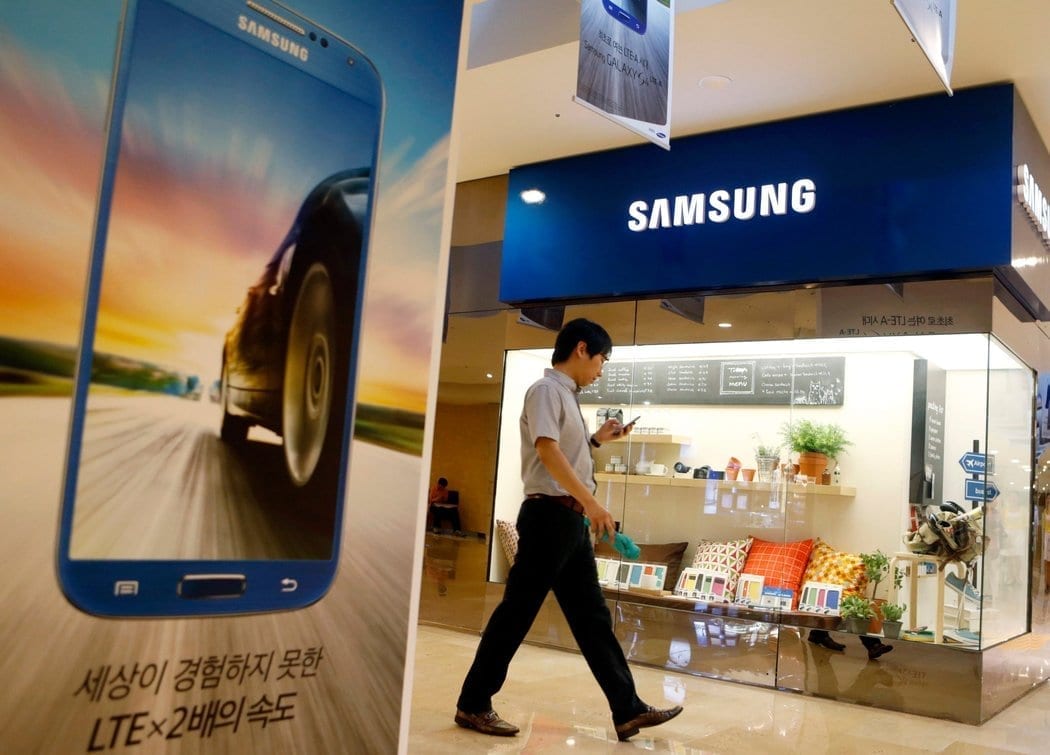
  • Samsung may build $17 billion chip plant in Texas

    Samsung may build $17 billion chip plant in Texas

    Samsung has been searching for a prime location to set up a new multi-billion-dollar chip production plant for a while now, and it’s most certainly happening in the United States. The company already has one semiconductor chip foundry in th U.S., based in Austin, Texas.

    The Korean tech giant has already been reported to be considering Florida, Arizona, Austin, and even New York at different times for the new project, but Samsung didn’t end up sticking to any of those locations for the 17-billion plant.

    Now, we seem to have evidence that Samsung’s most recent target location falls in Taylor, Texas. While nothing has been set in stone, the city has already been offering the company powerful incentives in terms of tax breaks. And we’re talking huge tax breaks—namely 92.5% for the first decade, which will slowly decrease over time after that.

    When interviewed a Samsung spokeswoman said that “A final decision has not yet been made regarding the location.” Samsung had chosen Williamson County in Austin, Texas, for its first chip plant for the stable water and electricity sources available there, as well as similar financial incentives on offer.

    And having already considered Austin once more previously for its second plant, it seems reasonable to say that Samsung definitely seems rather inclined to begin construction in Texas. The Texan Governor, Greg Abbott, is already expected to make a big “economic announcement” at an event today (November 23), at 5PM local time—reinforcing people’s suspicions that it will be about Samsung’s new chip plant.

    The company has already confirmed to state officials that the new project will create about 1,800 jobs in the area, and plans to begin eking out chips in 2024 at the latest, once the location is chosen. We’ll update the article if tonight’s announcement in Texas does bring news of an official location for Samsung’s second U.S.-based chip foundry.

  • Samsung Electronics Close To Finalising $17 Billion Texas Chip Plant

    Samsung Electronics Close To Finalising $17 Billion Texas Chip Plant

    Samsung Electronics Co Ltd is close to finalizing the construction of a $17 billion semiconductor factory in Williamson County in the U.S. state of Texas, three people with knowledge of the matter said. Samsung told Reuters that it is continuing due diligence in multiple locations and that it has yet to make a decision. The factory will make advanced logic semiconductor chips and is likely to create about 1,800 jobs, Samsung previously said in filings to state officials.

    One of the people said though no decision has been made, the Austin suburb of Williamson County is the frontrunner due to the subsidies on offer as well as the likelihood of stable sources of electricity and water. A winter storm shut down at Samsung’s existing chip plant in Austin during the first quarter caused the equivalent of 300 billion to 400 billion won ($254 million to $339 million) of damage to wafer production.

    All three people declined to be identified as they were not authorized to speak with the media. Samsung previously said it would start construction on the new 6-million-square-foot (557,418-sq-meter) plant in January, with production up and running by the end of 2024. The plan comes at a time when the global auto industry faces a significant semiconductor shortage.

    “With the United States turning semiconductors into a strategic material, it is becoming a risk to be concentrated only in Asia,” said Park Sung-soon, an analyst at Seoul-based Cape Investment Securities. “Samsung wants to be on the ground in the U.S.”

    In the global chip contract manufacturing industry, Samsung is second to TSMC which had 52.9% of market share compared to Samsung’s 17.3% as of end-June, according to analysis provider TrendForce.

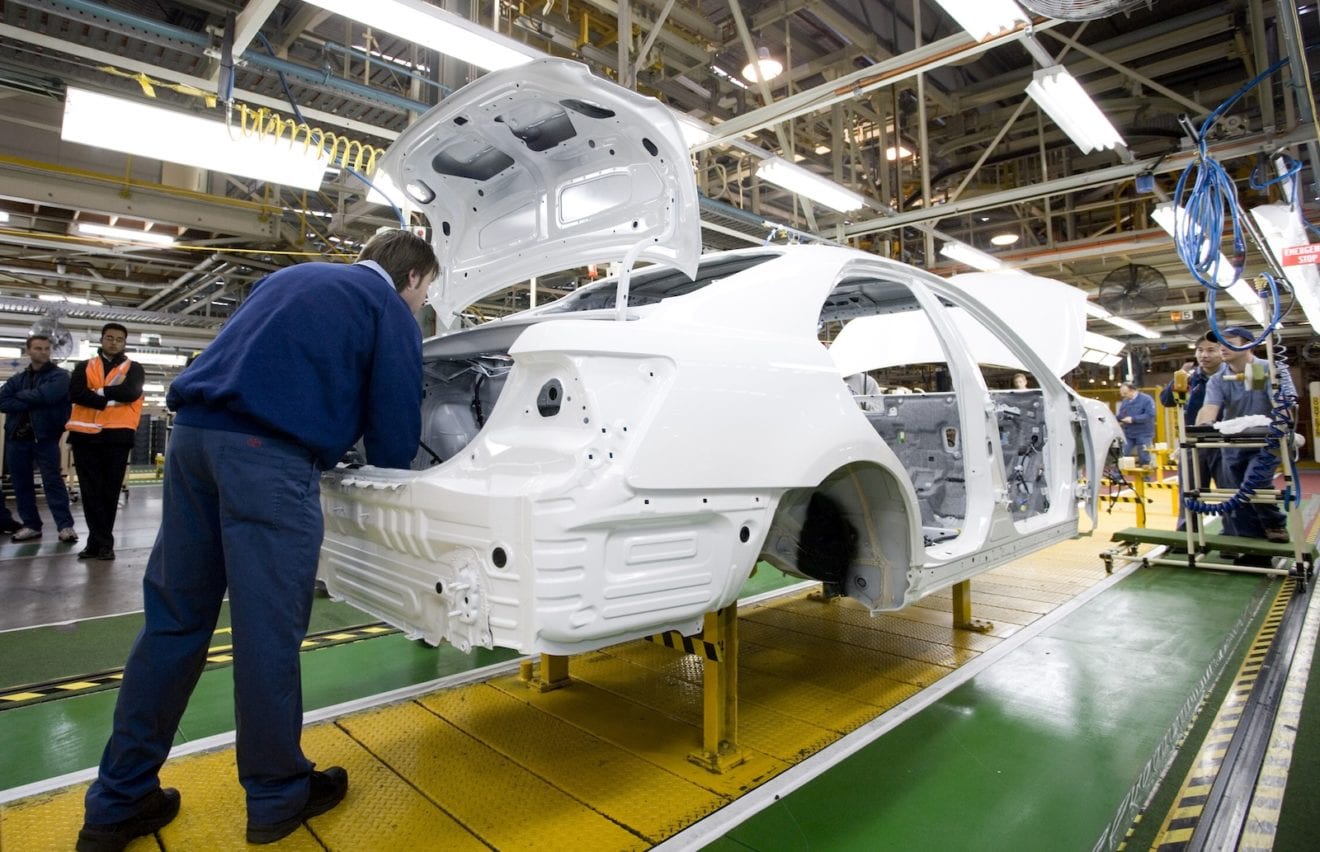
  • Toyota Invests $391 Million In Its Texas Truck Assembly Plant

    Toyota Invests $391 Million In Its Texas Truck Assembly Plant

    Toyota Motor Corp said on Tuesday it was investing $391 million in its pickup truck assembly plant in San Antonio, Texas, as part of the Japanese automaker’s plan to invest $13 billion in its U.S. operations over five years through 2021. The company said the investment will be used to introduce advanced manufacturing technologies at the plant and also to help with the development and education of the local workforce. Christopher Reynolds, Toyota Motor North America’s chief administrative officer, told Reuters the investment could allow the company to eventually boost the plant’s capacity but no decision has been made. Reynolds added that the company was “bullish” on the future of its U.S truck sales, which are up 4% this year. Toyota’s San Antonio truck plant assembles full-size Tundra and mid-size Tacoma pickup trucks and employs more than 7,200 workers.

    The announcement comes a day after U.S President Donald Trump said Washington had struck trade agreements with Tokyo that could be implemented without congressional approval, but stopped short of assuring Japan that new tariffs would not be slapped on vital auto exports. Trump’s announcement left unclear whether he has agreed not to impose threatened national security tariffs on Japanese vehicles and auto parts.

    Avoiding the “Section 232” tariffs of up to 25% was a major motivating factor for Tokyo in negotiating with Washington on trade.Over much of the past year, the scope of talks has narrowed to exclude the automotive sector, the source of most of the $67 billion U.S trade deficit with Japan. Prime Minister Shinzo Abe in August announced an agreement in principle on a deal that covered reductions in tariffs on agricultural and industrial goods, but not autos.

    Abe has repeatedly emphasized the significant U.S investments of Japanese automakers and parts manufacturers to Trump

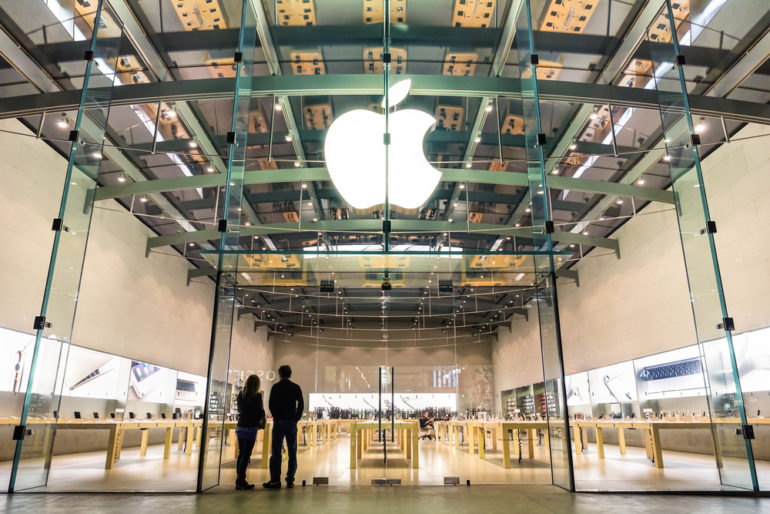
  • Trump says Apple will soon announce plans to build a new apple factory in Texas

    Trump says Apple will soon announce plans to build a new apple factory in Texas

    Stop us if you’ve heard this before. President Donald Trump said that Apple will follow his wishes by opening a U.S. factory in Texas. The president’s comments were made the same day that he disseminated a tweet saying that he would not grant the tech giant a waiver that would prevent it from having to pay import taxes on parts for the Mac Pro imported from China. Trump also pointed out that if Apple made the parts in the states, it wouldn’t face tariffs on them. While Apple designs its products in the U.S., many of them are actually manufactured in China. Even though there is a “truce” in the trade war between the U.S. and China, the already announced tariffs remain in place.

    You might remember that in July 2017, Trump said that he was told by Apple CEO Tim Cook that the company was building “three big plants, beautiful plants.” The only problem with that comment was that it was not true. Apple later denied that any such conversation took place and said that it certainly did not have plans to build any factories in the U.S.

    Trump has had a love-hate relationship with Apple, calling for a boycott of the company back in February 2016. Apple had refused a court order to unlock the iPhone 5c that belonged to San Bernardino shooter Syed Farook. Apple refused to do so because it would have required that the company develop a special operating system for the government; Apple was afraid that the software could get into the wrong hands making all iPhones vulnerable to getting hacked. Trump threatened to stop using his iPhone and said that he would use a Samsung handset until Apple gave the FBI what it wanted. An unnamed Apple executive responded by saying, “Trump’s call for (an) Apple boycott puts the company in standing with other good people he has criticized.”

    In June of 2018, The New York Times reported that Trump had promised Cook that the iPhone would not be subject to any tariffs. Economist and Trump advisor Peter Navarro denied that this promise was made. And while Apple’s most important product has not yet been hit with tariffs, if the current truce doesn’t hold up, the next tier of products from China to receive an import tax is said to include smartphones like the iPhone. According to Morgan Stanley analyst Katy Huberty, tariffs could add $160 to the price of the iPhone XR. That would raise the retail price of the 64GB model from $749 to $909. Last month, Apple tried to warn the president that tariffs on the iPhone could damage the U.S. economy.

    Some of you might be surprised to learn that the tariffs are actually an import tax paid by consumers. In May, President Trump incorrectly tweeted that “tariffs are NOW being paid to the United States by China of 25% on Billions of Dollars worth of goods and services. These massive payments go directly to the Treasury of the U.S.” Either Trump doesn’t know how tariffs work, or the president purposely tried to mislead the country. China does not pay one cent of the tariffs. They are taxes paid by U.S. corporations that can eat them, or pass them along to U.S. consumers by raising prices. Apple, to its credit, has eaten the tariffs imposed on certain iPhone and iPad cases in order to keep the cost to consumers the same. This lowers Apple’s profit margin on those products. So if a tariff is imposed on the iPhone, either Apple will be negatively impacted, or U.S. consumers will be in the form of higher prices for the device.

    Meanwhile, we wouldn’t be holding our breath waiting for Apple to announce a new plant in Texas. It is likely to be found next to the three non-existent factories that Trump said Apple was going to build two years ago.

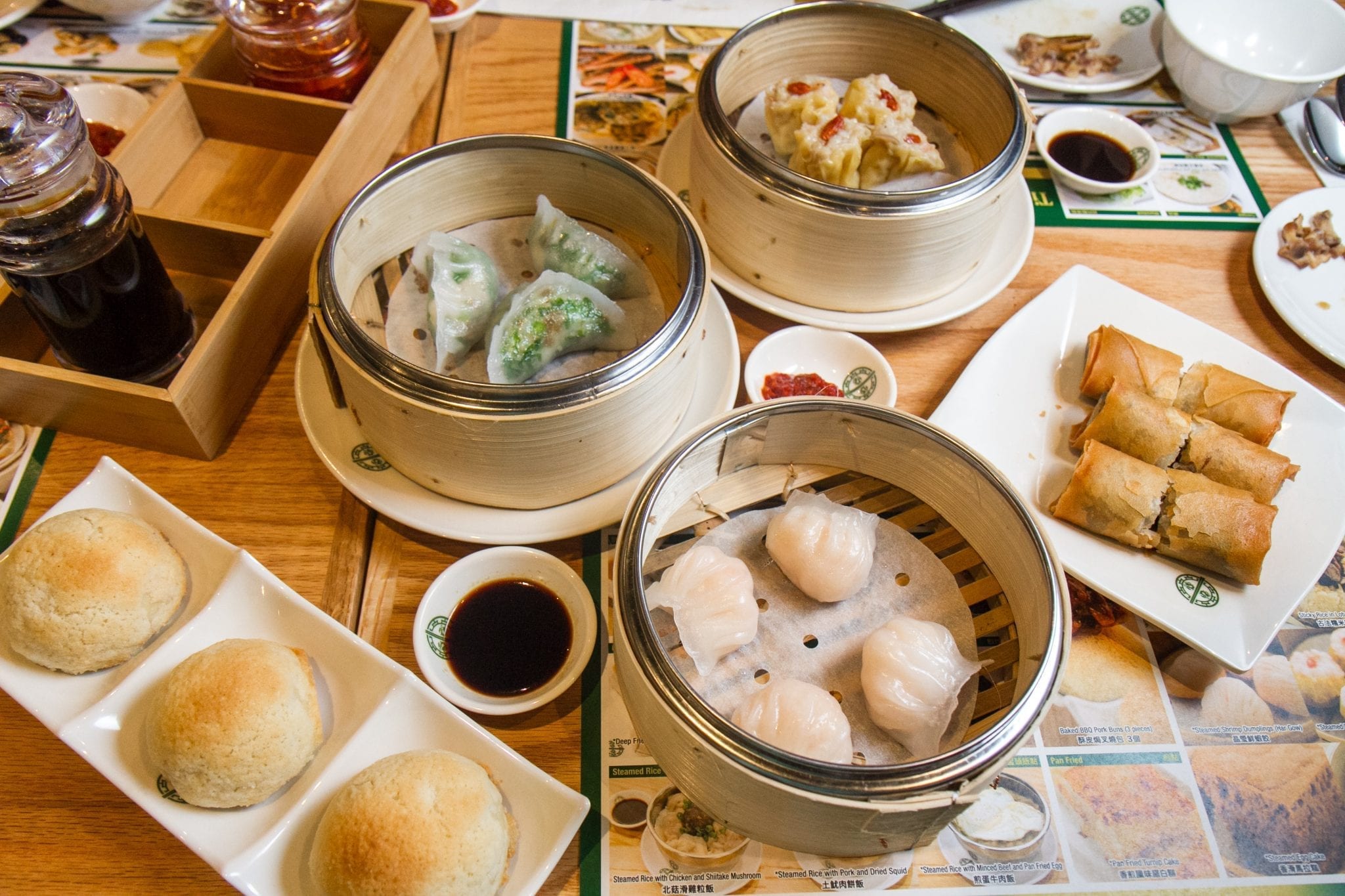
  • Tim Ho Wan to launch in Texas

    Tim Ho Wan to launch in Texas

    Dim sum restaurant brand Tim Ho Wan is launching its first Texas location at NewQuest Property’s Katy Grand development.

    The new Katy store is the group’s fourth US location and is expected to open later this year or early 2020. The lease for the 5160sqft outlet has been signed, with plans to include a Zen garden, bringing total leasing of the first of two buildings for Phase 2 of the Katy Grand development to 100 percent.

    Other tenants at the complex are to include 85°C Bakery & Cafe, Kura’s Revolving Sushi Bar and Kinokuniya Books.

  • Texas Chicken Indonesia opens New Restaurant in Bandung

    Texas Chicken Indonesia opens New Restaurant in Bandung

    A Texas Chicken Indonesia franchisee will be among the first in the world to display the brand’s new look and feel.

    The company’s new ‘Blaze’ concept will make its debut in central Bandung, in a popular town-square style area known as Alun Alun Bandung. Quick Service Restaurant, an affiliate of the Texas Chicken franchisee in Malaysia, Envictus International Holdings Limited (EIH), will be the official franchisee for the new restaurant.

    “This has been an exciting opportunity to introduce a new audience to an ever-evolving brand like Texas Chicken which is known and respected for its quality and superior guest experience,” said Quick Service Restaurant’s country head Daniel Harris Ishak.

    The new Texas Chicken in Bandung is part of a much larger franchise development deal that will bring 80 Texas Chicken restaurants to Indonesia over the next 10 years – mainly in Jakarta, West Java, Banten, Lampung, South Sumatra, and Bengkulu provinces.

    The 150-seat restaurant, located on the first floor of The Kings Shopping Centre, will be the first in Indonesia to feature the new logo, new store design, and the latest international menu.

    “QSR is an extension of one of our most proven franchisees – which made them an excellent choice for piloting this new design,” said Texas Chicken’s executive VP of international business Tony Moralejo.

    “We look forward to bringing our quality food and authentic flavours to our guests in ways that are fresh and engaging.”