Tag: THAAD

  • Retaliations by Beijing for Thaad seem to be easing

    Retaliations by Beijing for Thaad seem to be easing

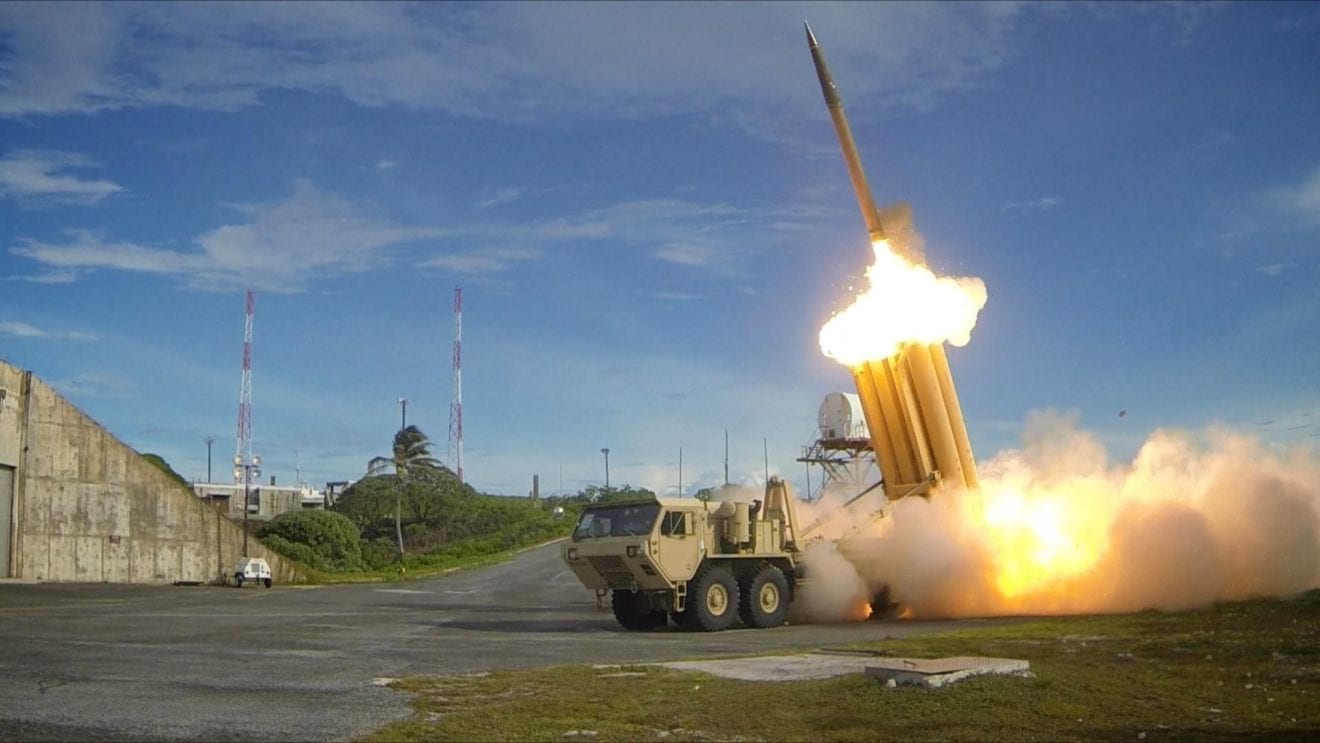
    Since the Moon Jae-in government kicked off, Beijing has been easing up on retaliatory measures for Seoul’s deploying of U.S. antimissile system.

    According to Korean news reports, Chinese custom authorities have reduced the number of Korean products being sampled for import approvals to the level before the decision to deploy the Terminal High Altitude Defense (Thaad) system was made last summer.

    After the Park Geun-hye administration decided to allow a Thaad battery to be set up in the southern region of the country, Beijing intensified inspections of Korean imports, which led to bans of several food items and cosmetics goods.

    Although it never officialy acknowledged that the inspections were retaliation measures for the Thaad deployment, the cause-and-effect phenomenon was understood.

    Other noticeable improvements have taken place in the entertainment field. Popular Korean group Big Bang has reappeared in Chinese online commercials, after being missing for a few months. Shows which were not aired on TV because of featuring Korean actors are now being considered for release in the second half of this year.

    Although no Korean celebrities have yet appeared on Chinese TV or in televised advertisements recently, the lifting of that unofficial ban on Korea-related content seems to be taking place.

    Lotte Mart announced last week that its website in China, which was forced by the government to shut down in March, has reopened.

    “Since the new Korean government came in, a momentum is being felt in China over improving a relationship that seemed to have been heading toward a dead end,” said an official at the Korea Trade-Investment Promotion Agency’s Beijing office. “Although it has only been two weeks since the Moon administration started; and that more time is needed to expect actual changes, signals from the Chinese government have been changing favorably, and business sentiment seems to follow that of the government.”

    The Kotra official said retribution for the Thaad deployment was also felt in Chinese investments.

    “Chinese investors who previously had interest in investing in Korean businesses held back their decisions since Thaad,” the Kotra official said. “The situation hasn’t improved drastically but they are now in a situation where they can start considering opening up.”

    In March, the Industrial Bank of Korea released a report estimating that Korea would likely suffer losses worth US$20 billion if the Chinese government deepened its retaliations for the Thaad system.

    The industries hurt the most are the Korean duty-free and tourism industries, where revenues would shrink to US$11.7 billion compared to the previous year, IBK predicted, while manufacturing exports would see a drop of US$8.3 billion. Cosmetic companies could suffer losses amounting to US$1.4 billion.

    Although the situation seems to be slowly resolving itself, some remain skeptical.

    “We’re still not at a stage where we can say that the situation has ‘improved’, since we haven’t received any detailed messages or notifications from the Chinese government,” said a Lotte Group official.

    “Eighty-seven of our branches are still closed [for alleged fire code and other safety violations],” said a Lotte Mart official. “We are continuously requesting a revaluation of our safety violations but the Chinese government remains silent. Since our businesses have been suspended we haven’t seen any improvement.”
  • Lotte affiliate to raise 360 bln won to cope with THAAD fallout

    Lotte affiliate to raise 360 bln won to cope with THAAD fallout

    A unit of Lotte Group, a South Korean retail giant currently receiving the brunt of China’s apparent economic retaliation in protest over Seoul’s deployment of a U.S. missile defense scheme, said Friday that it plans to raise a total of 360 billion won (US$320 million) via stock sales and loans.

    In a regulatory filing, Lotte Mart, the operator of the group’s hypermarket chain, said its board of directors has decided on the proposal to sell stocks and borrow money.

    The proceeds from the stock offering and loans will be used to cover the costs of buying products and giving wages to its employees in China, according to company officials.

    The China-based retail outlet unit has been teetering on the brink of collapse as protracted business suspension by Chinese authorities is leaving the firm with snowballing losses.

    China has ratcheted up pressure against Lotte, South Korea’s fifth-largest family-controlled firm, since it handed over one of its properties to the Korean military so it can be used as a site for a U.S. Terminal High Altitude Area Defense (THAAD) battery.

    Seoul’s deployment of the THAAD on its soil has angered Beijing, who claims that it will be used to monitor its own military.

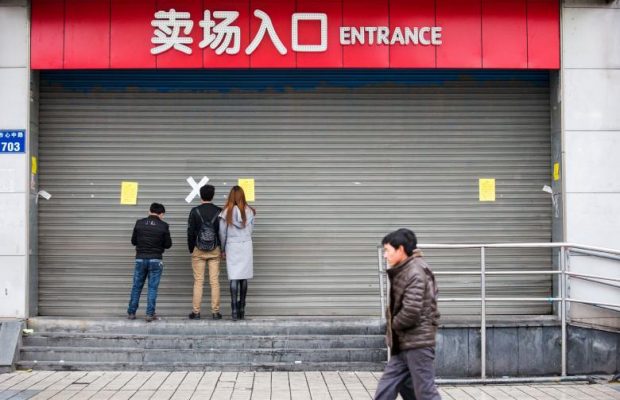
    According to Lotte, 90 Lotte Mart stores operating in China, Lotte’s hypermarket chain, have been placed under suspension or on voluntary suspension as some Chinese consumers continued to stage anti-Korea protests near the stores.

    That represents nearly 90 percent of 99 Lotte Mart outlets in China that have been forced to close down temporarily. Lotte has some 120 retail outlets operating in the neighboring country, including five department stores.

    Lotte is predicted to suffer some 116.1 billion in losses in its Lotte Mart revenue if the shutdown continues for a month. Last year, sales from China-based Lotte Marts reached 1.13 trillion won, or 94 billion won on a monthly basis, according to the firm.

    The profitability of Lotte’s retail outlet business has been expected to further worsen since it is required to pay full wages to local employees for the first month of the suspension.

    The suspension means a serious blow to Lotte, since its China-based business has long been running a deficit even though it has been in the world’s second-largest economy for some 10 years.

    In 2016, Lotte recorded a combined 207 billion won deficit in its department store and outlet divisions, of which about 80-90 percent came from its Chinese units.

    Industry watchers voiced concerns that Lotte may have to consider a pullout given that losses from the shutdowns are growing too fast for the firm to withstand.

    But, in an interview with foreign news media, Shin Dong-bin, chairman of Lotte Group, flatly denied such speculation saying that the company has no intention of pulling out of China.

  • Korea looks elsewhere as Chinese shoppers vanish

    Korea looks elsewhere as Chinese shoppers vanish

    South Korea has stepped up efforts to overhaul its dependence on Chinese shoppers by shifting the focus to other Asian countries.

    The country’s tourism sector – especially the duty-free retail industry – is bearing the brunt of the fallout triggered by the stationing of an advanced US missile defense system in Korea.

    In what appears to be acts of retaliation by Beijing against Seoul’s decision reached in July to host a Terminal High Altitude Area Defense (THAAD) battery, since Wednesday, all package trips from China to South Korea have been banned at the behest of authorities.

    China has vehemently objected to the missile move, saying THAAD’s high-power radar can be used to spy on its own military.

    This week, Chinese airlines have cut back on South Korea-bound flights and Chinese cruises are no longer making stopovers at local ports in popular tourist destinations.

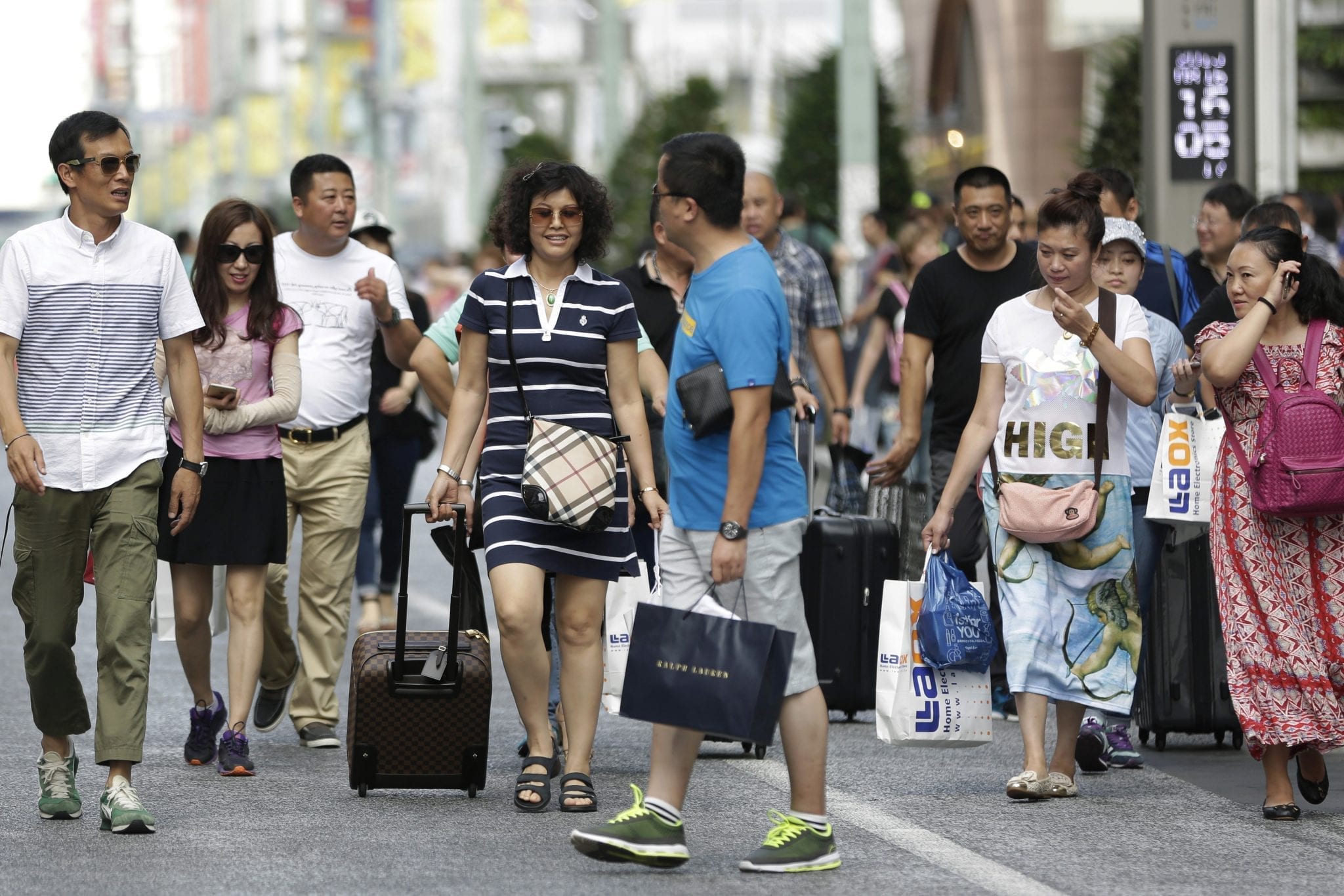
    The slew of restrictions by Beijing has caused concerns among the local tourism and related sectors, such as the duty-free business, as they have heavily depended on Chinese visitors as sources of profit. Not only did they account for half of all foreign travellers last year, but they were big spenders who spent at least US$2000 per person buying things in Korea.

    In an effort to minimise the impact, Korea’s central and provincial governments are pushing to diversify foreign visitors to Southeast Asians and those from the Middle East, where Korean pop stars and TV drama series have gained huge popularity.

    Busan, South Korea’s largest port city, plans to bolster designing various tour programs that target Middle Eastern visitors, who are mostly big fans of Korean dramas, its city government said earlier.

    The city will also work with local businesses to develop medical and cruise tours for visitors from the Middle East, India, Mongolia and Russia.

    North Chungcheong Province, which has Cheongju International Airport, is pushing to increase flights to Taiwan, Vietnam, Russia and Japan.

    Related to such moves to diversify, the culture ministry said Thursday it plans to hold tourism exhibitions in Vietnam and Singapore next month to promote South Korea.

    Aside from state and provincial efforts, local firms, led by duty-free operators, are rushing to diversify their customer bases to tide over current difficulties. Hanwha Galleria, the duty-free unit of Hanwha Group, recently clinched deals with two travel agencies in the Middle East to secure foreign customers.

    It also plans to work with local hospitals to offer medical treatment services for Middle Eastern visitors as part of their tour programs.

    “The purchasing power of Middle Eastern customers on average is 30 per cent higher than people from China. We see (the THAAD issue) as a chance to boost our duty-free business through focusing more on individual tourists and VIP marketing,” Hanwha Galleria said.

  • Politics could add to forces working against Korean cosmetics industry

    Politics could add to forces working against Korean cosmetics industry

    Last week the Korean government announced plan to impose duty free limits to stop third party sales of cosmetics in China, and now, in an unrelated move, the China government’s threats to retaliate over Korea’s deployment of new military defence technology seems to be adding to investor fears.

    Korea has taken a decision to deploy a Terminal High Altitude Area Defence (THAAD) battery, which some experts believe is one of the reasons why investors a dumping shares in Korean companies, a sector that is heavily reliant on exports to China.

    Raising the bar on visas and sanitary regulations

    In the first move, perceived to be a retaliatory step by China authorities, officials recently closed a visa agency catering to Koreans, something that will make it harder for Korean companies to obtain multiple entry visas for doing business in China.

    On top of this, the China trade authorities have also stepped up sanitary regulations governing Korean beauty products, a move that is also likely to put a damper on exports of certain products and make the whole process more difficult.

    “Cosmetics and entertainment stocks have plummeted as China has begun taking steps against Korean companies and individuals doing business on the mainland,” said Daniel Cho, head of research at Daishin Securities, speaking to the Korean Times.

    “The recent decline was largely engineered by the potential THAAD backlash.”

    Those duty free regulations

    Simultaneously, speculation has been growing about the impact of proposed duty free regulations, which are being drawn up to protect the industry, but some experts say this has already had an impact on investors and the value of shares in the country’s big beauty players.

    Last week the Korean customs authorities notified all Korean duty-free retail operators, which include three major operators, that each customer would be limited to buy no more than 50 cosmetic and fragrance products.

    The main objective behind the clamp down is to cut out on the emerging market for cosmetics then be sold on to third-party brokers, and then resold on to other retail channels.

    News of the limit was leaked on the previous Friday and when the Korean Stock Exchange re-opened for trading on Monday, stock prices dropped significantly, with Amore Pacific share prices falling over 2% and LG Household & Health falling 6%.

    In the last few years the rise and rise of Korean cosmetics companies has been attributed to a huge appetite from the China market, but with prices of the products being much higher in China, consumers have taken to shopping holidays in Korea to stock up.

    China drives duty-free cosmetics sales

    Sales of Korean cosmetics have been boosted by chic advertising campaigns, Korean pop and a product innovation pipeline that boasts some of the most cutting edge products available anywhere in the world.

    A large part of this success has been the huge influx of tourism from China, many of whom are going on ‘shopping holidays’ with the main aim of buying up their favourite Korean cosmetic products at a cheaper price than they would pay in China.

    Current figures show that cosmetics make up the lion’s share of Korea’s largest duty free retail chain, Lotte, accounting for 58.9% of sales in the first quarter of this year, and that 70.8% of the company’s overall sales came from Chinese visitors. This up from 63.3% compared to the previous year.

  • Chinese tourists cancel trips to South Korea after THAAD

    Chinese tourists cancel trips to South Korea after THAAD

    Analysts warn of possible blow to tourism, retail industry

    A number of Chinese tourists are cancelling trips to South Korea in the wake of the country’s decision to deploy a missile defense system, a trend which experts say might lead to a blow to South Korea’s tourism industry if it continues, as the sector depends heavily on visitors from China.

    A Beijing while-collar worker surnamed Wang who planned to travel to South Korea in August told the Global Times that although she has already placed a non-refundable payment on a hotel, she was cancelling because of THAAD.

    “After all, there are still a number of travel destinations where I can go,” Wang said.

    Travel agencies in China and South Korea have also noticed the trend.

    Xu Xiaolei, manager of marketing at China’s CYTS Tours Holding Co, said that there have been a handful of clients who cancelled their bookings on a South Korea tour recently.

    “Also, compared with last year, the recruitment process for tours to South Korea during the Golden Week three-day holiday has been slow.” Xu told the Global Times on Monday.

    South Korean tourism industry officials, along with officials from travel agencies that specialize in hosting Chinese tourists in the country, have said that there are “a rising number of Chinese tourists cancelling reservations for August,” according to report on koreabizwire.com.

    The most recent cancellation was for the Chimaek festival, an annual celebration of fried chicken and beer that began on July 27 in Daegu, a city in southeastern South Korea.

    To attract Chinese tourists, the committee came up with a scheduled program in May and organized a train for incoming tourists from Seoul to Daegu, Korea JoongAng Daily reported on July 25.

    The number of Chinese tourists who signed up for the organized tour was 500 by early July, the report noted.

    But in the two weeks since South Korea announced the deployment of the Terminal High Altitude Area Defense (THAAD) anti-missile system, which has received intense backlash among the Chinese public, over 60 percent of the bookings have been cancelled, said the report. As a result, the committee has decided to offer a sightseeing bus instead of the originally planned train.

    Several days ago, Daegu’s 23-year-old sister city in China, Qingdao, East China’s Shandong Province, said it would not be participating in the festival due to “inappropriate timing,” the report noted, citing a Daegu city official.

    The Qingdao government also called off plans for a Daegu government exchange visit to the Qingdao Beer Festival, which started on July 29, amid public outcry to boycott South Korean products, the official said.

    Heavy reliance on Chinese tourists

    Recent years have witnessed a soaring number of Chinese tourists visiting South Korea.

    The number of Chinese arrivals grew 29.4 percent year-on-year to 3.82 million in the first six months of 2016, accounting for 48.8 percent of the country’s foreign visitors, the Korea Tourism Organization data showed.

    Wei Changren, CEO of Beijing-based Jinlu Consulting, told the Global Times on Monday that South Korea’s tourism and travel retail sector rely heavily on visitors from China.

    In the first half of 2016, an estimated 65 percent of the sales volume of Samsung Group’s Shilla Hotel and Resort, the country’s second largest duty free shop, was generated by Chinese visitors, up 45 percentage points over the same period last year.

    “About 70 percent of Chinese tourists travel to South Korea to shop. But average spending by Chinese tourists has decreased recently,” Zhu Zhengyu, an industry analyst with Enfodesk told the Global Times on Monday. “If the number of Chinese visitors continues to drop, the retail industry in South Korea will suffer.”

    Zhu’s opinion is echoed in a report published by Samsung Securities, which reveals that if the number of Chinese visitors shrinks by 1 percent, the operating profit of Shilla Hotel and Resort could fall by 2.6 percent.

    “Besides, considering the size of China’s economy and population, no other country can fill the vacancy if Chinese visitors go away,” Zhu said.

  • Korean cosmetics makers fear losses from THAAD deployment

    Korean cosmetics makers fear losses from THAAD deployment

    South Korean retailers and cosmetics companies are closely watching China’s moves after Korea and the US decided to deploy an advance missile defense system in the country on July 8.

    Neighboring China lodged a swift protest against the decision announced in the morning which is expected to further heighten geopolitical risks.

    Local cosmetics makers and duty-free shops are on alert as they worry about losing Chinese market and consumers who account for a growing portion of their revenues.

    Customers shop for cosmetics at a local duty-free shop.

    On the day, cosmetics stocks like LG Household & Health Care and AmorePacific plunged more than 4 percent.

    “The THAAD issue was a huge blow to Cosmetic stocks earlier this year and it happened again,” an official at a cosmetics company said.

    South Korea’s cosmetics exports to China doubled on-year to US$1.08 billion in 2015, which accounts for nearly 40 percent of global sales, according to the Korea International Trade Association. South Korea is the second-largest cosmetics exporter to China following France.

    “There hasn’t been an immediate impact so far as China hasn’t took any trade-related actions but we still have to keep an eye on the issue,” she said.

    If ties between the two countries weakens, China could tighten regulations on safety and tariff issues, experts said.

    Retail companies, which started to see a rebound in the number of Chinese tourists to Korea after a sharp drop due to the Middle East respiratory syndrome outbreak hit the country last year, are in panic mode.

    “We are worried over the possible drop in the number of tourists coming here if political conflicts drag on for long,” said an official at a duty-free store in Seoul.