Tag: thaco

  • Vietnamese Automaker Thaco Joins Forces with Hyundai Rotem for Advanced Rail Tech Transfer

    Vietnamese Automaker Thaco Joins Forces with Hyundai Rotem for Advanced Rail Tech Transfer

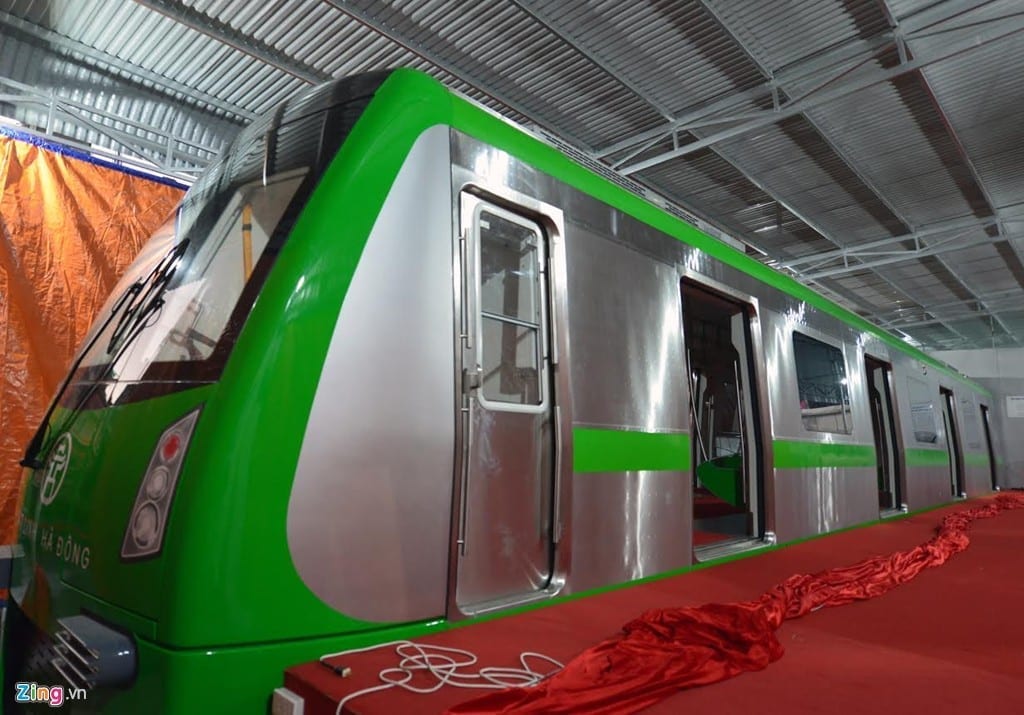
    South Korean company Hyundai Rotem, a subsidiary of the Hyundai Motor Group, has entered into a technology transfer agreement with Thaco, a Vietnamese automaker. The deal will enable Thaco to manufacture rolling stock for metros and high-speed railway systems under its own brand, by using Hyundai Rotem’s advanced technologies.

    Integrated System Development

    In addition to the technology transfer, Hyundai Rotem will aid Thaco in the development of an integrated system encompassing signaling and communications, as well as mechanical and electrical components.

    Thaco’s Railway Industrial Complex

    As part of its expansion plans, Thaco aims to construct a railway industrial complex sprawling across 786 hectares in Ho Chi Minh City. The complex will include a manufacturing zone for rolling stock, a closed-loop test track system, and a repair center.

    Thaco’s agreement with Hyundai Rotem aligns with Vietnam’s current contemplation of strategies to advance its railway industry. Earlier this year, Prime Minister Pham Minh Chinh encouraged Thaco to be actively involved in research, technology transfer, and the production of carriages and locomotives for high-speed rail projects.

    Thaco’s Investment in High-Speed Rail Projects

    In May, Thaco proposed to construct the North-South high-speed rail link, with an estimated projected cost of US$61.35 billion. Thaco proposes to contribute 20% of the total cost, with the remaining funds to be borrowed from banks, with the backing of government interest subsidies.

    Thaco also revealed interest in developing the 47-kilometer Ben Thanh-Long Thanh rail line, which would connect downtown Ho Chi Minh City with the soon-to-be-completed Long Thanh International Airport.

    Established in 1997, Thaco has a diversified portfolio that includes the auto, agriculture, construction, and logistics sectors. The company assembles Kia, Mazda, and Peugeot cars and also manufactures trucks and buses under its own brand.

    Questions & Answers

    What is the significance of the technology transfer agreement between Hyundai Rotem and Thaco?
    The agreement will enable Thaco to use Hyundai Rotem’s cutting-edge technologies to manufacture rolling stock for metro and high-speed rail under its own brand.

    What is Thaco’s plan for the development of the railway industry in Vietnam?
    Thaco plans to construct a railway industrial complex in Ho Chi Minh City, which will include a manufacturing zone for rolling stock. They have also shown interest in developing high-speed rail projects, including the North-South rail link and the Ben Thanh-Long Thanh rail line.

    What sectors does Thaco operate in?
    Thaco has a diversified business portfolio, with interests in the auto, agriculture, construction, and logistics sectors. They assemble Kia, Mazda, and Peugeot cars and manufacture trucks and buses under its own brand.
  • Carmaker Thaco eyes $4.1B circular bauxite complex project

    Carmaker Thaco eyes $4.1B circular bauxite complex project

    Carmaker THACO has proposed a circular economy complex for mining and processing bauxite worth VND103 trillion (US$4.1 billion) in Lam Dong Province.

    The project, called Lam Dong 2 Aluminum Complex, will be carried out in Bao Lam, Da Huoai and Da Teh districts and Bao Loc City.

    It will encompass the entire process of mining bauxite ores, processing them into aluminum, restoring the surrounding environment, planting crops and developing ecotourism in the area.

    Almost one-third of the project’s capital will come from THACO while the remainder will come from loans.

    The complex is divided into three stages, which will be carried out over 10 years, and is expected to produce four tons of aluminum per year once it is put into operation in 2034.

    During the project’s 50-year duration, it will mine bauxite ores to manufacture aluminum in the first 20 years then switch to external bauxite supply in the remaining 30 years, says THACO.

    The carmaker is asking to have a meeting with Lam Dong People’s Committee this month to present its research results and implementation plan for the project.

    It aims to complete the report on the project’s feasibility quickly and submit it to regulators within the first quarter of 2024.

    THACO is a multi-industry corporation that currently operates in automobiles, agriculture, mechanics, logistics, construction, and commerce.

    The firm’s profit after tax was just over VND1 billion for the first six months of 2023, which is barely 25% of the profit it earned in the same period in 2022 when the car industry was mired in difficulties.

    Lam Dong Province has one of the largest bauxite reserves in the Central Highlands region, and there are currently two bauxite plants in the province.

  • Thaco H1 profit falls as auto market remains listless

    Thaco H1 profit falls as auto market remains listless

    Automaker Thaco Group reported first half profits of VND1.076 trillion (US$45.6 million), or less than a quarter of last year’s figure, amid an auto market slump.

    Its profit margin of 2.1% was a fifth of the rate in the first half last year, the company said in a financial report it sent to the Hanoi Stock Exchange.

    The car market has been sluggish since the last quarter of 2022. Thaco Group recently slashed the prices of many models it manufactures and distributes by hundreds of millions of dong (VND100 million = $4,114) to stimulate demand.

    Thaco Group still has a sales target of over 120,000 vehicles for this year, including 96,000 passenger cars, 23,500 trucks and 1,500 buses and mini buses.

    According to statistics from the Vietnam Automobile Manufacturers Association, Thaco sold some 58,000 cars in the first eight months of this year, down 40% year-on-year and only 48.3% of its target.

  • Thaco to sell 10% stake in automobile subsidiary

    Thaco to sell 10% stake in automobile subsidiary

    Truong Hai Group (Thaco Group) is looking for investors to sell a 10% stake in automobile manufacturing and distributing subsidiary Thaco Auto.

    Nguyen Hung Minh, vice chairman of Thaco Group, said Wednesday that the sale of 10 percent of shares in Thaco Auto is meant to raise funds for production and business, investment in expanding the retail system and development of new products.

    Ho Chi Minh City Securities Corporation (HSC), Thaco’s financial advisor, is working on this plan.

    DMeanwhile, Thaco’s ESOP shares issued in 2018 will be converted to make it a public joint stock company. This company plans to list on the market within the next next years.

    According to Nguyen Hung Minh, all production activities of Thaco Auto currently take place at our industrial park in Chu Lai.

    Recently a number of domestic and foreign investors have been working with Thaco and HSC on buying the Thaco Auto shares.

    Negotiations are still ongoing and no decision has been made, but Minh said Thaco expects to complete the deal this year.

    The company, owned by billionaire Tran Ba Duong, is a diversified corporation with interests in automobiles, agriculture, mechanical engineering and supporting industries, construction investment, logistics, trade, and services.

    Thaco Auto manufactures, assembles, and distributes KIA, Mazda, Peugeot, and BMW cars and has nearly 400 showrooms across Vietnam.

    Mazda cars being manufactured at Thaco Auto’s factory in the Chu Lai Industrial Park, Quang Nam Province. Photo courtesy of Thaco Auto

    Thaco Auto has a production complex with seven factories in the Chu Lai Industrial Park (Quang Nam).

    This year it targets sales of over 120,000 vehicles, including 96,000 passenger cars, 23,500 trucks and 1,500 buses and minibuses.

    It expects consolidated revenues of over VND90 trillion, equivalent to nearly $USD3.8 billion, including VND5.2 billion from services.

    In 2022 the company sold 111,440 vehicles to retain the largest market share in the country at 38 percent.

  • Thaco eyes 7% auto sales growth despite headwinds

    Thaco eyes 7% auto sales growth despite headwinds

    Automaker Thaco Group plans to increase its sales 7.7% from last year to 120,000 units this year, with earnings of more than VND90 trillion ($3.80 billion), despite concerns about market challenges.

    The plan calls for the sales of 96,000 passenger cars, 23,500 trucks, and 1,500 buses and minibusses, Chairman Tran Ba Duong said in a letter to employees.

    Duong said many global challenges are expected this year, including rising inflation and tightened spending, adding that Vietnam’s economy is forecast to grow slower while consumption declines.

    Although Thaco is targeting a sales growth, Duong anticipates that the auto industry will see a drop in sales and that competition will be fierce. Lowering costs to bring down prices is a key mission, he added.

    Thaco Group this year begins a new development phase with focus on six sectors: automobiles, mechanics and supporting industry, agriculture, logistics, investment, construction and commerce.

    The company wants the mechanics and supporting industry managed by its subsidiary, Thaco Industries, to be the second biggest business in the group with a target revenue of over VND20 trillion.

    The company expects to manufacture and export 15,000 trailers to the United States, Canada, Mexico and Japan.

    Thaco Industries was established last year with a charter capital of VND12.6 trillion. It expects to spend over VND3 trillion this year to build a manufacturing complex to produce auto parts.

    Agriculture subsidiary Thaco Agri plans to grow 14,000 hectares of bananas, and expects to have over 100,000 cows and 215,000 pigs by the end of the year.

    The construction unit Thadico – Dai Quang Minh will launch 24 new projects this year and complete three projects.

  • Vietnamese car maker plans private share issue

    Vietnamese car maker plans private share issue

    Truong Hai Auto Corporation (THACO) is planning to issue more than 30.3 million shares to a strategic shareholder. The company is currently collecting shareholders’ opinions on a draft resolution to authorize a private placement worth an estimated total of VND3.89 trillion ($167.19 million) to Jardine Cycle & Carriage, a Singaporean diversified conglomerate that specializes in investment in car manufacturing.

    The share issue aims to raise additional capital to finance THACO’s investment and business plans this year, the company said in a circular issued to shareholders last week.

    The 30.3 million shares proposed in this placement make up 1.82 percent of THACO’s current chartered capital, and will raise the Singaporean shareholder’s stake in the car manufacturer to 26.57 percent.

    The share ownership of remaining shareholders will remain unchanged. Currently, 6.8 percent of THACO is owned by billionaire Tran Ba Duong, founder and chairman of the company, and another 60.6 percent by Tran Oanh JSC, a holding company owned by Duong and his family.

    The shares are expected to be issued soon after the State Securities Commission has confirmed the receipt of all documentation regarding the private placement.

    Dong Nai-based THACO was established as an auto and commercial vehicle maker in 1997. It has a plant in central province of Quang Nam and 89 showrooms and 53 dealerships.

    It makes trucks and buses and assembles cars for brands like Kia (South Korea), Mazda (Japan), and Peugeot (France).

    Jardine Cycle & Carriage Ltd, which is part of the Jardine Group of companies, has a diverse business portfolio. They have long term shareholdings in major manufacturers such as Jakarta based Astra International, as well as other interests in the refrigeration, cement and milk business.

    In Singapore, Jardine C&C is best known as the retailer of Mercedes Benz, Mitsubishi, Kia, Citroen, DS, and Maxus motor vehicles. The company has a current market capitalisation of S$14.55 billion (US$10.71 billion).