Tag: the fed

  • Gold prices rise on trade talk optimism; Fed stance limits gains

    Gold prices rise on trade talk optimism; Fed stance limits gains

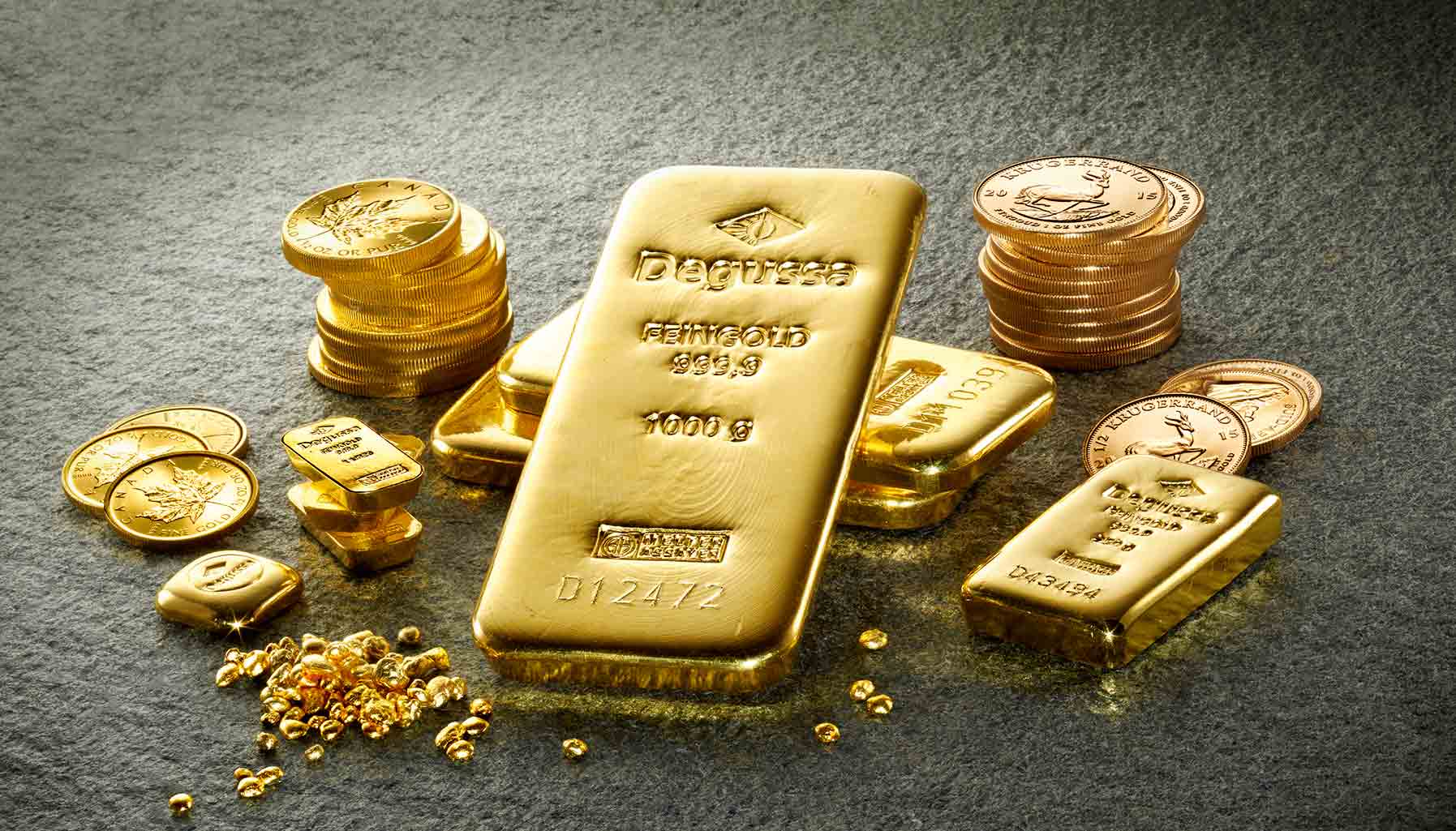
    Gold prices edged higher on Friday as optimism over U.S.-China trade talks pressured the dollar, but signs of the U.S. Federal Reserve raising interest rates again this year capped gains. Spot gold inched 0.1 percent higher to $1,324.59 per ounce at 0408 GMT. The metal was headed for a second straight weekly rise, up almost 0.3 percent. The precious metal had hit a 10-month high on Thursday, but later erased the gains.

    U.S. gold futures were subdued at $1,327.7 per ounce.

    “On a day-to-day basis, gold is a function of changing currency markets and the U.S. dollar. Medium outlook is a lot more to do with geopolitical issues and yields,” said Kyle Rodda, a market analyst with IG Markets.

    The dollar index against a basket of six major currencies was set to decline about 0.3 percent this week, which could be its biggest weekly fall in a month..

    “The fact that gold was overbought-driven very much by a new yield environment and tensions around the world has helped keep gold prices elevated,” Rodda said.

    Gold had hit a 10-month high of $1,346.73 on Wednesday, but minutes from the Fed’s January policy meeting indicated there might in fact be a rate hike this year, erasing gains in gold.

    “Dovish signals from U.S. Federal Open Market Committee officials for the shorter term have kept global equities steady whilst applying bearish pressures on the non-interest bearing asset,” Phillip Futures said in a note.

    Higher interest rates reduce investor interest in non-yielding bullion.

    Markets were looking for further indications of progress on trade talks with U.S. and Chinese negotiators resuming high-level talks on Thursday to hash out a deal that could end their trade war, just over a week before a U.S.-imposed deadline.

    The United States and China have started to outline commitments in principle on the stickiest issues in their trade dispute, marking the most significant progress yet toward ending a seven-month trade war, according to sources familiar with the negotiations, Reuters reported exclusively.

    Indicative of investor sentiment toward bullion, holdings of SPDR Gold Trust, the world’s largest gold-backed exchange-traded fund, fell 0.63 percent to 789.51 tonnes on Thursday.

    Meanwhile, palladium was up 0.3 percent to $1,473.00 per ounce, having surpassed the key $1,500 level for the first time on Feb. 20.

    The autocatalyst metal was on track for a third straight week of gains, up nearly 3 percent. Platinum gained 0.6 percent to $824, and was set for its best week since early January.

    Silver was little changed at $15.81 per ounce. It was on course to snap two consecutive weekly losses.
  • Asian shares rise as Trump boosts US-China talks

    Asian shares rise as Trump boosts US-China talks

    Asian stocks climbed Wednesday as US President Donald Trump said he could extend the deadline for a trade deal with China, appearing to boost the prospects of an agreement. Trump said “things are going well” at preliminary talks in Beijing, where top economic officials will gather Thursday seeking an accord to stop sharp US tariff hikes that could damage the global economy.

    “If we’re close to a deal, where we think we can make a real deal … I could see myself letting that slide for a little while,” the US president said of his March 1 deadline.

    He added that he expects a meeting with counterpart Xi Jinping to happen “at some point”.

    The comments all improved market sentiment on the likelihood of a deal to prevent US tariffs on $200 billion in Chinese imports more than doubling next month.

    Washington is demanding changes from Beijing on what it says are unfair commercial practices.

    Tokyo added 1.5%, Hong Kong rose 0.4% and Shanghai gained 0.2% on the news, following Wall Street’s lead.

    However, some analysts struck a cautious tone, noting that much work needs to be completed before a framework agreement is in reach.

    “The rally in stocks has been based on hope rather than any concrete agreements overnight,” warned Oanda senior analyst Jeffrey Halley, predicting short-term volatility to come as headlines emerge from Beijing.

    Sydney shed 0.3%, with calls for a snap election amid political tensions over refugees adding to underwhelming corporate earnings and subdued metal prices.

    Nonetheless, renewed global investor confidence saw a movement away from the greenback, which has enjoyed a strong rally in the past week, to riskier currencies.

    The pound moved upwards closer to $1.29, despite no-deal Brexit fears as Prime Minister Theresa May was accused by the opposition of “running down the clock” and “playing chicken” with Brussels over talks.

    Trump’s suggestion that another chaotic US government shutdown was now unlikely following a deal struck in Congress over border security further fuelled risk appetite.

    The deal to offer nearly $1.4 billion for construction of a Mexico border wall, as well as other security measures, fell far short of Trump’s demands but has been presented as a workable compromise.

    “I don’t think you’re going to see a shutdown,” said the president.

    Elsewhere oil continued its climb after heavyweight Saudi Arabia slashed output and exports fell in crisis-hit Venezuela.

  • Malaysian banks to maintain earnings potential this year

    Malaysian banks to maintain earnings potential this year

    Analysts believe that the banking sector will be able to maintain its earnings potential this year, as margin pressure is expected to ease and continued loans growth with stable asset quality. MIDF Research said while the industry’s loans growth moderated to 5.6% year-on-year (y-o-y) as at December 2018 due to moderation in business loans and loans for the purchase of residential properties, the growth was still slightly above its expectations.

    “As for CY19, we expect a moderation in loans growth to 4.7% y-o-y due to the high base effect. We also believe that deposits growth will moderate to 5.3% y-o-y due to lower growth in fixed deposits growth this year,” the research house said in a note.

    “This also means that there will be accretion in value for banks’ book value. Hence, we maintain our ‘positive’ view on the sector,” it added.

    Overall, MIDF Research said it is cautiously optimistic of the banking sector continuing its solid performance in 2019.

    Given the current market conditions, the research house said its top picks for the sector are Maybank, CIMB and Public Bank.

    In a separate note, AmBank Research said it expects that the foreign fund inflows into emerging markets would benefit the share prices of the liquid banking stocks as the US Fed rate hike is tapering off.

    Therefore, the research house said it maintained its “overweight” stance for the sector with “buy” calls on RHB Bank, Public Bank, Alliance Bank, BIMB Holdings, Maybank as well as MBSB. Its tops picks include Maybank, Public and RHB Bank.

    AmBank Research noted that Maybank’s earnings are well diversified and the bank is still recording positive JAWs (a technical term that denotes income growth exceeding that of expenses) with growth in total income outpacing expenses.

    It added that Maybank’s net interest margins could also improve further ahead with the lowering of its funding cost as the group releases the excess liquidity built-up in the first half of financial year 2018 (1HFY18).

    “Meanwhile, dividend yield for the stock continues to be attractive relative to peers with its high payout ratio while potentially offering investors higher returns with the reinvestment of their dividends into additional shares under the DRS (dividend reinvestment scheme),” it added.

  • Asia stocks quiet, dollar firm after upbeat US job data

    Asia stocks quiet, dollar firm after upbeat US job data

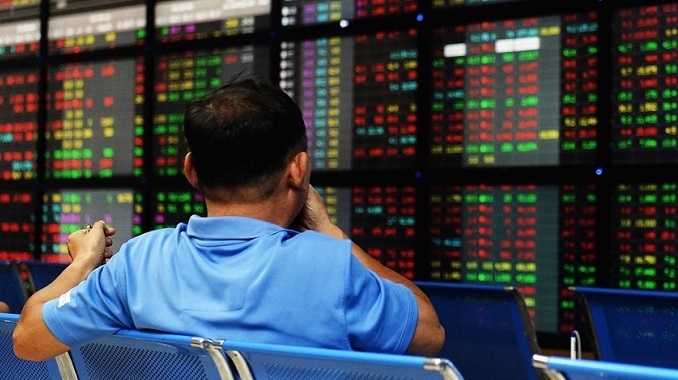
    Asia stocks hovered near four-month highs on Monday after a mixed performance on Wall Street at the close of last week, while the dollar firmed against the yen following strong US job and manufacturing data. MSCI’s broadest index of Asia-Pacific shares outside Japan was almost flat. It had scaled a four-month peak on Friday along with a surge in its global peers.

    Trade was subdued with many of the region’s markets closed for the Lunar New Year. China’s financial markets are closed all week, while those in South Korea are shut until Thursday.

    Hong Kong’s Hang Seng, which is trading for only half a day, edged up 0.2%.

    Japan’s Nikkei added 0.5%.

    On Wall Street on Friday optimism from a surge in January US job growth was offset by a weaker-than-expected outlook from Amazon.com Inc that battered retail stocks. The Dow nudged up 0.26% while the Nasdaq shed 0.25%.

    “Key points for the markets this week will be how the remaining US corporate earnings releases turn out, and whether they are in line with recent upbeat data,” said Junichi Ishikawa, senior FX strategist at IG Securities in Tokyo.

    “While corporate earnings and fundamentals remain key, political developments, notably the US-China trade situation, remain potential risk factors,” he said.

    A US Labor Department report on Friday showed nonfarm payrolls jumped by a stronger-than-forecast 304,000 jobs last month, the largest gain since February 2018.

    That report, along with better-than-expected ISM manufacturing activity numbers for January, pointed to underlying strength in the world’s biggest economy.

    “After last week’s risk appetite revival, the data pulse and the tone of Fed speakers will be important. For the Goldilocks market to continue, we need to find a delicate balance between improving data and still-neutral central banks,” strategists at ANZ wrote.

    Global equity markets performed strongly last week after the Federal Reserve pledged to be patient with further interest rate hikes, signalling a potential end to its tightening cycle.

    Friday’s robust economic data triggered a sharp rebound in US Treasury yields, in turn lifting the dollar.

    On Monday, the US currency was a shade higher at 109.555 yen after advancing 0.6% on Friday.

    The euro was little changed at $1.1456 after getting pulled back from a high of $1.1488 on Friday.

    The Australian dollar was mostly steady at $0.7244 after slipping 0.4% the previous session.

    The benchmark 10-year U.S. Treasury yield was at 2.686% after climbing nearly 6 basis points on Friday to pull away from a four-week low of 2.619% earlier last week.

    West Texas Intermediate (WTI) US crude oil futures extended Friday’s rally and were last up 0.3% at $55.42 per barrel.

    On Friday, WTI futures had rallied 2.7% on the upbeat US job report, signs that Washington’s sanctions on Venezuelan exports have helped tighten supply and data showing US drillers cut the number of oil rigs.

  • Gold scales 8-month peak on Fed rate pause hopes, trade woes

    Gold scales 8-month peak on Fed rate pause hopes, trade woes

    Gold prices edged up on Wednesday to hit their highest since May, supported by uncertainty over U.S.-China trade relations and expectations the U.S. Federal Reserve will keep rates on hold later in the day. Spot gold was up 0.2 percent at $1,313.91 per ounce by 0245 GMT, after touching its highest since May 15 at $1,314.10 early in the session. U.S. gold futures rose 0.3 percent to $1,312.30 per ounce.

    “For the short-term gold is going to move higher as the Federal Reserve will have a dovish tone, which should weaken the dollar and give gold a bit of a move up,” said INTL FCStone analyst Edward Meir.

    The absence of an agreement in U.S-China trade talks should also benefit gold, he said.

    Investors are waiting on the Federal Reserve’s policy decision later in the day, with expectations officials will reinforce their recent dovish stance given a stalemate on global trade, signs of a slowdown in the U.S. economy, and waning business and consumer confidence.

    The Fed raised interest rates four times last year.

    Investors are also concerned that criminal charges against China’s Huawei Technologies Co. Ltd. for violating U.S. sanctions against Iran could complicate U.S.-China trade talks.

    China’s Vice Premier Liu is due to meet with U.S. Trade Representative Robert Lighthizer later in the day.

    “Gold also looks good on the charts … Physical demand seems to be improving in some markets and ETF buying has been increasing. In general the path of least resistance is probably higher from here,” Meir said.

    Underscoring investor interest in the bullion, holdings of SPDR Gold Trust, the world’s largest gold-backed exchange-traded fund, rose 1 percent to 823.87 tonnes on Tuesday, to their highest since June.

    SPDR gold holdings have risen 4.6 percent so far this month, their best since September 2017.

    “A combination of falling treasury yields, anxiety over Brexit and Venezuela is all helping gold,” said Nicholas Frappell, global general manager at ABC Bullion.

    British lawmakers rejected most amendments that aimed to keep Britain from leaving the European Union without a deal, reviving worries of a chaotic withdrawal from the trading bloc that would damage the UK economy.

    Silver rose 0.3 percent to $15.88 per ounce, having hit its highest since July 2018 at $15.92 in the prior session.

    Palladium fell 0.2 percent to $1,343.50, while platinum was up 0.4 percent at $813.

  • Dollar eases as focus shifts to Fed meeting

    Dollar eases as focus shifts to Fed meeting

    The dollar eased versus most of its peers on Monday as investors turned their attention to this week’s Federal Reserve policy meeting, with traders wagering policymakers will signal a pause in their tightening cycle. The Federal Open Market Committee meets between Jan 29-30, and Chairman Jerome Powell is widely expected to acknowledge growing risks to the US economy as global momentum weakens.

    The dollar fell 0.2% versus the offshore yuan to 6.7406. The rally in the yuan also fuelled a bounce in the Australian dollar, which gained 0.18% versus the dollar to $0.7195. Kiwi dollar strengthened by 0.3% to $0.6859.

    “The general direction for the dollar is still down and markets will be taking cues from the FOMC this week,” said Sim Moh Siong, currency strategist at Bank of Singapore.

    “The Fed will most likely keep rates steady this year given the state of economic growth outside the US”

    The dollar index, a gauge of its value versus six major peers was marginally lower at 95.74, after falling 0.8% on Friday.

    A deal to reopen the US government for now after a prolonged shutdown also reduced investor demand for the safety of the greenback.

    ‘The re-opening of Federal government after one-month shutdown fuelled ‘risk on’ rally in the US equities and slashed demand for safe-haven currency like USD, leading to sharp decline of the dollar index last Friday,” said Margaret Yang, markets analyst at CMC Markets.

    Over the past two months or so, Powell and several other Fed policymakers have taken a more cautious approach on further monetary tightening, leaving the dollar underpowered after it enjoyed a boost from the Fed’s four rate increases last year.

    Traders are bearish on the dollar for 2019.

    Amid a weakening global economy and US-Sino trade tensions, the US central bank is widely expected to hold rates steady this year to avoid hurting growth at home. Interest rate futures markets are pricing in no rate hikes for 2019.

    Investors are also anxiously waiting news from high-level US-China trade talks on Tuesday and Wednesday to see if the world’s largest economies can reach a compromise that will end their trade war. President Donald Trump has threatened to hike tariffs on Chinese goods if there is no significant progress in the negotiations.

    The yen added 0.2% in early Asian trade at 109.34.

    The dollar has gained around 1.2% on the yen over the last two weeks. Not helping the yen was the Bank of Japan’s downgrade of its inflation forecasts last week when it also maintained its accommodative monetary policy, as widely expected.

    Moreover, Japanese investors have been net buyers of foreign bonds over the last few weeks, stoking demand for dollars. This likely explains why the safe-haven yen has not appreciated during this period even though risks of a global economic slowdown have rattled investor sentiment.

    The euro was marginally higher at $1.1411.

    The single currency managed to cling on to a 0.4 percent gain made last week despite the European Central Bank downgrading its growth forecasts for the near term.

    Growth data out of Europe’s economic powerhouses such as Germany and France has been weaker-than-expected and analysts expect the ECB to remain dovish for an extended period.

    Traders believe Europe’s slowdown and a dovish ECB are priced into the euro, which has traded in a $1.12-$1.16 range over the last three months.

    Sterling was marginally lower, fetching $1.3193.

    Cable gained 2.5% last week after a report in the Sun newspaper that Northern Ireland’s Democratic Unionist Party had privately decided to offer conditional backing for British Prime Minister Theresa May’s Brexit deal this week.

    However, Ireland’s Deputy Prime Minister Simon Coveney said on Sunday the backstop was already a compromise drawn up to meet May’s negotiating red lines, and the EU and Ireland were united in the view it “was not going to change”.

    Analyst expect sterling to remain volatile. Britain is set to leave the European Union on March 29, but the country’s members of parliament remain far from agreeing a divorce deal.

  • Higher Fed interest rate could weaken Vietnamese currency

    Higher Fed interest rate could weaken Vietnamese currency

    The U.S. recent interest hike might result in a high demand for U.S. dollars in Vietnam, weakening the local currency further, experts say. The U.S. Federal Reserve Wednesday raised its interest rates for the fourth time this year to 2.25-2.5 percent. The Fed has projected two more hikes next year.

    Every time the Fed raises its interest rate, the interest rate for the greenback will increase at international banks, economist Nguyen Tri Hieu said.

    He said that with the interest rate on dollar accounts at Vietnamese banks at zero percent currently, investors might look to deposit their money in international banks for at least 2 percent.

    “This could result in a bleeding of dollars which could lead to a lower supply of the greenback in Vietnam.”

    Hieu added that the smaller supply of dollars will increase its exchange rate against the dong.

    The Fed interest rate increase will pressure the USD-VND exchange rate, as the dollar strengthens further over the dong.

    Local banks will push their interest rates up to prevent their customers from exchanging local currency to the U.S. dollar, he said.

    According to Ngo Dang Khoa, HSBC country head of global markets, another risk is that the U.S. dollar is forecast to be stronger next year, making a weaker dong a high possibility.

    Economist Hieu said that a strong dollar will also increase its exchange rate against the Chinese yuan, which will create even greater pressure on the dong.

    If the dong value remains unchanged, it will become stronger against the yuan, and Chinese exports to Vietnam could increase, resulting in a higher trade deficit than Vietnam has already has with the country, he said.

    However, other observers have said that as the fourth hike has been predicted, the Vietnamese market has prepared itself for the new interest rate and short-term impacts could be mitigated.

    Khoa with HSBC also said that there won’t be major responses from the Vietnam market following this hike, especially the forex market, as investors have already expected the interest rate to be raised.

    The local finance market won’t have to bear major impacts because of the raise, as the State Bank of Vietnam has recently taken measures to control the exchange rate and interest rate to stabilize the market, he said.

    The dong has fallen by some 1.57 percent, against the greenback since the beginning of the year. The dong hit 23,419 to the dollar on Friday.

    Prime Minister Nguyen Xuan Phuc had said in August that the devaluation of the dong needs to be kept within a 2-percent band this year compared with the end of last year.

  • S-Reits are safe havens amid uncertainty

    S-Reits are safe havens amid uncertainty

    Amid the economic uncertainty caused by falling oil prices and slowing growth in China, Singapore-listed real estate investment trusts (S-Reits) are safe havens, DBS Group Research said yesterday.

    S-Reits have outperformed the local benchmark Straits Times Index and real estate developers so far this year, DBS analysts Derek Tan and Mervin Song wrote in a report.

    Like many sectors, S-Reits have fallen in value, but not as sharply as most others. S-Reit unit prices are down by about 3 per cent overall since the start of the year, while the STI has plunged by a much more dramatic 11 per cent.

    These trusts are likely to continue putting in a “firm” performance in the near term, the analysts wrote, especially as increasing expectations of a delay in further interest rate hikes by the United States Federal Reserve will have a positive impact on share prices in general.

    The Fed lifted interest rates in December for the first time since 2006, and the DBS forecasters expect the central bank to raise rates four times throughout this year.

    But the Fed has indicated that it has grown cautious after its December move, as the slump in oil prices has made it harder for it to meet its inflation targets, implying that the next rate hike could be delayed.

    The longer the Fed takes to raise rates, the better for Reits as it will keep their borrowing costs low.

    “While higher interest rates are a potential risk in the medium term, we remain comforted by S-Reits’ conservative capital strategies… which will mitigate the impact of higher refinancing costs when it occurs,” the DBS analysts said.

    On average, locally listed Reits have a gearing of 34 per cent, which is “manageable”, they noted.

    S-Reits are trading at attractive valuations, which make it a good time for investors to jump in and lock in some yields, they added, saying that S-Reits are trading at 0.9 time price to book and offer investors a yield of 7.1 per cent.

    “We believe current valuations are attractive re-entry levels and believe that large caps are likely to benefit as investors turn yield-hungry in a tepid growth environment,” they said.

    Their favourite S-Reits are “those with the opportunity to surprise on the upside through acquisitions or portfolio-specific catalysts”, the DBS analysts added.

    Their top picks are Ascendas Reit, Mapletree Greater China Commercial Trust, Mapletree Commercial Trust, Frasers Centrepoint Trust and CapitaLand Retail China Trust.

  • Dollar drops against yen as risk-off mood persists

    Dollar drops against yen as risk-off mood persists

    The dollar weakened against its main rivals Wednesday after a spate of weak economic data and the Federal Reserve’s Beige Book painted a troubling picture of the U.S. economy.

    The ICE U.S. Dollar Index DXY, +0.12% a measure of the dollar’s strength against a basket of six rival currencies, was down 0.5% to 94.2800.

    U.S. producer prices fell 0.5% in September, outpacing an expected decline of 0.2% from a survey of economists conducted by MarketWatch, while retail-sales increased by just 0.1% in September. A measure of retail sales in August was revised lower to show no change.

    The Fed’s Beige Book, a collection of anecdotes from business leaders in each of the Fed’s 12 regions, indicated some slowing in the economy.

    Emerging-markets currencies also put in a strong performance Wednesday, with several — including the Brazilian real USDBRL, -0.0525% South African rand USDZAR, -0.2130%  and the Turkish lira USDTRY, -0.0686% — rising nearly 2% against the dollar.

    “The combination of [the retail sales and PPI] and the pretty awful data we’ve seen thus far in September is pushing back when the Fed will hike, lowering the odds of December and raising the odds of 2016,” said Mark McCormick, a global FX strategist based in New York.

    The U.S. currency was slightly weaker against the euro EURUSD, -0.0349% which rose to $1.1473, up 0.8% from $1.1378 late Tuesday in New York — its highest level since Sept. 18, according to FactSet data.

    The greenback USDJPY, +0.25%  was at ¥118.75, down 0.8% from ¥119.74 Tuesday, its weakest level since Oct. 2.

    Concerns about stubbornly low inflation and deteriorating jobs growth caused two voting members of the Fed’s rate-setting committee — Fed Governors Lael Brainard and Daniel Tarullo — to warn against a premature rate increase during speeches earlier this week. While Brainard refused to speculate about timing, Tarullo said outright that he doesn’t expect the Fed to hike in 2015.