Tag: The shanghai stock exchange

  • What’s Driving China’s Stock Market Selloff?

    What’s Driving China’s Stock Market Selloff?

    Just as they did when Chinese stocks swooned in July, global investors appear to be learning the right lessons about China for all the wrong reasons. Investors who can see through the haze and confusion can keep picking up bargains in undervalued markets like Indonesia.

    First and foremost, the latest stock-market turmoil does not mean that China’s economy is in a meltdown. Yes, China’s economy is still slowing as investment retreats and exports decline. Spending by China’s emerging middle class remains a bright spot. But the service sector’s growth isn’t powerful enough to counteract the slowdown in China’s industrial sector. Most predictions are for growth of roughly 6.4% this year, slightly below the government’s 6.5% target.

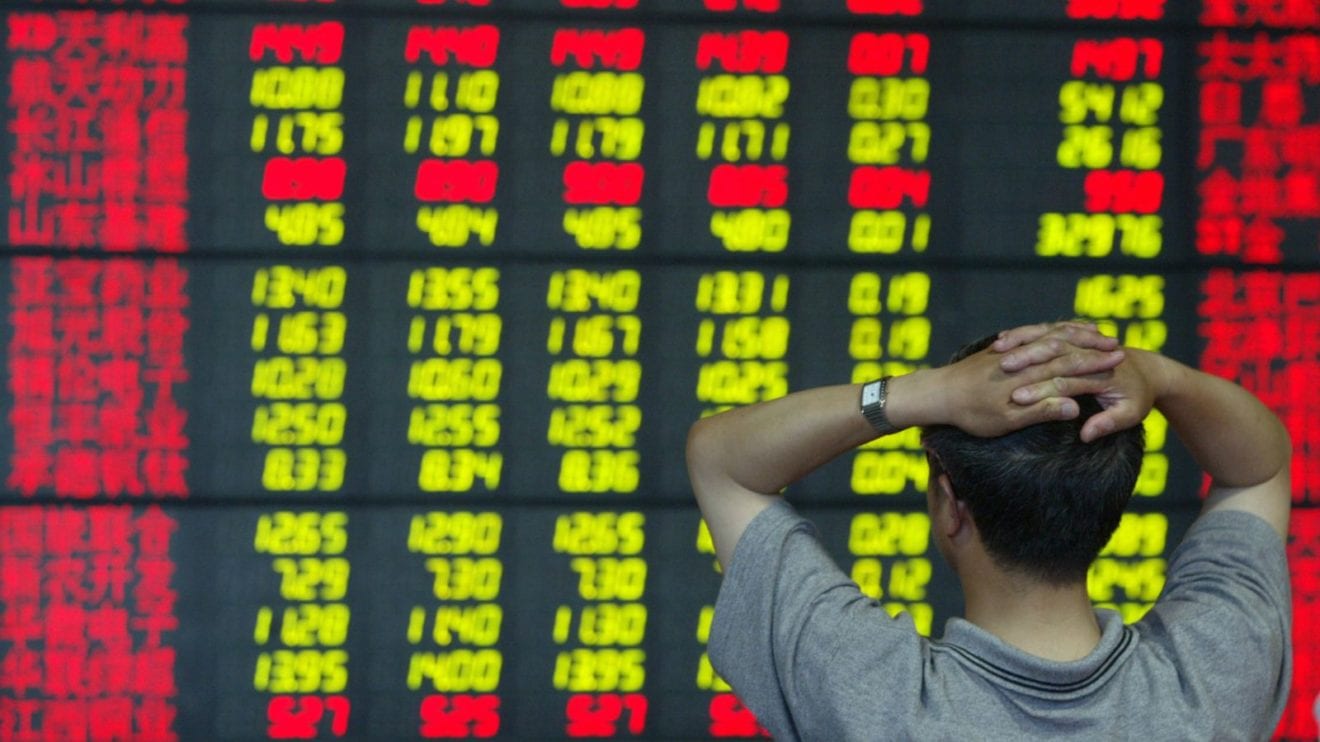
    What’s driving the selloff? Not global investors jittery about China’s growth prospects. China’s markets remain highly restricted to foreigners, who represent a tiny fraction of trading. On the contrary, trading in China is dominated by domestic, retail investors. This makes the market relatively volatile. Retail investors everywhere tend to trade more frequently are more prone to herd behavior. Many in China fled the market after last summer’s turmoil, which has left the market in the hands of an even smaller group of jittery, retail punters.

    That’s why China’s new circuit breakers turned out to be such a bad idea. Intended to halt panics so cooler heads could prevail, the trading curbs proved too narrow for a market as volatile as China’s. In the U.S., a much less volatile market, trading pauses for 15 minutes if the S&P500 drops 7% or more and halts for the day only if the index falls 20%. China’s circuit breaker imposed a 15-minute halt after a 5% drop and halted trading if its CSI300 index fell 7%, a fluctuation all too common last year. So as stocks started falling, retail investors nervous they might be frozen into positions if the circuit breakers tripped joined the stampede to sell. The circuit breakers thus heightened volatility. Realizing this, regulators scotched the breakers Thursday night.

    Most of these domestic, retail investors in the stock market aren’t middle-class consumers. They’re relatively affluent individuals who invest a conservative portion of their net worth in stocks. Volatility in China’s stock market therefore poses little threat to the overall wealth of China’s middle class and its ability to spend.

    So what caused these wealthy punters to take flight? Because China’s economy is so tightly controlled by the government, and the stock market so dominated by big government-controlled companies, investors in Shanghai have long looked to signals on policy, rather than corporate profits, to drive markets. Beijing’s intervention in the stock market last summer has only reinforced this logic. So signals over the weekend that President Xi Jinping might favor painful economic reform over feel-good stimulus measures touched off this week’s selling.

    Does that mean we shouldn’t be worried? Absolutely not. While China’s slowdown by itself isn’t enough to derail global growth, it won’t help. As times get tougher, growing labor unrest is a worrisome red flag. And the more growth slows, the more difficult it will be for China Inc. to service a mountain of corporate and local government debt that by some estimates has swelled to 250% of GDP. China is inching closer to a possible credit crisis.

    That’s particularly true now that China has removed its gloves to join the global currency war already underway between Japan and Europe. It fired a shot across the bow in August with a one-time depreciation of its currency, the yuan. Then in December, the People’s Bank of China started marking the yuan down with the currencies of China’s major trading partners.

    Some economists believe most of that revaluation lower is complete. Not likely. Central banks in Europe and Japan, which are using weaker currencies to try to revive growth, will now likely need to push their own currencies lower still, which will prompt China to nudge the yuan lower with them. That creates a vicious circle of depreciation.

    Worse, China’s decision to move the yuan lower appears to be accelerating what was already a torrent of outflows by Chinese savers eager to get their cash out of the way of the slowing economy and a widening crackdown on corruption. China is trying to discourage the outflows by cracking down on foreign-exchange transactions and even trying to influence rates for yuan offshore. But the vacuum of funds out of banks is pushing up the cost of credit, forcing the PBoC to print yet more yuan to inject into the banking system – a measure that stands to weaken the yuan even further. And Jefferies warns that liquidity is likely to tighten even more ahead of the Lunar New Year holidays a month from now.

    A weaker yuan will ultimately be good for China’s exporters and stocks. But because it inflates China’s economy by exporting deflation, the cheaper yuan is bad for economies that rely on exporting to China, like Australia, or that are using a weaker currency to try to inflate their own growth, like Japan.

    Not surprisingly, stocks in Australia and Japan suffered the biggest declines in Asia outside China this week, falling 5.8% and 5.4%, respectively. Also hit hard was South Korea, which has one of the region’s highest exposures to China’s import demand. Stocks there have dropped 2.8%.

    But the turmoil doesn’t alter the overall outlook for regional markets this column laid out earlier this week. Because it’s most likely to enjoy government support, China’s stock market is still likely to outperform its neighbors’. And stocks in a handful of Asian markets still stand to exceed investors’ rock-bottom expectations. This week’s declines have made stocks in Jakarta, for example, even more attractive.

    Comments? E-mail us at wayne.arnold@barrons.com

    Comments? E-mail us at asia.editors@barrons.com
  • China’s stock market is a clown show

    China’s stock market is a clown show

    Just as “bad cases make bad law,” to cite the ancient legal adage, bad stock markets make for bad investment decisions. China’s stock market, with its repeated crashes, has the entire world in a tizzy.

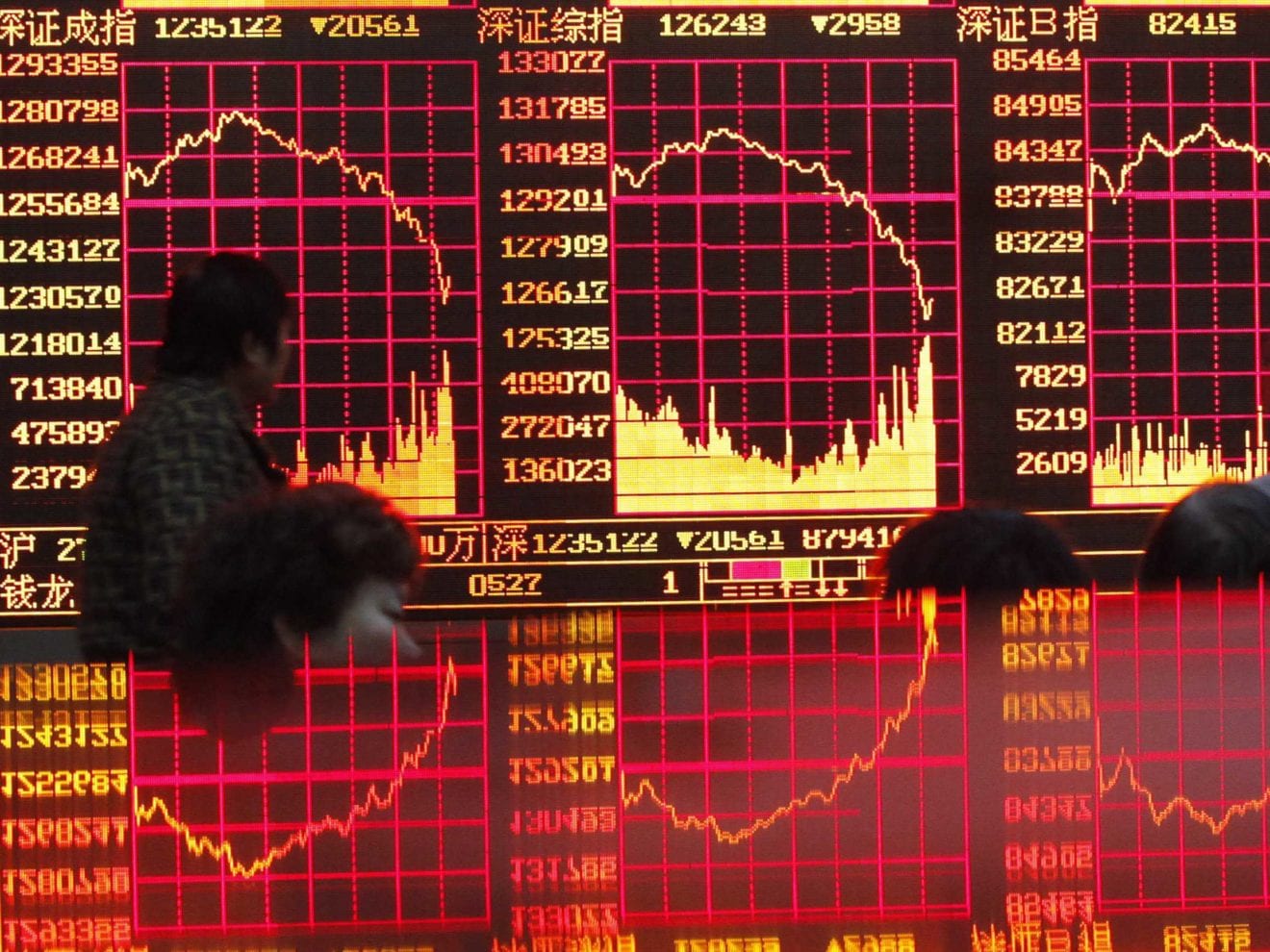
    The Shanghai stock exchange experienced its shortest trading day ever on Wednesday, as circuit breakers designed to end trading if the market slid 7% kicked in after only 14 minutes of active trading. As reported, the Shanghai Composite has dropped about 12% this year, and the Shenzhen composite has fallen more than 15%.

    Investors in the U.S. have taken the opportunity to sell. As of Thursday’s close, the Standard & Poor’s 500 index is down 4.67% from the opening bell for 2016 trading Monday, theNasdaq has lost 4.29%, and the Dow Jones Industrials have shed 5.12%. European stocks have marched over the cliff in tandem.in the U.S. took the opportunity to sell. As of Thursday’s close, the Standard & Poor’s 500 index is down 4.67% from the opening bell for 2016 trading Monday, the Nasdaq has lost 4.29%, and the Dow Jones Industrials have shed 5.12%. European stocks have marched over the cliff in tandem.

    The world should take a deep breath. The China stock market meets the definition of a bad stock market.

    The market is the target of relentless intervention by the Chinese government, which has been setting investment rules and tweaking them without any evident understanding of how open markets work. Adding to the chaos, the market was inflated by an inflow of small investors buying on huge margins — a notoriously skittish class of investors buying under conditions that made them especially vulnerable to the market’s volatile swings.

    Last April, as Evan Osnos of the New Yorker reported, the official organ of the Chinese Communist Party exhorted citizens to plunge into the market. An upsurge of more than 80% in four months was “merely the start of a bull market.” Investors should take heart from the government’s determination to keep Chinese companies strong.

    “Over the next two and a half months, investors opened thirty-eight million new stock accounts, more than quadruple the number of accounts opened in all of 2014,” Osnos wrote. “Retail exchanges, equipped with audience seating, attracted retirees and other small-time investors who spent hours scanning the digital displays, like visitors to the dog track.”

    This was a bubble primed for pricking. But that wasn’t all. On July 8, during a major market crash, Chinese regulators imposed a lockup on shareholders owning 5% or more of their companies, prohibiting them from selling for six months.

    The effect of lockups is well understood in mature stock markets; they tend to create latent bearish pressures as the expiration approaches. That expiration was due for Friday, Jan. 8, plainly creating some of the downdraft witnessed this week.

    The circuit breakers are another source of trouble. Introduced Jan. 4, the rules halt trading for 15 minutes after a 5% drop in the benchmark CSI 300 index, and stop trading for the rest of the day when the index falls 7%. They were triggered on day one, and again on Wednesday.

    Circuit breakers exist in U.S. markets, but critics say they’re cinched too tight in China, where 5% swings have been far more common. In the U.S., trading is shut down only if the Standard & Poor’s 500 benchmark falls 20% in a day.

    Adding to the confusion is that Chinese authorities lack the courage of their own convictions. On Wednesday, regulators tried to keep the bear caged by extending the stock lockup for three more months, albeit in modified form–big shareholders could sell, but only up to 1% of their companies’ shares. And following the circuit-breaker meltdowns of Monday and Wednesday, they scrapped the circuit-breakers themselves, a clear indication that they were not implemented properly in the first place.

    Among other signs of the immaturity of the markets and their regulators are stiff limits on short-selling–after a market crash this summer, the Shanghai and Shenzhen exchanges banned one-day short sales, in which traders place short orders and cover them on the same day. Mature exchanges understand that short selling is an indispensable relief valve for overheated bull markets.

    All these features, artifacts of the government’s inclination toward intervention in the stock market on the bull side, make the market an unreliable gauge of economic trends, many critics say. (Though they’re not unanimous — last February, economists at MIT and New York University argued that the market had matured to the point that it was providing reasonably accurate signals about future corporate earnings. “China’s stock market no longer deserves its reputation as a casino,” they wrote.)

    None of this means that there’s not cause to be concerned about the Chinese economy and its effect on world markets. Underlying the Chinese market plunge are signs that the world’s second-largest economy is slowing down, and that government economic officials aren’t fully up to the task of managing it.

    They’ve been frantically depreciating the Chinese yuan, which will put pressure on the nation’s trading partners by making Chinese exports more competitive and imports more expensive. The rapid depreciation sends a signal, moreover, that policymakers are getting to the end of their stimulative arsenal.

    Adding to uneasiness about government policy, no one has ever been entirely certain about the pace of China’s economic growth because its official figures are untrustworthy. Gross domestic product may have been overstated as much as three-fold, some observers believe.

    There’s no question that cracks in the Chinese economy are worrisome, but the wild swings of the stock market may be exaggerating the mood of panic. It makes sense for investors worldwide to keep their eye on the economy, but the stock exchanges? Just watch the ride.