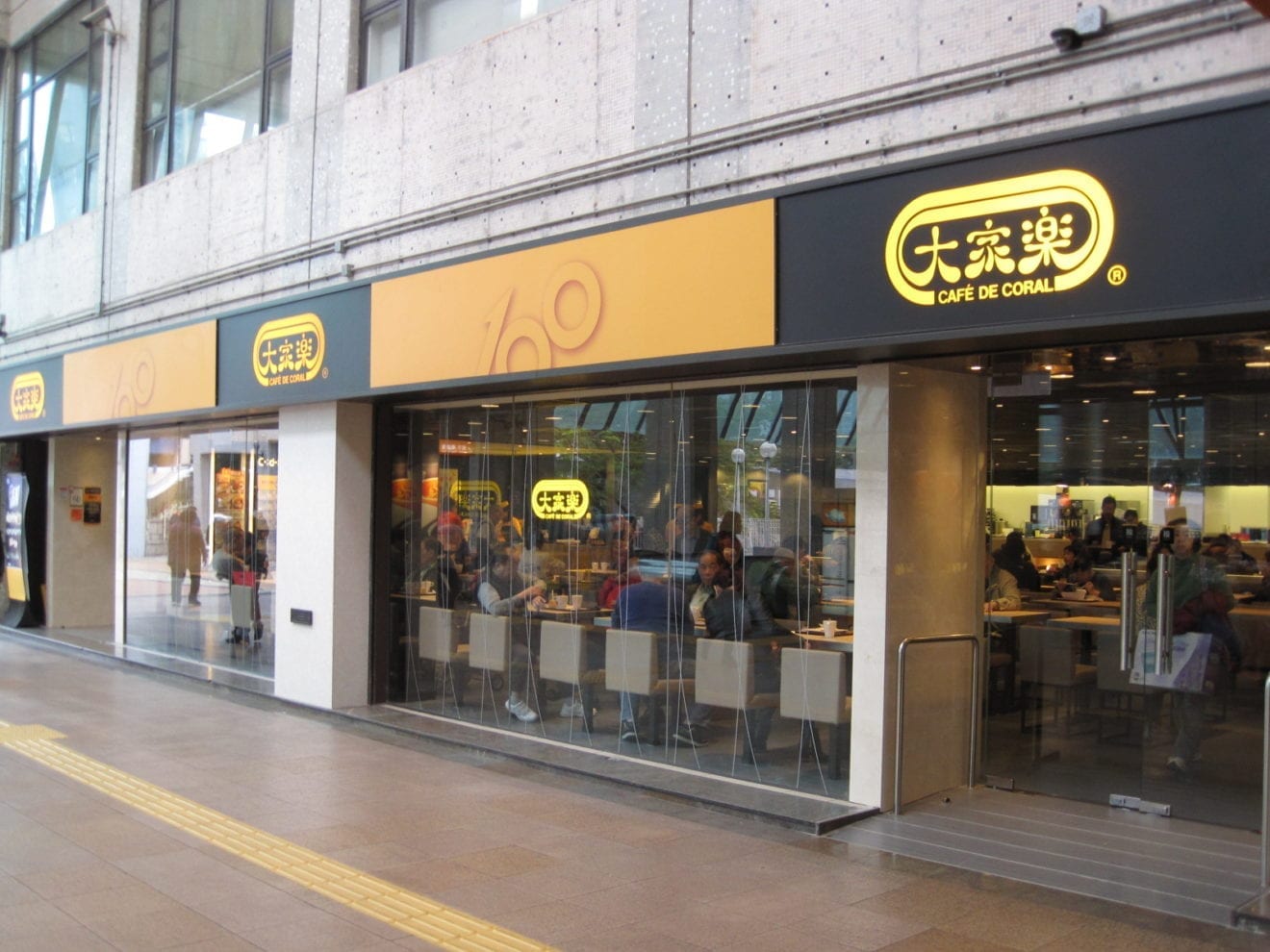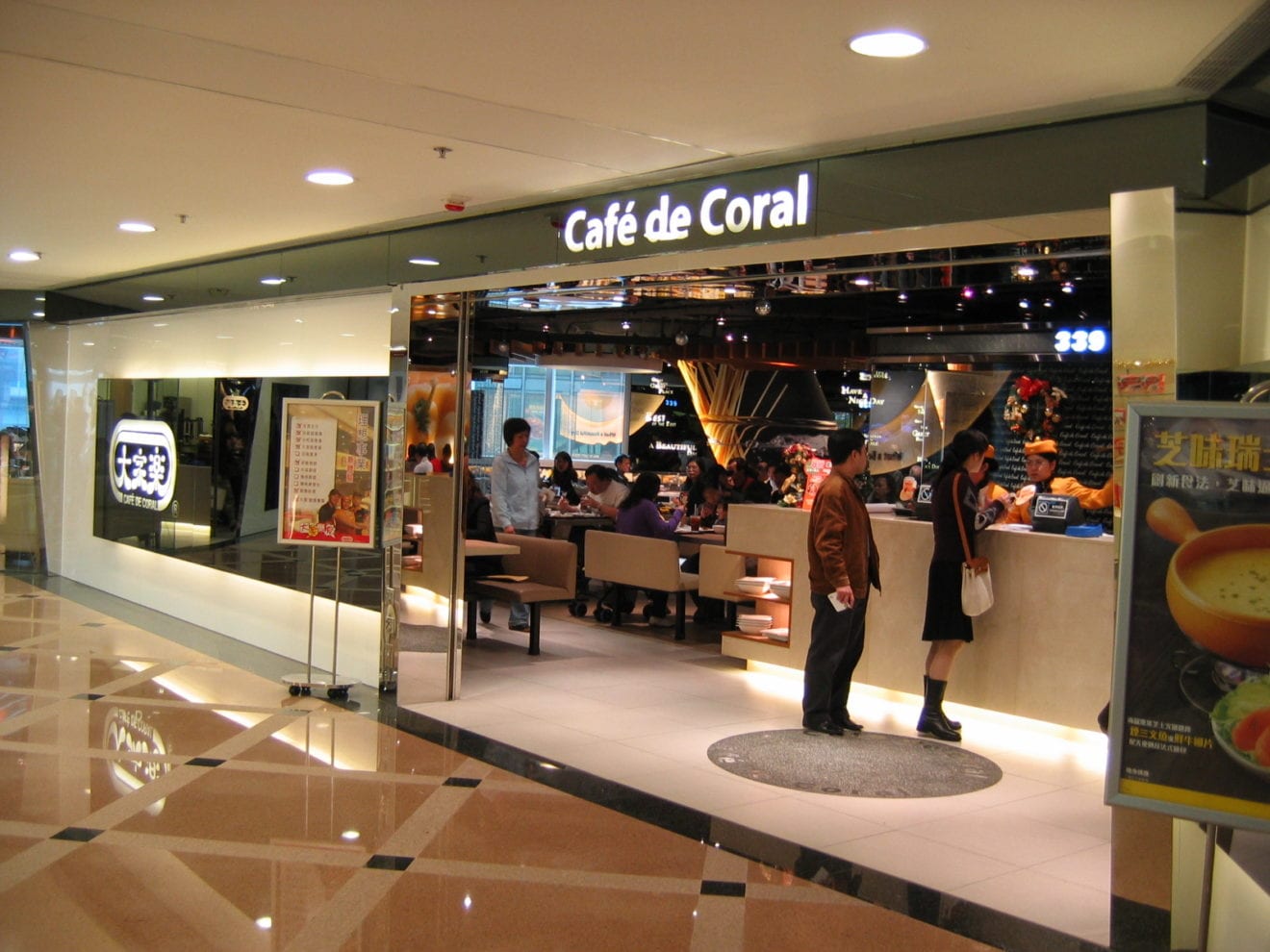
With expansion in Hong Kong and “outstanding” growth in China, restaurant/catering group Cafe de Coral Holdings says it has had six months of key achievements.
Its first-half revenue grew by 6.2 per cent to HK$4.1 billion (US$525 million), but profits were hit as rising staff costs exceeded the group’s pace of revenue growth. The profit attributable to shareholders, $205.7 million, was down 11.3 per cent on last year’s first half, while gross profit margin fell to 11.9 per cent from 13.3 per cent.
This decline, in Hong Kong, was largely because of the group’s investment in people for its core quick-service restaurant (QSR) business. “This was necessary for attracting and retaining talent in a highly competitive labour market,” says Cafe de Coral, which continued its network expansion by opening more outlets than in previous years.
However, the drop was partially offset by business growth in Mainland China. “Following our previous efforts to consolidate our branch network there, our product and promotion strategies began to pay off with strong growth in same-store sales and profit.”
QSR and institutional catering brands continued to dominate in Hong Kong, contributing to 74.6 per cent of the group’s total revenue for the period. Revenue from this division rose 5.7 per cent to $3 billion.
At September 30, the group’s QSR and institutional catering business had 306 units, up from 295 at the end of March.
Positive market
The market for fast-food service in Hong Kong was positive, with customers still price sensitive and value-driven. Cafe de Coral fast food achieved same-store sales growth of 3 per cent, and 10 branches were opened for the group to finish the period with 170 outlets.
Its other QSR brand Super Super Congee and Noodles had 51 stores at the end of September, with two new outlets since March 31. Same-store sales growth was maintained at 1 per cent.
Overall, the performance for institutional catering was steady, with both Asia Pacific Catering and Luncheon Star gaining new contracts. The total number of business units at the end of the review period was 85, up from 79 six months earlier.
After brand renovations and consolidation, casual-dining revenue grew 9.2 per cent to reach $422 million, and the first half ended with 72 shops, up from 64 at the end of March. Underperforming outlets of The Spaghetti House were closed, while Oliver’s Super Sandwiches had a rebranding program. The two restaurant chains had 10 and 18 shops respectively at the end of September, compared with 12 and 19 six months earlier.
Cafe de Coral’s homegrown brands established a stronger foothold through expansion. Three Shanghai Lao Lao outlets were added during the half-year, as well as six Mixian Sense restaurants.
China strategy
After a period of store consolidation, the company’s focus for the mainland was on developing a local management team and menus catering to local tastes. This strategy began to pay off with same-store sales growth of 15 per cent and “substantial profit growth” in southern China.
During the six months, the China division saw revenue rise 7.3 per cent to $548.3 million, while the total number of restaurants was consolidated at 96, down three from March 31. O2O delivery services were also launched, which the group says have been growing faster than the in-store market.
Late last month, the group closed its final two stores in eastern China as part of a short-term strategic adjustment while it focuses on developing the southern China market where the potential for growth is higher.
Meanwhile, the group set up six shops at the refurbished JP Plaza in Causeway Bay to demonstrate the synergy it can achieve across all its fast-food and casual-dining brands. These were set up in one 16,000sqft (1490sqm) complex, anchored by Cafe de Coral and including Mixian Sense, Shanghai Lao Lao and The Spaghetti House.
At the end of September, the Cafe de Coral network had 474 stores in Hong Kong and China, up from 45 six months earlier.