Tag: Thom Browne

  • Ermenegildo Zegna acquires Thom Browne

    Ermenegildo Zegna acquires Thom Browne

    The Italian company Ermenegildo Zegna Group has acquired 85 percent of the business at a $500 million valuation. Browne is the sole other shareholder.

    The American designer label, best known for its intellectual and imaginative take on silver-spoon tropes — most notably, its signature shrunken grey suits — is partnering with a strategic investor on a bold expansion plan that will likely broaden its customer base and reach.

    Today, Thom Browne announced that Italian menswear stalwart Ermenegildo Zegna Group has acquired an 85 percent stake in the company, valuing the business at approximately $500 million. Browne, the label’s founder and chief creative officer, is the only other remaining shareholder.

    The transaction marks a brisk, successful exit for private equity firm Sandbridge Capital, which has held a majority stake in the brand since 2016.

    “Thom and I took great care in choosing a new partner who would continue to both honor and celebrate Thom’s uniquely visionary approach to marrying the highly conceptual with the beautifully commercial,” Ken Suslow, founding managing partner at Sandbridge, said in an email to BoF. “It was readily apparent from the very beginning that Gildo and the Zegna Group constituted this ideal partner in every important respect.”

    Chief executive Rodrigo Bazan, who joined Thom Browne in 2016 from Alexander Wang, will continue in his role. According to a report, Thom Browne generated $100 million in sales in 2016 and was on track to reach $120 million to $125 million in 2017.

    In July 2018, Bazan said the company is still growing, with 31 directly owned retail stores in New York, London, Milan, Tokyo, Hong Kong, China, South Korea and Singapore. (A store in Miami is set to open in October.) “If anything, we’re containing the growth,” Bazan said.

    “My goal is to keep Thom Browne independent,” Ermenegildo Zegna, chief executive of the Zegna Group said. “It’s a good company, a good organisation, a good business and profitable. The company has to stay autonomous from Zegna with support and help from the group. It will be a gradual approach. If something is working, don’t change it, just support it.”

    In addition to leveraging Zegna Group’s global reach to expand the Thom Browne retail footprint, the New York-based fashion house will also benefit from Zegna’s expertise in fabrics and manufacturing. While Browne has volleyed between manufacturing in the US and Italy, most of his clothing is now produced in Europe.

    Browne said that he was “proud” of the new partnership. “I think the most important thing is that Zegna represents the best quality,” he said. “As conceptual as my collections may be, the quality is the most fashionable part of what I do across the board.”

    In return, Thom Browne will provide a contemporary fashion play for the family-owned textiles giant, whose current portfolio includes its flagship luxury menswear brand, sister-line Z Zegna and womenswear label Agnona. Zegna described the Thom Browne brand as one that appeals to consumers with a “millennial mindset.”

    “I never put an age to it,” added Browne. “I think it’s just because of the way I approach design. It’s the youthful sensibility and spirit.”

    Zegna also cited Thom Browne’s “thriving” women’s business — which launched in 2011 and now makes up 35 percent of sales — and its resonance with younger generations as proof that the brand will offer long-term value for the group. The deal also marks Zegna’s first notable investment in an American brand in recent history. “Both Thom Browne and Zegna have not fully utilised the opportunity of the US market, which is growing very very well, second only to China,” he said. “We believe in the market, and we can do much better with both brands.”

    In July, he announced a partnership with Spanish football club FC Barcelona as the team’s official off-field outfitter. Most recently, the company has been working on signaling that Thom Browne is about more than runway showpieces and suiting. “That’s one of the reasons we bought Thom Brown,” Zegna said. “He’s the master of fun casualisation.”

    Relaxed, yet still stylised, pieces — from sweatpants to quilted jackets — now play a starring role in the line’s commercial collections. At the time of the Barcelona announcement, Bazan said that that the brand will “continue to expand the product pricing architecture to touch more consumers, while continuing to prioritise quality.”

    For Browne, the deal marks natural progression. While it was adamant on maintaining a financial stake — “I founded the business and it was just really important to know that I still had a piece of it,” he said — the series of investors he has brought on over the years, from Japan’s Stripe International to Sandbridge and now Zegna, have helped to continue building the business in the way he wants to build it: led by creativity.

    “The most important thing for me that there was a real personal connection to all of them. It’s the reason why they worked,” he said. “With Ken and Sandbridge, it worked because we had a really close friendship. It’s refreshing to know that you can grow a successful big business and still be a gentleman. Sitting down with Gildo, I saw in him a true gentleman.”

  • Alibaba backs virtual showroom startup Ordre

    Alibaba backs virtual showroom startup Ordre

    Alibaba Group has bought a minority stake in Ordre, a European online luxury wholesale platform.

    Ordre, launched in 2015, allows fashion designers to show off their collections via 360-degree photography and virtual reality to interested wholesale buyers. The technologies make it more convenient for buyers, who aren’t always able to travel due to time and distance constraints, to build inventory each season. The reduced travel translates into lower carbon emissions at a time when sustainability is increasingly important to the industry, said Ordre.

    Dianne Von Furstenberg, Vivienne Westwood and Jason Wu are among the world’s leading designers who have established digital showrooms on Ordre. They also work with fashion brands such as Joseph.

    For Alibaba, the investment is a further push into the luxury sector, which is among its top strategic priorities, given the rising spending power and increasingly sophisticated tastes of Chinese consumers. The Hangzhou, China-based company plans to leverage Ordre’s technologies for consumers, however, delivering a more-enhanced shopping experience on platforms such as B2C marketplace Tmall.

    “Matching Ordre’s technology with Alibaba’s unique data insights and capabilities – of which our recently launched Luxury Pavillion is a great illustration—we can provide our consumers with a personalised and differentiated experience, helping brands develop a deeper engagement with them,” said Jessica Liu, president of Tmall Fashion and Luxury.

    The Luxury Pavillion, which lives within Tmall, was launched last August to deliver to China’s high-end consumers the same kind of brand exclusivity and tailored shopping experience online that they would expect at a brick-and-mortar store. About 50 brands, including l, offer products ranging from apparel and cosmetics to watches and luxury cars.

    The pavillion is driven by Alibaba’s New Retail technologies, which blend online and offline commerce to deliver a better buying experience for consumers. Simon Lock, founder and CEO of Ordre, said the company’s digital assets, including 360-degree images, 360 video and VR fashion shows and designer interviews, are in line with this strategy and could serve Tmall shoppers and brands.

    “Our 360-view allows consumers to understand every aspect and every view of a garment,” he said. “When you’re purchasing online, as much detail as can be provided is going to make your purchasing decision much more confident,” which can help drive down the product return rates.

    The companies are currently discussing a number of potential initiatives that would expand on these technologies. One of which would create new direct-to-consumer channels for Ordre’s partner brands by leveraging content to communicate their brand story and provide more information about products. For example, Ordre’s VR technology was able to recreate Stella McCartney’s Coachella-inspired 2018 fall show and the theatrical experience of Thom Browne’s latest showcase in Paris, so that buyers could watch fashion shows from the front row.

    Other potential collaborations include “fit avatars,” which allow buyers to see collections on models in 360-view and technology that allows buyers to remotely feel fabrics on a touch pad.

    Lock said he was also interested in Alibaba’s “See Now, Buy Now” technology, as well as the company’s artificial intelligence and cloud-computing capabilities.

    “We can work together to create the ultimate global fashion cloud,” he said.

  • Joyce Boutique plunges into the red

    Joyce Boutique plunges into the red

    Listed fashion boutique operator Joyce Boutique says it will continue to take a cautious approach to business expansion and focus on consolidation of the Joyce multi-label business towards higher-productivity stores in the year ahead.

    It will renovate and expand the Joyce flagship store in Central and relocate the Shanghai Joyce flagship store to a bigger space within Plaza 66 to introduce a completely new look and unique shopping experience to customers.

    The move follows revelation of a HK$34.9 million half year loss for the company – a major turnaround from the $32.8 million profit in the same period last year.

    Sales slumped 10.9 per cent, and gross margin lost 3.5 percentage points, the company has reported to the stock exchange.

    “The persistent fall-off in customer spending on luxury goods in Hong Kong and Mainland China drove down the sales performance of the luxury retail market in the period. Depreciation of the euro and yen against the dollar and renminbi led to an increase in overseas shopping and online shopping for luxury goods and impacted on bricks-and-mortar local retailing.” the company said in its interim report.

    Joyce Boutique’s Hong Kong, turnover dropped by 10.3 per cent against the same period last year and accounted for 82.5 per cent of group turnover (2014: 81.9 per cent). Further impacted by declined gross margin and increased rental costs, the Hong Kong division incurred an operating loss of $12.6 million for the period (2014: a profit of $36.6 million).

    Mainland China turnover declined by 14.6 per cent versus the same period last year and operating results turned into a loss of $22.9 million from last year’s profit of $3.1 million, chiefly the result of a general decline in turnover and margin and an additional $7.6 million provision made for a loss making shop in Shanghai.

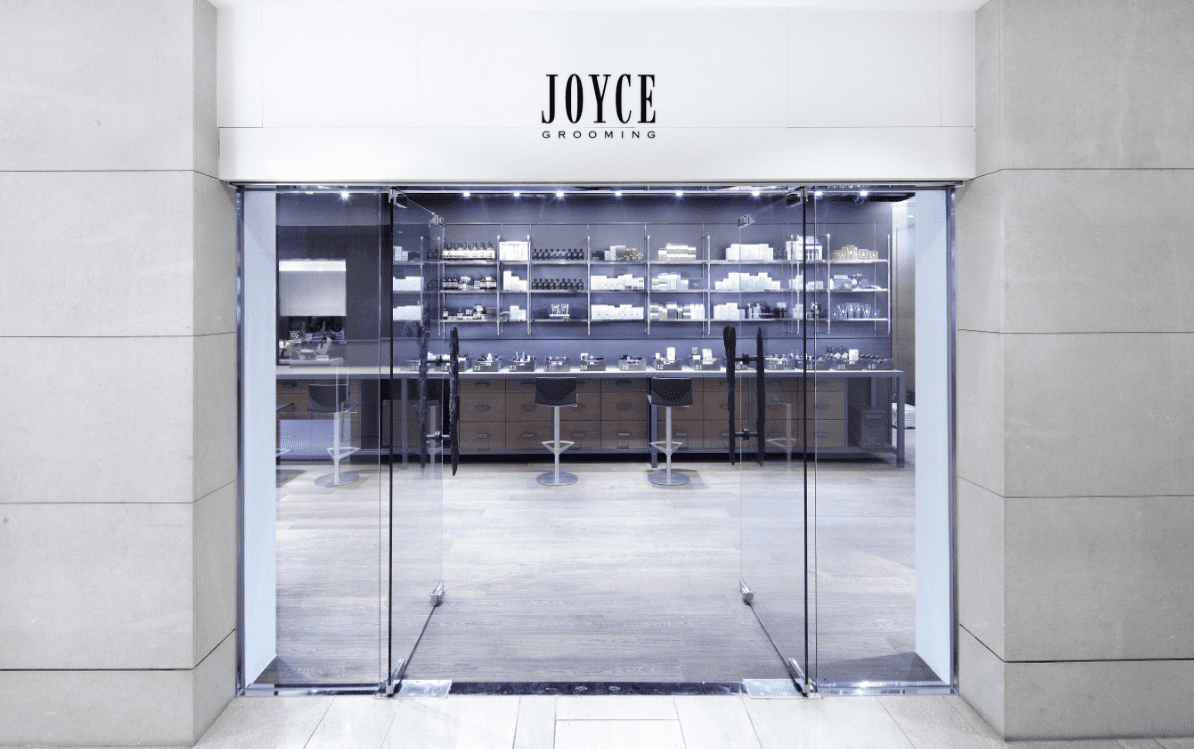
    Joyce Boutique inside

    The joint venture with Marni made a loss contribution of $1.0 million (2014: profit of HK$1.3 million) due to a drop in turnover and an increase in operating costs.

    “In view of the difficult trading environment, the group adopted a cautious shop strategy. While opening new shops for three potential brands as planned in the previous financial year (the first Hong Kong shop for Thom Browne at On Lan St, the first China shop for Sacai at Beijing Sanlitun and the first Macau shop for Alexander Wang at Galaxy Macau), the group closed certain non-performing shops to improve shop productivity,” the company reported.

    As well as the change in store focus and the renovation of the Hong Kong and Shanghai flagships, the company says it plans to further strengthen customer loyalty and drive sales from VIP customers through enhanced personal stylist services and the introduction of private customer mobile apps.

    Joyce Boutique says it expects the near term trading environment will remain “tough and challenging”.

    “Rental levels in prime shopping malls remain high relative to turnover. Online shopping and overseas shopping for luxury goods will continue to impact on bricks-and-mortar specialty retailing. In view of the challenges, the group will focus on driving cost efficiency and shop productivity, fashion editing and reducing business risks through taking cautious approach to business expansion and stock purchase planning.”