
Tag: threat

  • Unveiling the Hidden Loophole in EU’s New AI Labeling Rules: A Threat to Authentic Online Content?

    Unveiling the Hidden Loophole in EU’s New AI Labeling Rules: A Threat to Authentic Online Content?

    The European Union (EU) understands the need for transparency in AI-generated content and has decided to enforce mandatory labeling of such content. However, this new ruling has not been without its own set of challenges.

    EU’s New AI Act

    The EU’s AI Act, first introduced in 2023 and approved by the EU Parliament in March 2024 with 523 votes for, 46 against, and 49 abstentions, aims to protect customers and democracy. As stated by EU parliament member Sergey Lagodinsky, the AI Act’s purpose is not solely to protect consumers but also to preserve democracy and the authenticity of online facts. The AI Act came into effect on August 2nd, requiring all AI-generated content to carry a specific label. This rule applies to AI systems that operate in the EU market, including AI-generated images, videos, audio, and text.

    The Loophole and Penalties

    However, the mandated labeling only applies to content designed to look real, creating a dilemma due to the subjectivity of what constitutes “real.” The law excludes personal content and “evidently artistic” works, including satirical and fictional content, making its interpretation even more ambiguous. The EU has also outlined penalties for violating the rule, with fines as high as €15m or 3% of a company’s global turnover, potentially resulting in billions of dollars for corporations such as Apple, Google, and Samsung. While the August 2nd deadline applies to new AI systems, existing systems will have an additional four months to comply.

    It’s worth noting that many companies, particularly large social networks and apps, already incorporate policies regarding AI-generated content. Google, for example, utilizes a special SynthID tool to label billions of images and audio content spanning 60,000 years. Despite these policies, AI images and videos frequently slip through the cracks, making their way onto people’s feeds. With the new EU policy in effect, these companies will need to enhance their enforcement or risk financial penalties.

    Questions & Answers

    What is the main purpose of the EU’s AI Act?
    The EU’s AI Act primarily aims to ensure transparency in AI-generated content, thereby protecting consumers and upholding the authenticity of online facts to safeguard democracy.

    What kind of content does the EU’s AI Act mandate to carry labels?
    The AI Act requires all AI-generated images, videos, audio, and text that are designed to appear real and operate in the EU market to carry a specific label.

    What are the penalties for non-compliance with the EU’s AI Act?
    Companies found in violation of the AI Act are subject to fines of up to €15m or 3% of the company’s global turnover, potentially resulting in billion-dollar fines for large corporations.
  • Vietnamese workers warned of ‘robot threat’

    Vietnamese workers warned of ‘robot threat’

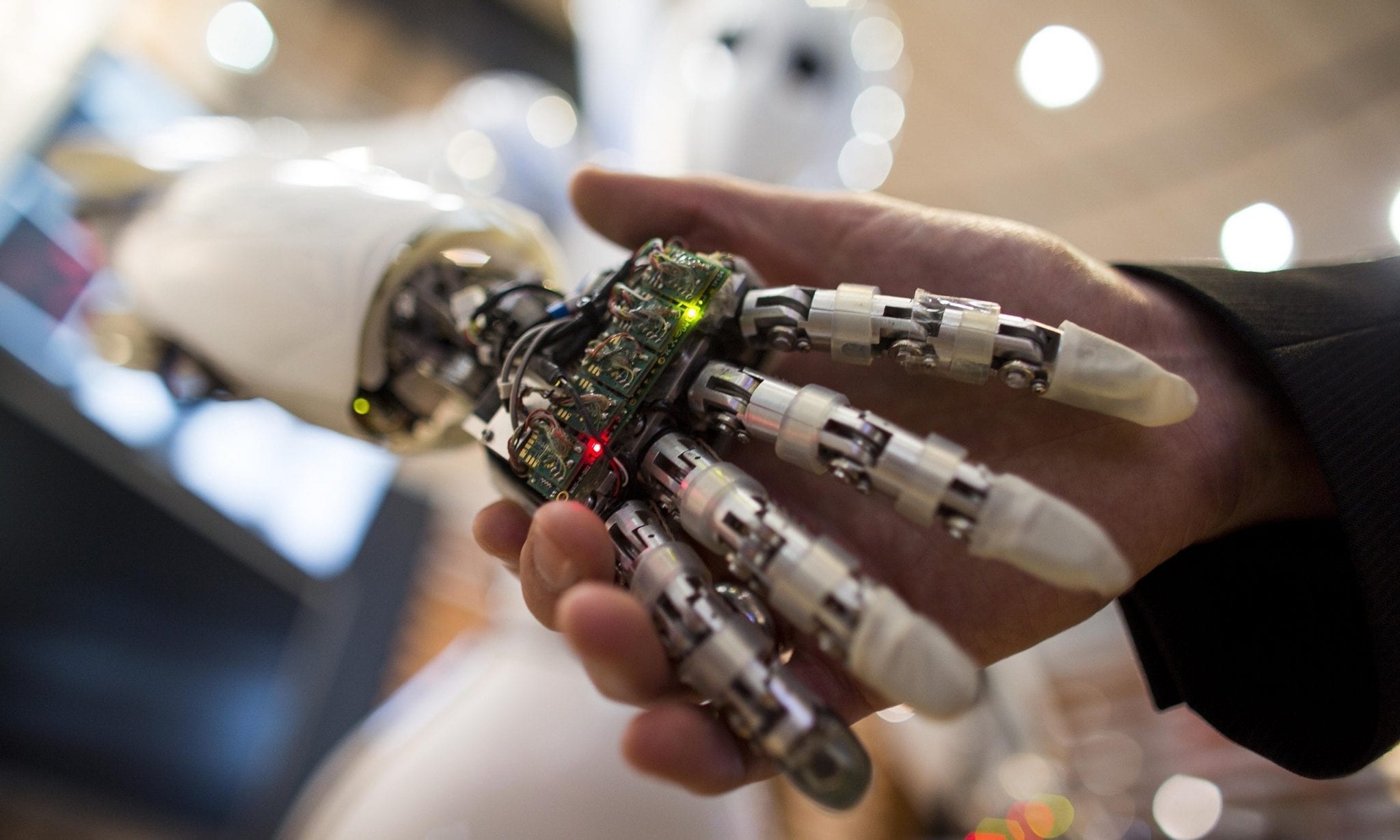
    Robots are already being used at the 20-hectare Vinamilk actory in Binh Duong province. There are 19 robots and several workers. Everything runs on an automation process. Some robots carry packs to the filling room, while others take finished products to the storehouse.

    When robots begin to lose power, they automatically go to the battery charging area, where they install full batteries without the assistance of workers.

    Nguyen Chien Thang, director of Scan Pacific, an interior product manufacturer, who has received more orders from foreign partners in recent years, has decided to equip his newly built factory with an automated production line, which would help increase productivity by 4-5 times.

    Other large furniture companies in Binh Duong have also spent money on automation technology. A representative of Vi Dai, a supplier of machines and equipment, said the company’s sales increased by 50 percent in 2016 because more wooden furniture manufacturers bought modern equipment to increase productivity and lower costs.

    Thanks to the automation production line, which has been running in the last 10 years, Minh Long 1 Porcelain Company has cut the number of workers from 400 to 20. To date, it has imported seven robots with the value of no less than 40,000 euros.

    Analysts commented that though it is costly to replace workers with intelligent robots, using robots in production lines is a growing tendency worldwide, including in developing countries like Vietnam.

    The World Economic Forum predicted 5 million jobs would be lost by 2020 because of  artificial intelligence. The latest report from ILO shows that two-third of 9.2 million workers in the textile & garment and footwear industries in South East Asia are being threatened by robots.

    In Vietnam, ILO said 86 percent of textile & garment workers may lose jobs in the automation process, while three-fourth of workers in the electronics sector will be replaced with robots.

    Pham Thi My Le, president of Le & Associates, predicted that 80 percent of works would be undertaken by robots by 2020.

    The popularity of robots would prompt multi-national conglomerates to stop outsourcing to Asian countries and to make products in their home countries with automated production lines. If so, Asian countries, which now rely on doing the outsourcing for foreign companies, would suffer.

    Vietnam can attract foreign investments thanks to cheap labor. However,  once robots replace large numbers of workers, that advantage will diminish.