Retail News CRM

Tag: threats

  • Thailand’s Export Boom: Record-Breaking $35.16B Earned in March 2026 Amid Threats of Global Volatility

    Thailand’s Export Boom: Record-Breaking $35.16B Earned in March 2026 Amid Threats of Global Volatility

    Thailand’s merchandise exports experienced a surge for the 21st month in a row in March 2026, reaching a new high of US$35.16 billion, an increase of 18.7% when compared to the previous year. The Ministry of Commerce reported these figures, highlighting a significant growth compared to the 9.9% increase recorded in February. This data further underscores the crucial role of exports in boosting the Thai economy.

    Driving Factors for Growth

    This remarkable performance can largely be attributed to the strength of technology-related products, a robust global supply chain activity, and the temporary relief from certain U.S. tariff measures. Nantapong Chiralerspong, the Director-General of the Trade Policy and Strategy Office (TPSO), added that the recovery in global manufacturing, evident from the stable demand and new orders from international markets, also contributed to this export growth.

    Despite the positive indicators, Chiralerspong issued a word of caution. He pointed out the presence of emerging challenges, particularly the disruptions in shipping through the Strait of Hormuz, which is starting to impact Middle Eastern markets, indicating a potential slowdown.

    Imports and Trade Deficit

    On another note, Thailand witnessed a significant rise of 35.7% in imports in March, bringing the figure to $38.50 billion. This resulted in a trade deficit of $3.34 billion. The first quarter of the year saw total exports from Thailand reaching $96.17 billion, marking an increase of 17.6%. On the other hand, imports surged by 32.4% to $105.65 billion, leading to a trade deficit of $9.48 billion.

    Future Outlook

    The Ministry of Commerce expressed concerns over the uncertain future of export prospects due to global volatility. The ongoing tensions in the Middle East are driving up logistics, energy, and production costs, thereby increasing the pressure on Thailand’s export sector.

    Questions & Answers

    What are the main drivers of Thailand’s recent export growth?
    The recent export growth in Thailand can mostly be attributed to the robust sales of technology-related products, active global supply chain activity, and the temporary relaxation of certain U.S. tariff measures. The recovery in global manufacturing has also supported this growth.

    What challenges is Thailand facing in its export sector?
    Emerging challenges, including disruptions in shipping through the Strait of Hormuz, are starting to impact the Middle Eastern markets, indicating a potential slowdown. Additionally, ongoing Middle East tensions are escalating logistics, energy, and production costs.

    How has the import activity been in Thailand recently?
    Thailand has seen a sharp increase in imports, rising by 35.7% in March 2026 to $38.50 billion. In the first quarter of the same year, imports surged by 32.4% to $105.65 billion.

  • US Dollar Soars to Year’s Peak Against Major Currencies, Dodging Inflation Threats”

    US Dollar Soars to Year’s Peak Against Major Currencies, Dodging Inflation Threats”

    The U.S. dollar experienced a surge against the Vietnamese dong on Thursday morning, while oscillating around its apex value against significant international currencies this year.

    Vietcombank, a prominent banking institution, reported a minor increase of 0.01% in the value of the dollar, selling it at a rate of VND26,314.

    Contrarily, the U.S. dollar dipped slightly by 0.18% to VND27,910 in the unofficial currency exchange market, also known as the black market.

    Thursday witnessed the U.S. dollar, a popular refuge during periods of financial instability, hovering near its most robust position for the year. This trend was driven by the rising oil prices, which are predicted to escalate inflation and compel central banks around the world to espouse more assertive monetary policies.

    In early Asian trading, the euro experienced a slight decline of 0.1% against the dollar, going down to $1.1549. This brought the euro close to its lowest value since November of the previous year.

    Similarly, the Japanese yen saw a momentary fall, surpassing the 159-per-dollar mark. It depreciated as much as 0.2%, reaching 159.23. This puts the yen on the brink of its most diminished value since July 2024.

    The Australian dollar and the New Zealand dollar also observed declines, both slipping by 0.1%, with the former valued at $0.7148 and the latter at $0.5907.

    Questions & Answers

    What factors influenced the rise in the value of the U.S. dollar?
    The uptick in the value of the U.S. dollar can be attributed to the increasing oil prices, which are expected to instigate inflation and cause global central banks to adopt a more aggressive policy stance.

    How did the rise in the U.S dollar affect other major international currencies?
    The rise of the U.S dollar resulted in a slight depreciation of several international currencies such as the Vietnamese dong, the euro, the Japanese yen, the Australian dollar, and the New Zealand dollar.

    What was the selling rate of the U.S. dollar in the black market?
    In the black market, the U.S. dollar saw a nominal decline, with its rate recorded at VND27,910.

  • U Mobile Pioneers Nationwide Scam Protection, Blocks Over 265 Million Threats in Malaysia

    U Mobile Pioneers Nationwide Scam Protection, Blocks Over 265 Million Threats in Malaysia

    U Mobile, a leading telecommunications provider in Malaysia, has become the first in the country to introduce a network-level scam protection system. This groundbreaking initiative, operational since February 2025, has successfully intercepted and blocked over 265 million fraudulent phone calls and text messages, according to the company’s recent statement.

    Powered by Advanced Technology

    The scam protection system employs state-of-the-art technology provided by Cellusys, a renowned global provider of mobile operator solutions, including signaling, roaming, and analytics. This technology enables the identification and immediate blocking of suspicious calls and messages at the network level, preventing them from reaching user devices.

    Comprehensive Scam Screening

    According to U Mobile, this new deployment allows for exhaustive screening across 4G and 5G networks. It aims to combat a broad range of digital fraud activities, including scam calls posing as officials or institutions, SMS phishing attempts, spoofed caller identities, and broad fraud campaigns.

    U Mobile’s Chief Technology Officer, Woon Ooi Yuen, expressed his pride in the company’s achievement. He stated that the introduction of the nation’s first large-scale, network-level scam protection has yielded significant results, blocking hundreds of millions of fraudulent calls and messages. Yuen emphasized the company’s dedication to improving their network using the latest technology to enhance customer protection across voice, messaging, and data services. He asserted that as U Mobile expands its next-generation 5G network throughout the country, security continues to be a key priority, as reliable connectivity is crucial for a robust Malaysian digital economy.

    Brendan Cleary, CEO of Cellusys, expressed his company’s pride in providing the technology that powers this nationwide protection. He emphasized that Cellusys’s technology works with the necessary precision, resilience, and scalability to prevent scams from reaching consumers.

    Digital Fraud in Malaysia

    The launch of the scam protection system is timely amid the significant increase in digital fraud incidents in Malaysia. Recent data from the Global Anti-Scam Alliance (GASA) reveals that 73% of Malaysians have reported being targeted by fraudulent calls or messages, ranking the nation as one of the hardest-hit in Southeast Asia.

    Cellusys’s platform leverages signaling and behavioral data analyses at the network level to uncover suspicious activities. This allows operators to quickly adapt their defenses as scam techniques evolve, thereby minimizing disruption to legitimate network traffic.

    Questions & Answers

    What is the purpose of U Mobile’s network-level scam protection system?
    The system identifies and blocks suspicious calls and messages at the network level before they can reach user devices, thereby preventing potential scams.

    Who developed the technology behind this scam protection system?
    The technology powering the scam protection system was developed by Cellusys, a global provider of mobile operator solutions, including signaling, roaming, and analytics.

    How significant is the problem of digital fraud in Malaysia?
    According to the Global Anti-Scam Alliance (GASA), 73% of Malaysians have reported being targeted by fraudulent calls or messages, indicating a serious problem with digital fraud in the nation.

  • Cybercriminals Target Organizations with Phony App to Steal Data and Demand Ransoms

    Cybercriminals Target Organizations with Phony App to Steal Data and Demand Ransoms

    In a worrying trend, hackers are escalating their tactics by targeting organizations across Europe and the Americas, employing social engineering to install a modified version of a legitimate data import tool. This seemingly innocuous application opens the door for attackers to steal sensitive information, gain access to cloud services, and navigate through networks, escalating their assaults and demands for extortion.

    Cybercriminals Craft Deceptive Strategies

    Tracking this malicious activity is the threat group known as UNC6040, which makes use of voice phishing, or vishing, to trick unsuspecting employees into downloading the malicious app. Designed to closely imitate a familiar enterprise tool, this rogue application secures an alarming level of access to corporate environments. Once in, it enables the exfiltration of critical data and compromises system integrity with ease.

    Consequences and Scope of the Attack

    The Google Threat Intelligence Group has reported that approximately 20 organizations have fallen victim to these attacks, some enduring confirmed data breaches that threaten their operational security. This ongoing operation is linked to a cybercriminal ecosystem referred to as ‘The Com,’ which engages in various illegal activities, underscoring the complex and interconnected nature of modern cybersecurity threats.

    The Human Element in Cybersecurity

    Experts warn that the root of this threat lies not in software vulnerabilities but in the effectiveness of social engineering tactics. This serves as a crucial reminder of the importance of heightened employee awareness and the implementation of robust controls over app authorization. It turns out that even the most sophisticated cybersecurity measures can be bypassed with a simple phone call — it’s a lesson every organization should take to heart.

    Questions & Answers

    What tactics are hackers using in these attacks?
    Hackers are using voice phishing to deceive employees into downloading a malicious version of a legitimate data import tool, allowing unauthorized access to sensitive data.

    How many organizations have been affected by these cyber attacks?
    Approximately 20 organizations have been affected, with some experiencing confirmed data breaches as a result.

    What steps should organizations take to mitigate such attacks?
    Organizations should focus on improving employee awareness regarding social engineering tactics and enforce stricter controls on app authorization to prevent unauthorized access.

  • New iOS 17.3 feature will keep a thief out of your iPhone and your banking apps

    New iOS 17.3 feature will keep a thief out of your iPhone and your banking apps

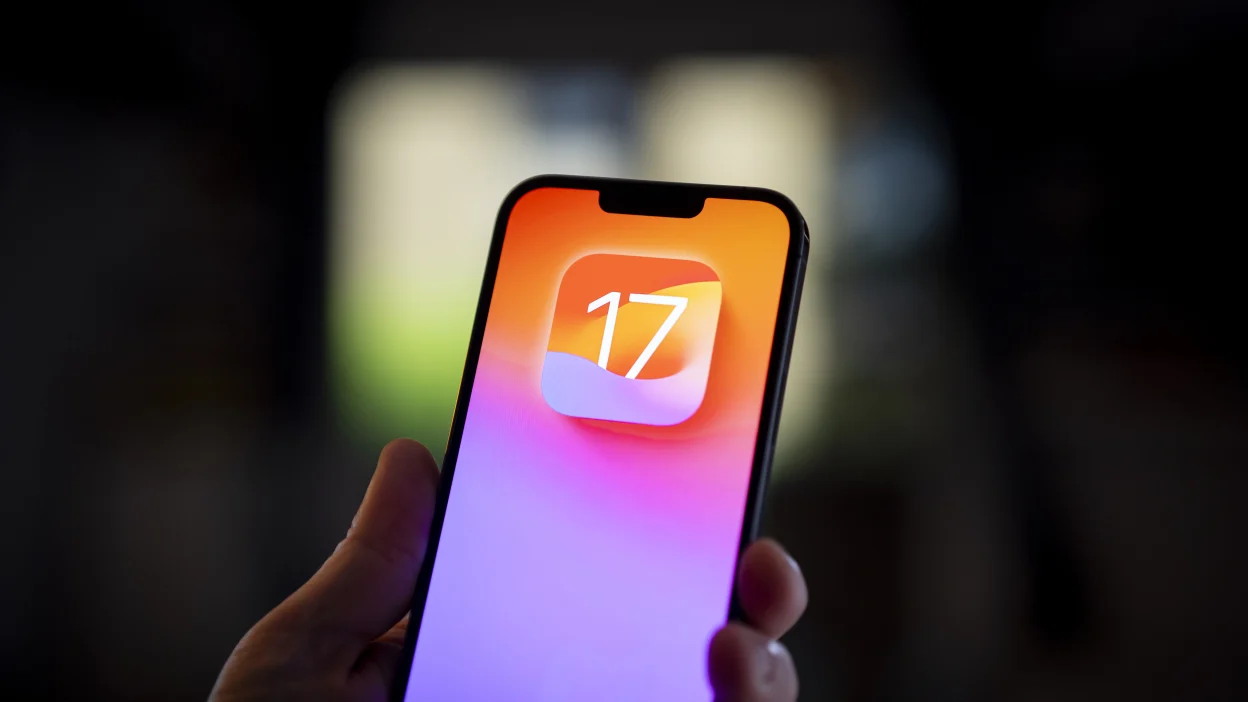
    Now that Apple released iOS 17.2, the first iOS 17.3 developer beta has been released and includes a new feature that might frustrate iPhone thieves. Stolen Device Protection uses certain tools to prevent criminals from employing a stolen iPhone passcode to have the run of an iPhone that is at a location normally not associated with the owner of the device. If an iPhone is at such a location and Stolen Device Protection is enabled, the handset will require that Face ID or Touch ID be used before allowing certain actions to be made.

    Actions that require either Face ID or Touch ID when an iPhone is in an unusual location include viewing passwords stored on the device and wiping the phone. A one-hour delay will be called for when creating a new Apple ID password. After the hour, Face ID or Touch ID will still be required to change the password. The delay is essentially buying time for the owner to report his phone stolen.

    Apple adds another layer of biometric protection to the iPhone in iOS 17.3; Image Credit Beta Profiles.

    Other actions that require biometric approval when Stolen Device Protection is enabled and an iPhone is away from the user’s usual locations include applying for an Apple Card, turning off Lost Mode, and accessing and using payment methods stored in Safari. If Face ID or Touch ID fails and Stolen Device Protection is enabled, the user cannot use his/her passcode to sign in.

    The following actions will require Face ID or Touch ID when Stolen Device Protection is enabled:

    • Viewing/using passwords or passkeys saved in iCloud Keychain
    • Applying for a new Apple Card
    • Viewing an Apple Card virtual card
    • Turning off Lost Mode
    • Erasing all content and settings
    • Taking certain Apple Cash and Savings actions in Wallet
    • Using payment methods saved in Safari
    • Using your iPhone to set up a new device

    The following actions require Face ID or Touch ID and the final action is delayed by one hour:

    • Changing your Apple ID password
    • Updating select Apple ID account security settings, including adding or removing a trusted device, trusted phone number, Recovery Key, or Recovery Contact
    • Changing your iPhone passcode
    • Adding or removing Face ID or Touch ID
    • Turning off Find My
    • Turning off Stolen Device Protection

    Stolen Device Protection is supposed to prevent a scam that starts when someone makes friends with an iPhone user or spies on one in order to obtain his/her passcode. Sometimes this is done by looking over the shoulder of the iPhone user or by asking to see a photograph and watching as the iPhone user unlocks his handset using his/her passcode.

    The thief then steals the iPhone, enters the purloined passcode, resets the Apple ID password, disables Find My, performs a factory reset, and sells the device. A working iPhone is more valuable in the black market than one that is locked down; the latter device is generally sold for parts. Alternately, the thief could use the passcode to steal passwords for banking and other financial apps, email passwords, and more that are stored in the iCloud Keychain.

    If Apple keeps the new feature in the final version of iOS 17.3, most iPhone users won’t get this feature until sometime early next year. If you installed the first developer beta of iOS 17.3, you can enable Stolen Device Protection by going to Settings > Face ID & Passcode > Stolen Device Protection.

  • Singapore CIOs taking action against BYOD threats

    Singapore CIOs taking action against BYOD threats

    CIOs in Singapore are stepping up their fight against the security risks posed by the widespread adoption of BYOD practices.

    More than one in three (36%) CIOs say a lack of employee knowledge and skills around data security is the most significant security risk their organisation will face in the next five years, according to a report from Robert Half.

    While traditionally, the response to IT security has been to find the optimum way to protect a business’ assets from external security attacks, a growing risk now faces organisations in the form of potential internal security threats.

    This threat is made evident by the fact that almost three in four (74%) CIOs allow their employees to access corporate data on their personal devices.

    Matthieu Imbert-Bouchard, managing director of Robert Half Singapore said that BYOD practices offer many advantages such as increased employee satisfaction, productivity and cost savings, so companies must take steps to balance both their employees’ needs and their security concerns.

    To combat the ongoing threat posed by BYOD, nearly all (97%) of CIOs are taking action to protect their company from potential data breaches.

    The most common response (58%) is to train personnel on cyber-security policies and corporate practices when using their personal devices. Signing an acceptable use policy also seems to be standard practice for more than half (57%) of the Singaporean companies.

    Technical applications are being implemented as 53% say they are deploying mobile device management technology and 52% are using authentication software.

    There is an increased demand for IT security specialists with the niche skills needed to protect companies against data security risks, including risks related to BYOD. But finding the right skillset is a challenge, with all of Singaporean CIOs saying it is difficult to source skilled technology professionals, with one in three (29%) saying professionals with mobile security skills are the most in demand.