Tag: Ticket

  • Revolutionizing Bangkok Commute: Single Ticket Policy Caps Electric Rail Fares at $1.36 for 2027 Launch

    Revolutionizing Bangkok Commute: Single Ticket Policy Caps Electric Rail Fares at $1.36 for 2027 Launch

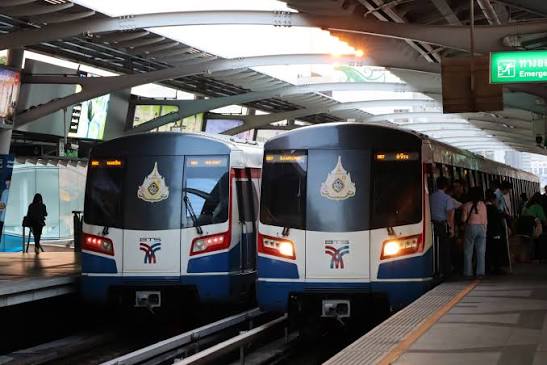
    Thailand has announced its intention to implement a common-ticket policy for electric rail services in Bangkok and the surrounding provinces. This initiative, which is expected to commence next year, will cap fares at 45 baht (US$1.36) per journey to streamline the public transportation system. Additionally, an initial cost of no more than 17 baht will be instituted, which will not be re-imposed if travelers switch to another line, as stated by Deputy Transport Minister Siripong Angkasakulkiat at a recent official gathering.

    Unifying Public Transportation

    The aim of the new fare bracket is to render Bangkok’s disjointed urban rail network more user-friendly. At present, passengers are required to negotiate separate ticketing systems, fare structures, and payment methods when moving between lines. The current SkyTrain fares can amount to as much as 65 baht, depending on the route, as per the Bangkok Mass Transit System’s data.

    The common-ticket policy’s legal and administrative procedures are projected to be finalized by November 2026. System testing is set to commence in December, leading up to the introduction of the common-ticket measure on January 1, 2027.

    Growth of the BTS SkyTrain

    The BTS SkyTrain, which began operations in December 1999 as Bangkok’s premier mass-transit rail system, has seen substantial upgrades since its inception. The original core network has expanded significantly to include approximately 68 kilometers of lines and 60 stations.

    In the last year, the BTS SkyTrain noted a 5.6% increase in ridership from 2024, recording a total of 205.4 million journeys.

    Questions & Answers

    What is the proposed common-ticket policy in Thailand?
    The common-ticket policy is a projected initiative by the Thai government to cap fares at 45 baht per trip for electric rail services in Bangkok and surrounding provinces. An initial charge of up to 17 baht will be imposed, which will not be repeated if passengers switch lines during their journey.

    Why is this policy being introduced?
    The policy aims to simplify navigation of Bangkok’s urban rail network, which currently requires passengers to negotiate separate ticketing systems, fare structures, and payment methods while transferring between lines.

    When is the common-ticket policy expected to be implemented?
    The common-ticket policy is expected to take effect on January 1, 2027, with system testing set to begin in December 2026.
  • Vietnam to promote electronic bills via lottery

    Vietnam to promote electronic bills via lottery

    Vietnam is set to use lottery prizes to promote the use of electronic bills as the country seeks to boost digital transformation.

    Since April, seven billion electronic bills, or 93 percent of the total, have been recorded, and starting July 1 all businesses in the country will have to utilize electronic billing, Minister of Finance Ho Duc Phoc told the National Assembly on Wednesday.

    To promote electronic bills, the ministry will use lottery service Vietlott to award random people using the electronic billing code submitted to the national database whenever a customer purchases a product or service.

    Promoting electronic bills is among Vietnam’s latest efforts to create an e-government as its leaders have vocalized the need to digitally transform the country to boost economic growth.

    Deputy Head of the General Department of Taxation Dang Ngoc Minh said earlier this month that tax payers can now scan a QR code to have tax bills delivered to their smartphone within 10 seconds.

  • Hanoi metro tickets to cost $0.35-0.65

    Hanoi metro tickets to cost $0.35-0.65

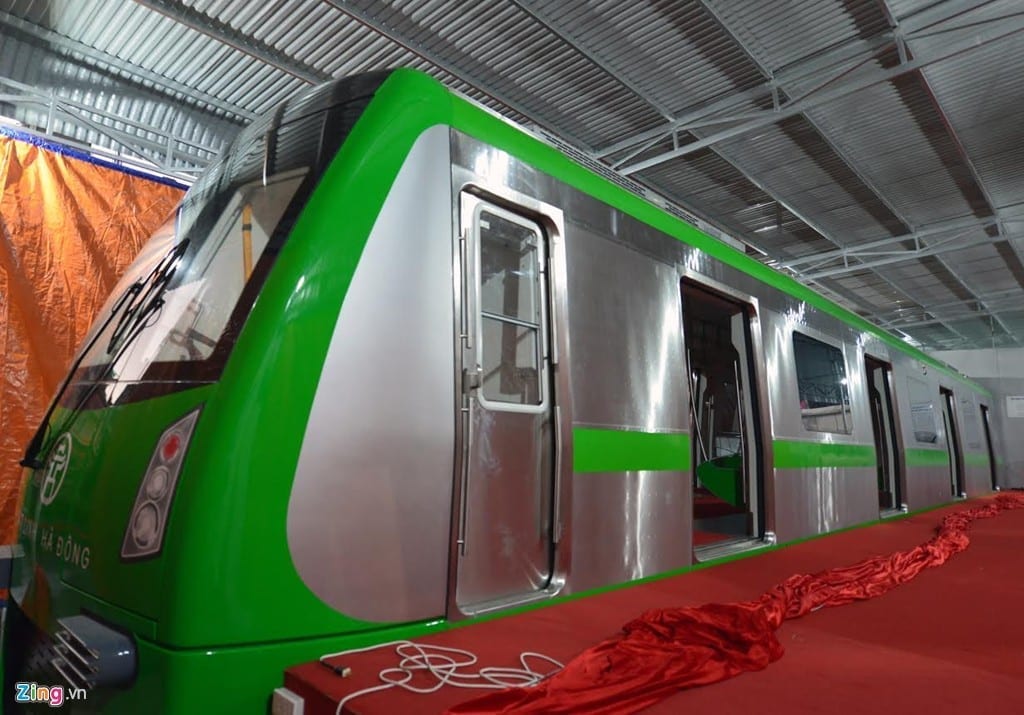
    Fares on Hanoi’s first metro will range from VND8,000-15,000 ($0.35-0.65).

    City authorities have also decided that a day pass on the Cat Linh – Ha Dong metro line for unlimited trips will cost VND30,000.

    A monthly pass will cost VND200,000 and half that for students and workers at industrial parks.

    For businesses buying the monthly pass for its employees, the rate will be VND140,000.

    Travel will be free for seniors, children under six, people with disabilities, and people designated by the government as poor.

    Fares are subsidized to boost the use of public transport, city authorities said.

    People using non-cash payment methods will get a discount of VND500 per trip.

    Travel will be free for the first 15 days after the metro begins operation, though the start date has not been announced yet.

    The full trip from Cat Linh to the south-western district of Ha Dong through 12 stations will take 25 minutes.

    A train can carry 960 passengers.

    Trains will run from 5 a.m. to 11 p.m every day.

  • AirAsia keeps improving flight services

    AirAsia keeps improving flight services

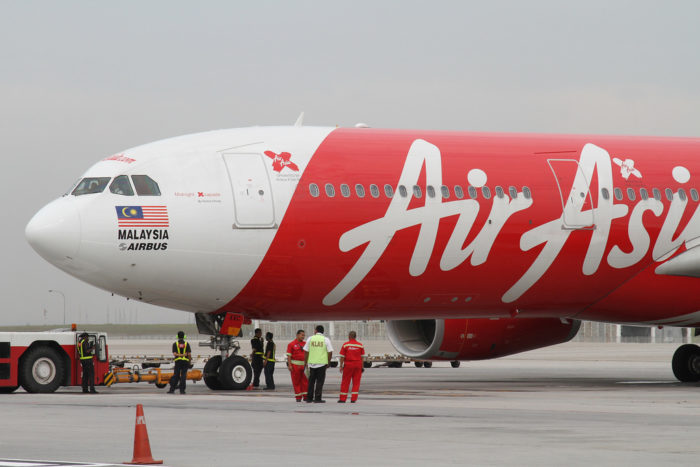
    AirAsia won for the 11th time at the prestigious Skytrax World Airline Awards as the world’s best low-cost airline during the Paris Air Show in Le Bourget, Paris, France, in the middle of June 2019. But despite the awards, it has never let itself get complacent.

    The airline keeps its commitment to continue increasing and improving its flight services for domestic routes and foreign routes, by being continually committed to providing low cost but quality flight services on all of the routes it serves.

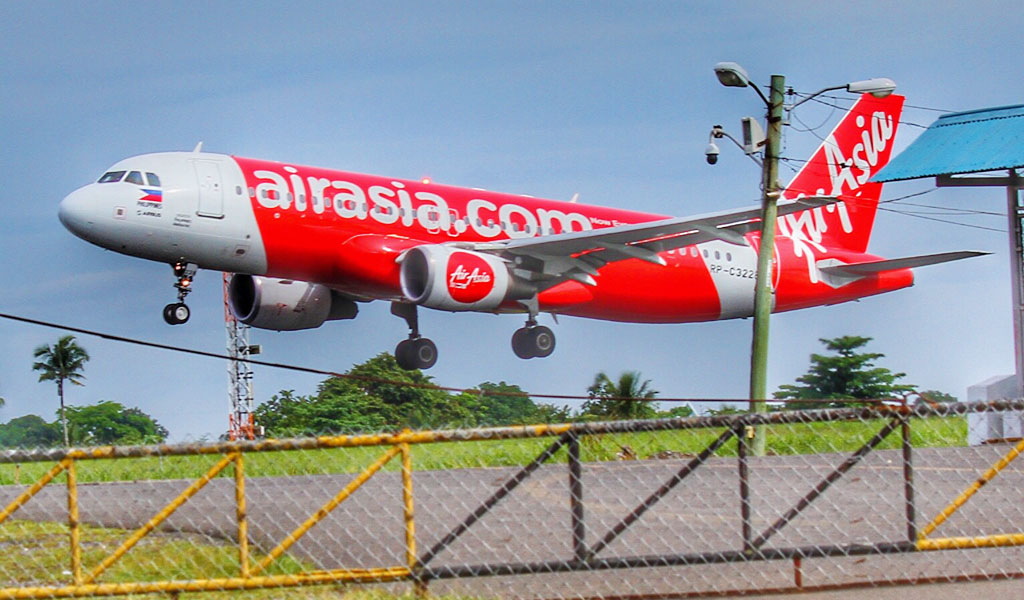
    In July 2019, the airline launched three new routes from Jakarta to Sorong in West Papua, Lombok in West Nusa Tenggara and Semarang in Central Java. The new routes will start operating on Sept. 1 and will be served by Airbus A320 aircraft with a capacity of 180 seats. In June, AirAsia launched five new domestic routes. The five round-trip domestic routes are Jakarta-Lombok (11 flights per week), Bali-Lombok (seven flights per week), Yogyakarta Kulonprogo-Lombok (three flights per week), Bali-Labuan Bajo (seven flights per week) and Surabaya-Kertajati (three flights per week). AirAsia will start operating its flight services on the five new domestic routes from Aug. 1 onwards.

    In an effort to attract more passengers to the new routes, AirAsia is offering special prices, namely for Jakarta–Lombok starting from Rp 635,000, Bali–Lombok from Rp 243,000, Surabaya–Kertajati from Rp 626,000. All the prices are one-way but include tax and free baggage up to 15 kg.

    The flight tickets, which are offered at a price of Rp 2.49 million for Jakarta-Sorong, Rp 590,000 for Jakarta-Lombok and Rp 341,000 for Jakarta-Semarang, can be ordered at airasia.com and through the AirAsia application. The prices are only for one-way but include passenger service charge and free baggage up to a maximum of 15 kg. The prices are only available on flights booked until July 28, for flights from Sept. 1 until Oct. 26.

    Sorong is the largest city in West Papua and stands as a gateway to Raja Ampat, one of the most exotic and beautiful tourist destinations in Indonesia.

    In Lombok, where AirAsia has recently opened its new hub, travelers can enjoy a number of enchanting destinations, such as Bukit Merese, the Gili Islands, Tanjung A’an, Pink Beach and Mandalika.

    In Semarang, which is also known as the little Netherlands, travelers can trace its history through the old buildings mostly from the Dutch colonial era, while hunting for local delicacies along the exotic journey.

    Besides the route expansion, last month AsiaAsia also offered five million cheap tickets through its Big Sale 2019 program for various domestic and international destinations. The promotional tickets include those on favorite routes, such as Jakarta-Singapore at a price of only Rp 150,000, Medan-Penang from Rp 230,000 and Surabaya-Bali from Rp 359,000.

    The airline has also introduced a new standard of flight comfort with its Airbus A330neo, which will certainly change the public perception of long-distance flights. It will offer the best value of ticket prices for 30 long-distance destinations in 10 major markets of AirAsia Group.

    “Besides developing international connectivity to support the visit of foreign tourists to Indonesia, this year, as we promised, we are focusing on expanding our domestic routes, especially those to eastern Indonesia.,” said AirAsia’s president director Dendy Kurniawan recently during the ceremony to launch the new routes.

    Currently, AirAsia Indonesia operates a total of 292 flights per week from Jakarta to various domestic and international destinations, such as Kuala Lumpur, Penang, Bangkok, Phuket, Surabaya, Yogyakarta and Bali.

    Overall, AirAsia serves more than 700 flights per week on 38 direct routes from 15 cities of Indonesia for domestic and international routes. It has a fleet of more than 200 airplanes of the type Airbus A320-200 and Airbus A330-300 in six countries, namely Indonesia, Malaysia, Thailand, Philippines, India and Japan, with more than 140 international destinations in Asia, Australia, the Middle East and the US.

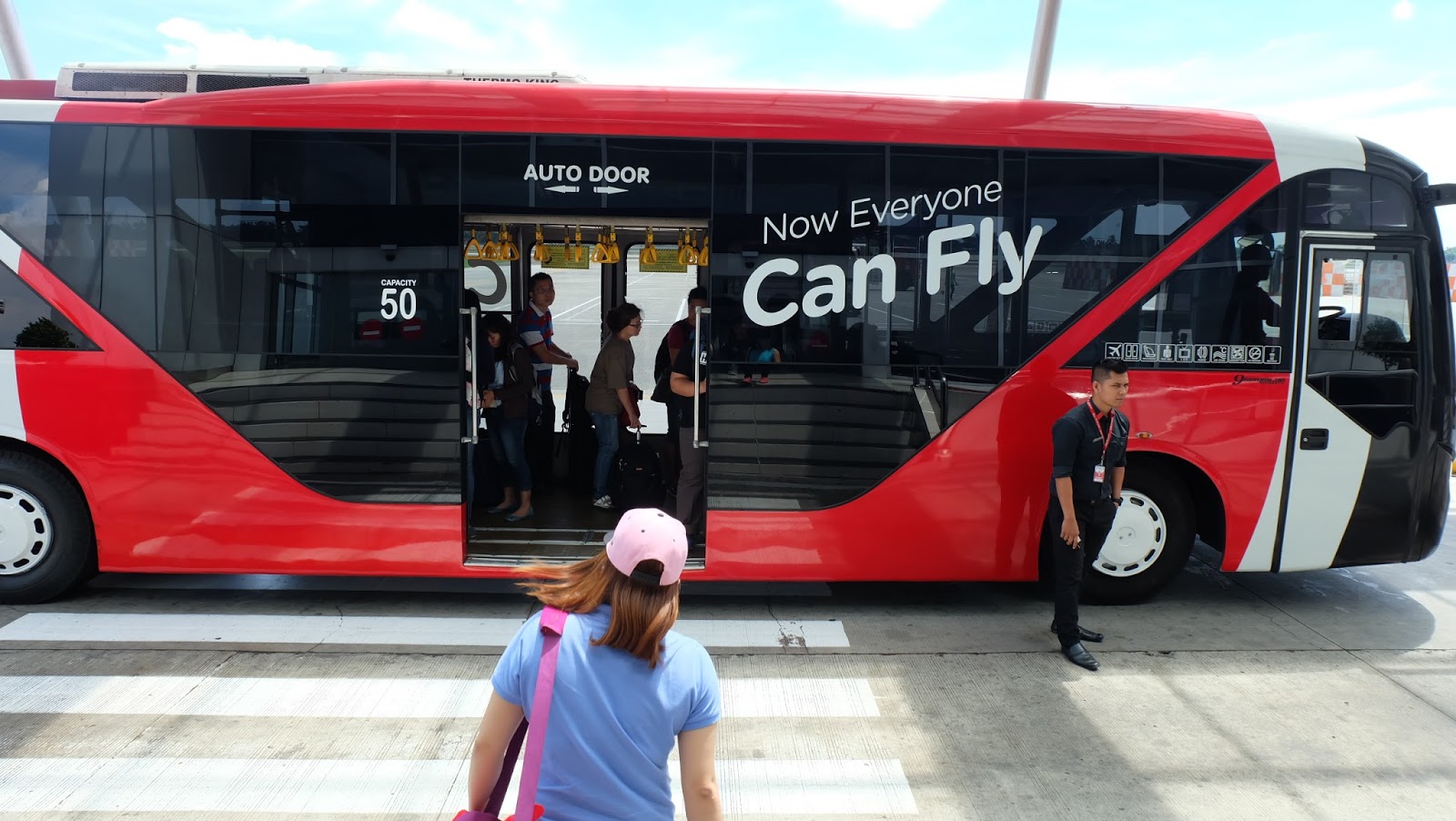
    “We’ll continue to be committed to providing low cost but quality flight services in Indonesia. We realize it through the principle of efficiency, innovation and operation digitalization. It is not just a marketing gimmick. It is part of our vision and mission to realize ‘Now Everyone Can Fly,” Dendy Kurniawan concluded.

  • Are Indonesian online travel agents dropping AirAsia

    Are Indonesian online travel agents dropping AirAsia

    Following AirAsia’s withdrawal of flights from online travel agent Traveloka, the airline told that it will be placing its focus on enhancing its products and services as well as website and mobile app instead. This comes as online agents are rumoured to be asked by major Indonesia airlines to keep AirAsia’s Indonesia flights out of their platforms. The online agents reported by the travel publication include Traveloka, Tiket.com, Panorama Group, Golden Rama Tours & Travel, and Wita Tour. Traveloka PR director Sufintri Rahayu said that she hopes that AirAsia’s withdrawal is “not a permanent decision” and the company is currently discussing with the airline how to “reach the best outcome for all relevant parties.”

    She added, “We have always done our best to provide an open and fair online platform for all our airline and travel partners, including AirAsia, to sell their services to our customers. We respect and recognise AirAsia’s position as an important regional airline in Southeast Asia. Our faith and goodwill towards AirAsia remain high as ever.”

    Meanwhile, a spokesperson from AirAsia reiterated that it remains “open to dialogue with business partners” but  did not comment further on the alleged bans from various online travel agents. Previously, AirAsia Indonesia president director Dendy Kurniawan called Traveloka out for unexplained disappearance of AirAsia Indonesia flights from Traveloka for the second time in the two weeks. He said that the omission of flights has “hurt” cooperation between AirAsia and Traveloka, adding that Traveloka has “not acted in good faith.”

    Brand impact and sale for AirAsia

    While it remains uncertain how long this saga will last, aviation consultant at CommunicAvia Gerry Soejatman said that it is “unlikely for the withdrawal to impact on AirAsia’s international market”. Even domestically, the impact may not be as high as one would have expected. He explained,

    In Indonesia, AirAsia is perceived to be the airline with the strongest direct selling compared with the others, and its customers are generally quite loyal.

    And while being on online travel agents’ website is a great form of brand recall and point of sale for many travel brands, Construct Digital’s senior internal digital marketer Jan Mascarina suggested tactical campaigns such as awareness activations can help AirAsia elevate their position in Indonesian consumers’ minds. He said, “One way to do this, aside from aggressive media spending, is to maintain a social media presence that speaks local lingos and understands local trends, in order to connect with the very locals they are trying to win business from.”

    In terms of search marketing, AirAsia could consider hijacking competitor keywords. Mascarina said, “AirAsia can bid against searches for competing airlines in the country to keep itself as the first suggestion when users search for airlines.”

    He added with 97% of Indonesian search being powered by Google, this could present a low-hanging fruit for travellers exploring their options. Moreover, AirAsia could also bid against keyword searches “for the very travel site that it now finds itself at odds with, in order to funnel some of the users from these sites into their own website.” Additionally, AirAsia should find ways to engage and grow their current user base through loyalty or referral programs.

    Prantik Mazumdar, managing partner of Happy Marketer, a Merkle Company said if there is one independent airline brand that can fight being dropped from online travel agents’ lists on its own terms, it is Air Asia.

    “AirAsia is a pioneer in data-driven digital marketing and have made huge improvements in the recent past in terms of its mobile-first customer experience to drive bookings and multi-touch customer engagement,” he said.

    To further battle this challenge, AirAsia will need to invest resources in a multi-prong approach to capture more SEM traffic for generic keywords that are usually bid for by online travel agents. It will also need to run location-based dynamic ads to achieve higher relevance and click through rates. An added focus will be needed to improve conversion rates and cost per acquisition through tactical tweaks on landing pages and drive higher bookings through it’s existing customer base by targeting them through personalised offer emails or through custom audience ad messages on social media.

    “AirAsia will also need to now create more local destination related content independently or through syndicates that improve its SEO rankings; experiment with dynamic pricing to improve its average revenue per booking metric and beyond digital, you may also see them innovate through better bundled offerings and new partnerships with hotel chains and new age digital businesses in Indonesia,” he added.

    We have all seen that Tony Fernandes and his team relish a good challenge and I’m sure they will take this head on.

    He added that this could turn out to be a great imperative for AirAsia to further build on it’s own internal full stack marketing capability and reduce it’s reliance on online travel agents.

    Industry players said that one reason for airlines to exert pressure on travel agents may be because they “want to increase fares due to high fuel costs and AirAsia isn’t playing ball.” The article also said that several consumers have take their frustration about rising domestic airfares to an online petition, which has collected near to 400,000 signatures. In an update, it said that the Indonesian National Air Carriers Association and Transportation Ministry have since responded and brought the prices down on some flight routes.

    “Airlines usually sit together to discuss their challenges, but not to set prices, that would be illegal. The Indonesian Competition Commission is looking into those allegations,” Soejatman said.

  • Hanoi metro fares initially capped at 65 US cents

    Hanoi metro fares initially capped at 65 US cents

    The maximum fare on Hanoi’s first metro line will be VND15,000 (65 cents), city authorities said in a draft proposal. The minimum will be VND8,000 (34 cents).

    Passengers can also buy monthly season tickets for VND200,000 ($8.61) or daily tickets for VND30,000 ($1.29), both allowing unlimited trips.

    The proposal, meant to collect public opinion, said the fares would only apply initially when the commercial run begins next month, and would be increased later.

    Work on the Cat Linh-Ha Dong elevated railway began in 2011 and was originally scheduled for completion in 2013. But several hurdles, including loan disbursement issues with China that were only resolved in December 2017, stalled it for years.

    The original estimated cost of $552.86 million also ballooned to more than $868 million, including $670 million in loans from China.

    The metro eventually entered the testing phase with all 13 cars carrying out trial runs on both lines. The ministry wanted commercial operations to begin before the Lunar New Year in early February, but this deadline too was missed.

    The Chinese contractor of the metro, China Railway Sixth Group Co., Ltd, plans to finish trial run this month. It has been carrying them out since last September.

    Hanoi, a city of more than 7.5 million people, has 5.2 million motorbikes and around 550,000 cars, besides some 1.2 million vehicles brought by non-residents, according to police figures.

  • AirAsia abolishes KLIA 2 fee

    AirAsia abolishes KLIA 2 fee

    AirAsia Group Bhd will cease charging the RM3 klia2 fee for all flights departing from Kuala Lumpur International Airport 2 (klia2) starting today. The klia2 fee was introduced in May 2014 to cover the additional cost created at klia2 due to the use of mandatory facilities imposed by Malaysia Airports Holdings Bhd (MAHB) such as aerobridges and SITA check-in and boarding systems, compared to the low-cost carrier terminal previously.

    “Following our announcement last week, we have removed the klia2 fee. We have said from the very beginning that klia2 is not fit for low-cost carrier operations, and we will be going directly to MAHB for all the extra costs they’re costing us,” AirAsia Malaysia CEO Riad Asmat said in a statement.

  • Cathay Pacific to honor premium Vietnam-US tickets sold by mistake

    Cathay Pacific to honor premium Vietnam-US tickets sold by mistake

    Cathay Pacific Airways mistakenly sold Vietnam-U.S. first class and business class tickets at economy prices, but will honor them. The Hong Kong flag carrier made this announcement in a Twitter post Wednesday after customers reported Tuesday that they were able to purchase first class and business class tickets at unusually cheap prices from Vietnam to North American destinations such as San Francisco and New York in the U.S. and Vancouver, Canada.

    Cathay, Asia’s largest international airline, offered return business and first seats from Vietnam’s central city of Da Nang to New York at the price of $650 and $845 respectively, while typically these tickets cost $16,000 and $31,000.

    Hanoi-based pastor Jacob Bloemberg was one of the lucky customers who were able to purchase the tickets, which only lasted “for minutes.”

    “My wife and I travel from Hanoi to the U.S. every year, but we are very excited this time as we enjoy business class seats at the price of an economy seat,” he said.

    The number of tickets sold during the computer error is believed to be several thousand. Cathay Pacific blamed the mistake on an individual entering the wrong fares into the company’s system. Although Cathay has not revealed the cost of this error, it is calculated that the airline should have collected at least $685,800 from 11 customers that it spoke to.

    However, Cathay said it hoped the move would make this year special for its customers.

    “Yes – we made a mistake, but we look forward to welcoming you on board with your ticket issued. Hope this will make your 2019 ‘special’ too!,” the airline said on its Twitter account.

    It added #promisemadepromisekept, and #lessonlearnt at the end of the post.

    Last summer, a similar situation happened with Hong Kong Airlines when business class tickets were sold for $587, much lower than the usual price of $3,800. The airline honored its mistakes and covered all bookings.

    Bloemberg said that Cathay’s move was “honorable.”

    “If there are similar errors in the future, I’d like to find out right away.”

  • Blibli.com acquires Tiket.com, expands into online travel

    Blibli.com acquires Tiket.com, expands into online travel

    Indonesian e-commerce company Blibli.com has acquired a pioneer Online Travel Agents (OTA) in Indonesia, Tiket.com. Blibli.com CEO Kusumo Martanto and co-founder and chief communications officer Gaery Undarsa, the of Tiket.com signed the documents finalising the acquisition recently. At the same event, George Hendrata was appointed Tiket.com’s new CEO.

    Since it was founded in 2011, Blibli.com has held on to a vision of expanding its business line through various innovations.

    In late 2016, Blibli.com introduced its online travel product category, Blibli Travel. Blibli Travel is a special category section that offers travel products on the Blibli.com website.

    Since then, online travel has become one of Blibli.com’s focuses in developing its business due to the size of this market.

    “Tiket.com has a good business track record. In a relatively short time, it grew into one of the biggest OTA in Indonesia. It has maintained its focus on customer satisfaction and has been consistent in running its business.

    “Moreover, we see that Tiket.com shares many similarities of vision, mission and corporate values with Blibli.com. We expect that this can ease the process of achieving synergy between the two. Based on this consideration, we are confident with this acquisition,” explained Kusumo.

    Tiket.com is currently one of the OTA with the biggest inventory of travelling-related and leisure products, namely airline and train tickets, hotel room bookings, car rental, concert tickets.

    Tiket.com has partnered with more than 35 international and domestic airlines, and with thousands of domestic and international hotels.

    Blibli Travel, newly-developed late last year, now has more than 1,000 travel product variants, including train tickets, hotel vouchers, and entertainment and lifestyle tickets.

    Blibli.com partners with various banks offering 0% interest instalment programs and offers a wide array of payment methods to customers.

    With the acquisition, Blibli.com is set to become an e-commerce group offering a one-stop shopping experience and added value to its customers.

    Business target and plan

    “The acquisition process started five months prior. We see this as an opportunity for Tiket.com to grow exponentially, in terms of the plan for synergy and from the point of view of market penetration. Seeing the future potentials and the similar business cultures and vision shared by both companies, we are very excited about the move to become part of Blibli.com” said Gaery.

    Blibli.com will provide full support to Tiket.com, both in the share inventory, sales programme, promotion, and social media penetration. Blibli.com will also help strengthen Tiket.com’s team.

    “Blibli.com is optimistic that from the business point of view we are looking at organic and non-organic growths which are to reach 2.5 times in the second semester of this year,” explained Kusumo about the target by the company for the second half of 2017.

    “With the acquisition, Blibli.com is ready to emerge as the biggest OTA player in the country and to become the only, or the first, B2C e-commerce player in Indonesia whose OTA business offers the most complete variety of travel products,” said Kusumo, who went on to explain that the money for the acquisition was from the internal sources set up by Blibli.com for its business development.

    Moving forward, Blibli.com sees no reason not to expand to other categories of products. The company, however, for the time being will concentrate on developing the two e-commerce companies to cater to the traveling and online shopping needs of its domestic and international customers.

  • B2B Marketplace Bizzy.co.id Launches in Indonesia With $2.5 Million Investment

    B2B Marketplace Bizzy.co.id Launches in Indonesia With $2.5 Million Investment

    Ardent Capital today announced the launch of one of Indonesia’s first B2B ecommerce marketplaces with a $2.5 million commitment to Bizzy.co.id, amidst a growing investor gold rush to ecommerce ventures in the country.

    Bizzy will solve a pain point with procuring inventory, supplies and services from other businesses. The platform carries thousands of products from hundreds of merchants in business supplies, electronics, cleaning, pantry and services.

    “Globally B2B ecommerce has gained massive traction. In Korea we’re talking 91 percent penetration, while in Indonesia this type of ecommerce is in its infancy so the opportunity is huge. Just 11 percent of all startup endeavours in Indonesia are dedicated to B2B,” said Adrian Vanzyl, CEO of investor Ardent Capital.

    Disrupting the Traditional B2B Climate

    Bizzy CEO and co-founder Peter Goldsworthy spent the past eight years building businesses in Indonesia and saw a lack of innovation in business supplies and services.

    “I was constantly frustrated with ordering supplies and services. In particular I felt the entire process of sourcing, approval and shipping could easily be improved upon,” Peter said.

    Through market research Bizzy discovered that many distributors and principal brands were having difficulties reaching and servicing their direct B2B customers.

    “Merchants were struggling to meet the needs of businesses. What we were seeing was that the way businesses shop was much more complex than how an individual would and this was causing problems at both ends of the transaction,” Peter explained.

    Bizzy helps merchants make the shift to online and meet the logistical demands of B2B business customers, by integrating multiple shipments from multiple vendors, known as ‘crossdocking’, through the fulfilment center of partner aCommerce.

    Enticing Millennials

    The demographics of those making B2B purchasing decisions has shifted rapidly. In a Google- and Millward Brown Digital-partnered B2B marketplace report this year, data showed that between 2012 and 2014 the age of those doing B2B research increased 70 percent in the 18- to 34-year-old age group. The data also showed that by 2014 this millennial age group was also accounting for 46 percent of B2B purchasing decisions.

    “Millennials are now the key decision-makers for company sourcing. This changing of the guard means they expect the same information available for personal purchases when they search for business solutions. Bizzy addresses that need,” Peter added.

    Bizzy will actively support not just tech startups but charities, hospitals and universities by offering wholesale pricing through a complimentary year of ‘Bizzy Wholesale’ membership, entitling them to wholesale purchase rates irrespective of purchase quantity.

    With customers like Tiket.com, Traveloka, Halomoney and Grabtaxi already onboard, Bizzy is generating the buzz to make 2015 the year of B2B.

    Snapshot: Penetration of B2B Ecommerce in Asia

    In the US, B2B ecommerce represents a $1 trillion opportunity, while in mature Asian markets B2B ecommerce already accounts for a large and growing share of total online transactions:

    • In China B2B ecommerce is estimated to have a potential value of $2.1 trillion by 2020
    • In South Korea 91 percent of online transactions are B2B
    • In Thailand B2B represents more than 50 percent of all online transaction value, yet by startup founder type, captures less than 20 percent of all founders who launch businesses
    • In Indonesia the current split between B2B and B2C revenue is just 11 percent