Retail News CRM

Tag: tickets

  • Vietnam stops selling domestic flight tickets

    Vietnam stops selling domestic flight tickets

    The Civil Aviation Authority of Vietnam (CAAV) on Monday requested airlines to stop selling tickets for domestic flights until further notice.

    Airlines would need to refund tickets for customers who’ve already purchased theirs from July 21, the CAAV added.

    The number of flights from cities and localities under Covid-19 social distancing orders as dictated by Directive 16 would be limited as well, it said.

    Since July, the CAAV has requested airlines to limit the number of flights from socially distancing localities to Hanoi amid concerning coronavirus threats. The Hanoi-HCMC flight route, an important one, has been limited to two flights a day at maximum.

    Domestic flight passengers must present effective negative coronavirus test papers.

    Vietnam closed its borders and canceled all international flights in March last year, and has since allowed only certain categories of visitors with strict Covid-19 quarantine requirements.

    The country has recorded 445,292 local Covid-19 cases since the fourth coronavirus wave hit Vietnam in late April.

  • Bamboo Airways warned for overselling tickets

    Bamboo Airways warned for overselling tickets

    Vietnam’s aviation authorities have ordered Bamboo Airways to stop selling tickets for the wrong flight slots after many passengers complained of canceled and delayed flights.

    Each airline has an allocated number of flight slots, meaning a specific period of time wherein an aircraft can take off or land at an airport depending on the latter’s capacity, but Bamboo Airways has sold tickets for slots that it does not have, according to the Civil Aviation Authority of Vietnam (CAAV).

    In recent weeks customers have been complaining about Bamboo Airways frequently canceling or delaying flights, especially on the Hanoi-Da Nang route.

    On March 4, the budget carrier published a public apology over its changing of schedules, blaming it on maintenance work happening at the Noi Bai International Airport.

    However, a representative of Noi Bai airport said the maintenance work had finished earlier and that flight schedules were not affected by it.

    The CAAV has informed Bamboo Airways that if it ignored the warning and continued to offer tickets for the wrong flight slots, the carrier will not get more slots for six months.

    In January, Bamboo Airways, Vietjet, and Vietnam Airlines all received warnings for selling tickets for the wrong slots for the annual Tet (Lunar New Year) holiday.

  • AirAsia transitioning to asset-light business model

    AirAsia transitioning to asset-light business model

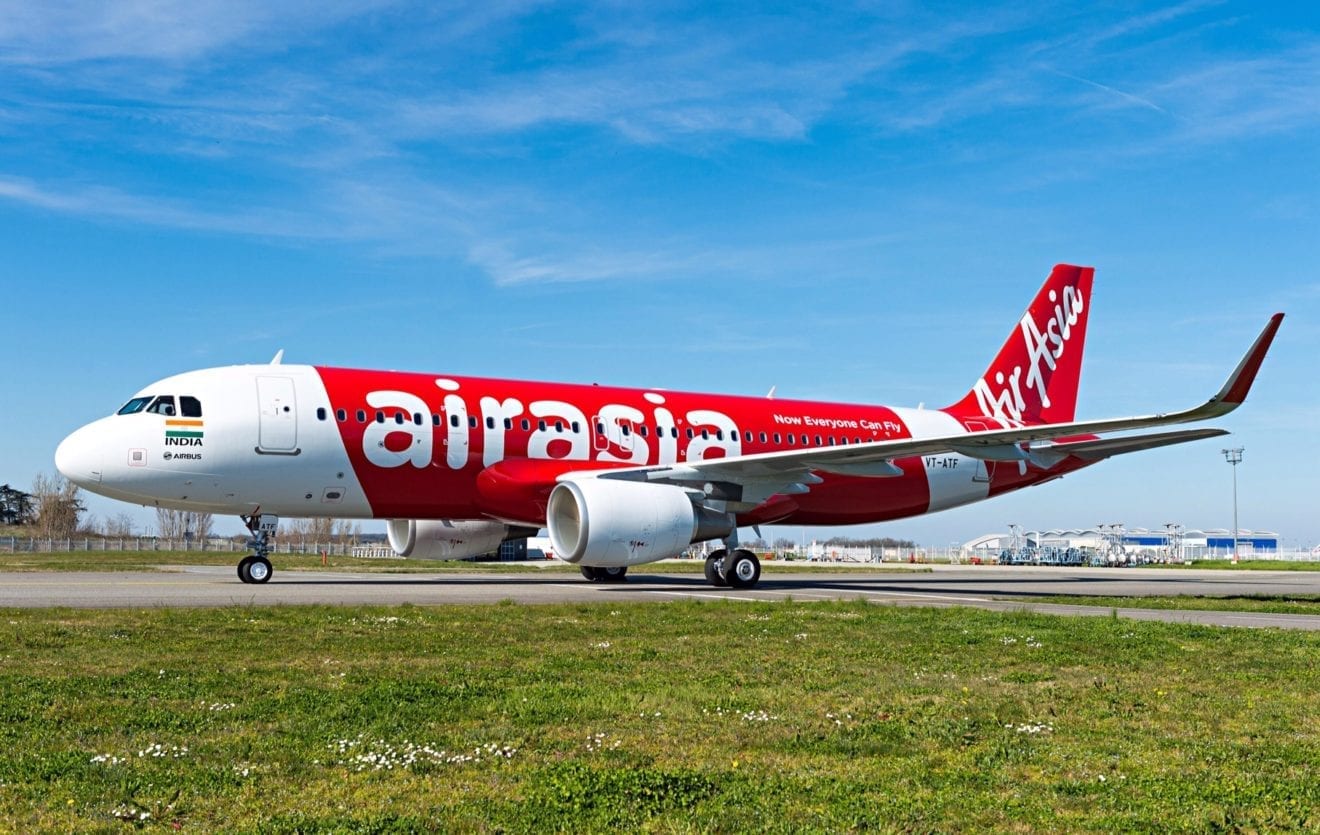
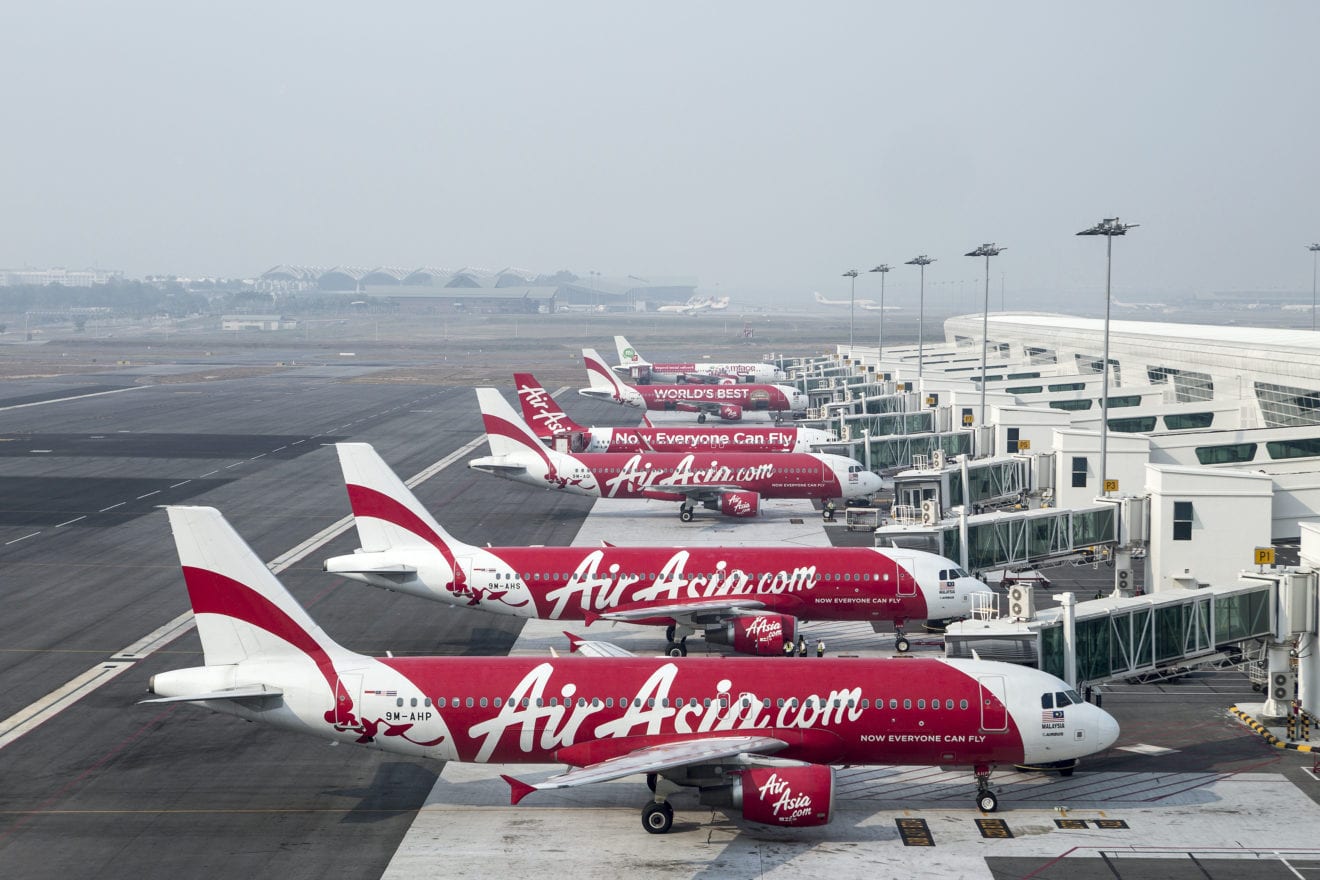
    AirAsia is moving from the traditional model of owning aircraft to become an asset-light airline. The company plans to fully shift to the new model by completely withdrawing from aircraft ownership, a move that would bring the obvious benefit of lowering its financial liabilities.

    During AirAsia’s conference call with analysts last Wednesday, its management said it is targeting to sell another 19 aircraft this year.

    AirAsia is also focusing on its “digitalization” agenda, management added.

    The analyst said AirAsia would be looking to secure a deal similar to what it achieved last year when it went into sale and leaseback agreements that helped it raise a lot of funds.

    AirAsia’s management expects to raise around RM1.5bil from the sale and leaseback of its remaining 19 aircraft.

    Last year, the airline group sold 79 aircraft and 14 aircraft engines to US private investment firm Castlelake LP in a deal worth RM4.38bil.

    Following the success of the sale, AirAsia had last week announced a bumper dividend of 90 sen a share, which is worth more than RM3bil in total payout.

    For shareholders of AirAsia, this strategy has worked out well. AirAsia began its aggressive sale and leaseback programme and dishing out dividends around 2017.

    Here’s an interesting fact: AirAsia shareholders who bought the company shares on Jan 2, 2017 would have paid RM1.78 per unit. Since then, that’s exactly how much the airline has paid back in dividends, giving back those investors their entire cost of buying those shares.

    “AirAsia is a different company now. It is transitioning into an asset-light model, focusing its services through its platform and on-the-plane experience as well as its mobile wallet,” an analyst said.

    Going forward, though, not all analysts have a positive view on the airline’s earnings growth prospects.

    Going by Bloomberg data, analysts have a varied target price on AirAsia’s shares, ranging from RM1.56 to RM5.20.

    For the first quarter ended March 31, AirAsia posted a 92% drop in net profit to RM96.09mil compared with RM1.14bil recorded last year, when it recorded extraordinary gains. Its shares closed at RM2.88 last Friday.

    CIMB Research analyst Raymond Yap expects AirAsia’s future earnings to be under pressure, stemming from rising operating costs and higher depreciation as well as interest expenses due to the Malaysian Financial Reporting Standards 16.

    He added that other risks included higher fuel prices and a weaker ringgit against the US dollar.

    “The poor results will likely shock the market and cause analysts to slash their earnings forecasts, although the share price may be supported in the next two months by the 90 sen special dividend per share,” he said in a report.

    Yap has recommended investors to sell their positions in AirAsia prior to the dividend ex-date on June 30.

    “We recommend investors to take advantage of any share price upside post-announcement of the 90 sen special dividend to sell into strength, and to sell their AirAsia holdings prior to the dividend ex-date on June 30, 2019, to avoid the rush out of the door,” he said.

    Although AirAsia’s management has highlighted that it is targeting to continue with special dividend payments to shareholders for every two years, Yap believed the group is unlikely to declare additional special dividends in the near future beyond the 90 sen per share it had announced.

    “Continued losses at AirAsia India and Indonesia AirAsia may require the group to provide further equity injection or continuous working capital support,” he said.

    A different view is held by Nomura Research analyst Ahmad Maghfur Usman, who has the highest target price of RM5.20 for AirAsia shares. He expects AirAsia’s core earnings in financial year 2019 (FY19) to double to RM1.37bil compared with RM656mil last year.

    “We remain optimistic on the earnings outlook on the back of lower fuel costs, coupled with the turnaround from its Asean affiliates, while we expect losses from India to narrow on improved scalability as passenger volumes increase,” he said in a research note.

    For this year, AirAsia is targeting to add 18 aircraft including additional 11 for AirAsia India.

    In terms of its digital business, AirAsia is targeting to roll out remittance and lending products and expand its BigPay offerings to other Asean countries this year.
  • Google Maps speed camera alerts and speed limit indicators rolling out

    Google Maps speed camera alerts and speed limit indicators rolling out

    One of the important features that differentiate Waze from other navigation apps like Google Maps is the possibility to see in-depth traffic information and get alerts about speed cameras and speed limits indications.

    Surprisingly, the feature didn’t make it to Google Maps yet, even after the search giant acquired Waze. Well, the anomaly is about to be completely dissipated as Google Maps users in a bunch of countries report they are now getting speed camera alerts and can now see speed limit indicators.

    Speed camera alerts should now be available for many users in the following countries: Australia, Brazil, Bulgaria, Canada, Czech Republic, Finland, Greece, Hungary, India, Indonesia, Israel, Italy, Mexico, the Netherlands, Portugal, Romania, Russia, Saudi Arabia, Slovakia, Slovenia, South Africa, Spain, Sweden, the UK, and the US.

    Furthermore, another new Google Maps feature, the option to see speed limits while driving, is now live in Denmark, Poland, the UK, and US. However, we expect these features to roll out to all Google Maps users worldwide, it’s just that this appears to be a released gradually, so we’ll just have to wait until Google enables it for more people.

  • Vietjet Prepares for Take-off with Super Promotional Tickets  in Conjunction with International Women’s Day

    Vietjet Prepares for Take-off with Super Promotional Tickets in Conjunction with International Women’s Day

    Jetsetters certainly have something exciting to look forward to. With just a few days left till International Women’s Day, Vietjet is offering a whopping 2.4 million super-saving tickets priced from MYR0. Tickets can be purchased at https://www.vietjetair.com/ from 6 to 8 March, 2019.

    The promotional tickets are applicable during golden hours from 1.00pm – 3.00pm on all of Vietjet and Thai Vietjet’s domestic routes, as well as international routes connecting Vietnam to Malaysia (Kuala Lumpur), South Korea (Busan and Daegu), Taiwan (Kaohsiung, Taipei, Taichung and Tainan), Singapore, Thailand (Bangkok, Phuket and Chiang Mai), Myanmar (Yangon) and Cambodia (Siem Reap).

    To top it off, for flights linking Hanoi / Ho Chi Minh City – Osaka (Japan); Hanoi – Tokyo; and Ho Chi Minh City / Phu Quoc – Hong Kong (China), the special promotional tickets will be available at all times during the three golden day sale period. The flight period is from 7 May – 31 December 2019 (**).

    With a network comprising 39 domestic routes and 66 international routes, Vietjet operates safe flights with a technical reliability rate of 99.64% — the highest rate in the Asia Pacific region. As a fully-fledged member of International Air Transport Association (IATA), Vietjet has obtained the IATA Operational Safety Audit (IOSA) certificate and has been awarded a 7-star ranking, the world’s highest rate for safety, by AirlineRatings.

  • Vietjet Air offers 2.4 million cheap tickets to the fast ones

    Vietjet Air offers 2.4 million cheap tickets to the fast ones

    Budget airline Vietjet Air will offer 2.4 million tickets starting from 0 VND on March 6-8 to celebrate the International Women’s Day (March 8). Promotional tickets will be on sale from 12:00 to 14:00 for flights across Vietnam, Thailand and some other international ones.

    Meanwhile, low-cost tickets for some flights to Japan and Hong Kong (China) will be offered every hour of the three days. The tickets are valid for passengers travelling from May 7 to December 31 this year.

    The promotional tickets are available on all sales channels, including the website www.vietjetair.com

    Vietjet Air currently operates 40 domestic routes and 66 international ones.

  • AirAsia warns of free ticket scam

    AirAsia warns of free ticket scam

    AirAsia has issued a public warning about a social media post, claiming to offer free flight tickets through an online survey.

    The post asks participants to answer several questions to redeem vouchers, the low-cost carrier said in a statement on Monday.

    “There is also another scam circulating on Facebook, offering 268 free tickets in conjunction with AirAsia’s 28th anniversary.

    “Both scams used the AirAsia brand without authorisation and aim to lure the public to participate in it,” it added.

    The airline said it will not be held liable for any claims pertaining to the false scheme and will not hesitate to take legal action against individuals or groups that organise illegal schemes using the AirAsia brand.

  • AirAsia India Offers All-Inclusive Tickets

    AirAsia India Offers All-Inclusive Tickets

    Ahead of the Holi festival next week, AirAsia India has announced a promotional offer, selling tickets starting Rs. 1,499. Bookings for this AirAsia India offer are open till March 12, 2017, the airline – which is a joint venture between Tata Sons and Malysian carrier AirAsia – said on its website. AirAsia India’s special fares scheme is applicable on travel till June 30, 2017, said the airline, which competes with the likes of Air India, IndiGo, Jet Airways and SpiceJet in the domestic market.

    Under the special all-inclusive tickets programme, aimed at the upcoming Holi festival, tickets between Hyderabad and Bengaluru are being offered from Rs. 1,499 – the lowest under the scheme.

    “Celebrate the festival of colours with your loved ones in #Srinagar, #Pune & other awesome destinations!” AirAsia India said in a tweet.

    Some of the other routes covered under the offer include Imphal-Guwahati from Rs. 1,999, Pune-Jaipur from Rs. 2,999, and Pune-Bengaluru and Visakhapatnam-Bengaluru from Rs. 2,399, as per the AirAsia India website.

    Discounted fares from various airlines have spurred strong growth in air travel market in India. The country’s domestic air passenger traffic zoomed 25.13 per cent to 95.79 lakh last month, data from aviation regulator DGCA (Directorate General of Civil Aviation) showed.

    Rival airlines IndiGo, SpiceJet and Jet Airways had also announced discounted tariffs recently.

    Also, AirAsia India is likely to commence international operations from the second half of next calendar year. “We will have 14 aircraft in the fleet within this year, depending on the business performance. And, we will add another six planes by the middle of the next year. Then we will get to international operations,” its CEO Amar Abrol had said earlier.

  • AirAsia warns of fake ticket sales on Facebook, Instagram

    AirAsia warns of fake ticket sales on Facebook, Instagram

    Discounted AirAsia and AirAsia X tickets sold on social media platforms are likely fraudulent, the airline warned the public today.

    The low-cost carrier today said it has already encountered several complaints from consumers who procured the tickets from unauthorised resellers who advertised these at heavily discounted rates on Facebook and Instagram.

    “The airline would like to remind the public to book their flights only through official channels such as the website airasia.com, official websites of its affiliates (such as AirAsiaGo.com) and official sales centres listed on our website,” it said in a statement today.

    It then urged the public to verify such third-party offers via the airline’s social media channels on Facebook, Twitter and Ask.

    The low-cost carrier said that its popularity in the region made it an attractive target for such scams, further warning that it may take legal action against those involved, in addition to the police report it has already lodged.

  • Thai airlines raise domestic fares

    Thai airlines raise domestic fares

    Thailand’s low-cost airlines are increasing fares on domestic routes in a respond to a massive increase in excise tax on jet fuel that came into effect last week. The government increased the fuel tax on all domestic flights from 20 satang to THB4  per litre, claiming it was overdue, while bringing the tax more inline with the THB6 a litre tax on diesel fuel.

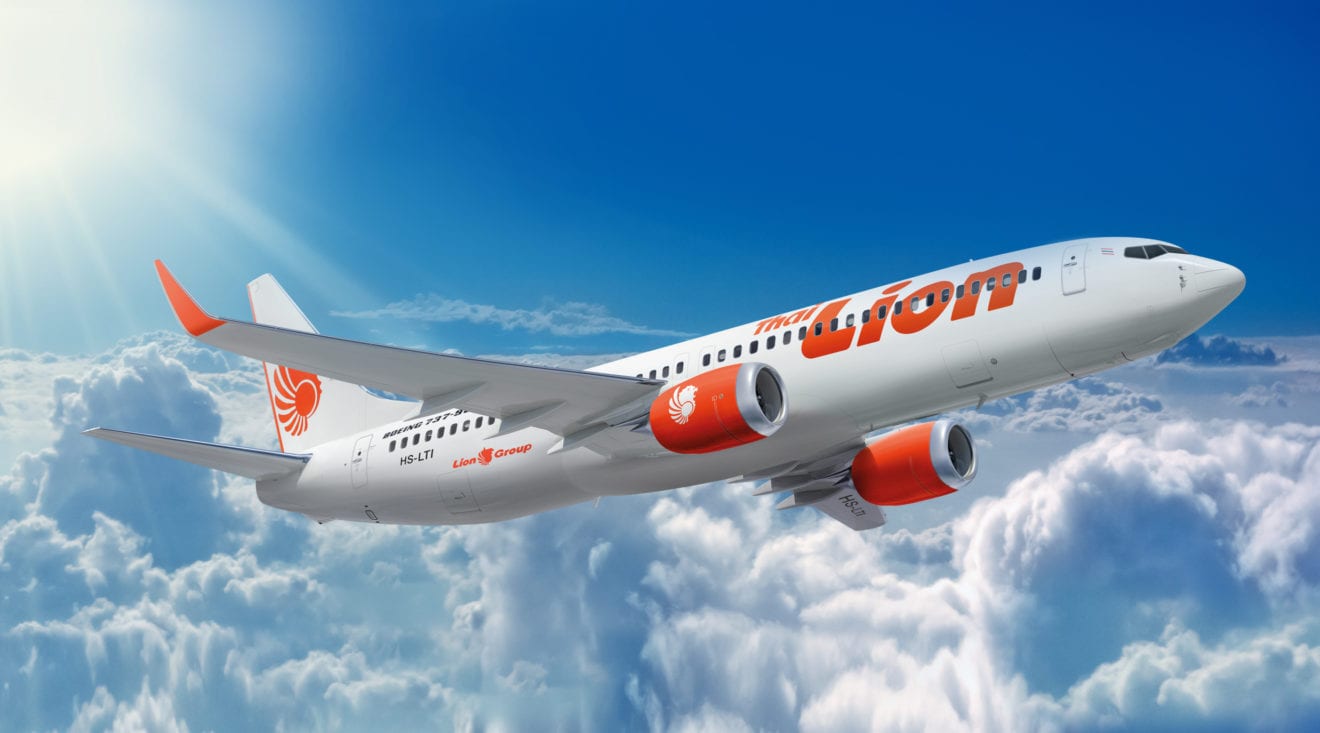
    Nok Air, Thai Lion Air and Thai AirAsia issued statements, Tuesday, saying they would raise fares on domestic routes to reflect the “real cost increase by THB150 per sector”. It will increase roundtrip fares by THB300.

    This additional cost will be included in all fares posted on Nok Air’s website as of 6 February 2017 onwards, the statement read.

    Thai AirAsia and Thai Lion Air announced the same increase, effective 1 February (Air Asia) and 6 February (Lion Air).

    Bangkok Airways announced later in the day  that it would increase fares by THB200 per sector, effective 8 February.

    Excise Department  director general, Somchai Poolsavasdi, said the increase should generate more than THB4 billion from domestic jet fuel consumption, which is expected to reach 1.2 billion litres a year.

    Excise tax on lubricants has also been raised, to THB5 a litre from zero previously, he said.

    He noted that land transport companies pay THB6 in excise tax on a litre of diesel fuel, while airlines have enjoyed a 20 satang tax (100 satang = THB1) for years. The  tax is not applied to international flights originating or transiting in Thailand.

    The department hiked the fuel tax to create fairer competition in business, he said. It was a reference to rail and bus transport that has suffered a mass migration to airline travel.

    Inter-city bus fares will be slightly more competitive when compared with airline fares after the THB150 is added to air fares. By 2016,  jet fuel costs had declined by 36% since 2014 and this allowed low-cost airlines to quote fares that were almost identical to long-distance bus fares (air-conditioned buses).

    While offering a token helping-hand to bus operators, the government’s other hand will snatch THB4 billion in taxes ultimately from travel consumers.  It is unlikely  to persuade travellers to return to long-distance bus transport noted as the second most dangerous form of transport after the infamous Toyota commuter van.

    Thai aviation has been rising rapidly in recent years powered by low-cost airlines at the expense of land transport. Jet fuel consumption, will exceeds 1 billion litres this year, the director general reported.

    Association of Domestic Travel advisor, Yutthachai Soonthronrattanavate, told Voice TV media that the tax increase would impact badly on domestic tourism.

    “As airlines increase fares to compensate, the burden falls squarely on the consumer’s’ shoulders,” he said.

    “The tax measure will hurt airlines operating domestic flights flying about one hour and using 8,000 to 9,000 litres per trip …it will increase an airline’s costs…in turn passengers will then have to spend more on flights.”

    In the past when fuel prices were high, airlines immediately passed part of the cost to consumers in the form of a “fuel surcharge.”   They eventually were forced to include the surcharge as part of the base fare rather than lumping it with service fees and taxes at the close of the transaction.

    Thailand’s Ministry of Tourism and Sports is counting on domestic tourism to boost earnings and share the benefits of tourism beyond the main gateways.  Low-cost airlines are the main driver allowing urban Thais to explore their country safely and at competitive prices.

    Government officials will argue there are alternatives such as rail and road transport, but the standard and safety of those alternatives lags far behind air travel.

    It would take a massive investment to upgrade rail transport to offer fast inter-city rail travel that could be considered  a credible alternative to low-cost airline travel. It’s decades away which means for most travellers  low-cost airlines continue to be the only choice to get around the country quickly and safely.

    In the TV interview, Yutthachai said the excise department should have staggered increases step by step to give airlines a chance to adjust while cushioning the impact on consumers.

  • Vietjet offers tickets at VNĐ5,000

    Vietjet offers tickets at VNĐ5,000

    Vietjet will sell five million air tickets at only VNĐ5,000 (20 cents) per ticket from December 28, 2016 to February 28, 2017, as part of its fifth anniversary celebrations.

    The carrier’s “Win a 1-kg gold airplane, Fly to a happy future” promotions offers super-cheap airfares on www.vietjetair.com between noon and 2pm. Passengers who book tickets within the promotional period have the chance to take part in a lucky draw for 3.75-gram gold bullion prize every week and a 1-kg gold airplane.

    The discounted fares apply for all domestic routes and international services between Việt Nam and Hong Kong, Taipei, Kaohsiung, Taichung, Tainan, Seoul, Busan, Singapore, Bangkok, Kuala Lumpur, Yangon and Siem Reap.

    All passengers flying from December 28, 2016 to February 28, 2017 will also get the chance to win free return air tickets every day onboard Vietjet flights.

    The airline is also planning a series of other promotional activities such as photo ops with bikini models and surprise performances at several domestic and international airports.

  • GIC buys $370 million ticket to the movies in Indonesia

    GIC buys $370 million ticket to the movies in Indonesia

    GIC is investing 3.5 trillion rupiah (S$370 million) in Indonesian cinema operator PT Nusantara Sejahtera Raya (NSR) as the Singapore sovereign wealth fund hopes to capture a slice of Indonesia’s economic growth.

    The investment is intended to help NSR further anchor its market position and to prepare for the next stage of growth, GIC and NSR said in a press release.

    “The investment by GIC reflects our confidence in Indonesia’s long-term growth potential,” said Amit Kunal, GIC’s head of direct investments group for South-east Asia, private equity and infrastructure.

    “NSR’s operational expertise and portfolio of high quality cinemas positions it well to benefit from the rapidly expanding consumer class and economic development in Indonesia. We look forward to working with the team at NSR to accelerate its presence nationally and to achieve the vision of providing best-in-class cinematic experience to the country.”

    NSR owns the Cinema 21, Cinema XXI and The Premiere brands in Indonesia.

    The company operated 864 screens in 157 cinemas across 36 cities in the country as at December 2016.

    The NSR investment is in line with GIC’s stated long-term optimism about the region’s economic prospects.

    In GIC’s investment report in July, the fund noted that it held more emerging market equities than a reference portfolio.

    About 19 per cent of the fund’s portfolio was invested in emerging market equities as at March 31, 2016, up slightly from the 18 per cent allocation a year earlier.

    “We have assessed that emerging market equities will benefit from the sustained structural improvements in these economies, and contribute positively to the long-term real returns of the GIC portfolio,” GIC said.

    “We have maintained this assessment even though emerging market equities have underperformed developed market equities in recent years.”

    The worldwide cinema industry is expected to continue to grow over the next few years, with Asia-Pacific outpacing the global average, according to an analysis by PwC.

    In a recent report, PwC estimated that the Asia-Pacific cinema business could grow at a rate of 11.8 per cent per year from US$14.2 billion in 2015 to US$24.7 billion in 2020.

    The expected global average is a more modest 5.8 per cent per year over the same period.

    Box office sales in the region are estimated to grow at 12 per cent per year through 2020, about double the global outlook of 5.8 per cent per year.

    Asia-Pacific cinema advertising is expected to grow at 6 per cent every year through 2020, more than two times faster than the expected global average of 2.8 per cent.

  • 70 percent train tickets for Christmas season already sold

    70 percent train tickets for Christmas season already sold

    Seventy percent of the regular train tickets for travel during Christmas and New Year 2017 holidays have been already sold, Bambang Eko Martono, the Director of state railway operator PT Kereta Api Indonesia, said here on Monday.

    “We are targeting 258 million passengers this year,” Bambang Eko Martono stated.

    “PT KAI will offer new additional train tickets that could be ordered on Tuesday (Nov 15) at 12 noon,” he added.

    PT KAI has will make available 13,892 additional train seats during the Christmas and New Year 2017 holiday period.

    “We have made available 212,564 seats per day with 328 regular train trips and 28 additional train trips during Christmas and New Year holidays, about 11 percent more than last year,” he noted.

    The number of passengers travelling by train during the holiday season increased by six percent, from 4.3 million in 2015 to 4.5 million this year.

    PT KAI estimates that revenue during the holiday season could increase up to 10 percent, compared to last years figure for the same period.

  • Lion Air should not just return passengers` tickets

    Lion Air should not just return passengers` tickets

    The airline company, Lion Air, should not resort to merely returning passengers tickets after it postponed 277 flights following sanctions imposed by the ministry of transportation, a consumer institute has said.

    “The Lion Air management should transfer the passengers tickets to other airlines, instead of only returning the tickets purchased by them,” Chairman of the Indonesian Consumers Institute (YLKI), Tulus Abadi, demanded here on Monday.

    He argued that while the Lion Airs decision to postpone 277 of its flights for one month did not basically violate any rule, it should also not violate consumers rights.

    “The ministry of transportation should supervise this strictly to prevent the company from violating consumers rights,” he stressed.

    The ministry of transportation has imposed a sanction on the Lion Air, freezing its flights for five days for having recently disembarked international passengers from Singapore at the domestic terminal of Soekarno Hatta Airport.

    The management of Lion Air opposed the sanction by reporting the directorate general of air transportation to the police and postponed 277 of its flights for a month.

    Tulus was of the view that the Lions legal move to oppose the ministry of transportations sanction was rather awkward.

    “It is rather an anomaly. Probably this is the only case of its kind in the world where the operator is taking a stand against the regulator.”

    On May 10, Lion Air pilots went on strike at the Soekarno-Hatta Airport on Tuesday, leading to a delay in the low-cost carriers flights to several regions in Indonesia.

    The corporate secretary of state airport operator, Angkasa Pura I, Farid Indra Nugraha, explained in a press statement released on Tuesday that his side has been in close touch with the representatives of the Lion Air Group at the airport.

    Farid claimed that his side had made efforts to ensure that the airline is able to serve the passengers despite the delay in flights.

    “In response to the Lion Air pilots strike at several airports under the purview of Angkasa Pura I, we call on the passengers to understand the conditions and be patient,” he pleaded.

    The strike led to a delay in Lion Air flights from Sam Ratulangi Ariport in Manado, North Sulawesi, Sultan Hasanuddin Airport in Makassar, South Sulawesi, Lombok International Airport in West Nusa Tenggara, I Gusti Ngurah Rai Airport in Bali, and Adisutjipto Airport in Yogyakarta.

    Public relations manager of the Lion Air Group, Andy M Saladin, denied that the pilots had gone on strike because they had not received transport allowances.

    “There is no strike. The airlines operations have returned to normal,” he pointed out.

    Meanwhile, Lion Air President Director Edward Sirait insisted that the fact that some of the airlines pilots fell sick, coupled with an administrative problem, was what had led to flight delays.

    “We, on behalf of the Lion Air Management, apologize for the inconvenience,” he said.