Tag: TigerAir

  • Tigerair Cancels Flights From The Whitsundays To Sydney

    Tigerair Cancels Flights From The Whitsundays To Sydney

    Tigerair has announced it will cancel flights from Whitsunday airport to Sydney in early 2020. Flights will still continue over the Christmas and New Year period, but anyone who has booked the service from Feb 2020 onwards will be notified by the airline.  Direct flights will still continue to be available through Jetstar.
  • Tigerair expands PBH contract with AJW Group

    Tigerair expands PBH contract with AJW Group

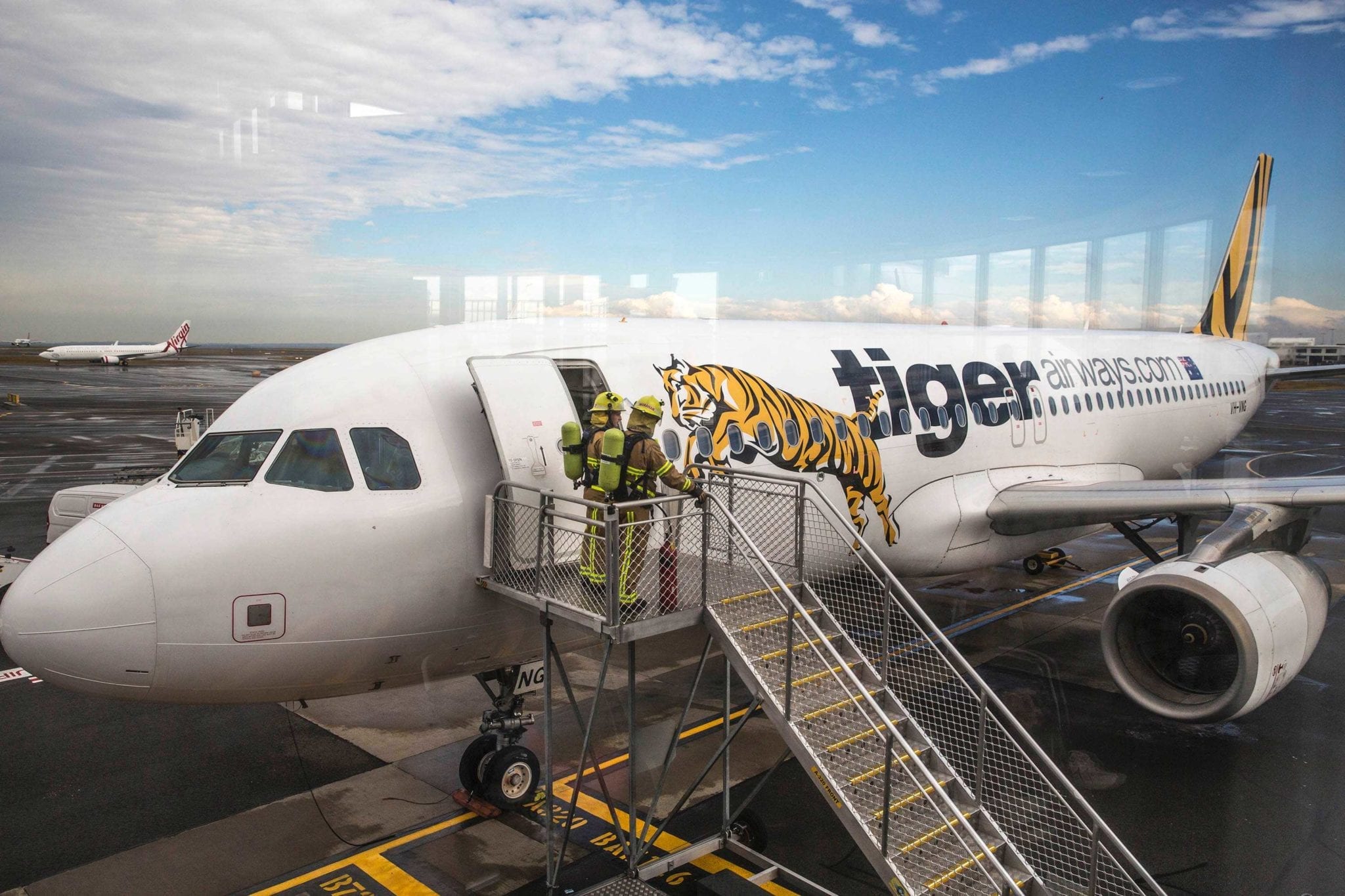
    Australian low-cost airline Tigerair has extended Power-by-the-Hour (PBH) contract with AJW Group. AJW Group specializes in the global management of aircraft spares.

    The company has been providing an integrated component pooling, repair and logistics support program to Tigerair since 2014. The PBH agreement covers Tigerair’s fleet of A320 aircraft.

    Under the support program, AJW will satisfy the airline’s material requirements across a variety of component groups including airframe and engine LRU’s, major assemblies, wheels and brakes, auxiliary power units (APU), thrust reversers and consumables.

    Tigerair is an Australian low-cost airline headquartered in Melbourne with two additional established service bases at Sydney and Brisbane Airports. Tigerair operates a fleet of Airbus A320 and Boeing 737 aircraft, across 21 domestic routes out of 12 destinations around Australia.

    Christopher Whiteside, chief executive officer of AJW Group said: “Tigerair was AJW’s first major contract in Australia and our work over the past five years has demonstrated the Group’s strength across the Australasia region.”

    Over the past five years, AJW Group has successfully delivered improved operational efficiency and cost savings, which according to AJW Group, are ‘key focus areas for the airline’.

  • Tigerair eyes Davao-Taipei flights

    Tigerair eyes Davao-Taipei flights

    Another international air link will be added to Davao City as Tigerair Taiwan plans to service the Davao-Taipei route within the year or early 2020.

    Department of Tourism Davao Regional Director Tanya Rabat-Tan revealed that the new route will boost the region’s tourism, trade, and investments

    She said a group of 12 Taiwanese travel agents and an executive from the airline visited Davao Region in July.

    “We tour(ed) them around the city and region. The highlight of our tour was our beach destinations especially in Samal, Davao del Norte,” she said during the agency’s presentation of its accomplishments and updates on Monday, October 7, at Seda Abreeza Hotel in Davao City.

    The regional director said the Taiwanese visitors were impressed with Davao’s tourism destinations.

    “They appreciate more about the people’s hospitality and the food. The tour has strengthened their intention to set up Davao-Taipei route,”she said.

    Rabat-Tan added that Tigerair Taiwan initially planned to launch a chartered flight only but later on decided to push regular direct flights due to the routes viability.

    “If it is not going to push through this year, it will be early next year. Also, we are expecting another visit from them any time within the year but most likely a bigger group will be coming,” she said.

    Sustaining flights

    Following the launch of more direct flights to the city, Rabat-Tan acknowledged the necessity of programs and plans to sustain these flights.

    Trade and tourism roadshows and missions are already set to promote Davao Region and Mindanao as a whole to international markets where Davao has direct link and vice versa.

    “A mission to Taipei composed of Davao tour operators and other stakeholders including city officials is presently being organized. It is more like a Business-To-Business (B2B) meeting. We are in constant communication with the Taiwan group,” she said.

    She also mentioned a Manado, Indonesia travel roadshow with Mindanao Development Authority (MinDA) and Department of Trade and Industry (DTI) is happening this month or in November.

    How are other flights doing?

    Rabat-Tan shared that, in a meeting last week, the Qatar Airways country manager said he was happy with how the Davao-Doha route is performing. She said plans of increasing the flight frequency of the route is being discussed.

    Qatar Airways’ Doha-Davao route, the first long-haul flight in Mindanao, was launched on June 18. It is operating once a week, every Friday.

    Meanwhile, around 50 travel agents from Hong Kong are also set to visit Davao City sometime in November to promote the Davao-Hong Kong link.

    She also shared that Davao-Tokyo route is currently being discussed with the City Government of Davao and Davao City Chamber of Commerce and Industry, Inc.

    At present, Davao City has five international direct air links – Singapore; Hong Kong; Quanzhou, China; Qatar; and Manado, Indonesia.

    These routes are currently being served by six airlines namely Cebu Pacific, SilkAir, XiamenAir, Qatar Airways, Cathay Dragon, and Garuda Indonesia.

  • Tigerair and SilkAir were merged into Scoot and Singapore Airlines

    Tigerair and SilkAir were merged into Scoot and Singapore Airlines

    Creating a more simple model was the main motivation behind Singapore Airlines whittling the number of its brands from four – Scoot, Tigerair, SilkAir and Singapore Airlines to just two: Scoot and Singapore Airlines.Singapore Airlines CEO Goh Choon Phong spoke about the reasons driving the consolidation of its brands during a session discussing the portfolio strategy of the airline at the first Skift Forum Asia.

    In response to a question from Skift airline weekly editor Madhu Unnikrishnan on the decision to wind down SilkAir, Goh pointed to the fact that SIA at one stage had four airline brands – two low-cost carriers (Tigerair and Scoot) and two full-service airlines (Singapore Airlines and SilkAir) across short, medium and long haul routes. He said, “It was not the most efficient way to address connectivity.”

    And so the decision to merge Tigerair into Scoot and SilkAir into Singapore Airlines to “simplify the model”, said Goh.

    Asked whether SIA was contemplating a more premium offering under the Scoot brand, Goh said: “Our model is to keep things pure. Singapore Airlines and Scoot offer two ends of the spectrum. We can compete and win in those segments.

    “Anyone in between will have a hard time.”

    Goh also addressed why SIA first opted to start a low-cost offering. He said: “10 years ago, we realized low-cost carriers were a structural and not a cyclical change.

    “We decided to be involved for two key reasons: without a low-cost carrier, we could not participate in that growth.

    “Also, they made it difficult for us to operate as a short-haul carrier. There were many hugely successful examples of full-service airlines setting up low-cost options. Most of these were done to serve smaller cities.”

    Given Singapore’s city-state status, this was not an option, said Goh, who added that Scoot was created to work as seamlessly as possible with the main brand. It was the right decision on hindsight. Goh pointed out that low-cost carriers now accounted for over 50% of traffic in the region.

  • Tigerair receives most complaints for sixth year in a row

    Tigerair receives most complaints for sixth year in a row

    For the sixth year, Tigerair has scored the dubious title of being the most complained about airline in Australia. The recent data by the Airline Customer Advocate, from January to December 2017, which has gone largely unreported, revealed the low-cost carrier had the highest rate of complaints in relation to flight cancellations or delays — with an average of two complaints for every 100,000 passengers.

    Overall, the most common complaints among Australian domestic carriers related to flight cancellations (28 per cent), refund requests (26 per cent), baggage services (11 per cent), loyalty and frequent flyer programs (10 per cent) and fees or charges (7 per cent).

    The annual report revealed a total of 1253 complaints out of more than 77 million passengers were received in 2017, which was up 17.15 per cent on the previous year. 

    Tigerair also received the highest complaints in relation to refund requests — with an average of 1.54 complaints for every 100,000 passengers.

    A Tigerair spokeswoman said the airline was committed to delivering a safe and reliable service to its customers.

    “In aviation there are times when things go wrong for reasons outside of our control and we recognise that the way we handle such disruptions is an important part of the customer experience,” the spokeswoman said.

    Virgin Australia was next with 0.42 complaints relating to refund requests, followed by Jetstar with 0.36, Qantas with 0.31 and Regional Express with 0.24.

    Virgin Australia fared the worst when it came to complaints about baggage services, receiving an average of 0.24 for every 100,000 customers, It was followed by Jetstar and Tigerair with 0.17, Qantas with 0.14 and Regional Express with 0.08.

    Of the three airlines that offer frequent flyer or loyalty programs, such as Qantas, Virgin Australia and Jetstar, the most complaints were lodged against Qantas. Airline Intelligence Research managing director and former Qantas chief economist Dr Tony Webber said he wasn’t surprised that cancellations and delays were the biggest gripes among passengers. 

    “Tigerair are on really strict turnaround times given that they’re a smaller and low-cost carrier,” Dr Webber told.

    “This means that they’re just as strict on refunds because the ability for passengers to buy a cheap fare means that they don’t get a refund.”

    Dr Peter Bruce, airline operations expert at Swinburne University, said some airlines outsource their baggage handling to third-party services. 

    “Areas of improvement could definitely include better engagement with these services to create more efficiency,” Dr Bruce told.

    Monash University’s Professor Greg Bamber, who has researched airline performance in Australia and overseas for more than 15 years, said complaints needed to be handled better by low-cost carriers. 

    “Passengers aren’t being dealt with appropriately as they’re usually put through to a call centre which is usually in another country,” Professor Bamber told.

    Passengers are usually left to wait on hold, in some cases more than an hour, he said.

    “Low-cost carriers need to step up and handle complaints more appropriately, especially when it comes to cancellations which can be extremely frustrating.”

    A Virgin Australia spokeswoman said the airline continually reviewed its complaint-handling practices to facilitate a responsive and positive experience for its customers and to ensure it was complying with its legal obligations.

    A Jetstar spokesman said the airline still had areas to work on, but was pleased to see a reduction in the number of complaints in a number of key areas including delays and cancellations, refund requests and fees or charges.

  • Tigerair Taiwan announces Cebu-Taipei flights with seat sale

    Tigerair Taiwan announces Cebu-Taipei flights with seat sale

    Tigerair Taiwan said it would start flying between Cebu City and Taipei on Dec. 1. Taiwan’s only low-cost carrier said it would offer a 2-day seat sale for the new route starting Monday. Tigerair will use the new Mactan-Cebu International Airport and will compete with the Philippines’ largest carrier, Cebu Pacific and AirAsia in the Cebu-Taipei route.

    “Tigerair Taiwan’s presence in Cebu shall give Filipinos more access to fun, affordable, and memorable flights to Taipei. We look forward to this development before the year ends,” said Tigerair Taiwan spokesperson Bernard Hsu.

    Tigerair flight IT537 will depart Taipei for Cebu every Tuesday, Thursday, Saturday, and Sunday. The return flight, IT538, will depart Cebu every Monday, Wednesday, Friday, and Sunday.

  • Tigerair has the most delayed flights of any airline

    Tigerair has the most delayed flights of any airline

    Delayed and cancelled flights are on the rise, leading to calls for Australian passengers to be ‘better compensated’. Tigerair has the most delayed flights, followed by Jetstar, Virgin and Qantas, data from the Bureau of Infrastructure, Transport and Regional Economics shows.

    Only 71.4 per cent of Tigerair flights arrived on time, compared to 77.2 per cent for Jetstar, 83.4 for Virgin Australia and 84.7 for Qantas, the report revealed. Delayed and cancelled flights are on the rise, leading to calls for Australian passengers to be ‘better compensated’ Only 71.4 per cent of Tigerair flights arrived on time, compared to 77.2 per cent for Jetstar, 83.4 for Virgin Australia and 84.7 for Qantas, the report revealed.

    The average on-time arrivals across all airlines was 82 per cent and 1.9 per cent of all flights were cancelled.

    This represented an increase of delayed flights and cancellations compared to previous years.  QantasLink had the highest rate of cancellations in 2017, following by Tigerair and Virgin Australia Regional Airlines.

    The highest rate of cancellations was 6.2 per cent on the Sydney-Hamilton Island route, followed by Hamilton-Island to Sydney at 6.1 per cent and Melbourne to Hamilton Island at 5.2 per cent.

    The average on-time arrivals across all airlines was 82 per cent and 1.9 per cent of all flights was cancelled

    Choice spokeswoman Stefanie Menzies told Australian airlines are ‘flying below the radar’ on consumer protection.

    ‘Compensation should be fair and standardised, no matter what airline you’re on or what the customer service agent decides you deserve on the day,’ she told the publication.

    ‘Airlines should take responsibility for their own mistakes instead of making passengers pay for a delay.’

  • Customers can use Zippay to pay for Tigerair flights

    Customers can use Zippay to pay for Tigerair flights

    Jetsetters on a budget can now pay for their flights in installments using buy now, pay later schemes. Low-cost carrier Tigerair is the latest airline to join forces with a scheme allowing customers to book their flights, go on holiday and pay off their airfares at a later date.

    Partnering with alternative payments provider Zip, the airline will put the plan in place by the end of this month, giving travellers Zip interest-free payment options on all domestic and international fares, allowing them to pay off their flights in bite-sized instalments.

    Passengers can book multiple flights up to the value of $3000 and then have full flexibility to repay either in weekly, fortnightly or monthly instalments.

    Zip customers have up to 60 days to repay before they incur any charges.

    The move follows in the footsteps of rival airline Jetstar, who last year introduced the option to use Afterpay for flights booked at least four weeks in advance for fare reservations ranging anywhere between $200 and $1000.

    Tigerair spokeswoman Vanessa Regan said the move would make it more affordable and convenient for jetsetters wanting to ease the burden of paying for flights.

    “We are pleased to be providing our customers with better flexibility when it comes to booking and paying for travel with Tigerair,’’ she said.

    But consumer group Choice’s spokesman Tom Godfrey has warned customers if they can’t afford a flight in the first instance they could be “flying into a world of financial pain.”

    “Far from taking a relaxing holiday, you could end up staring down a debt collector,’’ he said.

    “We’d urge caution with these buy now, pay later financial products.”

     Zip co-founder Peter Gray said Zip does ID and credit checks for every applicant and there are no establishment fees.

    “You can make as many purchases as you like and you receive a statement on the first of the month with your balance,’’ he said.

    “You have until the end of the month to pay off your balance in full and we’ll waive the monthly fee, or if you choose to take longer, and choose to only pay the minimum, there’s a $6 monthly account fee.
  • Cebu Pacific, Tigerair JV secures Singaporean antitrust nod

    Cebu Pacific, Tigerair JV secures Singaporean antitrust nod

    Cebu Pacific Air (5J, Manila) and Tigerair (TR, Singapore Changi) have secured Singaporean anti-trust regulatory approval for their enhanced joint venture on flights between the Philippines and Singapore.

    Under their original agreement filed in September of last year, the two carriers proposed jointly operating common routes between the two countries (Singapore to Manila, Clark, and Cebu in particular) and other markets that may emerge, on a metal-neutral basis. In addition, they intended to jointly sell and market common and non-common routes while cooperating in the area of sales and marketing, distribution, airport operations and ground handling, scheduling, procurement, and pricing among other areas.

    The Competition Commission of Singapore (CCS) said in its ruling that an initial assessment of the joint venture had shown it would impinge on competition on the Singapore-Clark and Singapore-Cebu routes where the two are the only operators and the dominant operators respectively. The Singapore-Manila route would not be affected given the presence of what the CCS termed ‘strong carriers’Philippine Airlines (PR, Manila) and Jetstar Asia Airways (3K, Singapore Changi).

    Given the CCS’s concerns, the carriers agreed to make various concessions which include reducing the level of cooperation on the Singapore–Clark and the Singapore–Cebu routes to an interline agreement only. In addition, they pledged not to coordinate on any commercial activities, such as pricing, surcharges and capacity, and will not undertake any form of revenue sharing on the Singapore–Clark and the Singapore–Cebu routes.

    “The Parties’ coordination will instead be restricted to coordinating minimum and maximum connecting times in their booking systems for the purpose of creating joint interline itineraries. Scheduling of flights on these two routes will also be carried out independently by each Party,” the CCS said.

    With these guarantees in place, the CSS said the risk of coordinated fare increases and the possible impediment to the entry by other airlines on these routes to be “sufficiently mitigated.”

    Both carriers welcomed the CCS’s decision

  • Tigerair Australia proves it’s ‘true blue’ despite Qantas concerns

    Tigerair Australia proves it’s ‘true blue’ despite Qantas concerns

    A government body has paved the way for Virgin Australia subsidiary Tigerair Australia to begin operating low-cost flights to Bali despite concerns raised by rival Qantas.

    The ruling by the International Air Services Commission, deeming Tigerair an “Australian international airline”, should also make it easier for Tigerair to add more international destinations such as New Zealand and Fiji. Obtaining this designation was a prerequisite for Tigerair to apply for an international airline licence.

    Virgin had applied to the IASC to vary the terms of its allotted capacity to Bali so that a wholly owned subsidiary, Tigerair, could also use it. The positive decision helps clear the way for Tigerair to launch flights from Melbourne, Adelaide and Perth to Bali from March, taking over routes that are currently flown by Virgin.

    To be designated an “Australian international airline”, a carrier needs to be majority-Australian owned. More than 80 per cent of Virgin shares are held by overseas investors including Air New Zealand, Etihad Airways, Singapore Airlines and Sir Richard Branson’s Virgin Group. However, in 2012 it split off its international arm and gave it its own board to meet the ownership requirements under the Air Navigation Act.

    Qantas concerns

    In 2013, when Qantas boss Alan Joyce was seeking government aid for his then-ailing carrier, he called the Virgin structure a “sham”. “We all know that Virgin’s international business has no independent existence apart from the foreign-­controlled domestic business: no assets, no management, no people, no funds,” Mr Joyce said at the time.

    In a submission to the IASC last week, Qantas said Virgin needed to prove its subsidiary was an Australian carrier in order for a complete assessment of the application to be made.

    A Virgin spokeswoman said on Friday Tigerair’s international arm was a subsidiary of Virgin’s international arm.

    Tigerair will use Virgin international’s Boeing 737 aircraft and pilots on the Bali route, although the flight attendants will be employed by the low-cost carrier. There are no plans for Tigerair to apply for a separate air operator’s certificate for its international operations, but it is required to obtain an international airline licence, which is a less onerous process.

    The IASC on Friday approved Virgin’s application to transfer some of its Bali capacity allocation to Tigerair, after being advised by the Department of Infrastructure and Regional Development that the budget carrier complied with the ownership and control obligations of the Air Navigation Act.

    The IASC said there would be a public benefit to Tigerair flying to Indonesia, which had outbound traffic of 1.1 million passengers in the year ending July. Other carriers that operate the route include Jetstar, Garuda Indonesia, Virgin, AirAsia Indonesia and Indonesia AirAsia X. Qantas has also announced plans for seasonal flights to Bali from Sydney in December and January.

    “The commission considers that Tigerair’s proposed services between Australia and Indonesia will likely benefit consumers, as Tigerair’s presence on the Indonesia route will likely promote competition on this popular route,” the IASC said.