Retail News CRM

Tag: tiki.vn

  • Chinese Singles’ Day courts Vietnamese consumers

    Chinese Singles’ Day courts Vietnamese consumers

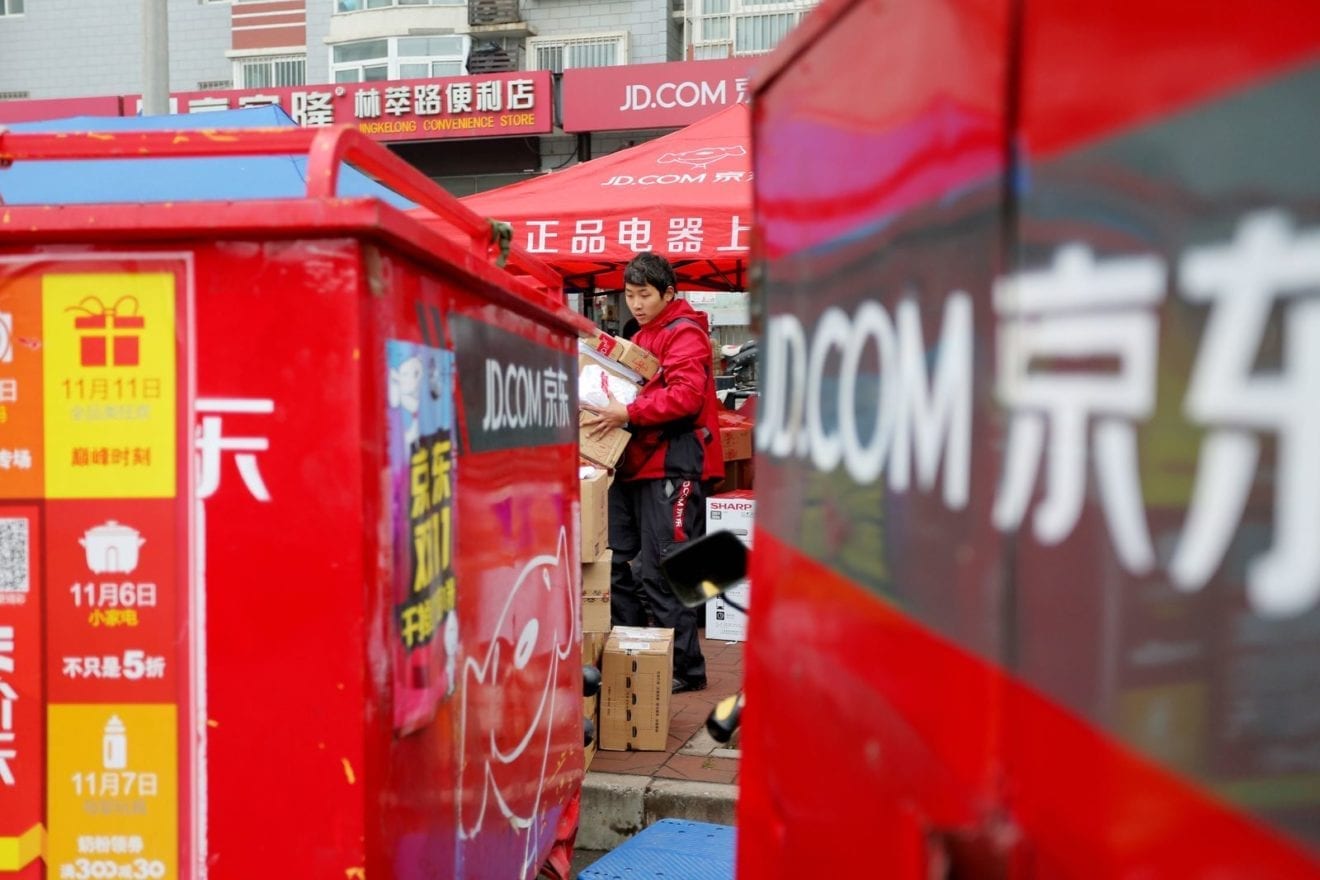
    Promoted by Alibaba in China for more than 10 years, Singles’ Day is now courting Vietnam with great fervor. More than a week before “Singles’ Day’ which falls on Nov. 11, major shopping firms in Vietnam had begun to update their mobile applications with a range of games designed to ‘hype up’ consumers.

    These included shaking the phone to earn coins (shopping vouchers), discount lotteries and ‘easter eggs’ giving specific discounts, and many more.

    Few retailers explain why Nov. 11 was chosen as the date for this promotional event, which some hail as “the biggest discount of the year.”

    Consumers and online businesses both acknowledge, however, that the marketing race building up to the day has been very fierce.

    The most boisterous claims came from Singapore based e-commerce group Lazada, which announced that it will gift 110,000 vouchers worth $10 million.

    General manager of Lazada Vietnam, Zhang YiXing, said he had spent the last three months fine-tuning Lazada’s app and working with vendors for the Nov. 11 event.

    Although they have no reason or specific connection with Alibaba, other e-commerce sites are not missing the opportunity to profit from Singles’ Day. Industry insiders remark that with competition so fierce, the ‘big players’ are implementing emulation strategies to grab whatever advantage they can get at.

    In particular, businesses do not want to stand idle during an event which increases the traffic and revenue of its rivals. So they’ve all jumped on the Singles’ Day bandwagon and made it spread further.

    “E-commerce is the most developed industry in Vietnam and also the most competitive,” said Tran Ngoc Thai Son, founder and CEO of e-commerce company Tiki.

    On the Tiki website, the company hails Nov. 11 as the “legendary sales season”, introducing a lottery to win laptops, phones and shopping vouchers with a total value of up to VND10 billion ($431,980).

    Meanwhile, Shopee, a consumer Internet platform provider based in Singapore, has called this day the “Super Sale.” The company has also launched a game consumers can play to earn rewards and has been promoting a different product line each day to attract attention before the official event.

    Lotte.vn has also jumped into the fray in dramatic fashion, calling the event the “Nov. 11 shopping war”, while Adayroi, run by Vietnam’s biggest private conglomerate Vingroup, has launched a full week of promotions from Nov. 1-11 with its “Sale Season”.

    Experts say that in addition to price, this years’ competing retailers have also focused more on branded goods and after-sales service.

    “Technology is no longer a challenge for Vietnam’s e-commerce sector but consumer confidence. Now choosing products and discounts from a trusted retailer is also important, not just price,” said Le Hai Binh, vice president of the Vietnam E-commerce Association.

    “Delivery and after-sales services are competitive advantages that cannot be ignored in this race.”

    Lucrative day

    Although not as fierce as this year, last Nov. 11 had made ‘a killing’ for retailers, encouraging them to step up promotions this year.

    According to data released by France-based commerce marketing company Criteo, retail sales of online shopping sites in Vietnam during the last Single’s Day campaign increased 245 percent, compared with ordinary days in the year, and marked a 70 percent increase in traffic.

    Last Nov. 11, traffic increased the most in the evening, from about 9 p.m. onwards. Shopping time “peaked” at 11 p.m., which is one hour before promotions end, so consumers were rushing to finish their shopping.

    The two most popular items last year were home appliances and electronics, with sales soaring by over 276 percent and 266 percent respectively compared to ordinary days.

    Silvia Siow, Criteo’s chief customer strategy manager for Southeast Asia, Hong Kong and Taiwan, said that these two categories were best sellers because of their high value. People tended to wait for promotions to cash in on significant discounts in absolute terms. Siow also said that Nov. 11 was playing a growing role in Southeast Asia, not just Vietnam.

    He said the real gains from Nov. 11 were not in sales but an expanded customer base and increased market share.

    “Sales are important, but traffic is more important. Increased traffic may represent newcomers who arrive and discover or rediscover products. “

    The heat of the Nov. 11 race in Vietnam is expected to last many years as it is the second most dynamic e-commerce market in Southeast Asia, behind Indonesia.

    Economist Simon Baptis, CEO of Asia region for the Economist Intelligence Unit (Economist Group) said: “Vietnam will be one of the fastest growing economies in the region with real growth constant at a high level between 2019 and 2023.

    “Reinforcing consumer confidence in e-commerce and electronic payment systems is also a need of the period.”

  • Shopee becomes top e-commerce in Vietnam in Q3

    Shopee becomes top e-commerce in Vietnam in Q3

    Shopee has become the leading Vietnam e-commerce market player, followed by Lazada and Tiki. The report published by Iprice Insight, ranks the top 50 Vietnam e-commerce market players based on their average quarterly traffic, mobile application ranking, social media followers and number of staff, using data collected in July.

    The report shows that during the quarter, Shopee had a monthly average traffic of 34.5 million visitors while Lazada, which had topped the list since the second quarter of last year, achieved 30.2 million.

    Other players in the Top 5 included local company Tiki, with 29.4 million visitors a month, Sendo with 20.7 million, and Adayroi with 5.3 million.

    All of the top four platforms have foreign investment.

    Iprice predicts significant changes during the next quarter when the platforms offer more promotions to stimulate shopping as year-end approaches.

    The Vietnam e-commerce market has been growing fiercely, with revenue forecast to reach US$10 billion by 2022.

  • Tiki.vn attracts investors despite $26 million in accumulated losses

    Tiki.vn attracts investors despite $26 million in accumulated losses

    A prominent case in instance is that of Tiki.vn, a popular e-commerce platform in the country.

    Tiki Jsc. (Tiki) started off as an online book store in 2010 before venturing into e-commerce. Just six years later, the firm was valued at $45 million, following domestic tech firm VNG injecting some $17 million in a 38 percent stake acquisition deal.

    However, at the end of that year, 2016, Tiki’s financial statement showed accumulated losses of nearly VND308 billion ($13.39 million). Tiki had posted revenues of nearly VND62.4 billion ($2.71 million) in 2016, a six-fold increase over 2015. However, this was accompanied by a loss of around VND179 billion ($7.78 million) because of high operational costs.

    In its annual report for 2017, VNG showed Tiki making a loss of VND282 billion ($12.26 million) for the year, raising its aggregate losses to VND590 billion ($25.65 million).

    Despite its losses, Tiki has remained attractive to investors as a leading brand in the market. In mid-January this year, JD.com Inc., a giant retailer in China, injected an unspecified sum into Tiki. The Chinese firm had announced last November that it would pump $44 million into the Vietnamese e-commerce platform, making it Tiki’s largest shareholder.

    Unlike other types of firms, startups like Tiki are not valued on the profit it makes, but on other key elements like market growth, market share, sales, average purchase value, and customer retention rates.

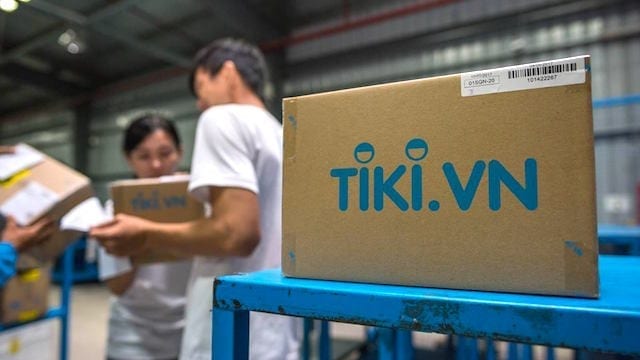
    Tiki, which ships goods across the length and breadth of Vietnam, has annual sales of about $240 million, according to the Financial Times. And it is not the only e-commerce firm recording continual losses in Vietnam.

    Ralf Matthes, managing director of market research company Infocus Mekong said that e-commerce platforms are in the red largely because of their fragmented logistics chains.

    He said that with up to 80 percent of consumers paying cash on delivery, the logistics required in just collecting payment leads to losses.

    E-commerce firms in the country were also drawn into a cash-burning battle as they spent on massive sales and marketing campaigns to promote their platforms, he said.

    The Vietnam E-commerce Association (VECOM) said that the local e-commerce market grew 25 percent last year and that this growth is expected to continue through 2020.

  • JD.com widens Southeast Asia presence by investing in Vietnam’s Tiki.vn

    JD.com widens Southeast Asia presence by investing in Vietnam’s Tiki.vn

    Chinese online retailer JD.com Inc has made an investment in Vietnamese e-commerce firm Tiki.vn, expanding its Southeast Asia business amid growing competition in the region from Alibaba Group Holding Ltd and Amazon.com Inc.

    JD.com co-led the financing with Vietnamese entertainment and social media firm VNG Corp, which is an existing investor, China’s second-biggest e-commerce firm behind Alibaba said in a statement on Tuesday.

    The firm did not disclose the size of the funding but said that JD.com will become one of Tiki’s largest shareholders alongside VNG following the deal.

    Vietnamese media had reported in November that the round was worth roughly 1 trillion dong ($44.04 million). JD.com declined to give a dollar number for the investment.

    “With JD’s expertise in leveraging social media for e-commerce, Tiki.vn’s partnership with VNG in social network and mobile payments is a natural fit,” Winston Cheng, president of JD.com’s international business, said in the statement.

    Vietnam is the latest focal point in JD.com’s strategic push into Southeast Asia, where Alibaba and Amazon have also made significant investments in the past year.

    JD.com will tap Tiki.vn’s warehousing and delivery system, as well as its technology and payments capabilities.

    Tiki.vn and VNG’s tie-up has similarities to the partnership between JD.com Inc and internet giant Tencent Holdings Ltd, which is an investor in JD.com and Asia’s largest tech firm by market cap.

    JD.com leverages data and payments from Tencent’s WeChat, China’s most popular social media app, and will seek to build similar capabilities with VNG and Tiki.vn, Cheng said.

    While Southeast Asia’s e-commerce market is still nascent compared to the China‘s, improvement in internet services and an increase in mobile-based payments have attracted large international e-commerce firms to the region.

    Alibaba has invested heavily in payment and e-commerce ventures in Thailand, Singapore, Indonesia and Malaysia. U.S. retailer Amazon also launched its subscription-based Prime service in Singapore last month in a bid to challenge Alibaba-backed online retailer Lazada Group in Southeast Asia.

    JD.com launched a local online retail business in Indonesia two years ago, and now claims to be the country’ largest retailer by revenue. It also formed a $500 million e-commerce venture with Thai retailer Central Group.

    Besides VNG, Tiki.vn’s previous investors include Seedcom, Sumitomo Corp and CyberAgent Ventures.