Tag: Tim Cook

  • Tim Cook Passes the Apple Torch: A New Era Dawns with CEO Transition

    Tim Cook Passes the Apple Torch: A New Era Dawns with CEO Transition

    Speculation has been rife for some time about the imminent departure of Apple CEO Tim Cook from his position. The unexpected announcement of his replacement has therefore caught many by surprise. Despite forecasts suggesting Cook’s remaining tenure might run into a few more years, it now appears his exit is imminent.

    Tim Cook’s New Role

    Tim Cook is slated to relinquish his CEO role later this year after a successful and influential period of leadership at Apple. Starting from September 1, Cook will transition into the position of executive chairman on Apple’s board of directors.

    According to typical patterns, Cook is expected to serve as executive chairman for a substantial period, though his presence at the launch of the iPhone 18 in the upcoming months remains uncertain.

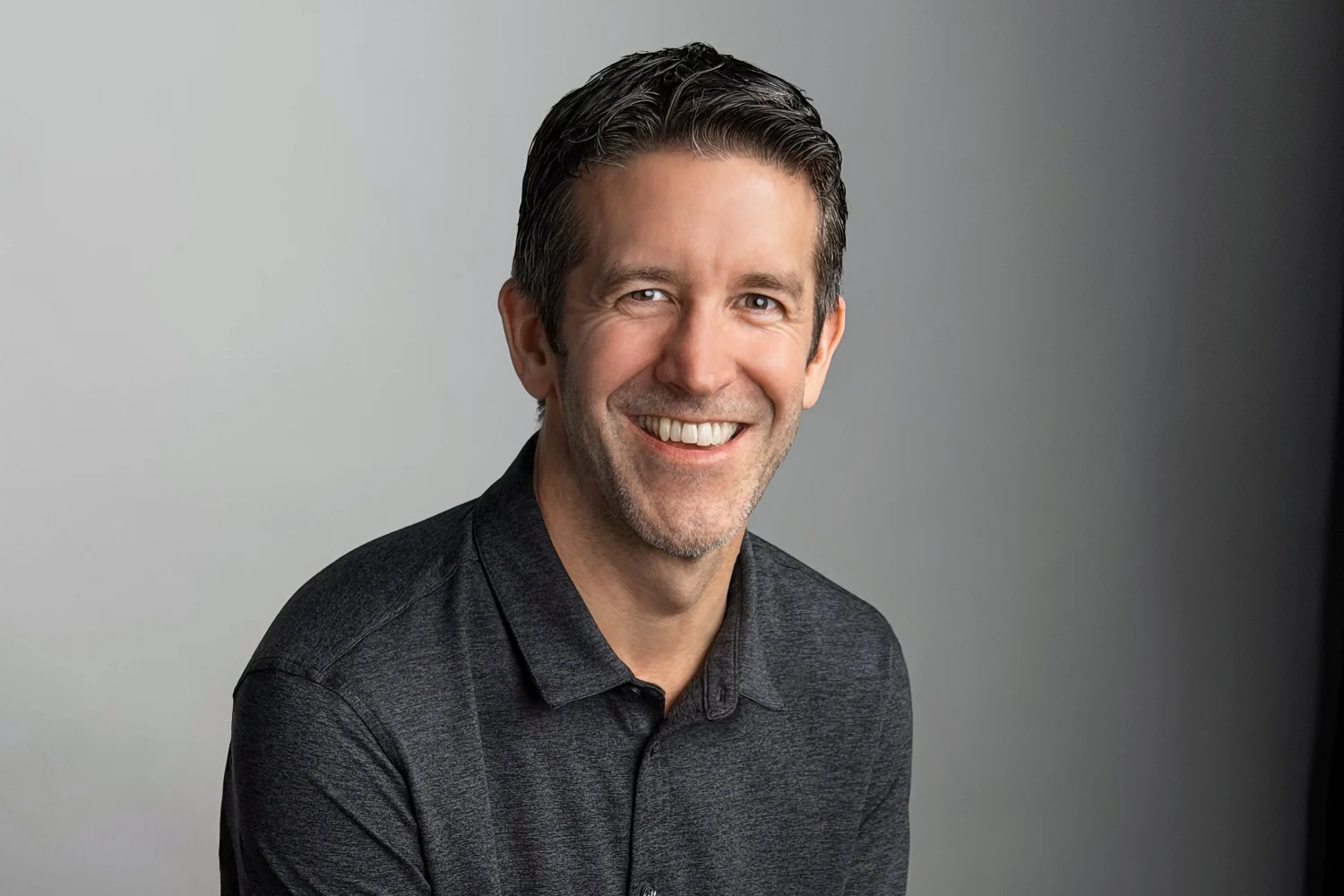
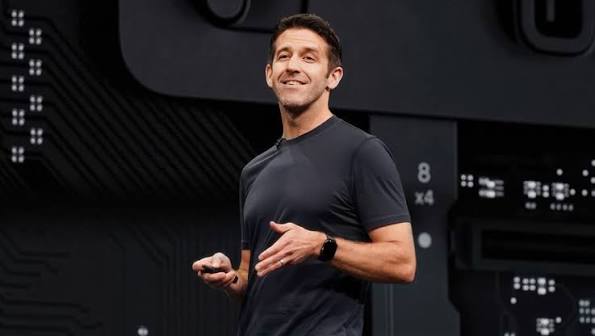
    The decision to appoint Cook’s successor, John Ternus, as the new CEO seems like a well-anticipated move to many. Recently, Ternus has been increasingly in the public eye, having even presented the iPhone Air. Some believe this was a strategic move to familiarize the public with Ternus’s presence during significant product launches.

    Cook’s Farewell Message

    In an internal memo to Apple employees, Cook reflected on his time with the company and the collective accomplishments of the team. He praised the company’s values and expressed his confidence in Apple’s future prospects. This, he noted, influenced his decision to transition to the role of executive chairman and pass on the CEO baton to John Ternus. He affirmed his belief in Ternus’s capability to guide Apple into the future and maintain the company’s core values.

    Cook also expressed his intention to support Ternus and the company in various key areas in his new role and thanked the executive team for their brilliance throughout the years. He concluded by expressing his optimism about the future and inviting all to join him in congratulating Ternus.

    John Ternus’s Response

    In a memo of his own, John Ternus expressed his excitement about his new role as CEO and gratitude for the opportunity to lead the hardware engineering team. He revealed that as he transitions to the CEO role, Tom Marieb will take over as the head of hardware engineering, reporting to Johny Srouji, who is taking on an expanded role of Chief Hardware Officer. Ternus expressed his anticipation for their continued work together and shared his confidence in the team.

    Reflecting on Cook’s Legacy

    Reflecting on Cook’s tenure, it’s astounding to consider the significant impact he has had on Apple and its global user base. Cook’s strategic prowess following the passing of Steve Jobs was instrumental in sustaining the company’s stability and growth.

    Under Cook’s leadership, Apple’s product range has evolved remarkably. The MacBook has become a powerful technological asset, and the iPhone 17 Pro is widely regarded as one of the best flagship smartphones on the market.

    The upcoming launch of the iPhone 18 Pro and the iPhone Ultra later this year will be a poignant moment, given Cook’s absence. The future Apple events are inevitably going to be different, marking a shift in an era in the company’s history.

    Questions & Answers

    Who will replace Tim Cook as CEO of Apple?
    John Ternus has been announced as the successor to Tim Cook as CEO of Apple.

    What will be Tim Cook’s new role at Apple?
    Tim Cook will transition to the role of executive chairman on Apple’s board of directors.

    Who will take over as head of hardware engineering at Apple?
    Tom Marieb will assume the role of head of hardware engineering at Apple as John Ternus transitions to the CEO role.

  • Apple CEO Tim Cook reveals what Apple needs to build iPhone in the US

    Apple CEO Tim Cook reveals what Apple needs to build iPhone in the US

    While the tariff fiasco has brought red ink to the markets and chaos to the global economy, the ultimate goal according to President Donald Trump and his supporters, is to have manufacturing brought back to the United States. According to Trump’s Commerce Secretary Howard Lutnick, who was appearing on CNBC, Apple CEO Tim Cook told him that there is a “key catalyst” that would be necessary for Apple to consider building the iPhone in the US.

    Lutnick says that he asked Cook when he was going to bring iPhone manufacturing to the States. Cook responded by saying, “I need to have the robotic arms to do it at a scale and precision that would allow me to bring it here.” Cook seems to be one of the few tech industry leaders who might not be a Trump supporter but who still commands respect from the president and vice versa.

    This relationship has helped Apple protect its most important product, the iPhone, from tariffs during both Trump terms. Recently, Trump temporarily exempted some consumer electronics including smartphones from the reciprocal tariffs that Trump imposed on US trading partners. This includes a whopping 145% tariff on products imported to the US from China which is where the majority of iPhone units are assembled.

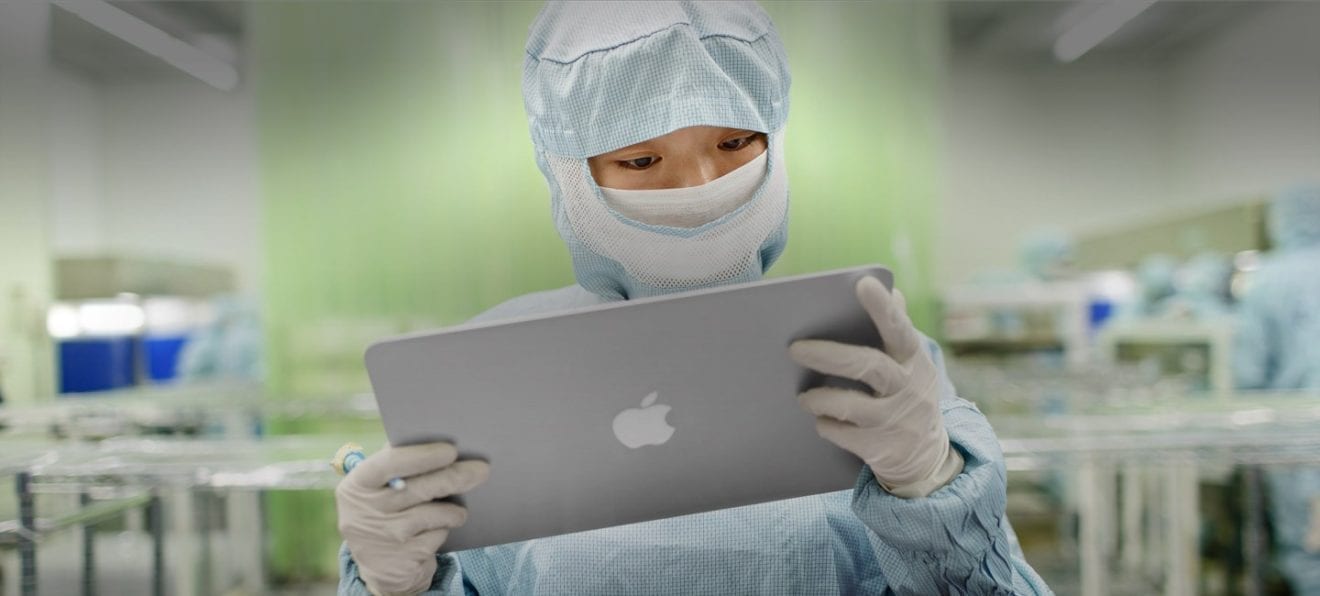
    By using robots to do the tedious low-paying assembly jobs such as building an iPhone, Apple wouldn’t have to worry about finding Americans willing to work for the $3 to $3.70 per hour that iPhone assemblers reportedly make in Shenzhen, China. Without a robotic labor force, at the federal minimum wage of $7.25 per hour, Apple would be paying twice that amount to build the iPhone forcing it to raise the price of the device.

    By using robots to build the iPhone in the US, Apple would be able to reduce the cost to assemble the product and might even be able to cut prices for the iPhone. But Apple is still a long way from having a team of robots unplug themselves in the morning and head over to the assembly line where they silently build iPhone units. Yet, if you ask the Commerce Secretary, he’ll try to get you to believe that this technology is coming sooner than you’d think.

    Talking about the iPhone, Lutnick says about Tim Cook, “He wants to build it here, he’s going to build it here. The Commerce Secretary does agree with our position that Americans won’t work for the low wages Foxconn pays iPhone assemblers in China. He says that Americans will be running the iPhone factories in the States. “They’re not going to be the ones screwing components in.” Unfortunately, Lutnick doesn’t explain who will be.

    Cook is right and robotics can be the answer, but this is going to take time even with AI. Let me make a statement that many of you will find surprising. If the Trump administration is patient and allows time for the technology to catch up with the goal, the current administration might end up being known for helping change the world of manufacturing for the better. However, patience is not the strong suit of our president and his team.

  • Apple CEO Tim Cook says it is considering a manufacturing facility in Indonesia

    Apple CEO Tim Cook says it is considering a manufacturing facility in Indonesia

    Apple will look into building a manufacturing facility in Indonesia, its CEO said on Wednesday after meeting President Joko Widodo, who hoped the tech giant would increase its local content by partnering with domestic firms.

    Apple chief executive Tim Cook arrived in Jakarta on Tuesday after visiting Vietnam. He met with Jokowi, as the president is popularly known, and will inaugurate its fourth developer academy on the island of Bali.

    “We talked about the president’s desire to see manufacturing in the country, and it is something that we will look at,” Cook told reporters after the meeting.

    Apple has no manufacturing facilities in Indonesia, but since 2018 it has been setting up app developer academies, which including the new academy have a total cost of 1.6 trillion rupiah ($99 million).Indonesia’s industry minister, Agus Gumiwang Kartasasmita, who also attended the meeting, told reporters that if Apple decided to build manufacturing facility in Indonesia, it would have the capacity to produce for export.

    “We will discuss how Apple’s facility in Indonesia could become a global supply chain,” he said, adding that the government said that even if Apple didn’t built a factory, it could partner with Indonesian companies to obtain components.

    Apple has met Indonesia’s 35% local content requirement to sell its products by investing in developer academies, Agus said, but the government hoped that number could be pushed higher with a manufacturing facility.

    Apple has based much of its key manufacturing of iPads, AirPods and Apple Watches in Vietnam; suppliers for MacBooks are also investing in the country.

    Indonesia has a huge, tech-savvy population, making the Southeast Asian nation a key target market for tech-related investment.

  • Tim Cook arrives in Vietnam

    Tim Cook arrives in Vietnam

    Apple CEO Tim Cook arrived in Hanoi Monday morning for a two-day business trip to meet notable content creators and app developers on App Store.

    Cook said upon arrival he was excited to meet with content creators, students and customers in Vietnam and learn about the way they use Apple’s products.

    Apple has unveiled plans to strengthen its commitments to Vietnam during his visit, including increasing spending for suppliers and fund a clean water initiative at schools.

    Since last year the company has been launching new major services in Vietnam.

    It opened the Apple Store Online in May and launched payment service Apple Pay in August, is taking pictures of Vietnamese streets to develop its Apple Maps and expanding recruitment to hire engineers to develop its Siri voice assistant in Vietnamese.

    Cook, 64, became CEO in 2011, and doubled the company’s revenues and profits by 2020. Under him, new products like Apple Watch and Apple Vision Pro, a virtual reality headset, were developed.

    In 2023 it became the first company in the world to achieve market cap of $3 trillion.

  • Tim Cook pushes to get this device shipped against the wishes of Apple engineers

    Tim Cook pushes to get this device shipped against the wishes of Apple engineers

    Apple CEO Tim Cook and COO Jeff Williams have been pushing to release the Reality Pro mixed-reality headset this year. However, Apple’s industrial design team feels the product is not ready for prime time. The team wanted to hold off on releasing the Reality Pro until Apple first released its AR spectacles dubbed Apple Glasses. That release has reportedly been pushed back to 2025 or 2026.

    Meanwhile, Apple’s operation team wanted the company to release a headset resembling ski goggles with limited capabilities. For example, this device would allow users to make FaceTime calls using virtual avatars, something discussed for the Reality Pro, watch 3D videos, and exercise with interactive workouts. Apple engineers who worked on the mixed reality headset said that they were under “huge pressure to ship” the Reality Pro.

    The mixed-reality headset has been under development by Apple for seven years and is supposedly the most complex product Apple has ever made. The product is expected to carry a price tag as high as $3,000 and could be outfitted with as many as 12 cameras and a 4K micro-LED display for each eye. Manipulating the Digital Crown, like the one on the Apple Watch, will take the user from VR (which creates immersive environments for the user) to AR.

    The Reality Pro is expected to be powered by a 5nm Apple M2 chipset containing close to 20 billion transistors. Apple will supposedly introduce the Reality Pro at this June’s WWDC developers conference with a release expected later this year. The tech giant is reportedly devising an expensive ad campaign for the headset. Apple is also said to be working on a less-expensive second-generation headset that could be called the Reality One. The price for this headset will be in the range of $799 to $1,599 and will not have all of the capabilities of the pricier Reality Pro.

  • Woman obsessed with Tim Cook accuses him of fathering her twins

    Woman obsessed with Tim Cook accuses him of fathering her twins

    There are Apple fans, there are Apple fans, and then there are those that need some kind of mental help. A woman named Julia Lee Choi has been stalking Apple CEO Tim Cook since October 2020 according to court documents. Choi, who lives in Virginia, claims that Cook was the father of her twin children. Choi calls herself Julia Lee Cook and threatened the executive on social media.

    Choi has sent approximately 200 emails to Cook with some of them including photos of loaded handguns. On Monday, Santa Clara County Superior Court issued a restraining order against Choi on behalf of Cook and all Apple employees. A court hearing has been scheduled for March 29th.

    Choi, 45, started tweeting about Apple’s CEO on Halloween in 2020 when she sent out 18 tweets calling him her “husband” and “bed man.” Posting about Cook on that one day, she wrote, “‘My bed MAN! My bathroom MAN! My kitchen MAN! My Cleaning MAN! My Husband! My MAN is Tim Cook ! My kids Daddy~!’” It is no secret that Cook is gay, having announced his orientation back in 2014.

    It seems obvious that Choi has some issues. She got upset at Microsoft CEO Satya Nadella for sending a  tweet to Cook and wrote, “You should unfollow my husband Tim Cook as soon as possible.” She also sent a tweet to Google CEO Sundar Pichai apparently thinking that he was a female named Sandra Pichia. With her claws out, Choi wrote, “While we two of us reached our love final decision, and in progress, Sandra Pichia, CEO of Google insisting to interrupt Cook’s love and tried to hurt me several times.”

    The court said that the emails demonstrated ‘a significant escalation in tone.’ Some of the messages, described by Cook’s attorney as ‘threatening and highly disturbing,’ were sexual in nature, and some were downright violent. One of the messages reportedly read: ‘What you have done is criminal defense, murdered.’

    Lawyers for the Apple CEO, in a petition for a restraining order, stated that on November 3, 2020, she emailed him a photo of a package of ammunition: the following day, she wrote: “I warned and told you stop trying to kill me. You made me to buy this instead of going for Christmas. I will NEVER forgive forget you.” Choi then started to register fake corporation names described as “highly offensive.”

    The fake corporations that she filed were located in California, New York, and Virginia, and each one listed Cook as a chief executive or director and used his home address or an Apple corporate address. And her actions became even more frightening. Last September she sent Cook an email that said that she was filing to become his roommate in Palo Alto.

    And in the application for the restraining order, it was noted that “she drove from Northern Virginia to Palo Alto twice within two months in a Porsche Macan; the second time, in October 2021, she showed up at Cook’s home and told security officials that she wanted to speak to Cook. She remained on the property until Palo Alto police arrived on the scene, and said she ‘could be violent’.”

    Last month Choi amped up her threats by sending an email to Cook that said, ‘we do not have to meet. give me 500 millions cash. then I will forget and forgive all better listen to me.’ She continued to threaten the CEO and even sent a tweet threatening to burn down Cook’s home. Apple believes that she is still in the South Bay and might be armed.

    The temporary restraining order was filed last Thursday and was granted on Friday. It requires Choi to stay away from any Apple employee or any Apple-owned building.

  • Upset Tim Cook sends email to Apple employees about product leaks.

    Upset Tim Cook sends email to Apple employees about product leaks.

    Apple CEO Tim Cook once again made it clear that he is not happy with those who work at Apple and have a side hustle selling leaked information to those who pass these secrets on to Twitter tipsters and others. Cook wrote an email to employees last week and naturally, that missive leaked. Cook said in the email that Apple is doing “everything in our power to identify those who leaked” and he also stated that “people who leak confidential information do not belong” at Apple.

    Cook was upset to see details of a global employee meeting, held last Friday, September 17th, leak. During the internal meeting, the executive announced that Apple would demand frequent COVID testing for Apple employees who have yet to receive a vaccination, but that the company would not force workers to get the jab. He also was not happy that details of his response to the judge’s ruling in the Epic v. Apple bench trial were leaked.

    Cook wrote in his letter, “I want you to know that I share your frustration. These opportunities to connect as a team are really important. But they only work if we can trust that the content will stay within Apple. I want to reassure you that we are doing everything in our power to identify those who leaked. As you know, we do not tolerate disclosures of confidential information, whether it’s product IP or the details of a confidential meeting. We know that the leakers constitute a small number of people. We also know that people who leak confidential information do not belong here.”

    The executive added, “As we look forward, I want to thank you for all you’ve done to make our products a reality and all you will do to get them into customers’ hands. Yesterday we released iOS 15, iPadOS 15, and watchOS 8, and Friday marks the moment when we share some of our incredible new products with the world. There’s nothing better than that. We’ll continue to measure our contributions in the lives we change, the connections we foster, and the work we do to leave the world a better place.”

    Earlier this year, in an effort to stop leaks, Apple instructed its manufacturing partners Foxconn and Wistron, to conduct criminal background tests on all assembly line workers. Those found to have a criminal background would be banned from entering areas where unreleased Apple products are being developed and assembled. Additionally, all visitors to these factories must flash a government-issued ID, and guards must keep tabs on the movement of factory workers with possession of important components and products.

    There is a bit of inconsistency involved here. While Apple is promoting the privacy of its own employees by restricting the biometric information (like fingerprints) that Foxconn and Wistron can collect from Apple employees visiting these facilities, it still wants its manufacturing partners to collect this data from its own employees.

    The report that Apple held an internal meeting about leaks which itself leaked might have led you to experience deja vu. That’s because back in 2017 the company held an internal seminar called “Stopping Leakers – Keeping Confidential at Apple.” It was hosted by employees from Apple’s Global Security division. As you might have guessed, the seminar leaked.

    Arguably, the worse year for Apple iPhone leaks came in 2013 when images of the different colored rear shells for the more affordable iPhone 5c leaked. Many of these iPhone 5c leaks were traced to Australia’s Sonny Dickson, who at the time was a teenager.

    In 2017, Dickson told Reuters that he had 5 to 10 sources inside China who purchased prototype parts from assembly line workers paying $250-$500 a pop. The sources sent him videos of the parts and sometimes they sent him the parts themselves.

  • Tim Cook comments on Elon Musk, and AR/VR and Apple Car

    Tim Cook comments on Elon Musk, and AR/VR and Apple Car

    In case you missed it, Apple’s CEO gave a 30-minute interview with Kara Swisher, which is available on all major streaming platforms in the form of a podcast.

    The majority of the conversation revolved around data privacy and security, but they also touched on other important topics for Cook and Apple.

    The boss commented on Elon Musk’s claims that Tesla’s boss offered to sell the company to Apple, but Cook ‘wouldn’t even take a meeting with him’. Apple’s head said he hasn’t met up with Musk, but strongly admires what Tesla’s been able to achieve, touching on the company’s consistency over the years.

    He finally shed some light on Apple’s own electric car! He expressed a strong opinion that ‘autonomous cars are robots’. He said there are many things that can be done with autonomous vehicles and ‘we’ll see what Apple does’.

    When Swisher asked if it is going to be ‘a technology within a car’ or a car, he laughed and avoided answering the question. He said: “We love to integrate hardware, software, and services”. This is indeed a very Apple thing to say. He added that he wants to have complete control of all of the three components, so the final product works as seamlessly as other Apple products.

    Kara Swisher mentioned the upcoming WWDC21 conference with a tagline ‘Glow and behold’, and asked if this sentence is supposed to hint at a VR headset. Cook said that he strongly believes in AR, and he’s already seeing use for it even on a smartphone. Therefore, this is definitely part of Apple’s future plans in a big way.

    When he was questioned about the new administration in the US, Apple’s boss stayed very politically correct, and said that he’ll seek involvement in policy, and not politics (if he does at all).

    The interviewer teased him with a question about people being able to vote from their iPhones, and he was positive about it, underlining the fact that most of our data is already on our phones, so using a phone for voting for the next president, might not be so far fetched of a concept.

    Yet, he doesn’t like the idea of moving into politics, but said he wants to advance work on climate change, job creation and ‘retraining’. He is willing to work with whoever is keen on helping Apple to achieve these goals.

    He also spoke about coming out as gay, highlighting the idea of being able to help young people feel safe about being themselves. He said he is going to speak out about discriminatory laws.

  • Tim Cook calls Facebook’s business model violent and says that it leads to divisiveness

    Tim Cook calls Facebook’s business model violent and says that it leads to divisiveness

    Earlier this morning, we told you that Facebook was reportedly planning to attack Apple-in court. The social media network is believed to be ready to accuse Apple of violating antitrust laws by using the iPhone’s popularity to force a major change on third-party app developers. In order to keep iOS users from constantly being served up targeted ads, iPhone and iPad users would have to opt-in and allow themselves to be tracked. Since you could assume that most iPhone users would prefer not to be tracked, this change is going to negatively impact outfits like Facebook that derive a large percentage of their business from posting online ads.

    Today, Apple CEO Tim Cook gave the opening address during a panel at the European Computers, Privacy & Data Protection (CPDP) conference. Cook discussed Apple’s privacy initiatives pointing out the dangers of business models that rely on collecting personal information from users. During his address, Cook stated, “As I’ve said before, if we accept as normal that everything in our lives can be aggregated and sold, then that we lose so much more than data. We lose the freedom to be human.” The executive did not mention Facebook specifically although those who have been following recent events had a good inkling about which company he was talking about.

    Discussing the dangers of businesses that collect personal user information, Apple’s CEO said, “If a business is built on misleading users, on data exploitation, on choices that are no choices at all, it does not deserve our praise. It deserves scorn.” Cook also said that such businesses could lead to polarization, distrust of life-saving vaccinations, and violence set off by extremist groups. Many of these outcomes are already being seen in the United States. Cook also spoke about Apple’s decision to protect its users’ privacy “to create ripples of positive change across the industry.”

    Cook said, “At Apple, we made our choice a long time ago. We believe that ethical technology is technology that works for you. It’s technology that helps you sleep, not keeps you up. It tells you when you’ve had enough, it gives you space to create, or draw, or write or learn, not refresh just one more time. It’s technology that can fade into the background when you’re on a hike or going for a swim but is there to warn you when your heart rate spikes or help you when you’ve had a nasty fall. And with all of this, always, it’s privacy and security first, because no-one needs to trade away the rights of their users to deliver a great product.”

  • Apple’s Tim Cook has a clear replacement

    Apple’s Tim Cook has a clear replacement

    August 24th marks eight years since Steve Jobs stepped down as CEO of Apple and Tim Cook assumed the position’s full responsibilities. The company has since more than doubled its market value and sold products to millions of customers across the globe. But with growth now slowing, Bloomberg suggests a clear successor to Tim Cook has begun emerging, even though the latter is unlikely to step down anytime soon Chief Design Officer Jony Ive was often considered to be the most important person at Apple after Tim Cook. But following the announcement last month that he was departing the company to start up.

    a design studio, this position appears to have been filled by Chief Operating Officer Jeff Williams who is currently seen as the perfect Tim Cook replacement. Speaking on the condition of anonymity, many current and former colleagues described Williams as a “modest, disciplined, demanding leader in the current CEO’s style.” Since taking over the role of COO – a title once held by Tim Cook – he has prioritized operational efficiency and worked closely with suppliers across the globe. Williams has also adopted a more hands-on role when it comes to product development and schedules weekly reviews for future products to track progress and brief CEO Cook of developments. These meetings are officially called New Product Reviews but some employees now call them “Jeff Reviews.”

    The COO, just like Cook, is very good at watching and listing to other employees. He has built up the reputation of being soft-spoken but when required, Williams isn’t afraid of asking sharp questions or insisting on further improvements until Apple’s standards are met. This is especially the case when it comes to the design teams. Williams “comes from the operations side, and the metrics being applied there often have very little meaning in design.” Because of this, he isn’t always as understanding when things aren’t up to scratch, although colleagues say he doesn’t quite have the temper of Steve Jobs. Back when Apple was developing AirPods, the executive purposely continued wearing wired EarPods until he was happy with the fit of their wireless counterparts to get his point across rather than creating a storm inside the company.

    Williams currently overseers Apple’s entire supply chain, fitness and health research and app development, AppleCare customer support, and the development of all hardware products including the next-gen iPhones. Before taking over as COO, however, Williams primary focus was the first Apple Watch which quickly became his biggest test at the company. Mere months before the original’s release in April 2015, some employees testing the wearable began reporting allergic reactions to the type of nickel Apple had used. This is a common issue in the watch industry but Williams chose to scrap the thousands of devices that had already been produced in favor of restarting production from scratch with a different metal.

    Around this time, the now-COO also had to deal with another issue regarding the company’s Taptic Engine. The feature, which was a priority for Williams and allowed the Watch to vibrate more quietly than the counterpart used inside phones, was prone to corrosion which ultimately led to long-term failure. Instead of shipping the wearables, Williams decided to gift the affected models to employees and fix the issue ahead of release.

    The move led to delays and made the Apple Watch difficult to find shortly after launch. Nevertheless, it avoided potentially defective units hitting shelves and was ultimately the right move for consumers.

    Over the past few years, Apple has completely transformed the way it operates with the help of Tim Cook. Product design used to be the priority but the company’s operations team now appears to be running the show and influencing every other department. According to a former senior Apple executive, Jeff Williams is “the closest thing at the company to Tim Cook, and you’ll get more of that. If you think Cook is doing a good job, then it’s a good choice.” Another person who knows him said, “Jeff is 95% operations and 5% product.”

    This strategy has worked incredibly well for the company over the past few years but, with growth slowing, many now wonder if it’s sustainable. Michael Gartenberg, a former Apple marketing executive, believes “one doesn’t necessarily need a visionary as CEO of Apple as long as there’s a visionary in the company that the CEO can work with. had Jony Ive. The question is, with Ive gone, who is the visionary at the company that can guide the next big thing?”

  • Apple CE promises new products will ‘blow you away’ soon

    Apple CE promises new products will ‘blow you away’ soon

    Apple CEO Tim Cook has promised investors the firm remains on track to double its 2016 revenues of almost US$25 billion next year, prompting a rise of more than 1 per cent in Apple stock on Friday.

    Speaking at the firm’s annual meeting in Cupertino, Cook claimed Apple is “planting seeds” and “rolling the dice” on new products set to “blow you away”.

    Cook indicated a range of new products under development for the Apple Watch and AirPods, and has previously stoked ongoing expectations for an AR glasses product. He also signalled an eventual drop in price for the MacBook Air laptop, currently retailing at US$1200, despite upgrading to a higher-resolution screen.

    The shareholder meeting saw the entire Apple board re-elected, including former US VP Al Gore, and included a political discussion that emphasised a variance in political ideology with that of the current US administration, despite an acknowledgement that the firm has worked successfully with the US government.

    It also implied criticism of other big tech firms who maintain data profiles of its users, such as Facebook.

    Cook said the company was also continuing to evaluate new businesses to buy to build its technology capabilities.

  • Apple appoints new retail head to ramp up sales

    Apple appoints new retail head to ramp up sales

    In an effort to ramp up slow iPhone sales amid sluggish smartphone market, Apple on Wednesday appointed a new head of global retail and online stores. Deirdre O’Brien will take over as Senior Vice President of Retail and People, reporting to CEO Tim Cook, the company said in a statement. “For more than three decades, she has helped keep Apple focused on serving customers and enriching lives,” said Cook.

    “I am thrilled to work alongside Deirdre in her new role, and I know our 70,000 retail employees will be, too,” he added.

    After five years, current retail head Angela Ahrendts plans to depart Apple in April for “personal and professional pursuits”.

    O’Brien will continue to lead the People team, overseeing all People-related functions, including talent development and Apple University, recruiting, employee relations and experience, business partnership, benefits, compensation, and inclusion and diversity.

    “I am looking forward to this journey, and to continuing the important work of the People team in supporting all of Apple’s amazing employees,” said O’Brien.

    Despite slow iPhone sales, Apple posted $84.3 billion in revenue for the first quarter of its fiscal 2019 — a decline of 5 per cent from the year-ago quarter — while revenue from its other products and services grew 19 per cent.

    Apple operates 35 online stores and 506 retail stores in five continents.

    In the first quarter of its fiscal 2019, revenue from iPhone declined 15 per cent from the prior year.

    Cook said that there are several factors why iPhone sales are not picking up in the emerging markets.

    “The customers are holding on to their older iPhones a bit longer than in the past.

    “When you pair this with the macroeconomic factors, particularly in emerging markets, it resulted in iPhone revenue that was down 15 per cent from last year,” Cook told analysts.

    The Apple CEO said foreign exchange is another key factor behind the slow iPhone sales. “The relative strength of the US dollar has made our products more expensive in many parts of the world,” he added.

  • Apple’s Tim Cook says developers have earned $17 bln from China App Store

    Apple’s Tim Cook says developers have earned $17 bln from China App Store

    Apple Inc’s chief executive Tim Cook said developers using its platform in China number 1.8 million and have earned a total 112 billion yuan ($16.93 billion), representing roughly a quarter of total global App Store earnings.

    Cook shared the data on Sunday during a speech at China’s top public cyber policy forum, organised by the Cybersecurity Administration of China (CAC), which oversees internet regulation including censorship.

    Earlier this year, Apple said that developers had earned roughly $70 billion in total revenue through the store.

    Apple is facing criticism from local users and rights groups for bowing to pressure from Beijing cyber regulators after it decided to remove hundreds of apps from its Chinese store this year, including messaging apps and virtual private network (VPN) services, which help users subvert China’s Great Firewall.

    Apple counts China as its third-largest region by sales but it has lost market share in recent years as high-end handsets from local rivals continue to gain traction. The firm is hoping to regain momentum following the release of its iPhone 8 and iPhone X models which shipped in November.

    The U.S. tech giant said earlier it had moved its Chinese cloud data onto the servers of a local partner in the Chinese province of Guizhou.

    Cook has come to China several times this year, including an October visit where he was among executives that met with President Xi Jinping, who also had prepared remarks read at the conference on Sunday.

    Cook’s attendance is conspicuous at the conference, marking the first high-level executive to attend in the event’s four-year history.

    Others included Google chief executive Sundar Pichai, who is also attending the conference for the first time.

  • Oppo, Vivo founder reveals how he toppled Apple in China

    Oppo, Vivo founder reveals how he toppled Apple in China

    Duan Yongping is convinced Tim Cook didn’t have a clue who he was when they first met a couple years ago. The Apple boss probably does now.

    Duan is the reclusive billionaire who founded Oppo and Vivo, the twin smartphone brands that dealt the world’s largest company a stinging defeat in China last year. Once derided as cheap iPhone knockoffs, they leapfrogged the rankings and shoved Apple Inc. out of the top three in 2016 — when iPhone shipments fell in China for the first time.

    They managed to do it because the American smartphone giant didn’t adapt to local competition, the entrepreneur told Bloomberg in what he said was his first interview in 10 years. Oppo and Vivo employed tactics Apple was reluctant to match, such as cheaper devices with high-end features, for fear of jeopardizing its winning formula elsewhere, Duan said.

    “Apple couldn’t beat us in China because even they have flaws,” the 56-year-old electronics mogul said. “They’re maybe too stubborn sometimes. They made a lot of great things, like their operating system, but we surpass them in other areas.”

    That’s not to say Duan doesn’t appreciate the iPhone maker’s global clout. In fact, the billionaire’s obsession with his US rival is legion: he’s long been a big-time investor in Apple and an unabashed fan of its chief executive officer.

    “I’ve met Tim Cook on several occasions. He might not know me but we’ve chatted a little,” Duan said. “I like him a lot.”

    Apple couldn’t confirm Duan’s meeting with Cook when contacted by Bloomberg. But Duan has blogged incessantly about Apple’s products, share price and operations since 2013, when the company was worth half what it is today. He needs “a really big pocket” because he carries four devices, including a heavily-used iPhone. In a 2015 post, he argued Apple’s profit should reach $100 billion within five years. Today, Duan won’t say when he actually bought in but says much of his overseas wealth remains tied up in the iPhone maker. He even lives in Palo Alto, an easy drive from Apple’s new UFO-like headquarters in Cupertino.

    “Apple is an extraordinary company. It is a model for us to learn from,” Duan said. “We don’t have the concept of surpassing anyone, the focus instead is to improve ourselves.”

    Oppo’s gains against Apple may now earn an even broader following for the billionaire dubbed China’s Warren Buffett by local media for his investment acumen. Born in Jiangxi, a birthplace of Mao Zedong’s Communist revolution, Duan began his career at a state-run vacuum tube plant before making his name with homegrown electronics.

    Duan left the factory floor around 1990, when China was just embracing capitalism and opening industries to private investment. He headed to southern China’s Guangdong province, then the cradle of liberal reforms, to run a struggling electronics plant. His first product was the “Subor” gaming console with dual-cartridge slots — a direct shot at Nintendo Co.’s classic Family Computer, known elsewhere as the Nintendo Entertainment System. The 100- to 400-yuan Subor became a hit in the absence of local competitors. Duan even enlisted Kung Fu star Jackie Chan to endorse the device. By 1995, revenue from the Subor exceeded 1 billion yuan.

    Duan left to set up a new business that year as the operation flourished — a pattern he would repeat in later years. He christened his second venture Bubugao, literally “rising higher step-by-step.” BBK, as the company came to be known, created a popular line of VCD and MP3 players but later also made DVD players for global brands. Subsidiary Bubugao Communication Equipment Co. became one of the country’s biggest feature-phone makers around 2000, going head-to-head with Nokia and Motorola.

    It was the first iPhone in 2007 that paved the way for Oppo and Vivo. While they share a common founder in Duan, the sister brands are fierce competitors, trotting out dueling marketing campaigns in markets from India to Southeast Asia. Their salesmanship philosophy plays well in emerging markets, IDC research manager Kiranjeet Kaur said.

    “The companies fully understand how to make the best of their people, a specialty they inherited from Duan,” said Nicole Peng, a senior director at Canalys. Importantly, they understood their millennial audience. “Many of their managers are young and have been working at the company since graduation.”

    Duan’s latest endeavors were, in part, dreamed up in Apple’s backyard. By 2001 at the age of 40, Duan had decided to move to California to focus on investment and philanthropy, later installing his family in a mansion he reportedly bought from Cisco Systems Inc. Chairman John Chambers. But the advent of the smartphone forced the entrepreneur out of retirement.

    By the second half of 2000s, BBK was on the verge of falling apart as sales of its basic devices slowed. The likes of Huawei and Coolpad were making smartphones priced at around 1,000 yuan. That nearly put the company under, Duan recalled.

    “We were in serious discussions about how to close the company peacefully — in a way that the employees can leave unhurt and suppliers don’t lose money,” he said.

    Those intense brainstorming sessions spawned the two businesses that would go on to embody Duan’s greatest success. In 2005, the entrepreneur and his protege Tony Chen decided to create a new company. Dubbed Oppo, it sold music players but ramped up to smartphones in 2011. In 2009, BBK itself created Vivo, headed by another of Duan’s disciples, Shen Wei.

    “Making mobile phones was not my call,” said Duan. “But I reckoned we could do well in this market.”

    At first, neither label garnered much attention. The iPhone was captivating users with its revolutionary apps system and elegant interface, while BlackBerrys lorded over the corporate market. But Oppo and Vivo then developed a marketing-blitz approach that relied on local celebrity endorsement and a vast re-sellers’ store network across China. They crafted an affordable image that appealed to a millennial crowd, then tricked out their devices with high-end specs. On the surface, Oppo and Vivo phones now routinely surpass the iPhone on measures such as charging speeds, memory and battery life.

    It paid off. The duo together shipped more than 147 million smartphones in China in 2016, dwarfing Huawei Technologies Co.’s 76.6 million units, Apple’s 44.9 million and Xiaomi’s 41.5 million, IDC estimates. Oppo and Vivo both doubled their 2015 haul. In the fourth quarter, they were No. 1 and No. 3, respectively — Huawei was second. Their approach worked particularly well in lower-tier cities, where mid-range phones became a mainstream hit, said Tay Xiaohan, an IDC analyst.

    Duan’s smartphone progeny are also gaining some momentum beyond their home turf. In the fourth quarter, Oppo and Vivo were fourth and fifth in the world, respectively. About a quarter of Oppo’s shipments went to markets like India, where it hopes to dig in before Apple establishes a meaningful presence.

    “Smartphones are an unprecedented opportunity. We forecast at least for the next 10 or 20 years, there’s no replacement. But we don’t know,” Duan said.

    Cook said on the weekend that Apple doesn’t have a specific goal for market share.

    “The competition is more fierce in China — not only in this industry, but in many industries,” Cook told the China Development Forum in Beijing. “I think that’s a credit to a number of local companies that put their energies into making good products.”

    Duan has increasingly kept his distance from the Chinese smartphone makers despite remaining a significant shareholder (he won’t say how much). He says he prefers to stay out of the spotlight and enjoy California with his journalist wife and kids. In fact, he attends board meetings but claims to get most of his information on Oppo and Vivo from the internet, to avoid “disturbing them.”

    His rivals have been less considerate. Last October, Xiaomi Corp. co-founder Lei Jun lambasted competitors who build dense store channels in rural areas in pursuit of quick sales. In an interview with China Entrepreneurs Magazine in October, Lei accused such players of using “imbalanced information” to trick buyers into shunning Xiaomi, precipitating its decline from the top spot.

    “Those who said this were insane,” Duan said without naming names. “When someone talks about an information imbalance, deep down they believe consumers are idiots.”

    His most visible passion these days is stock investment, which is why he agreed to pay a then-record $620,100 in 2006 to lunch with Buffett. Quotes from the Sage of Omaha still pepper Duan’s blogposts, right alongside tips on golf and Apple.

    Duan cemented his reputation as a savvy financier in part by digging his friend, Netease Inc. founder William Ding, out of a hole. Ding’s internet company tanked to as low as 13 cents after the dot-com bubble burst, then almost became the first U.S.-listed Chinese company to get tossed off the Nasdaq over an auditing issue. Duan came to his friend’s aid, buying about 5 percent of Netease with just $2 million in 2002, when the stock price averaged 16 cents. Company filings show he still held just over 4 million shares as of March 2009, but Duan said he sold much of that when Netease hit $40.

    His other much-studied holding is premium-liquor company Kweichow Moutai Co. He said he bought in at 180 yuan in late 2012. While it nearly halved in 2014, Moutai today trades above 370 yuan.

    Duan isn’t shy about talking up his trades, not least of which is Apple, which remains near a record high despite a rare sales decline in 2016. But looking back on his decades as first entrepreneur then stock-picker, his proudest moments remain rooted in BBK. Though he claims to keep it at arm’s length, he admits to worrying about succession and whether the company culture will survive another generation of leaders.

    And while BBK’s Vivo and Duan’s own Oppo have done well, there’s no certainty in a fast-moving business. Both are starting to ramp up everything from the features on their phones to marketing campaigns: Oppo notably used Barcelona’s Mobile World Congress to unveil its most advanced camera technology yet, signaling a new maturity.

    One thing’s for sure, Duan doesn’t see himself returning to an active executive, leaving others to deal with the next challenge.

    “I’ve made it clear many years ago, I will never make a comeback,” he said. “If there’s a problem they can’t fix, then neither can I.”

  • Apple CEO Tim Cook in China hails Chinese app developers

    Apple CEO Tim Cook in China hails Chinese app developers

    Apple CEO Tim Cook has hailed Chinese app developers and their contribution to world’s second biggest economy, as he began his visit here days after the tech-giant invested $1 billion in local ride hailing app Didi Chuxing.

    “The momentum is absolutely incredible,” Cook said in a meeting with developers, government officials and journalists.

    He said developers in China have earned over $7 billion, more than half of it in last one year.

    Their apps are popular around the world, with many of them having been downloaded in hundreds of countries, Cook said.

    “We are in the early phases of a tremendous growth,” the 55-year-old CEO said.

    “Government policies like Internet Plus act as the foundation of why I think the growth can be so incredible from here. They foster innovation and entrepreneurship throughout the Chinese economy,” state-run Xinhua news agency quoted him as saying.

    Cook is on his eighth China visit since becoming Apple CEO in 2011.

    He took a Didi taxi with Jean Liu Qing, president of Didi, to meet the developers.
    The Apple chief regularly meets entrepreneurs when in China, and he said he continues to be impressed by them.

    “[China] is one of the most vibrant places in the world. There are so many entrepreneurs now that they’ll drive the next generation of innovation in China,” he said.

    Apple Inc chief executive Tim Cook visited Beijing last Monday, days after announcing a $1 billion deal with ride-hailing app Didi Chuxing, and as the US firm tries to reinvigorate sales in China, its second-largest market after the United States.

    Cook explained that Apple had chosen to invest in Didi as it has been “an incredibly great success story on the App Store,” aside from being a leading ride sharing service both in and outside China.

    He said the investment reflected Apple’s excitement about Didi’s fast-growing business and Apple’s “continued confidence” in China’s economy in the long term.
    Cook did not give a direct answer when asked about rumours that the Didi investment has some connection with Apple’s own plans for an electric car.

    Currently, he said, Apple’s focus when it comes to the car market is on CarPlay, it’s device for connecting Apple smartphones to in-car entertainment systems.

    “We’ll see where that takes us,” he said.
    But Cook became far more direct when asked whether the investment was a sign of Apple losing its innovative edge.

    “No, no, there is no truth behind that at all,” he said, arguing that it was a sign of Apple placing greater focus on China.

    Apple has already put a lot of money into opening retail stores in China, which is Apple’s second biggest market after the US.

    It is expecting the 37th Apple Store to open this Saturday, approaching Cook’s goal of having 40 before the end of 2016.