Retail News CRM

Tag: titans

  • Chinese Milk Tea Titans Embark on Global Conquest: Expanding Across US and South Korea Amid Southeast Asia Saturation

    Chinese Milk Tea Titans Embark on Global Conquest: Expanding Across US and South Korea Amid Southeast Asia Saturation

    Chinese milk tea brands are broadening their horizons and expanding into new markets in Asia and the West. These brands have traditionally focused on Southeast Asia as their primary area for foreign expansion. However, with the market becoming overcrowded, they are now setting their sights on other regions. This comes as the tea market grows increasingly saturated, prompting a shift in emphasis from rapid expansion to improving store performance and streamlining operations.

    Over 60 Chinese milk tea brands had established more than 6,100 outlets throughout Asia by the end of 2024, most notably led by major chains such as Mixue and Chagee. Mixue, the largest food and beverage chain globally in terms of store count, has begun adjusting its operations in Indonesia and Vietnam. Despite a decrease in store numbers in these markets, the company maintains its focus on the region while pushing into emerging markets, including its first location in Kazakhstan.

    Expansion and Competition

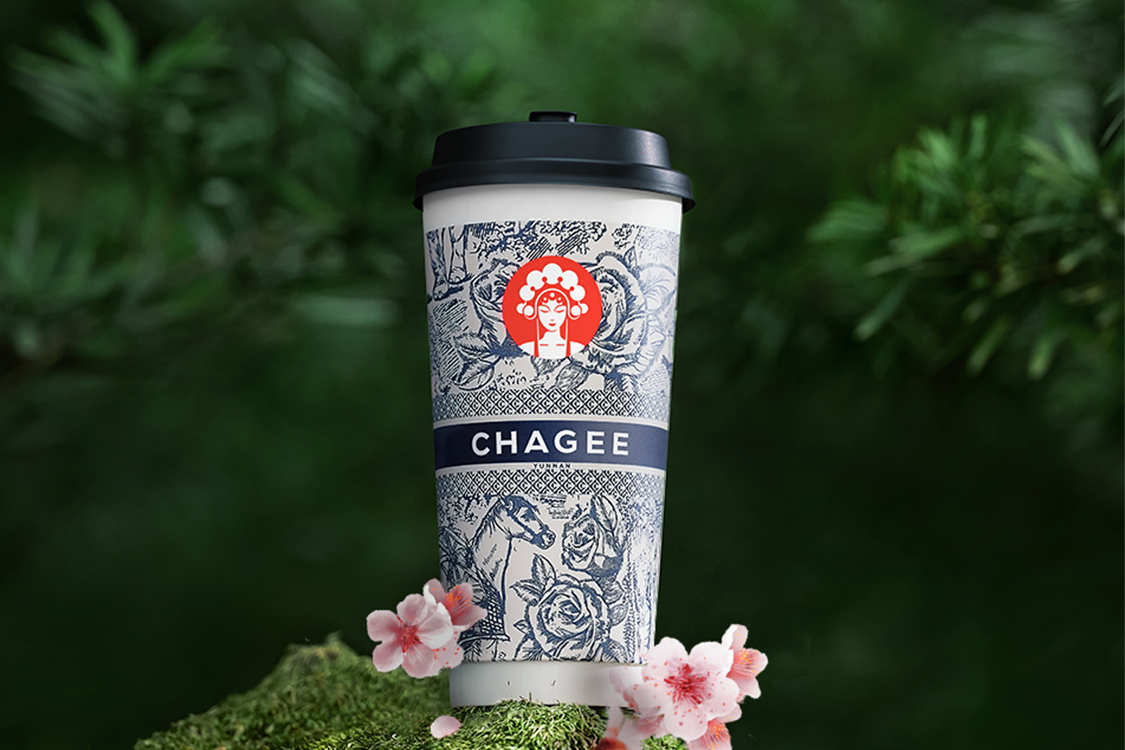
    Chagee, another renowned milk tea brand, has plans to venture into the South Korean market with three upcoming outlets in Seoul. It joins a growing number of its peers already established in the market, including Heytea, Mixue, ChaPanda, and Auntea Jenny. Chagee has further signaled its intent to spread its reach into Japan.

    Understandably, the homefront competition for these Chinese brands is fierce, with the milk tea boom of the last decade leading to around 420,000 outlets. To attract customers, some brands resort to pricing their products at less than a dollar or offering free online orders.

    Moving Westward

    Besides nearby Asian markets, several brands are also extending their presence to the United States. The country has become a significant focus for the sector, with the number of fresh tea retailers rising by 18.2% annually to 7,845 in 2025. It is projected that the U.S. market for freshly made tea drinks will be worth $2.9 billion by 2029.

    However, penetrating the U.S. market brings its challenges. Amanda Wang, co-founder of beverage chain Ningji Lemon Tea, highlights the need to adapt to local tastes, noting American consumers’ preference for sweeter drinks. She also cites differences in the business landscape.

    Despite these hurdles, various Chinese brands, including Mixue, Chagee, Chahalo, Molly Tea, and Auntea Jenny, have successfully launched U.S. stores or announced expansions in recent years. For instance, Mixue’s recently opened New York store, twice as large as its typical outlet in China, has managed to maintain the brand’s familiar look and affordable prices.

    Competitive Edge and Consumer Response

    Nevertheless, competitive pricing is not the only strength of Chinese tea brands. HeyTea, with its drinks averaging around $10, has enjoyed robust demand. Its Times Square store sold over 3,500 cups on its opening day and has since averaged over 2,000 cups daily. Other brands, such as Chagee and Auntea Jenny, have also experienced strong debuts in the U.S. market.

    Consumers appreciate the diverse flavors offered by Chinese brands, distinguishing them from established chains like Starbucks. Consumers’ preference for different flavors and affordable prices are significant factors driving their patronage of Chinese tea brands.

    Questions & Answers

    Why are Chinese milk tea brands expanding into new markets?
    Chinese milk tea brands are expanding into new markets as their traditional focus area, Southeast Asia, becomes overcrowded, and the tea market becomes increasingly saturated. This has led to a shift from rapid expansion to improving store performance and operations.

    How are Chinese brands faring in the U.S. market?
    Despite facing challenges such as adapting to local tastes and a different business environment, several Chinese brands have successfully launched stores or announced expansions in the U.S. They have garnered a positive response from consumers who appreciate the diverse flavors and competitive prices they offer.

    What distinguishes Chinese tea brands from established chains like Starbucks?
    Chinese tea brands stand out from established chains like Starbucks due to their unique flavors and affordability. They offer a variety of flavors not typically found in Western chains, boosting their appeal among consumers.


  • Thailand’s DIY Titans Losing Ground Amid Sluggish Economy and Rising Costs: A Deep Dive into the Struggles and Strategies

    Thailand’s DIY Titans Losing Ground Amid Sluggish Economy and Rising Costs: A Deep Dive into the Struggles and Strategies

    Home improvement retail is a sector known for its cyclical nature and susceptibility to shifts in consumer confidence. This is evident in Thailand’s DIY market, Southeast Asia’s largest, which is currently grappling with low consumer confidence, escalating household debt, rising energy costs, and general macroeconomic instability. Retailers are finding their large warehouses less productive, but they continue to add stores. This results in consistent drops in same-store sales and increasingly fierce competition. Profit margins are further threatened by increasing material costs, placing a squeeze on both revenue and net income.

    Home Pro: A Silver Lining Amid Stagnation

    Home Pro and Thai Watsadu are the largest players in this market based on revenue. Home Pro operates 126 stores in Thailand and seven in Malaysia. Despite reporting a decrease of 2.8% in 2025’s annual revenue compared to the previous year, the company is persistently expanding its network of warehouses. The firm’s same-store sales fell by 6.4% and showed weakened momentum during the fourth quarter.

    Interestingly, Home Pro asserts its sales growth is sustainable even though it has witnessed successive years of revenue decline. The company’s home services business, however, shows promise, with a growth rate of over 9% in 2025 as customers shift from DIY to DIFY services, which include installation, renovation, maintenance, and repair.

    Home Pro also earns rent from its Market Village shopping malls, particularly in popular tourist destinations like Hua Hin, Rayong, and the region adjacent to Suvarnabhumi Airport. However, the current geopolitical instability could impact the influx of tourists, predominantly from Europe, further dampening the outlook for 2026.

    Thai Watsadu: Parallel Trajectories

    Thai Watsadu, a subsidiary of Central Retail Corporation, closely competes with Home Pro. Despite experiencing a similar decline in same-store sales, it is on an expansion spree. The company’s total sales in 2025 matched Home Pro’s at about 70.6 billion baht (US$2.2 billion). Apart from DIY warehouses, the company’s portfolio includes electronics and white goods, office supplies, stationery, and home furniture chains.

    At the end of 2025, the Thai Watsadu chain comprised 88 stores, with plans to open an additional three to five locations this year.

    Siam Global House: Amid Pressure

    Siam Global House operates from the small northeastern provincial capital of Roi Et and is a fierce contender for Home Pro and Thai Watsadu. Despite its vast network of 96 warehouses in Thailand, the company’s revenue decreased by 1.9% in 2025 from the previous year, and its net profit fell by 20%.

    Mr DIY: A Potential Winner in the Short Term

    Malaysia-based Mr DIY, with its smaller store formats, appears better equipped to navigate Thailand’s challenging retail landscape in the short term. With more than 2,000 stores across 10 countries, including approximately 900 in Thailand, Mr DIY offers a limited range of DIY goods that can be easily accommodated in conventional malls and high-traffic shopping areas. This strategy provides the chain with a short-term advantage while the weakening economy and geopolitical tensions continue to impact larger home improvement warehouses.

    The Future: An Uphill Battle

    The general outlook for the sector suggests a slower recovery, with rising materials and operating costs on the horizon. Home improvement retailers, who have already weathered the storm of the Covid-19 pandemic and various geopolitical conflicts, will likely have to delay their expected recovery until beyond 2026.

    Questions & Answers

    What is the current state of the home improvement retail industry in Thailand?
    A: The industry is experiencing a downturn due to weak consumer confidence, rising household debt, and increasing material costs.

    What are the business strategies of major players like Home Pro and Thai Watsadu in response to the challenging market conditions?
    A: Both companies continue to expand their store networks despite declining same-store sales, with Home Pro also focusing on its profitable home services and mall rental businesses.

    Why is Mr DIY potentially better positioned than its competitors in the short term?
    A: Mr DIY’s smaller store formats and limited range of goods make it a flexible fit in conventional malls and busy shopping areas, providing an advantage in the current economic climate.

  • Indian Fast Food Titans Merge: KFC and Pizza Hut Unite under $933M Deal

    Indian Fast Food Titans Merge: KFC and Pizza Hut Unite under $933M Deal

    In a significant move within India’s quick-service restaurant (QSR) industry, Devyani International and Sapphire Foods India, two of the nation’s largest franchise operators for KFC and Pizza Hut, have agreed to join forces. The merger, approved by parent company Yum! Brands, is a $933 million deal that consolidates the operations of the two QSR chains under a singular operator in India.

    Details of the Deal

    The merger process is expected to be completed within 12 to 15 months, subject to regulatory and shareholder approval. Stock exchange filings reveal that Devyani will acquire exclusive franchise rights for the entire Indian market as part of the agreement. Moreover, Devyani will assume control of 19 KFC outlets in Hyderabad, currently directly managed by Yum! India.

    In recent times, Yum! Brands’ Indian operations have been divided between Devyani and Sapphire Foods. While Devyani, a part of Ravi Jaipuria’s RJ Corp, runs several outlets, Sapphire Foods, backed by Samara Capital, operates its own distinct territories.

    Objective of the Merger

    The primary aim of this consolidation is to generate efficiencies driven by scale in the face of increasing costs, escalating competition, and fluctuating consumer demand.

    Ravi Jaipuria, non-executive chairman of Devyani International, expressed confidence that the merger would “allow us to realize meaningful economies of scale, leverage a unified technology platform, and strengthen our supply-chain capabilities.” He added that these advantages would “unlock sustained value creation and long-term growth for our shareholders, customers, employees, and partners.”

    About the Companies

    Devyani International, one of India’s largest QSR operators, manages over 2,000 outlets across India and international markets. It operates several other renowned global food and beverage brands, including Costa Coffee, Tea Live, New York Fries, and Sanook Kitchen.

    On the other hand, Sapphire Foods India, which was established in 2015, operates more than 1,000 KFC, Pizza Hut, and Taco Bell restaurants across India and Sri Lanka in dine-in, takeaway, and delivery formats.

    Questions & Answers

    What is the value of the merger deal between Devyani International and Sapphire Foods India?
    The merger deal is valued at $933 million.

    What is the expected timeline for the completion of the merger?
    The merger is expected to be completed within 12 to 15 months, pending regulatory and shareholder approvals.

    What is the primary goal of the merger?
    The merger aims to achieve efficiencies driven by scale amid rising costs, intensifying competition, and uneven consumer demand.

  • India’s Fast-Food Titans, KFC and Pizza Hut, Fuse in Billion-Dollar Powerhouse Merger

    India’s Fast-Food Titans, KFC and Pizza Hut, Fuse in Billion-Dollar Powerhouse Merger

    Sapphire Foods and Devyani International, the operators for KFC and Pizza Hut in India, announced plans to merge in a transaction valued at $934 million. This move will create a major fast-food enterprise in India, the world’s most populated nation. The merger is a strategic decision amidst rising operational costs, slowing sales growth, and squeezed margins, coupled with tough competition from the likes of McDonald’s and Domino’s Pizza in a market where consumers are limiting non-essential purchases.

    Deal Details

    As part of the merger, Devyani will issue 177 shares for every 100 shares of Sapphire. The companies expect annual synergies between 2.1 billion and 2.25 billion rupees ($23.34 million to $25.01 million) from the second year of operations of the merged entity. Both companies, which are partners with Yum Brands, operate over 3,000 outlets throughout India and abroad. Their businesses encompass KFC and Pizza Hut dine-in restaurants and they compete directly with the Indian operators of McDonald’s and Domino’s Pizza – Westlife Foodworld and Jubilant Foodworks.

    Challenges and Opportunities

    Despite their presence in the market, both KFC and Pizza Hut franchises operate at a net loss in India, presenting scalability issues, according to Akshay D’Souza, an independent consumer goods consultant. He suggests that if the merged entity can tap into even half of the expected synergies, it could potentially create a profitable operation with improved cost control. In the quarter that ended in September, Sapphire’s consolidated total costs increased by 10% year-on-year to 7.68 billion rupees, while Devyani’s expenses rose by 14.4% to 14.08 billion rupees.

    Financial Performance

    Devyani reported a net loss of 219 million rupees for the quarter ending September 30, a significant downturn from the previous year’s profit of 170,000 rupees. Similarly, Sapphire posted a larger consolidated net loss of 127.7 million rupees, compared to a loss of 30.4 million rupees the year prior.

    Questions & Answers

    What are the expected benefits of the merger between Sapphire Foods and Devyani International?
    The companies anticipate synergies between 2.1 billion and 2.25 billion rupees ($23.34 million to $25.01 million) from the second year of the combined operations.

    What challenges are the KFC and Pizza Hut franchises facing in India?
    Both franchises are currently operating at a net loss amid rising operational costs, slowing sales growth, and squeezed margins. They also face stiff competition from other fast-food chains like McDonald’s and Domino’s Pizza.

    What is the financial impact of the merger on the two companies?
    In the short term, both companies have reported losses. However, the merger is expected to lead to improved cost control and potential profitability.

  • Japanese Coffee Titans Brew Expansion Strategy to Rival Starbucks in India and Southeast Asia

    Japanese Coffee Titans Brew Expansion Strategy to Rival Starbucks in India and Southeast Asia

    Japanese-themed full-service café chains are accelerating their proliferation across India and Southeast Asia. They are banking on the allure of their high-end atmosphere and Japan-centric menus to the emerging middle and upper-class consumers in these regions.

    Emergence of Full-Service Cafés

    Coffee-Kan, a full-service café where customers place their orders at the table and enjoy comprehensive waiter service, is gearing towards inaugurating its debut international outlet in India by 2027. The company is targeting to set up 60 stores throughout India and Southeast Asia within the next decade.

    Targeting urban office-goers and middle to high-income consumers in cities like Mumbai and Bengaluru, café operator C-United anticipates an average spending to surpass JPY2,000 yen (US$12.90), which is over double its average expenditure in Japan.

    The number of international café chain outlets in India saw a 13% hike in 2024 from the preceding year, tallying up to around 5,300 outlets. Leading the pack was Starbucks, followed by native brands Barista and Café Coffee Day, all of which only offer counter service. Industry experts believe that full-service cafes have a high growth potential.

    “Full-service cafes are gaining in popularity as a space where office employees and university students can relaxingly spend longer durations indulging in food, reading, and socializing,” remarked Takanori Higuchi of the Japan External Trade Organization office in New Delhi.

    C-United’s President Yuki Tomonari commented that “there is a demand for more expensive options in the full-service café format.”

    Thriving Market Potential

    Market research company Euromonitor International predicts that by 2030, India’s middle to high-income population will leap to over 40% from just 10% in 2020.

    Another Japan-based firm, Doutor Nichires Holdings, has plans to inaugurate the first international branch of its full-service concept Kanno Coffee in Taiwan by March 2026. The chain, which currently operates 12 outlets chiefly in urban areas in Japan, will spotlight matcha-based offerings in Taiwan and anticipates an average customer spending of approximately 1,000 yen.

    Doutor Nichires has already opened roughly 20 branches of its Hoshino Coffee brand across Taiwan and the Philippines. Kanno Coffee boasts numerous Japanese-style menu items that incorporate matcha,” observed President Masanori Hoshino. “We believe it will be successful even at a higher price point than Hoshino Coffee.”

    Komeda is also broadening its reach in Taiwan and Indonesia, managing about 80 international stores compared to 18 as of February 2021.

    Questions & Answers

    What does the term ‘full-service café’ refer to?
    Full-service cafes offer a dining experience where customers place their orders at their tables and enjoy complete waiter service.

    What are the expansion plans of Coffee-Kan?
    Coffee-Kan plans to open its first overseas outlet in India by 2027 and aims to establish 60 stores across India and Southeast Asia by 2030.

    What is the special offering of the Kanno Coffee chain?
    Kanno Coffee, a chain run by Doutor Nichires Holdings, places special emphasis on matcha-based offerings at its outlets.

  • Japan’s Telecom Titans: Pioneering Global Connectivity with Next-Gen Technologies

    Japan’s Telecom Titans: Pioneering Global Connectivity with Next-Gen Technologies

    As the international telecommunications sector experiences significant changes, companies from Japan are harnessing the power of emerging technologies, their established brands, and strategic partnerships to establish a foothold in the Asia Pacific and various emerging global markets. The Japanese approach is a blend of innovative thinking, collaboration, and long-term strategic planning, all aimed at enhancing regional connectivity.

    Japan’s Telecom Landscape

    In Japan, over 150% of the population owns a mobile phone. However, as the population ages and decreases in size, telecom operators are finding fewer opportunities to attract new subscribers within the country. As a result, they are looking beyond the Asia Pacific for growth opportunities. In terms of global positioning, Japan’s leading telecom companies hold strong. The NTT Group is ranked fifth worldwide with a brand value of $37.1 billion USD, SoftBank sits at 11th with $13.9 billion USD, and au by KDDI is 14th with $10.9 billion USD. These rankings illustrate the robustness of Japan’s telecom sector and highlight the need for these companies to penetrate new markets to maintain their growth. While domestic innovation will persist, international projects, consultations, and partnerships will drive Japan’s global initiatives.

    Leading the Charge in 6G and Intelligent Network Development

    Japan is at the forefront of the development of next-generation wireless technology, making it a primary focus for exports. Leading companies such as NTT DOCOMO, SoftBank, and KDDI are spearheading the profitable development of 6G technology. In December 2024, NTT DOCOMO announced a new 6G initiative following approval from the 3GPP Madrid meeting. Supported by 56 global companies, the project aims to standardize 6G technology, align with UN objectives, and accelerate AI-powered connectivity.

    In July 2025, SoftBank and Nokia conducted Japan’s first 7 GHz 6G outdoor trial, testing centimeter-wave frequencies in Tokyo. The project aims to compare 6G and 5G urban coverage, thereby providing key insights before the ITU-R WRC-27 discussions. Additionally, KDDI Research and Samsung signed a MoU to further AI-driven innovations for 6G. The partnership’s goal is to enhance D-MIMO systems, boost speeds, and broaden coverage using AI. The companies share a vision of a user-centric, AI-integrated 6G network.

    Technology as a Tool for Regional Leadership

    In 2024, Japan demonstrated its leadership in advanced communications with a significant Beyond 5G/6G research project, spearheaded by top firms and selected by the National Institute of Information and Communications Technology (NICT). This project aims to create seamless user connections across cloud data centers, improve fault tolerance, and advance all-photonics networks in rural areas, thereby bolstering Japan’s global standing in next-gen ICT.

    In the same vein, SoftBank unveiled a new AI system for wireless signals in 2025 based on the Transformer model. This AI system, part of the Artificial Intelligence Radio Access Network (AI-RAN) project, boosted 5G speeds by 30% in live tests, thus enhancing Japan’s role in developing AI-powered telecom and next-generation networks.

    Japan’s New Role in the Telecom Ecosystem

    Japan’s leading telecom companies are transitioning from being local market leaders to regional connectivity influencers. By exporting technology, expertise, and ethical standards, they are shaping Asia’s digital landscape. Japan’s influence, powered by 6G innovation, rural networking, and global collaborations, extends beyond its borders, fostering the development of smart, interconnected societies.

    The success of these regional strategies hinges on balancing ambition with caution, and innovation with teamwork. Japan’s telecom industry has set its sights on larger goals, aiming to connect Asia and beyond by focusing on quality, trust, and ongoing innovation.

    Questions & Answers

    What is the current state of Japan’s telecom industry?
    Japan’s telecom industry is robust and globally recognized, with leading telecom companies like NTT Group, SoftBank, and au by KDDI holding strong positions worldwide. However, due to Japan’s aging and declining population, these companies are looking for growth opportunities beyond the Asia Pacific.

    How are Japanese telecom companies advancing 6G technology?
    Japanese telecom companies such as NTT DOCOMO, SoftBank, and KDDI are spearheading the development of 6G technology. They are undertaking numerous initiatives, from standardizing 6G technology to conducting outdoor trials to comparing 6G and 5G urban coverage. They are also focusing on using AI to improve network systems, speed up connectivity, and broaden coverage.

    What is the future outlook for Japan’s telecom industry?
    Japan’s telecom industry is set to evolve from a domestic leader to a regional influencer, shaping Asia’s digital landscape and extending its impact beyond its borders. The industry is also aiming to connect Asia and the rest of the world by focusing on quality, trust, and ongoing innovation. The balance of ambition with caution and innovation with teamwork will be key to the success of these strategies.