Retail News CRM

Tag: Tokopedia

  • GoTo posts first full-year underlying profit

    GoTo posts first full-year underlying profit

    Indonesia’s biggest tech firm PT GoTo Gojek Tokopedia forecast a sharp increase in its underlying earnings for 2025 on Wednesday, and also posted its first ever full-year underlying profit.

    GoTo, which offers ride hailing, food deliveries, logistics and financial services, also forecast a surge in its core earnings, or adjusted EBITDA, the company’s key measure of profitability.

    “We saw a significant increase in our user numbers throughout the year and expect this to continue into 2025,” said Patrick Walujo, GoTo Group CEO.

    The tech firm now expects its adjusted EBITDA for 2025 to be in the range of 1.4 trillion rupiah (US$85.16 million) to 1.6 trillion rupiah.

    It’s a significant increase from GoTo’s underlying profit of 327 billion rupiah for 2024, swinging from a loss of 3.670 trillion rupiah last year.

    The firm’s financial technology segment, whose earnings jumped 70 per cent last year, is expected to expand further in 2025 as the user base for its GoPay app and its loan book grows, the company said.

    GoTo, which is backed by Japan’s SoftBank Group and Singapore’s sovereign wealth fund GIC, had reportedly been involved in merger talks with Southeast Asian ride-hailing and food delivery company Grab.

    But GoTo said in a filing last month it had not engaged in talks regarding a potential merger with any party, noting media reports involving Grab.

    In an interview with the Financial Times, GoTo CEO Walujo expressed openness to a potential deal.

    “I will always be open to anything that is enhancing our shareholders’ return . . . in the long term,” Walujo said.

  • VinShop aims for success as store connection platform

    VinShop aims for success as store connection platform

    VinShop is expected to soon become a successful store connection platform in Vietnam, with a business strategy similar to Tokopedia in Indonesia.

    Tokopedia’s success lesson

    Founded in 2009, Tokopedia is one of Indonesia’s tech unicorns. According to CB Insights (U.S.), Tokopedia’s value reached $7 billion as of June 2020, becoming the third largest unicorn in Southeast Asia, behind Grab (Singapore) and Gojek (Indonesia).

    Tokopedia was developed as a shopping platform where any business could easily arrange and sell its products.

    William Tanuwijaya, co-founder of Tokopedia, said that the company’s business model is similar to Alibaba’s as it combines Toko (shop) and encyclopedia.

    In 2018, Tokopedia launched the Mitra Tokopedia app for warungs – small family-owned businesses that usually cater to a neighborhood.

    Mitra Tokopedia has recorded one million downloads in the island nation that has two million warungs.

    Mitra Tokopedia has gained popularity and is now present in more than 20 major cities, including Bandung, Yogyakarta, Banda Aceh, Medan, Palembang, and Pekanbaru. This is due to its capacity to connect grocery store owners directly with suppliers and ease retail operations.

    Research from PT Visa Worldwide shows that more than 90 percent of Indonesia’s transactions are conducted in cash. Therefore, tech unicorns like Tokopedia are pioneers in promoting online shopping.

    According to experts, grocery stores still have several advantages over supermarket systems and e-commerce, particularly in Asia. They are friendly, close to homes and convenient.

    Tokopedia, Warung Pintar in Indonesia, StoreKing in India, and Alibaba with LST have all shaken hands with traditional retailers.

    VinShop’s potential

    Tokopedia’s success in Indonesia inspired One Mount Group to develop its VinShop platform.

    One year after its launch, VinShop has connected more than 100,000 traditional grocery stores. However, this figure is still modest compared to the market potential.

    According to Nielsen, Vietnam has 1.4 million grocery stores in operation. Kantar Worldpanel, the world’s leading consulting and market research company, said that traditional retail channels, including markets and grocery stores, still meet 85 percent of consumer demand. The advantage of the grocery store business model is convenience, right in the small alley, good service, easy to travel, and low cost.

    VinShop has helped 10,000 Vietnamese grocers become real business people by using technology and financial solutions from this digital platform. Data from VinShop shows that the platform has covered up to 80 percent of the core market in Hanoi and Ho Chi Minh City.

    Several small businesses said that they can earn a lot thanks to VinShop’s benefits, such as the abundance of products from suppliers themselves, transparent pricing, more than 100 promotions each month, and VinShop’s loyalty programs.

  • Gojek and Tokopedia formally announce merger

    Gojek and Tokopedia formally announce merger

    Indonesian ride-hailing and payments firm Gojek and e-commerce leader Tokopedia formally announced their merger today in a transaction that will create a technology powerhouse in the country’s largest deal.

    Sources familiar with the situation had earlier said the companies were seeking a $18 billion merger. Neither firm confirmed a valuation for the merged group, named GoTo.

    The deal comes as Gojek and Tokopedia seek to boost profitability some 10 years after they were founded by offering a bouquet of services under a single platform, extending a regional trend.

    Alibaba Group Holding and SoftBank Group Corp are among Tokopedia’s investors, while Gojek’s include Warburg Pincus and Tencent Holdings.

    Last month, Southeast Asia’s biggest ride-hailing and food delivery firm, Grab, clinched a $40 billion merger with a special purpose acquisition company. Meanwhile Singapore-based regional internet firm Sea Ltd, which operates e-commerce platform Shopee, is also muscling into food delivery and financial services.

  • Indonesian e-commerce site Tokopedia generates record sales

    Indonesian e-commerce site Tokopedia generates record sales

    Tokopedia, an Indonesian e-commerce site backed by SoftBank and Alibaba, said on Wednesday it generated a record $1.3 billion in gross merchandise volume (GMV) during Ramadan sale, amid soaring demand for online retail.

    The company said its biggest sales, recorded on May 17, resulted in a total transaction value that was higher than combined sales from the first six years.

    “Those transactions are happening across 97% of sub-districts in Indonesia and involved 5.9 million sellers,” said Tokopedia founder and CEO William Tanuwijaya.

    The start-up secured $1.1 billion in a funding round in December, led by Japan’s SoftBank Group Vision Fund and Chinese e-commerce giant Alibaba Group Holding Ltd. Sources say Tokopedia is valued at $7 billion.

    Shopping for clothes and gifts during the holy month of Ramadan is a significant part of the culture for Indonesia – the world’s largest Muslim-majority country.

    The Southeast Asian nation of over 260 million people is seen among the most promising global e-commerce markets, buoyed by a younger generation shifting their preference to online shopping.

    The Indonesian internet economy reached $27 billion last year and is poised to grow to $100 billion by 2025, according to Google-Temasek 2018 study.

    However, its logistical challenges are massive. The country’s 17,000 islands are sprinkled across an area bigger than the European Union, with logistical costs swallowing up around a quarter of Indonesia’s gross domestic product.

    Tokopedia’s Ramadan sale success reflects that e-commerce retailers are trying to overcome difficulties faster than expected amid higher usage of smartphones.

    Tanuwijaya told reporters that Tokopedia, which does not have its own inventory, was experimenting with artificial intelligence to predict demand and store stock in advance in partnership with warehouse operators.

    Rivals Bukalapak and Shoppee have not made their Ramadan sales public.

  • Tokopedia enters wedding industry, buying Bridestory

    Tokopedia enters wedding industry, buying Bridestory

    Indonesian e-commerce platform Tokopedia has acquired local wedding-service marketplace Bridestory, which allows users to plan their big day on their smartphones.

    Bridestory targets the Southeast Asian wedding market, connecting couples with venues, organizers and vendors/service providers in the wedding industry. It has reportedly connected more than 3.5 million customers with at least 27,000 wedding vendors annually.

    “It all started with a web application,” said Bridestory CEO Kevin Mintaraga, “then we slowly saw the change in behavior as people became more mobile-centric. We also wanted to help brides to plan their wedding anywhere and anytime with their smartphone”.

    The Tokopedia acquisition includes Bridestory’s new service, Parent story, which help parents and expecting parents connect with age-specific activity providers for their kids.

    Tokopedia has stated that the site will continue to operate independently, while Kevin Mintaraga will join Tokopedia’s management in a VP role.

  • Tokopedia expands delivery promise Same Day Delivery

    Tokopedia expands delivery promise Same Day Delivery

    Indonesian e-commerce company Tokopedia is expanding its one-day delivery guarantee to almost all of its products as it prepares to battle Amazon and other foreign rivals.

    Backed by Alibaba Group and SoftBank, Tokopedia’s greatest strength might lie in the fact it is a 100-per-cent Indonesian focused company, unlike its rivals – and shareholder – which are simultaneously trying to build share in many different markets simultaneously.

    “We focus on Indonesia,” Tokopedia founder and CEO William Tanuwijaya said in an interview in Tokyo. “Our mission is really to solve the Indonesian customer problem. And we see the room for growth is still tremendous.”

    Online shopping in Indonesia is expected to grow by more than 400 percent within the next five or so years, to US$53 billion. That sort of growth is attracting Amazon, which opened in Singapore two years ago and subsequently launched in Australia, along with existing Indonesian rivals including Alibaba-backed Lazada and Shopee.

    Tokopedia already offers same-day or one-day delivery for about 65 percent of the products it sells. Expanding that to almost its entire catalog would be made possible by alliances with 11 logistics companies covering the most populous of the country’s 17,000 islands.

    The company is a marketplace, linking more than 5 million sellers with the nation’s largest database of online shoppers. It has no inventory of its own.

    Tanuwijaya admitted getting more than 90 per cent of goods delivered within 24 hours was a goal that might take two years or more to achieve.

  • Indonesia’s Tokopedia Secures $1.1b From Alibaba, SoftBank

    Indonesia’s Tokopedia Secures $1.1b From Alibaba, SoftBank

    Indonesian e-commerce company Tokopedia said on Wednesday that it had secured $1.1 billion in its latest funding round led by Chinese e-commerce giant Alibaba Group Holding and Japan’s SoftBank Group. This follows a similar investment in 2017, also led by Alibaba, which has been expanding rapidly into Southeast Asia amid slowing growth in China’s e-commerce market.

    Tokopedia said it planned to use the funds to invest in technology and infrastructure, adding that the firm would continue to focus on the Indonesian market and drive economic development and financial inclusion in the country.

    The investment would help “broaden Tokopedia’s scale and reach” besides improving its operational efficiency, chief executive and co-founder William Tanuwijaya said in a statement.

    Tokopedia did not confirm a valuation following the round. However, news website TechCrunch citing an unnamed source said the company was valued at around $7 billion.

    The latest funding boosts Alibaba’s share of the fast-growing Indonesian e-commerce market. The Chinese company is also the majority owner of Lazada, which is the Tokopedia’s top competitor in the market.

    Indonesia is also increasingly becoming a proxy battleground for Alibaba and JD.com, China’s second-largest e-commerce company, which has invested heavily in building a logistics network in the archipelago.

    Founded in 2009, Tokopedia is currently Indonesia’s largest online marketplace, drawing comparisons to Alibaba’s Taobao.

    The latest round includes investments from Softbank’s Vision Fund as well as Softbank Ventures Korea and Sequoia Capital.

    The company, which delivers to around 93 percent of Indonesian districts, says it has quadrupled its sales in the past year.

  • Millennials Dominate Indonesia’s Online Shopping Scene

    Millennials Dominate Indonesia’s Online Shopping Scene

    Millennials are driving growth in Indonesia’s e-commerce industry as they buy a wide range of items, from clothes and gadgets to phone credit and electricity tokens, from online outlets with increasing frequency, according to a recent report from market research and consulting firm Ipsos Indonesia. The E-Commerce Outlook 2018 report released on Monday looked at the profiles of 32 million online shoppers in the country.

    The study drew results from an online survey in August. Ipsos Indonesia said the study served as an exploratory stage to be followed up by a more extensive survey planned for next year.

    The study found that 64 percent of online shopping is dominated and driven by millennials, both in terms of product categories and revenue, Ipsos research director Andi Sukma said, referring to the 25-30 age group.

    “They are made up of young families that have a minimum income of Rp 4 million [$280] per month,” said Indah Tanip, an associate director at Ipsos Observer.

    Most millennials are drawn to e-commerce for its convenience and competitive prices, the rise of financial technology and online payment platforms, such as OVO and Go-Pay, which have also encouraged more millennials to purchase their phone credit and pay bills through e-commerce apps, the Ipsos report said.

    The report also identified the five most-visited e-commerce sites: Tokopedia, Shopee, Lazada, Bukalapak and Blibli.com.

    Citing data from the Indonesian Internet Service Providers Association (APJII), Ipsos said the wider availability of broadband internet in the country has helped fuel e-commerce growth. About 72 percent of Indonesians living in urban areas and nearly 50 percent in rural-urban areas have internet access.

    The E-Commerce Outlook 2018 report also looked at community habits, online service accessibility, popular e-commerce sites and consumers’ preferred payment methods.

  • OVO lead in Cashless Payment Race in Indonesia

    OVO lead in Cashless Payment Race in Indonesia

    Lippo-backed cashless payment service OVO has announced a partnership with Tokopedia, Indonesia’s largest e-commerce platform. OVO said in a statement on Wednesday that the deal would help it cement its position as the country’s largest mobile payment platform in terms of transaction volume and reach.

    “The partnership will add Tokopedia’s close to 80 million active monthly users to OVO’s existing userbase of 60 million. It will also add more than 4 million Tokopedia merchants to what is already a market-leading merchant network, covering malls, smaller retailer, as well as GrabFood partners and Kudo agents,” the company said in the statement.

    OVO has been partnering with online-based ride-hailing service Grab since December last year, while also targeting brick-and-mortar shops and restaurants across Indonesia.

    “We see this landmark partnership as a validation of our strategy to enable payments for all Indonesian companies, both online and offline. Cash is a very difficult habit to break and consumers will only switch to cashless if it’s easier and safer than cash,” said Harianto Gunawan, director of enterprise payments at OVO.

    OVO chief executive Jason Thompson said the company expects a surge in new users and additional transactions from the e-commerce platform.

    “We have a very bullish outlook as we close out 2018. Having established ourselves as the No. 1 mobile payment platform by transaction volume, this partnership with Tokopedia and our push into e-commerce will further accelerate our growth,” Thompson said.

    The company said OVO is now available in 90 percent of shopping malls across the country, offering cashless payment options to customers at hypermarkets, department stores, coffee shops, cinemas, parking operators, hospital chains and food and beverage outlets.

    It has also set a target to expand QR-code payments to 100,000 small and medium enterprises by the end of this year.

    OVO’s online-to-offline business comprises its partnerships with Grab and Kudo, a service that allows individual agents to sell digital products, such as phone credit, tickets or insurance, to customers. Kudo currently has about 1.7 million agents in its network.

    OVO said its latest deal with Tokopedia would allow it to reach 93 percent of districts in Indonesia currently served by the e-commerce platform. It also plans to secure more deals with other e-commerce platforms.

  • Indonesian Conglomerates-Backed Tech Fund to Be Launched in 6 Months

    Indonesian Conglomerates-Backed Tech Fund to Be Launched in 6 Months

    An Indonesian tech venture capital fund backed by the country’s largest conglomerates will be launched within the next six months, Communications Minister Rudiantara said.

    “We, Indonesian investors, must immediately enter the tech market,” the minister said on Thursday (05/07).

    He said the fund, which would be pooled from Indonesian conglomerates, was supported by his ministry, with its structure being discussed with the Financial Services Authority (OJK).

    The size of the fund has not been disclosed.

    Rudiantara said he held discussions with local conglomerates on how they should unite and support “series A, B and C” as well as “unicorns,” a term used for startups worth at least $1 billion.

    The Sinar Mas Group, one of Indonesia’s largest conglomerates, previously said that it would invest in a pooled venture fund supported by the government.

    The country’s startup sector has witnessed a boom as investors are lured by the youthful demographic in the nation of more than 250 million people, who resort to online shopping for everything from tickets to electronic gadgets.

    “While two national conglomerates such as Djarum and Astra became investors in a ‘unicorn’ such as Go-Jek, it is not enough,” the minister said.

    The country has four “unicorns,” including ride-hailing service Go-Jek, travel site Traveloka and market places Bukalapak and Tokopedia.


  • Alibaba to invest $1bn in Indonesia e-commerce platform

    Alibaba to invest $1bn in Indonesia e-commerce platform

    Alibaba Group has led a $1.1 billion investment round for financing into Indonesia’ Tokopedia to become a minority shareholder.

    A number of undisclosed existing Tokopedia investors also participated in the round, the Chinese e-commerce giant said.

    “We have always thought of Alibaba as our teacher and role model. Today, we are excited to welcome them as a shareholder and we believe that our partnership will further accelerate Tokopedia’s mission, to democratise commerce through technology,” said Tokopedia CEO and co-founder William Tanuwijaya, in a statement.

    “The partnership with Alibaba will enhance the scale and quality of Tokopedia’s offerings to its customers and make it easier for merchants and partners to do business across the archipelago and beyond.”

    Alibaba first showed interest in Tokopedia in July where it was in reported talks to lead a funding round in the Indonesian unicorn.

    “Alibaba and Tokopedia have a shared mission of helping small and medium enterprises in achieving success in its business,” said Daniel Zhang, CEO of Alibaba Group.

    “We are very delighted to partner with Tokopedia in serving Indonesian customers.”
    The start-up first announced an investment round in 2014, where it received $100 million from SoftBank and Sequoia.

    In 2016, Tokopedia raised $147 million in an undisclosed round from several venture capital firms including Amasia, which brought the total amount raised to $247 million. The funding round valued the company at one billion dollars.

  • Oppo Joins Hands with Tokopedia

    Oppo Joins Hands with Tokopedia

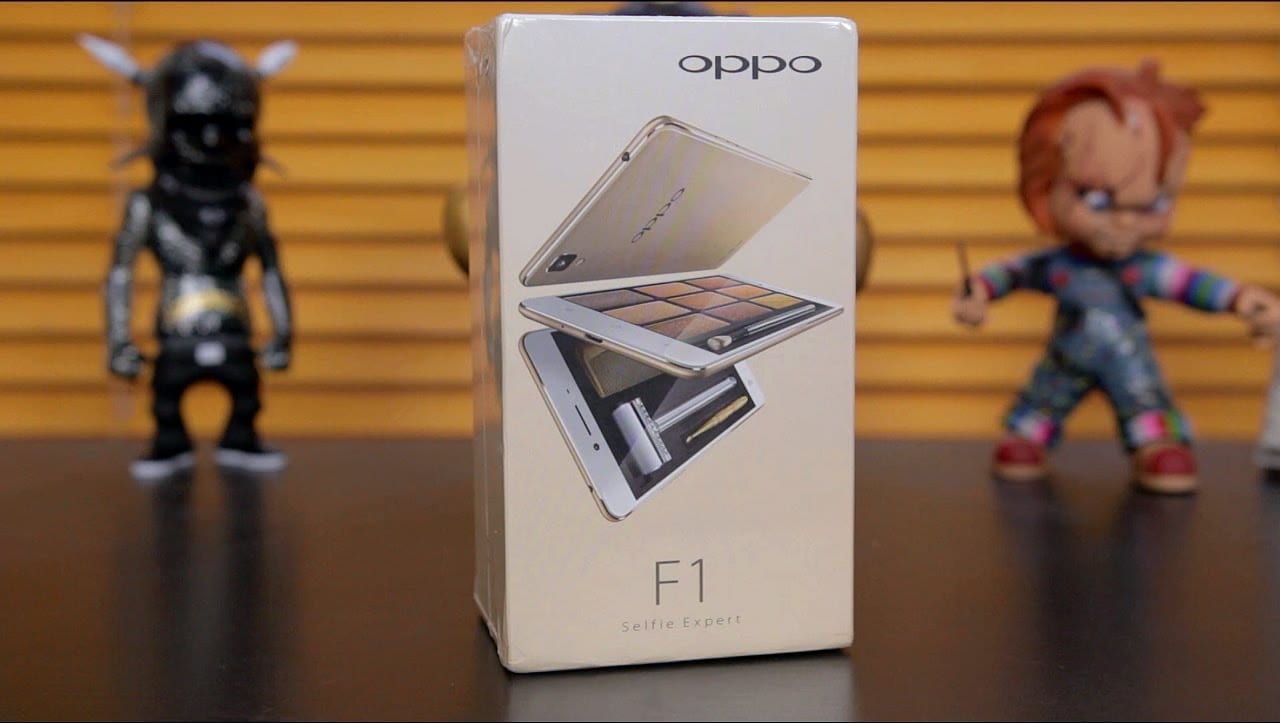
    OPPO has officially established a partnership with e-commerce company Tokopedia to market its best products, such as its best-selling product OPPO F1s.

    “Our cooperation with Tokopedia is an added value to our customers throughout Indonesia,” OPPO Indonesia CEO Ivan Lau.

    Ivan said that OPPO’s customers who cannot be reached by OPPO’s physical stores will be able to get OPPO products through Tokopedia. In addition, he said, OPPO’s excellent sales volume in Tokopedia had also been factored in. “It was one of the reasons behind the strategic cooperation with Tokopedia.”

    Tokopedia CEO William Tanuwijaya said that Tokopedia users, known as Toppers, will be able to enjoy the ease of payment for OPPO products, ranging from cash payments via convenience stores and post offices to interest-free credit card installments.

    Tokopedia boasts two million pageviews per month, making it as one of the best distribution channels for many brands, including OPPO.

  • Coupang Sales Growth Bolsters SoftBank’s Bet on Korean Retailer

    Coupang Sales Growth Bolsters SoftBank’s Bet on Korean Retailer

    Coupang’s net sales more than doubled in the first half of the year, helping to validate SoftBank Group Corp.’s bet that the South Korean web retailer will carve out a piece of Asia’s booming e-commerce market.

    Net revenue rose to 868 billion won ($782 million) in the first half of the year, helped by retail expansion and increased margins, according to a financial document seen by Bloomberg. Gross merchandise volume climbed 26 percent to 1.8 trillion won in the period, the document showed.

    SoftBank, whose investment in Alibaba Group Holding Ltd. has zoomed past $70 billion, backed Coupang in June 2015 with $1 billion in financing that valued the Seoul-based company at $5 billion. The bets are part of billionaire Masayoshi Son’s quest to replicate his success with Alibaba, an investment that started with a $20 million stake more than 15 years ago. SoftBank’s expansion in Asia has also led to deals with India’s Snapdeal and Indonesia’s Tokopedia.

    The number of products offered by Coupang more than tripled to 700,000 items from a year ago, according to the document. The startup launched its Rocket Pay services and opened a fulfillment center in Korea, the first of two planned for this year, the document showed.

    Matthew Nicholson, a spokesman for SoftBank, declined to comment. Coupang Chief Executive Officer Bom Kim didn’t immediately reply to an e-mail seeking comment. Backers of Coupang include Sequoia, Greenoaks Capital and Rose Park Advisors.

    The startup, founded in 2010, is burning through cash to expand and capture users as it competes with sites such as Ticket Monster, a Korean online retailer that’s owned by Groupon Inc., KKR & Co. and Hong Kong-based Anchor Equity Partners. Forward Ventures, Coupang’s parent, said its operating loss widened to 547 billion won in 2015, compared with a 121.5 billion won loss in 2014.

    SoftBank’s e-commerce bet in India is under even more pressure. Snapdeal, which has struggled to narrow the lead of its home-grown rival Flipkart Ltd., now faces competition from Amazon.com Inc. In June, Amazon Chief Executive Officer Jeff Bezos pledged to invest another $3 billion in his company’s Indian operations, bringing the total to $5 billion.

  • Report predicts $25b in eCommerce revenues

    Report predicts $25b in eCommerce revenues

    Southeast Asia eCommerce revenues are projected to exceed US$25 billion by 2020, according to new research by growth partnership company Frost & Sullivan.

    Despite acquisitions, market exits and many online retailers struggling to achieve profitability, the market earned $11 billion last year, says the report, from its Telecommunications and Digital Services program, Analysis of the Southeast Asian E-commerce Market. The study examines market trends and opportunities in six key Southeast Asian markets – Indonesia, Malaysia, the Philippines, Singapore, Thailand and Vietnam.

    Key findings include continuing rapid growth as the industry evolves.

    Total revenues from business-to-consumer (B2C) eCommerce in the six markets will increase at a compound annual growth rate of 17.7 per cent.

    Malaysia and Thailand were the largest eCommerce markets in the region last year, generating revenues of $2.3 billion and $2.1 billion respectively. But by 2020, both these markets are expected to be eclipsed by such emerging economies as Indonesia and Vietnam.

    “Despite being relatively young, the eCommerce market in Southeast Asia is developing quickly, thanks to an astounding rate of digital adoption,” says Frost & Sullivan Asia-Pacific lead consultant for eCommerce and digital transformation, Cris Duy Tran.

    “However, companies pursuing an Amazon-style B2C mass-market business model are struggling to turn a profit, and there have been several mergers and acquisitions and market exits,” he says.

    “With fewer players in the market, eCommerce players are beginning to compete beyond price points and logistics, and are moving into new areas such as Online-to-Offline (O2O) eCommerce and loyalty programs.”

    Although the mass-marketing approach has not worked so far in Southeast Asia, he says there are many exciting opportunities in specialized eCommerce and peer-to-peer (P2P) eCommerce. Services such as Carousell, Shopee and Tokopedia are aggressively pursuing a “mobile first” strategy, and Frost & Sullivan expects to see more sector-specific services in areas such as travel, food delivery and luxury goods.

    Challenges

    While the opportunities for growth are immense, says the report, the eCommerce market in Southeast Asia is not without challenges.

    Several key factors that inhibit growth have been identified, including low credit-card ownership – less than 7 per cent of the population in all Southeast Asian markets except for Malaysia and Singapore. In some countries, more than half of the population does not have a bank account, making payment the biggest challenge for eCommerce companies.

    Logistics is another issue hampering eCommerce growth, especially in areas with complex geographies such as Indonesia and the Philippines. However, recent investments by regional logistics players such as aCommerce and SingPost have strengthened eCommerce logistics infrastructure in these markets.

    China’s rapid expansion in eCommerce is providing further impetus for online retail growth in Southeast Asia, says the report.

    “The eCommerce revenue in China represented 12.1 per cent of all retail sales last year, surpassing the US, Europe and Japan,” says Tran. “Given the massive adoption of eCommerce in China, Southeast Asia is set to follow a similar upward trajectory, even though eCommerce now represents less than 2.5 per cent of all retail sales.”

    With more mergers and acquisitions likely during the forecast period, more exciting market developments can be expected in the near future, says Tran.

  • Tokopedia Tops Indonesia`s E-Commerce Website List

    Tokopedia Tops Indonesia`s E-Commerce Website List

    Seven years after its establishment, start-up company Tokopedia continues to strengthen its foothold in Indonesia’s e-commerce market. Tokopedia CEO William Tanuwijaya said that there are currently one million registered sellers in Tokopedia.

    “Over 16.5 million items are delivered monthly to buyers in Tokopedia,” William told Tempo, Wednesday, August 17, 2016. “The items are sent [to various regions] from Sabang to Merauke. The volume reaches trillions of rupiah per month,” William said during Tokopedia’s 7th birthday party at Pullman Hotel Central Park, Jakarta.

    William said Tokopedia has successfully become Indonesia’s most popular e-commerce website. Per SimilarWeb data, Tokopedia (9th in Indonesia) ranks above Twitter and Wikipedia. Data from Appnie also show that Tokopedia app is used most often compared to other e-commerce websites, such as Lazada (16), Bukalapak (17), Blibli (22), Elevenia (18), or Mataharimall.com (20). Its total active users are twice of other e-commerce website users.

    William said Tokopedia was started with a dream of providing an equal opportunity for all Indonesians. “Today is Tokopedia’s seventh year in realizing the dream,” William said.

    Willian said consumer behaviour has changed in the past few years. “Two years ago, mobile visitors were 56 percent and contributed to 29 percent of purchase. Yet, in the first half of 2016, 79.55 percent of visit were mobile and the transaction volume hit 73.5 percent,” he said. Today, a total of 1.3 billion pages are opened monthly in Tokopedia.

    Tokopedia is currently making efforts to help vendors by establishing cooperation with banks to distribute loans of up to Rp18 billion per vendor.

    “Our mission is to ensure all Indonesia a digital access to economic equality,” William said.