Tag: tonnes

  • Despite Shipping 7 Million Tonnes, Vietnam Rice Exports Witness Slump Amid Falling Prices and Weak Global Demand

    Despite Shipping 7 Million Tonnes, Vietnam Rice Exports Witness Slump Amid Falling Prices and Weak Global Demand

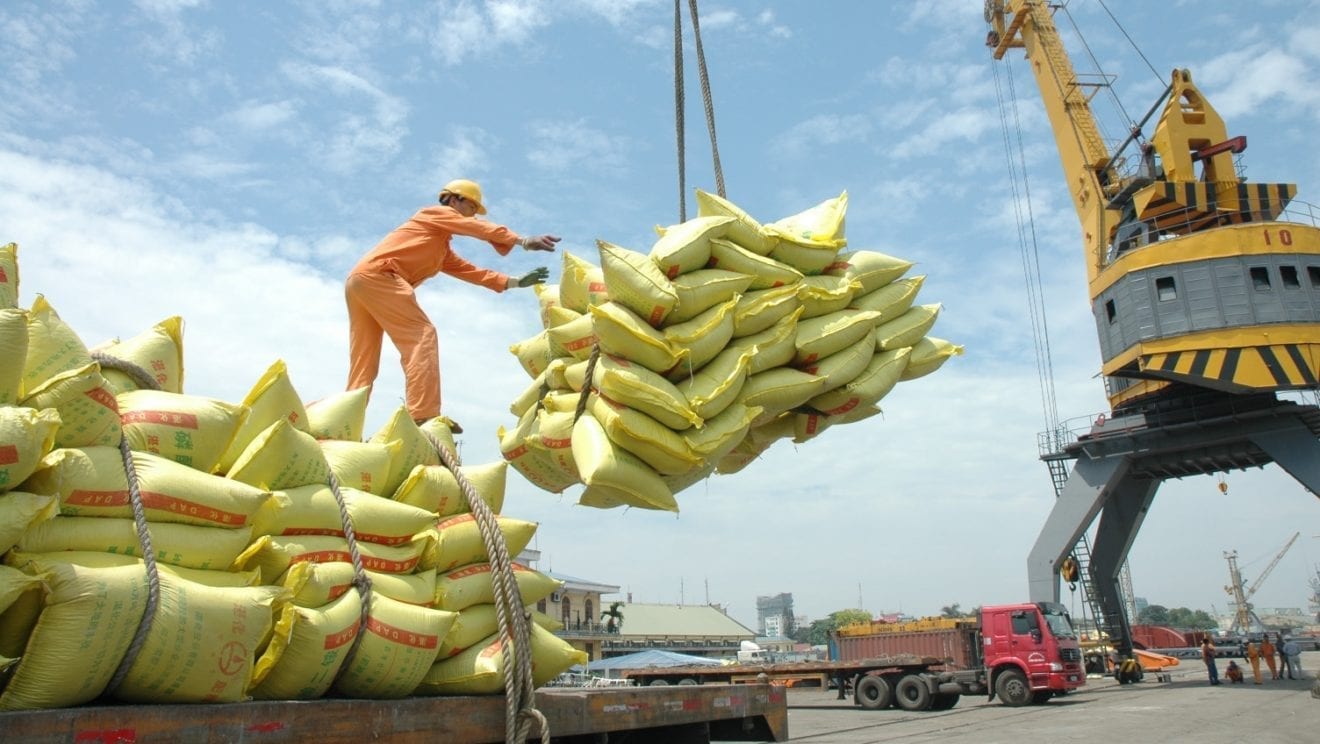
    From the start of the year through October 15, Vietnam exported more than 7 million tonnes of rice. Despite this significant export volume, domestic paddy and rice prices have seen a decline due to reduced purchases from exporters.

    Rice Export Data

    The cumulative rice exports from Vietnam for the mentioned period were 7.02 million tonnes. These exports were valued at approximately $3.59 billion. When compared to the same time frame from the previous year, there was a 4.4% decrease in volume and a 21.9% reduction in value, according to data from the Vietnam Food Association (VFA).

    Last week, the cost of 5% broken jasmine rice was between $420 and $435 per tonne, which is close to a two-month low. A trader based in Ho Chi Minh City reported that domestic trading activity has been relatively stagnant. This is primarily due to many exporters slowing their paddy purchases from farmers as a result of weak overseas demand.

    Domestic Market Performance

    In the domestic market, jasmine paddy was trading at approximately $0.20 per kilogram, reflecting a decrease from the previous week. Conversely, the price of ordinary paddy saw an increase to an average of $0.20 per kilogram, as reported by the VFA.

    In Can Tho, a city in the Mekong Delta region, prices for various types of paddy remained steady. For instance, jasmine paddy was priced at $0.36 per kilogram, OM 18 at $0.29, IR 5451 at $0.27, and ST25 at $0.40, as per the data shared by the Institute of Policy and Strategy for Agriculture and Environment.

    In An Giang province, the Department of Agriculture and Environment reported that fresh paddy prices ranged from $0.21 to $0.25 per kilogram, depending on the variety. Retail rice prices within the province were observed to range between $0.52 and $0.95 per kilogram.

    Production Updates

    Regarding production, the Ministry of Agriculture and Environment stated that by October 20, nearly 1.24 million hectares of the 2025 summer-autumn crop were sown across the Mekong Delta provinces. Harvesting has been completed with an average yield of approximately 6.06 tonnes per hectare, or an estimated total of 7.51 million tonnes of paddy.

    For the autumn-winter crop, 763,000 hectares were planted, surpassing the planned area by 102.8%. Of this, 263,000 hectares have been harvested with an average yield of 5.68 tonnes per hectare.

    Questions & Answers

    What is the total volume of rice that Vietnam exported from the beginning of the year through October 15?
    Vietnam exported more than 7 million tonnes of rice during this period.

    How have domestic paddy and rice prices in Vietnam been affected?
    Domestic paddy and rice prices have seen a decline due to reduced purchases by exporters.

    What has been the impact on domestic trading?
    Domestic trading activity has been relatively stagnant due to many exporters slowing their paddy purchases from farmers because of weak overseas demand.

  • Singapore Changi Airport Sees 3.1% Surge In Passenger Traffic Amid Robust Asian Travel Demand In Q3 2025

    Singapore Changi Airport Sees 3.1% Surge In Passenger Traffic Amid Robust Asian Travel Demand In Q3 2025

    Between July and September 2025, Singapore Changi Airport experienced a 3.1% year-on-year increase in passenger movement, handling approximately 17.3 million passengers. The number of aircraft movements, encompassing takeoffs and landings, remained fairly consistent with the same quarter of the previous year, totaling 91,600.

    Leading Markets

    The primary markets for Changi Airport during this period were China, Indonesia, Malaysia, Australia, and India. Among the top 10 markets, China and Vietnam displayed the most substantial growth, at 9.7% and 11.3% respectively. The leading city connections for the quarter were Kuala Lumpur, Jakarta, Bangkok, Denpasar (Bali), and Shanghai. Notably, the Singapore–Jakarta route exhibited double-digit growth.

    Airfreight Throughput

    During the third quarter, Changi Airport recorded an airfreight throughput of 531,000 tons. This figure represents a 3.7% increase year-on-year. Despite ongoing global trade uncertainties, air trade at Changi grew, with imports showing substantial growth of 10% compared to 2024 levels. The main air cargo markets for the quarter were China, the United States, Australia, Hong Kong, and India.

    Executive Remarks

    Executive Vice President for Air Hub and Cargo Development at Changi Airport Group, Mr. Lim Ching Kiat, stated that Changi Airport continues to capitalize on the positive travel demand this quarter, especially on Asian routes. The airport is extending its network with new airlines and destinations, which further enhance Changi’s regional connectivity. The airport is preparing for the year-end travel season, promising greater convenience and additional ways for travelers to explore both new and familiar destinations.

    New Services

    On 11 August, new Indonesian airline Pelita Air began operations at Changi Airport, offering daily flights between Singapore and Jakarta. This development expands Changi’s network to include about 100 airlines. New city links have been added to Changi’s network with the launch of Hainan Airlines’ four-times-weekly Singapore–Haikou–Changchun service on 22 September, and Loong Air’s three-times-weekly flights to Zhangjiajie on 9 October. Lion Group affiliate Batik Air Malaysia will begin new daily flights to Ipoh, Penang, and Subang from 8 December 2025 to accommodate the group’s growth and increasing regional travel demand.

    In addition, Scoot has introduced new routes to four Indonesian cities – Labuan Bajo, Medan, Palembang, and Semarang – providing travelers with more travel options across the archipelago.

    On the air cargo front, Changi Airport welcomed JD Airlines’ thrice-weekly Shenzhen freighter services, providing more shipping options for Southeast Asia and China.

    As of 1 October, approximately 100 airlines operate around 7,000 scheduled weekly flights at Changi Airport, linking Singapore to over 160 cities in 50 countries and territories worldwide.

    Questions & Answers

    **What were the leading markets for Singapore Changi Airport in Q3 2025?**
    The top five markets for Changi Airport during the third quarter of 2025 were China, Indonesia, Malaysia, Australia, and India.

    **What was the total airfreight throughput at Changi Airport in Q3 2025?**
    In the third quarter of 2025, Changi Airport recorded an airfreight throughput of 531,000 tonnes.

    **Which new airlines began operations at Changi Airport during this period?**
    New Indonesian carrier Pelita Air began operations at Changi Airport on 11 August, and Hainan Airlines and Loong Air introduced new city links in September and October respectively.