Tag: toshiba

  • Toshiba To Invest $1 Billion To Double Power Chip Production

    Toshiba To Invest $1 Billion To Double Power Chip Production

    Toshiba Corp said on Friday it will invest about 125 billion yen ($1.09 billion) to more than double the production of power management semiconductors, aiming to catch up with power chip giants such as Infineon Technologies AG.

    The Japanese industrial conglomerate will build a cutting-edge 300-millimeter fabrication plant in central Japan for power management chips, which efficiently control electric power in cars, electronic devices, and industrial equipment.

    Toshiba will invest around 100 billion yen in the new plant, on top of a 25 billion yen investment in a 300-millimeter fabrication line it is building at an existing chip plant, a Toshiba spokesperson said.

    The new plant is set to start operating by March 2025. When the first phase is complete, Toshiba’s power chip output capacity would be 2.5 times its current level. Depending on demand, the new plant could further expand with additional investment, the spokesperson said.

  • Netflix removes key feature from its iOS app

    Netflix removes key feature from its iOS app

    AirPlay is a feature found on iOS and Mac devices that allows users to send audio, video, photographs, screenshots and more between Apple devices sharing a similar network. Using Bluetooth and Wi-Fi, AirPlay will let a home with multiple HomePod speakers in different rooms, share the same song throughout the house. And with several smart TV manufacturers adding support for the feature, content from an iOS or Mac device can be viewable on certain large-screen smart TVs.

    There have been a number of complaints from iPhone and iPad users stating that AirPlay was no longer working with Netflix. That was unusual because the iOS version of the streaming video app has supported AirPlay since 2013. The complaints from iOS users state that when they tried to use AirPlay in the Netflix app, a pop-up error message appeared that said, “Cannot play title. Please try again later.”

    But there is a reason why AirPlay no longer works with Netflix. As a result of what it is calling “technical limitations,” Netflix has pulled AirPlay support from its iOS app. This is actually noted by the video streamer on its support page. Considering that this was an iOS feature that Netflix had supported for over five years, it is strange that AirPlay would all of a sudden no longer work with Netflix. The company has not divulged the details of the “technical limitations” that have forced it to stop offering AirPlay support (more on that later).

    This isn’t the end of the world for Netflix subscribers used to employing AirPlay. After all, the Netflix app can be installed or is already installed on a number of smart television sets. But using AirPlay does make it easier for iOS users with Netflix to stream content from their own account to a smart TV that does not have their Netflix login information.

    “We want to make sure our members have a great Netflix experience on any device they use. With AirPlay support rolling out to third-party devices, there isn’t a way for us to distinguish between devices (what is an Apple TV vs. what isn’t) or certify these experiences. Therefore, we have decided to discontinue Netflix AirPlay support to ensure our standard of quality for viewing is being met. Members can continue to access Netflix on the built-in app across Apple TV and other devices.”-Netflix< The Netflix support page lists some other options that iOS users can try in order to cast Netflix from their phone or tablet to a compatible television. With the Netflix 2nd Screen option, subscribers open the Netflix app on their iOS device and television, signing into the same account on both devices. The mobile device and the TV must share the same Wi-Fi network. On the mobile device, the user needs to tap on "Cast" found in the upper or lower right of the screen, and select the television that he/she wants to view Netflix on. After deciding which show or movie to watch, the user hits play and the selected content will appear on the TV. Another option, found on Philips, Polaroid, Sharp, Skyworth, Soniq, Sony, Toshiba, and Vizio TVs, will allow you to Chromecast Netflix from your iOS device to your television. Simply open the Netflix app on your iOS device, and tap on the "Cast" icon in the upper or lower right hand side of the screen. Select the device you want to watch Netflix on, choose a television show or movie, and hit play. Last month, Apple became a Netflix competitor by unveiling Apple TV+. This is a video streaming service that will be available this fall on iOS devices along with certain smart TVs. There will be new, original programming from Apple along with content from HBO, Showtime and others. Could this new rivalry be behind the "technical limitations" that forced Netflix to stop supporting AirPlay? After all, it does seem strange that Netflix was able to support AirPlay for from 2013 until now, just when Apple introduces a service that will compete with it. Netflix, of course, will never admit to this. And regardless what the true reasons are, the bottom line is that iOS users will have to resort to the aforementioned alternatives if they want to cast any streaming Netflix content from their iPhone or iPad to their smart TV.

  • Toshiba is being sold ?

    Toshiba is being sold ?

    Toshiba has been stuck in tortuous negotiations over selling the segment, which could raise as much as $20 billion.

    At a train station used by hundreds of workers at struggling Japanese electronics giant Toshiba, an advert is apparently trying to poach staff worried by their employer’s precarious financial position.

    “Do you work for ‘that’ electronics company? If so, come and work for us!” screamed the ad for Toyota.

    The mere fact Toshiba staff are apparently being urged to jump ship by rivals underscores the difficulties suffered by the former industrial titan.

    Strapped for cash, the firm is soon expected to be forced to sell off part of the family silver — its key memory chip business, which accounts for around a quarter of its total annual revenue.

    Toshiba has been stuck in tortuous negotiations over selling the segment, which could raise as much as $20 billion.

    Three parties have been vying for the prize: a US-South Korean consortium led by investment fund Bain Capital, Toshiba’s US chip factory partner Western Digital and Taiwan’s Hon Hai Precision, better known as Foxconn.

    On Wednesday, Toshiba said it had signed a memorandum of understanding with the Bain consortium but this did not prevent them still talking to others.

    Selling the profitable chip division is seen as key to Toshiba’s survival, as one of Japan’s best-known firms battles to recover from multi-billion-dollar losses at its US nuclear operations.

    It could also face the humiliating prospect of being delisted from Japan’s stock exchange if the sale does not raise the sufficient funds.

    Fall from grace

    The move to sell represents something of a fall from grace for Toshiba, which can trace its history back as far as 1875 when the company set up a telegraph factory in the now swanky area of Ginza in Tokyo.

    In the 1930s, the firm manufactured the first Japanese vacuum cleaner, the first fridge and the first washing machine, which still works today — albeit with an almighty racket.

    It has been involved in the manufacture of an astonishing array of items from tiny electronic chips to nuclear reactors, with everything from televisions, computers and highway toll gates in between.

    But Toshiba is not the only once-mighty Japanese conglomerate to feel the pain from ferocious foreign competition.

    Household names Panasonic and NEC have been forced into major restructuring, and Sharp was acquired by Foxconn.

    Toshiba’s problems stem in large part from what Yasuyuki Onishi, a specialist in the sector, described as its “reckless” purchase of US nuclear unit Westinghouse, which racked up billions of dollars in losses before being placed in bankruptcy protection.

    This is the “main cause of the crisis that the group is suffering”, Onishi told AFP.

    Those huge losses came to light as the group was still recovering from revelations that top company executives had pressured underlings to cover up weak results for years after the 2008 global financial meltdown.

    Its most recent results published in August revealed a loss of $8.8 billion in the last fiscal year, although it predicted it would be back in the black this year.

    ‘Pothole in the road’

    But most analysts believe Toshiba is too important to fail.

    Tokyo is believed to be unwilling to lose sensitive technology, with security questions swirling over systems already using Toshiba’s memory chips, which are widely used in data centers.

    The government also needs the company to take care of the painstaking task of decommissioning reactors at the Fukushima plant crippled by the 2011 tsunami.

    Toshiba could end up becoming “just a company that dismantles Japanese nuclear plants”, mused Onishi.

    “Toshiba will avoid bankruptcy for now but it will shrink and end up disappearing,” said the expert.

    Masahiko Ishino, an analyst at Tokai Tokyo Research Center, said the sale was designed to help Toshiba meet temporary funding difficulties.

    It will “fill in a pot-hole in the road”, he said, arguing also that the speculated price tag is too cheap.

    “The business is a magic hat out of which comes 500 billion yen (of operating profit) every year,” he said.

    “It’s like a huge property is being bequeathed. Everyone is trying to get a bigger share.”
  • Huawei, Toshiba to work on NB-IoT for ‘smart factory’

    Huawei, Toshiba to work on NB-IoT for ‘smart factory’

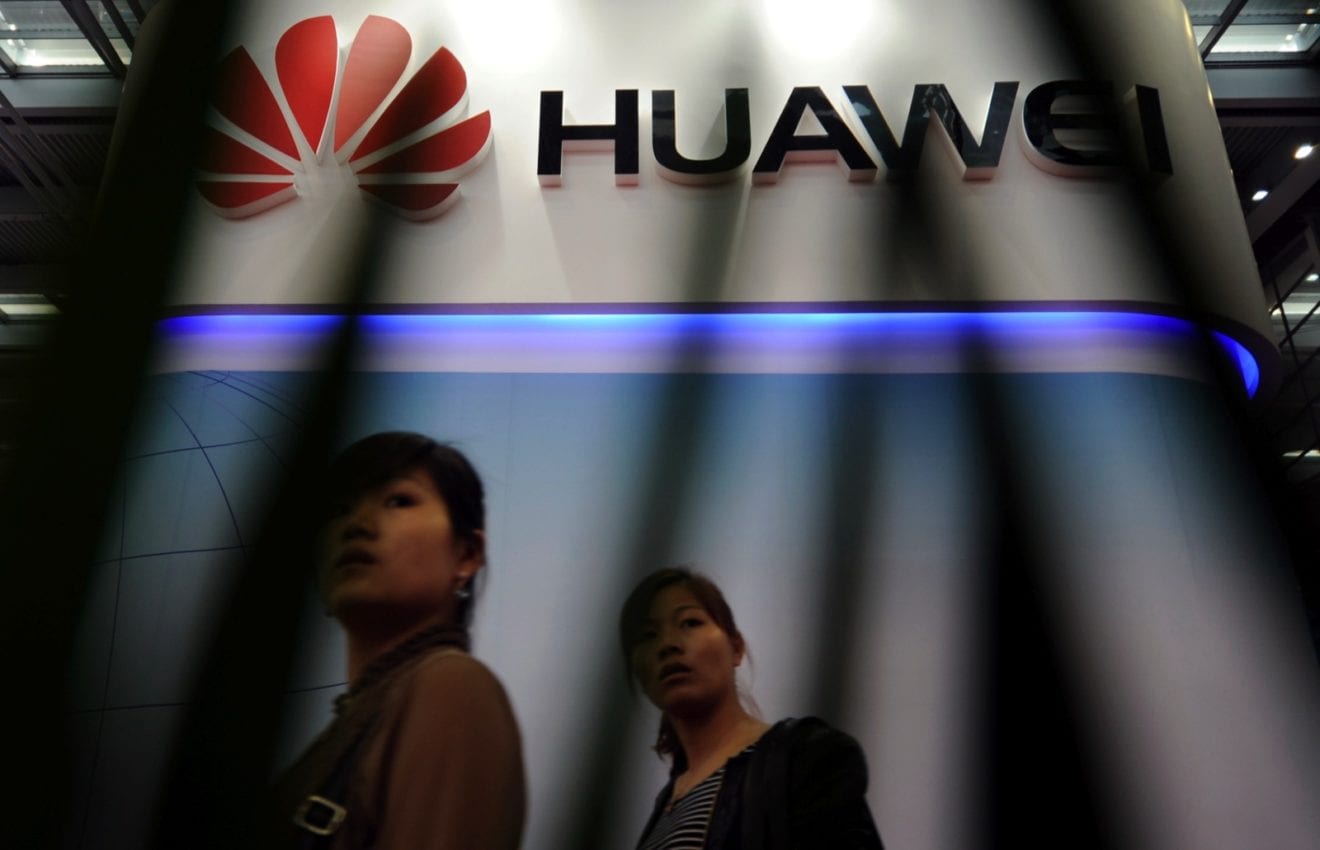
    Huawei has signed a MoU with Toshiba to collaborate on the integration of NB-IoT (Narrowband Internet of Things) for the development of “smart factory” solutions.

    The cooperation between Huawei and Toshiba will accelerate the commercial availability of NB-IoT in a diverse range of vertical industries, supporting a range of applications and deployment scenarios as operators are looking ahead towards new business opportunities in vertical industries.

    Both companies will work together to develop enhanced wireless product life cycle management solutions based on NB-IoT technology applied to real-world manufacturing scenarios.

    As a first step, Huawei will work closely with Toshiba by providing the communications technology expertise and help facilitate the integration of NB-IoT technology within Toshiba’s current IoT gateway, with initial testing scheduled to be performed in Huawei’s NB-IoT Open Lab located in Shanghai.

    The next phase will see actual live field tests being performed with expectations from both companies to develop a suite of smart factory solutions based on NB-IoT technology ready for global commercialization.

    With the number of connections in smart factories possibly reaching 100 million by 2020, the integration of NB-IoT within the smart factory will greatly enhance the data collection ability over wider areas in factories worldwide using cellular network connectivity, further improving management efficiency of the manufacturing process, and the ability to enhance product lifecycle management.

  • Toshiba delays results again, warns of $8.4 bln net loss

    Toshiba delays results again, warns of $8.4 bln net loss

    Toshiba twice postponed nine-month earnings before it released unaudited results last month. Troubled conglomerate Toshiba on Monday delayed its earnings for a third time since January, but warned it likely lost 950 billion yen ($8.4 billion) in the just-ended fiscal year, with fears growing about its survival.

    The latest delay comes as one of Japan’s best-known firms grapples with claims of financial misconduct at money-losing U.S. nuclear unit Westinghouse Electric, which is sitting in bankruptcy protection.

    Monday’s warning — largely linked to the bloodletting at Westinghouse — was, however, slightly better than an earlier projected net loss of 1.01 trillion yen for the year ended in March.

    “We can’t officially disclose the earnings as they’re still being audited,” Toshiba president Satoshi Tsunakawa told a news briefing in Tokyo Monday.

    Toshiba — still recovering from a 2015 accounting scandal — has said it needed more time to probe claims of financial misconduct by senior managers at Westinghouse and to gauge the impact on its finances.

    The investigation was started after a whistleblower complained that one or more executives at the U.S. unit exerted “inappropriate pressure” on its accounting.

    The series of delays have stirred fears that Toshiba could be delisted from the Tokyo Stock Exchange.

    The company now faces a deadline for the end of June to file its results with Japan’s finance ministry, or face a possible end-of-July delisting.

    But it is not clear if the firm’s shares will be yanked from the exchange even if that date is missed.

    Toshiba stock, which has lost more than 40 percent of its value since late December, rose 3.43 percent to 261.8 yen on Monday.

    “The market does not feel that the exchange is pushing toward a delisting,” Toshihiko Matsuno, chief strategist at SMBC Friend Securities, told AFP.

    “If that was the case, the company would have been delisted a while ago, but the reality is that it’s been put off for quite some time.”

    Lucrative chips

    Monday’s announcement comes as a sensitive time as Toshiba looks to sell its prized memory chip business.

    The plan is facing opposition from Western Digital, which jointly runs Toshiba’s key chip plant in Japan.

    On Sunday, the U.S.-based firm said it is taking its case to the International Court of Arbitration, seeking an injunction to block Toshiba from selling the business to a third party.

    Unloading the division, which accounts for about one-quarter of Toshiba’s previous 5.6 trillion yen in annual revenue, is seen as key for the company to turn itself around.

    The Japanese firm is the world’s number two supplier of memory chips for smartphones and computers, behind South Korea’s Samsung.

    Numerous reports have suggested that Taiwan’s Hon Hai Precision, better known as Foxconn, is offering some 3.0 trillion yen for the unit.

    Google and Amazon as well as U.S. private-equity firm Silver Lake Partners and American chipmaker Broadcom are reportedly among the other interested suitors.

    Any foreign buyer would need to pass a Japanese government review, given Japan’s concerns about losing a sensitive technology and questions about security around systems already using Toshiba’s memory chips. They are widely used in data centers as well as smartphones and computers.

    The Financial Times reported that Tokyo is ready to guarantee up to 900 billion yen in bank loans if Toshiba chooses a domestic suitor or one with strong Japanese links.

    “It would be no surprise if Japanese authorities take action to prevent Toshiba’s memory chip technology from being transferred overseas,” said Hideki Yasuda, an analyst at Ace Research Institute in Tokyo.

    “The technology is quite attractive and lucrative.”

    Toshiba’s huge losses come after its reputation was badly damaged over separate revelations that top company executives had pressured underlings to cover up weak results for years after the 2008 global financial meltdown.

    The company — which has 188,000 employees globally — once touted its overseas nuclear business as a future growth driver, filling a hole left after the 2011 Fukushima crisis slammed the brakes on new atomic projects in Japan.

    But delays and cost overruns have hit Westinghouse’s finances hard, as the global outlook for the nuclear business weakens.

  • Toshiba ropes in RPTech as a service partner

    Toshiba ropes in RPTech as a service partner

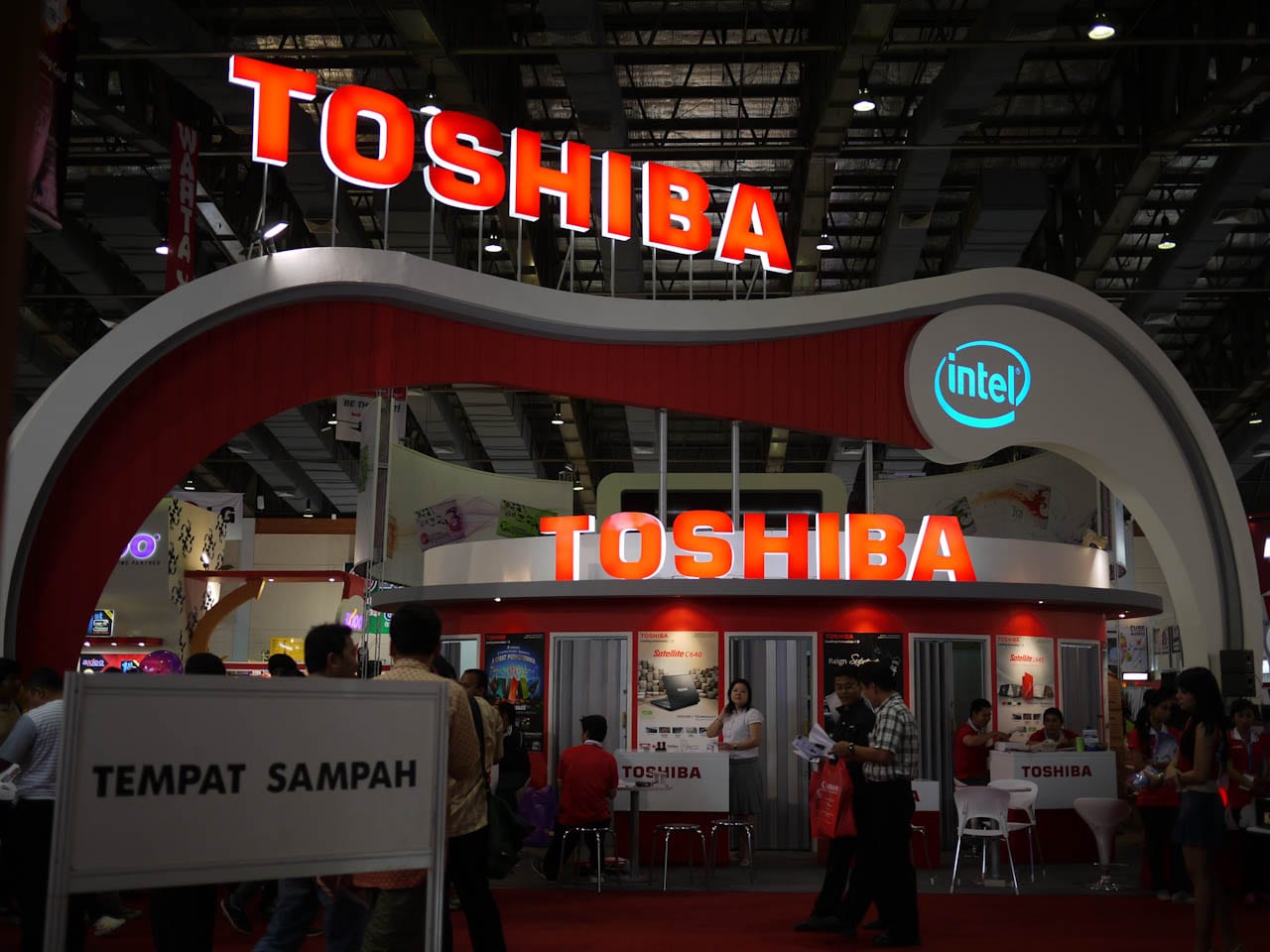
    Toshiba Electronics Asia (Singapore) Tuesday roped in RPTech Care Center, a service division of Rashi Peripherals a its service partner for India.

    RPTech Care Center will be managing Toshiba India Private Limited (TIPL) service needs and this alliance is aligned with Toshiba’s commitment to serve the customers by offering superior after-sales service, the two companies in a joint statement said.

    RPTech has more than 50 service centers spread across large cities in the country.

    “Being an international legendary brand that is committed to people, we believe in offering world-class quality and inventive products to our customers,” Polad Garda, country head, Toshiba India said.

    Further with our alliance with the RPTech Care Center, we are keen to offer our customers an excellent after sales service experience and satisfaction, Garda said, adding that it was a driving step to allow our customers with numerous alternatives and reduced turnaround time.

    “RPTech Care Center has well-built and dedicated service capabilities and post sales service systems,” Rajesh Goenka, Vice President, Rashi Peripherals said.

  • Aqua City’s android has the answers

    Aqua City’s android has the answers

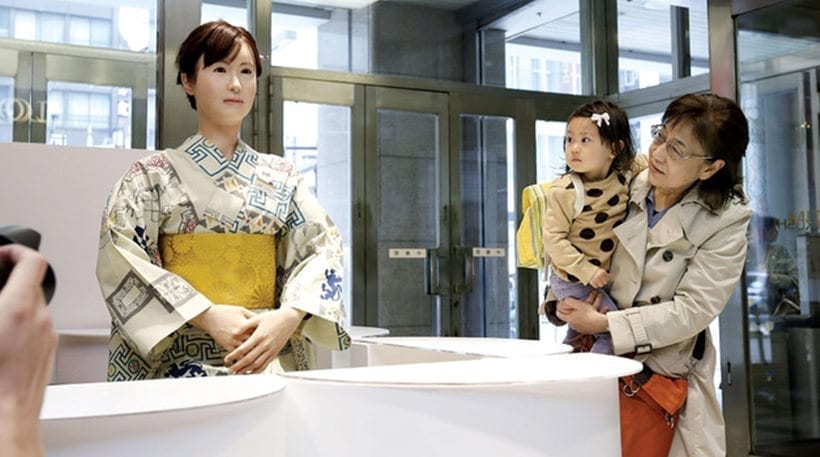
    Odaiba’s Aqua City waterfront shopping complex in Tokyo has an unusual lady on the third floor who waits patiently to answer visitor inquiries.

    Chihira Junco looks exactly like the type of polite, impeccably dressed and well-groomed staff attendant you’d find at a service desk in Japan, only she is not human at all – she is a robot, created by the Toshiba Corporation.

    Robot Japanese mal 1

    Junco gets her name from the fact she was “born” in June, reports Rocket News. Said to be 26 years old, she stands at 165cm and speaks Japanese, English and Chinese.

    Her facial features and hand movements draw large crowds daily. Next to her is an information desk staffed by three real-life female attendants who tend to be overlooked.

    Alongside the android at her desk is a futuristic device that lets visitors interact with her. A touch-screen panel displays options, and responds to mid-air “touch”, meaning customers do not have to actually touch any surface.

    Robot Japanese mal 2

    Once the selection has been made, Junco springs to life, offering guidance and directions in the language chosen, complete with lifelike gestures and a friendly smile. Visitors have a list of options for their inquiries, such as restaurants, transport access and tourist information.

    In the future, the company plans to have Junco respond directly to questions from customers rather than have them use a menu. They also hope to add more foreign languages, including Korean.

    When not responding to customer requests, Junco spends time speaking in Japanese, Chinese and British-accented English in rotation. On special holidays, like Christmas, she dresses up in appropriate outfits.

    * More photos here.

  • Scandal-hit Toshiba cuts 6800 jobs, sells Indonesia plant, sees annual loss of $4.5 billion

    Scandal-hit Toshiba cuts 6800 jobs, sells Indonesia plant, sees annual loss of $4.5 billion

    Scandal-plagued Japanese manufacturer Toshiba Corp. is cutting 6,800 jobs after projecting a net loss of 550 billion yen ($4.5 billion) for the fiscal year through March 2016.Toshiba said Monday it will slash the jobs in its personal computer, video product and consumer electronic businesses.

    The job cuts equal about 3 per cent of Toshiba’s overall employees. It is also selling its TV plant in Indonesia.Toshiba, which also makes nuclear power plants, has repeatedly apologized after acknowledging it had systematically doctored its books over several years to inflate profits by 152 billion yen ($1.3 billion).Officials have said that mangers set unrealistic earnings targets, under the banner of creating a big “challenge,” and subordinates faked results.

    The scandal at one of the nation’s top brands highlights how Japan is still struggling to improve corporate governance, despite efforts to beef up independent oversight of companies.Toshiba said the job cuts in Japan will be by early retirement, but a significant number of overseas jobs will also be involved and steps will vary by each nation. It did not immediately have a detailed regional breakdown.Earlier this year, Toshiba said it is selling facilities for making computer chips related to image sensors to Sony Corp.Toshiba is also in trouble because it operates and is decommissioning, with Hitachi and other companies, the Fukushima Dai-ichi nuclear power plant, which went into meltdowns after the March 2011 tsunami.

    Toshiba said it had not yet fully calculated the impact of the nuclear disaster on its books.The latest earnings projection means Toshiba is sinking into its second straight year of red ink, after racking up a nearly 38 billion yen ($312 million) loss for the fiscal year that ended in March.Japanese media reports said the loss forecast for this fiscal year would be a record for Toshiba, surpassing the massive losses during the Lehman financial crisis.

  • After Toshiba scandal, foreign investors want tougher Japan governance steps

    After Toshiba scandal, foreign investors want tougher Japan governance steps

    Japan needs bolder measures such as harsher criminal sanctions for fraud and whistleblower protections to improve corporate transparency and prevent a repeat of the accounting scandal seen at Toshiba Corp, foreign investors and governance experts said.

    Toshiba’s chief executive Hisao Tanaka and a string of other senior officials resigned on Tuesday after an independent inquiry found he had been aware the company had inflated its profits by $1.2 billion over several years.

    The scandal is a major setback for the government of Prime Minister Shinzo Abe, who has made improving corporate governance a central theme in his bid to reinvigorate Japan’s economy and entice more foreign capital.

    “This is a negative headline in what’s been 18 months of positive momentum in Japan,” said Singapore-based David Smith, head of corporate governance at Aberdeen Asset Management, which owns Japan stocks. An Aberdeen affiliate had a very small equity holding in Toshiba as of end-May, Reuters data shows.

    “This is a black mark for corporate Japan in the face of positive news and strong markets. The government may want to act tough,” said Smith, who helps manage about $115 billion in Asia.

    Japan’s listed companies have long-had tense relations with their foreign shareholders, who have frequently blamed long-term insiders’ dominance of corporate boards for low returns and weak oversight.

    In response to this criticism, the Abe government last month introduced new rules requiring listed company boards to appoint at least two outside independent directors, but investors said this did not go far enough – Toshiba already had four independent directors as part of its 16-person board.

    “The Toshiba scandal further underlines the need for board training as well as a robust whistleblower protection system,” said Seth Fischer, chief investment officer at Hong Kong-based hedge fund Oasis Management and a corporate governance activist who successfully pushed for reforms at Nintendo Co Ltd.

    “Whistleblowers are ultimately performing a service to the company, its executives and the company’s overall mission – which is integrity of financial statements. They need to be rewarded as such,” he said.

    This week’s revelations come four years after a similar scandal in which camera-maker Olympus Corp concealed nearly $1.7 billion in losses from shareholders.

    Both scandals also raise questions about the quality of Japan company audits, which rate poorly compared with developed market peers, according to data compiled by Hong Kong-based GMT Research.

    “One of the problems is that audit fees are very low in Japan. It’s nonsense that auditors, on these fees, are doing any proper work,” said Robert Medd, a partner at GMT.

  • Toshiba Expands Retail Manufacturing in Singapore

    Toshiba Expands Retail Manufacturing in Singapore

    Toshiba Global Commerce Solutions today announced its continued commitment to Singapore with an expanded manufacturing presence to include the SurePOS 700 series of POS systems. Known for delivering state of the art ODM/OEM products for Fortune 500 companies worldwide and for being a key player in the retail sector, Toshiba TEC Singapore Pte Ltd (TSE) was selected to build the new SurePOS 700 systems, in addition to SurePOS 500 systems and 4610 SureMark printers.

    Toshiba’s total spend in Singapore includes nearly $200M U.S. annually, with approximately 140 combined employees from Toshiba Global Commerce Solutions and TSE based in Singapore, dedicated to retail development, engineering, manufacturing, procurement, sales and services.

    “With our #1 market leadership worldwide and heritage of over 40 years’ experience in POS systems, retailers rely on Toshiba to keep their stores relevant by providing powerful, efficient and adaptable checkout solutions,” said Thomas Buchholz, Vice President, Growth Markets Sales and Professional Services, Toshiba Global Commerce Solutions. “Our Singapore customers can take pride in the fact that we are expanding our manufacturing to include local sourcing of our newest and most powerful retail POS.”

    “As a Together Commerce Alliance partner, we distribute Toshiba’s point of sale solutions to Singapore’s leading retailers, which include gaming, specialty stores, malls, restaurants and grocers,” said Frankie Chong, Director, E-Tech IT Solution PTE Ltd. “Toshiba is committed to growing its footprint in the Singapore market through its technology innovation, working closely with us to ensure a comprehensive eco-system of solutions and services to satisfy the changing demands of today’s shoppers.”

    Toshiba Global Commerce solutions available in Singapore include SurePOS 300, 500 and 700 series, TCxWave, TCxFlight, POS printers, displays, VisualStore, 4690 Operating System, POS applications and barcode printers. To learn how Toshiba’s solutions can improve your store’s operations, request a meeting with our local Singapore team by emailing Toshiba_Comms@toshibagcs.com.

    About Toshiba Global Commerce Solutions

    Toshiba Global Commerce Solutions is retail’s first choice for integrated in-store solutions and is a global market share leader in retail store technology. With a global team of dedicated business partners, we deliver innovative commerce solutions that transform checkout, provide seamless consumer interactions and optimize retail operations that are changing the retail landscape. To learn more, visit toshibacommerce.com or engage on Twitter @toshibagcs

    Toshiba and related logos are trademarks of Toshiba Corporation or its affiliated companies in Japan, the United States and/or other countries, registered in many jurisdictions worldwide. Copyright (C) 2015 Toshiba TEC Corporation or its affiliated companies.

    The information in this document represents current goals and objectives and is subject to change or withdrawal without notice.

  • Toshiba leaving Singapore end of May 2015 due to stiff competition

    Toshiba leaving Singapore end of May 2015 due to stiff competition

    Chinese evening newspaper Shin Min Daily News reported on Thursday that Toshiba Singapore had recently sent a notice to its retailers, announcing that some products will be withdrawn from the local market.

    Reporters from the Chinese daily checked with several retailers and they understand that the retailers received the notice via e-mails and letters a few weeks ago.

    Toshiba said that due to a highly competitive environment in Singapore, they had to make an “extremely difficult” decision to withdraw from the local television and appliance market.

    In a statement, Toshiba said after-sales customer service will continue until further notice.

    Small retailers have expressed concerns over Toshiba’s exit.

    A retail shopowner said about half of her electrical products are from Toshiba and several of her regular customers are fans of the Japanese brand.

    She also said small retailers are not doing well now and Toshiba’s withdrawal will add to the problem.

    One industry insider said that regardless of technical specifications, South Korean products are slightly better in comparison.

    Shin Min reported that a Toshiba spokesman was unable to provide further information about their withdrawal.