Tag: tourism retail

  • Lotte Signs Blackpink Jennie as Foreign Spending Drives Record Department Store Profits

    Lotte Signs Blackpink Jennie as Foreign Spending Drives Record Department Store Profits

    Lotte Department Store signed Blackpink singer Jennie for a yearlong campaign. The deal follows foreign shoppers pushing international sales past 1 trillion won for the first time.

    The agreement gives South Korea’s largest department store operator its first brand ambassador in seven years. It covers 31 domestic branches and four outlets in Vietnam and Indonesia.

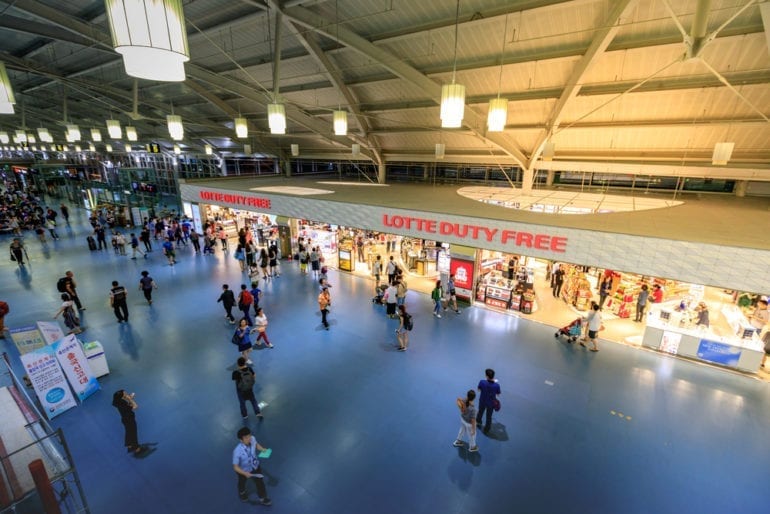
    Promotions launch in October across central transit hubs, including Incheon Airport and Seoul Station. Shinsegae Department Store counters without a formal contract. The rival chain, which operates 13 locations nationwide, features rookie group Allday Project member Annie on the digital screen outside its Myeong-dong flagship through Oct. 18. She is the daughter of Shinsegae Inc. Chair Chung Yoo-kyung.

    Foreign Footfall Rewrites Merchandising Strategies

    Department store operators across East and Southeast Asia spent years phasing out celebrity-driven advertising in favour of direct luxury brand partnerships. Rising tourist traffic reversed that playbook in Seoul. Floor plans evolved from standard retail halls into cultural destinations for international visitors.

    Foreign visitors spent 14.02 trillion won ($10.5 billion) on credit cards across South Korea from January through August. That represents a 48.5 percent increase from a year earlier, according to the Ministry of Culture, Sports and Tourism. Overseas visitors now generate almost 30 percent of total sales at the Myeong-dong flagships of both Lotte and Shinsegae. That share stood at 15 percent in 2024.

    “By combining our ambassador’s global influence with Lotte Department Store’s brand value, we will widen our reach to customers worldwide,” said Lotte Department Store CEO Jung Hyun-seok.

    Flagship Showdowns in Myeong-dong

    Concentrated tourist demand inside central Seoul creates intense pressure on prime retail real estate. Lotte built a dedicated hall for domestic fashion labels that draws most of its volume from inbound travellers. Shinsegae consolidated K-pop merchandise, packaged snacks, and domestic apparel labels onto a single tourist floor.

    Competition extends directly to the street. Shinsegae uses its building-scale outdoor digital media screen to display cultural and pop music content. Lotte plans to counter with an even larger outdoor display panel on its own building facade in December.

    Surging Operating Profits Across Both Chains

    Record quarterly and half-year earnings followed the spending surge. Lotte generated roughly 640 billion won in sales to overseas shoppers during the first half. Shinsegae collected 580 billion won from the same demographic.

    Second-quarter results set new records. Lotte’s department store division reported revenue of 891.2 billion won, lifting operating profit 84 percent to 119.7 billion won. Shinsegae posted store revenue of 738.5 billion won, up 17.5 percent, while operating profit jumped 53.5 percent to 108.8 billion won.

    First-half tallies confirmed the trend. Lotte expanded six-month operating profit by 54.8 percent to 295.9 billion won on revenue of 1.69 trillion won. Shinsegae grew first-half operating profit 39.7 percent to 249.9 billion won as division revenue reached 1.48 trillion won.

    Southeast Asian Footprint and Year-End Targets

    Across Southeast Asia, the celebrity campaign supports a retail footprint of four department stores in Vietnam and Indonesia. Cross-border brand recognition directly affects footfall in those assets. Korean lifestyle and beauty concepts drive the tenant mix at each location.

    Lotte had not used a single advertising model since actress Shin Min-a fronted its promotions in 2017. Its Myeong-dong flagship alone generated approximately 520 billion won of the retailer’s 1 trillion won in foreign sales this year. The chain focuses on maintaining foreign customer volumes into the final quarter.

    Both department store chains turn next to year-end campaigns for the winter travel season, led by the December opening of Lotte’s expanded media wall in Myeong-dong.
  • Asung Daiso Approaches 5 Trillion Won in Sales on Budget K-Beauty Surge

    Asung Daiso Approaches 5 Trillion Won in Sales on Budget K-Beauty Surge

    Asung Daiso is nearing 5 trillion won ($3.7 billion) in annual revenue in South Korea. Overseas tourists are flocking to its downtown outlets for low-cost cosmetics and travel essentials.

    Total sales reached 4.54 trillion won last year, up from 2.6 trillion won in 2021. Growth came from a strict 5,000-won price ceiling alongside dedicated skincare and makeup lines.

    Foreign card transaction values doubled year-on-year across the first eight months of 2026. That followed overseas card spending growth of 130 percent in 2023, 50 percent in 2024 and 60 percent in 2025, led by central tourist locations.

    Expanding From Seven Brands to 170

    Its beauty catalogue grew from seven brands and roughly 120 stock-keeping units in 2022 to approximately 170 brands and over 1,900 products this year. Category sales jumped 50 percent in 2022, 85 percent in 2023, 144 percent in 2024 and 70 percent in 2025.

    Every item across the store network sells for between 500 won and 5,000 won. To meet that retail cap, major cosmetics manufacturers supply modified formulations and smaller unit packages.

    Daiso merchandizers have excellent taste in selecting products of high enough quality that can meet the customer’s expectations while keeping them at very low prices.

    Cosmetics now rank as the single highest-selling category at the Myeongdong Station store in central Seoul. Dedicated space on the second floor captures footfall from inbound Asian and Western travelers.

    Rivalry With Olive Young and Musinsa

    That cosmetics push challenges health and beauty leader CJ Olive Young and fashion platform Musinsa. Olive Young built a nationwide network around mid-tier and prestige domestic skincare. Musinsa opened a beauty-dedicated store in Seoul’s Hongdae district to draw younger apparel shoppers.

    The retailer targets the bottom tier of that market entirely for itself. Its 5,000-won price ceiling captures entry-level consumers and tourists buying small jars, sheet masks and serums as low-risk souvenirs.

    Margin compression remains the primary risk. Fixed dollar-store price caps during prolonged supply-chain inflation force suppliers to cut packaging costs to the bone, leaving little buffer if raw ingredient prices climb.

    First Beauty-Only Format in Eastern Seoul

    In August 2026, Daiso opened its first beauty-dedicated store near Konkuk University in Gwangjin-gu, eastern Seoul. The outlet replaces traditional homeware and hardware aisles with shelf space for personal care, cosmetics and accessories aimed at university students and local residents.

    Five consecutive years of top-line expansion made that test possible. Annual revenue climbed from 2.95 trillion won in 2022 to 3.46 trillion won in 2023 and 3.97 trillion won in 2024 before breaking past 4.5 trillion won.

    Management is now tracking full-year 2026 revenue against the 5 trillion won threshold while evaluating whether to replicate the Konkuk University format across other tourist-heavy metro stations in Seoul and Busan.

  • Central Park Draws 25 Million Visits in First Year

    Central Park Draws 25 Million Visits in First Year

    Thailand’s Central Pattana has unveiled the next phase of growth for Central Park in Bangkok as the shopping centre marks its first anniversary in September 2026.

    The centre welcomed more than 25 million visits in its first year, including over 10 million visits from international tourists, placing it among the top-tier performers in the developer’s portfolio.

    Three Pillars for International Footfall

    Work on the next stage centres on a campaign dubbed Bangkok’s World Stage. This framework splits tenant curation and event programming into three tracks: Global Firsts, Global Culture, and Global Audience.

    Global Firsts secures exclusive product launches, debut store formats, and international brand partnerships new to Thailand. Global Culture runs live music, design exhibitions, and art installations throughout the complex. Global Audience steers marketing spending toward overseas tourists, touring creators, and commercial partners beyond Southeast Asia.

    Mixed-Use Integration in Central Bangkok

    The mall anchors the wider Dusit Central Park mixed-use development alongside grade-A corporate offices, a luxury hotel, and private residential towers. It features more than 1.12 hectares of elevated public green space. That parkland channels foot traffic between the retail concourses and the surrounding Silom and Rama IV commercial districts.

    Across Southeast Asia, retail developers are pivoting away from standard leasing toward event-driven programming. Operators in Bangkok, Singapore, and Kuala Lumpur compete for big-spending tourists through regional brand exclusives and large cultural draws. But the strategy carries higher execution costs. Continuous programming and rapid turnover of experiential concepts demand heavier capital commitments than traditional leases.

    Building Out the Dusit Joint Venture

    Central Pattana conceived the retail asset to replace the historic Dusit Thani hotel through a joint venture between Central Group’s property arm and Dusit International. Construction launched under a multi-billion-baht master plan to protect downtown market share against rival mega-projects along the Sukhumvit and Chao Phraya corridors.

    Tenant handovers and new flagship openings under Global Firsts will roll out over the coming quarters. Remaining office and residential towers across Dusit Central Park will hit completion in phases over that stretch.

  • Uniqlo to Open First Kyoto Global Flagship Store on Kawaramachi-Dori

    Uniqlo to Open First Kyoto Global Flagship Store on Kawaramachi-Dori

    Uniqlo will open its first global flagship store in Kyoto on 6 November. The new site replaces the retailer’s existing Kyoto Kawaramachi shop, which is currently its largest location in the city.

    Located on Kawaramachi-dori, central Kyoto’s primary shopping boulevard, the new store trades on a strip packed with major retail complexes and heavy pedestrian traffic from both domestic shoppers and international tourists. Fast Retailing plans expanded sales floors at the location to carry its full LifeWear apparel range alongside interior features drawn from Kyoto’s traditional craft culture.

    Upgrading Prime Street Footprints

    Upgrading an existing high-street location to flagship status mirrors Fast Retailing’s broader store strategy across key Asian metros. Rather than multiplying smaller satellite outlets in secondary suburban hubs, the apparel group concentrates capital into dense, high-visibility corridors where large-format stores capture heavy tourist footfall.

    Flagship formats in major Japanese tourist cities serve a dual commercial purpose. They generate steady baseline trade from residents while reinforcing brand awareness for inbound visitors who shop the label across greater Asia, Europe, and North America.

    Focus on Inbound Travel Hubs

    Kawaramachi-dori serves as Kyoto’s main commercial artery, linking central rail transit to the city’s key retail and hospitality zones. Replacing the older Kawaramachi shop provides Uniqlo with modernized floor space built to handle heavy transaction volumes during peak travel periods.

    The company scheduled the launch for 6 November, positioning the expanded sales floors to trade directly into Kyoto’s busiest autumn tourism weeks.