Tag: tourism spending

  • FairPrice Adapts on Xiaohongshu to Target 3.1 Million Chinese Tourists

    FairPrice Adapts on Xiaohongshu to Target 3.1 Million Chinese Tourists

    FairPrice Group has partnered with agency Prizm Group to overhaul its marketing on Xiaohongshu, shifting resources away from broadcast advertisements toward search-indexed consumer guides.

    The push targets a domestic audience where Chinese residents make up 73.9 per cent of Singapore’s resident population, alongside mainland Chinese visitors who generated S$3.68 billion in tourism receipts during the first nine months of 2025.

    Shifting from Social Feeds to Search Queries

    Xiaohongshu, operated internationally as RedNote, functions across Southeast Asia primarily as a product search engine rather than a passive social feed. Users search the platform for purchasing advice, store guides and product comparisons before transacting in physical outlets or on digital storefronts.

    For retailers, the operational change requires building content around high-frequency search keywords rather than conventional brand campaigns. Agency data from Prizm Group shows that organic saves serve as the primary performance benchmark on the platform, indicating intent to retrieve product information inside a supermarket aisle.

    Localising Terminology for Regional Shoppers

    Campaign assets developed for FairPrice include bilingual grocery guides designed to resolve naming disparities between Southeast Asian and mainland Chinese retail packaging. A visual reference guide for fresh pork cuts mapped regional Singaporean retail labels against terms used by shoppers from mainland China.

    A related campaign targeting office workers with breakfast recipes generated 1,453 organic saves against 1,591 likes, demonstrating higher retention than standard social engagement formats. FairPrice also introduced closed user group chats on the platform to distribute promotional vouchers without diluting standard search feeds.

    Regional Reach Across Southeast Asian Markets

    The platform’s user base extends across neighbouring Malaysia, where the Chinese community accounts for 22.2 per cent of citizens, representing nearly seven million consumers. Xiaohongshu recorded more than 2.5 million active Malaysian users in 2023, establishing the country as the platform’s second-largest user base outside mainland China after Taiwan.

    Retail operators running regional supply chains across the Singapore-Malaysia corridor face three distinct consumer tiers on a single application: local citizens, resident expatriates and incoming tourists. Marketing assets created for domestic Singaporean shoppers frequently fail with mainland tourists due to differences in product nomenclature and payment preferences.

    Search Indexing Over Brand Broadcasts

    Mainland China delivered 3.1 million visitor arrivals to Singapore in 2025, regaining its position as the city-state’s top international travel source. Department of Statistics data indicates that inbound spending from these travellers concentrates heavily in grocery, personal care and specialty food categories.

    Retailers operating physical store networks in the region are now tracking keyword volumes on lifestyle platforms alongside traditional Google search rankings to protect footfall against cross-border e-commerce alternatives.

  • GS25 Sales to North American Shoppers Jump 131 Percent

    GS25 Sales to North American Shoppers Jump 131 Percent

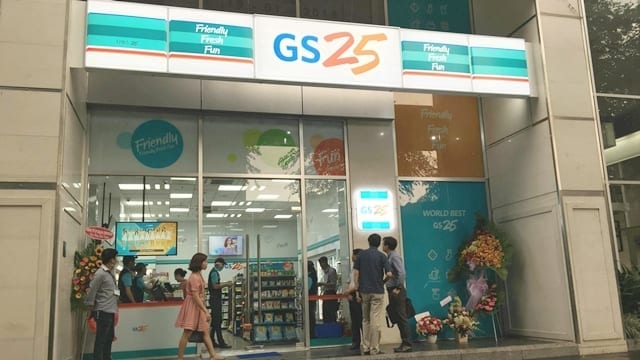
    GS Retail recorded a 131 percent jump in sales to North American visitors at its GS25 convenience stores in South Korea during the first eight months of the year.

    The surge pushed North American shoppers to roughly 30 percent of total foreign customer sales across the network. That leaves them just 10 percentage points behind visitors from Greater China, who continue to hold the largest foreign share at approximately 40 percent.

    Buying beer instead of banana milk

    Spending patterns between the two visitor groups show a sharp split in basket composition. North American customers spend primarily on canned beer, wine and spirits, alongside sports drinks, energy drinks and sodas, spending more on canned beer than any other overseas group. Shoppers from Greater China buy dairy products, instant noodles and baked goods, where blueberry Greek yogurt recently overtook banana milk as the top-selling item.

    Geographic data highlights a similar divide in where travellers spend. Greater China tourists stay clustered around traditional shopping hubs and downtown districts in Seoul, Busan and Jeju Island. North American footfall has concentrated heavily along coastal resort corridors.

    East coast sales outpace Seoul hubs

    Regional revenue from North American buyers saw its fastest expansion in Gangwon Province, where sales climbed 338 percent year on year. The bulk of that volume settled along the province’s beach-lined east coast, driven by seasonal leisure travel.

    For convenience operators in South Korea, this geographic and product divergence changes how individual franchise locations must manage inventory during peak travel seasons. Stores in coastal resort towns require alcohol distribution and cold beverage stock lines calibrated for Western preferences, while urban transit hubs must protect shelf space for packaged snacks and fresh dairy popular with Chinese tour groups.

    GS Retail and rival chains such as CU and 7-Eleven have spent years competing over inbound tourist wallets, yet historical strategies focused almost exclusively on Mandarin-language signage and group tour bus routes. A sustained shift toward Western independent travellers introduces higher margins on liquor and ready-to-drink beverages, but demands different localized marketing at the store shelf.

    Merchandising shifts across 1,000 stores

    Earlier network expansions set the groundwork for tracking foreign transaction data at the point of sale. GS25 introduced foreign card processing upgrades across its domestic estate over recent operating quarters, giving the chain real-time visibility into basket differences by issuing bank and country of origin.

    About 1,000 GS25 stores located in high-traffic tourist corridors have rolled out English-language promotional displays, recipe cards and product preparation guides this year. The company plans to use autumn purchasing data from coastal and metropolitan stores to adjust product distribution schedules ahead of the winter travel cycle.

  • Alipay and WeChat Pay Link Foreign Cards Ahead of Apec Meeting

    Alipay and WeChat Pay Link Foreign Cards Ahead of Apec Meeting

    China has expanded cross-border mobile payment access across Alipay and WeChat Pay. The update enables foreign bank card integration ahead of the November Apec Economic Leaders’ Meeting in Shenzhen.

    Daily domestic mobile payment usage reached 88.5 per cent in 2025, according to August survey data from the Payment and Clearing Association of China. That is up 5.6 percentage points from the prior year.

    Card Linking and App Setup

    International travellers visiting mainland cities can now register on Alipay and WeChat Pay using an email address. They can link Visa, Mastercard, or other overseas payment cards. Users scan merchant QR codes directly at point-of-sale terminals. They no longer need a domestic bank account or a local currency balance.

    Tencent has introduced a payment application built for foreign visitors. Meanwhile, Ant Group has expanded terminal acceptance points across transit hubs, hospitality venues, and retail districts in tier-one cities. Covered locations include Beijing, Xian, Chengdu, and Shenzhen.

    Retail and Hospitality Impact

    Merchant acceptance barriers historically suppressed direct retail spending by international tourists in mainland China. Domestic consumers moved away from cash and card swipes years ago. Foreign card acceptance, however, remained confined to high-end department stores and international hotel chains.

    Overseas travellers can now transact with street vendors, local convenience stores, ride-hailing networks, and regional rail ticketing systems. This broadens the customer base for independent retailers and food operators. They do not need separate card-processing hardware.

    Platform Infrastructure and Merchant Settlement

    Operational risks for domestic merchants centre on payment processing fees and foreign exchange buffers. Tech platforms handle currency conversion at the point of sale. They route charges through international payment channels and settle in yuan to local merchant accounts.

    Regional payment providers across Asia and Hong Kong continue to align their cross-border wallets with mainland QR standards. Technical adjustments made for the summit establish a permanent clearing model instead of a temporary trial.

    Earlier Policy Steps

    Regulators prompted the platform overhaul to lower inbound tourism friction and support consumer services. Central authorities told major wallet operators to raise transaction limits for non-resident users. They also ordered simpler passport verification steps.

    Initial trials began in early 2024, when platforms first allowed foreign card bindings with restricted spending limits. The new infrastructure removes earlier balance transfer limits. It also simplifies interface navigation for non-Chinese speakers.

    What to Track Next

    Inbound spending volume across Shenzhen’s retail network during the November Apec summit will serve as the first major test. Regional payment operators will track merchant settlement speeds as transaction volumes scale across southern China’s retail corridors.

  • South Korea Pours 30 Billion Won into Six Regional Retail Districts

    South Korea Pours 30 Billion Won into Six Regional Retail Districts

    South Korea’s Small Enterprise and Market Service will inject up to 5 billion won ($3.68 million) into each of six regional shopping districts through 2027.

    This two-year project targets commercial hubs outside the capital. Funding will cover multilingual infrastructure, foreign payment systems, tax-refund stations and retail startup spaces across provincial cities.

    Funding and rollout for six hubs

    Selected commercial zones include Seorak Rodeo in Sokcho, Octopus 1955 in Yeongju, Hwangnidan-gil in Gyeongju, Gyodong in Daegu, Dongmyeong in Gwangju and the central shopping district of Seogwipo on Jeju Island. Each precinct will upgrade physical storefronts to pull international tourist footfall away from Seoul.

    Municipal operators will install luggage storage points, digital directories in multiple languages and instant tax-refund counters. The program also pays for pedestrian street redesigns alongside joint marketing campaigns with digital content creators.

    Repurposing retail in Sokcho and Yeongju

    In Sokcho, the Seorak Rodeo district spans 443 stores along Jungang-ro, connecting coastal tourism with retail strips. Planners will convert vacant second-floor commercial units into digital media galleries. Ground-floor properties will run as pop-up retail space for local consumer brands.

    Yeongju’s Octopus 1955 commercial area covers 52,400 square meters and 179 stores near Yeongju Station. The site builds a branded retail route around regional food traditions dating back to the 1955 opening of the Yeongdong railway line. It links local merchants with e-commerce platforms for regional produce, beef and ginseng.

    Global infrastructure for Hwangnidan-gil

    Gyeongju’s Hwangnidan-gil district is the largest hub in the program, covering 347,500 square meters and 479 retail and dining units. The district recorded 11 million visitors in 2025. Roughly 300,000 of them were foreign travelers.

    Operators in Gyeongju will install point-of-sale systems accepting overseas digital wallets, translate commercial directories and open pop-up stores to test new consumer products. Foot traffic will be routed directly to older adjacent shopping streets, including Geumridan-gil, Bonghwang-ro and the Jungang and Seongdong traditional markets.

    Decentralising consumer spending beyond Seoul

    For regional store owners and landlords, the state subsidies address a structural headache. South Korea’s retail spending remains heavily concentrated in the Seoul metropolitan area. That leaves provincial shopkeepers dependent on weekend domestic trade and seasonal domestic holidays. Upgraded payment terminals and tax-refund desks lower the barrier for foreign visitors who rarely venture past metropolitan transit zones.

    Retaining independent retail tenants after construction finishes will be the main operational test. Upgraded commercial strips frequently drive up rents. When that happens, higher overhead displaces the independent food vendors and craft retailers who created foot traffic in the first place.

    Government agencies have spent the past three years trying to spread tourism receipts beyond Seoul’s central shopping corridors of Myeongdong and Hongdae, following the post-pandemic reopening of regional flight corridors.

    Participating districts will open their first multilingual traveler centers and pop-up storefronts in early 2027. Total tenant counts and foreign tourist transaction volumes will be tracked through the final funding deadline in December 2027.

  • Uniqlo to Double Japanese Flagship Count to 20 in Ten-Year Strategy Shift

    Uniqlo to Double Japanese Flagship Count to 20 in Ten-Year Strategy Shift

    Uniqlo will double its network of Japanese flagship stores to roughly 20 locations over the next decade as parent Fast Retailing pivots away from standard shopping mall outlets.

    The apparel group currently runs about 10 flagship or flagship-equivalent premises across domestic city centres, anchored by 3,000-square-metre destinations in Tokyo’s Ginza and Osaka’s Umeda districts. Future domestic openings will focus on major regional hubs such as Nagoya and Sapporo alongside central Tokyo retail corridors, targeting local foot traffic and spending from inbound foreign tourists.

    “Every major city in Japan needs a flagship store,” Fast Retailing chairman and chief executive Tadashi Yanai said. He added that the group sees little value in opening conventional stores that function solely as transaction counters.

    Demographic pressures reshape store networks

    As of late May, Uniqlo operated 785 retail locations across Japan. That count reflects an 8 per cent drop from its peak of roughly 850 outlets in August 2013, following years of flat domestic store numbers.

    A shrinking domestic population and the rise of digital commerce have forced the company to rethink its physical footprint. Stores in Japan now operate less as basic distribution points and more as brand showrooms where customers handle garments and interact with services before buying across omnichannel channels.

    Exporting the Western retail model

    The domestic overhaul mirrors Fast Retailing’s recent playbook in Europe and the United States, where it secured historic buildings and prominent high-street addresses. Those two Western regions together account for nearly 20 per cent of total group revenue and have delivered double-digit sales growth since the pandemic.

    RetailNews Asia views this as a clear signal that the era of aggressive suburban store expansion in mature Asian markets is over. Just as department stores in regional Japan have retreated, fast-fashion operators must concentrate capital into higher-yielding, destination-scale flagships that can capture international tourism spend while digital channels absorb routine replenishment sales.

    Fast Retailing is also preparing to apply this revised large-format strategy to its broader store networks across Southeast Asia and mainland China over the coming fiscal years.