Retail News CRM

Tag: track

  • Not being able to track you on iPhone could cost Facebook $12.8 billion in 2022

    Not being able to track you on iPhone could cost Facebook $12.8 billion in 2022

    As many of you probably know, Facebook was a loud critic of Apple’s App Tracking Transparency feature upon its announcement and release, and that has, surprise, surprise, a reason. In 2021, Facebook lost some money due to those privacy features, and the social media giant might lose an estimated $12.8 billion just because of ATT.

    App Tracking Transparency was launched back with iOS 14 in April of 2021, and it is a very useful privacy-related feature for iPhones. What it does is prevent third-party tracking to occur (of course, if you choose not to be tracked, which is what the majority of iPhone users chose anyway). This way, an app such as Facebook cannot track your activity online so that it can serve you with relevant ads.

    And Facebook has seen the impact of this. Almost 12 months after Apple’s launch of ATT, a new analyst now predicts the second year will cause major disruption to advertisers. Companies that rely on advertising, including Facebook, YouTube, and others, are estimated to collectively lose around $16 billion because of the feature.

    Towards the end of last year, Facebook’s Mark Zuckerberg reported the company would potentially see a $10 billion revenue hit for 2022. Well, it seems this number may be a bit higher, at least according to an analysis by research firm Lotame.

    According to the research, Apple’s App Tracking Transparency will continue to have an impact this year, but it should be lessening. Alongside the introduction of ATT, Apple also deprecated its old technology called IDFA (Identifier for Advertisers), which made it possible for third-party apps to track you across websites using an identifier and then serve you ads that you are more likely to buy something from.

    Despite that, Apple doesn’t wish death upon all advertisers, so the company introduced new frameworks to help advertisers, but this time, no personal tracking is used and the data is aggregated. This way, less relevant ads could be served to users.

    The report continues on to say that the collective impact for companies would be nearly $16 billion, and the company that’s going to lose the most is Facebook with an around 81% share of those $16 billion. Other companies expected to lose revenue are Snap, which could lose around $545 million, then Twitter with around $323 million. YouTube is also on the list of impacted companies, and there, the estimated revenue loss is around $2.2 billion.

    Pretty large sums, we might add. Interestingly enough, these sums represent in fact how much those companies and apps were actually relying on tracking you on the internet…

    The report also indicates that both Snap and Twitter have been quickly adapting to the situation, including using the new measurement systems provided by Apple, and these two companies don’t seem too troubled with it.

    Facebook has also stated that it will work to decrease its reliance on Apple. Earlier, the social media giant stated that it will look into other ways that advertisers can profit.

    But Apple’s App Tracking Transparency impact, at least according to the analysts, is going to decrease by the second half of 2022, and “other shocks” are expected to affect the advertising industry, but the report doesn’t delve into details on that.

    Facebook seems to have suffered the most from Apple’s ATT. You may remember earlier when Meta’s stock price drastically fell after Zuckerberg’s report on the revenue of the company and ATT. For those of you who are curious, currently, Meta’s share price sits at $214.99 (at the time of writing), dropping down from around $323 in February 2022 (before the report came out).
  • Apple blocks TikTok’s attempt to track iPhone users

    Apple blocks TikTok’s attempt to track iPhone users

    Ever wonder how you could look up a product online and all of a suddenly targeted ads for that product pop up on your phone and other connected devices? This, not witchcraft, readers. Third-party apps and websites track your travels across the internet and also know which apps you’ve been viewing. When Apple released iOS 14.5 in May, it gave iOS users the opportunity to opt-out of getting tracked with the App Tracking Transparency (ATT) feature.
    This feature gives iPhone users the ability to decide for themselves whether they want to be tracked by third-party apps and websites for the purpose of receiving online ads. More importantly, the ATT feature allows users to opt-out of being tracked which is the option that the vast majority of iOS users have selected. Facebook CEO Mark Zuckerberg was not pleased that Apple was giving users a way out of being tracked, but that isn’t surprising since the social media giant took in over $84 billion in ad revenue last year and 96% of iOS users had decided to opt-out of tracking in the early going.
    Another company decimated by ATT is TikTok and the popular short-form video app attempted a workaround to get around App Tracking Transparency called device fingerprinting. The latter can collect user data through the use of an algorithm and the entire workaround is called CAID for short.
    The Financial Times said that Apple was left with certain options: it could decide to look the other way and allow CAID to be used by app developers to obtain personal data, or it could block apps like TikTok from the App Store as long as the workaround continued to be employed. The latter is what Apple decided to do as it rejected TikTok updates that contained the CAID build.
    Alex Bauer, head of product marketing at adtech group Branch, told the Times that “The Chinese app ecosystem was collectively baiting the bull with CAID, under the theory that Apple couldn’t afford to ban every major app in the market. Apple called their bluff, and seems to have reasserted control over the situation by aggressively rapping knuckles on early adopters before the consortium gained any real momentum.”
    While TikTok tried to use a back door to get past Apple’s ATT, the tech giant was able to slam that door shut. The company remains serious about promoting privacy on the iPhone and its other devices.
  • Garmin expands Forerunner line with five new GPS models

    Garmin expands Forerunner line with five new GPS models

    While Garmin makes all kinds of wearable devices, ranging from super-basic activity trackers to luxury smartwatches, its central focus remains on so-called GPS running watches, designed to take on the likes of the Fitbit Versa rather than the global market-leading Apple Watch family.

    But not all athletes have the same passion, drive, and needs, which is why Garmin is today vastly expanding the Forerunner lineup with five new models ranging in price from $199.99 to $599.99. These are joining the entry-level $100 Forerunner 25, mid-range $350 Forerunner 735XT, and a $450 Forerunner 645 Music that lets you store your favorite tunes directly on your wrist, as well as supporting contactless payments.

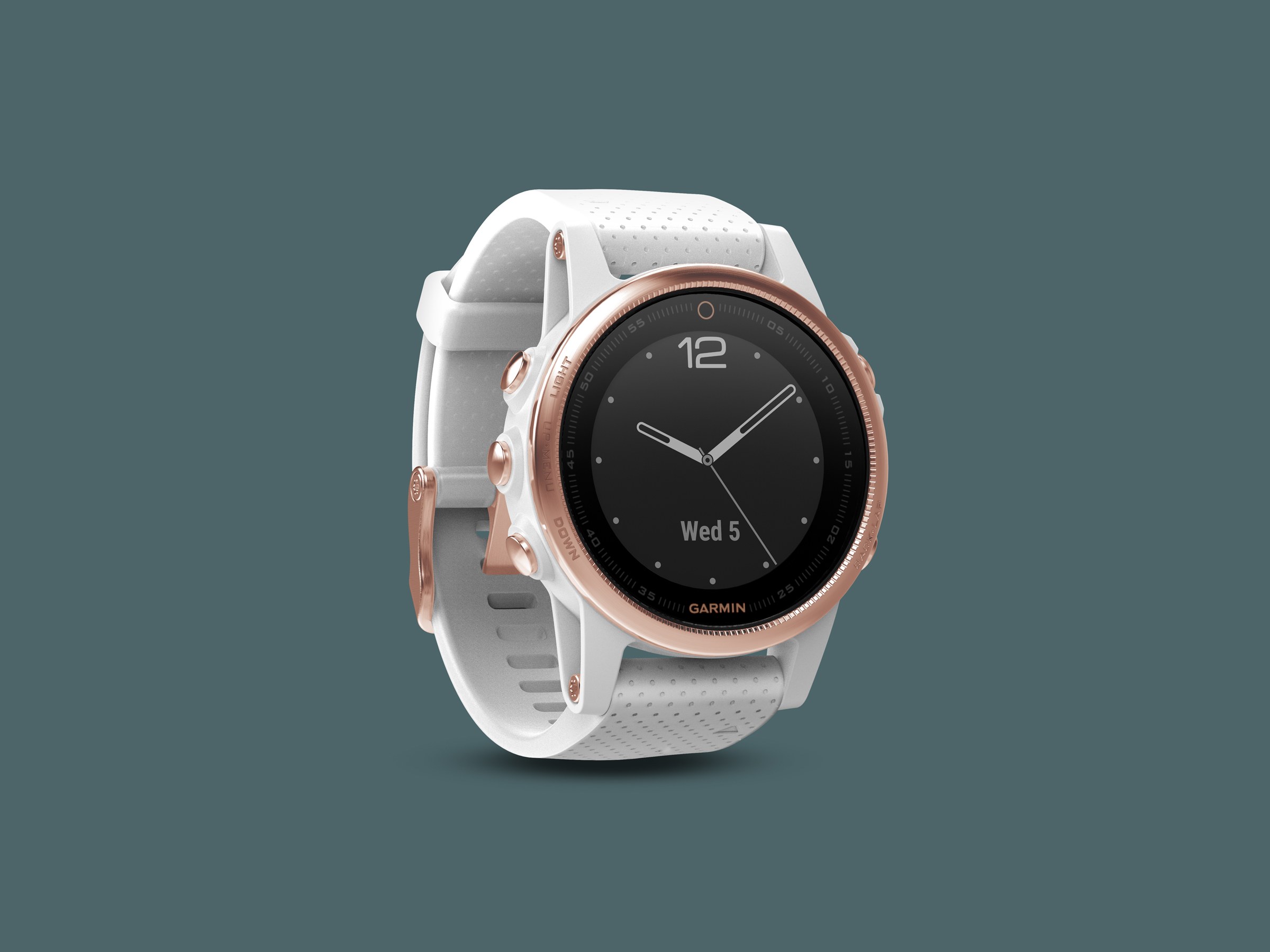
    Obviously, the newly unveiled Garmin Forerunner 45 and Forerunner 45S come with no such advanced features, although their built-in heart rate monitor and standalone GPS functionality are arguably enough to justify a $200 price tag. In case you’re wondering, the main difference between these two models is the smaller 39 mm case of the 45S (compared to a 42-milimeter “standard” Forerunner 45 variant).

    Not exactly the world’s most stylish wearable products, the Forerunner 45 series also comes with “chemically strengthened” glass, a silicone strap, relatively small display, top-notch water resistance, lengthy battery life (up to 7 days in “smartwatch mode”), and all the elementary fitness tracking features a casual runner would ever need.

    At $350, the Garmin Forerunner 245 Music adds the ability to hold up to 500 songs into the equation, as well as more “advanced features to help runners improve.” Basically, you can get personalized recommendations on smarter ways to train and recover after intense workouts, not to mention a larger and sharper screen, stronger Gorilla Glass 3 lens protection, and improved battery life in “GPS mode.” There’s also a non-Music Forerunner 245 version available in exchange for $299.99.

    Last but certainly not least, the $600 Garmin Forerunner 945 is purportedly “made for the driven, the qualifiers, and the elite”, holding up to 1,000 songs (with both Spotify and Deezer support), while aiming to take your training to the next level with all the state-of-the-art activity tracking technologies and sensors available today, from VO2 Max to Pulse Ox and a bunch of complex performance monitoring tools.

    The Forerunner 945 can keep the lights on for up to two weeks on a single charge with the GPS switched off, while supporting wrist payments and boasting an extra-robust body with Gorilla Glass DX protection.

  • Arl-shipping.com launches Facebook chatbot last mile container tracker

    Arl-shipping.com launches Facebook chatbot last mile container tracker

    Arl-shipping.com has launched it’s Facebook chatbot tracking of containers on the road en route from discharge port to import warehouse, giving real-time visibility of the truck(s) on the road. Import customer and warehouse operator follows the trucks in real-time and prepare for speedy container unstuffing upon arrival to the warehouse. The tracking is facilitated by truck drivers using arl-shipping.com’s free app, tracking the shipment and OCR’ed container numbers via driver’s smartphone GPS location services. The Facebook tracking service is fully embedded into the transport provider’s Facebook page as an integral service.


    “On top of Facebook chatbot cargo tracking, we are soon launching also Skype and WeChat Last Mile Container Tracking for shipping line agents, freight forwarders, warehouse operators or other intermediaries via the arl-shipping.com powered chatbot,” said arl-shipping.com director, René Bendt. He added, “We explore maturing technologies, which can be deployed with little effort to the benefit of real life shipping scenarios like container number OCR, GPS trackers and other IoT devices, drones and blockchain technology.”


    The tracking is facilitated by truck drivers using arl-shipping.com’s free app, tracking the shipment and OCR’ed container numbers via driver’s smartphone GPS location services.

    The Facebook chatbot Last Mile Container Tracker tracks shipment en route from discharge port to warehouse, prepping the warehouse operator for warehouse dock, unstuffing gang and x-docking operation readiness. Upon providing the warehouse’s location to the chatbot via smartphones’ built-in location sharing services, Last Mile Container Tracker alerts in Facebook messenger when container(s) is close to the warehouse, as well as giving hourly status messages while container(s) is on the road, en route to the warehouse.

    Soon the chatbot will also advise warehouse ETA imbedding online traffic pattern services into the Last Mile Container Tracker.