Tag: tracking

  • The iOS stopwatch gets Live Activities support in iOS 17.4

    The iOS stopwatch gets Live Activities support in iOS 17.4

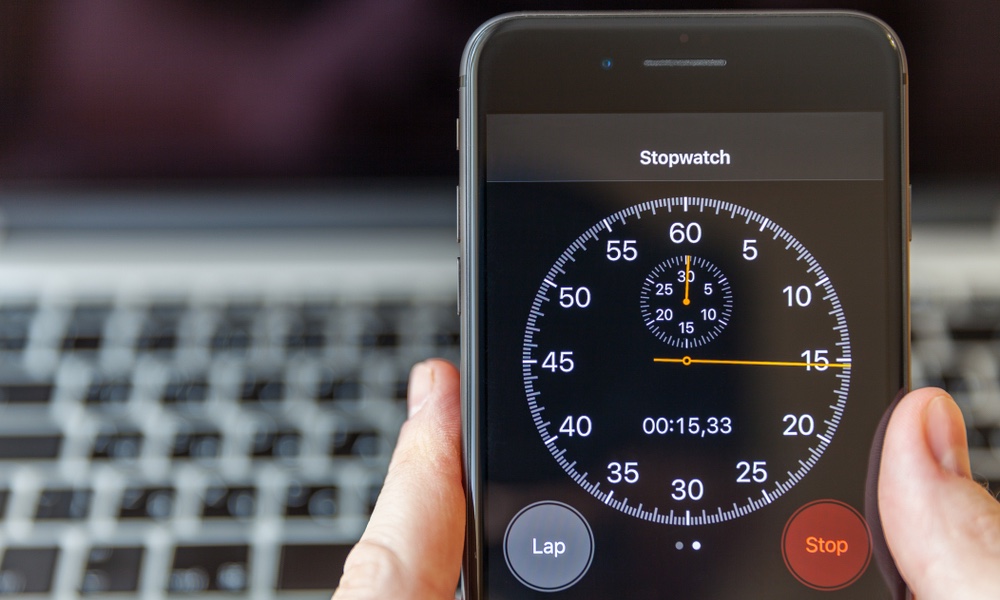
    The iOS 17.4 beta update that was recently released by Apple includes a new feature for the Clock app’s Stopwatch. Once iOS 17.4 is installed on your iPhone, (we expect the update to be released as soon as March 4th), you’ll be able to start the Stopwatch from the clock app and watch it count the seconds, minutes, and hours on the Dynamic Island and the Lock Screen.

    The Dynamic Island will display an up-to-the-second look at the Stopwatch and tapping on it will give the user an option to pause the timer, or start a new lap. The same controls are all available for the Stopwatch on the Lock Screen. After pausing the Stopwatch on the Dynamic Island, you can clear it by tapping on the “X” button. On the Lock Screen, you can clear the Stopwatch by pausing it and swiping it off the screen.

    While timers have worked with Live Activities since the feature was introduced with iOS 16, the Stopwatch could only be viewed in the Clock app. But with iOS 17.4, that is going to change. And with an active Stopwatch running on the iPhone showing up front and center, you will no longer forget that you have one running.

    Because iOS 17.4 will bring major changes to iOS, Safari, and the App Store in the EU thanks to the Digital Markets Act (DMA). The DMA mandates that Apple make these changes by March 8th which is why we expect the update to arrive on Monday, March 4th. As we noted the other day, iOS 17.4 will also add a switch to the Stolen Device Protection feature allowing users to have the feature work everywhere. Currently, users can arrange to have the feature work at unfamiliar locations or they can disable it.

    Stolen Device Protection requests that Face ID and Touch ID verify your identity to complete certain actions. More sensitive tasks, such as changing your iPhone passcode, changing your Apple ID password, resetting Face ID or Touch ID, and disabling the Find My app, require that an hour pass before the requested changes take place. And even then, after an hour, you must verify your identity via Face ID or Touch ID.

  • New report says increasing number of iOS users seeing the value in being tracked

    New report says increasing number of iOS users seeing the value in being tracked

    With last year’s iOS 14.5 came Apple’s App Tracking Transparency feature that asks people whether they would like to be tracked by apps. Companies like Facebook which rely on this sort of tracking to serve personalized ads vehemently criticized the Cupertino giant for introducing this feature, but it’s not all doom and gloom, suggests a new report.
    Apple assigns a random device identifier called Identifier for Advertisers (IDFA) to devices like iPhones and iPads that let app makers track user activity across apps for targeted advertising. IDFA has now been made an opt-in feature, meaning users will have to consent to being tracked.
    Facebook has been a vocal critic of the feature and a recent report estimates that the company could lose $12.8 billion in revenue this year because of ATT. Snapchat, Twitter, and YouTube are also expected to be impacted, though they are projected to take smaller hits.
    The situation looks to be improving, per analytics platform Adjust. In May 2021, 16 percent of the users had opted-in to being tracked, and the number has now grown to 25 percent. The study is based on the 2,000 most popular apps in the firm’s database.
    The stats are even more promising for gaming apps, with an estimated 30 percent of users allowing businesses to track their activities for personalized ads. For some popular games, opt-in rates were as high as 75 percent.
    The outlet notes that a month after the launch of the ATT feature, only 4 percent of the users in the US had opted-in to it, so the latest report could be a beacon of hope for the likes of Facebook.
    Apple allows app developers to explain why users should allow tracking and it looks like many businesses have found ways to convince users to opt in to tracking. For instance, an app may say that personalized ads help the developer keep the app free or that it can help users save money.
    Adjust thinks that more users now “understand the value of opting in and receiving personalized advertisements” and expects the upward trend in consent rates to continue.
    Apple meanwhile continues to advocate for stronger privacy protections and is fighting hard to prevent legislation that would let users download third-party apps outside of the App Store.
  • Ads on Facebook are starting to recover from Apple’s App Tracking Transparency effect

    Ads on Facebook are starting to recover from Apple’s App Tracking Transparency effect

    Recently, Facebook has been struggling with its market share as it predicted a $10 billion loss in revenue due to Apple’s App Tracking Transparency. However, the company might be starting to recover its ad revenue.

    For those of you who don’t know, with iOS 14.5, Apple introduced a feature dubbed App Tracking Transparency (ATT), which allowed iPhone and iPad users to opt-out of tracking of their activity for targeted ads. Before this change, apps could track you across websites in order to offer you relevant ads, but Apple’s feature prevented that. And, as you can imagine, a vast majority of iOS users decided they didn’t want to be tracked.

    Facebook was among the companies that vocally disagreed with ATT, accusing Apple of harming small businesses with the move. And, as we could see later, Facebook ended up suffering quite a lot from ATT, and its ad revenue dropped significantly.

    As nothing is without consequence in this world, Facebook’s share value then plummeted because investors started selling their Facebook stock.

    However, things seem to be starting to improve, at least according to some small businesses owners on Facebook or Instagram. Many small businesses are claiming that their ads are performing better than usual. The reason for this change is… surprise, surprise – unknown at the moment.

    Earlier, Meta stated that it is working on adapting its advertisement systems to the new situation, so they can maximize the performance of ads. At the same time, many advertisers are reportedly still skeptical, but Meta seems to be working hard to maintain the improvement.

  • Facebook criticizes App Tracking Transparency on iPhones

    Facebook criticizes App Tracking Transparency on iPhones

    When Apple introduced App Tracking Transparency back with iOS 14.5, a feature that allows iPhone users to opt-out of ad-related activity tracking on their phones, Facebook was not happy with it. Back then, Facebook criticized the new privacy feature claiming it would hurt small businesses’ advertising. Now, Mark Zuckerberg is at it again.

    On Monday, Facebook reported its third-quarter financial results that showed $29.1 billion in revenue from advertisements. Despite these results though, the company’s CEO Mark Zuckerberg has remained upset about Apple’s privacy changes that prevented ad tracking if the user didn’t want to be tracked. Reportedly, he stated in an investor call that Apple has been hurting not only Facebook but “millions of small businesses” with these changes.

    Zuckerberg stated that Facebook experienced “revenue headwinds” because of Apple’s App Tracking transparency and its impact on the advertising business. He criticized the iOS privacy features stating that they affect small businesses that rely on ad platforms in the “difficult times”.

    He also said that despite the impact these changes had on the social media platform, the company will learn to navigate the “headwinds” over time with investments Facebook is making today.

    Another participant in the investor call was Facebook COO Sheryl Sandberg stated that the iOS privacy changes advantaged Apple’s own advertising business. Additionally, Sandberg stated that now it is more difficult to target an ad or measure campaign results when it comes to iPhone and iPad users.

    Apple’s App Tracking Transparency, which was introduced back in April with iOS 14.5. The feature presented iPhone users with a prompt to opt-out of advertisement tracking on apps. If people wanted, they could click on a button and thus prevent tracking so they won’t receive targeted apps. Understandably, a large number of iPhone users opted out of tracking.

    Companies such as Facebook which rely heavily on advertisements disagreed with the new change ever since it was introduced back in April. Facebook criticized Apple on the move, stating multiple times that this change was hurting small businesses.

    It was not only Facebook complaining though. Last week, Snap’s CEO also stated the company’s revenue from Snapchat was affected by the new App Tracking Transparency technology. However, Snap’s CEO stated that these changes might be positive in the long run.

    By September of this year, according to data from analysis firm Statista, only 21% of iPhone users have decided to opt-in for app tracking and to allow for their activity to be tracked in order to receive targeted ads. The remaining percentage is, understandably, for iPhone users that have opted out and prevented apps from tracking them for ads.

    The App Tracking Transparency feature has now started to change the advertising market across the mobile industry. Right now, many advertisers focus primarily on Android devices, as many iPhone users have decided that they do not wish to be tracked for targeted ads.

    Apparently, it’s not only advertisers like Facebook that are affected by this change. A couple of months ago, we reported that the new App Tracking Transparency feature is also changing the mobile game industry and is influencing the way game makers have to go about in order to advertise in games, as they cannot be targeted to specific users.

    Recently, we reported on another fact: Apple’s in-house advertisement business has been experienced growth since the change. Apple has an ad service named Search Ads and it has grown since App Tracking Transparency was introduced on iOS devices.

  • Apple blocks TikTok’s attempt to track iPhone users

    Apple blocks TikTok’s attempt to track iPhone users

    Ever wonder how you could look up a product online and all of a suddenly targeted ads for that product pop up on your phone and other connected devices? This, not witchcraft, readers. Third-party apps and websites track your travels across the internet and also know which apps you’ve been viewing. When Apple released iOS 14.5 in May, it gave iOS users the opportunity to opt-out of getting tracked with the App Tracking Transparency (ATT) feature.
    This feature gives iPhone users the ability to decide for themselves whether they want to be tracked by third-party apps and websites for the purpose of receiving online ads. More importantly, the ATT feature allows users to opt-out of being tracked which is the option that the vast majority of iOS users have selected. Facebook CEO Mark Zuckerberg was not pleased that Apple was giving users a way out of being tracked, but that isn’t surprising since the social media giant took in over $84 billion in ad revenue last year and 96% of iOS users had decided to opt-out of tracking in the early going.
    Another company decimated by ATT is TikTok and the popular short-form video app attempted a workaround to get around App Tracking Transparency called device fingerprinting. The latter can collect user data through the use of an algorithm and the entire workaround is called CAID for short.
    The Financial Times said that Apple was left with certain options: it could decide to look the other way and allow CAID to be used by app developers to obtain personal data, or it could block apps like TikTok from the App Store as long as the workaround continued to be employed. The latter is what Apple decided to do as it rejected TikTok updates that contained the CAID build.
    Alex Bauer, head of product marketing at adtech group Branch, told the Times that “The Chinese app ecosystem was collectively baiting the bull with CAID, under the theory that Apple couldn’t afford to ban every major app in the market. Apple called their bluff, and seems to have reasserted control over the situation by aggressively rapping knuckles on early adopters before the consortium gained any real momentum.”
    While TikTok tried to use a back door to get past Apple’s ATT, the tech giant was able to slam that door shut. The company remains serious about promoting privacy on the iPhone and its other devices.
  • eSIM and its impact in an hyperconnected world

    eSIM and its impact in an hyperconnected world

    Powered by 5G, eSIM or embedded subscriber identity module is a rising technology that is threatening to replace traditional SIM cards. With 5G revolutionizing connectivity, eSIM emerges as a seamless way to harness greater connectivity between a future of billions of IoT devices. Instead of relying on physical SIM cards, eSIM is the embedded alternative that uses remote SIM provisioning (RSP) to download a user’s profile onto a device, to provide users full control of connectivity management and the ability to switch networks as desired.

    Last year, eSIM adoption grew in the wake of the pandemic. In the coming years, this trend will continue to persist. According to recent findings from Juniper Research, the number of eSIMs embedded in connected devices will more than double from 1.2 billion this year to 3.4 billion in 2025. Of which, 94% of global eSIM installations in 2025 can be attributed to the consumer sector.

    In the consumer market, eSIM is deployed in tablets, smartphones, laptops, and wearables. Some smartphones from Apple, Google, Huawei, and Samsung are already supporting eSIM, though they continue to allow for physical SIM. Last year, Motorola released the world’s first eSIM-only smartphone.

    With IoT on the rise, connectivity is one of the important considerations when developing future-proof tech solutions. Across industries, automotive is one of the areas that fuel eSIM deployment. For instance, Tesla’s electric vehicles use eSIM to power in-car connectivity. Juniper Research predicts that other industries such as oil and gas, manufacturing, and logistics industries will also experience a hike in eSIM adoption to power connectivity, with eSIM installations growing from 28 million to 116 million by 2025.

    For many, it is becoming clear that eSIM is the future for IoT connectivity as it offers a level of flexibility not provided by traditional SIM. Since all IoT subscriptions and connectivity can be carried out through a single embedded source, this significantly simplifies SIM management for as many devices across geographies. For enterprises or governments, eSIMs can also be used for asset tracking, with each IoT device being remotely and automatically provisioned to an optimal carrier profile.

    For consumers, eSIM is the seamless management of subscriptions whereby they no longer need multiple SIM cards for different connections. In this pandemic, eSIM offers the advantage of subscribing to a connectivity service without having to physically purchase a SIM.

    For MVNOs, tech giants, and device manufacturers, eSIM is the ideal avenue to generate new revenue streams. For device manufacturers, for instance, it means the ability to create smaller products without a SIM card and an opportunity to optimize supply chain processes.

    Of course, more entrants into the mobile market is unsettling for network operators that fear disruption and stiffer competition in addition to having to build costly cellphone towers to support 5G networks. At the same time, telecom operators cannot ignore the fact that future IoT devices will be better served with eSIMs. With brands like Apple and Google, which have massive followings offering eSIM, operators are pressured to catch onto the eSIM fad to avoid being displaced.

    According to GSMA, about 175 mobile operators launched eSIM for smartphones across 69 countries by the end of last year. Amongst these operators, Vodafone Group leads in eSIM roll-out.

    In Asia, Singtel and China Unicom launched an eSIM network swap service last December to allow devices equipped with China Unicom eSIM to automatically switch profiles to Singtel’s in Singapore. In India, the three largest telecom operators Airtel, Jio, and Vi have started to offer eSIM functionality for supported devices. For operators, eSIM roll-out achieves customer churn, creating opportunities for up-selling and cross-selling services and packages.

    To stay ahead, Tata Communications is going beyond connectivity to expand competency in mobility and IoT. Last October, Tata Communications partnered with Micron for a cloud-based eSIM business. In December, the company acquired a majority equity stake in a France-headquartered eSIM technology provider. The acquisition was motivated by enterprises’ heavy reliance on mobile devices to operate and access data in the cloud and an upward trend in machine-to-machine (M2M) connections worldwide.

    According to Ecosystem, Asia-Pacific is poised to lead in IoT by 2023. With connectivity becoming more pervasive in our everyday lives, there is no doubt that eSIM will play a pivotal role in ushering in a new era in consumer and enterprise applications.

  • Facebook uses scare tactic to get iOS users to opt-in for tracking

    Facebook uses scare tactic to get iOS users to opt-in for tracking

    Researcher Ashkan Soltani disseminated a tweet on Friday about Facebook’s plan to take on Apple’s App Tracking Transparency (ATT) feature. ATT sends out a prompt from third-party apps asking whether users want to opt-in to being tracked through their travels on other apps and online. This information is collected and used to send out personal advertisements and also to collect personal data.

    The prompts just started rolling out last Monday with the release of iOS 14.5 and while the data might be too early to be considered significant, 47% of those responding to a survey by app figures said that they chose to allow themselves to be tracked by third-party apps. Before the update dropped, estimates called for 32% of users to allow tracking while 68% were forecast to opt-out.

    When Apple first announced that it was going to launch App Tracking Transparency, one company, in particular, went totally bonkers. Facebook published two newspaper ads complaining that ATT would kill small businesses since it would reduce the reach that these firms get from online advertising. Of course, let us not forget that Facebook took in $84 billion last year from online ads.

    Do you really believe that Facebook was concerned about the future of small businesses with ATT enabled? The social media firm and its beleaguered Chief Executive Mark Zuckerberg were probably more concerned about the future of Facebook; the latter is an advertising company more than it is a social media app.

    Some companies have been trying to find ways to gently guide iOS users to allow themselves to be tracked even though Apple has a number of rules and guidelines that companies must follow when creating their ATT pre-prompt and prompt, or face getting booted out of the App Store. One amazingly blatant prompt gives users just one choice-to allow themselves to be tracked.

    What Facebook is doing, according to Soltani, is using “scare tactics” to get Facebook and Instagram users to choose to be tracked. Images of pre-prompt notifications that are reportedly being considered make it sound that by withholding permission to be tracked, both social media apps might have to charge users for access.

    The text on Facebook’s and Instagram’s pre-prompt pages say, “This version of iOS requires us to ask for permission to track some data from this device to improve your ads. Facebook and Instagram go on to say that thanks to the information it receives from tracking users, it shows ads that are more personalized while keeping Facebook (and Instagram) free of charge.” The insinuation is crystal clear: if you decide to disable tracking, you eventually might have to pay to use Facebook or Instagram.

    Last week we told you about the guidelines that Apple had developed for ATT prompts, such as banning those that bribed users to allow tracking. While it is not yet known whether Facebook/Instagram will use these exact screens, if they do, both would seem to be permissible under Apple’s rules.

    We can see where Facebook might simply be explaining a business decision that it could have to make. On the other hand, Black’s Law Dictionary says that a Bribe is “the offering, giving, receiving, or soliciting of any item of value to influence the actions of an official, or another person, in charge of a public or legal duty.” Facebook has not made a definitive offering, but as we said, the insinuation is clear.

    Back in March, Facebook CEO Zuckerberg reversed his stance, saying that Facebook might actually benefit from ATT and stated that “It’s possible that we may even be in a stronger position if Apple’s changes encourage more businesses to conduct more commerce on our platforms.” In other words, ATT could end up delivering more traffic to Facebook’s platforms.

    However, it appears that Facebook has reverted back to its adversarial position in a note to advertisers written last week. The note says, “As more people upgrade to iOS 14.5, opted-out users will automatically be excluded from certain targetable audiences, which may result in decrease of audience sizes.”

  • DuckDuckGo reveals how you can block Google’s new method of tracking Chrome users

    DuckDuckGo reveals how you can block Google’s new method of tracking Chrome users

    Privacy-first search engine DuckDuckGo on Friday posted a blog that discussed Google’s new data-tracking system called Federated Learning of Cohorts (FLoC). Using an algorithm and browsing histories, Google groups together those with similar interests and demographics. FLoC replaces the use of cookies to track users and feed them ads and other targeted content.

    When Google added FLoC to Chrome, it did so without giving users a choice as the tracking system is enabled by default. As DuckDuckGo noted in its blog post, “The criteria for being opted into FLoC are somewhat hidden and conflicting.” As scary as that sounds for those who value their privacy, there are things that you can do to block FLoC from trying to fit you into a category.

    Google claims that FLoC is good for privacy. And while FLoC, in theory, replaces third-party cookies, the latter won’t be removed until 2023 at the earliest. Thus, Google is getting to track users via two different methods for the time being.

    With FLoC, the websites you visit will be able to target ads since they will know things about you from the moment you enter the site. While Google says that you are placed in a group of others with the same interests in demographics, you are more protected as an individual. However, the data that is available to websites, combined with your IP address (which these sites receive automatically), means that you remain tracked as an individual.

    It seems fairly straightforward, but if you don’t want to be tracked by Google Chrome, use a different browser on your iOS and Android devices and on the desktop. If you own an iPhone and don’t like Safari, this writer has started using the recently updated version of Opera Browser which is available for iOS and Android). Besides Opera, on Android the Samsung Internet Browser would be a great choice to replace Chrome.

    If you must continue to use Chrome, DuckDuckGo says that you might be able to avoid FLoC by changing the settings on the Chrome browser. Some suggestions include logging out of your Google account, avoid syncing your history data with Chrome, disabling “Web & App Activity” or “Include Chrome history and activity from sites, apps, and devices that use Google services” in Google Activity Controls. In Google Ad Services you should shut down “Ad Personalization” or “Also use your activity & information from Google services to personalize ads on websites and apps that partner with Google to show ads.”

    Since Google has been profiling users for years, even if FLoC reduces you to a series of numbers based on your interests and demographics, it will only be a matter of time until the code is broken and your identity becomes known. Google says that FLoC is 95% as effective as third-party cookies and DuckDuckGo says that this means that Google will continue “to target people based on age, gender, ethnicity, income, and many other factors. This targeting, regardless of how it’s done, enables manipulation, discrimination, and filter bubbles that many people would like to avoid.”

    DuckDuckGo has also enhanced its tracking blockers on its extension. This protection from FLoC appears on version 2021.4.8 and newer of the DuckDuckGo extension and is also in the process of being approved for the Chrome Web Store. Keep in mind though that by default it will set your default search engine and homepage to DuckDuckGo Search.

    Several organizations dealing with privacy pleaded with Google not to use FLoC, but to no avail. While Google makes it sound as though it is trying to improve privacy online, replacing third-party cookies with a tracking system that is enabled by default certainly sounds just as bad.

  • Garmin expands Forerunner line with five new GPS models

    Garmin expands Forerunner line with five new GPS models

    While Garmin makes all kinds of wearable devices, ranging from super-basic activity trackers to luxury smartwatches, its central focus remains on so-called GPS running watches, designed to take on the likes of the Fitbit Versa rather than the global market-leading Apple Watch family.

    But not all athletes have the same passion, drive, and needs, which is why Garmin is today vastly expanding the Forerunner lineup with five new models ranging in price from $199.99 to $599.99. These are joining the entry-level $100 Forerunner 25, mid-range $350 Forerunner 735XT, and a $450 Forerunner 645 Music that lets you store your favorite tunes directly on your wrist, as well as supporting contactless payments.

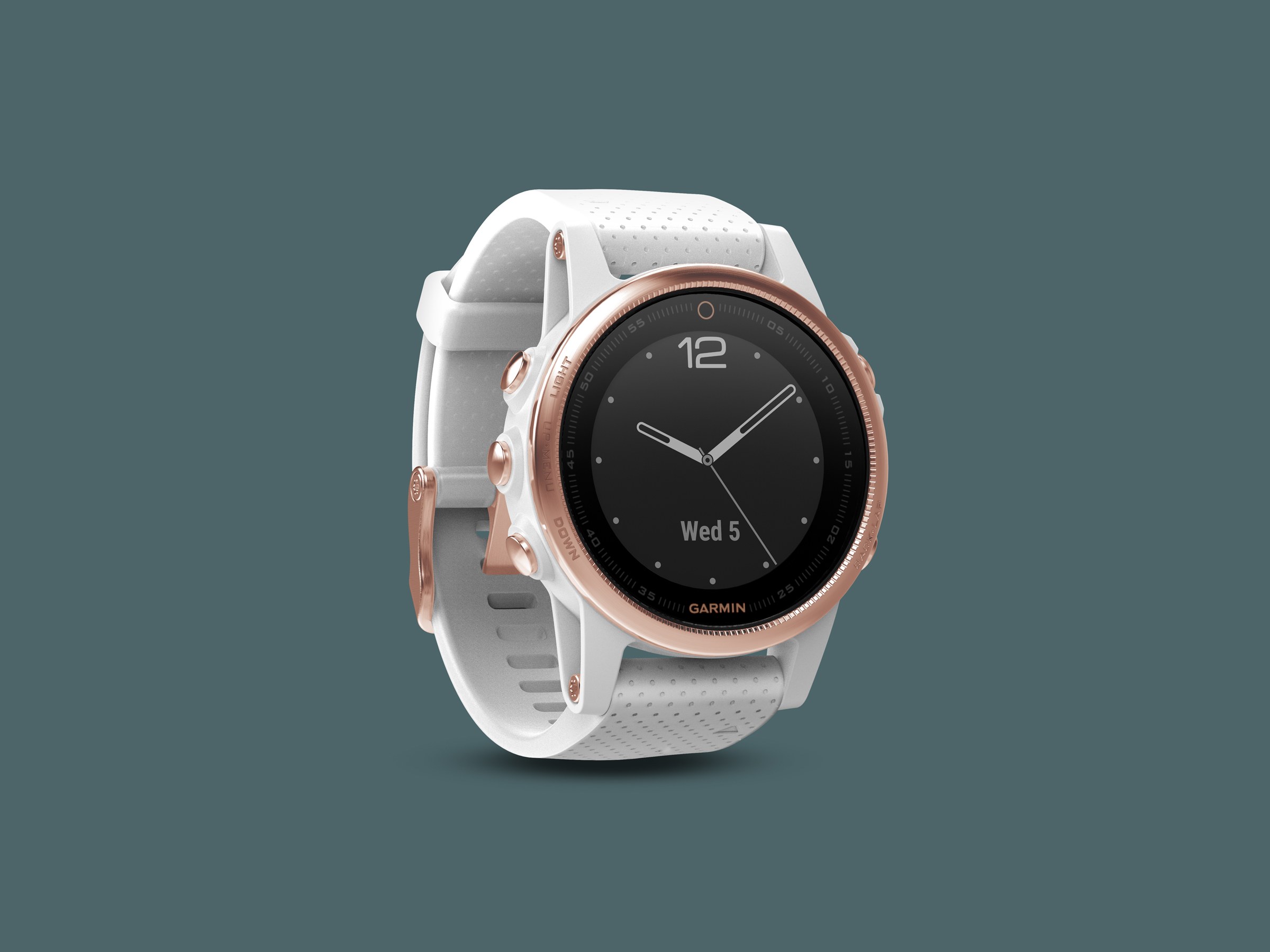
    Obviously, the newly unveiled Garmin Forerunner 45 and Forerunner 45S come with no such advanced features, although their built-in heart rate monitor and standalone GPS functionality are arguably enough to justify a $200 price tag. In case you’re wondering, the main difference between these two models is the smaller 39 mm case of the 45S (compared to a 42-milimeter “standard” Forerunner 45 variant).

    Not exactly the world’s most stylish wearable products, the Forerunner 45 series also comes with “chemically strengthened” glass, a silicone strap, relatively small display, top-notch water resistance, lengthy battery life (up to 7 days in “smartwatch mode”), and all the elementary fitness tracking features a casual runner would ever need.

    At $350, the Garmin Forerunner 245 Music adds the ability to hold up to 500 songs into the equation, as well as more “advanced features to help runners improve.” Basically, you can get personalized recommendations on smarter ways to train and recover after intense workouts, not to mention a larger and sharper screen, stronger Gorilla Glass 3 lens protection, and improved battery life in “GPS mode.” There’s also a non-Music Forerunner 245 version available in exchange for $299.99.

    Last but certainly not least, the $600 Garmin Forerunner 945 is purportedly “made for the driven, the qualifiers, and the elite”, holding up to 1,000 songs (with both Spotify and Deezer support), while aiming to take your training to the next level with all the state-of-the-art activity tracking technologies and sensors available today, from VO2 Max to Pulse Ox and a bunch of complex performance monitoring tools.

    The Forerunner 945 can keep the lights on for up to two weeks on a single charge with the GPS switched off, while supporting wrist payments and boasting an extra-robust body with Gorilla Glass DX protection.

  • GPSengine, Alematics forge partnership in tracking fleets

    GPSengine, Alematics forge partnership in tracking fleets

    Alematics a tracking device manufacturer for fleet tracking and management and GPSengine, a leading hosted platform service provider in IoT, GNSS, Tracking and Telematics,have established a new partnership to support Alematics tracking devices on GPSengine’s Platform Connect hosted platform.

    Based in Taiwan and with a core focus on tracking devices, Alematics provides a range of trackers suitable for a range of industries and applications.  The combined solution made available by this partnership provides customers with a ready to go solution.  Projects in the fleet tracking space take time to develop and implement and this incurs costs for organisations even before they can see basic tracking.  With this combined offering, organisations can install Alematic trackers and start tracking straight away utilising Platform Connect, reducing the cost and time to implement traditional solutions.

    Platform Connect is a hosted platform service that receives, processes and stores information from GNSS, IoT’s, devices, sensors, applications and third party services.  Based in Brisbane, Australia, GPSengine is a white label IoT platform provider, specialising in vehicle tracking.  Recognised globally for innovation and quality, the GPSengine platform is the result of more than 10 years working in the telematics space. Since 2014 their primary focus has been the development and support of an easy-to-skin, customisable white label GPS tracking platform, as well as seamless integration of supporting hardware. This combination means GPSengine delivers a comprehensive M2M technology enabling companies to connect and monitor assets with confidence. Alematics (www.alematics.com) vision and aim is to provide added value for people and companies by creating the latest technologies that bring comfort, efficiency and security to everyday life.

  • Singapore startup Semantics3 in new funding round

    Singapore startup Semantics3 in new funding round

    Singaporean software startup Semantics3 Friday said it has successfully closed a $1.55 million round of bridge funding, with Brussels-based seed investor E-Merge bringing $1.5 million to the table.

    The company will use the latest funding, which also saw participation from early-stage investor Zillionize, to expand its business team and ramp up sales efforts. The company had raised $600,000 from the two investors in a previous financing round in March 2013.

    “We are at break even, but we’re not profitable yet,” chief executive Varun Sivamani told CNBC.

    Semantics3’s proprietary software allows companies to more efficiently track their products. Conventional barcodes are unable to track products and prices in real time across the internet, which creates a conundrum for e-commerce retailers.

    The four-year-old startup’s over-the-top software solves this problem by allowing them to use their barcodes to access detailed information about any item in their inventory, and track the price of their products in real time across a variety of websites.

    While competitors Indix and Factual have more funding and a larger share of the market, Semantics3’s software is currently being used by retailers, as well logistics, industrial supply, and insurance companies, including Liberty Mutual and American Family Insurance, the company said.

    The brain child of three students from the National University of Singapore, Semantics3 in 2013 became the first Singaporean startup to make it into the prestigious Y Combinator accelerator program that has also seen participation from bitcoin wallet provider Coinbase and Codeacademy.

    With some 99 percent of Semantics3’s customers based in the US, the company is looking forward to stress testing some of its software’s new features during the Black Friday sales in the US later on this month.