
Tag: trade controls

  • Malaysia Seizes 30 AI Chip Servers Worth $12 Million at Kuala Lumpur Airport

    Malaysia Seizes 30 AI Chip Servers Worth $12 Million at Kuala Lumpur Airport

    Malaysian customs officers intercepted 30 server units carrying advanced artificial intelligence chips valued at 49.5 million ringgit ($12.11 million) at Kuala Lumpur International Airport this month. The hardware was falsely labelled as basic electronic parts to skirt international transit rules.

    Authorities discovered the cargo on October 15 during an inspection inside the airport’s free trade zone. The shipment began in an unnamed Asian country and was destined for re-export to another nation in the region without the mandatory trade clearances.

    Inspection at the Free Trade Zone

    Customs officials confirmed that the shipment needed formal regulatory clearance under statutory cross-border rules before transit. Airport customs director Aspalila Ag Tuah said the paper declarations concealed the true nature of the server units.

    “The servers were falsely declared as electronic components… and shipped through Malaysia to ensure there would be no restrictions imposed while being exported to the next destination,” Aspalila said.

    A domestic logistics firm that facilitated the shipment has been summoned to assist investigators with shipping paperwork and chain-of-custody logs. The enforcement arm is tracing the freight forwarders who booked the cargo bays.

    Syndicate Routes Across Regional Hubs

    Investigators suspect the seized hardware connects to an established electronics smuggling operation operating across regional air terminals. Aspalila noted the cargo matched patterns observed in an earlier interception executed at the same airport in June.

    Enforcement records now tie at least five separate cases to this specific network. Total hardware confiscations linked to the syndicate exceed 100 million ringgit across multiple warehouse raids and transit stops.

    The pattern reveals how intermediary air hubs are being tested by clandestine brokers attempting to circumvent semiconductor oversight. Transit points in Southeast Asia face intense pressure to track high-specification gear routed under general electronics descriptions.

    Export Controls and Supply Chain Oversight

    Malaysia imposed explicit export controls last year on the shipment of advanced AI chips originating from the United States, following measures aimed at halting unauthorized semiconductor transfers into China. Those regulations mandate strict transit permits for restricted computational units traversing domestic export processing zones.

    For regional freight operators and warehouse managers, the seizure increases compliance liability on standard electronics manifests. Cargo handlers face heavier penalties if freight declarations fail to specify exact processing capabilities and hardware types.

    Transshipment hubs like Kuala Lumpur rely on fast clearance cycles to maintain air cargo competitiveness. Routine physical inspections of server racks inevitably slow turnaround times for legitimate enterprise hardware distributors.

    Enforcement Track Record

    The October intervention follows a similar raid in June, when customs officials seized roughly $13 million worth of high-end processor units passing through the same airport facility. That earlier operation exposed the operational blueprint of shell forwarders using regional transshipment corridors.

    Enforcement teams are reviewing electronic freight waybills across all five connected cases to identify common corporate handlers. Customs officials have declined to reveal the origin or end destinations while investigations remain active.

    Investigators are now cross-referencing company filings of the local forwarding intermediary against export manifests filed earlier this quarter. Customs authorities are preparing formal charges as forensic analysis of the seized 30 server racks continues.

  • Taiwan Indicts Ten over Smuggling NT$360 Million in Controlled Chips

    Taiwan Indicts Ten over Smuggling NT$360 Million in Controlled Chips

    Taiwan prosecutors have indicted 10 tech executives for running illicit procurement rings. The rings smuggled NT$360 million ($11.33 million) worth of export-controlled military chips into China and Hong Kong.

    The New Taipei District Prosecutors’ Office filed aggravated fraud charges against the group. Investigators uncovered three separate networks that falsified ties to the island’s premier defense research institute.

    Forged End-User Certificates and Relabeling

    Chen Chien-hsiung, head of ADWELL Technology, ran the largest operation starting in 2017. Chen and his associates imported semiconductors from the United States, the Philippines, Malaysia, and South Korea. They forged end-user declarations from the National Chungshan Institute of Science and Technology. Those documents falsely certified that the components would remain in Taiwan and would not reach entities under US trade restrictions.

    Once shipments arrived in Taiwan, the group repacked the components. Workers swapped original labels for stickers claiming Taiwan manufacture, then routed the shipments to shell companies in Hong Kong and mainland China. That operation generated roughly NT$120 million in illicit gains. Smuggled hardware included more than 10 types of restricted chips manufactured by Texas Instruments and Analog Devices. These were designed for radar units, electronic warfare systems, antenna arrays, ultrasound equipment, and unmanned aerial vehicles.

    A second network led by Hygge Investment head Lai Chin-lan launched in 2019. Lai used identical document falsification methods to ship US military-specification chips to buyers in Hong Kong. That operation brought in NT$130 million in illegal revenue.

    Yuan Tung-tai, a third operator, ran orders through two Taiwan entities, Hui Chung Telecommunications and ZhanKai Technology. Yuan masked product origins on customs declarations. He exported drone flight-control chips to his own Hong Kong entity for onward sale into mainland China, netting more than NT$100 million.

    Sentencing Demands and Legal Gaps

    Prosecutors seek a 10-year prison sentence for Chen, eight years for Yuan, and six years for Lai. They also requested a six-year sentence for Zkey Technology head Chiang Kun-cheng. Terms of one to three years were requested for six other co-defendants across five supplier entities.

    The indictment lands as regional component distributors face scrutiny over grey-market diversion. Manufacturers and franchised distributors formally block unverified buyers in mainland China. Intermediary brokers still exploit Taiwan’s deep inventory pools and porous transit documentation to reroute critical hardware. For electronics supply chain managers, the case signals immediate tightening of know-your-customer audits and inventory traceability across East Asian logistics hubs.

    Grey-market routing through Hong Kong shell entities presents compliance risks for component manufacturers. Major chipmakers rely on automated compliance screening. Physical relabeling in intermediate free-trade zones bypasses those digital customs filters. Until regional authorities enforce physical lot-tracking across cross-border freight transfers, distributor liability will remain a flashpoint in cross-strait trade enforcement.

    Widening Enforcement Across Regional Tech Hubs

    This case parallels recent international crackdowns on parallel semiconductor pipelines running through Southeast Asia into China. In the United States, federal authorities arrested Earthmade Computer chief executive Greg Lui. Lui allegedly routed more than $300 million in restricted Nvidia A100 and H100 graphics servers to Hangzhou through front operations in Malaysia and Singapore. That operation also relied on falsified purchase orders and shell recipient identities to clear customs.

    Taiwanese investigators note that the National Security Act does not currently classify the smuggling of dual-use electronic components and commercial artificial intelligence hardware as a direct breach of state security law. Prosecutors must instead rely on aggravated fraud and commercial forgery statutes to penalize diversion networks after shipments clear.

    Judicial authorities in Taiwan are preparing evidence submissions for the upcoming trial in the New Taipei District Court. Meanwhile, legislative committees are reviewing proposed amendments to extend statutory national security export controls over dual-use electronics.

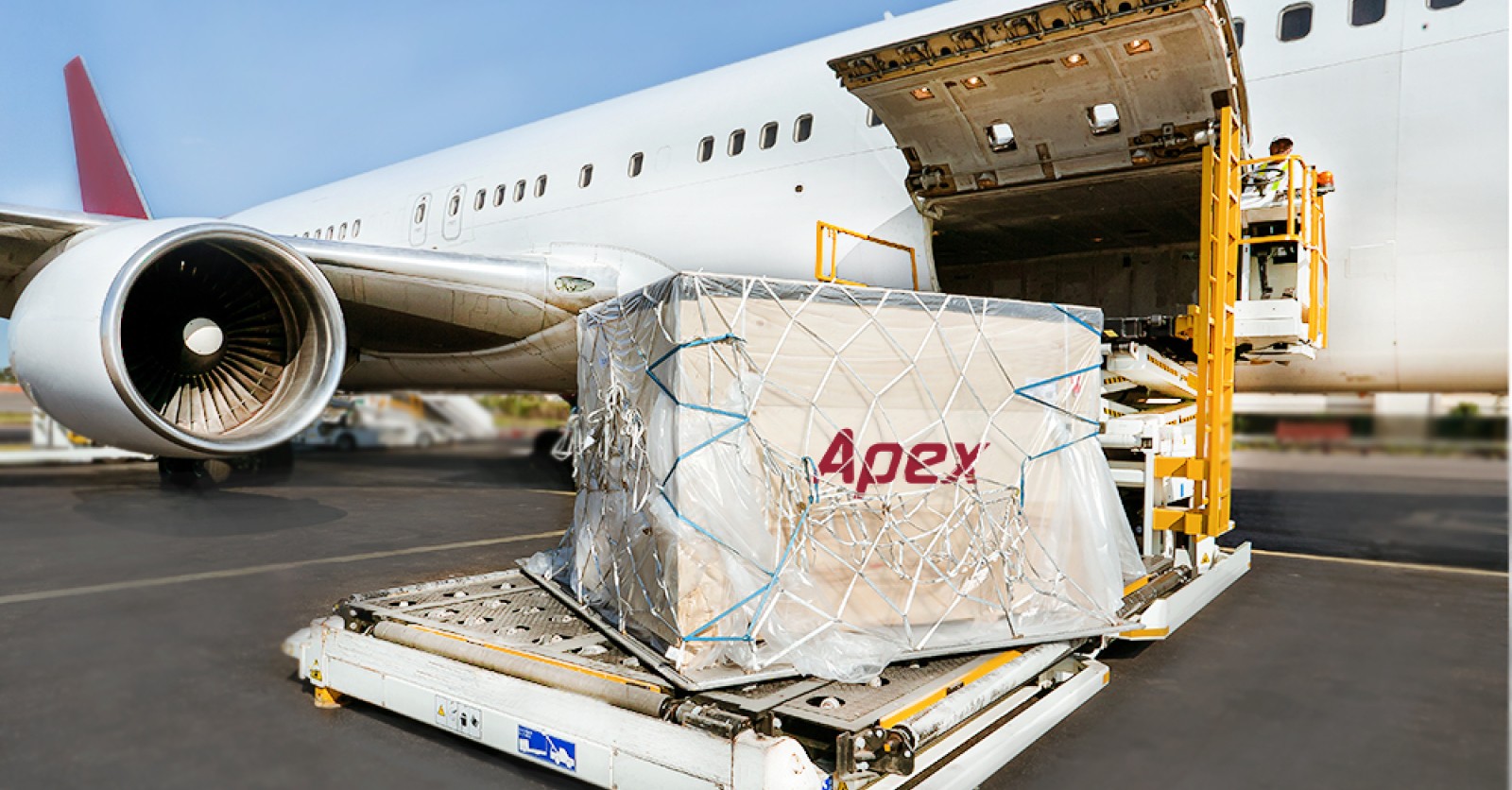
  • Apex Logistics Faces US Probe over Alleged Nvidia Chip Transshipment to China

    Apex Logistics Faces US Probe over Alleged Nvidia Chip Transshipment to China

    US authorities are investigating Singapore-headquartered Apex Logistics over the suspected diversion of Nvidia-powered artificial intelligence servers to mainland China through Southeast Asian transshipment hubs. The inquiry focuses on cargo handled in 2024 and could mark the first US enforcement action against a commercial freight company for illicit semiconductor trade.

    Swiss logistics group Kuehne+Nagel, which bought a majority stake in Apex in May 2021 and acquired the remaining shares in October 2025, confirmed the subsidiary is assisting the investigation. Kuehne+Nagel stated it has not been contacted directly by US investigators, describing the probe as an isolated issue concerning specific past shipments.

    How the Taiwan to Hong Kong routing worked

    Investigators are examining a supply line that moved Nvidia-powered server hardware from Taiwan to the United States, dispatched it to a destination in Southeast Asia, and then forwarded it to Hong Kong. From Hong Kong, ground carriers transported the hardware across the border into mainland China. The US inquiry centers on the leg between American ports and Southeast Asian distribution points.

    Apex acknowledged US scrutiny regarding a limited batch of cargo moved during 2024 that reached prohibited destinations. The company stated it is cooperating with investigators and maintains compliance protocols across its network. Apex was founded in Shanghai in 2001 and registered its corporate entity in Singapore in February 2016.

    The servers under review were assembled by California-based Super Micro Computer. Super Micro maintains no direct contract with Apex, as the freight forwarder was hired directly by third-party buyers purchasing the hardware.

    Scrutiny on Southeast Asian hubs

    Washington has restricted direct sales of advanced AI processors to China since 2022, expanding those curbs to include custom chips such as the H20 over national security and military computing concerns. As export controls tightened, enforcement agencies increased audits on cross-border logistics firms that handle transshipment routes across Asia.

    Freight forwarders across Singapore and Malaysia face heightened compliance checks from Western trade officials seeking to close multi-leg shipping channels. Singapore Prime Minister Lawrence Wong stated on August 23 that the country will not permit illicit trade through its facilities, while noting ports cannot audit the full manufacturing chain of every container in transit. The US Commerce Department is reviewing freight documentation from the 2024 shipments to determine if formal export violation penalties apply.