
Tag: trade deficit

  • Thai Exports Jump 21.6% in July on Surging Global Tech Demand

    Thai Exports Jump 21.6% in July on Surging Global Tech Demand

    Thai exports jumped 21.6 percent year on year in July, powered by surging international demand for artificial intelligence and technology hardware. Outbound shipments beat analyst expectations of a 17.75 percent increase, extending momentum from a 20.8 percent rise recorded in June.

    Data from the Ministry of Commerce showed imports surged even faster, climbing 36.7 percent during the month. That gap left Thailand with a monthly trade deficit of $3.61 billion, pushing the cumulative shortfall for the first seven months of 2026 to a record $34.35 billion.

    Tech demand fuels outbound shipments

    Shipments to the United States, Thailand’s largest export destination, increased 45.3 percent in July compared with the same month last year. Deliveries to China rose 15.2 percent. Across the first seven months of 2026, total exports gained 18.2 percent, following an overall expansion of 12.9 percent across 2025.

    Stronger tech orders prompted the Ministry of Commerce to raise its full-year export growth projection to more than 11 percent, up from an earlier target of 8 percent.

    Transshipment scrutiny and factory output

    The persistent gap between inbound and outbound volumes adds friction to Bangkok’s trade relationship with Washington. United States officials continue to monitor Thailand over transshipment risks, examining whether goods originating in China pass through Thai logistics channels to circumvent trade barriers. For regional supply chain operators, the expanding import volume shows how heavily Thai electronics and export assembly lines rely on foreign components.

    Domestic industrial activity showed modest recovery alongside trade flows. Thailand’s manufacturing production index rose 0.46 percent year on year in July, beating market expectations of a 1.0 percent drop and reversing a revised 2.4 percent decline in June.

    Factory output is now projected by the Ministry of Industry to expand 0.25 percent across 2026, trimmed from an earlier forecast range of 1.0 to 2.0 percent.
  • Vietnam trade deficit could balloon to $3 billion

    Vietnam trade deficit could balloon to $3 billion

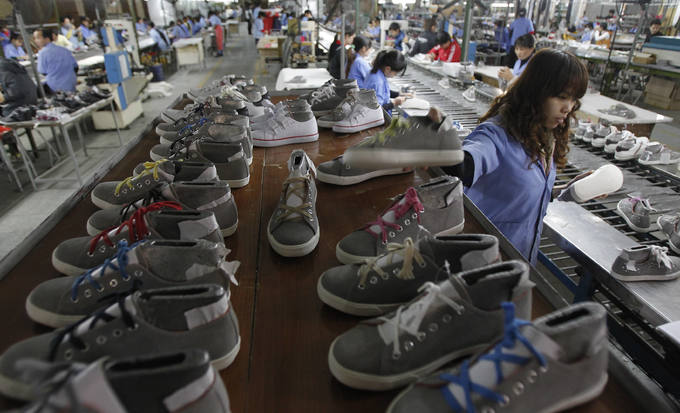
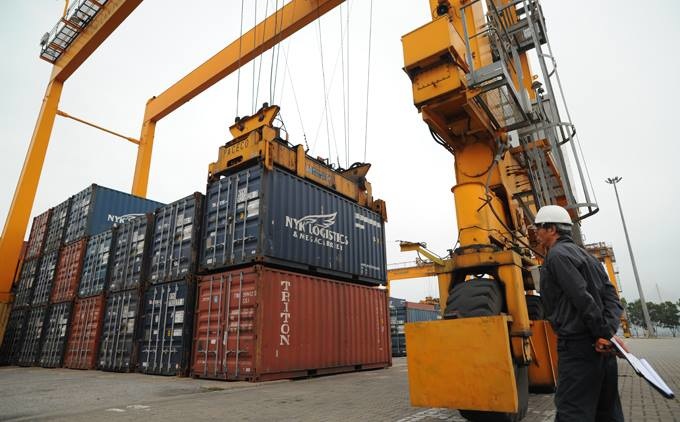
    Vietnam could face a trade deficit of $3 billion this year, after achieving the highest trade surplus in a decade in 2018. Export turnover in 2019 is expected to reach about $265 billion, down 17.4 percent from 2018. However, imports are expected to rise by 13.2 percent, reaching $268 billion, meaning a trade deficit of $3 billion, the Ministry of Industry and Trade has predicted.

    The volatility of trade policies of major economies like the U.S. and EU could hurt Vietnam’s exports this year, Deputy Minister of Industry and Trade Hoang Quoc Vuong said at a recent review conference.

    Geopolitical tensions and monetary policies which were tightened earlier than expected in many economies are other challenges for Vietnam’s export sector this year, he added.

    Global agricultural supply this year is expected to rise as countries hike up production of own agriculture sectors to avoid reliance on imports, and competition for agricultural and seafood products is set to intensify.

    Meanwhile, imports are forecast to continue to grow in manufacturing sectors that rely on imported materials or machinery.

    “Trade protection looks to be on the rise, especially after the U.S. has raised tariffs on imports from other countries. The US-China trade war is also not showing signs of cooling down,” Vuong said.

    Nguyen Xuan Cuong, Minister of Agriculture and Rural Development, said at the conference that 2019 was going to be a more difficult year after 2018’s windfall.

    “We’ve hit very high targets last year, so going even higher is extremely difficult. In addition, world trade is unstable, U.S.-China trade relations have not returned to normal, and Brexit remains unfinished. These are difficult challenges for our industrial and agricultural sectors this year,” said Cuong.

    He suggested that the Ministry of Industry and Trade supports growth in the agricultural sector, using its influence on supply chain areas like marketing and distribution.

    Vietnam had an export surplus of $7.2 billion in 2018, three times higher than that of 2017 and the highest in the past decade.

  • Indonesia’s November Trade Deficit Widest Since July 2013

    Indonesia’s November Trade Deficit Widest Since July 2013

    Indonesia posted its widest monthly trade deficit in over five years in November as exports, especially that of palm oil and pulp, slumped, data from the statistics bureau showed on Monday. The deficit in November was $2.05 billion, compared with October’s revised deficit of $1.77 billion and the biggest trade gap since July 2013, according to Refinitiv data. A Reuters poll had expected a deficit of $830 million.

    The rupiah weakened slightly after the trade data to 14,620 a dollar at 12.45 p.m. from 14,600 before the announcement.

    Exports surprisingly fell 3.28 percent in November from a year earlier to $14.83 billion, the worst monthly performance since June 2017. The poll’s median was for a 3.95 percent increase for exports.

    A decline in overseas sales of a range of products, such as palm oil, jewelry, pulp and paper, and crude oil, was the main reason for the drop, Central Statistics Agency (BPS) head Suhariyanto said at a news conference.

    Export revenues from vegetable oils, including palm and coconut oil, fell nearly 19 percent in November from a year earlier due to weak prices, he said.

    November imports stood at $16.88 billion, up 11.68 percent from a year earlier, topping the poll’s 10.50 percent estimate, but down from the nearly 24 percent growth in October.

    Southeast Asia’s largest economy has been struggling to contain imports in recent months. Some measures, including higher tariffs, have been imposed to curb imports.

    Authorities have also sped up negotiations for free trade deals to gain better access for exports, in a bid to reduce the trade gap and support the rupiah.

    Bank Indonesia has also hiked interest rates six times since May to try to attract portfolio investment needed to fund the widening current-account deficit.

    Fakhrul Fulvian, an economist at Trimegah Sekuritas, said the worse-than-expected trade deficit would “lower the expectation of improving current-account balance” in the fourth quarter. But he argued that the central bank would not have to raise rates again because it already did in November.

    Maybank Indonesia economist Myrdal Gunarto agreed.

    “The movement of the exchange rate in domestic market remains manageable and the trade deficit was supported by returning foreign inflows,” Gunarto said. “With that, we project Bank Indonesia will still maintain its policy interest rate at the current level.”