Tag: trains

  • Nsw Government Cracks Down On Modified E-bikes On Trains Amid Safety Concerns

    Nsw Government Cracks Down On Modified E-bikes On Trains Amid Safety Concerns

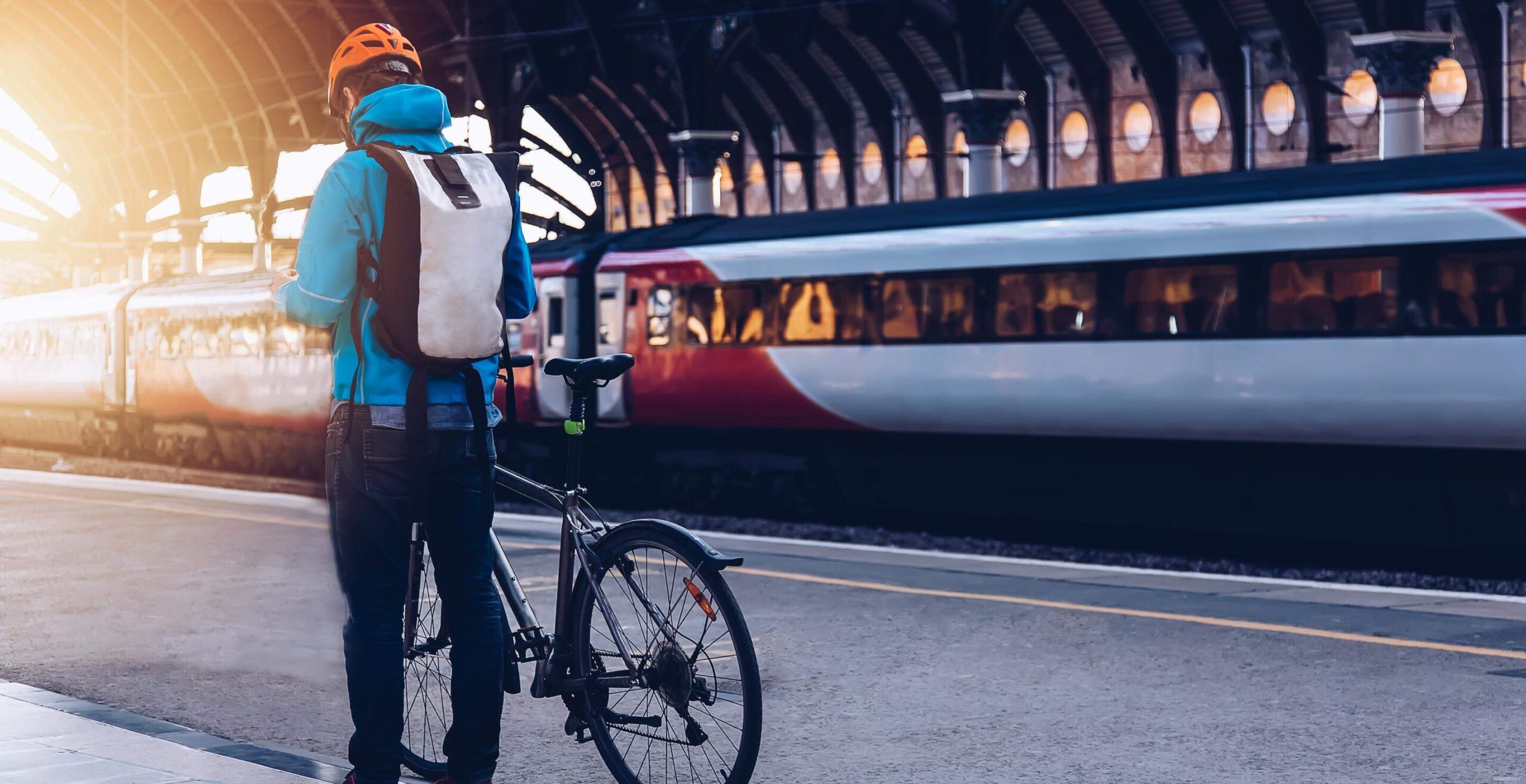
    The New South Wales (NSW) Government has issued a stern warning to cyclists intending to board the Sydney rail system with modified e-bikes. Beginning on November 1st, such individuals could be penalized with a considerable fine ranging from $400 to $1,110.

    Modified E-bike Restrictions

    The introduction of these measures is a direct response to the 77 incidents caused by lithium-ion batteries, which power e-bikes, leading to 16 injuries this year, as reported by Fire and Rescue NSW. These incidents were primarily resultant from do-it-yourself installations, substandard wiring, usage of second-hand batteries, and poor-quality or incompatible componentry.

    Public Safety and Reasonability

    Transport Minister John Graham stated that the decision to impose these fines emerged from comprehensive deliberations with the public and stakeholders, due to the increasing occurrences of lithium-ion battery-related incidents. It was deduced that the best course of action would be to prohibit converted e-bikes, as this would target the highest-risk e-bikes while maintaining a sensible and balanced approach.

    Graham acknowledged the popularity of e-bikes in the community, but emphasized the necessity to prioritize public safety and prudence. He added that an outright ban on all e-bikes from trains was deemed excessive by many during the consultations. As such, the department will monitor the situation closely and will not hesitate to take further measures if necessary.

    Enforcement of New Rules

    Starting November 1st, Transport for NSW staff will conduct “hotspot blitzes”, issuing on-the-spot fines to anyone contravening the new regulations. Cyclists are therefore strongly advised to keep their converted e-bikes off the trains and on the streets to avoid these penalties.

    Questions & Answers

    What are the new measures the NSW Government is introducing for e-bikes on Sydney trains?
    From November 1st, the NSW Government will impose a fine of $400 – $1,110 on anyone found on a Sydney Train, Trainlink, or Metro with a converted e-bike.

    Why has the NSW Government introduced these measures?
    The NSW Government has introduced these measures due to an increase in incidents caused by lithium-ion batteries, which power e-bikes, leading to 16 injuries this year alone.

    Who will be affected by the new rules?
    The new rules will primarily affect cyclists intending to board the Sydney rail system with modified e-bikes. Regular e-bikes without modifications are not subject to these new regulations.
  • Vietnam eyes nine new rail routes by 2030

    Vietnam eyes nine new rail routes by 2030

    Vietnam plans to have nine new railway routes, running 2,362 kilometers, by 2030 as it seeks to upgrade its outdated transport network.

    The total capital needed for these projects accumulates to VND240 trillion ($10.3 million), set to come from state coffers and private investors.

    The biggest route would run from Hanoi to Ho Chi Minh City, covering 1,545 kilometers, according to the government’s approved plan for the 2021-2030 period.

    The Ministry of Transport has proposed that two sections be prioritized on this route: from Hanoi to the central city of Vinh and HCMC to the central town of Nha Trang.

    There will be three routes in the north, connecting Hanoi with tourist hotspot Ha Long and with port city Hai Phong. Another route will run along the eastern boundary of the capital.

    One route is planned for the central region, connecting Vung Ang Port in Ha Tinh Province with the Laos border.

    There will be four routes in the south, with one connecting Bien Hoa town in Dong Nai Province with Vung Tau Province. Two routes will connect HCMC with Can Tho City and the Cambodia border. The remaining route would connect HCMC’s Thu Thiem Station with Long Thanh International Airport in Dong Nai.

    The railway sector targets to transport 11.8 million tons of goods a year by 2030, or 0.27 percent of total goods transported.

    It eyes to carry 460 million passengers or 4.4 percent.

    By 2050, the country is set to have 25 rail routes covering 6,354 kilometers. It now has seven routes covering 2,440 kilometers.

    Vietnam’s railway network has not received major upgrades for decades and has lost its competitiveness to roads and aviation, which are preferred for speed and convenience.

  • Cummins to make electric powertrains for city buses in 2019

    Cummins to make electric powertrains for city buses in 2019

    Engine maker Cummins plans to start production of electric powertrains for transit buses in cities around the world in 2019, executives said on a conference call on Wednesday.

    Company executives said that more industrial and commercial uses will follow in the years to come, especially as the battery range for electric vehicles increases.

  • Russian Railways eyes high-speed Europe-China cargo trains

    Russian Railways eyes high-speed Europe-China cargo trains

    The president of Russian Railways, Oleg Belozerov, proposed a high-speed cargo railway connection between Europe and China, allowing transport of goods to take as little as two days.

    “We plan to reach China via Kazakhstan and to carry special, high-profit cargoes to Europe via Russia, because a ship sails now 60 days, which is a long time. It sails round India and only then arrives to Europe. With a high speed rail transport we will be able to deliver goods in two days, and to earn extra money for our country,” Belozerov told a United Russia party meeting recently according to an Executive Intelligence Review News Service (EIRNS) report.

    Earlier Russian Railways said it was working on developing a cargo train capable of carrying from 300 to 600 tonnes of cargo at speeds up to 300kph.

    The China-Europe cargo line will be part of the Moscow-Kazan high-speed railway, whose construction should begin in 2017, Belozerov said. With a distance of some 770 kilometers, and a speed of of 350-400 kph, the rail route will cut the time between the two cities to as little as 3-3.5 hours; the current time is 14 hours. The line could be commissioned before 2022-2023.

    The US$16.8 billion railway project could later be extended to China, connecting the two countries across Kazakhstan. The Moscow-Beijing railroad will be 7,769 kilometers, with a travel time of 32.8 hours — four times faster than the current 130.4 hours. The average annual passenger traffic is estimated at 195 million people.

    China is committed to providing $6.5 billion as a credit for 20 years and $1.6 billion as a contribution to the charter capital of the special-project company. The German Initiative Consortium (includes Siemens, Deutsche Bank, Deutsche Bahn, and other companies) is ready to allocate €2.7 billion to finance the construction of the high-speed railway line and to attract up to €800 million for the project.