
Retail News CRM

Tag: transaction

  • Vietnam Shakes Up Gold Market With New 0.1% Transaction Tax: Aiming for Level Playing Field in Asset Classes

    Vietnam Shakes Up Gold Market With New 0.1% Transaction Tax: Aiming for Level Playing Field in Asset Classes

    As per a newly enacted legislation on Wednesday, sales of gold bars will now be subjected to a 0.1% tax, as declared by the National Assembly. However, the responsibility of determining the tax threshold and the schedule of implementation has been delegated to the government.

    The Rationale Behind the Taxation

    The government has previously expressed its stance that taxing gold is a crucial measure in order to limit speculation and facilitate the redirection of more resources towards the economy. The establishment of a taxable threshold is aimed at excluding those individuals who engage in the buying and selling of gold as a form of investment rather than for speculation.

    Investment in gold is a common practice in Vietnam, and the act of selling gold has never been subjected to taxation in the past.

    Creating a Level Playing Field

    Industry analysts have voiced their opinions that the taxation of gold could potentially establish a more balanced environment for all asset classes. The domestic gold market has been a source of major concern for lawmakers due to its volatility, with gold prices witnessing a hike of over 80% since the beginning of the current year.

    At the time of publishing, the price of gold was hovering around VND153.7 million (equivalent to US$5,829.60) for a tael of 37.5 grams, marking 15% higher than the global rates.

    Questions & Answers

    Why has the government decided to tax gold sales?
    The government views this taxation as a necessary step to curb speculation and channel more resources into the economy.

    What does the establishment of a “taxable threshold” imply?
    The taxable threshold is intended to exempt individuals who buy and sell gold as an investment, not for speculation.

    How does this new tax regulation impact the domestic gold market?
    The new tax regulation could potentially create a more balanced field for all asset classes and help control the volatility in the domestic gold market.
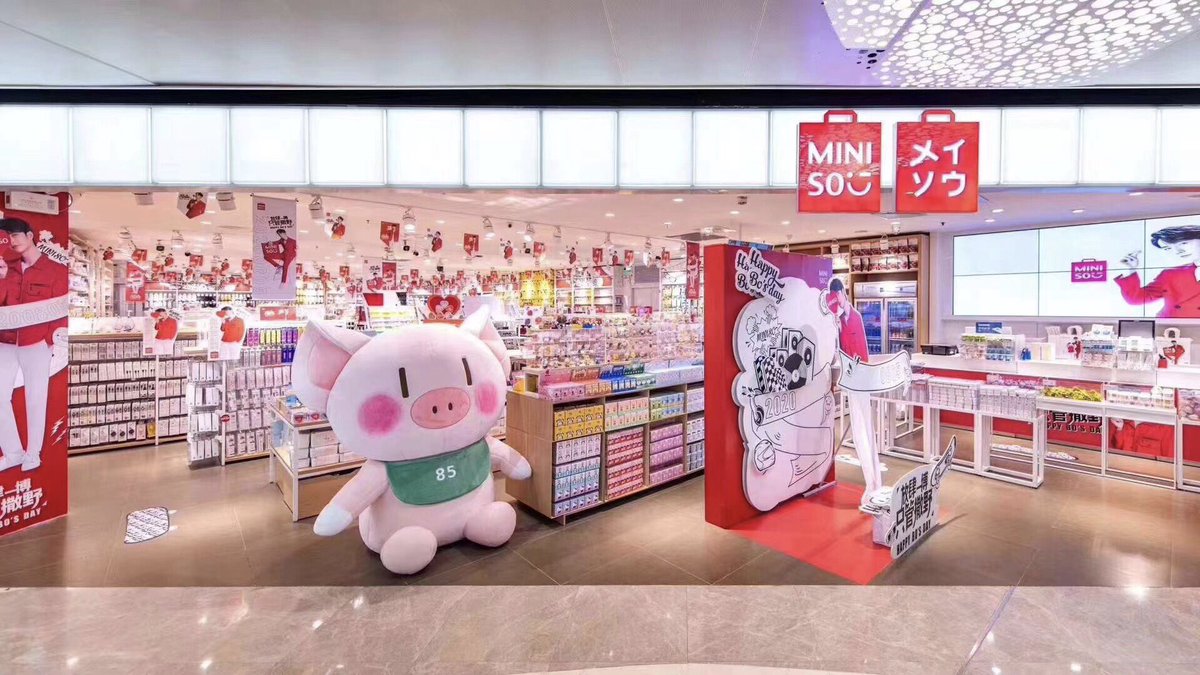

  • MINISO Chairman Sheds Light on 2023 Collar Transaction: Key Insights Unveiled!

    MINISO Chairman Sheds Light on 2023 Collar Transaction: Key Insights Unveiled!

    As the retail landscape in Asia continues to evolve, consumer preferences are shifting dramatically, blending traditional shopping habits with the rapid adoption of digital technologies. A recent report from China’s National Bureau of Statistics highlights these changes, illustrating a landscape where online shopping has cemented itself as a cornerstone of modern retail.

    Online Shopping Gains Ground

    In 2022, e-commerce sales in China surpassed a staggering 13.7 trillion yuan, a growth surge of over 10% compared to the previous year. This remarkable statistic showcases not only the resilience of online retail during the pandemic but also hints at a deeper integration into the daily lives of consumers. From fashion to electronics, virtual shopping has transitioned from a convenience to a necessity for many. It’s as if consumers realized that their couch could double as a front-row seat to the best sales in town!

    Transformation of the Physical Retail Experience

    Physical retail isn’t expected to fade away, but it is undergoing a significant transformation. Brands are increasingly prioritizing experiential retail, emphasizing personalized and immersive shopping experiences. Retailers are incorporating technology into brick-and-mortar stores, blending engaging displays with interactive elements. For example, augmented reality (AR) apps allow customers to visualize products in their own homes before making a purchase, striking a perfect balance between the tangible and virtual worlds.

    The Rise of Sustainability

    Another trend reshaping the retail environment is the growing emphasis on sustainability. Consumers are becoming more environmentally conscious, often favoring brands that prioritize eco-friendly practices. From packaging to sourcing, businesses are responding by adopting greener methods and materials. With fashion retailers like Uniqlo and Zara leading the way in sustainable collections, it is evident that a “buy less, choose better” mentality is taking hold in the marketplace.

    Challenges Ahead for Retailers

    While the outlook may seem promising, retailers face significant hurdles. Supply chain disruptions and inflationary pressures are compelling companies to reassess their pricing strategies and inventory management. As the cost of materials rises, brands must navigate these challenges while keeping consumer trust intact. The balance between maintaining profitability and offering competitive prices will be crucial in the forthcoming months.

    In a world where retail dynamics are constantly shifting, those who adapt wisely to these changes will undoubtedly emerge stronger. As Asia’s retail scene continues to innovate, it’s a canvas splashed with opportunities as vivid as the neon lights of a bustling marketplace.

    Questions & Answers

    How has online shopping impacted traditional retail in Asia?
    Online shopping has fueled significant growth in e-commerce sales, becoming a fundamental part of consumers’ shopping habits while pushing traditional retailers to adapt through experiential approaches.

    What role does sustainability play in today’s retail landscape?
    Sustainability is becoming increasingly crucial for retailers, as consumers prefer brands that demonstrate eco-friendly practices and a commitment to reducing environmental impact.

    What challenges do retailers face in the current market?
    Retailers are grappling with supply chain disruptions and rising costs, which necessitate smarter pricing and inventory strategies to maintain competitiveness and consumer trust.

  • Payment Providers Could Shave $5 Billion From ASEAN Banks

    Payment Providers Could Shave $5 Billion From ASEAN Banks

    Banks in South-east Asia could miss out on as much as $5 billion, or 14.3 percent of their payments revenue by 2025, displaced by the growth of digital payments and competition from non-banks, according to a new report.

    As payments become more «instant, invisible and free, banks will face further pressure on income from card transactions and fees over the next six years. Free payments put 9.6 percent of payments revenue at risk in the region, according to professional services firm Accenture said in a report titled Banking Pulse Survey: Two Ways To Win.

    The world of instant, invisible and free payments is here to stay, squeezing margins further on a business that was already feeling a lot of pressure from new competition, particularly in South-east Asia with the proliferation of e-wallets,» said Divyesh Vithlani, who leads Accenture’s financial services practice in ASEAN. The survey polled 240 payments executives from the largest banks across 23 markets.

    Next, competition from non-banks in invisible payments, where payments are completed in a “virtual wallet” on a mobile app or device, will put 3.1 percent of bank revenues at risk, Accenture said. Card displacement by instant payments – an area where banks make little to no interest – is projected to put an additional 1.7 percent of payment revenues in jeopardy.

    Banks previously earned billions of dollars from some of these channels, and that’ll dry up eventually as competition heats up, so they’ll need to develop new digital business models to compete in this new era, said Vithlani.

    However, the industry is aware of the challenges posed by new technologies in payments. More than two-thirds (71 percent) of the banking executives polled in all markets agree that payments are becoming free. Nearly three-quarters (73 percent) believe that most payments are already invisible, or will become so over the next 12 months.

  • Malaysia ranks second in SEA for Chinese tourist transactions during CNY

    Malaysia ranks second in SEA for Chinese tourist transactions during CNY

    Malaysia is the second largest market in Southeast Asia for Chinese tourists spending over the Chinese New Year holiday season, as recorded by Alipay, the digital payment and lifestyle platform offered by Ant Financial, an affiliate company of Alibaba Group. The transactions were recorded between Feb 4 and 10 this year. Malaysia saw a 16% increase in average per-capita spend by Chinese tourists this year, with a growth in transaction volume by 71% compared to 2018.

    What’s more, Chinese millennials can no longer claim to be the dominant user group spearheading spending while travelling, as 68% of Chinese tourists born between 1960 and 1979 were found to be the main driving force in outbound tourism and overseas consumption.

    Alipay head of business operation for cross-border business Janice Chen said this year’s findings highlight how mobile payment is taking root in China’s outbound tourism market, and it is excited to see the robust growth in the use of Alipay by overseas tourists from third-and-fourth tier cities and middle-aged vacationers.

    “While providing a better experience for Chinese travellers, Alipay is, at the same time, a huge drawcard for overseas merchants as a platform to help grow their business,” Chen said in a statement.

    This is in accordance to a recent report published by Nielsen and Alipay, called the 2018 Trends for Mobile Payment in Chinese Outbound Tourism.

    Chinese tourists are bringing their cashless lifestyles outside of China, paying for 32% of their overall travel transactions using mobile payment, overtaking their use of cash for the first time ever.

    The survey found that merchants offering Alipay as a payment option has experienced growth in both foot traffic (58%) and revenue (56%).

    Heinemann, a travel-retailer with a store in Kuala Lumpur International Airport 2 (KLIA2) has also reported an increase in sales. Its general manager for retail operations Alexander Maas said since implementing Alipay, it is now able to provide added convenience to its customers from China, and provide them with a familiar shopping experience, ultimately seeing over 20% of all its transactions completed on the Alipay app with Chinese tourists.

    With the increased popularity of Alipay among both young and old Chinese tourists, brick-and-mortar retailers across the region can continue to adopt Alipay as a payment option to further boost profitability moving forward.

  • Malaysia’s CIMB to gain RM200m from stockbroking business transfer

    Malaysia’s CIMB to gain RM200m from stockbroking business transfer

    CIMB Group Holdings Bhd is expected to record a gain of disposal of approximately RM200 million from the process of transferring the group’s stockbroking business to its joint venture company with China Galaxy Securities Co Ltd.

    This comes after taking into account the premium on the disposal of approximately RM433 million and goodwill attributable to the business.

    CIMB said the consideration in connection with the proposed business transfer will be satisfied in cash and it was determined based on the future prospects and net asset value of the in-scope business as at Dec 31, 2015, which amounted to RM565.6 million.

    The consideration is subject to closing audit adjustments, if any.

    Jupiter Securities, the subsidiary of China Galaxy Securities Co Ltd (CGS)-CIMB Holdings Sdn Bhd, which is the Malaysian joint venture entity, will operate the stockbroking business.

    CIMB said in a stock exchange filing that its wholly owned subsidiary CIMB Group Sdn Bhd (CIMBG), China Galaxy’s wholly owned unit China Galaxy International Financial Holdings Ltd (CGI), and CGS-CIMB Holdings Sdn Bhd has inked a share subscription agreement for the subscription of new shares in CGS-CIMB Holdings Sdn Bhd.

    The proposed business transfer entails the sale of CIMB Investment Bank Bhd’s cash equities business and 100% equity interest in CIMB Futures Sdn Bhd as well as CIMB Bank Bhd’s equity financing services business and share margin financing granted in connection with the cash equities to Jupiter Securities.

    After the completion of the exercise, CIMBG and CGI will hold 50% stake each in the Malaysian JV entity.

    The exercises are expected to be completed in the first half of 2019.