Retail News CRM

Tag: Transforming

  • Revolutionizing Retail: How WhatsApp and Conversational AI are Transforming Your Shopping Experience

    Revolutionizing Retail: How WhatsApp and Conversational AI are Transforming Your Shopping Experience

    The shift towards Conversational Artificial Intelligence (AI) is transforming the retail landscape, with AI-powered customer experiences emerging as the new standard, particularly within the realm of daily use messaging apps. This trend signals a departure from the previously flashy, novelty bots to a more meaningful, user-centered approach.

    Transition from Broadcasting to Dialogue

    For the past ten years, retailers have primarily focused on optimizing websites, apps, and mass emails – platforms that were primarily designed for broadcasting messages rather than fostering interactions. Burton Chau, CEO and Co-founder of Sanuker, contends that such platforms are now out of sync with how individuals typically utilize their smartphones. While websites, apps, and email blasts continue to play an essential role, they tend to be more transactional. Messaging platforms, which consumers frequently use daily, present an opportunity for high user interaction, high intent, and measurable customer journeys, particularly when supplemented with AI, automation, and data.

    This shift marks a significant realignment of the tech stack. Retailers are increasingly focusing on meeting consumers within their preferred platforms, such as WhatsApp, Messenger, and Instagram, and threading marketing, service, and commerce into a single chat thread. AI agents are employed within these threads to manage discovery, frequently asked questions (FAQs), lead qualification, and first-line service, with human staff handling more complex tasks.

    WhatsApp as the New Retail Hub

    Sanuker operates across various messaging platforms, but WhatsApp has emerged as the anchor for conversational retail in markets like Hong Kong, Malaysia, Singapore, India, and Indonesia. Chau attributes this to the app’s ubiquity and the quality controls established by Meta. A key selling point is that WhatsApp supports the entire retail journey, from pre-sales inquiries to recommendations, purchasing, post-sales follow-ups, and customer support.

    Using Sanuker’s technology, retailers can integrate the conversation with e-commerce platforms, Customer Relationship Management (CRM), and Enterprise Resource Planning (ERP) systems, providing real-time updates on inventory, pricing, and order status. As a result, the customer experience becomes less like a campaign and more like a continuous relationship.

    Personalization with a Contextual Memory

    While many retailers claim to offer personalization, Chau identifies a clear distinction between basic tweaks and what he terms “CRM-connected personalization.” He asserts that an AI agent achieves true personalization when it uses real-time customer data to provide accurate responses and promote outcomes. This includes access to purchase history, interests, and behaviors. The ability to update the backend with new events when orders or inquiries are made within the chat creates a closed loop that makes conversational AI economically attractive.

    Automation: The Future of the First-line Concierge

    Sanuker foresees a future where AI agents serve as the first-line digital concierge on messaging platforms. Chau believes that AI agents could replace human agents in customer service roles by 2026, not by eliminating human roles, but by taking on repetitive questions and escalating only when necessary.

    Achieving this requires a seamless integration of technologies. Sanuker’s platform, alongside tools like N8N and Dify, enable retailers to quickly and efficiently connect messaging with e-commerce, CRM, and ERP systems, and integrate AI models from OpenAI, Azure, Gemini, or DeepSeek.

    Guardrails, Not Gimmicks

    Despite the promise of conversational AI, it also brings potential risks, including spammy bots that undermine trust and invite regulatory scrutiny. Chau emphasizes the need for robust governance and compliance measures, and highlights the importance of designing explicit handover routes to human agents to ensure that customers never feel trapped in an automated loop.

    In his vision, the most successful retailers in 2026 will not be those that replace staff with bots, but those that utilize conversational AI to enhance human interactions, making them rarer, richer, and more consequential.

    Questions & Answers

    What is the role of messaging platforms in the shift towards conversational AI?
    Messaging platforms, such as WhatsApp, Messenger, and Instagram, are pivotal to the shift towards conversational AI as they provide the daily-use platform that allows for high user interaction, high intent, and measurable customer journeys.

    How does Sanuker’s technology enhance the customer experience on WhatsApp?
    Sanuker’s technology integrates WhatsApp conversations with e-commerce platforms, CRM, and ERP systems, providing real-time updates on inventory, pricing, and order status. This makes the customer experience more personalized and relationship-based.

    How does Sanuker envision the future of conversational AI in retail?
    Sanuker envisages a future where AI agents serve as the first-line digital concierge on messaging platforms. These AI agents would handle repetitive questions, escalating only when necessary, thereby enhancing the efficiency of the customer service process.
  • Central Phuket’s Expansion: Transforming Thailand’s Luxury Retail Landscape by 2028

    Central Phuket’s Expansion: Transforming Thailand’s Luxury Retail Landscape by 2028

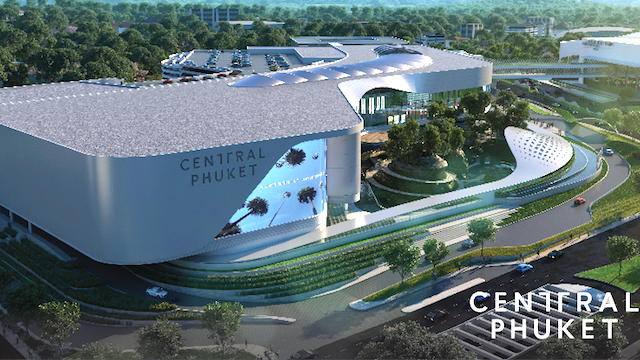
    Central Pattana is embarking on a significant expansion of Central Phuket, aiming to transform the mixed-use development into a keystone of Phuket’s transition from a tourist-centric locale to a global lifestyle hub.

    The expansion will enlarge the project’s existing area by approximately 40%, pushing the total developmental value past 26 billion baht (US$835.7 million) when completed in 2028. The expanded project will cover an approximate 500,000 square meters of gross building area, solidifying its standing as one of southern Thailand’s major retail and lifestyle establishments.

    Transition to Luxury Lifestyle Destination

    Situated in Phuket City, Central Phuket has gradually evolved from a traditional mall set-up to a luxury-focussed, experience-centric destination. It is designed to cater to high-spending local and international consumers. The latest development phase is set to tap into the escalating long-term residency, growth in branded residential spaces, and infrastructure improvements across Phuket.

    A key aspect of the expansion plan is the doubling of luxury retail space in Central Phuket Floresta. Central Phuket Festival will also be repositioned to enhance its appeal in the fashion and lifestyle sector. The expansion will additionally usher in new high-end dining areas and significant attractions, including immersive entertainment concepts, scheduled for gradual introduction by 2028.

    Central Pattana’s chief marketing officer, Nattakit Tangpoonsinthana, has drawn comparisons between this development model and successful examples in Miami, Saint-Tropez, and Barcelona. He emphasized Central Pattana’s commitment to strengthening this approach with a ‘Global Coastal City’ model. This model is underpinned by three core elements: luxury lifestyle, downtown economy, and a global community, positioning Phuket for long-term sustainable growth.

    Store Expansions and Exclusive Concepts

    The expansion will see the introduction of multiple store expansions and unique shopping concepts. These include the largest Louis Vuitton outlet in southern Thailand, a 597 square meter Prada boutique showcasing one of its widest beachwear collections, a pop-up by Celine, and revamped concept stores from Balenciaga and Saint Laurent.

    In a separate development, Central Pattana allocated 21 billion baht (US$640 million) last year to construct a new mega shopping and lifestyle complex, The Central Phaholyothin, in northern Bangkok.

    Questions & Answers

    What is the projected value of the expanded Central Phuket project?
    The total developmental value is estimated to exceed 26 billion baht (US$835.7 million) upon its completion in 2028.

    What new features will the expansion of Central Phuket introduce?
    The expansion plans include the doubling of luxury retail space, the introduction of new high-end dining areas, major attractions including immersive entertainment concepts, store expansions, and unique shopping concepts.

    What is the ‘Global Coastal City’ model?
    The ‘Global Coastal City’ model is driven by three core elements: luxury lifestyle, downtown economy, and a global community. It aims to position Phuket for long-term sustainable growth.

  • Wellington & Standard Chartered Unveil No-Load Shares, Transforming Wealth Market Dynamics in Singapore

    Wellington & Standard Chartered Unveil No-Load Shares, Transforming Wealth Market Dynamics in Singapore

    Wellington Management has enhanced its alliance with Standard Chartered Bank by launching exclusive no-load share classes of the Wellington Asia Quality Income Fund for the bank’s customers in Singapore. This strategic initiative enhances its competitive standing in an increasingly cost-conscious wealth market.

    Building on Established Collaboration

    Wellington’s new offering, announced on Monday, is an extension of a collaboration that started in 2024. At that time, Wellington’s Credit Total Return strategy was made exclusively accessible to Standard Chartered’s private and retail banking clients in Singapore and Hong Kong. This award-winning UCITS model has since grown to over $1.3 billion in AUM in less than two years, showcasing robust client acceptance.

    Encouraging Long-Term Investment

    The recently launched Class B Shares of the Asia Quality Income Fund eliminates the initial subscription fees, making investment more accessible. The structure incorporates a contingent deferred sales charge of two percent if shares are redeemed within three years, an inventive way to encourage long-term investment rather than short-term trading.

    Chia Chia Chng, Southeast Asian Wealth Head at Wellington Management, noted that this expanded collaboration reflects the mutual emphasis on resilient income strategies. She further emphasized the attractiveness of dividend strategies given the current economic climate characterized by growth uncertainties, trade policy ambiguities, and geopolitical risk.

    A Disciplined Approach to Asia ex-Japan Equities

    The actively managed fund, overseen by seasoned portfolio manager Naveen Venkataramani, targets superior, dividend-paying companies across the Asia ex-Japan region. The investment approach emphasizes three categories; Dividend Compounders, Dividend Leaders, and Dividend Surprisers. It accentuates robust balance sheets, competitive advantages, and sound corporate governance.

    Venkataramani revealed that historically, dividends have constituted approximately 65 percent of total equity returns in Asia ex-Japan. He predicts room for growth in Asia’s dividend payout, supported by improved cash flow generation and relatively low corporate leverage.

    The Significance of this Partnership for Wealth Platforms

    For astute investors and distributors, this partnership signifies a wider industry trend. Global asset managers and banks are leveraging targeted fee structures and exclusive access to differentiate their offerings in competitive wealth markets like Singapore.

    By merging Wellington’s considerable scale – $1.3 trillion in assets under management – with Standard Chartered’s regional distribution capabilities, this initiative aligns product design with changing client expectations around cost transparency and income resilience.

    Questions & Answers

    What does the newly introduced Class B Shares of the Asia Quality Income Fund offer?
    These shares eliminate initial subscription fees, turning investment more accessible. It also includes a two percent deferred sales charge if shares are redeemed within three years, encouraging long-term investment behaviors.

    What is the investment focus of the Asia Quality Income Fund managed by Naveen Venkataramani?
    The fund targets high-quality, dividend-paying companies in the Asia ex-Japan region, emphasizing strong balance sheets, competitive advantages, and good corporate governance.

    What is the significance of this partnership between Wellington Management and Standard Chartered Bank for the wealth market?
    This collaboration, which offers targeted fee structures and exclusive access, signifies a wider industry trend in competitive wealth markets like Singapore. It aligns product design with evolving client expectations around cost transparency and income resilience.

  • Subtle Le Nguyen: Transforming Emotions into Fashion and Reshaping Vietnam’s Style Identity

    Subtle Le Nguyen: Transforming Emotions into Fashion and Reshaping Vietnam’s Style Identity

    At a young age of 16, Nhat Viet developed an interest in fashion while shopping with his family in Hanoi, a practice that would shape his future professional life. Viet found himself drawn towards clothing and fashion, a realization that came to him when an orange gown he had chosen for his mother was later seen worn by Beyoncé.

    The Birth of a Fashion Label

    A decade later, Viet’s natural flair for fashion led to the creation of Subtle Le Nguyen, a renowned fashion label in Vietnam. Established in 2014, the brand, initially a self-funded venture, has grown into a recognized name in fashion circuits, including popular platforms like Ssense and Moda Operandi. It even found its way into the wardrobe of Kylie Jenner for Coachella, marking a significant milestone in its journey.

    Despite this recognition, Viet maintains that he did not create Subtle Le Nguyen for fame, but rather for the sheer love and passion he has for fashion and creativity.

    A New Era in Vietnamese Fashion

    Vietnam’s fashion industry has always been a reliable partner to global brands like Uniqlo, Zara, and H&M, known for its precise and efficient manufacturing. However, a new wave of Vietnamese designers, including Viet, are now focusing on establishing their own brands that reflect their culture, identity, and artistic expression, rather than just production volumes.

    Initially, Viet faced financial constraints that limited his ability to experiment with designs. He had to settle for simple collections and carefully chosen fabrics. However, his vision remained steadfast – to build a space where he, along with others, can freely express ideas and experiment with different garment-making techniques.

    Reflecting Tradition and Emotion

    Subtle Le Nguyen stays true to its name, reflecting quiet, thoughtful designs that are laden with emotion. The designs mirror the tranquil and introspective nature of Hanoi, Viet’s hometown, with a muted color palette of soft taupes, faded olives, and dusted creams.

    Viet often incorporates Vietnamese traditions into his designs, merging them with contemporary fashion. He draws inspiration from various cultural elements, including traditional rituals, the way people interact with their clothes, and even unexpected objects such as a ceramic vase or an accordion.

    Sustainability is also central to Subtle’s philosophy, although Viet prefers to talk about its longevity and intention, rather than using the term ‘sustainability’ outright.

    Weathering the Pandemic Storm

    When the COVID-19 pandemic struck, Subtle faced a challenging period with retail sales freezing and rent pressures mounting. However, a silver lining appeared when the brand was chosen by Ssense and Moda Operandi to join their global online platforms. This opportunity provided Subtle Le Nguyen with essential exposure, placing it among the ranks of independent designers worldwide.

    Despite the economic downturn, rising production costs, and unpredictability of global retail, Viet remains committed to building relationships with customers and retailers, and improving customer service.

    Looking to the Future

    Looking ahead, Viet has ambitious plans, including hosting an independent fashion show internationally, with Paris as the dream location. However, he also acknowledges the uncertainty that lies ahead. His ultimate dream is for Subtle Le Nguyen to be more recognisable and accessible to people around the world.

    Questions & Answers

    What led to the creation of Subtle Le Nguyen?

    Nhat Viet, at a young age, developed a keen interest in fashion while shopping with his family. He later turned his passion into a career, establishing Subtle Le Nguyen.

    What makes Subtle Le Nguyen stand out in the fashion industry?

    The brand reflects traditional Vietnamese culture and contemporary design. It follows a philosophy of sustainability, focusing on the longevity and intention behind each garment.

    What does the future hold for Subtle Le Nguyen?

    Despite the uncertainty in the fashion industry, Viet plans to improve customer service, build relationships with customers and retailers, and launch an independent fashion show internationally. He hopes to make Subtle Le Nguyen more recognisable and accessible worldwide.