Tag: Trial

  • Sustainable Snacking: Aussie Trial Launches KitKat Bars in Recycled Packaging

    Sustainable Snacking: Aussie Trial Launches KitKat Bars in Recycled Packaging

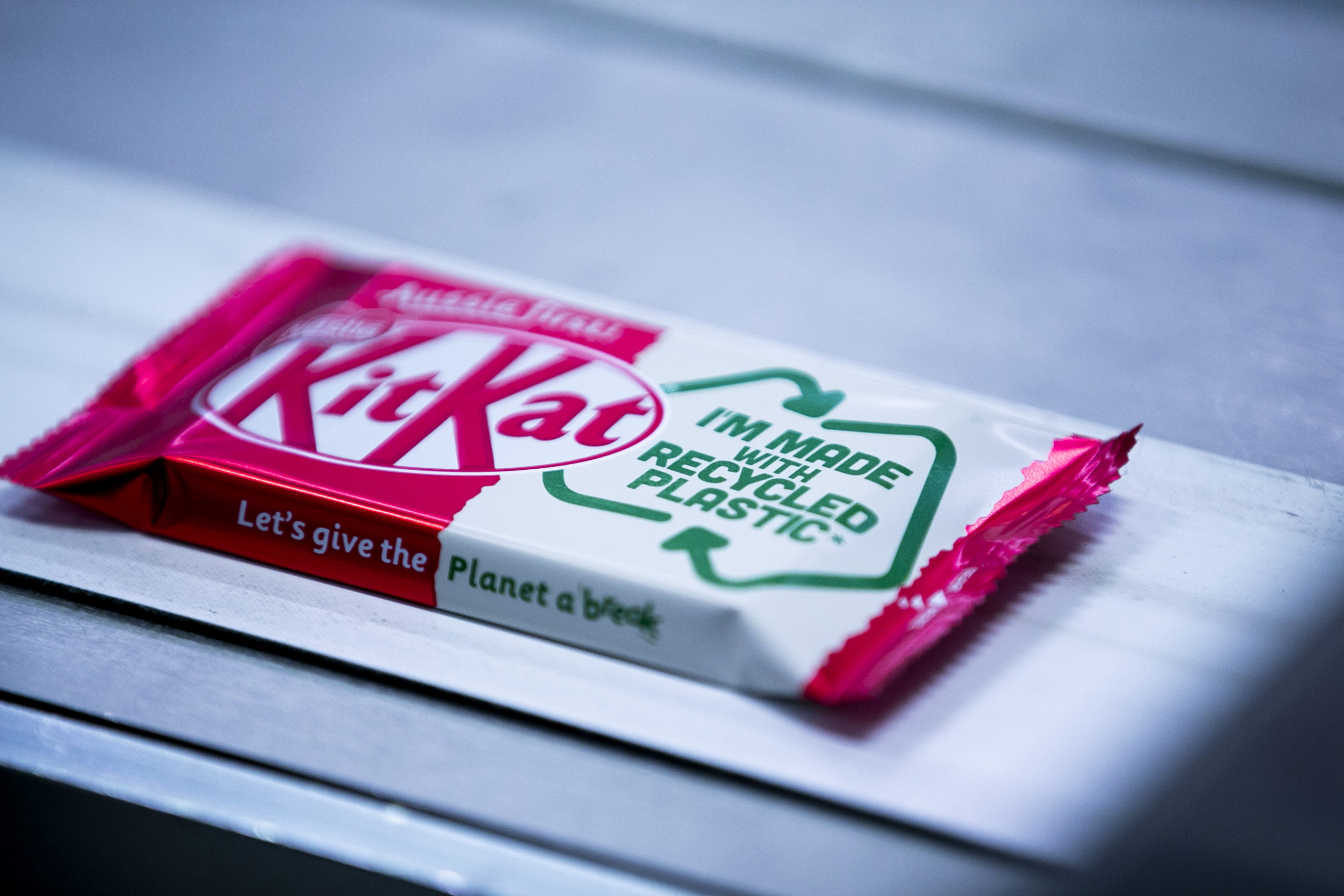
    A unique production run of the popular KitKat 4 Finger chocolate bars is now available in Australia, with the chocolate bars enclosed in wrappers made from locally recycled polypropylene (PP). This initiative is part of an experimental collaboration between Viva Energy and Nestlé, where soft plastic pyrolysis oil is transformed into food-grade recycled polypropylene.

    Recycling Plastic into Edible Packaging

    The experimental journey commenced in Victoria and extended across the entire production chain. Viva Energy processed over 9.5 tonnes of pyrolysis oil from plastics at its Geelong Refinery last year. This led to the creation of approximately 5 tonnes of recycled PP. The recycled PP was then used to fabricate seven million ISCC-certified KitKat wrappers in March, a joint venture involving Taghleef Industries and Amcor. The KitKat 4 Finger bars now on the market are encased in these environmentally friendly wrappers.

    The pyrolysis oil derived from plastic was imported from Alterra in the United States for the trial, as Australia lacked the necessary materials at a commercial scale. To ensure the origin and journey of the recycled material were traceable, ISCC certification was implemented across the production chain.

    The Geelong Refinery and the connected polymers plant, both owned by Viva Energy, are the only facilities in Australia with the capability to convert waste soft plastics into food-grade plastic feedstock chemically.

    Creating a Circular Plastics Economy

    Viva Energy’s executive GM energy and infrastructure, Bill Patterson, emphasized that the trial had proven that soft plastics pyrolysis oil could be used as a feedstock. This demonstrated the potential of adapting existing industrial infrastructure to support a circular plastics economy.

    This trial project stemmed from a partnership formed in 2022 between Viva Energy and Nestlé, when the companies first used recycled soft plastic packaging for KitKat 4 Finger bars. Andrew Lawrey, Nestlé Oceania confectionery GM, expressed that the trial could provide valuable insights into the design of future packaging and commercial-scale recycling processes.

    This ambitious plan’s successful implementation will rely on the domestic supply of feedstock, efficient collection and sorting systems, robust recycling infrastructure, and a comprehensive producer responsibility scheme.

    Viva Energy and Cleanaway are currently conducting a feasibility study on a large-scale plastics recycling project. The Front-End Engineering and Design phase is anticipated to commence after the Australian Government finalizes the details regarding its packaging reforms.

    Questions & Answers

    What material are the new KitKat 4 Finger wrappers made from?
    The wrappers are made from locally recycled polypropylene.

    Why was the pyrolysis oil for the trial imported from the US?
    The necessary materials for producing pyrolysis oil were not available at a commercial scale in Australia.

    What could be the impact of this trial on future packaging design and recycling processes?
    The trial could lead to more sustainable packaging design and improved commercial-scale recycling processes.

  • Revolutionizing Retail: Australia’s Innovative In-Store Avocado Ripeness Scanner Trial

    Revolutionizing Retail: Australia’s Innovative In-Store Avocado Ripeness Scanner Trial

    In the competitive world of retail, customer satisfaction is key, and the avocado industry is no exception. A common issue faced by both retailers and consumers is determining the ripeness of an avocado on a supermarket shelf. Avocados Australia, an industry association, has introduced a potential solution to this problem – an in-store ripeness scanner.

    Understanding Customer Frustration

    According to John Tyas, the CEO of Avocados Australia, one of the major frustrations faced by consumers is identifying the ripeness of an avocado. This is important because approximately 75% of consumers want to buy avocados that are ready to be eaten within two days. Tyas believes that helping consumers with this selection process can enhance their eating experiences, minimize bruising of the fruit, and strengthen the overall trust in Australian avocados.

    The Ripeness Scanner

    The ripeness scanner aims to minimize the physical handling of avocados, which often leads to bruising. Data shows that about 47% of consumers handle three or more avocados before making a purchase, resulting in product loss for both growers and retailers. The scanner, developed by the Dutch agri-tech firm OneThird, not only reduces the need for physical handling but also prevents potential damage to the fruit.

    The scanner utilizes near-infrared (NIR) spectroscopy to assess the firmness of the fruit without causing damage, thereby helping to estimate the fruit’s readiness for consumption. The device also provides storage guidance to help consumers make informed purchase decisions. This technology has undergone trials in Europe and Thailand, where it was well-received by retailers and customers.

    Benefits for the Supply Chain

    Beyond consumer use, the ripeness scanner provides retailers with valuable data on in-store conditions and purchasing patterns. This information, which includes metrics on shelf ripeness, purchasing behavior, and peak periods, can be used to optimize merchandising, inventory management, and waste reduction efforts.

    The early results are promising, with the device being used for approximately 45% of avocado sales per week in participating stores. The accompanying platform provides fresh produce managers with data to monitor product condition and support efficient stock management.

    John Tyas further emphasized that the Australian avocado industry is committed to investing in research and development to continually enhance product quality and improve the consumer experience.

    Questions & Answers

    What is the purpose of the avocado ripeness scanner?
    The scanner helps consumers select ripe avocados, reduces fruit handling and bruising, and enhances the overall shopping experience.

    How does the ripeness scanner work?
    The scanner uses near-infrared spectroscopy to assess the firmness of the fruit without causing damage. It also provides storage guidance to consumers.

    What additional benefits does the ripeness scanner provide to retailers?
    The scanner provides data on in-store conditions and purchasing patterns, which can be used to support merchandising, inventory management, and waste reduction efforts.

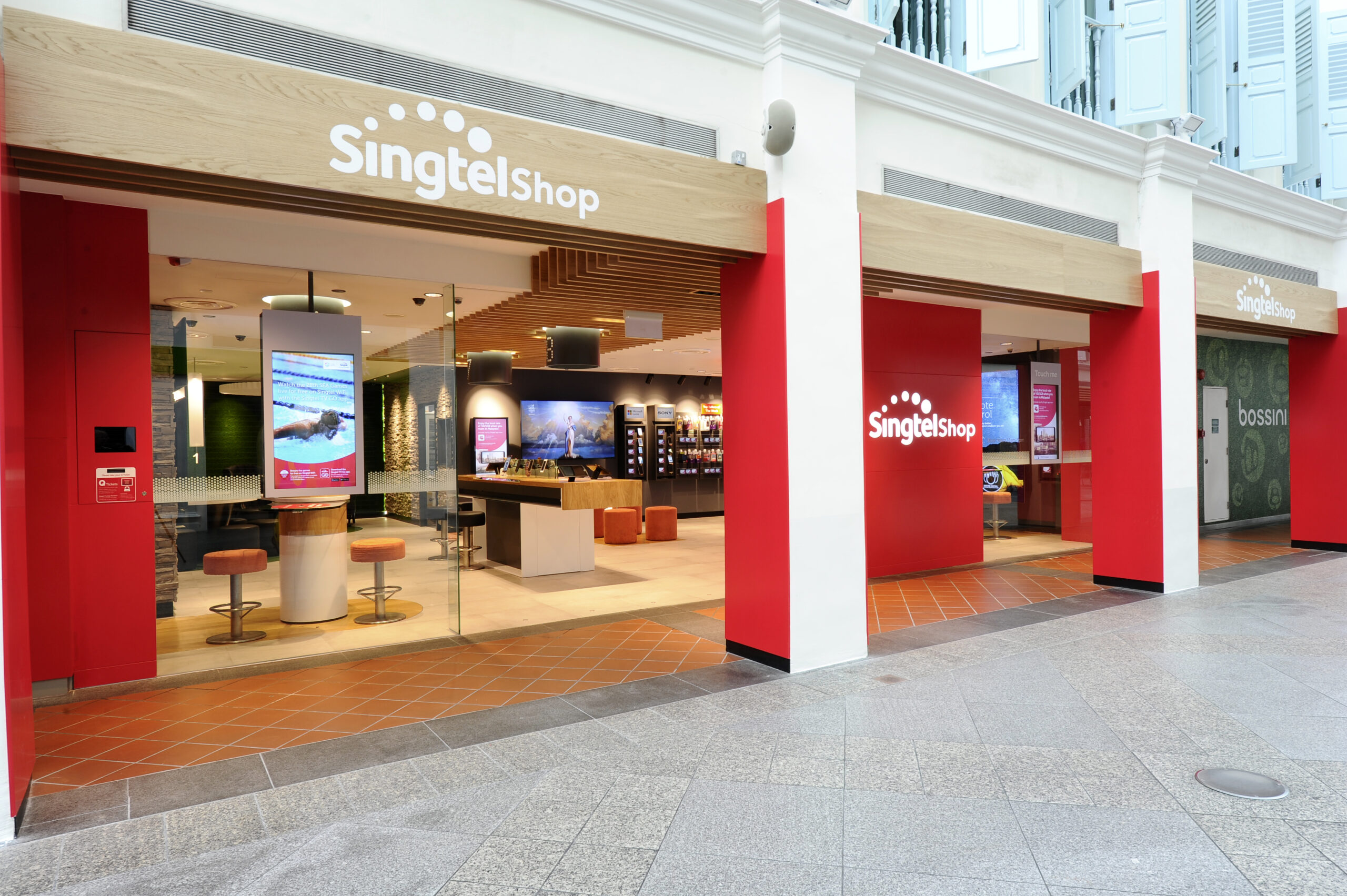
  • Singtel Launches Singapore’s First 50 Gbps Fiber Broadband Trial: Ushering in a New Era of Ultra-Speed Connectivity

    Singtel Launches Singapore’s First 50 Gbps Fiber Broadband Trial: Ushering in a New Era of Ultra-Speed Connectivity

    Singtel, a leading telecommunications company, has initiated Singapore’s first technical trial for 50 Gbps fiber broadband, a forward-looking step aimed at bolstering the country’s fixed connectivity. This venture is a response to the expected boom in AI-powered and data-heavy digital services.

    Next-Gen Connectivity

    The trial leverages advanced XGS-PON-based fiber technology to achieve speeds of up to 50 Gbps. This state-of-the-art connectivity is designed to facilitate the increasing demand of emerging technologies such as augmented reality (AR), virtual reality (VR), mixed reality (MR), cloud gaming, AI-enabled smart homes, and high-performance remote workspaces. Singtel’s objective with this initiative is to ensure that both residential and business consumers are equipped for the assimilation of these technologies as they transition into the mainstream over the next three to five years.

    During this technical trial, Singtel aims to assess the network’s performance and potential to support the complex, multi-device environments that AI enables. The company believes this trial signifies a critical progression towards the large-scale deployment of ultra-high-speed fiber broadband for both residential and commercial users.

    According to Ng Tian Chong, CEO of Singtel Singapore, Singapore’s everyday life is deeply intertwined with digital technologies, facilitated by near-universal internet access, high device ownership, and the widespread use of online communication and digital services across work, learning, and entertainment. He notes that this next evolution in fiber broadband connectivity is crucial to ensure that homes and businesses can continuously support increasingly immersive and AI-driven digital experiences.

    Enhancing Digital Infrastructure

    Singtel’s early adoption of the 50 Gbps fiber technology sets Singapore as a pioneer in next-generation broadband innovation. This aligns with the nation’s Digital Connectivity Blueprint that aims to construct a resilient and future-proof digital infrastructure.

    The new 50 Gbps trial offers the possibility of comprehensive, multi-gigabit connectivity. Singtel suggests that this will facilitate ultra-high-definition entertainment, including 8K and future 12K video streaming, high-quality AR, VR, and XR experiences, low-latency cloud gaming, and cloud PCs. The technology is also expected to support data-heavy workflows for home-based businesses and professionals, such as engineering simulations and secure, enterprise-grade remote connectivity.

    Moreover, advanced telemedicine and remote diagnostics stand to benefit from this ultra-high-speed broadband. This includes real-time medical imaging transmission, VR-based physiotherapy, and home-connected medical devices. AI-powered smart homes can also leverage this technology for real-time analytics across security cameras, IoT appliances, and autonomous devices. Furthermore, this technology has the potential to enhance the next generation of Wi-Fi, dense IoT ecosystems, and emerging AI-driven entertainment formats.

    Investing Ahead of Demand

    The fiber broadband trial underlines Singtel’s long-standing strategy of anticipating demand to deliver advanced connectivity. The company made history by becoming the first to democratize network slicing for everyday users to support evolving digital needs.

    In 2022, Singtel set another milestone by becoming the first operator globally to deploy nationwide standalone 5G. The company later improved coverage by integrating a 700 MHz spectrum, offering up to 40% stronger signal strength in indoor, underground, and high-density environments.

    Questions & Answers

    What is the purpose of Singtel’s 50 Gbps fiber broadband technical trial?
    The trial is meant to test the network’s performance and its capabilities to support increasingly complex, AI-enabled, multi-device environments.

    How will ultra-high-speed broadband benefit home-based businesses and professionals?
    The technology is designed to support data-heavy workflows, such as engineering simulations and secure enterprise-grade remote connectivity, which are integral to many home-based businesses and professionals.

    How will this technology improve healthcare?
    The ultra-high-speed broadband is expected to enable advanced telemedicine and remote diagnostics, such as real-time medical imaging transmission, VR-based physiotherapy, and connected at-home medical devices.

  • Singtel Pioneers Singapore’s First 50 Gbps Fiber Broadband Trial, Ushering in New Era of Ultra-High-Speed Connectivity

    Singtel Pioneers Singapore’s First 50 Gbps Fiber Broadband Trial, Ushering in New Era of Ultra-High-Speed Connectivity

    Singapore’s premier telecommunications company, Singtel, has initiated the country’s inaugural 50 Gbps fiber broadband technical trial. The aim of this groundbreaking move is to fortify the fixed connectivity infrastructure of the country, which is crucial for the delivery of emerging data-intensive digital amenities propelled by Artificial Intelligence (AI).

    Exploring the Potential of Next-Gen Technology

    This technical trial employs the cutting-edge XGS-PON-based fiber technology, which is capable of facilitating speeds of up to 50 Gbps. The trial has been conceptualised keeping in mind the anticipated use cases of the imminent future, such as ultra-realistic Augmented Reality (AR), Virtual Reality (VR), and Mixed Reality (MR), AI-powered smart homes, high-performance remote working setups, and cloud gaming. Singtel’s objective with this initiative is to prepare both residential and commercial customers for the smooth adoption of novel technologies as they become mainstream over the next three to five years.

    Through this trial, Singtel aims to assess the network performance and capabilities needed to support the increasing complexity of multi-device environments driven by AI. Singtel maintains that the trial is a significant milestone towards the future large-scale rollout of ultra-high-speed fiber broadband for diverse users, both residential and commercial.

    Preparing for a Digital Future

    Ng Tian Chong, Singtel Singapore’s CEO, emphasised that digital technologies are already a part of everyday life in Singapore, with near-universal internet access, high device ownership, and extensive use of digital services for work, learning, and entertainment. The next leap in fiber broadband connectivity, he said, will ensure that homes and businesses can keep up with increasingly immersive and AI-enabled digital experiences.

    Singtel insists that its early adoption of the 50 Gbps fiber technology places Singapore at the vanguard of next-generation broadband innovation. This aligns with the nation’s Digital Connectivity Blueprint, which prioritises the construction of a robust and future-ready digital infrastructure.

    Enabling Advanced Applications

    The 50 Gbps trial facilitates a new grade of whole-home, multi-gigabit connectivity. Singtel believes this will support ultra-high-definition entertainment, including 8K and future 12K video streaming, high-quality AR, VR, and XR experiences, and low-latency cloud gaming and cloud PCs. The technology also caters to data-heavy workflows for home-based businesses and professionals, including engineering simulations and secure enterprise-level remote connectivity.

    Moreover, the ultra-high-speed broadband is anticipated to enable advanced telemedicine and remote diagnostics, such as real-time medical imaging transmission, VR-based physiotherapy, and connected at-home medical devices. AI-driven smart homes will reap the benefits of real-time analytics across security cameras, IoT appliances, and autonomous devices. It also provides a solid foundation for next-generation Wi-Fi, dense IoT ecosystems, and emerging AI-generated entertainment formats.

    Questions & Answers

    What is the purpose of Singtel’s technical trial?

    The purpose of the technical trial is to assess the network performance and capabilities needed to support the increasingly complex multi-device environments enabled by AI. It also aims to prepare residential and commercial customers for the smooth adoption of novel technologies as they become mainstream.

    How will the 50 Gbps fiber broadband technology benefit homes and businesses?

    The technology will support ultra-high-definition entertainment, low-latency cloud gaming, high-quality AR, VR, and XR experiences, and data-heavy workflows for home-based businesses and professionals. It will also enable advanced telemedicine and remote diagnostics, as well as provide real-time analytics for AI-powered smart homes.

    How does this initiative align with Singapore’s nationwide digital strategy?

    The trial aligns with Singapore’s Digital Connectivity Blueprint, which focuses on building a robust and future-ready digital infrastructure. By positioning Singapore at the forefront of next-generation broadband innovation, it is helping prepare the nation for a rapidly evolving digital future.

  • SoftBank and Nokia Kick Off Japan’s Pioneering 7 GHz 6G Trial

    SoftBank and Nokia Kick Off Japan’s Pioneering 7 GHz 6G Trial

    SoftBank Corp. is making a significant move in the race towards 6G by teaming up with Nokia for an outdoor trial scheduled for June 2025 that will explore the potential of the 7 GHz band—a centimeter-wave frequency gaining traction in discussions about next-generation mobile technology. This marks a groundbreaking first for a telecommunications carrier in Japan and positions SoftBank as a pioneer in this important field.

    Building the Future of Connectivity in Tokyo

    In a bid to assess the viability of urban 6G deployment, SoftBank plans to install three pre-commercial base stations in central Tokyo, utilizing cutting-edge massive multiple input, multiple output (MIMO) technology. The objective? To achieve coverage that rivals the impressive standards set by 5G.

    Examining the Next Level of Mobile Technology

    This trial will focus on comparing the radio characteristics and coverage of the 7 GHz band against the established 5G sub-6 band, particularly the 3.9 GHz spectrum. By strategically placing the new 7 GHz base stations alongside existing 5G installations atop city rooftops, SoftBank aims to gather comprehensive data. Upcoming tests will encompass both indoor and outdoor measurements, further fueling the research and development necessary for the commercialization of 6G technology.

    The Science Behind the Bandwidth

    Centimeter waves—radio waves with wavelengths between 1 to 10 cm—are part of a spectrum that includes frequencies from 3 to 30 GHz. The 7–24 GHz band, known as FR3 according to 3GPP standards, is emerging as a frontrunner for future mobile networks. SoftBank’s experiment targets the 7,125 to 8,400 MHz range, which is poised for dialogue at the ITU-R’s World Radiocommunication Conference 2027 (WRC-27) as a potential frequency for 6G, stirring global interest in the process.

    The 7 GHz band promises a much wider bandwidth compared to the existing 5G sub-6 GHz offerings. Coupling it with the current 5G band of 6,425–7,125 MHz (band n104) opens up nearly 2 GHz of contiguous spectrum, delivering the characteristics necessary for speedy and reliable communication. With mobile data traffic continuously on the rise—partly fueled by the explosion of artificial intelligence (AI)—this trial represents a crucial step in shaping the landscape of future connectivity.

    Questions & Answers

    What is the main goal of SoftBank’s trial with Nokia?
    The primary aim is to test the 7 GHz band for its potential as a future 6G frequency and compare its coverage and characteristics with those of existing 5G technology.

    Why is the 7 GHz band considered important?
    It offers significantly wider bandwidth than 5G’s sub-6 GHz frequencies, and its propagation characteristics make it suitable for high-speed communication, making it an enticing candidate for next-gen mobile networks.

    How does this trial contribute to the future of mobile communication?
    As mobile data demands grow, particularly due to advancements in AI, this trial lays vital groundwork for developing and eventually commercializing 6G technology, ensuring future connectivity keeps pace with demand.

  • SK Telecom Achieves Milestone with Successful Disaggregated IPoDWDM Network Trial Completion

    SK Telecom Achieves Milestone with Successful Disaggregated IPoDWDM Network Trial Completion

    SK Telecom (SKT) has ushered in a new era in network technology by completing a groundbreaking proof of concept (PoC) for a disaggregated IP over DWDM (IPoDWDM) solution. This accomplishment signals a significant leap in the operator’s quest for next-generation, high-performance network infrastructure, tailored for the digital age.

    Collaborative Innovation Drives Progress

    Partnering with technological heavyweights IP Infusion and Edgecore Networks, SKT is demonstrating its commitment to pioneering open, flexible, and cost-effective networking solutions. This trial showcases SKT’s proactive approach to advancing network technology, solidifying its position as a leader in the field.

    The PoC utilized the cutting-edge Innovative Optical and Wireless Network (IOWN®) All-Photonics Network (APN), seamlessly integrating IP Infusion’s OcNOS® with Edgecore’s whitebox hardware and 400G OpenZR+ optics from various vendors. This impressive setup showcased flawless interoperability among disaggregated systems and conventional equipment, emphasizing both the technical viability and commercial promise of open networking in long-distance, point-to-point (P2P) contexts.

    Smart Management for a Faster Future

    Central to the trial was SKT’s sophisticated Software-Defined Networking (SDN) Orchestrator, which furnished centralized, automated control and real-time monitoring of optical modules. Through this orchestrator, SKT adeptly managed key parameters including transmit power, line rates, and wavelengths, all while leveraging telemetry to monitor module performance and status. This innovative approach streamlined operations and bolstered network reliability — ensuring things ran more smoothly than a well-oiled machine.

    “This live trial with IP Infusion and Edgecore validates the viability of disaggregated solutions for our network,” said Takki Yu, Vice President and Head of Infra Tech at SKT. “Leveraging SKT’s advanced SDN Orchestrator, this successful PoC marks a significant step toward achieving cost efficiency and technical excellence in our IPoDWDM use case.”

    Future-Ready Networking

    This PoC is part of SKT’s broader strategy to modernize its network infrastructure through open, multi-vendor ecosystems. By adopting a disaggregated approach, SKT is simplifying its network architecture while ensuring high-speed performance—a combination that presents exciting possibilities for future innovations and swift service delivery.

    In the wake of this success, SKT plans to further enhance its SDN Orchestrator capabilities, aiming for deeper and more integrated management of optical modules. This commitment reinforces the company’s ambition to build flexible, scalable, and future-ready networks.

    With this triumphant PoC, SKT not only affirms its status as a trailblazer in network innovation across South Korea but also highlights how global tech collaborations can facilitate significant advancements in optical networking. So, who said the future of networking had to be boring?

    Questions & Answers

    What was the main focus of the proof of concept conducted by SK Telecom?
    The PoC primarily aimed to validate the effectiveness of disaggregated IP over DWDM networking solutions.

    Who were the key partners in this trial?
    SK Telecom collaborated with IP Infusion and Edgecore Networks to conduct this innovative trial.

    What are the implications of this successful PoC for SK Telecom’s future?
    The PoC sets the stage for enhanced network infrastructure, promising cost efficiency and greater flexibility while encouraging ongoing innovation and improved service delivery.

  • Judge says Apple and one of its executives lied during Epic Games trial in 2021

    Judge says Apple and one of its executives lied during Epic Games trial in 2021

    Remember Judge Yvonne Gonzalez Rogers? She was the judge who made the ruling in Apple’s 2021 legal battle against Epic Games that resulted from Apple’s decision to boot Epic and its popular Fortnite game from the App Store. Apple said that Epic included a link inside the App Store version of Fortnite that would allow users to buy in-app items for the game directly from Epic. This prevented Apple from taking the 30% cut it would usually take from the cost of paid apps and in-app purchases.

    Today, Judge Gonzales Rogers said in a court document that Apple “willfully” violated an injunction that she imposed on the company in 2021. She also wrote that Alex Roman, Apple’s Vice President of Finance “outright lied to the court” about the timing related to a decision made by Apple to place a 27% fee on some App Store purchases. The judge turned over the matter to U.S. attorneys who will now investigate whether Roman and Apple will be charged with criminal contempt.

    In a short but sweet response, Apple said, “We strongly disagree with the decision. We will comply with the court’s order and we will appeal.”

    Wednesday, Rogers ruled that Apple was in contempt and accused the tech giant of trying to violate the rulings she made in the 2021 case. The judge explained that after her decision in 2021, purchases made off-app by iPhone users would be expected not to have any commission or cut for Apple. But all Apple did in 2024 was reduce the cut it would receive from 30% to 27%.

    “In stark contrast to Apple’s initial in-court testimony, contemporaneous business documents reveal that Apple knew exactly what it was doing and at every turn chose the most anti-competitive option. To hide the truth, Vice-President of Finance, Alex Roman, outright lied under oath.”

    The judge also said that Apple never presented documentation about a meeting held in June 2023 that Apple CEO Tim Cook attended. Apple never told the court about this meeting until this year by hiding it from the court, according to Judge Gonzales Rogers. The judge ordered Apple to immediately stop charging commissions on purchases made for iPhone apps obtained through web links inside an app. As previously noted, that’s exactly what Epic did with its Fortnite app that kicked off all of this drama.

    “It’s a huge victory for developers, and it means all developers can offer their own payment service side-by-side with Apple’s payment service. This forces Apple to compete. This is what we wanted all along.”

    Additionally, Apple will be responsible for Epic’s attorney fees related to this issue. Judge Gonzalez Rogers had no sympathy for the company. “This is an injunction, not a negotiation. There are no do-overs once a party willfully disregards a court order,” the judge wrote.

  • Apple quietly and sharply reduces the free-trial period for Apple Music

    Apple quietly and sharply reduces the free-trial period for Apple Music

    For years, Apple has given first-time subscribers to Apple Music a free three-month trial. The free trial period has been reduced to just one month in countries including the U.S., Canada, Australia, Japan, the U.K., and other markets as well. It should be noted that this has no impact on the six free months of Apple Music that are awarded for a limited time to buyers of certain Apple devices like the AirPods, HomePod mini, and Beats products.

    There is no change in the pricing of the service which kicks in following the end of the free trial. Each month will cost you $9.99. For $14.99 a month, you and five other family members can subscribe to the Family Plan. Students pay $4.99 monthly, but this price is available to college students only and this must be verified.

    Apple has added a new tier of service called the Apple Music Voice Plan. For $4.99 per month, you can access and navigate Apple Music using your voice and Siri. This plan doesn’t offer spatial audio, nor is the full catalog available with lossless audio as offered with the other plans.

    Apple’s biggest competitor in the music streaming industry, Spotify, also offers a one-month free trial for its premium tier. However, in the U.S. and other select countries, Spotify is offering two free months for a limited time. And those subscribing to Spotify’s premium service via PayPal are entitled to three free months.

    The tech giant hasn’t promoted the reduction in the trial period as you might imagine. The change takes effect starting this week and for the first time since the service debuted in 2015, those who have never subscribed to Apple Music will get just one month to decide if they want to pay for it.

    Will this lead to stronger growth for Apple Music; trial subscribers will have to whip out their wallets two months earlier if they want to continue streaming the service. Or will more trial subscribers give up after one month and look for some other platforms to stream music over. Knowing Apple, we would imagine that the company did some research before making this move.

    You may not know that Apple Music is behind Apple’s most expensive acquisition. In May 2014, the company purchased Beats Audio for $3 billion. Apple usually makes smaller purchases of companies with products or innovations that can be used with the iPhone or other products in the following year or two. That is the blueprint Apple used to buy SRI International in 2010 which led to the launch of digital assistant Siri on 2011’s iPhone 4s.

    In October 2012, Apple bought biometric security firm Authentec for $356 million. The next year, Apple debuted the Touch ID fingerprint scanner on the iPhone 5s. As the first quarter of 2013 was ending, there were leaks indicating that what some were calling “iRadio” was coming.

    Apple itself had to be a bit nervous as the Beats Audio streamer had just 111,000 paying customers before the acquisition by Apple was announced. The headphones division was taking in $1 billion on an annual basis at the time Apple bought the company.

    All things considered, Apple Music should be considered a success. Last month, MIDia Research released a report estimating that Apple’s streaming music platform had 78 million paid subscribers. This makes the service the second largest music streamer in the world but puts Apple well behind the industry’s top streamer Spotify.

    Spotify’s market share has declined from 34% in 2019 to 33% in 2020 and 31% last year. Apple Music has a 15% slice of the streaming market pie worldwide followed by Amazon’s 13%. Despite the current trends, for Apple to catch up and overtake Spotify it will have to take a long term, patient approach to the business of streaming music.

  • Apple Music trial may shrink from three months to just one

    Apple Music trial may shrink from three months to just one

    One way for music streaming services to expand their subscribers base is through trials. Offering their services for free for a limited is a great way to convince potential subscribers whether or not a service suits their needs.

    Apple is one of the not so many companies that offer a generous 3-month trial to those who want to try out its music streaming service. However, the situation might change.

    A new banner published on Apple’s page for accessories offers a one month free trial of Apple Music instead of the standard three-month free trial. It doesn’t look like this is a mistake, but it’s possible that Apple will start offering 1-month trials in addition to the usual 3-month trials.

    If you click on the banner, you will get the prompt for a three-month free trial in iTunes, so that’s encouraging. Also, Apple hasn’t yet officialized the move on the Apple Music website, so it remains to be seen whether or not this a mistake or the company plans to change the duration of its Apple Music trial.

  • Docomo to expand overseas 5G trials

    Docomo to expand overseas 5G trials

    Japan’s NTT Docomo has arranged with partners in the US, Israel and Japan to collaborate on 5G trials in Guam, with the aim of verifying 5G-compatible systems and equipment for business solutions.

    Under the collaboration, NTT Docomo will provide the 5G test network, while solution partners will provide 5G-based products and services for use by testing by local field partners.

    These field partners comprise the electricity utility Guam Power Authority, the University of Guam, local wedding services provider ARLUIS Wedding Guam and United Airlines Guam.

    The Guam Power Authority will test 5G VR training solutions provided by Israel’s Humaneyes Technologies, as well as 5G monitoring with AI technology developed by Aegis Systems.

    The University of Guam office of IT will test a 5G AI-based robot system for identifying examinees from PLEN Robotic, and 5G monitoring with AI technology from US-based Smart Home Sentry.

    ARLUIS Wedding Guam will test a 5G multi-screen video live streaming solution from AMATELUS, while the United Airlines Guam Marathon Organizer will test a series of 5G drones, tourism, sports photo upload and 5G robotics solutions.

    Docomo also announced that it has opened a new 5G Open Lab in Guam, its first center outside of Japan for testing and verifying 5G technologies.

    A number of Japanese and overseas companies have already announced an intention use the facility to collaborate on cross-border 5G testing in partnership with Docomo.

  • Former ANZ employee to stand trial in million dollar fraud case

    Former ANZ employee to stand trial in million dollar fraud case

    A former ANZ Bank employee will be tried for allegedly falsifying customers’ signatures and misappropriating over VND91.3 billion ($4 million). Ho Chi Minh prosecutors have submitted to the court an indictment against Nguyen Pham Gia Tho, a former employee of ANZ, and his sister-in-law Nguyen Tuong Vi, director of an agricultural product export/import company, for appropriating property through fraud.

    According to the indictment, in 2015, Tho was head of customer relations at ANZ’s South Saigon branch in District 7 and was tasked with mobilizing savings deposits, providing insurance sales advice and proposing mortgages.

    During his time, he allegedly falsified signatures of customers with saving accounts to register for internet banking service and then transferred their money into his or his relatives’ accounts. Specifically, in early 2016, Tho was asked by a customer named Mai to help manage her bonds worth VND3 billion ($130,000) with securities firm VPBS. Abusing her trust, he falsified six contracts to mortgage the bonds and secure loans from VPBS.

    Tho asked his mother to impersonate Mai and register for internet banking service, then transferred the VND3 billion to her account so that he could withdraw from it. In July 2017, to have money for a fruit trading business with his sister-in-law Vi, Tho falsified signatures of several ANZ customers to open joint bank accounts in their names and one of his relatives.

    He then falsified documents to secure loans from the bank for the joint accounts before appropriating the money by transferring them into Vi’s and his own accounts. In total, Tho was determined to have misappropriated a total of VND91.3 billion (nearly $4 million), with Vi an accomplice in the misappropriation of over VND80 billion of this money. The relatives of Tho and Vi, whose identities were used to open the joint accounts, will not be prosecuted as investigators concluded they were unaware of the fraud and did not benefit from it.

  • Afterpay starts cross-border payments

    Afterpay starts cross-border payments

    Buy now, pay later provider Afterpay is enabling shoppers to make cross-border payments through the service, following a successful trial.

    The feature means that businesses that offer Afterpay at checkout will now be able to offer the payment method to customers in other countries where Afterpay is active.

    The feature is initially limited to Australian and New Zealand businesses, where a combined 2.7 million people use Afterpay, but will eventually be extended to include businesses in the US and later the entire Afterpay network.

    “We are confident that [this] will add value to our retail partners, and open up the opportunity for them to seek and delight new customers from different countries,” Afterpay chief executive Nick Molnar said.

    “Customers will be able to pay directly in their currency and not be hit with any additional foreign exchange fees after the payment is processed.”

    The payment provider also will remove the complexity of foreign exchange, through a proprietary global payments solution that allows funds to be settled in their country of origin.

    Afterpay’s support for cross-border payments is expected to be a boon for online retailers looking to grow their sales outside of the domestic market.

  • Samsung Electronics calls for retrial in Apple case

    Samsung Electronics calls for retrial in Apple case

    Samsung Electronics on Tuesday called for a retrial of the latest ruling by a U.S. court, which ordered the Korean tech giant to pay Apple $539 million over design infringement.

    The Korean tech giant claimed that the amount awarded to Apple by the latest ruling is excessive, demanding that the U.S. District Court in San Jose, California, reconsider the ruling.

    The conflict between the two companies surrounding alleged design infringement started in 2011, with the court ruling ordering Samsung to compensate Apple coming in May.

    The U.S. company claimed Samsung violated its designs, such as a “black rectangular front face with rounded corners,” a “rectangular front face with rounded corners and a raised rim” and a “grid of 16 colorful icons on a black screen.”

    Shortly after the court ruling, Samsung said it would “consider all options to obtain an outcome that does not hinder creativity and fair competition for all companies and consumers.”

  • Telstra conducts Australia’s first live 5G trial

    Telstra conducts Australia’s first live 5G trial

    Australia’s largest operator by subscribers Telstra has teamed up with Ericsson to conduct the nation’s first live 5G trial.

    The trial in Melbourne used a combined 800MHz of spectrum, achieving aggregate speeds of more than 20Gbps in a real-world, outdoor environment.

    Telstra said the trial used 10 times more spectrum than the operator currently uses with its 4G service.

    Ericsson’s 5G radio prototype equipment was used for the demonstration, which also achieved an indicative latency of at least half of that seen in current 4G networks.

    In a blog post,Telstra group managing director for networks Mike Wright said the tests also served to demonstrate the accuracy and improved signal quality of beam steering technology.

    Beam steering involves antenna arrays tracking a user’s location and sending data directly to the device, instead of out in all directions.

    “But what made this trial really significant is we took the test bed out of the laboratory and into real world, outdoor conditions,” he said.

    “Australia’s environment, size, and population density is unique, and it means we need to consider different things to other countries. We’re even trying to understand how radio signals propagate in through gumtrees.”