Tag: tsmc

  • Samsung rumored to begin mass production of 3nm chips next week

    Samsung rumored to begin mass production of 3nm chips next week

    Right now there are only two independent foundries that are able to manufacture cutting-edge chips. The companies are TSMC and Samsung Foundry. Independent foundries take chip designs created by other firms and build the actual chips off of that design. Both TSMC and Samsung are working on building chips using their 3nm process nodes. The smaller the process node used, the larger the number of transistors found inside a chip.
    This is important because the more transistors employed in a chip, the more powerful and energy-efficient that chip can be. Every two years or so, the process node gets smaller and more transistors fit inside an integrated circuit. This is the famous “Moore’s Law” that you’ve heard about, named after Intel and Fairchild semiconductor co-founder Gordon Moore. Remember, this is not an actual law and as smaller and smaller components are being built, this “observation” no longer can be fully counted on to double the transistor count every other year.
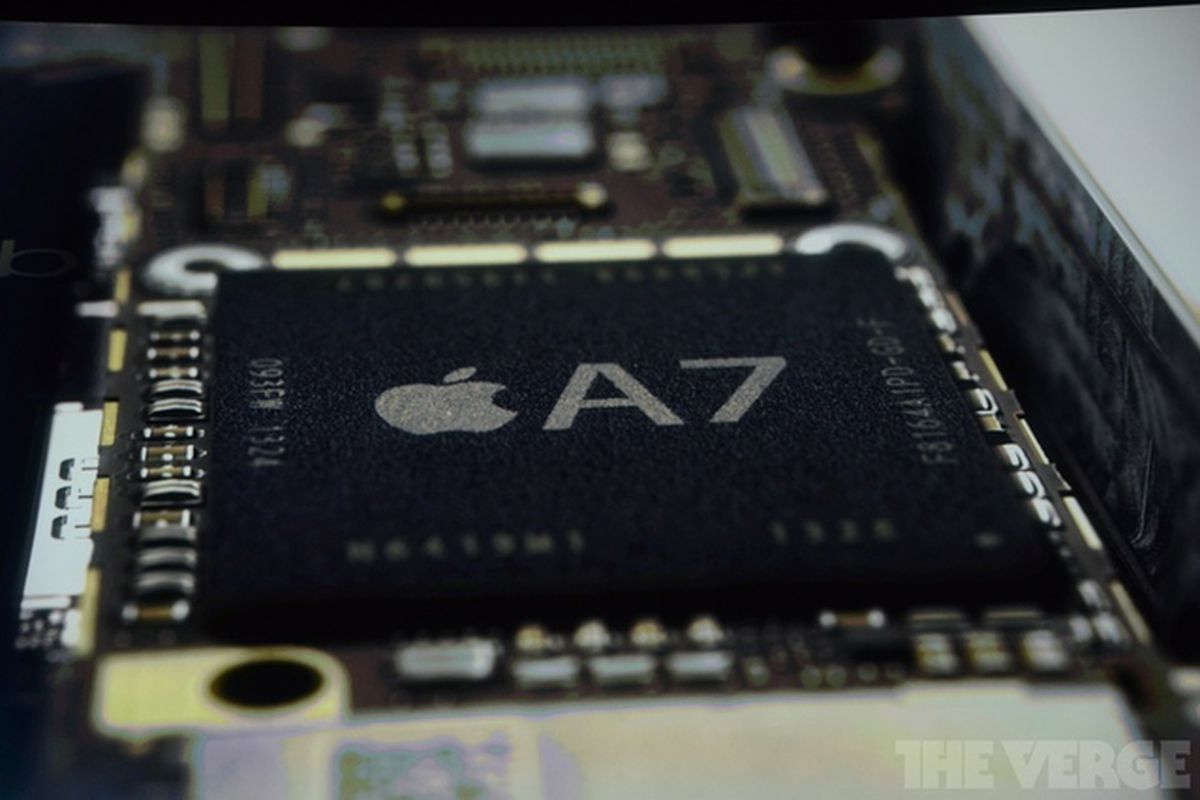
    Still, over time, you can see how “Moore’s Law” has forecast the incredible increase in processing capabilities over the years. Let’s take the iPhone X, which was released in November 2017 powered by the Apple A10 Bionic chipset. The latter carried 4.3 billion transistors in each chip. Now let’s move ahead to the 2021 iPhone 13 series which sports the A15 Bionic chipset. The A15 Bionic contains 15 billion transistors, up 27.1% from the 11.8 billion transistors employed by the A14 Bionic chip.
    So now Samsung and TSMC are battling for supremacy in the business of building chips for third-parties. TSMC is number one in most metrics and its customer list includes top tech firms such as Apple (its number one customer), MediaTek, Nvidia, Qualcomm, and others. But it appears, according to ExtremeTech, that Samsung will soon beat out TSMC by starting mass production of chips made using its 3nm process node next week with TSMC starting 3nm mass production later this year.
    Additionally, Samsung is going to use a new transistor structure on its 3nm chips called GAA or gate-all-around. With this structure, the flow of current is controlled by gates that contact the transistor on all four sides. TSMC will continue to use the FinFET structure which has been in place since the 22nm process node debuted. TSMC will finally scrap FinFET for GAA when it starts shipping 2nm chips in 2026.
    Samsung’s GAA design is called Multi-Bridge Channel Field Effect Transistor (MBCFET) also known as nanowires. This is one of only two different gate-all-around designs currently available with the second one known as GAAFET or nanowire.
    The report cites a major Korean news agency that says Samsung is expected to make a major announcement about its 3nm chip production shortly. It also notes that the move to gate-all-around from FinFet will reduce the area of a chip by 45% to help deliver a performance bump of 30% while reducing energy consumption by 50%. However, there is a big problem. Samsung was reportedly getting yields of only 10% to 20% at 3nm meaning that the vast majority of its 3nm chip dies cut from a wafer could not pass quality control.
    Back in February, a report indicated that Samsung’s yield on 4nm production was only 35% resulting in Samsung losing some business from chip designer Qualcomm. The latter supposedly moved some of those orders to TSMC. However, if Samsung Foundry is about to announce the start of high volume manufacturing (HVM) at the 3nm process node, one could come to the conclusion that Samsung Foundry has improved its 3nm yield.
    Speaking of 3nm, TSMC’s major customers such as AMD, Apple, Broadcom, Intel, MediaTek, Nvidia, and Qualcomm, have started to queue up for 3nm capacity. And next on the horizon, of course, is the 2nm process node that both TSMC and Samsung are working on. Another name is expected to join TSMC and Samsung on the list of  cutting-edge foundries. Intel Chief Executive Pat Gelsinger has announced that the American company will regain process leadership from Samsung and TSMC by 2025.


  • TSMC founder Chang says that the U.S. has the world’s best chip designers

    TSMC founder Chang says that the U.S. has the world’s best chip designers

    The two most advanced chip foundries in the world at the moment are Taiwan’s TSMC and South Korea’s Samsung. With both providing phone manufacturers with chips produced using their 3nm process node next year, TSMC recently said that it will start shipping 2nm chips to customers in 2026.
    In theory, the lower this process node number goes, the smaller the transistors used in these chips become. That allows chip designers and manufacturers to put more transistors in these integrated circuits allowing them to be faster and/or more power-efficient.
    The U.S., concerned about geopolitical events putting a crimp in the supply chain for chips (especially the possibility of China making a move on Taiwan) would love to become self-sufficient in the design and production of chips. Design is actually not an issue as U.S. firms like Apple, Qualcomm, Intel, and others have no problem designing chips (more on this later). But building a foundry takes oodles of money and time. It also requires proximity to a reliable supply chain.
    TSMC is working with the U.S. to build a fab (a plant that manufacturers chips) in Arizona. The facility should start producing chips by 2024 although production will reportedly be limited at first to 5nm chips which will have been replaced by the 3nm process node by the time the fab starts running in the states.
    But TSMC founder Morris Chang considers the U.S. attempt to be relevant in chip manufacturing to be “a wasteful, expensive exercise in futility.” According to The Register, Morris spoke as a guest of the Brookings Institution think tank and stated that the U.S. does not have the talent pool necessary to create a thriving business in the states manufacturing chips.
    Chang cited Taiwan’s large population that helped TSMC become the world’s top independent foundry. While the U.S. moved away from producing manufacturing professionals, Taiwan was loaded with talent. As we mentioned earlier in this story, where the U.S. does have the talent is in chip design, something that Morris isn’t shy about saying.
    The 90-year-old Chang has high praise for the chip design talent in the U.S. calling it “the best in the world.” He adds that “Taiwan has very little design talent, and TSMC has absolutely none.” As an independent foundry, TSMC wouldn’t be expected to produce its own designs since its job is to produce chips designed by other companies like Apple, Qualcomm, MediaTek, and more.

    Talking about the costs of running a fab in the U.S., Chang says that the small plant in Oregon that TSMC has run for 25 years is making money but not enough to justify expanding the facility. “We were extremely naive,” said Chang, “in expecting comparable costs, but manufacturing chips in the US is 50 percent more expensive than in Taiwan.”

    U.S. experts happen to agree with Chang’s take on the situation with one think tank expecting several thousand unfilled positions in any new U.S. based fabs. With Chang’s comments in mind, why would TSMC lay out $12 billion to build the Arizona factory? “We did it at the urging of the US government, and TSMC felt we should do it,” Chang said.

    Morris also pointed out that while chip production state-side will certainly see an increase, “there will be a high per-unit cost increase, and it will be hard for the US to compete internationally.” Chang also worries about a possible war between China and Taiwan. If there is a war, U.S. chip production might prove to be profitable with TSMC possibly not able to continue normal production.

    He adds that if there is a war between China and Taiwan, “the U.S. will have a lot more than chip manufacturing to worry about.” Back in December, we passed along a stat that said 90% of the world’s most advanced chips are shipped from Taiwan. Worried about how vulnerable that makes the country, and in turn big chip consuming nations like the U.S., foundries need to work in advance on contingency plans in case Taiwan-based fabs are damaged or destroyed in a war.
  • TSMC continues to dominate the global foundry business with Samsung a distant second

    TSMC continues to dominate the global foundry business with Samsung a distant second

    TSMC’s market share during the fourth quarter of last year was 52.1% based on its revenue of $15.7 billion during the three-month period. That was down from the 53.1% share of gross that the foundry had during the previous quarter, but was still well ahead of the next name on the list.

    Behind TSMC was its biggest rival in the industry (at least for now), Samsung Foundry. The latter had 18.3% of industry revenue at the end of the last quarter of 2021. Even with strong 15.3% growth in its top-line on a quarter-over-quarter basis, Samsung’s gross for the period from October through December was only 35% of TSMC’s.

    And things are about to get worse for Samsung. Low yields on the production of some Application Processors (AP) by Samsung, about half the yield rate achieved by TSMC, has led Qualcomm to move over production of some of its most powerful Snapdragon chipsets to TSMC from Samsung. Additionally, Samsung is investigating the disappearance of funds that the foundry unit had supposedly set aside to improve chip production yields.

    Trend Force notes that while Samsung Foundry is showing strong revenue growth, the bottom line has not been able to stay in gear as “the slower ramp-up of advanced process capacity continues to erode overall profitability.”

    TSMC’s results for the quarter were bolstered by strong growth in revenue connected to the production of 5nm chipsets for the iPhone 13 series. The only TSMC process node that showed a drop in the top line for the fourth quarter was the 7nm/6nm unit which was impacted by a weak smartphone market in China. Samsung’s strong 15.3% hike in sequential revenue came about from the completion of its 5nm/4nm advanced process node capacity.

    After the well-known pair of TSMC and Samsung, Taiwan’s United Microelectronics Corporation (UMC) was next as its Q4 revenue comprised 7% of the industry’s revenue for the three months. For the quarter, it garnered $2.12 billion in gross, up 5.8% from its third-quarter revenue. In fourth place, GlobalFoundries kept the 6.1% share of global foundry revenue that it earned during Q3. At number five was China’s largest foundry, SMIC, with a market share of 5.2% and Q4 revenue of $1.58 billion.

    What holds back SMIC is its inability to compete at the current cutting-edge process nodes of 5nm/4nm with both TSMC and Samsung knocking at the door of 3nm. Like the U.S., China is desperately looking to become self-sufficient in semiconductors, and its failure to do so worries experts who fear that China could use TSMC’s success as a reason to take over Taiwan and capture control of the world’s largest contract foundry.

    The industry is far from balanced in terms of revenue with the top five foundries controlling 90% of global foundry market share. That is understandable though when you consider that TSMC and Samsung are the leaders in advanced process nodes.

    The remaining foundries making up 6-10 on the list and their Q4 market shares include HuaHong Group (2.9%), PSMC (2%), VIS (1.5%), Tower (1.4%), and Nexchip (1.2%). The latter might have reported the lowest market share of global foundry revenue for Q4, but it did show the largest growth rate in revenue quarter-over-quarter at 44.2%.

    For the fourth quarter, global foundry revenue came in at $29.55 billion, up 8.3% from the third quarter.

    One of the reasons for TSMC’s success is its long working relationship with Apple. For every $100 in revenue collected by the foundry, $26 comes from Apple. Just last week Apple announced that by combining a pair of its M1 Max SoCs, it created the M1 Ultra which contains a whopping 114 billion transistors inside.

  • Samsung execs accused of doctoring 5nm chip yield results to hide stolen funds

    Samsung execs accused of doctoring 5nm chip yield results to hide stolen funds

    On the heels of a report claiming that Qualcomm is so upset about the low 35% yield achieved by Samsung Foundry’s 4nm process node that it dumped Sammy for TSMC, another alarming report has surfaced. Samsung is investigating the possibility that fraud occurred inside the company’s foundry business.

    Unnamed Samsung Foundry executives are being accused in the Korean media of fabricating the yield rate data achieved by Samsung Foundry for its 4nm and 5nm process node. This data, expressed as a percentage, shows how many chips in a wafer meet quality testing standards. Yesterday’s report indicated that the yield for Samsung Foundry’s 4nm process node was a poor 35% compared to the 70% yield achieved by rival TSMC.

    The poor yield was mentioned in a report as the reason why Qualcomm supposedly replaced Samsung Foundry with TSMC for the production of next year’s Snapdragon 8 Gen 2 Application Processor. The new report claims that the 4nm and 5nm yields were faked by Samsung Foundry executives to make it seem that everything was going well with the division.

    Samsung officials are trying to track down funds that were supposed to be used to improve the yield at Samsung Foundry. Reports of the poor yields and missing funds at Samsung Foundry come at a poor time for Samsung since it and TSMC are the only two foundries in the world able of churning out chips at a process node of under 5nm. Both are working hard to become the first foundry able to ship 3nm components.

    TSMC already has plenty of business as its customer list includes heavyweights such as Apple, MediaTek, Nvidia, and more. TSMC is believed to be running into yield problems of its own at the 3nm process node although volume production is only supposed to be reached later this year.

    The lower the process node, the higher the number of transistors that can fit in a chip. That is key to the performance of the component since the more transistors used, the more powerful and energy-efficient a chip is.

    A Samsung official familiar with the situation said in a quote translated by Machine Learning, “Since the delivered quantities is struggled to meet the recent foundry order volume, we have doubts about the yield of the non-memory process, which has was known to be achieved.”

    The official added, “The management consulting investigates the claims on the yield of a semiconductor foundry by former and current DS division executives. The consulting will determine whether the claims are false.”

    If this story sounds strange and bizarre, that’s because it is. Frankly, we can’t think of a story that is similar to this one. And that means that until more official statements are issued by Samsung or even the police in Korea, we should take this report with a grain of salt.

Samsung’s foundry business set a company record for revenue during the fourth quarter of 2021. On a sequential basis, profits declined from the third quarter of last year as Samsung had to spend more money to ramp up advanced process nodes such as 4nm and 3nm. Whether some of that money has to do with the funds allegedly missing is not clear.

The increase in revenue to a record high in the foundry business came from increased sales to HPC (High Performance Computing) customers. For the current quarter, the first quarter of 2022, Samsung said that its foundry would “focus on improving its advanced process yield to improve its supply stability. Also, the Company will continue technical leadership through mass production of the 1st generation GAA process in the first half of 2022.”

GAA, or Gate All Around, is a transistor structure associated with Samsung’s 3nm process node. It replaces (for Samsung, anyway) the FinFET structure used presently.

Samsung Foundry says that the chip market will remain “tight” as 5G penetrates more market, and demand from High Performance Computing firms remains solid. Additionally, the need for manufacturers to have more chips than needed just in case there is a supply shock from an external event, and outsourcing demand from integrated device manufacturers (ISDMs) who design and build their own chips (like Intel) will keep the assembly lines humming in 2022.

For this year, Samsung expects supply to remain tight due to rising penetration of 5G, solid HPC demand, growing out-sourcing from IDM players and continued needs for securing safety inventory. The Company aims to exceed market growth by expanding capacity at advanced nodes, adjusting prices and adding new customers.

  • TSMC To Expand New Japan Chip Factory, Denso Takes Stake

    TSMC To Expand New Japan Chip Factory, Denso Takes Stake

    Taiwan Semiconductor Manufacturing Co (TSMC) said on Tuesday that the chip plant it is building in Japan with Sony Group will expand, with an extra $1.6 billion in spending, while auto supplier Denso Corp will take a 10% stake. TSMC, which is the world’s largest contract chipmaker, announced the $7 billion factories in southern Japan in November and construction is scheduled to start this year, with production beginning by the end of 2024. That announcement was welcomed by the Japanese government which wants TSMC to build plants to supply essential chips to Japan’s electronic device makers and auto companies as trade friction between the United States and China threatens to disrupt supply chains and demand for the component grows.

    TSMC said in a statement on Tuesday that to meet market demand, it had decided to enhance the plant’s capabilities and increase monthly production capacity to 55,000 12-inch wafers, putting the new total cost at around $8.6 billion. It was originally due to have a monthly production capacity of 45,000 12-inch wafers. The company, which is also a major Apple supplier and produces some of the world’s most advanced semiconductors, said that Denso would invest $350 million for a more than 10% equity stake in the Japanese plant.

    Automakers have been particularly badly hit by the global chip shortage, which have seen some production lines halted. “Through this partnership, we contribute to the stable supply of semiconductors over the medium to long term and thus to the automotive industry,” Denso’s CEO Koji Arima was quoted as saying in the TSMC statement.

    Taiwan, home to chip makers such as TSMC, has become front and center of efforts to resolve the chip shortage. TSMC last year pledged to spend $100 billion over the next three years to expand chip capacity and is building a $12 billion chip fabrication plant in the U.S. state of Arizona.

  • Intel to meet this month with TSMC to avoid a fight with Apple

    Intel to meet this month with TSMC to avoid a fight with Apple

    It appears as though TSMC is back on track and is aiming to start mass production of chips using the 3nm process node starting in the second half of 2022. As a result, there is still a good chance that the Apple A16 Bionic chipset will be built with the 3nm process although earlier talk centered on the use of the 4nm process for the component. The difference is the number of transistors inside each chip which drives performance and energy efficiency.

    Intel plans on paying a visit to TSMC soon, and not just to personally give them holiday greetings. Intel is one of the foundry’s largest customers (along with Apple, AMD, NVIDIA, MediaTek, and Qualcomm) and they want assurance that TSMC will have enough capacity to make 3nm chips in the quantity that Intel needs.

    Intel is not a fabless company like Apple is, for example. That means that while Apple designs its own chips, it does not own equipment and fabrication facilities to manufacture them. While Intel does own its own foundry, it cannot produce cutting-edge chips as TSMC can. In January there was a report that TSMC was prepared to offer Intel capacity at 4nm while testing at 5nm.

    High-level Intel executives plan to travel to Taiwan in the middle of this month to meet with TSMC. On the agenda is the amount of 3nm capacity that Intel needs. While the American chip giant might have to outsource some of its production through TSMC, it also has indicated a desire to upgrade its own production capabilities.

    The meeting is being held so that Intel can “avoid fighting with Apple.” Reportedly, Apple has already worked out a deal with TSMC for all of the latter’s initial 3nm production capacity. This means that Intel most likely would not have access to TSMC’s 3nm capacity until 2023 at the earliest.

    Assuming that there is some urgency on Intel’s part (their executives aren’t flying to Taiwan for a vacation), it will be interesting to see whether Intel’s meeting with TSMC is productive. TSMC is the world’s largest independent foundry and last year it generated revenue of $45.51 billion which produced net profits of $17.60 billion. The company is valued at $565 billion.

    Now that Apple has created its own high-powered chips for the Mac that replace Intel processors, the company relies on TSMC even more. The Apple M1 chip contains 16 billion transistors which are one billion more than the number found in the A15 Bionic. The latter is used on the iPhone 13 series.

    Earlier this year, Apple introduced the M1 Pro, a 5nm chip that features 33.7 billion transistors, and the 5nm M1 Max with 57 billion transistors. Both are manufactured by TSMC.

    Apple is also rumored to be replacing Qualcomm’s 5G modem chip with one it will design itself.

    The new 5G modem chip will be built by TSMC using its 4nm process node, and it should debut in the 2023 iPhone 15 series. While Apple undoubtedly feels as though it now has no worries about obtaining enough chips in the future, it might have not considered how all roads lead to TSMC. And late yesterday we passed along a report from Fox News that noted how some experts fear that China might look to take back Taiwan to create a unified China.

    In such a scenario, the Chinese Communist Party (CCP) could create some serious global chaos by taking control of TSMC. China itself has realized that it needs to boost the chip production on the mainland. While the U.S. has also come to this conclusion about itself, it is trying to increase American production by having TSMC build a foundry in Arizona that could eventually grow to be a huge fabrication facility.

  • Apple’s main chip supplier on track to make next-generation 5nm silicon

    Apple’s main chip supplier on track to make next-generation 5nm silicon

    Semiconductor manufacturers might not be following Moore’s law to a T, but that doesn’t mean they’re not making good progress. Last year, we saw the first mobile chips using the 7nm architecture: Apple’s A12 and HiSilicon’s Kirin 980, followed by the Snapdragon 855. It was expected that processors will remain on that level for a while, considering that producing smaller transistors gets exponentially harder with the reduction of their size.

    Turns out, we might not have to wait as long as we thought. News coming from Taiwan, raises hopes that the next jump might be just a year away. TSMC, one of the world’s biggest semiconductor manufacturers and the main chip supplier for Apple’s own A12 and upcoming A13 SoC, has announced that its design infrastructure for 5nm chips is now available for potential customers to download and start working with.

    This means that TSMC clients, such as Apple, now have the tools to design their next-generation chips. This will likely allow TSMC to secure orders from Apple for at least a couple of years. But what would the new architecture mean for performance?

    Exact gains are hard to predict, but what TSMC says is that it will be able to fit 1.8 times more transistors within the same surface and expects about 15% speed gain in ARM’s Cortex-A72 Cores. Power efficiency will also be higher than that of 7nm chips, which should lead to better battery life.

    TSMC is also proud of the progress it’s making in terms of yield, which was one of the main problems with the mass production of 5nm chips. Using EUV lithography, which replaced FinFET as the size decreased, the company is able to achieve yields comparable to those of its larger nodes when they were at the same stage of development. This means, of course, there’s still work to be done before the chips can enter mass production, but the important takeaway is that the technology is advancing on schedule.

    The potential arrival of the 5nm chips in 2020 is actually good news for Apple. This year we expect to see the major design changes coming with the iPhone 11, leaving the performance improvements to be the major selling point of the 2020 iPhone 11S. In other words, business as usual.

    Of course, other manufacturers will also be able to benefit from TSMC’s developments, but only if they manage to secure any of its production capacity, for which Apple is paying top dollar, we’re sure.