Retail News CRM

Tag: Tuna

  • Sushi Tycoon ‘Tuna King’ Shells Out Record $3.2M for Massive Bluefin at Tokyo’s Prestigious Auction

    Sushi Tycoon ‘Tuna King’ Shells Out Record $3.2M for Massive Bluefin at Tokyo’s Prestigious Auction

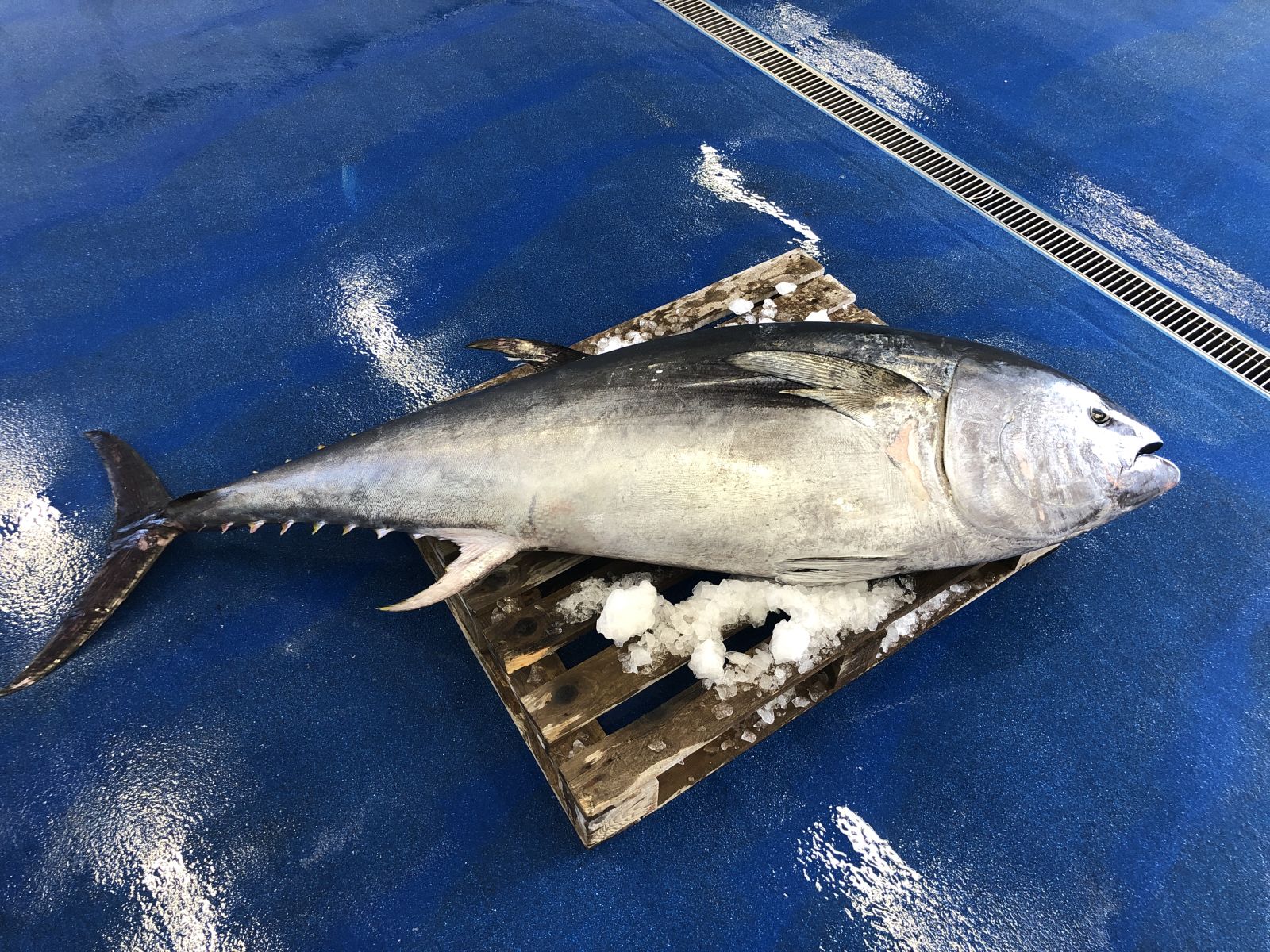
    A sushi entrepreneur from Japan, who goes by the moniker “The Tuna King”, set a new record when he purchased a colossal bluefin tuna for an unprecedented 510.3 million yen (approximately US$3.25 million) at an auction held on Monday.

    Record-Breaking Purchase

    Kiyoshi Kimura, the owner of a chain of sushi restaurants, emerged as the highest bidder at the esteemed annual New Year auction in Tokyo’s primary fish market. The 243-kilogram tuna that fetched this record price was caught off the northern coast of Japan.

    Kimura candidly expressed his surprise at the rocketing price of the fish. “I had hoped we could secure the fish at a somewhat lower cost, but the price escalated rapidly,” Kimura revealed in the wake of the predawn auction at Tokyo’s main fish market.

    Auspicious Tuna to Usher in the New Year

    Despite the staggering cost, Kimura remained optimistic about his purchase. “The price certainly caught me off guard…but I am hopeful that the consumption of this lucky tuna will invigorate as many people as possible,” he asserted to journalists.

    As the president of Kiyomura Corp., the Tokyo-based company operating the Sushizanmai sushi restaurant chain, Kimura showcased the 243-kilogram bluefin tuna at his flagship restaurant in Tokyo on January 5, 2026, following the New Year’s auction at Toyosu fish market.

    Historical Highs of Tuna Prices

    This auction price is the highest on record since data regarding such figures started being compiled in 1999. The previous record was 333.6 million yen, paid for a 278-kilogram bluefin tuna in 2019, after the fish market relocated from its traditional Tsukiji location in central Tokyo to a more modern facility.

    Last year’s highest bid was 207 million yen for a 276-kilogram bluefin. After this year’s auction, the hefty tuna was promptly prepared into sushi and sold for around 500 yen (about US$3) per roll.

    Customer Reactions

    Diners at one of Kimura’s restaurants in Tsukiji were delighted to partake in such an auspicious meal at the start of the year. “Having had the privilege of eating something so fortunate as the year begins, I feel like I’ve started the year on the right note,” shared 19-year-old Minami Sugiyama. Another patron, a 40-year-old Shinto priest named Kiyoshi Nishimura, shared a similar sentiment, praising the taste and texture of the tuna.

    Effects of the COVID-19 Pandemic

    During the COVID-19 pandemic, the New Year tuna prices plummeted to only a fraction of their regular peak prices as restaurants reduced their operations. However, the purchase of the bluefin tuna this year signals a potential recovery and brighter future for the Pacific bluefin industry.

    Questions & Answers

    What is the highest price ever paid for a bluefin tuna?
    The highest price ever paid for a bluefin tuna was 510.3 million yen (approximately US$3.25 million), by entrepreneur Kiyoshi Kimura in 2026.

    Who is Kiyoshi Kimura?
    Kiyoshi Kimura, also known as “The Tuna King”, is the president of Kiyomura Corp. and the owner of the Sushizanmai sushi restaurant chain in Tokyo.

    How has the COVID-19 pandemic affected the tuna industry?
    During the COVID-19 pandemic, prices for New Year tuna decreased significantly because restaurants had to scale back their operations.
  • Tuna exports expected to grow by 20% in H1

    Tuna exports expected to grow by 20% in H1

    According to the Vietnam Association of Seafood Exporters and Producers (VASEP), tuna exports are projected to reach US$456.8 millio in the first half of 2024, a 20% year-on-year increase.

    After decreasing in 2023, exports rose by 22% in the first five months of the year to $388 million.

    Shipments of canned tuna products, bagged tuna and frozen loin/fillet increased by 44%, 24%, and 7%. Exports of frozen whole tuna nearly tripled.

    Exports to most markets increased, with those to the U.S. and the E.U., the two largest, rising by 30% and 37% and accounting for 37% and 22% of total exports.

    Exports to Israel, Russia and the Republic of Korea rose by 64%, 58% and 66%.

    Speaking at the association’s annual general conference in HCM City on June 10, Cao Thị Kim Lan, Director of the Binh Dinh Fisheries Joint Stock Company, said in 2023, Vietnam became the world’s 5th largest exporter of tuna behind Thailand, Ecuador, Spain, and China, rising from the 8th place 10 years ago.

    She said exports could reach $1 billion again this year if the raw material shortages are resolved. More than 50% of exports are processed from imported tuna.

  • Tuna exports rise to year’s highest levels

    Tuna exports rise to year’s highest levels

    Tuna exports rose to US$87 million in August, the highest for the year though 5% down year-on-year, according to the Vietnam Association of Seafood Exporters and Producers.

    VASEP said there were some changes in the export patterns in August.

    After declining steadily, exports to the U.S. increased by 2% bolstered by a 24% jump in shipments of canned tuna.

    But exports for the year-to-date were 45% down from 2022 at US$208 million.

    Exports to the EU saw a 37% surge, including a 45-fold rise in shipments to Italy. Smaller markets like Thailand and the Philippines also bought more tuna.

    Shipments to members of the CPTPP trade deal like Japan, Canada and Mexico fell by 53%, 49% and 14%.

    Exports for the year have been worth $545 million, down 25% from the same period last year.

  • Vietnam tuna exports to S Korea soar

    Vietnam tuna exports to S Korea soar

    According to the Vietnam Association of Seafood Exporters and Producers, tuna exports to South Korea rose by 2.5 times year-on-year to over US$7 million in the first seven months.

    Tuna Vietnam, Nha Trang Bay and Phat Trien Seafood were the three biggest exporters, accounting for 64% of total shipments.

    Exports of canned tuna jumped by 468%.

    VASEP said declining fishing catches in South Korea and rising demand for canned products amid tightened spending drove up demand for Vietnamese products.

    Vietnam was the eight biggest exporter of tuna to that country in the first half this year, but the largest seller of canned tuna, accounting for nearly 77% of all imports.

  • Vietnam’s tuna export orders to increase

    Vietnam’s tuna export orders to increase

    The Vietnam Association of Seafood Exporters and Producers (VASEP) forecast tuna export orders will increase sharply in the last months of the year due to decreasing inventories in major export markets.

    VASEP said the stockpiled quantity of tuna in the U.S., one of the main markets of Vietnam has begun to decrease and importers were considering speeding up imports.

    By the end of the year, major markets such as the U.S. will have many festivals, so consumer demand will increase. Meanwhile, preferential tariffs are an advantage that has pushed EU importers to seek orders from Vietnam.

    Over the past seven months of this year, Vietnam’s tuna exports reached nearly $445.6 million, down 31% year-on-year, VASEP said.

    While exports of high-value fresh, frozen and dried tuna products decreased 46%, shipments of processed and canned tuna goods saw a modest rise of 4% to over $204 million, it said.

    Besides, exports to the EU, Mexico, Israel and Thailand had recorded high growth over the same period of 2022.

    The EU market showed signs of recovery, with a growth rate of 28% in June and July, earning Vietnam a turnover of $12 million per month. Notably, in the bloc, exports to the Netherlands also continuously grew remarkably while that to Germany maintained an increase of 30% in June and July.

    Vietnamese tuna exports to Mexico and Chile also recorded hikes of 100% and 90%, respectively. Meanwhile, tuna shipments to Thailand also soared 65% in the last two months.

    According to Nguyen Ha, tuna market expert of VASEP, in the context that exports to the main traditional markets had all declined, Israel had emerged as a potential market.

    In the first half of this year, Vietnamese tuna exports to Israel hit nearly $25 million, up 92% over the same period last year.

    Frozen tuna meat and fillets still accounted for the highest proportion of 47%. The export value of this product group saw a yearly hike of 29%. Meanwhile, the export turnover of canned tuna increased 375% and other processed tuna products surged 83%.

    Despite being a small country, with no natural resources and limited domestic labor resources, Israel’s consumer demand was quite large and solvency was high, so there remained ample room for Vietnam’s tuna exports to the market, Ha said.

    Especially, the Vietnam-Israel FTA (VIFTA), signed on July 25, would open up opportunities for Vietnam’s seafood exports, including tuna, to access the Israeli market and lucrative Middle East region, Ha said.

    To penetrate the Israeli market, VASEP Secretary General Truong Dinh Hoe suggested that tuna exporters ensure product quality, carefully study market information, promote credibility and be responsible.

    He vowed that VASEP would accompany, research carefully and disseminate market information to businesses.

    To facilitate tuna exports, businesses petitioned the Ministry of Agriculture and Rural Development and the Ministry of Industry and Trade to grant more quotas for imported raw tuna as domestic tuna raw material could meet only 25% of demand for processing and export, the Binh Dinh Fishery JSC Co suggested.

  • Tuna exports to UK triple

    Tuna exports to UK triple

    Tuna exports to the U.K. tripled year-on-year in the first two months even as shipments to some main markets like the U.S. and E.U. plunged.

    Exports to the U.K. were worth US$1.3 million, enabled by a 13-fold rise in February, according to the Vietnam Association of Seafood Exporters and Producers (VASEP).

    Vietnam now ranks 13th out of 45 countries and territories that export tuna to that country.

    Last year its exports to the U.K. rose by 10%.

    Other markets to which Vietnam’s tuna exports grew by 32-99% in the first two months were Japan, Thailand, Germany, and Israel.

    They made up the country’s top five markets in the first two months along with the U.K.

    Vietnam’s total exports, however, dropped 30% year-on-year to $109 million in the period.

    The U.S. and the E.U. each posted a 50% decline, which VASEP attributed to rising inflation and a change in consumers’ shopping habit.

    The fact that Vietnam still has a yellow card given by the E.U. for illegal, unreported and unregulated fishing also pose challenges to exports, VASEP added.

    The association expects global demand for tuna to recover in the second half of this year.

    Vietnam has nine tuna species across its seas, with an estimated reserve of 600,000 tons. The three biggest tuna fishing localities are Binh Dinh, Phu Yen, and Khanh Hoa.

  • Tuna becomes billion-dollar export for first time

    Tuna becomes billion-dollar export for first time

    Despite a sharp fall in exports before the end of 2022 due to global inflation, tuna still brought home US$1 billion in revenue last year, up 34% from 2021, becoming a billion-dollar commodity for the first time, data showed.

    Tuna products of Vietnam were shipped to 99 markets, of which the U.S., the EU, members of the Comprehensive and Progressive Agreement for Trans-Pacific Partnership (CPTPP), Israel, Thailand, Saudi Arabia, Russia, the Philippines, and Egypt were the largest importers, accounting for 92% of total exports, according to the Vietnam Association of Seafood Exporters and Producers (VASEP).

    Germany, Spain, and Belgium were the biggest EU buyers of Vietnamese tuna. Notably, shipments to Germany and Spain shot up 161% and 117% last December, respectively.

    Tuna exports to Japan, a CPTPP member, grew fast in the last quarter of 2022. The value surged 131% year on year in December alone, helping raise the export turnover to CPTPP markets to nearly $136 million, up 48%.

    Meanwhile, strong declines were recorded in shipments to many other markets, VASEP said, noting that after dropping in November, tuna exports to the U.S. fell by another 38% in December. However, last year’s exports to this market still rose 44% to approximate $487 million.

    VASEP forecast the export in the first quarter of 2023 will be unable to sustain its 2022 performance, but markets may recover in the latter half of this year. Free trade agreements are the driver for tuna exports in the year’s beginning.

  • Tuna exports jump by 56 percent in H1

    Tuna exports jump by 56 percent in H1

    Tuna exports in the first six months were worth US$553 million, a 56 percent rise year-on-year, according to data from the Vietnam Association of Seafood Exporters and Producers.

    Exports to the U.S. all but doubled thanks to higher demand, especially for canned tuna.

    Exports to members of the Comprehensive and Progressive Agreement for Trans-Pacific Partnership (CPTPP) also rose sharply, especially to Canada (up 68 percent), Japan (up 26 percent) and Mexico (up 30 percent).

    The EU market grew the slowest at 7 percent.

    The association expected high growth for tuna export in the second half of the year, with export rising 45 percent from 2021 to $1.1 billion.

    It warned rising fuel prices, which have kept fishing boats on shore, would affect supply.

  • Vietnam goes past Thailand, becomes Israel’s biggest tuna supplier

    Vietnam goes past Thailand, becomes Israel’s biggest tuna supplier

    Vietnam surpassed Thailand in the first half of this year to become the biggest exporter of tuna to Israel.

    It accounted for 31 percent of Israel’s imports while that country became Vietnam’s third largest market behind the U.S. and Italy.

    Israel bought less tuna from most countries amid the Covid-19 pandemic, but increased its imports from Vietnam, the Vietnam Association of Seafood Exporters and Producers (VASEP) said.

    Latest data from VASEP shows that Vietnam’s exports to Israel jumped by 34 percent during the year until Aug. 15 to nearly $25 million.

    Eight companies ship tuna fish to Israel, but have all complained about Covid-related restrictions hurting their production in recent months.

    VASEP has repeatedly been petitioning the government to quickly vaccinate workers in the fisheries sector to ensure the supply chain is not disrupted.

  • Tuna exports soar

    Tuna exports soar

    Vietnam exported $74 million worth of tuna in April, a 50 percent year-on-year surge, with the U.S. and E.U. buying more.

    According to the Vietnam Association of Seafood Exporters and Producers (VASEP), tuna exports to the U.S. saw the highest growth with a 56 percent year-on-year surge in April.

    The association also reported a change in the export structure with the export of fresh and frozen tuna to the U.S. rising in April, while that of canned products decreased. Exports to the E.U. and members of the Comprehensive and Progressive Agreement for Trans-Pacific Partnership (CPTTP) trade pact also saw increases of 31 percent and 42 percent in April, respectively.

    The association said tuna exports to these major markets will continue to rise because preferential tariffs under free trade agreements are attracting foreign importers.

    Vietnam has exported $226 million worth of tuna by the end of April this year, up 15 percent year-on-year, even as the number of importing markets reduced to 63 from 90 last year.

  • Another gloomy year forecast for tuna exports

    Another gloomy year forecast for tuna exports

    Vietnam’s tuna exports declined by 9.8 percent in 2020 due to the impact of the Covid-19 pandemic, and are showing no signs of recovery.

    Analysts point to two reasons for the continuing slump: the unpredictability surrounding the pandemic and intense competition from low-priced Chinese canned tuna in its largest market, the U.S.

    Besides, consumers prefer tuna with the blue MSC label representing certification of the sustainable fishery by the Marine Stewardship Council.

    Tuna exports were worth $649 million last year, according to the Vietnam Association of Seafood Exporters and Producers. Vietnam exports the fish to 108 markets.

    Vietnam’s largest markets after the U.S. are the E.U., Canada, Southeast Asia, and Israel.

  • Japanese tariffs hobble Vietnamese tuna exports

    Japanese tariffs hobble Vietnamese tuna exports

    Thai and Filipino tuna exporters have accessed the market tariff-free for years. Vietnam’s tuna exports to Japan have steadily declined since 2013 due to exceptionally high tariffs, according to the Vietnam Association of Seafood Exporters and Producers (VASEP).

    Following a bilateral trade deal, Japan scrapped tariffs on Thai canned skipjack tuna, which carried a 3.2 percent tariff in 2009 and 1.1 percent tariff in 2011. During the same time, Japan has maintained a 6.4 percent tariff on similar products from Vietnam, according to VASEP.

    Japan extended the same policy to canned yellowfin tuna and frozen tuna loin, lifting duties entirely on Thai yellowfin imports in 2012 and Filipino imports the following year under the Generalised Systems of Preferences (GSP).

    During that time, Japan levied a 9.6 percent tariff on canned yellowfin tuna from Vietnam, even after the Vietnam – Japan Economic Partnership Agreement (VJEPA) came into effect in October 2009.

    The two countries have yet to set a timeline on lifting tariffs on Vietnamese tuna exports, which generates between $450-550 million, annually.

    Japan ranks among Vietnam’s top-eight tuna export markets and VASEP has called on the Ministry of Industry and Trade to negotiate a deal similar to the arrangement enjoyed by exporters in Thailand and the Philippines.

  • Jordanian Investors Buys Gorontalo Tuna

    Jordanian Investors Buys Gorontalo Tuna

    Jordanian investor Iyad Al Shorafa expressed his interest in purchasing class C tuna from Gorontalo, at the amount of 25 tons per day.

    Al Shorafa is a member of the Middle East trade delegation participating in the Indonesian international trade promotional program, which was initiated by the Foreign Affairs Ministry as a part of the 2016 Trade Expo Indonesia.

    Budianto Sidiki, Chief of Gorontalo Regional Development Planning Agency (Bappeda) explained that Al Shorafa is ready to work together with the Gorontalo fishermen union, and to construct a tuna processing factory specifically for export purposes.

    “Production capacity of Gorontalo fishermen for class C fresh tuna is around five tons each day,” Sidiki said.

    To meet the importer demands, the Gorontalo local government will cooperate with city and regency officials in the region.