Tag: twitter

  • AirAsia’s Tony Fernandes quits Facebook, citing social media ‘hate’

    AirAsia’s Tony Fernandes quits Facebook, citing social media ‘hate’

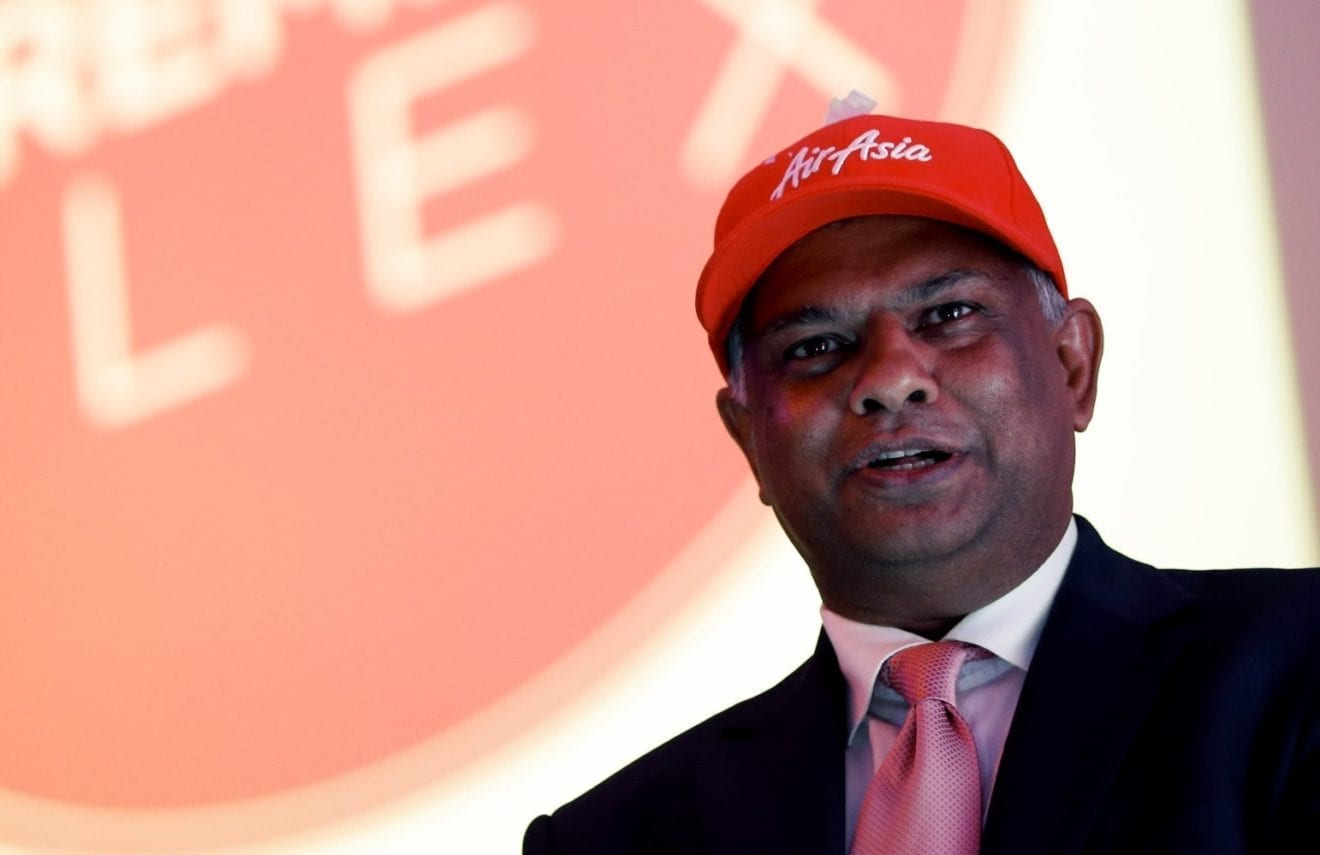
    AirAsia Group chief executive officer Tony Fernandes closed his Facebook account and said he may shut his Twitter page, citing “hate” being transmitted on the networks after the live-streaming of the terror attack on two mosques in New Zealand.

    “The amount of hate that goes on in social media sometimes outweighs the good,” Mr Fernandes said in a Twitter post on Sunday (March 17).

    “But on Twitter, I think the battle for me goes on.”

    Mr Fernandes said his Facebook account had 670,000 followers. He said in a Twitter post on Saturday that while he is “a big fan” of social media, he had to think hard about whether to remain on Facebook after Friday’s mass shooting that claimed 50 lives in New Zealand’s second-largest city of Christchurch.

    Mr Fernandes has about 1.29 million followers on Twitter and has tweeted more than 20,200 times since joining in 2008, commenting often on the performance of his companies and sports teams.

    He is the co-owner of English football club Queens Park Rangers. AirAsia is one of the region’s biggest discount carriers.

  • Twitter confirms it is testing a new feature improving user experience

    Twitter confirms it is testing a new feature improving user experience

    A few days ago, Twitter pushed out an update allowing users to swipe to the left for access to the camera to take photos or stream live video. The update also adds a feature that results in hashtag recommendations based on the user’s current location. According to Twitter user Jane Manchun Wong (@wongmjane), who likes to dig through apps looking for future features, Twitter is testing a way for its members to follow a conversation on the app without having to like or respond to a tweet.

    Jane says that the feature is called “Subscribe to conversation,” and if a Twitter member signs up for it, he/she will receive a notification whenever there is a new reply to a particular conversation. After Jane disseminated her tweet stating that Twitter is testing “Subscribe to conversation,” the official Twitter Comms account tweeted back “This is part of our work to make Twitter more conversational.”

    It might be some time before this feature shows up on your Twitter app, but when it does, you won’t have to like tweets that you really don’t like, follow someone that you don’t want to follow, or post a response that you don’t want to post just to keep abreast of a particular conversation on Twitter.

  • Indian consumers ask Amazon to resume Pantry service

    Indian consumers ask Amazon to resume Pantry service

    The Indian users of online grocery delivery service Amazon Pantry have taken to Twitter to urge the e-retail major to resume services ever since it was discontinued on February 1. “Currently, pantry items are not available on Amazon. Kindly stay tuned for more updates. Thank you for understanding,” Amazon responded to its Indian users in a tweet. The service became unavailable in India on February 1, the day revised norms for Foreign Direct Investment (FDI) in e-commerce came into force in the country.

    Following the new norms, Amazon has also removed from its website sellers such as Cloudtail India and Appario Retail Pvt Ltd in which it owns a stake.

    “I am missing Amazon Pantry service which catered to my monthly needs. It was super convenient,” tweeted a user.

    “What happened to Amazon Pantry? Please fix it,” read another user’s tweet.

    Under the Ministry of Commerce and Industry’s new guidelines issued on December 26, e-commerce platforms providing a marketplace are barred from exercising control or ownership over the inventory.

    They are also barred from allowing any company to sell its products exclusively on their e-commerce platforms alone.

    The Indian arm of the Seattle-based e-commerce giant did not respond to questions by IANS on the expected impact to its business in the light of the revised norms.

    While the company had earlier in a statement to IANS said that “it has always operated in compliance with the laws of the land”, it did not respond to queries on the changes it may have to make to its business model to suit the new norms.

  • Post-Instagram age : What’s next?

    Post-Instagram age : What’s next?

    Oscar de la Renta was early to Twitter, early to Tumblr and, yes, early to Instagram. So in July 2013, when the American fashion house debuted its fall advertising campaign via the app, the industry was hardly surprised. It was a little thing. An experiment. After all, the Norman Jean Roy-shot images would still run in the September issues of every major fashion magazine.

    Actually, it was a “really big deal,” recalled Jason Wagenheim, a former Condé Nast publishing star who was, at the time, Teen Vogue’s chief revenue officer.

    “That was a real tipping point for fashion,” said Wagenheim, who left the legacy publisher in 2015 and is now chief revenue officer of Bustle Digital Group.

    “Here is this expensive luxury brand and their fall campaign, which everyone looked forward to seeing in the print pages of Vogue; and yet everyone is talking about the engagement — the bajillion likes within hours — that the campaign got on Instagram. It foreshadowed that this could be bigger than any fashion magazine.”

    In reality, each of the Oscar de la Renta advertising images attracted not much more than 1,000 likes within the first hour of their posting.

    But the campaign was indicative of a much wider shift that has transformed fashion, changing how publishers publish, how brands brand themselves, and how consumers consume.

    Brands have closed, stores have shuttered, magazines have folded — and both survivors and upstarts alike are fighting for consumer dollars in a new world where the formula for success is not nearly as clear as it is once was.

    And no single entity has had as lasting an effect on the fashion ecosystem as Instagram, the photo-sharing service let loose on Apple’s App Store on October 6, 2010.

    Three years later, when Oscar de la Renta drip-dropped those images down its feed, traditional print magazines like Vogue were still the arbiters of style.

    It feels like a long time ago. But back then, their authority remained intact and largely unchallenged, despite the rise of independent publications that operated outside of the traditional publishing industry and the emergence of digital brands that sold directly to consumers.

    But it’s 2018 now, and times have changed.

    Instagram, which was acquired by Facebook for $1 billion in 2012, is where people now go to discover fashion content and, increasingly, to shop, with 72 percent of users saying they have made fashion, beauty or “style-related” purchases after perusing the app, according to a 2017 study of 2,000 Instagram users.

    Instagram claims that more than 90 million users tap to see tags on shopping posts each month.

    In some ways, it was inevitable.

    Americans spend only 4 percent of their media-technology consumption hours with print, compared to 20 percent on personal computers and 28 percent on mobile.

    Many of them are spending their mobile phone screen time on Instagram.

    In June 2018, the app surpassed the billion-users-a-month mark, up from 800 million users in September 2017. More than 400 million people use Instagram Stories — the app’s more casual slideshow feature — every day.

    Rival Snapchat had 186 million daily active users in its most recent quarter, down from 191 million at the beginning of the year.

    As of August 2017, Instagram users under the age of 25 spend more than 32 minutes a day on the app.

    But the number dips only slightly to 24 minutes for those older than 25. That’s length of a sitcom…or a scan of a magazine.

    Of course, fewer and fewer consumers are buying those magazines. And brands have responded by following consumers online and shifting their marketing budgets from print to digital.

    In 1998, US print advertising revenue was $61 billion.

    In 2008, it was $54 billion, just a 12 percent decrease despite rising internet usage.

    But in 2018, it’s set to clock in at under $15 billion — down a staggering 75 percent from 20 years ago.

    Brands are increasingly using Instagram — via both organic and paid posts — to communicate directly with consumers.

    “Given the rising importance of social media for luxury brands — especially in the context of millennial’s growth — we believe Instagram data can no longer be ignored as a data point for luxury investors, to help them pick the winning brands,” Swiss investment bank UBS said in a recent note, going on to say that high Instagram engagement was a dependable reflection of brand heat.

    There is an unmistakable correlation between the size of a brand’s Instagram following and its retail sales.

    So it’s no surprise that, in the second quarter of 2018, global advertising spend on Instagram was up 177 percent year on year, significantly ahead of Facebook, which saw 40 percent growth in the same period.

    While Facebook still generates the majority of the company’s revenue, which hit nearly $41 billion in 2017, analysts estimate that Instagram will generate $8 billion to $9 billion in 2018.

    Projections predict that Instagram will account for about a third of its parent company’s overall ad revenue — and 70 percent of its new revenue — by 2020.

    In some ways, Instagram is to fashion what Napster was to music.

    You still can’t download a dress, but Instagram has fundamentally rewired the industry, replacing print magazines as the primary way in which people discover fashion.

    It’s the foundation on which the industry has built everything from new labels to an influencer economy worth $1.6 billion in 2018.

    All of Fashion Uses Instagram

    Consumers were quick to embrace Instagram, thanks to its simple user experience and flattering, colour-washed filters that made even grainy images look a little bit more perfect.

    They posted photos of their food, their travels and, yes, their outfits. Fashion brands picked up on this quickly, realising that creating content on Instagram — a highly visual platform — would allow them to reach more customers, and soon found themselves locked in a race for followers.

    Even luxury houses like Chanel, which has resisted selling core products online, took it seriously, using the service to post runway looks, campaign outtakes and inspiration boards.

    Some — from Proenza Schouler to Kith — have used the platform to tease their latest collections instead of waiting for a live Fashion Week moment.

    Earlier this year, Dior used Instagram as the main vehicle for the promotion of the relaunch of its classic saddle bag, tapping more than 100 influencers to spread the word.

    While the campaign proved controversial — several of the influencers did not disclose that they were paid to post on behalf of Dior — it was a blockbuster success.

    The #DiorSaddle hashtag drove $3.4 million in earned media value in the third quarter of 2018, beating #PFW, which garnered $2.6 million in earned media for the same time period.

    But it goes beyond the legacy players. “Instagram brands” — mostly independent startups with minimal capital — have caught the eye of major retailers looking to woo increasingly discerning customers.

    Why? Because their audiences are highly engaged, using Instagram stories to shop and direct message — “DMing”, in Instagram parlance — with the brands themselves.

    Labels like Doen, Cult Gaia and By Far boast little-to-no presence at major fashion weeks or within the traditional fashion system, and yet they are the brands industry insiders are most curious about because of the communities that they’ve built on Instagram.

    While Los Angeles-based bohemian apparel line Doen has just about 140,000 followers, it DMs with members of its community every day.

    The result? The brand regularly sells out of its peasant blouses and prairie dresses, creating an online frenzy.

    Cult Gaia, another Los Angeles-based label, may only have 317,000 followers on the platform, but the company says that it is on track to generate $15 million this year: far more than many independent high-end fashion brands with, in some cases, millions of followers.

    Through Instagram, we’ve built our own community.

    Instagram influencers are also launching brands, many with great success.

    Arielle Charnas, the influencer behind the account Something Navy, sold more than $4 million worth of product on the launch day of her collection with Nordstrom.

    In fact, the American department store has released multiple influencer collections, all of which are promoted via Instagram.

    Then there is the creative community, including relatively unknown artists, illustrators and photographers — from Gucci collaborator Jayde Cardinalli to artist Suzanne Jongmans, who has worked with Valentino’s Pierpaolo Piccioli— whose work now has global reach.

    But for Charles Porch, Instagram’s head of global creative programs, the platform’s crowning fashion moment came in October 2015, when American Vogue editor-in-chief Anna Wintour held a dinner during Paris Fashion Week in honour of Instagram co-founder and chief executive Kevin Systrom.

    Together, they celebrated the “Instagirls,” or models who earned or boosted their fame through Instagram, including Kendall Jenner and Gigi Hadid. Donatella Versace was there. So was Pat McGrath. They, too, were hooked.

    “To see the biggest designers, models, people in the industry talking about how much they love the platform, giving their feedback and, actually, huge people being able to talk about the product in depth … seeing their passion for a tech product … that really clicked for me,” Porch said. “They’re in so deep.”

    Earlier that year, Porch had wooed Eva Chen, an Anna Wintour protégé and the former editor-in-chief of now defunct Condé Nast shopping title Lucky, to lead fashion partnerships at the company.

    If Instagram is the modern equivalent of a fashion magazine, then you could call Chen its de facto editor-in-chief.

    Her personal brand — warm, friendly and, yes, democratic — aligns almost too perfectly with that of the platform itself. With more than one million followers, she has developed her own hashtag, written a children’s book, set to be published later this autumn, and earned a seat on the YNAP’s board of directors.

    Part of Chen’s job is to convince fashion industry stars like Kate Moss and Donatella Versace to join and use the app. But most importantly, she helps brands, image-makers, publishers and influencers get more out of their Instagram accounts.

    Chen travels the world to help fashion brands, holding master classes — filled with executives from brands like Madewell, Birchbox and Ralph Lauren — where she offers step-by-step instructions on how to take a good photo, how to get the most out of Instagram Stories, how to use hashtags without spamming people. All things that, if done well, can help improve engagement — and potentially increase sales.

    She also advises them on how to spend their advertising money on the app, although, like a traditional editor-in-chief, she is not cutting the deals and is more focused on organic marketing.

    “Instagram has made fashion more accessible,” Chen said recently one late Friday afternoon at the company’s New York city offices, wearing a pair of brown Gucci loafers and a checked blazer, the sort of off-duty look preferred by many of her friends who remain in print media.

    The Collateral Damage

    In many ways, Instagram has helped to modernise the fashion industry.

    But what about the collateral damage left in the wake of its success?

    Brands are not only pulling advertising from print, but also from legacy publications in general.

    While traditional publishers are still earning a part of the digital pie, brands are splitting up their marketing spends differently than they used to.

    Today, they might devote a certain percentage of budget to influencer marketing, and another slice to advertising directly on Instagram and other social media platforms.

    Oscar de la Renta has been using Instagram as an organic marketing tool for years, but it wasn’t until recently that it began spending a significant amount of its budget there.

    Three years ago, less than 5 percent of the overall budget was dedicated to digital advertising.

    For the spring 2019 season, it will be at least a third, said chief executive Alex Bolen, a portion of which will be spent on Instagram.

    Some brands are taking even bigger swings.

    About 55 percent of Gucci’s total 2018 media spend will go to digital efforts — mostly native advertising and paid social — per a report released by the Kering-owned brand in June. That is up from 44 percent in 2017 and 33 percent in 2016.

    And digital retailer Net-a-Porter has eliminated all national print advertising for 2018 bu for a few ads which will still run in local publications.

    Critically, the retailer also has its own newsstand-available magazine, Porter, that serves as a several-hundred-page advertisement.

    But moving away from print was not a small decision.

    “Instagram is where our customers expect to find us,” said Net-a-Porter managing director Matthew Woolsey.

    “Social media platforms certainly rise and fall, and while our outlook is agnostic, we are going to the platforms that enable us to have the brand conversation that we want to have and emotionally connect. Instagram does enable that.”

    Then there’s the talent drain.

    Image-makers and writers who would have normally held positions within legacy publications are now fleeing to digital-first publishers as well as brands, which are creating more content in-house to populate social channels.

    Many are also working independently as free agents, using Instagram to promote their projects.

    What’s more, declining advertising revenue means that there is less job security within traditional editorial.

    Today, editors might have to work across multiple publications within a company without any sort of raise or recognition. Going it alone often makes more fiscal sense.

    Legacy publications that cater to an older, affluent audience still have clout.

    As do those that still resonate with the industry.

    Doen — known for dreamy imagery and romantic silhouettes, created in limited-edition batches that often sell out — credits Instagram with much of its success.

    But it uses traditional media as a way to communicate to the trade.

    “Those are more of a tool to establish us as a brand within the fashion community,” said Doen co-founder Katherine Kleveland.

    “Through Instagram, we’ve built our own community.”

    But what happens if that community goes away?

    Testing Instagram’s Staying Power

    Eventually users will abandon Instagram.

    The question is when.

    Digital consumers can easily switch from one platform to another, making loyalty low.

    How long can Instagram keep them entertained?

    In September, the company made two significant announcements that could impact that answer.

    First, there was the introduction of new shopping features that make it easier for users to transact via the app.

    Then, just a week later, co-founders Kevin Systrom and Mike Krieger, who had carefully guided the business since its inception, announced their resignations.

    Reports in The New York Times and technology site Recode suggested that the two founders felt that parent company Facebook was moving too fast to change — and commercialise — the product, sacrificing the simplicity that made Instagram so popular in the first place.

    As Instagram has become the ultimate browsing tool, it has also become increasingly transactional.

    The company encourages this behaviour by making it easier for paying advertisers to link out and run targeted advertising both within the feed and Instagram Stories.

    Business accounts can also link out through Instagram Stories and tag products within posts.

    The addition of these tools is a natural — and welcome — progression, said Lauren Price, director of client strategy for luxury and special retail at research firm Gartner L2.

    “It doesn’t feel like it’s a huge divergence from the way that brands and consumers have used Instagram from the get-go,” she added. “The intention [to shop] has always been there.”

    After rumours that it would launch a standalone shopping app surfaced, Instagram announced that it would instead introduce a shopping channel on its “Explore” page, populated with products from brands the user follows, but also brands surfaced by its recommendation engine.

    While it is not yet possible to shop within the app, the company has linked up with major e-commerce providers including Shopify to ensure that the transition from post to check-out cart is as frictionless as possible.

    “Personalisation is a key principle,” said Layla Amjadi, Instagram’s product lead on Shopping. “In Explore, we want to make sure it’s your personalised mall.”

    Instagram insists that its focus remains on the user. That discovery is still the soul of the product.

    “Shopping is an inspiration-first product,” Amjadi said. “It maps to your interest, leans into relationships that you have… and is fantastic opportunity to help with consideration.” By “consideration” she means, “Should I buy this?”

    But as Instagram becomes more transactional, does it risk losing some of its magic?

    “I think it’s fine [for shopping] to be a part of the functionality,” said L2’s Price. “If you’re following a brand, you’re aware that it’s a brand.”

    The trouble comes in if Instagram integrates too deeply with Facebook and turns more into a pay-to-play platform.

    Right now, 93 percent of brands that advertise on social media advertise on Facebook, which prioritises advertising and organic posts from friends and family over organic posts from brands in its algorithm.

    “I advise the brands that we work [with] to get the most value out of that organic growth on Instagram in case it does change,” Price added.

    New Instagram head Adam Mosseri, the former vice president of the Newsfeed at Facebook, one of the platform’s most successful — and polarising — products, is said to have been Systrom and Krieger’s choice to lead the app into this next phase.

    But Mosseri has quite a bit of work ahead of him.

    Social networks fade as users grow tired of relentless promotions and frustrating user experiences.

    “You could certainly argue that there is an inherent scaling to the point of collapse in a social newtowrk,” said Benedict Evans, a partner at Silicon Valley-based venture capital firm Andreessen Horowitz.

    “But there isn’t an obvious next thing.”

    On the fashion front, competitors like YouTube and Snapchat are also hip to the success Instagram has seen with Chen, hiring fashion insiders Derek Blasberg and Vogue editor Selby Drummond, respectively, to head up fashion partnerships.

    And brands are likely to find it increasingly difficult to stand apart on Instagram, where they are competing for attention not only within their peer group, but with brands of all price points, quality and missions.

    The cost of advertising on the app will likely increase, as will the investment brands need to make on quality organic content.

    What if Facebook’s drive to squeeze more revenue out of Instagram makes it a less-fun experience?

    What’s more, if this “time well spent” movement actually catches on, how will this affect the new world order?

    Special interest groups are lobbying the government and private companies to better regulate the technology that powers social media.

    Instagram itself has contributed to this conversation, testing a feature that allows users to monitor their time on the app.

    Overall, fashion is still bullish on Instagram and eager to see what an easier shopping experience can do for its top line.

    For instance, the app’s bookmarking tool could be used, like Pinterest — a platform many brands still spend marketing dollars on — as a shopping list.

    If consumers continue to seek out Instagram for the fun stuff, and if Instagram can contain more of that fun stuff within the app, it could lead to more content creation, more talent discovery and more sales.

    “I don’t think Instagram is going anywhere,” Bustle’s Wagenheim said. “I feel like there’s a big opportunity to open the gates.”

    Of course, right now, fashion doesn’t really have a choice but to hope that’s the case.
  • IHOP makes waves with name-change mystery

    IHOP makes waves with name-change mystery

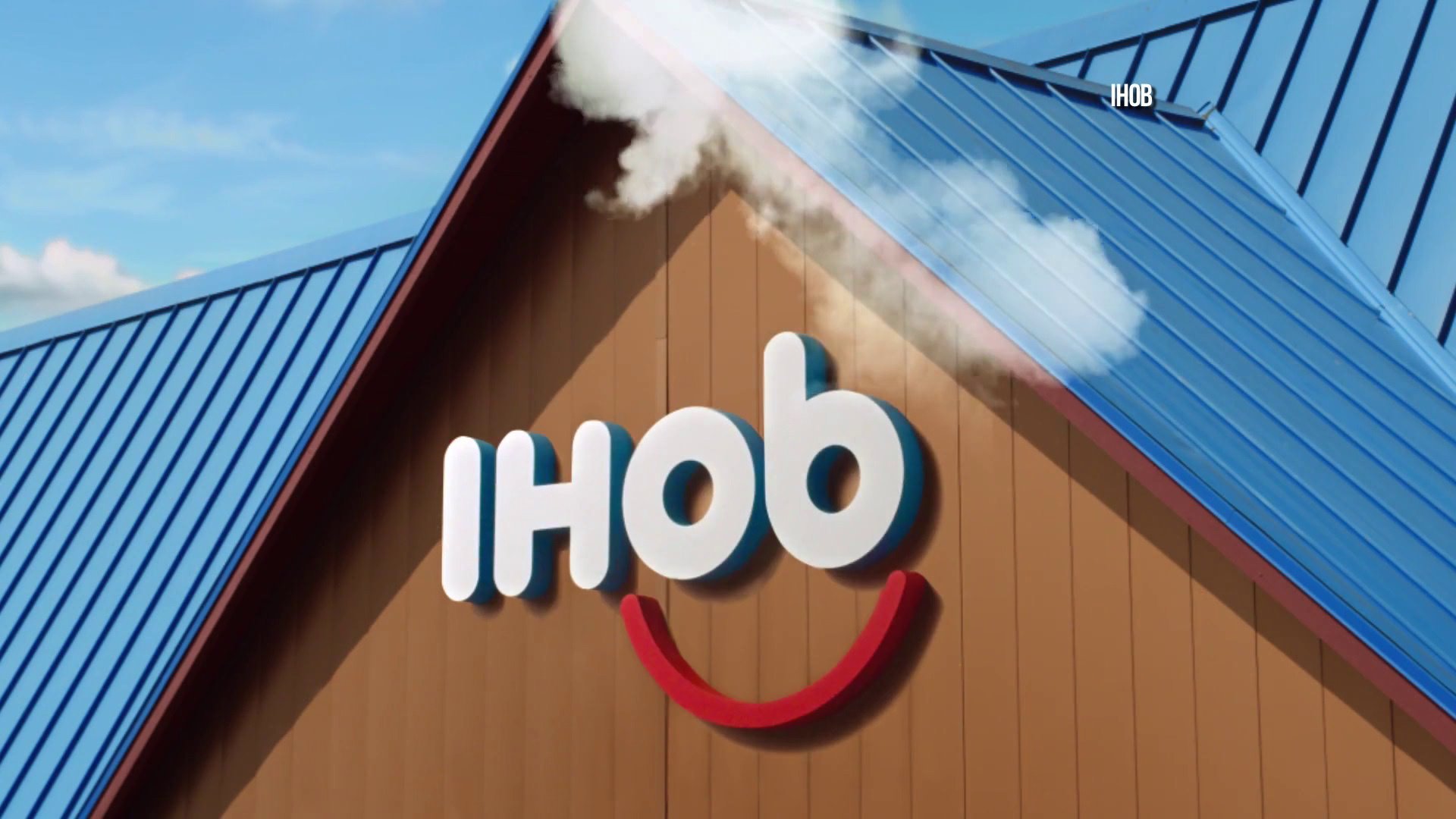
    US-headquartered pancake restaurant Ihop drew a massive social media backlash after announcing it was changing its brand to Ihob – with the b for burgers.

    But the Ihop name change turned out to be a publicity stunt – to try to share the message amongst the ranks of American fast-food fans that the ubiquitous chain was just as good at making burgers as its trademark, calorie-laden pancakes.

    So while the company had to fend off thousands of criticisms from its customers – most of whom failed to read the small print in the announcement that it was a “temporary” change – the subsequent publicity ensured there will be few people across America this morning who don’t know that Ihop – or Ihob – serves burgers as well as pancakes.

    “@IHOb the b stands for blasphemy,” tweeted one dismayed customer. Another said it stood for “international house of betrayal”.

    “The world is spiraling out of control and I can’t understand why IHOP would force us to deal with more unwelcome change,” said another. And yet another: “Why is ihop going thru a mid life crisis.”

    Rival chains climbed on the bandwagon with some good-natured jibes, as well:

    “Not really afraid of the burgers from a place that decided pancakes were too hard,” tweeted Wendy’s.

    And Whataburger tweeted: “As much as we love our pancakes, we’d never change our name to Whatapancake”.

    Guessing game

    Prior to the Ihop name change the company held an online survey, teasing the new Ihob name and inviting people to guess what the b stood for. More than 30,000 people guessed words ranging from bananas to bacon, brunch to breakfast.

    After the furore, Ihop president Darren Rebelez told CNN (yes, he go onto CNN – that’s how successful this PR stunt was!) the company will always be named Ihop, “but we want to convey that we are taking our burgers as seriously as our pancakes”.

    “Burgers are a quintessential, American menu item so it makes perfect sense that Ihop … would go over the top to create a delicious lineup of quality burgers,” added Nevielle Panthaky, the chain’s “culinary chief”.

    Ihop, which turned 60 this year, has nearly 1800 locations across the US, including a flagship in Hollywood, California, which was converted into an Ihob for yesterday’s brand launch party.

    Unsurprisingly, marketing experts were heaping praise on Ihop.

    “Credit to IHOP: They’re garnering more media attention than the moon landing for adding seven hamburgers to their menu,” wrote Kevinwxgg in a tweet, quoted by the Washington Post in a story headlined “IHOP’s name change is what happens when brands exploit the Internet outrage cycle”.

  • Facebook defends itself against critics of social media

    Facebook defends itself against critics of social media

    Facebook Inc on Friday struck back against scientific researchers and tech industry insiders who have criticized the world’s biggest social media network and its competitors for transforming how people behave and express emotion.

    Facebook, in a corporate blog post, said that social media can be good for people’s well-being if they use the technology in a way that is active, such as messaging with friends, rather than passive, such as scrolling through a feed of other people’s posts.

    It was the second time this week that Facebook had published such a rebuttal, signaling a new willingness to defend a business model that translates users’ attention into advertising revenue.

    On Tuesday, the company released a statement saying that former executive Chamath Palihapitiya, who at a conference publicly blamed Facebook for “destroying how society works,” had been gone for six years and was unfamiliar with the company’s recent efforts to improve.

    Palihapitiya on Thursday revised his view, writing in a Facebook post that the service “is a force for good in the world.”

    Online services such as Facebook and its Instagram unit, Twitter Inc, Snap Inc’s Snapchat and Alphabet Inc’s YouTube are under attack for their seemingly addictive nature and perceived promotion of anti-social behaviors.

    A study in March by U.S. researchers found that using such services at least two hours daily was correlated with reporting feelings of social isolation.

    A nonprofit organization called Time Well Spent, led by a former Google design ethicist, is pressuring tech companies to move away from products that try to hook people’s attention.

    In its blog post, Facebook acknowledged what it called “compelling research” on the negative effects of social media and cited two such academic studies.

    The company said, though, that those studies are “not the whole story.” It went on to cite other studies suggesting that the dangers of social media may be exaggerated, and that it has potential benefits if used correctly.

    “We employ social psychologists, social scientists and sociologists, and we collaborate with top scholars to better understand well-being and work to make Facebook a place that contributes in a positive way,” said the blog post, written by Facebook Research Director David Ginsberg and Research Scientist Moira Burke.

    Fundamental change would require turning away from “where the money is,” said Roger McNamee, a venture capitalist and early Facebook investor who recently has criticized the social network.

    “Facebook’s business model depends on monopolizing consumer attention, and content that appeals to fear and anger is the most profitable way to do that,” McNamee said in an email on Friday.

    A Facebook representative declined to comment beyond the blog post.

    Facebook is spending $1 million on research into the relationship among technology, youth development and well-being, the blog post said.

  • Net giants ‘must pay for news’ from which they make billions

    Net giants ‘must pay for news’ from which they make billions

    Nine European press agencies, including AFP, called Wednesday on internet giants to be forced to pay copyright for using news content on which they make vast profits.

    The call comes as the EU is debating a directive to make Facebook, Google, Twitter and other major players pay for the millions of news articles they use or link to.

    “Facebook has become the biggest media in the world,” the agencies said in a plea published in the French daily Le Monde.

    “Yet neither Facebook nor Google have a newsroom… They do not have journalists in Syria risking their lives, nor a bureau in Zimbabwe investigating Mugabe’s departure, nor editors to check and verify information sent in by reporters on the ground.”

    “Access to free information is supposedly one of the great victories of the internet. But it is a myth,” the agencies argued.

    “At the end of the chain, informing the public costs a lot of money.”

    News, the declaration added, is the second reason after catching up on family and friends for people to log onto Facebook, which tripled its profits to $10 billion (8.5 billion) last year.

    Yet it is the giants of the net who are reaping vast profits “from other people’s work” by soaking up between 60 and 70 percent of advertising revenue, with Google’s jumping by a fifth in a year.

    Meanwhile, ad revenue for news media fell nine percent in France alone last year, “a disaster for the industry”.

    ‘Pillar of democracy at risk’ 

    “Years have passed (without anything being done) and free and reliable newsgathering is now threatened because the media will simply no longer be able to pay for it,” the news agencies added.

    “Diverse and reliable news sources, a pillar of democracy, risk being undermined.”

    Attempts by news outlets in France, Germany and Spain to force internet giants to pay have only resulted in them coughing up a “few symbolic crumbs”, they added.

    The press agencies insisted that some of the vast imbalance could be rectified if the EU gives them and other media “related rights” copyright to their work.

    However, some European Parliament members were worried that the proposed directive would threaten free access to news for internet users.

    But that would not be the case, the agencies insisted.

    “Internet users would not be touched… simply those who now pocket a disproportionate part of advertising revenue would have to share a significant part of it with those who actually produce the information” on which the money is made.

    The appeal was signed by AFP; the German agency DPA; Britain’s Press Association; the Spanish agency EFE; Italy’s Ansa; the Swedish agency TT; Belga of Belgium, Austria’s APA, and the Dutch agency ANP.

  • Black Friday crushes Singles’ Day Chatter in Southeast Asia

    Black Friday crushes Singles’ Day Chatter in Southeast Asia

    Bigger is not always better – or so retailers are discovering following the conclusion of the biggest shopping extravaganzas.

    While Singles’ Day hit a record US$25.3 billion dollars in sales, it was Black Friday and Cyber Monday that dominated social media chatter in Singapore, Malaysia and Indonesia.

    Meltwater, a global media intelligence company, tracked online reactions in the lead-up to – and during – Singles’ Day, Black Friday and Cyber Monday and found that over eight in ten conversations (82.92%) online were focused on Black Friday and Cyber Monday.

    “The rise of Singles’ Day in recent years has been astronomical, breaking records every year and drawing interest from around the globe. While it’s clear that Chinese consumers are spending and talking about Singles’ Day, this massive spend and conversation in China seems to have translated poorly to other markets in Southeast Asia. Black Friday and Cyber Monday still prevail, highlighting the fact that these markets have yet to be fully penetrated by the Chinese phenomenon,” said Neil Brennan, Area Director, Meltwater Japan and South East Asia.

    Meltwater tracked online perceptions across Facebook, Twitter, Instagram, YouTube, blogs, forums, message boards and review sites from 28 October to 28 November 2017.

    Indonesia generates maximum buzz

    Regionally, Indonesia led the way driving the highest volume of online chatter with 88.6% of conversations centered around Black Friday and Cyber Monday.

    Out of the three markets monitored, Singapore generated the most social media buzz for Singles’ Day, accounting for 22.14% of the conversations, followed closely by Malaysia at 21.97%.

    Share of Voice Regional Singapore Malaysia Indonesia
    Singles’ Day 17.08% 22.14% 21.97% 11.4%
    Black Friday & Cyber Monday 82.92% 77.86% 78.03% 88.6%


    Alibaba for the win

    Conversations across all countries typically revolved around finding good deals and offers from specific retailers. It is noteworthy that Alibaba was a major source of online chatter thanks to its record breaking sales figures. Lazada, backed by Alibaba, also drew a considerable amount of chatter following their Singles’ Day push. The largest trending topic in Indonesia was Taman Anggrek, a famous mall located in Jakarta, known for being one of the biggest in Southeast Asia.

    Trending Keywords Black Friday & Cyber Monday Singles’ Day
    Regional
    1. Sales
    2. Amazon
    3. Best Buy
    1. Alibaba
    2. Lazada
    3. China
    Singapore
    1. Black Friday Sales
    2. Free Shipping
    3. Amazon
    1. Lazada Sale
    2. Taobao Buying Guide
    3. Qoo10 Deals
    Malaysia
    1. Amazon
    2. Black Friday Sales
    3. Cyber Monday Sales
    1. Alibaba
    2. Singles’ Sale
    3. China
    Indonesia
    1. Amazon
    2. Best Buy
    3. Black Friday
    1. Taman Anggrek
    2. Singles’ Sale
    3. Alibaba


    How the platforms stacked up

    A majority of the conversations took place on Twitter, Instagram and online forums. Twitter emerged as the top platform contributing to more than half of all conversations about Singles’ Day and over 85% of chatter on Black Friday and Cyber Monday.

    # Top Three Platforms – Black Friday & Cyber Monday
    1 Twitter – 86.51%
    2 Instagram – 6.81%
    3 Forums – 6.53%


    # Top Three Platforms – Singles’ Day
    1 Twitter – 57.92%
    2 Instagram – 29.67%
    3 Forums – 11.68%


  • Twitter increase ad transparency to foil politics meddling

    Twitter increase ad transparency to foil politics meddling

    US lawmakers are also looking into how foreign entities used social media to meddle in politics last year. Twitter on Tuesday announced steps to make it easier to see who is behind political ads and who they are targeting as social media giants try to thwart skullduggery.

    The moves include launching an online center with details about advertisers and their messages, according to general manager of revenue and product engineering Bruce Falck.

    Twitter also plans to adopt stricter ad policies and improve controls, amid heightened scrutiny surrounding the news that Russian-backed entities used online platforms to spread disinformation during the 2016 campaign to help Republican Donald Trump defeat Democratic challenger Hillary Clinton.

    “To make it clear when you are seeing or engaging with an electioneering ad, we will now require that electioneering advertisers identify their campaigns as such,” Falck said in an online post.

    “We will also change the look and feel of these ads and include a visual political ad indicator.”

    Honest Ads Act

    US lawmakers last month unveiled legislation to require disclosure of sources of online political ads, a move aimed at preventing a recurrence of Russian entities using social media to influence the 2016 election.

    Senators behind the Honest Ads Act referred to it as an issue of national security.

    Democrat Mark Warner, who was among those who introduced the bill, referred to Twitter’s move as “a good first step, particularly public disclosure of ads info,” in a tweet fired off on Tuesday.

    The Honest Ads Act would require online platforms with at least 50 million users to maintain and disclose information on spending of at least $500 for ads for candidates or legislative issues, applying rules that are similar to those for television and radio.

    Lawmakers are investigating how foreign entities used Facebook, Google and other online platforms to sway sentiment in 2016.

    Facebook handed to Congress about 3,000 Russia-linked ads that appeared to use hot-button issues to turn people against one another ahead of last year’s US election.

    Dark ads

    Many of these were so-called “dark ads” targeted at specific groups and which could not be viewed by the public.

    Falck noted that there is no clear industry definition of issue-based ads that aren’t clearly linked to politics but that Twitter is working with peers, policy makers, advertisers and others on a way to quickly and clearly identify such advertising.

    Twitter planned to debut the ad policy updates first in the US and then roll them out globally.

    Just a few years ago, Facebook and Twitter were hailed as tools for democracy activists, enabling movements like the Arab Spring to flourish.

    Today, the tables have turned as fears grow over how social media may have been manipulated to disrupt the US election, and over how authoritarian governments are using the networks to clamp down on dissent.

    Facebook and Twitter are among internet companies that have made moves to crack down on their services being used to achieve hidden political agendas with the help of bogus news stories or manipulative ads.

  • Trump attacks Amazon on Twitter over tax and jobs

    Trump attacks Amazon on Twitter over tax and jobs

    Having a large market share is not illegal in the US – but that hasn’t stopped ill-informed US president Donald Trump from launching an extraordinary attack on Amazon on Twitter.

    In a new tweet on Wednesday, Trump said Amazon was causing “great damage to tax-paying retailers,” and costing jobs.

    “Towns, cities and states throughout the US are being hurt – many jobs being lost!” Trump tweeted.

    The unexplained attack, which appeared to have no contextual relevance, follows earlier attacks during the election campaign during which he promised to pursue the company for antitrust violations should he be elected.

    “Believe me, if I become president, do they have problems. They’re going to have such problems,” Trump said in February 2016.

    But, as Bloomberg points out, in the US it is not illegal to have a large market share. While online retailing is growing in volume and in share of the total retail industry in the US, Amazon accounts for 30 per cent of e-commerce sales. Every other retailer in the US has the opportunity to sell online and Walmart, especially, is mounting an aggressive challenge to Amazon’s market share. Other online retailers have 70 per cent of the market.

    In short: shoppers are spending less in physical stores and more online. They are not shifting from malls to Amazon, per se, as Trump appears to be stating. Furthermore, Amazon is expanding offline, starting to open physical stores. It has also acquired Whole Foods Market and plans to expand that business.

    Trump has clearly not researched Amazon’s effect on the economy, either, before tweeting. Firstly, Amazon is collecting sales tax in every state where it is levied – just like every brick-and-mortar retailer (although third-party sales over its platform, accounting for about 50 per cent of sales through its portals, remain exempt via a loophole).

    Secondly, Amazon has promised to hire more than 100,000 new staff in the US by 2018, countering some of the jobs lost through America’s shrinking ranks of retail stores.

    “In some cases, fired department store workers are ending up at Amazon fulfillment centres,” observed.

  • Twitter said to be looking to sell

    Twitter said to be looking to sell

    Twitter, the global microblogging service that pioneered hashtags and the art of marketing in small, crisp sentences is reportedly looking for suitors.

    The sale around the region of $16 billion, although no accurate sales figures have been released and it greatly depends on the performance of Twitter’s stocks.

    Reportedly, Twitter is working with Goldman Sachs and Allen & Co for the potential sale.

    According to Reuters news sources, the company is not short of suitors. The list includes Alphabet (Google parent), Microsoft, Salesforce.com and Walt Disney, Twitter CEO Jack Dorsey is a board member.

    Facebook, for the moment, seem to be glaringly absent.

    No assurance of an actual sale has been given as of time of reporting.

    A similar rumor reared its head around the same time last year, although evidence points to more concrete reports this time.

    The biggest problem for Twitter is in its ability to be clear about its mission: whether it is a technology company or a media player.

    It also has not found a way to monetize its over 300 million subscriber base. In comparison, Facebook and LinkedIn have fared better.

    Twitter’s foray into becoming a major media player has not fared any better. Its prominence in the Rio Olympics did not increase engagement and a streaming deal with NFL is way lower than live TV. These misses have analysts saying that the Twitter stock being overvalued.

  • Introducing First View: The fastest way to be seen on Twitter

    Introducing First View: The fastest way to be seen on Twitter

    Twitter introduces First View in Asia Pacific today, an engaging and highly visible way to share your brand story with compelling video creative across Twitter’s massive audience. First View is now available in 29 countries including Asia Pacific markets Australia, India, Indonesia, Japan, Malaysia, Philippines and Singapore.

    Asia Pacific is the largest and fastest-growing region for Twitter worldwide, and First View will empower Asian businesses of any size to take their marketing campaigns to the next level using Twitter’s platform for real-time, public conversations. Nike Philippines, Samsung Australia and Tata Motors India are among the first advertisers in the region to leverage the feature.

    “Audiences today demand video content. With First View, marketers have the ability to connect with their audience through richer forms of communication and creative content, while ensuring that they are constantly top-of-mind on their feeds,” said Maya Hari, Senior Director for Product Strategy & Sales, Asia Pacific, Latin America and Emerging Markets. “First View provides advertisers with the opportunity to own the most valuable ad space on our platform on any given day, expanding their reach within a 24-hour period.”

    Premium placement, maximum reach

    First View helps marketers achieve significant audience reach with exclusive ownership of Twitter’s most valuable advertising real estate for a 24-hour period. When users first visit the Twitter app or log in to twitter.com, the top ad slot in the timelines will be a Promoted Video from that brand. Now, marketers can tell a powerful visual story across the Twitter audience.

    “Word of mouth is more important than ever. Twitter’s First View gives Samsung the opportunity to reach a wide audience to generate buzz and conversation about our new #GalaxyS7 and #GalaxyS7edge smartphones. We are able to hit a broad audience with great video content to help drive social momentum,” said Philip Newton, Corporate Vice President & CMO Samsung Electronics Australia.

    “Video is one of the hottest topics for all marketers at the moment. We are delighted to see exciting products being launched by Twitter, giving us more opportunities to build great experience for our audience. The ability of using video to generate global conversations and dominate moments of interest with First View opens up a great playing field, and ties in strongly with Mindshare’s vision of Adaptive Marketing,” said Quentin Perrot, Senior Account Director APAC, MindShare (managing Nike’s media strategy in Southeast Asia).

  • Indonesians share memorable Twitter moments to mark 10th anniversary

    Indonesians share memorable Twitter moments to mark 10th anniversary

    The Twitter logo appears on an updated phone post on the floor of the New York Stock Exchange. The social media site famous for its 140-character “tweet” limit turned 10 years old on Monday, having evolved from what was originally billed as a microblogging site into one of the internet’s most influential means of communication.

    Online social networking service Twitter on Monday celebrated its 10th anniversary, gathering many tweeters in Jakarta, including some of the nation’s most prominent figures.

    During the celebration, they shared their most memorable experiences with the microblogging site using the hashtag #KarenaTwitter (because of Twitter).

    Religious Affairs Minister Lukman Hakim Saifuddin, who spoke at the event on Monday evening, said Twitter had allowed him to express himself freely and to talk people who he might never have had an opportunity to meet with otherwise.

    Lukman said he signed up to the microblogging site in 2009 and admitted it was his most favorite social media platform.

    “After some comparison, Twitter is more enjoyable because of its short word count of only 140 characters and you can have a dialogue and unlimited communication,” he said.

    The minister added that the social media platform had exposed him to a wealth of information on a daily basis and prompted him to continue to learn new things, be more engaged and enrich his general knowledge.

    “Because of Twitter I feel stupid. There are many things I didn’t know about. The more people I meet on Twitter, the more I realize that I don’t know so many things,” Lukman said.

    Despite having almost 200,000 followers, the minister said his account was not yet verified.

    Singer Andien, who performed at the event, said Twitter had enabled her to get to know her now husband, Irfan Wahyudi. “This is a true story – without Twitter I may not have married my husband,” she said.

    Andien said she met her husband in 2002 but they did not become close until 2009, after she joined the social media platform. Andien explained that when she lost her cell phone that year, she messaged all her friends on Twitter with her new phone number. Among them was Irfan. After that, she and Irfan started to communicate more often and eventually grew closer. The couple married in May last year.

    Twitter Indonesia’s business head Roy Simangunsong thanked the Indonesian Twitter community for their continued enthusiasm. He said 77 percent of Twitter users in Indonesia were active daily tweeters. Of that amount, over half send out two tweets per day on average.

    Twitter had been witness to many historical moments in Indonesia, Roy said. Today, the wide range of interests and public sentiments can also be seen in the various hashtags that are used, he added.

    “From simple things like how they find a mate to gaining the confidence to be able to do business and become part of the everyday world using Twitter, we can see how Twitter has become an important element of Indonesian society,” Roy said.

  • Tweetwars: the social challenge in Twitter ‘capital’, Indonesia

    Tweetwars: the social challenge in Twitter ‘capital’, Indonesia

    Indonesia has long been the Twitter capital of the world, but rival apps and rancorous political debate are driving users away, illustrating the challenges the microblogging service faces even in markets once considered strongholds.

    While Twitter doesn’t break down country figures, Global Web Index data shows Indonesia remains joint first with Mexico in active users among the 34 countries the UK-based metrics company monitors – and significantly ahead in terms of penetration, at 74 per cent of all Internet users.

    But that masks a deeper shift, analysts and users say, as changing tastes, culture and politics push Indonesians to rival services.

    The proportion of active Twitter users in Indonesia has dipped 10 percentage points in the past two years, to about one third of Internet users, the Global Web Index data show.

    “Unless Twitter makes changes or there’s some new exciting things on Twitter that can’t be found on other platforms then I don’t think people are coming back to Twitter,” said Enda Nasution, a blogger and entrepreneur who has nearly 200,000 followers on his Twitter account.

    A Twitter spokesman declined to comment on the data, saying he had not seen it, but said younger people in major markets like Indonesia and India were eager users. He said the company was expanding in Indonesia and working with airlines, banks and celebrities to add services and content.

    He noted Indonesia was one of the top markets for Facebook’s recent acquisition Periscope, which allows users to stream live video.

    Twitter on Wednesday reported its first quarter since going public with no growth in users, and announced changes to its global service.

    Among younger users – active Twitter users in the 16-24 year age range – Indonesia lags Spain, Mexico and the UK. JakPat, an Indonesian survey company, found last month that teenagers were less likely to use Twitter regularly than those aged 26 and above, and were switching to other apps such as Facebook and its photosharing sibling Instagram.

    But there’s also a push factor: Indonesians are leery of Twitter’s core appeal; its default public feed, where everything a user posts is visible to everyone on the network. What was once an attraction in Indonesia’s sociable culture became a liability in 2014’s fractious presidential election.

    FISTICUFFS

    As politicians saw the power of Twitter to mobilise support, the network was flooded by digital armies of volunteers and automated accounts, or bots, spawning what Shafiq Pontoh, chief strategic officer at Jakarta-based social media consultancy Provetic, described as a “tsunami” of “black campaigns, hoaxes, prejudice, racism, spam, harassment, anonymous accounts and political action to frame topics, issues (and) spin doctoring.” “Twitter,” he said, “became an uncomfortable place to be.”

    This antagonism hit rock bottom when two Twitter users took a dispute over government car-making policies offline and slugged it out near a sports stadium. Cellphone footage of their fist-fight was broadcast on TV. “After that it felt like that if you don’t want to get into trouble, people would retreat and find a more comfortable space online,” said Nasution, the entrepreneur.

    Those online spaces include Facebook’s WhatsApp and Messenger apps, South Korean Kakao’s Path, Japan’s Naver Corp’s LINE and BlackBerry’s Messenger.

    Mr Nasution said students he has spoken to use WhatsApp to communicate with their lecturer, and LINE to chat with each other. Or Facebook and Path, says student Jeremiah Mandey, who joined Twitter in 2010. “I used Twitter to interact with friends, but now I use it to get news,” he said.

    MISSING A CULTURAL BEAT

    Government departments, companies and even President Joko Widodo have embraced Twitter as a public announcement service. The Jakarta police traffic feed, alerting commuters to jams, accidents, potholes and protests, has over 5 million followers.

    This provides a service, but is too passive for younger people, says Aulia Masna, an editor. “People are on social media to have fun and be entertained,” he says. “Twitter in Indonesia is better known as the place for news, debate and politics. So it attracts the more serious, older crowd.”

    The company spokesman said Twitter opened a Jakarta office last year and added staff, in part to expand its user base beyond the capital. The recruits included a government relations expert. It was also working with local bank BNI to allow customers to transact via Twitter. “We see great potential in Indonesia, it’s one of the top markets,” he said, adding Mr Joko was due to visit Twitter’s headquarters in San Francisco next week.

    Simon Kemp, regional managing partner of social media marketing agency We Are Social, said Twitter should focus more on understanding how people in places like Indonesia use their service before tweaking things.

    “People are still looking at these things as a technology base,” he said, “while it’s the cultural driver that determines what you use and when you use it.”

  • Origami launches payment service

    Origami launches payment service

    Origami, a social eCommerce startup for fashion and lifestyle products, is entering the offline payments fold.

    The startup, one of Japan’s most-funded, has announced the beta release of ‘Pay with Origami’ and ‘Shop Reward Program’. The new services allow existing users to pay for items at bricks-and-mortar retailers with credentials stored in the Origami app. They will also help retailers connect the dots between their customer’s online and offline purchases, data that can be used to provide special perks and incentives for repeat shoppers.

    Founded in February 2012, Origami unveiled its online-to-offline (O2O) mobile shopping app in April 2013. Users can follow their favorite brands within the app and receive updates when new items are introduced. It also recommends lesser-known brands and boutiques based on existing likes and purchase history. Users can share their likes and follows on social media, creating free advertising for the startup’s partner merchants.

    Approximately 100 influential brands – including Hankyu Men’s Tokyo, Urban Research, Head Porter, Toms, and MoMA Design Store – are scheduled to join Origami’s payments beta.

    “I created Origami to become a fintech company, but we decided to start with fashion- and lifestyle-focused mobile commerce” Origami founder and CEO Yoshiki Yasui told Tech in Asia.

    “They already have the followers on Facebook and Twitter, they have the best retail locations, and they set the benchmarks for other brands to look up to.”

    With its focus on O2O from the outset, it makes sense for Origami to offer an offline payments solution that keeps users and merchants within a single ecosystem. But becoming a force in Japan’s crowded offline payments space will be easier said than done.

    When you step up to a cash register in Japan, you’re often met by one or more contactless payment terminals for a seemingly endless variety of RFID-compatible cards and mobile phones (though NFC options remain slim to none). You can use your subway pass to buy a bottled water or your flip phone to buy a Big Mac, for example, but these options are largely limited to convenience stores and fast-food chains.

    Fashion retail is almost entirely cash or credit, and nearly 40 per cent of all consumer transactions in Japan are done with cash.

    ‘Origami for Business’ will use an iPad-based payment terminal without replacing the merchant’s existing POS systems. When an Origami user wants to make an in-store purchase, they simply scan a QR code with their smartphone or enter a six-digit pin code. Since Origami was born as an eCommerce platform, Yoshiki says that many users’ credit card details are already registered with the app.

    Pay with Origami and the startup’s new reward program are currently available in beta for iOS, with an Android version in the works. Origami accepts Visa and MasterCard for in-store payments, with more credit card options coming soon. They charge partner shops 3.25 per cent per transaction.

    The startup’s two biggest advantages over existing offline payment options will be that captive app audience and its founder’s connections in the financial world – Yoshiki was an investment banker and venture capitalist before becoming an entrepreneur.

    “Payments and eCommerce are the same, the only difference is online versus offline,” Yoshiki said.

    “If you buy three items from a retailer’s online store, then the fourth purchase is made in-store, you get treated like a first-time customer. That’s just wrong.”

    According to Techlist data, Origami is among Japan’s top-10 most highly-funded startups.