Tag: uber eats

  • Coles, Uber Eats launch on-demand delivery partnership

    Coles, Uber Eats launch on-demand delivery partnership

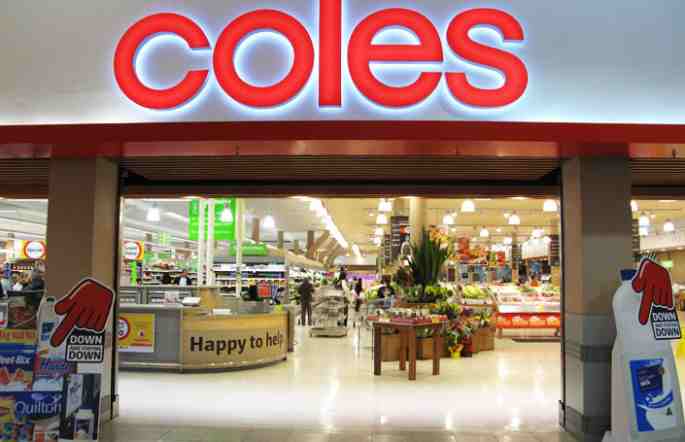
    An expanded partnership between Coles and Uber Eats promises to make on-demand grocery delivery services available across Australia. The supermarket giant pledges to add 500 brick-and-mortar stores to the app.

    It marks a statement of intent from the incumbent grocery and rideshare players, given the recent collapse of independent competitor Milkrun and the extreme difficulty of operating an ‘instant’ delivery startup in Australia without major corporate backing.

    Coles and Uber Eats revealed the expanded partnership Thursday afternoon, declaring that products from 40 Coles stores across Melbourne are now available through the delivery app.

    The companies said hundreds of other stores would join the Uber Eats network in the coming months.

    Customers can select fresh food, pantry staples, and other household items through the app, collected from Coles stores and delivered by Uber Eats workers.

    Mirroring the US-based Instacart, shoppers can communicate with the Uber Eats worker assigned to pick and pack their orders while they are in-store, allowing them to substitute out-of-stock products.

    Coles general manager of digital Operations and ventures, Claire Pallot, said the service will provide a “fast, reliable, and affordable” alternative to in-store shopping and Coles Online deliveries, which are usually delivered the next day.

    “Customers can continue to enjoy great value and quality products they find at Coles, but with the convenience of on-demand delivery through Uber Eats,” she said.

    Lucas Groeneveld, Uber Eats’ general manager of retail for the ANZ region, said the expanded partnership aims to “meet customers’ growing desire to get (almost) anything they need delivered on-demand, and this expansion will supercharge the wide variety of groceries available on the app.”

    Coles and Uber Eats publicly revealed the partnership just two days after Milkrun, the last independent player from Australia’s instant delivery boom, declared it will cease trading due to brutal economic and capital market conditions.

    Milkrun, which launched in early 2022 with $75 million in venture capital backing, operated differently from the Coles and Uber Eats model.

    Instead of tasking gig workers with picking and packing goods from a regular retailer, Milkrun owned and operated neighborhood ‘hubs’ that served as grocery warehouses and dispatch centres.

    It also employed riders as staff, unlike the independent contractor model adopted by Uber Eats.

    Ultimately, the cost of those hubs, employee wages, and surging wholesale costs collided with the normalization of shopping habits in a post-lockdown environment and a reticence among investors to pump more funding into a business with an unclear path to profitability.

    Jackie Vullinghs, a partner at VC fund and early Milkrun investor AirTree Ventures, said Milkrun had executed an “ambitious vision” that “forced incumbents to invest in improving their offerings.”

    Coles and Uber Eats proclaiming their updated “offerings” so soon after Milkrun’s demise suggests the incumbents did indeed pay attention to on-demand delivery ventures like Milkrun, and competitors Send, Quicko, and Voly, all of which promised unprecedented convenience but struggled to find a sustainable foothold in the Australian market.

    While the partnership operates vastly differently from those startups, and the success of Instacart abroad shows the viability of some on-demand grocery services, the same cultural and economic factors contributing to Milkrun’s closure may still be felt at Coles.

    In the six months ended January 1, 2023, Coles recorded e-commerce sales of $1.4 billion, a 6.6% drop from the prior corresponding period.

    Coles attributed that drop to Australia’s shopping habits, saying the value of online orders declined “as COVID-19 behaviors normalised and some customers returned to shopping in-store.”

    As more Australians return to the workplace, or integrate out-of-home work back into their routines, the convenience of on-demand delivery will compete against the old-school utility of visiting the supermarket on the way home.

    The partnership caught the attention of the influential Transport Workers Union (TWU), representing workers across the delivery sector and gig economy.

    After declaring Milkrun failed because its employee-rider model could not compete against competitors using cheaper independent contractors, the TWU gave its conditional approval to the Coles-Uber Eats partnership.

    That is because both Coles and Uber, Uber Eats’ parent company, have signed agreements with the TWU vowing to support the rights of workers in the gig sector.

    “For the last decade we have seen major corporates and multi-nationals abuse their position at the top of the supply chain to exert downward pressure on conditions and income, with the gig economy providing one of the major channels for exploitation,” TWU national secretary Michael Kaine said Thursday.

    “For the first time, there is now a genuine, constructive opportunity to turn that around and build better working conditions.”

    Coles in 2019 signed an agreement asserting the “right to annual leave, fair rates, superannuation, safe working conditions and union representation” for workers in the on-demand economy.

    A broader charter arrived in 2020, with Coles CEO Matt Swindells declaring the business and the union have shared priorities.

    “We have a common goal of improving safety through the transport supply chain, and by taking a collaborative approach, we will be even more effective in achieving safer outcomes that benefit everyone,” Swindells said.

    Separately, a 2022 deal struck between Uber and the TWU affirmed their joint support for an independent body capable of setting minimum earnings, benefits, and conditions for platform workers.

    Given those agreements, Kaine described the Coles-Uber Eats partnership as “a potential breakthrough for embedding decency at the heart of on-demand work.

    “A major company like Coles would only take this step because it was confident that core industry standards will be upheld.”

    Even so, the union says it will keep close tabs on what promises to be the most significant expansion of Australian on-demand delivery services to date.

    “We will monitor this hawkishly to make sure it lives up to its potential,” Kaine said.
  • Uber CEO Makes Deliveries For Uber Eats In San Francisco

    Uber CEO Makes Deliveries For Uber Eats In San Francisco

    Uber CEO, Dara Khosrowshahi, delivered food to people’s doorstep in San Francisco for those ordering from Uber Eats. He completed 10 trips and managed to rake in $98.91. He tweeted about this from his personal handle saying “Spent a few hours delivering for @UberEats. 1. SF is an absolutely beautiful town. 2. Restaurant workers were incredibly nice, every time. 3. It was busy!! – 3:24 delivering out of 3:30 online. 4. I’m hungry – time to order some”

    While it was great to see the CEO of the company getting into the groove and making deliveries, Twitter absolutely erupted calling this a ‘PR stunt’

    User Dan Skelley who has been the most vociferous of the lot in calling it a PR stunt questioned the stats presented. He said “Let’s discuss ur BOGUS stat page. U did 10 orders ON A BIKE in 3 hrs 24 min. First, U can’t get 45pts for 10 trips. Max is 30. U imply 1ride/18 min incl travel time to the pickup with no waiting. Short travel time EVERY time to perfect dropoff EVERY time + only 6 min of downtime”$

    Twitterati Brice Sopher too spoke out about the experience saying “Wow what a surprising conclusion that you, the ceo of Uber, had a great experience working this job. Now try doing it as your only source of income.

    There were many such replies questioning this exercise by the Uber CEO, suffice to say, that though it was all well-intentioned, there’s no wondering how social media will react to it.

  • Minor International’s food division turns a corner while hotels deliver huge profit boost

    Minor International’s food division turns a corner while hotels deliver huge profit boost

    Minor International has boosted its full-year profit by 137 percent, largely due to the consolidation of its recent acquisition, the NH Hotel Group.

    Fourth-quarter profit of US$119.3 million, represented a 569-per-cent increase year on year, but this included a gain on sale of three hotels in the Maldives. Excluding non-recurring items, profit grew 23 percent for the full year and 53 percent for the fourth quarter.

    Minor’s food division, which operates more than 2300 outlets in 26 countries trading under banners including The Pizza Company, The Coffee Club, Thai Express, Bonchon, Swensen’s, Sizzler, Dairy Queen and Burger King, recorded a mild reduction in profit for the quarter, from $8.6 million to $8.2 million.

    “Minor Food continued to invest in its digital capabilities to increase competitiveness and to address the soft market going forward,” the company said in a results release. “Thailand hub’s increased engagement with third-party aggregators (as a complement to its own delivery platform), coupled with continuous new product launches, resulted in much improved same-store-sales.”

    In Australia, new product launches, a digital loyalty program and a partnership with Uber Eats saw same-store sales turn into positive growth.

    “Improving operations during the quarter, together with the consolidation of Bonchon since mid-November, helped offset softer performance in other parts of the operations. As a result, Minor Food’s performance is showing signs of recovery with a lower decline in its net profit in the fourth quarter compared to other quarters in the year,” the company said.

    After the close of the quarter, Minor International announced a plan to privatize.

    Singapore-based BreadTalk Group, which would see it take a 25.1 percent stake in partnership with founder George Quek and his associates.

  • Zomato takes over Uber Eats in India

    Zomato takes over Uber Eats in India

    Local food-delivery app Zomato has purchased Uber Eats in India.

    “We are proud to have pioneered restaurant discovery and to have created a leading food-delivery business across more than 500 cities in India,” said Zomato CEO Deepinder Goyal. “This acquisition significantly strengthens our position in the category.”

    The purchase was made via an all-stock transaction, which awards Uber 9.99 percent ownership of Zomato.

    “India remains an exceptionally important market to Uber and we will continue to invest in growing our local Uber Rides business, which is already the clear category leader,” said Uber CEO Dara Khosrowshahi. “We have been very impressed by Zomato’s ability to grow rapidly in a capital-efficient manner and we wish them continued success.”

    Uber Eats in India has discontinued operations and is now directing restaurants, delivery partners, and users of the Uber Eats apps to the Zomato platform.

  • Coles reshaping 200 stores around convenience

    Coles reshaping 200 stores around convenience

    Coles is ramping up its convenience strategy, with a plan to grow sales on the back of “food-for-now” and “food-for-later” products. As part of this strategy, the brand will convert around 200 Coles supermarkets to a more premium, convenience-focused format, as shift 200 lower-volume stores to a more value-centric format, while adding around 75 new product lines to its existing range for ready-to-eat meals – such as breakfast foods, curries, soups, roast vegetables and stir-fry kits.

    According to the report, Coles chief executive Stephen Cain sees an opportunity through this strategy to grow another billion dollars in sales over the next five years.

    “It’s high growth and it mainly happens outside supermarkets at the moment,” Cain told.

    “Some of it will come from other players in the convenience market, but because it’s value-added it’s also growing the market as well.”

    Cain previously told analysts that the brand was changing rapidly in the space, but was still lagging behind the competition.

    “We are growing our baskets, and we are growing our transactions. We believe that we can do a better job with the convenience customers, and we’re setting up the business to do that going forward,” Cain said.

    Coles’ focus on convenience is not surprising, given the number of partnerships it has forged with third parties, since splitting from former-parent company Wesfarmers in late 2018, to ensure customers can get its products how they want when they want.

    Deals with online marketplace eBay and meal-delivery service Uber Eats are other incentives for Coles to improve its food-for-now and food-for-later offerings by allowing several pillars of the business to utilize the expanded range.

    “Making life easier for our customers means enabling our customers to fulfill their shopping needs ‘anytime, anywhere’,” a Coles spokesperson said.

    “We know our customers’ needs are changing rapidly and we are evolving our offer accordingly.”

    The convenience market is growing rapidly in Asia Pacific, with the region having been named the “largest and fastest-growing” convenience market in the world in a report by GlobalData.

    According to GlobalData retail analyst Honor Strachen, the changes being seen in the region’s convenience offers, such as those outlined by Coles, have been improving store sales and profitability at a time that retail space is becoming more expensive, and margins are increasingly under pressure from inflation and discounting.

  • Apps race to attract customers with sweet deals

    Apps race to attract customers with sweet deals

    E-wallets, food-delivery and online shopping apps are offering a range of Tet (Lunar New Year Festival) promotions to widen their customer base. On January 21, e-wallet cashless payment platform MoMo experienced a temporary freeze of its network shortly after launching a promotion that gives customers a chance to receive gifts when using the app to send money.

    Shortly after the promotion was launched, MoMo recorded an additional 500,000 downloads and registrations of its app, forcing the platform to upgrade its capacity immediately.

    At the time of the freeze, MoMo reported a record of over 1 million customers who had logged on at the same time for a chance to receive something from MoMo’s pool of gifts worth over VND100 billion ($4.32 million).

    About 2 days later, ZaloPay, another e-payment platform also entered the race by encouraging users to make deposits, payments and money transfers to receive bonus points and redeem vouchers from a pool of VND10 billion ($431,995).

    The promotion heat has also spread to the food delivery industry, where Grab, the Singaporean-based ride hailing and food delivery app, has announced its expansion to an additional 12 provinces and cities, to make “food ordering easier during Tet“.

    Tet, or Lunar New Year Festival, will be celebrated from February 2-10 this year.

    Demi Yu, GrabFood regional director for Thailand, Malaysia, Vietnam and Philippines, revealed that the number of GrabFood orders increased has increased 25 times since it was launched in Vietnam last October.

    “With our extensive driver partner network, we’ve been able to lower average delivery time to 20 minutes in central Hanoi and HCMC, making us the fastest food delivery service in Vietnam,” she said.

    A survey published by Vietnamese market research firm GCOMM earlier this month showed that 99 percent of those surveyed said they used online food ordering services at least 2-3 times per month. 39 percent said they ordered through these apps 2-3 times a week.

    According to this survey, the 6 most popular apps are GrabFood, Foody, GoFood, Lala, Vietnammm and Lixi. However, because of the fierceness of competition, just a few days before the study was announced, Lala withdrew from the food delivery market to focus on providing software solutions to restaurants.

    “Demand for delivery is growing in Hanoi and HCMC. I think in the next 5 years, it will thrive in the 10 largest cities. There are about 100,000 delivery orders each day in HCMC and Hanoi combined, whereas there was virtually no demand for this service 3 years ago.

    The delivery market is now worth $500 million, but is expected to grow to $2 billion in 5 years,” said Luong Duy Hoai, founder of GHN, a courier service with over 7,000 staff.

    According to a recent report by South Korean commercial giant Lotte, the number of orders and visits by online shoppers rose by 80 percent and 200 percent respectively in 2018.

    Kim Kyou Sik, general director of Lotte.vn, the group’s online outlet, said: “Late 2019 will be a major battle for all e-commercial sites to establish market share. We aspire to become one of Vietnam’s top 4 e-commerce sites by the end of the year.”

    According to research by Nielsen Vietnam, with 53 percent of the population using the Internet, nearly 50 million numbers registered on smartphones, most online shoppers being from 25-29 years old, the e-commerce market in Vietnam is full of potential despite growing at 22 percent per year.

    The e-Conomy SEA 2018 report by Google and Singaporean investment firm Temasek also revealed that e-commerce, along with three other areas, namely online advertising, online travel and ride hailing dominate Vietnam’s Internet economy.

    In 2018, the Internet economy had an estimated total worth of $9 billion. Earlier this year, the two companies collaborated in a report which revealed that gross merchandise volume of Vietnam’s Internet economy amounted to 4 percent of its GDP.

  • Uber Eats appoints Alia Bhatt as India brand ambassador

    Uber Eats appoints Alia Bhatt as India brand ambassador

    Uber Eats, the food delivery arm of ride-hailing major Uber, Thursday said it has appointed actor Alia Bhatt as its brand ambassador in India. India is the first country for Uber Eats globally where the company has appointed a brand ambassador, Uber Eats said in a statement.

    “Alia is an inspiration to Indian millennials and we are thrilled to have her on board. The youth today relates to her easy-going, carefree and energetic personality. “She is known for her unique style and agility as an actor – the same qualities are an integral part of the Uber Eats DNA; thus making her the perfect fit to represent our brand in India,” Bhavik Rathod, India and South Asia Head, Uber Eats said.

    Uber Eats was launched in India in May 2017. The food delivery service is available across 37 cities compared to 31 cities where the American company operates its rides business. Uber Eats started in 2014 as a small delivery pilot in Los Angeles and was launched as a separate application in Toronto in December 2015. It is now available as a stand-alone app in over 350 cities globally.

    The US-based company has been aggressively investing in its Uber Eats business globally. Earlier this month, Uber said gross bookings from Uber Eats grew more than 150 percent in September quarter to US$ 2.1 billion (excluding Southeast Asia and Russia) over the year-ago period.

  • Uber Eats India, CCD partner for virtual restaurant network

    Uber Eats India, CCD partner for virtual restaurant network

    Food delivery app Uber Eats in partnership with Cafe Coffee Day (CCD) on Friday launched a network of virtual restaurants that will offer more choices of ‘delivery-only’ restaurant brands. The first restaurant brand under this partnership is scheduled to launch in mid-November on Uber Eats app, the company said in a statement.

    “We are thrilled to partner with CCD – the pioneers of cafe culture in India,” said Jason Droege, Vice President of UberEverything, Uber Technologies.

    “Using experience and lessons learnt in the virtual restaurant space from our global operations, we hope to provide our Indian restaurant partners greater growth opportunities,” Droege added.

    Uber Eats is currently present in 37 cities in India while CCD has a network of 1,742 cafes across 246 cities in India.

  • Uber Eats aims to boost presence with CJ deal

    Uber Eats aims to boost presence with CJ deal

    U.S. food delivery app Uber Eats said Wednesday that it has signed a partnership with Korean food service company CJ Foodville in the latest move to boost its presence in the country’s growing food delivery market.

    Uber Eats said major CJ Foodville brands, such as VIPS, Cheiljemyunso, The Place and Juice Solution, would be easily accessible through its app in Seoul, a heavily populated city with a population of some 10 million.

    Eight out of 10 Koreans use smartphones, and they increasingly order popular food items through mobile apps.

    “We are excited about our partnership with CJ Foodville, the national representative food service brand, bringing its diverse selection to our customers,” Jean-Marc Serayssol, head of Asia sales at Uber Eats, said of the deal signed last Tuesday. “With this partnership, Uber Eats customers can now order CJ Foodville brands at the simple tap of a button, and Uber Eats will continue to expand to provide our services anytime, anywhere.”

    The food franchise unit of Korean food and entertainment conglomerate CJ Group has about 1,500 franchises across Korea and nearly 400 franchise stores in seven countries, including the United States, China and Vietnam. CJ Foodville is planning to reinforce the collaboration with Uber Eats overseas.

    Uber Eats, a food delivery service app run by ride-sharing pioneer Uber Technologies, began its business in Korea in August last year and currently has more than 1,500 local restaurant partners in Seoul.

    Uber Eats did not disclose its share in Korea’s estimated 12 trillion won ($10.7 billion) food delivery app market dominated by homegrown apps, such as YoGiYo and Baedal Minjok.

    Uber Eats is part of Uber’s attempt to expand its presence in Korea, where the company’s flagship ride-sharing service, Uber X, was banned in 2015 because it conflicted with the local transportation law.

  • India fastest growing market for Uber Eats globally

    India fastest growing market for Uber Eats globally

    US-based Uber said India is the fastest growing market for its food delivery platform Uber Eats and the service is being rapidly expanded to cover more Indian cities.

    Uber had launched Uber Eats in India in May last year and recently expanded the service to five more Indian cities — Tiruchirappalli, Surat, Nashik, Ludhiana and Mysore — to now cover 28 cities.

    “India continues to be the fastest growing market for Uber Eats in the Asia Pacific region and globally. As urbanisation picks up in the country, we look for opportunities to take our service to newer cities and expand our network, especially in tier II cities, which we believe, offer tremendous potential for the food tech industry,” Bhavik Rathod, Head of Uber Eats India said in a statement.

    While the company did not disclose specific numbers, it said the number of orders on its platform has “more than quadrupled” in the last three months and recorded nearly 50 percent month-on-month growth.

    Interestingly, Vijayawada and Madurai were the first two cities where Uber Eats was launched before the rides service. Uber CEO Dara Khosrowshahi had recently said the company is “deliberately investing” in products like Uber Eats and “high-potential” markets in the Middle East and India, even though its losses widened year-on-year in the June 2018 quarter.

    According to a report: Globally, the Uber Eats business is growing 200 percent per year and has a US $6 billion run rate. Uber Eats was started in 2014 as a small delivery pilot in Los Angeles and was later launched as a separate mobile app in Toronto in December 2015. In India, Uber Eats competes with the likes of Zomato and Swiggy as well as FoodPanda, which is owned by Uber’s rival, Ola.

  • Japan’s fast food rivalry heating up

    Japan’s fast food rivalry heating up

    McDonald’s Japan plans to open more stores this year, its first expansion in a decade.

    At the same time, rival Burger King is working on tripling its Japanese locations to 300 by 2022 at a cost of ¥5 billion (US$45.5 million).

    With a 4.5-fold increase in group net profit last year, McDonald’s Holdings logged a record ¥24 billion. It aims to open 150 to 200 locations in the next three years. With closures taken into account, it expects a net increase of about 100.

    “Over the past several years we were focusing on optimising our store portfolio,” says president Sarah Casanova. “Now it is time to look to opportunities to grow with new restaurants.”

    Following a peak in 2002, the number of McDonald’s locations in Japan has been declining. The chain now has 2900 outlets, a drop of about 1000.

    The turnaround for the burger market is mainly because of record numbers of tourists in Japan, 28.6 million last year.

    Burger King Japan plans to open most of its 200 new restaurants in cities like Tokyo, Osaka and Nagoya. Target locations include shopping-centre food courts and suburban sites with room for a drive-through. A home-delivery service will be offered to counter the move last year by McDonald’s Japan to partner with Uber Eats.

    After a slump, Burger King left Japan in 2001, returning in 2007. Its current expansion drive follows a Hong Kong investment fund acquiring the Japan rights from Burger King. It is also revamping its product lineup.