Tag: underwriting

  • IDX Overhauls Listing Rules with IDR100 Trillion Pathway

    IDX Overhauls Listing Rules with IDR100 Trillion Pathway

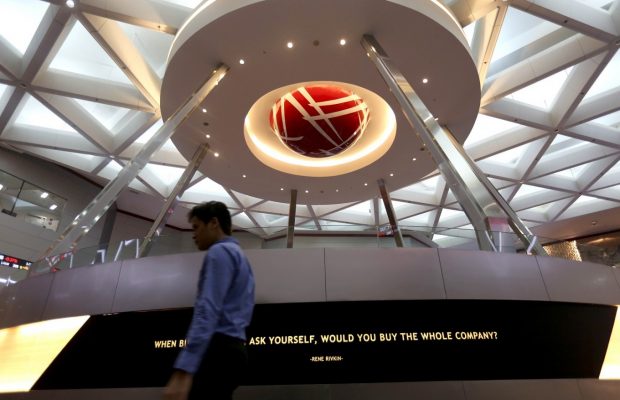
    The Indonesia Stock Exchange has rewritten its primary listing rules, establishing a 10,000-investor post-listing requirement for Main Board applicants alongside an IDR100 trillion market capitalisation route.

    Board of Directors Decree No. Kep-00152/BEI/10-2026 took effect on 9 October 2026, replacing the earlier framework under Decree No. Kep-00045/BEI/03-2026 to govern public offerings across the IDX.

    The revision eliminates standalone net tangible asset qualification for prospective issuers. Companies pursuing Main Board entry must now pair at least IDR250 billion in net tangible assets across their last two audited financial years and latest interim accounts with an established market capitalisation and an additional operating metric: pre-tax earnings averaging IDR100 billion over three years, revenue of IDR800 billion, total assets of IDR2 trillion, or operating cash flow of IDR100 billion. Alternatively, applicants can bypass asset tests entirely if they reach a market capitalisation of IDR100 trillion and equity of at least IDR10 trillion.

    Stricter Hurdle for Small Floats

    Development Board standards also faced upward revisions. Minimum commercial operating histories now span 24 consecutive months instead of 12, requiring full revenue records across that two-year period.

    Financial thresholds for the secondary tier require IDR50 billion in net tangible assets alongside market valuations between IDR300 billion and IDR500 billion, depending on whether applicants qualify via profits, revenue, assets, or cash generation. A standalone route on the Development Board requires an IDR10 trillion market capitalisation alongside IDR1 trillion in equity. Applicants must also distribute allocations across at least 5,000 single investor identification holders after the offering closes, up from earlier distribution practices.

    Shareholder Dispersion and Floats

    Capital markets in Southeast Asia have wrestled with tightly held listings that leave thin public floats after debut trading. Indonesia’s exchange is tackling that structural issue by enforcing absolute investor counts rather than relying strictly on percentage-based public floats.

    For regional consumer conglomerates, retail chains, and fast-growing technology platforms eyeing Jakarta, the rules cut off quiet, insider-dominated public exits. Companies can no longer slip onto the Main Board through balance-sheet asset valuations alone without proving wide retail or institutional buy-in across 10,000 separate accounts. Existing listed issuers also face a higher bar, requiring more than 1,000 active investor accounts to maintain their Main Board tenure compared with the earlier 750-holder floor.

    Five-Year Projections Replace Shorter Targets

    Underwriting teams now absorb deeper accountability under the disclosure terms. Lead managers must submit equity research reports at the time of application, at the end of the sixth month following admission, and at the close of the twelfth month.

    Filing documentation must feature integrated financial projections spanning at least five years, stretching past the historical three-year standard. Underwriters must execute and document formal due diligence on these five-year operating estimates, restricting aggressive growth claims often used to price retail and e-commerce listings.

    Scrapping the Share Price Floor

    Regulators removed the mandatory IDR100 minimum offering share price, handing dealmakers pricing room for fractional or high-volume issuances. Prospective applicants can also seek exchange clearance to count shares held by investment vehicles toward their official free float when underlying beneficiaries qualify as public investors.

    Companies that lodged listing applications before 9 October 2026 remain subject to review under the previous regulations during the transitional window. The exchange has yet to release the operational timetable and verification steps for approving beneficiary-level free-float exemptions.

  • Taiwan Non-Life Insurers Pivot to Commercial Lines as Market Expands to $19B

    Taiwan Non-Life Insurers Pivot to Commercial Lines as Market Expands to $19B

    Taiwan property and casualty premiums will reach $19 billion by 2036, expanding at an annual rate of 4.8 per cent as non-life business outpaces the mature life sector.

    Health insurance premiums will match that pace with 4.8 per cent annual growth to $25.1 billion, while life premiums expand at a slower 4.3 per cent clip from $65.1 billion in 2025 to $103.5 billion, according to data from Allianz Research.

    Manufacturing and Energy Drive Commercial Demand

    Commercial lines are absorbing capital from high-technology factory construction, offshore wind projects, and state-backed infrastructure upgrades. AM Best noted in a September sector review that consistent premium expansion across retail and commercial lines will support earnings, provided carriers maintain underwriting discipline.

    Motor insurance still generates the bulk of non-life revenue on the island. Premium growth in the category slowed through early 2026 as buyers postponed vehicle purchases during debates over import tariff adjustments.

    In commercial lines, growth could increasingly come from moving beyond traditional risk transfer toward more holistic solutions combining risk assessment, loss prevention, and insurance coverage.

    Regulatory Shifts Boost Reported Capital

    Underwriting profits also benefited from calm weather patterns across 2025 and the first half of 2026, which kept natural catastrophe payouts low. At the same time, carriers completed major balance sheet realignments under new capital and accounting frameworks.

    The adoption of IFRS 17 lifted sector-wide shareholders’ equity by approximately 10 per cent at the end of 2025 compared with older accounting metrics. The local Taiwan Insurance Solvency standard increased the weighting of market risk in required reserves without reducing overall capital buffers.

    For institutional investors and bank-backed financial holding groups in Taipei, the shift in premium momentum creates an operational problem. Life units long provided massive investment floats, but slower volume means management teams must extract higher fee income and tighter loss ratios from general insurance operations.

    Rival domestic insurers are targeting mid-sized commercial clients rather than relying exclusively on large electronics fabricators. Writing modular liability, business interruption, and property coverage for suppliers reduces balance sheet concentration while defending margins against commoditised pricing.

    Pressure Mounts on Underwriting Margins

    The regulatory transition began years earlier as Taiwan’s Insurance Bureau aligned domestic solvency calculations with international standards to prepare carriers for equity market volatility. Insurers spent that period building capital reserves and trimming exposure to high-guarantee savings products.

    Underwriting teams now face the next hurdle: pricing commercial property contracts accurately as extreme climate events become less predictable across East Asia. The next round of statutory solvency filings will show whether smaller non-life carriers can maintain target capital ratios without raising rates on corporate accounts.

  • DBS Broadens China Market Dominance: Secures Principal Bond Underwriting License

    DBS, a Singaporean financial institution, is expanding its operations in mainland China by acquiring a bond underwriting license. With this license, the bank’s China division is now permitted to function as a principal underwriter for non-financial corporate bonds in the mainland’s interbank bond market. This authorization has been granted by China’s National Association of Financial Market Institutional Investors (NAFMII). Consequently, DBS can now manage all onshore corporate bond deals, which involves coordinating syndicates.

    The Role of DBS in China’s Bond Market

    DBS is a substantial foreign participant in the issuance of panda bonds. These are yuan-denominated bonds that are sold onshore by issuers who are not Chinese. As of the close of the previous year, DBS held a 38 percent market share in panda bonds.

    In 2025, the issuance of panda bonds in China’s interbank market amounted to 173.3 billion yuan, or $25.1 billion. This represents a compound annual growth rate of 26 percent over the past five years, a clear sign of the bond market’s rapid expansion.

    Questions & Answers

    What is the recent development for DBS in mainland China?
    DBS’ China unit has received a principal underwriting license for non-financial corporate bonds in mainland China’s interbank bond market from the National Association of Financial Market Institutional Investors (NAFMII).

    What does this license allow DBS to do?
    This license allows DBS to handle all onshore corporate bond deals, including the coordination of syndicates.

    What is DBS’ current standing in the issuance of panda bonds?
    DBS is a significant foreign participant in the issuance of panda bonds with a market share of 38 percent as of the end of last year.