Tag: uniqlo

  • Uniqlo deploys apparel vending machines

    Uniqlo deploys apparel vending machines

    Uniqlo has deployed its first apparel vending machines at key locations across the USA, as the Japanese retailer looks to enter new markets.

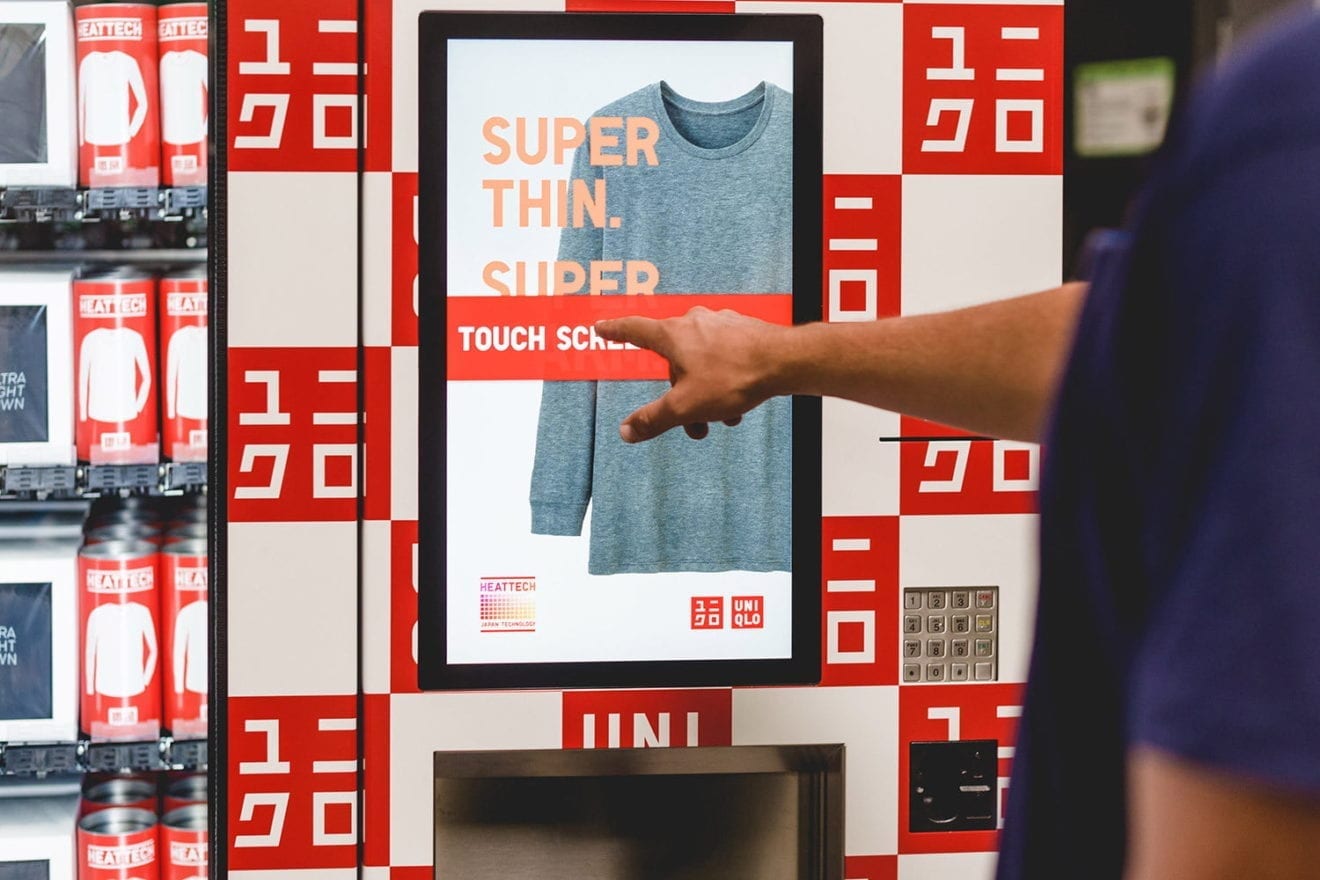
    Dubbed ‘Uniqlo to Go’, the fashion vending machines are popping up in select American airport terminals during August.

    According to the Fast Retailing-owned brand, the first ten are scheduled for Oakland Airport, where the vending machine bowed on Wednesday, followed by one in the Hollywood and Highland Centre in Los Angeles on August 10; Houston Airport, August 17, and Queens Center, Elmhurst, New York, August 22.

    The six remaining locations will be revealed soon, a Uniqlo spokesperson told WWD this week. Locations have been decided upon based on their potential for high-traffic and customer visibility.

    “We’re already talking with amusement parks, train stations, entertainment conventions and movie theatres about additional opportunities,” said the spokesperson. “The goal is to open new markets and use machines as an introduction to our products.”

    As for the operation of the vending machines, customers can use both debit or credit cards and access product via touch screens and a user interface.

    After browsing products, selecting and completing the transaction, a robotic arm retrieves the product. A conveyor shelf moves the item onto the robotic arm and the arm brings it to a window. From here, the customer can access the items.

    Apparel available for purchase includes Uniqlo’s Heat Tech Ultralight down jackets (US$69.9) and Heat Tech tops ($14.90). Both items are available in a variety of colours and styles for men and women.

    The company said it plans to expand to graphic t-shirts, Airism, and then innerwear items such as socks and underwear.

    Earlier in the year, Uniqlo said it plans to double its store count in Europe to 100 outlets over the next three years, in a bid to strengthen its retail presence outside of Asia.

    Uniqlo is eyeing global sales of 3 trillion yen ($26.6 billion) by the fiscal year ending August 2020.

  • Fast Retailing Indonesia taking Uniqlo to East Java

    Fast Retailing Indonesia taking Uniqlo to East Java

    Fast Retailing Indonesia is reaching out to new markets with the impending opening of two Uniqlo fashion stores in Surabaya, East Java.

    The Japanese retail giant’s expansion to the provincial capital adds to the 11 Uniqlo stores already in Indonesia.

    Fast Retailing Indonesia president/director Michiaki Tanaka says the Surabaya stores are part of his company’s plan to reach all customers across the country.

    Being launched next month, the stores are being built in Surabaya’s biggest shopping centres, Pakuwon Mall and Tunjungan Plaza.

    Uniqlo has 1800 stores in 18 countries.

  • Poets’ words grace Uniqlo t-shirt collection

    Poets’ words grace Uniqlo t-shirt collection

    Poets Sarah Kay and Phil Kaye’s works are to appear on a special Uniqlo t-shirt collection.

    The Japanese fast-fashion brand has released a range called “Poetry Beyond the Page”, which highlights the works of the two poets, including lines from their most-liked poems, including Kaye’s “Beginning, Middle & End,” and Kay’s “Useless Bay” along with their collaborative work “When Love Arrives.”

    “One of my favorite things in the world is to keep track of the way poetry and poets find their way to surprising places,” wrote Kay on her Facebook page.

    “I’m excited to see the surprising places these poems wind up!” she said.

    The collection has been released in Uniqlo stores in Japan, New York, Chicago and across Europe. Kay says they’ll soon be in-store in the Philippines as well.

  • Uniqlo releasing JW Anderson collaborative range

    Uniqlo releasing JW Anderson collaborative range

    A JW Anderson collaborative range will roll out at Uniqlo stores and at Uniqlo.com in September. Featuring British classic designs, the fall/winter range comprises 33 pieces for men and women featuring the signature London fashion brand’s graphic design aesthetic.

    “The point of this collaboration is that I believe in democracy in fashion, and what I hope will be achieved is that any age demographic can pick up and find something within the collection to relate to,” says JW Anderson founder Jonathan Anderson. “Doing something with Uniqlo is very interesting. It means you come up with a wardrobe that is universal and quirky.

    “The idea of reducing something to its essence is a very Japanese cultural thing. It can be culturally, textile or silhouette driven, but it’s about the idea of reducing something down so you can create the most impact.”

    “This line embodies our shared vision of offering elegance, simplicity, timeless comfort and individuality through LifeWear,” says Fast Retailing senior VP Yuki Katsuta, who is head of research and design at Uniqlo.

    “The inspiration for much of the clothing we wear today was the uniforms, workwear and sportswear that originated in the British Isles. We have combined the energy, creativity and traditional touches of JW Anderson with our fit, fabrics and functionality as part of our quest to craft wardrobe essentials that are enduringly appealing.”

    Design is a key focus for the collection, notably through such classics as a double-breasted belted trench coat, a wool-blend quilted jacket, a Fair Isle sweater and a striped scarf. The trench coat is accented by a tartan lining, and tartan is also used for a selection of down jackets, shirts and padded tote bags.

    Also in the line are multi-border cut-and-sewn pieces, knits, stoles in vivid hues, ruffle blouses and skirts. There are tweed coats in signature herringbone and shirts in extra-fine cotton, as well as knits in extra-fine Merino wool.

    Northern Irish designer Anderson established his company in 2008, attracting attention with his debut collection in that year’s London Fashion Week.

  • APAC boosts Uniqlo’s Q3

    APAC boosts Uniqlo’s Q3

    Fast Retailing, Uniqlo’s parent company, has reported consolidated revenue totaled ¥1.4779 trillion (+3.0 per cent year on year), with operating profit expanding to ¥180.6 billion (+23.9 per cent) in its latest financial results.

    In the third quarter from March to May, Uniqlo Southeast Asia and Oceania and South Korea reported a doubling in operating profit.

    The apparel chain said that its sports goods, new women’s blouses, dresses and clothes designed to “suit the Southeast Asian climate and culture sold especially well.”

    In the US, Uniqlo  reported a lower operating loss in the third quarter after same-store sales recovered, with business cost ratios improving under a new operational structure.

    In Europe, investment in 10 new store openings over three months inflated costs and knocked operating profit slightly lower.

    Uniqlo’s international network increased by 143 to 1,071 stores at the end of May.

    Japan reported a rise in revenue but a contraction in profit in the nine months to May 2017. Revenue rose 1.2 per cent year-on-year to ¥653.4 billion while operating profit dipped 0.6 per cent year-on-year to ¥92.6 billion.

    The global chain said it expects to achieve strong revenue and profit gains, “with Greater China, Southeast Asia, and South Korea acting as the key drivers of growth.”

  • Japanese retail brand opens store in Davao City

    Japanese retail brand opens store in Davao City

    Top Japanese fashion retail brand Uniqlo will open its first store in Davao City at SM Lanang Premiere this Friday.The store opened its doors today for a special preview to about a hundred selected shoppers mostly members of the media, bloggers, social media influencers and VIPs.

    Uniqlo Philippines chief operating officer Katsumi Kubota said the opening is in time for the 5th year anniversary of the brand’s presence in the Philippines.

    The fashion brand will open two more branches in SM City Davao located in Ecoland this June 2 and in SM Cagayan de Oro by the end of June.

    The SM Lanang branch is the 37th branch in the country. Combined the stores in the Philippines has about 3,000 square meters of retail space.

    Kubota said the three stores in Mindanao will have 100 local personnel. It will also offer the same clothes and accessories sold in its other stores.

    “We recognize the economic growth of the region, we are very excited as we are looking forward to bringing our high-quality and innovative LifeWear pieces closer to Dabawenyos.” Kubota said.

    The brand is known for its LifeWear; innovative, high-quality clothing clothing following the Japanese principles of simplicity, quality and longevity.

    The opening of the stores in Mindanao comes in the heels of the martial law declaration by President Rodrigo Duterte across Mindanao.

    Councilor Mabel Sunga-Acosta of the first district of Davao City and a guest of the store’s special preview said the opening of the store means that the current situation more or less is business as usual but with heightened security measures.

  • Uniqlo steps foot in Davao

    Uniqlo steps foot in Davao

    It was the brand of a polo shirt I received as pasalubong from a Japanese friend way back in the early 2000s. Everyone would agree that this apparel brand has been a favorite pasalubong from relatives and friends working in Japan or have visited that country every time they return home in the Philippines, be it fashion wear for kids, teens and adults, male and female alike.

    Indeed, Uniqlo has become a favorite shop store among Filipinos in Japan, the reason it entered into partnership with Henry Sy-controlled SM Retail for its expansion in the Philippines in 2012.

    In June of the same year, retail giant SM Supermall opened Uniqlo’s first store in the country at the SM Mall of Asia with a promise to make it a leading fashion wear brand by year 2020, targetting to open at least 200 branches.

    Since then, the Japanese fast fashion retailer Uniqlo continued to massively expand with 36 branches now operating in different key cities in the Philippines, most of which are in Metro Manila.

    Five years after it established its maiden store in the country, Uniqlo announced it is finally stepping foot on the island of Mindanao, at SM Lanang Premier in Davao City, where the brand’s 37th store and the first in Mindanao will be opened.

    The announcement indeed made Dabawenyos to get excited, especially the fashionistas, who are fond of the brand. For sure, shoppers are expecting a different shopping experience in Davao City with the store’s opening.

    Uniqlo is known for its high quality designed wardrobe essentials made with innovative fabrics at a very affordable price.

    But before it formally opens its doors on May 26, SM and Uniqlo will hold on Wednesday, May 24, the Mindanao launch, an exclusive event for media and very important guests to have a glimpse of what’s in store for Dabawenyos.

    Guests will be toured within the 1,200 square meter space occupied by the store at the ground level, near the main entrance of SM Lanang.

    Uniqlo’s SM Lanang branch is one of the three stores that are set to open in Mindanao. On June 2, the store’s 38th branch will be opened at SM City Ecoland, also in Davao City. By end of June, the 39th store will be opened at SM Cagayan de Oro Downtown Premier.

    “We are committed to growing our business in Mindanao, and look forward to delighting our customers in this region for years to come…We aim to make the lives of the Filipinos better through our innovative and high-quality Uniqlo Life Wear pieces,” Uniqlo Philippines chief operating officer Katsumi Kubota was quoted as saying in earlier reports.

    Uniqlo stores showcase a full line up of Uniqlo Life Wear, an innovative, high-quality clothing collection that is universal in design and comfort made for everyone.

    Also available are Uniqlo’s Heattech and Airism, the brand’s proprietary technology clothing lines. Airism is Uniqlo’s line of functional innerwear that solves a variety of discomfort by controlling sweat. The clothing line features quick-drying technology that keeps skin smooth and dry when perspiring. Meanwhile, the Heattech collection is an innerwear line that features heat retaining properties to keep the wearer warm and a soft tecture to keep the wearer comfortable.

  • Uniqlo wants to double EU store count by 2020

    Uniqlo wants to double EU store count by 2020

    Uniqlo said it plans to take its European store count to 100 outlets over the next three years, in a bid to strengthen its retail presence outside of Asia.

    In doubling its current store number from 50 to 100, the fast-fashion chain will make its first foray into Spain and Italy, according to local media.

    A planned Barcelona location will mark Uniqlo’s entry into Spain this autumn, while a Milan store will open in Italy, according to a report by the Nikkei Review.

    The Fast Retailing-owned brand already operates some 50 stores in France, Russia, Germany, the UK and Belgium.

    The firm said it would be opening new locations in regional cities in some European countries too, those it is already selling in. This includes regional stores in smaller French cities such as Bordeaux and Toulouse.

    With the store openings in the EU, Uniqlo will be facing stiff competition from two global fast-fashion moguls. Namely Zara, which is operated by Spain’s Inditex, and Sweden’s H&M, both of which have a solid history on the continent and a loyal consumer following.

    The Japanese chain told the Nikkei Review that demand for its highly functional basic apparel, however, is strong enough to warrant such fast-paced and vast expansion. This is particularly apparent now, given the Japanese firm’s domestic sales growth has plateaued.

    “Overseas operations are what our growth hinges on,” said Fast Retailing CEO Tadashi Yanai.

    However, Uniqlo is heavily reliant on Asia.

    Overseas sales came to 655 billion yen in 2016, with China accounting for half of the firm’s fiscal 2016 revenues made in foreign markets.

    Yanai said Uniqlo is eyeing global sales of 3 trillion yen ($26.6 billion) by the fiscal year ending August 2020. Japanese sales lifted just 3% to around 800 billion yen in fiscal 2016. Meanwhile, the number of stores in Japan has remained steady at around 840 for several years.
  • Uniqlo Canada expanding to British Columbia

    Uniqlo Canada expanding to British Columbia

    Uniqlo Canada has announced plans to open its third store.

    Its debut in British Columbia, the store will open late this year, 12 months after Uniqlo entered Canada with an outlet in Toronto.

    Opening at Metropolis at Metrotown in Burnaby, British Columbia, the casual apparel retailer’s store will have 20,630 sqft (1917 sqm) of sales floor and offer its full range of core items.

    “Canada continues to be an important focus for the company globally,” says Uniqlo Canada COO Yasuhiro Hayashi. “This country’s cultural and climatic diversity represents the perfect platform for Uniqlo and our philosophy of LifeWear.”

    Product offerings at the new store will include the brand’s signature collections such as Airism, Cashmere, HeatTech and Ultra Light Down.

    Since opening its first store in Japan in 1984, Uniqlo has expanded to more than 1800 outlets worldwide. It is one of seven brands under the umbrella of Japan’s Fast Retailing.

  • Japanese retailers to accept bitcoin payments

    Japanese retailers to accept bitcoin payments

    Two Japanese retail groups are about to start accepting bitcoin payments, a move that is likely to promote wider use of the virtual currency by domestic consumers.

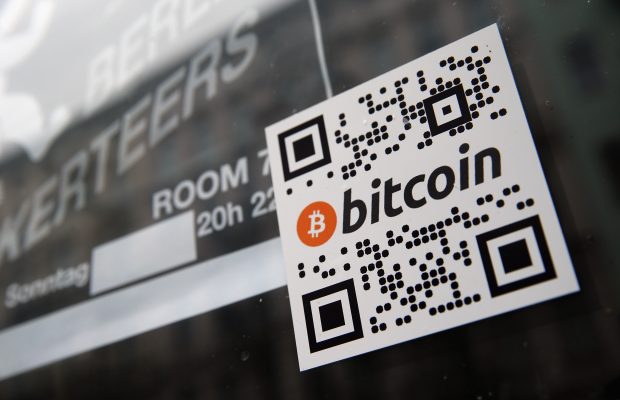
    Electronics chain Bic Camera has teamed up with Tokyo-based BitFlyer, which runs the largest Japanese bitcoin exchange, for a trial run of the payment system at Bic Camera’s flagship shop in Tokyo’s Yurakucho district, and at Bicqlo Bic Camera, the hybrid outlet with Uniqlo in Shinjuku.

    Customers can pay up to ¥100,000 (US$900) using the cryptocurrency, as well as earn reward points at the same rate as for cash payments. Bic Camera may roll out the payment system to other locations depending on its support.

    Meanwhile, Recruit Lifestyle, the retail support arm of human resources conglomerate Recruit Holdings, is partnering with another Tokyo bitcoin exchange company, Coincheck. The virtual currency will become a payment option at shops with the AirRegi POS app developed by Recruit Lifestyle.

    By using tablets or other devices provided by the store, or their own smartphone, customers can deduct the amount on the bill from the designated bitcoin account. Coincheck will convert the bitcoins into yen and transfer the funds to the store.

    AirRegi is used at 260,000 eateries and other retail locations throughout Japan. Businesses can choose to install the bitcoin payment system alone.

    The app is also compatible with Alipay, the payment platform developed by Alibaba Group and used by many Chinese tourists visiting Japan.

    Only about 4500 stores in Japan accept bitcoin payments. Rakuten’s Edy and Suica are leading electronic payment methods in Japan. The addition of AirRegi and Bic Camera outlets will multiply the number of bitcoin-compatible stores to around 260,000, nearing the 380,000 outlets that accept Suica and the 470,000 locations where Edy can be used.

    More than 20 million people worldwide use bitcoin, with the monthly trading volume reaching ¥12 trillion. But more than 80 per cent of users are in North America and Europe. Bitcoin has mainly been traded for investment purposes because its value fluctuates, but it is also increasingly used by overseas travellers as it saves them the need to exchange currencies.

    Japan has just started classifying virtual currency as a payment method, and cryptocurrency exchanges must register with the government. From July, purchases of virtual currency will be exempt from consumption tax.

  • Takashimaya Duty Free Shop opening soon

    Takashimaya Duty Free Shop opening soon

    Takashimaya Duty Free Shop, Tokyo’s latest downtown duty-free store, will open late next month.

    The 2800 sqm retail outlet is a JV between department store company Takashimaya, travel retailer ANA Trading and Hotel Shilla. It will be on the 11th floor of the new Takashimaya Times Square development, in the Shinjuku area.

    Other major downtown duty-free projects scheduled to open in Tokyo include Japan Duty Free Ginza and Lotte Duty Free Tokyo Ginza.

    Takashimaya Duty Free Shop is directly connected to Shinjuku Station and to Shinjuku Expressway Bus Terminal, allowing easy access to Tokyo’s airports.

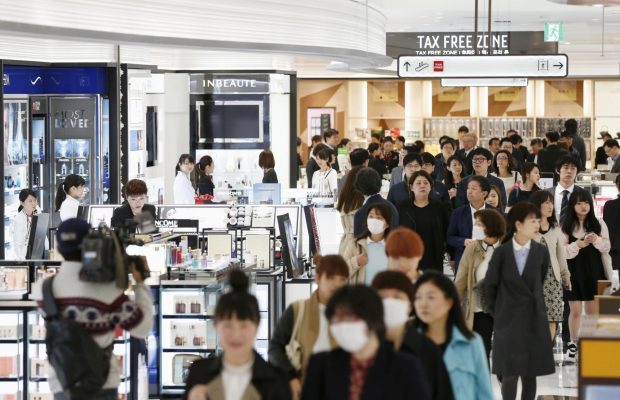
    A spokesperson for The Shilla Duty Free says Japanese cosmetics will be a key focus of the store. There will also be a tax-free zone for Japanese brands including cosmetics, food/confectionery, souvenirs, fashion and electronics.

    Goods bought at downtown duty-free stores must be collected at Narita or Haneda airport, while tax-free Japanese-made items can be collected in the stores.
    Chinese group tours will be a target audience, with Takashimaya Duty Free establishing infrastructure such as bus parking spaces, and developing offers to appeal to such visitors.

    A&S Takashimaya Duty Free Company was established last June, with Takashimaya holding a 60 per cent stake, with ANA Trading and Shilla each holding 20 per cent.

    Takashimaya Times Square includes a Takashimaya department store, brands like Nitori, Tokyo Hands and Uniqlo, as well as restaurants and a spa avenue.

  • 6ixty8ight expansion plan to Korea

    6ixty8ight expansion plan to Korea

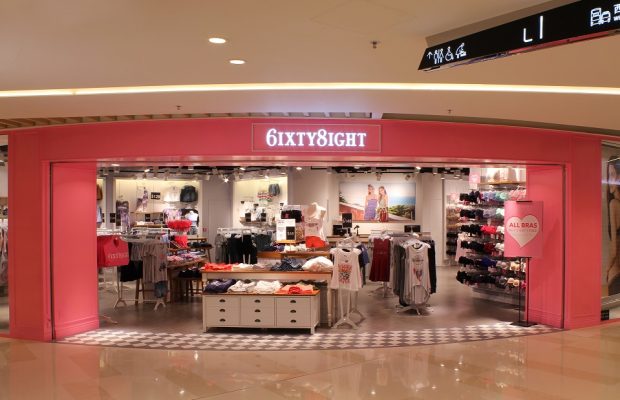
    Hong Kong-headquartered youth fashion brand 6ixty8ight has chosen South Korea for its first international foray outside Greater China.

    The company will open a flagship store in Myeongdong, downtown Seoul, at 992 sqm, its third largest footprint. A second store will follow on the fashion street of Garosu-gil in Sinsa-dong of southern Seoul.

    Owned by Hop Lun Group, which has for 25 years manufactured lingerie for many of the world’s largest brands, 6ixty8ight sells affordable, fashionable lingerie and casual wear designed specifically for the Asian female figure.

    Over the last two years, the retail brand has undergone a revamp and launched a major expansion, now numbering more than 130 stores through Hong Kong and Mainland China.

    Last year, in an exclusive interview, 6ixty8ight COO Anders Heikenfeldt said the secret to the brand’s new success has been a single-minded focus on who it is, what it stands for and who its customers are – a narrow band of 15 to 30 years.

    “We have a unique offer. Our value proposition is different to H&M, Zara, Forever 21 or Uniqlo – they go broad trying to cover menswear, women, kids – very mass – and they have something for everyone under the one roof.

    “Our strategy is to be very different and to be very true to our target. That’s our DNA. We are not going to divert into men or older customers.”

    At the time, Heikenfeldt said the company was in the final stages of planning to enter two international markets. It has not yet revealed the second.

  • Concept store Uniqlo Move opens in Tokyo

    Concept store Uniqlo Move opens in Tokyo

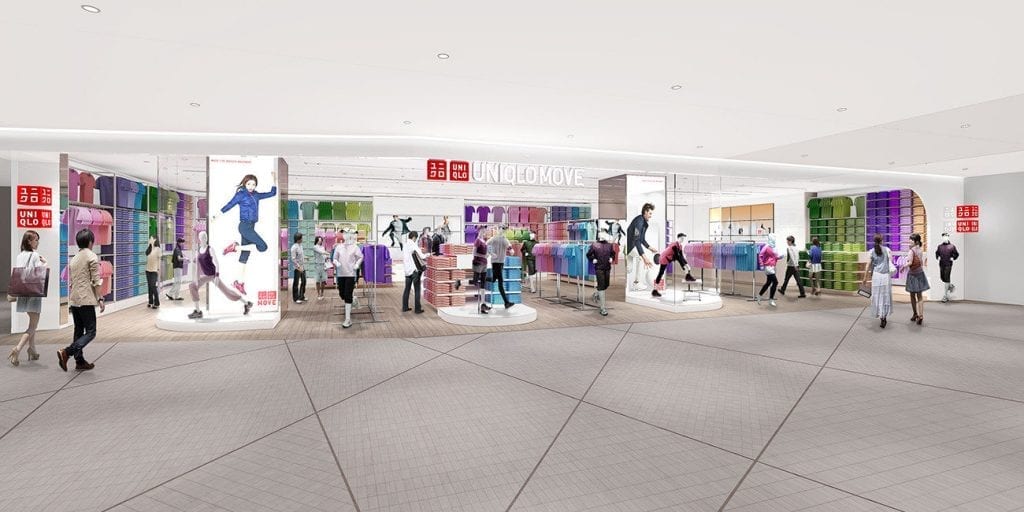
    A lifestyle-focussed concept store, Uniqlo Move, has been launched in Tokyo by the Japanese fashion basics retailer.

    It features its LifeWear range of activewear in a space on the eighth floor of Shinjuku Takashimaya department store.

    Sections of the 75 sqm store will be arranged according to movement, ranging from everyday life to exercise. Not only will the store offer products and visuals different to Uniqlo stores, but it will also act as an information hub for tips on making everyday life “more active and comfortable”, says the retailer.

    Dubbed “The Science of Lifewear” in its entirety, the brand’s first global campaign launched last year, being described by creative director John Jay at Uniqlo parent company Fast Retailing as “the ongoing innovation of simplicity”.

    As the range was developed last year, mountaineer Marin Minayama has appointed the brand’s first female ambassador.

  • Uniqlo targets Zara in faster fashion move

    Uniqlo targets Zara in faster fashion move

    From fast fashion to faster fashion: speed is seen as the key by Uniqlo owner Fast Retailing in its bid to outrace apparel powerhouse Zara.

    Uniqlo founder Tadashi Yanai says Fast Retailing plans to shorten the time it takes from design to delivery to about 13 days, roughly the same as Zara, owned by clothes retailer Inditex.

    He says the company’s new design and delivery centre in Tokyo will also help Uniqlo expand direct-to-consumer, custom-clothing sales and improve the efficiency of its same-day delivery in the city.
    “We need to be fast,” he says. “We need to deliver products customers want quickly.”

    Japan’s biggest clothing retailer aims to increase total revenue by nearly 70 per cent to ¥3 trillion (US$26 billion) in the fiscal year ending August 2021. While that may still not be enough to overtake Inditex, which reported sales of $25 billion last year, Yanai says Fast Retailing’s focus on clothes that meet consumers’ daily needs will help propel its growth.

    “Zara sells fashion rather than catering to customers’ needs,” he says. “We will sell products that are rooted in people’s day-to-day lives, and we do so based on what we hear from customers.”

    Overseas markets, notably in Asia, will grow to contribute about two-thirds of Fast Retailing’s revenue in the next four years, up from about half currently. Uniqlo will open 100 stores in China and another 100 in Southeast Asia annually, says Yanai.

    Concentration for speed

    The company’s new complex, in the Ariake district along Tokyo’s waterfront, houses more than 1000 employees, including designers and marketing teams, and also has a warehouse and delivery department. Yanai says that concentrating resources into one location will help speed processes.

    “The ability to provide anybody, anywhere, anytime with the ultimate, high-quality day-to-day clothing will set us apart,” he says. “We want to deliver products that customers want quickly. That’s why it’s Fast Retailing.”

    After revenue growth of more than 20 per cent for three straight years, Uniqlo sales took a hit in the latest fiscal year. The growth rate slowed to 6 per cent after the brand raised prices because of higher raw-material costs.

    Following the slowdown, the company did a U-turn on its pricing strategy, saying it was committed to delivering the lowest price possible. However, it had to roll back its 2021 revenue target to ¥3 trillion from ¥5 trillion.

  • Retailers snag prime spots for flagships amid lower rentals

    Retailers snag prime spots for flagships amid lower rentals

    Rising vacancies and plunging rentals in shopping malls may be a headache for landlords, but it is not all bad news for retailers who have taken advantage of lower rentals to snag prime locations for their flagship stores.

    More than 10 flagship stores were set up islandwide last year, noted property consultancy Cushman & Wakefield’s research director Christine Li. This is the highest number since the global financial crisis in 2009, she said.

    The last wave of flagship stores were set up between 2007 and 2009, when Orchard Road was undergoing a makeover.

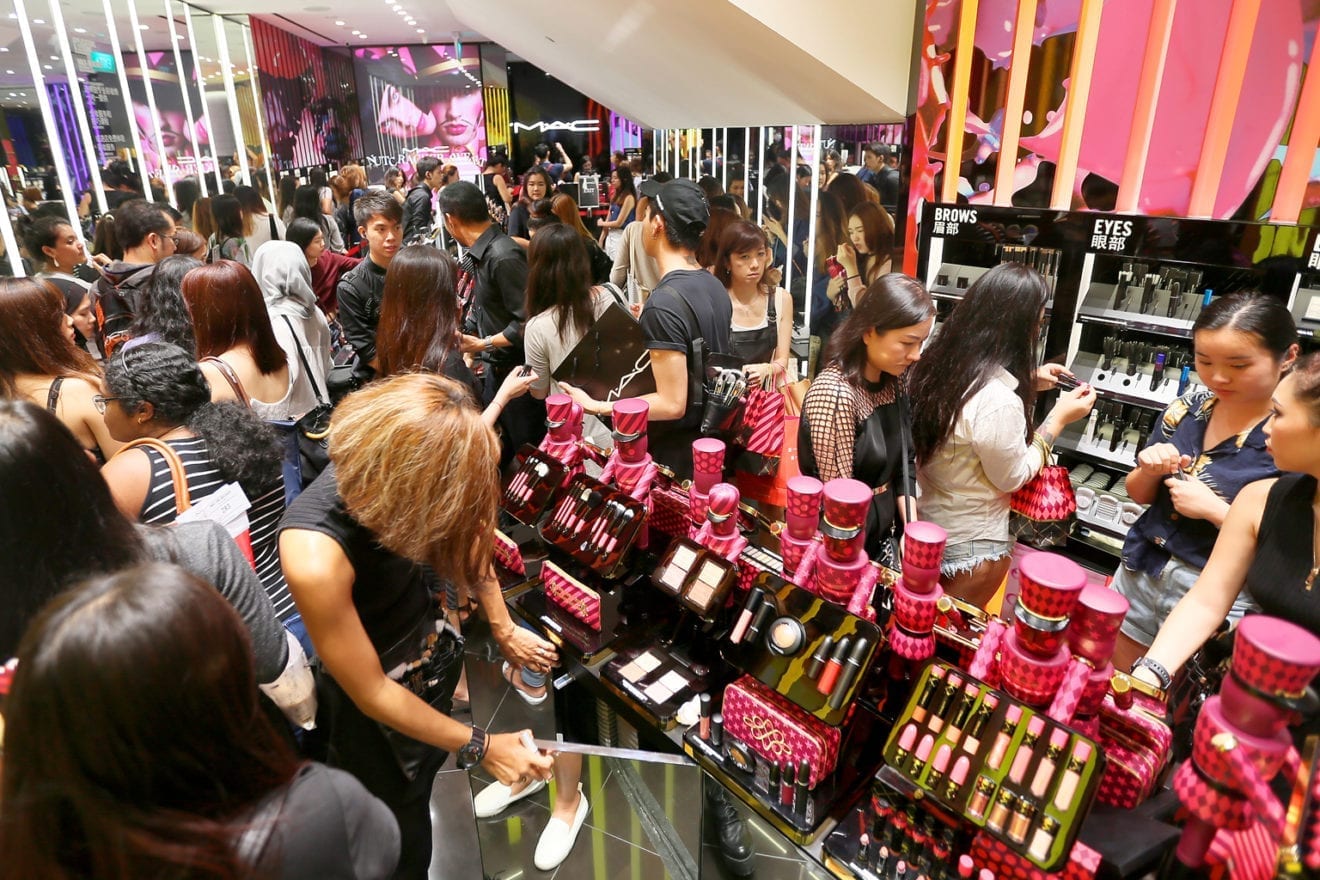
    Last year, cosmetics label MAC and Sephora opened flagships at Ion Orchard, while Japanese fashion retailer Uniqlo unveiled a three-storey store in Orchard Central. Other new flagships include those of watch brand Rolex at Marina Square and German leather goods brand Braun Buffel at Marina Bay Sands.

    Ms Li said: “In the lower rent environment, 2016 saw a ‘flight to quality’ as retail brands that are still optimistic on expansion took this opportunity to upgrade to larger prime retail spaces vacated by previous tenants.”

    • 10 At least this number of flagship stores were set up islandwide last year. This is the highest number since the global financial crisis in 2009.

    She said flagships are strategic, as they reinforce and enhance a brand’s presence and status.

    Uniqlo’s founder Tadashi Yanai said the firm decided to open a flagship in Orchard Road as it sees Singapore as a gateway to not only the markets in South-east Asia but also in the Middle East and Africa.

    “Despite the faltering retail climate in Singapore, Uniqlo’s belief in the potential of this region is what has driven (our) decision to launch the three-storey Global Flagship store here,” he said.

    The islandwide vacancy rate for retail space was 7.5 per cent at the end of last year, up from 4.5 per cent at the end of 2013, Urban Redevelopment Authority (URA) data showed.

    The climbing vacancy rate has, in turn, reduced rental rates. The median rental rate for retail space in the third quarter of last year was the lowest on record, falling to $9.82 per sq ft per month for the Orchard Road area – the first time it fell below $10, URA data showed.

    Riding on the wave of soft rents, French sporting goods retailer Decathlon even secured a 15-year lease for a 35,000 sq ft outlet in Viva Business Park in Chai Chee, which opened in January last year.