Retail News CRM

Tag: unlock

  • Unlock Luxury: Tiffany & Co Launches Expanded Flagship Store and Blue Box Cafe in Hong Kongs Lee Gardens

    Unlock Luxury: Tiffany & Co Launches Expanded Flagship Store and Blue Box Cafe in Hong Kongs Lee Gardens

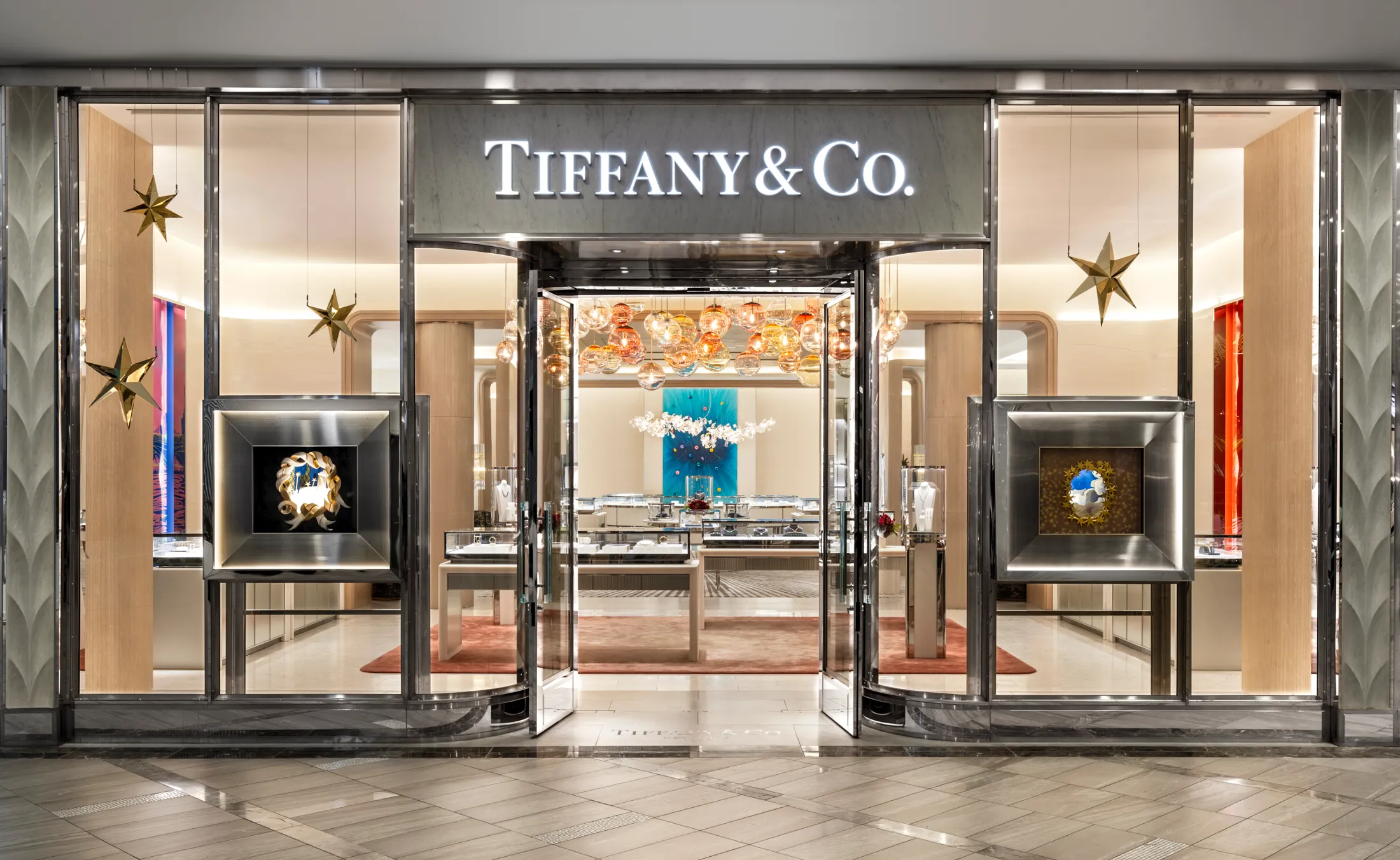
    Tiffany & Co, esteemed luxury jewellery brand, has broadened its reach in Hong Kong with the inauguration of a flagship store at Lee Gardens, introducing a fresh retail experience.

    The boutique, situated in Causeway Bay, extends over two floors and more than 770 square meters. It boasts specialized areas for high jewellery, watches, home accessories, and exclusive client appointments.

    Upon entering the 414 square meter ground floor, customers are greeted with an impressive display of Tiffany’s esteemed jewellery collections. These include the HardWear, Lock, Knot, and T ranges. Adding a touch of exclusivity, a dedicated high jewellery salon is also housed on this floor.

    The boutique’s interior exudes elegance, featuring metallic finishes, soothing color palettes, and bespoke design elements. A particularly eye-catching highlight is the exquisite orchid mural, which adorns a private salon space.

    The first floor, spanning 359 square meters, provides a multi-faceted experience for the clientele. It encompasses a watch salon, a home & accessories section, and the novel Blue Box Cafe which is set to open its doors next month. The brand also revealed the integration of artworks by notable artists Gregor Hildebrandt, Shim Moon Seup, Vik Muniz, and Sho Shibuya.

    The upcoming Blue Box Cafe will serve as a culinary treat for the customers, offering a unique, Japanese-inspired dining experience. The cafe will utilize local ingredients in its offerings, which will span across breakfast, teatime, and an all-day menu.

    The Causeway Bay store follows the opening of the first Tiffany Blue Box Cafe in Asia, which was launched in Hong Kong’s Tsim Sha Tsui last year. This marks the brand’s second cafe venture in the market.

    Questions & Answers

    **What does the new Tiffany & Co boutique in Causeway Bay offer?**
    The new boutique offers dedicated spaces for high jewellery, watches, home accessories, and private client appointments. The store also houses a new Blue Box Cafe and features artwork from renowned artists.

    **What will the new Blue Box Cafe offer to customers?**
    The Blue Box Cafe will provide a Japanese-inspired dining experience, featuring local ingredients across breakfast, teatime, and an all-day menu.

    **How many Blue Box Cafes does Tiffany & Co have in Hong Kong?**
    With the opening of the Blue Box Cafe in the Causeway Bay boutique, Tiffany & Co now operates two cafes in Hong Kong; the first one is located in Tsim Sha Tsui.
  • Unlock Personalized Deals and Tailored Ads with Google Wallet’s Latest Update: Here’s How

    Unlock Personalized Deals and Tailored Ads with Google Wallet’s Latest Update: Here’s How

    Google has been improving its Google Wallet app, making it a convenient hub for Android users to digitally store items such as credit and debit cards, passports, tickets, and transit passes. Despite these features, Google Wallet may not be as frequently used as other Google apps, such as YouTube, Messages, Keep, Drive, Email, Chrome, and the Google app.

    Upcoming Changes to Google Wallet

    However, Google Wallet should not be disregarded. Reports suggest that Google has been undergoing modifications to enhance the app’s utility. Insights from a recent teardown of the Wallet app indicate that Google is developing the Google Transit Card. This feature will enable users to pay for public transportation using a specific card without the necessity to unlock their phone, an addition that will undoubtedly be beneficial and time-saving for daily commuters.

    Additionally, the Wallet app is set to offer unique deals based on the loyalty cards stored within the app, provided certain settings are enabled.

    Data Management and Privacy Settings

    A forthcoming update to the Google Wallet app will allow U.S. users to manage their data and privacy settings. These settings can be utilised to create personalised experiences across Google. With your Google Wallet payment information and activity enabled for personalising content and experiences across Google, you will be able to view recommendations or deals based on the loyalty cards in your wallet.

    Google can utilise your purchasing information and details about the loyalty cards in your wallet to provide special deals and personalised ads that may be of interest to you. If you are uncomfortable sharing information about your wallet’s loyalty cards and purchases with Google, these settings can be disabled.

    Enabling Personalisation Settings

    To enable this setting in the app, open the Google Wallet app and tap on the profile icon in the upper right corner. Navigate to Your data in Wallet > Manage data from Wallet and payments services, then toggle on or off the setting Use Wallet to personalise experiences across Google.

    If you’re using a desktop computer, go to wallet.google.com, select Settings from the left sidebar, then under “Data & Privacy,” toggle on or off Use Wallet to personalise experiences across Google.

    Wallet History for Personalised Ads

    The Wallet History feature uses information from Google Wallet and payment services to help Google serve you more customised and useful ads. This setting can be turned on within the app by navigating to Your data in Wallet > Manage data from Wallet and payments services > Use Wallet to personalise Google Ads. Users can toggle this setting on or off at My Ad Center.

    This setting can also be activated via desktop by going to wallet.google.com, selecting Settings on the left, then under “Data & Privacy,” toggling on or off Use Wallet to personalise Google Ads. Users will be directed to My Ad Center to complete the process.

    When both settings are enabled, Google will utilise the data from your purchases, loyalty cards, event tickets, and boarding passes to offer more personalised services. These can manifest as personalised ads, promotions, and recommendations.

    Rolling out the Update

    Google has stated that the update to Google Wallet will be gradually rolled out. Users who do not yet see these settings in the Google Wallet app should expect to receive them in due course. When the settings become available in your Google Wallet app, you will receive a notification from Google.

    Questions & Answers

    What updates are being made to the Google Wallet app?
    In addition to the existing features, Google is reportedly developing a Google Transit Card to simplify payments for public transportation, and is also enhancing data and privacy settings to offer personalised experiences based on stored loyalty cards.

    What is the Google Transit Card?
    The Google Transit Card is a new feature being developed for the Google Wallet app. It will allow users to pay for public transportation using a specific card, without having to unlock their phone.

    How can I personalise my experience on Google Wallet?
    With the upcoming update, users can manage their data and privacy settings, which will then be used to offer personalised deals and recommendations based on the loyalty cards stored in your wallet. You can also enable Wallet History to receive more customised ads.

  • Adapting To Trade Changes: Fedex Bolsters Support For Asia Pacific Businesses Amid Market Shifts

    Adapting To Trade Changes: Fedex Bolsters Support For Asia Pacific Businesses Amid Market Shifts

    Federal Express Corporation, a world-leading express transportation company, is enhancing its support for businesses throughout the Asia Pacific. This move is in response to adapt to shifting market priorities, alterations in tariffs, and changes in customs regulations.

    In response to recent modifications to the U.S. de minimis exemption rules, FedEx arranged a series of webinars across nine markets in the Asia Pacific. These sessions attracted over 3,800 customers ranging from small- and medium-sized enterprises to multinational corporations. The webinars offered valuable insights on maintaining operational efficiencies, customs clearance, avoiding unexpected costs, and enhancing shipping automation. This has equipped businesses with the necessary tools and guidance to navigate the intricate trade environment of today.

    Trade Priorities and Market Shifts

    Feedback received after the webinars underlined two significant trends in cross-border trade priorities: Delivered Duty Paid disbursement fees and shipment duties and taxes.

    Whilst one-fourth of the APAC businesses surveyed still regard the United States as their primary market, over 40% are planning to redirect their attention to Intra-Asia (22%) and Europe (21%) over the coming year.

    Cost control and duty visibility are key concerns, with 25% of APAC businesses emphasising the need for clear pre-regulatory volatility. The difficulty of keeping pace with ever-changing rules has been cited by 27% of businesses as a significant barrier to trade.

    Salil Chari, Senior Vice President of Marketing and Customer Experience for the Asia Pacific at FedEx, stated, “We are working closely with our customers to ensure they maintain efficient access to vital markets. We are leveraging our deep regulatory expertise, innovative digital tools, and the strength of our global network to help Asia Pacific businesses improve cost and duty transparency, reduce clearance friction, and unlock new growth opportunities across the region and Europe with confidence.”

    Strengthening Cross-Border Business

    In response to businesses’ increasing demand for greater trade guidance and digital solutions to support supply chain diversification and cross-border trade expansion, FedEx plans to expand its comprehensive suite of offerings.

    FedEx is one of the leading entry-filers in the U.S. and provides 24/7 support to ensure smooth shipment movement across more than 220 countries and territories. For U.S.-bound trade requiring particular attention, FedEx’s U.S. Tariff Hub offers updated guidance on tariffs, required documentation and customs policies.

    Furthermore, 27% of APAC businesses are seeking automated tools to expedite customs clearance. To this end, FedEx continues to invest in digital trade solutions, such as the industry-leading AI-enabled Harmonized Tariff Schedule code-lookup feature and a Customs AI chatbot.

    FedEx is also working to strengthen connectivity across critical intra-Asia and Asia-Europe trade corridors to support Asia Pacific businesses looking to diversify beyond the U.S.

    Questions & Answers

    What initiatives has FedEx introduced to support businesses in the Asia Pacific?
    FedEx has arranged a series of webinars providing insights on maintaining operational efficiencies, customs clearance, and cost management. They are also expanding their suite of offerings to include automated tools for customs clearance and strengthening connectivity across critical trade corridors.

    What are the top concerns of APAC businesses according to the feedback received by FedEx?
    The top concerns are cost control, duty visibility, and the difficulty of keeping pace with changing trade regulations.

    What digital solutions has FedEx introduced to support customs clearance?
    FedEx has introduced an AI-enabled Harmonized Tariff Schedule code-lookup feature and a Customs AI chatbot to help expedite the customs clearance process.

  • You might soon unlock your BMW with your iPhone

    You might soon unlock your BMW with your iPhone

    Apple and premium German car manufacturer BMW are seemingly collaborating to bring the CarKey iPhone feature to eligible vehicles of the carmaker. Evidence for this was unraveled in the iOS 14 code, hinting that iPhone users might soon be able to unlock their BMW cars with their iPhones thanks to the CarKey feature. As a reminder, the existence of CarKey itself was revealed in the iOS 13.4 beta back in February.

    Given that BMW was among the very first automakers to adopt Apple’s CarPlay feature a few years back, it would make sense to assume that CarKey could be adopted on upcoming beemers as well.

    It seems that CarKeys could be stored inside the ubiquitous Wallet app and even be shared with other people through iMessage. “Yo, mom, shared me the keys for the car” would sound a whole lot cooler! Code strings suggest that you will not only be able to lock and unlock your vehicle with your device, but also start it remotely. This is already available through the BMW Connected app, but native iOS support would definitely be great. There would seemingly be two ways to unlock the car – either by holding your phone near the NFC-enabled door handle or just having your iPhone in your pocket.

    Apple could use NFC, UWB (ultra-wide band) chip, or a combination of the two. The UWB chip debuted with the iPhone 11-series but has been pretty underused when it comes to features, as it’s currently only used to aid AirDrop discovery.

    On the topic of anti-theft countermeasures, CarKey will enjoy the same level of biometric security that the sensitive data on your iPhone enjoys, but there would seemingly be an option to use CarKey without having to authenticate yourself with a Face ID scan or a PIN code for an even faster experience.

    BMW itself neither denied or acknowledged the rumored functionality. When asked, the company replied rather nonchalantly with “Please understand that at this point we cannot confirm your request nor give you further details. We would like to refer you to our press release, ” which suggests that we could be in for news on the matter very soon.