
Tag: up

  • Macau retail sales surge after Covid-19 lockdown

    Macau retail sales surge after Covid-19 lockdown

    The value of Macao’s retail sales for the second quarter of 2021 totaled 20.70 billion patacas (about 2.58 billion U.S. dollars), up 200 percent year on year, the special administrative region’s statistic department said on Tuesday.

    The latest report from the Statistics and Census Service (DSEC) showed that among the major retail trade activities, sales values of watches, clocks and jewelry, leather goods, and communication equipment witnessed a notable year-on-year growth of 957.9 percent, 504.0 percent, and 460.4 percent respectively, whereas sales value of supermarkets dropped by 11.3 percent.

    As regards the sales volume index, the indices of watches, clocks and jewelry, leather goods, and communication equipment registered a significant rise, while the index of supermarkets decreased.

    For the first half-year of 2021, the value of retail sales reached 39.46 billion patacas, an uplift of 118.4 percent year on year. Besides, the sales volume index jumped by 130.4 percent.

    The value of retail sales in the second quarter of 2021 rose by 10.3 percent as compared with the revised figure of 18.76 billion patacas in the first quarter. Sales values of department stores and watches, clocks, and jewelry increased markedly, whereas sales values of communication equipment declined.

    Moreover, the sales volume index grew by 9.9 percent quarter on quarter.

    In respect of retailers’ comments, 40.9 percent of the retailers expected the sales volume to stay stable year on year in the third quarter of 2021, 42.9 percent anticipated a decrease, and 16.2 percent forecast an increase. Meanwhile, 78.0 percent of the retailers predicted that the retail prices would remain steady year on year in the third quarter, 15.3 percent foresaw a decrease and 6.7 percent expected an increase.

    As compared with the second quarter of 2021, about 44.7 percent of the retailers envisaged sluggish business in the third quarter, whereas retailers expecting stable performance and those anticipating a favorable outlook together accounted for 55.3 percent of the total.

  • Beef prices rise as global supply gets ‘very tight’

    Beef prices rise as global supply gets ‘very tight’

    Beef prices are reaching record levels in some international markets with localized disruptions – including droughts and increased consumer demand in some countries – exerting a “dramatic impact” on global trade, according to Rabobank.

    In its Q2 Beef Quarterly research, the bank says a fundamental shift is underway in international beef market dynamics creating a “very tight” global market for beef cattle.

    The report’s co-author, Rabobank senior animal proteins analyst Angus Gidley-Baird, says local factors include the post-drought herd rebuilding in Australia which has reduced the number available for slaughter, and soaring demand in the US as restaurants reopen after Covid-related trading restrictions. Meanwhile, Chinese consumers are eating more beef.

    “Given the growth in demand (for beef) and global trade, pressures created in the system now mean that what may once have been considered slightly abnormal seasonal conditions (for example) are now causing major shifts to markets,” the report says.

    In the US, wholesales prices in April were running 18.5 percent higher than those of April 2019 and retail prices were up by 11.5 percent.

    “This is the result of a number of factors, including renewed competition between foodservice and retail triggered by the reopening US economy, combined with grilling season, high consumer incomes, and strong exports,” he said.

    In Australia, successive years of drought have forced farmers to liquidate stock resulting in the country’s smallest beef cattle herd in 30 years. East Coast cattle slaughter was down 30 percent in April, for example. These factors underpinned a 30-per-cent year-on-year surge in young cattle prices in February last year and a further 20 percent last February.

    But it is not all bad news for local farmers, said Gidley-Baird.

    “While lower volumes and higher prices make competing in the global market more difficult, the tight market situation is working in Australia’s favor and creating less resistance to our high prices,” he said.

    “We believe that current cattle prices in Australia will ease as cattle numbers increase and producer demand dissipates. However, as the supply chain overcomes the disruption here and consumers adjust their price expectations, we believe the market will adjust and a new baseline will be established.”

    In China, efforts to increase local beef production are failing to match increasing demand from consumers, forcing the country to rely on imported beef which is in short supply and commanding a higher price. Many Chinese consumers have switched from pork to beef after an outbreak of African swine fever.

    “While part of the beef consumed as a substitute for pork and will shift back when pork production recovers, we expect strong Chinese beef demand to remain as new markets have been established,” said Gidley-Baird.  “This will continue to drive Chinese beef imports from the global market.”

    Australia’s beef exports were down 22 percent in April and are running 11 percent below the five-year average. China accounted for just 17 percent of that, down from 24 percent in 2019.

  • Australian dollar up Again

    Australian dollar up Again

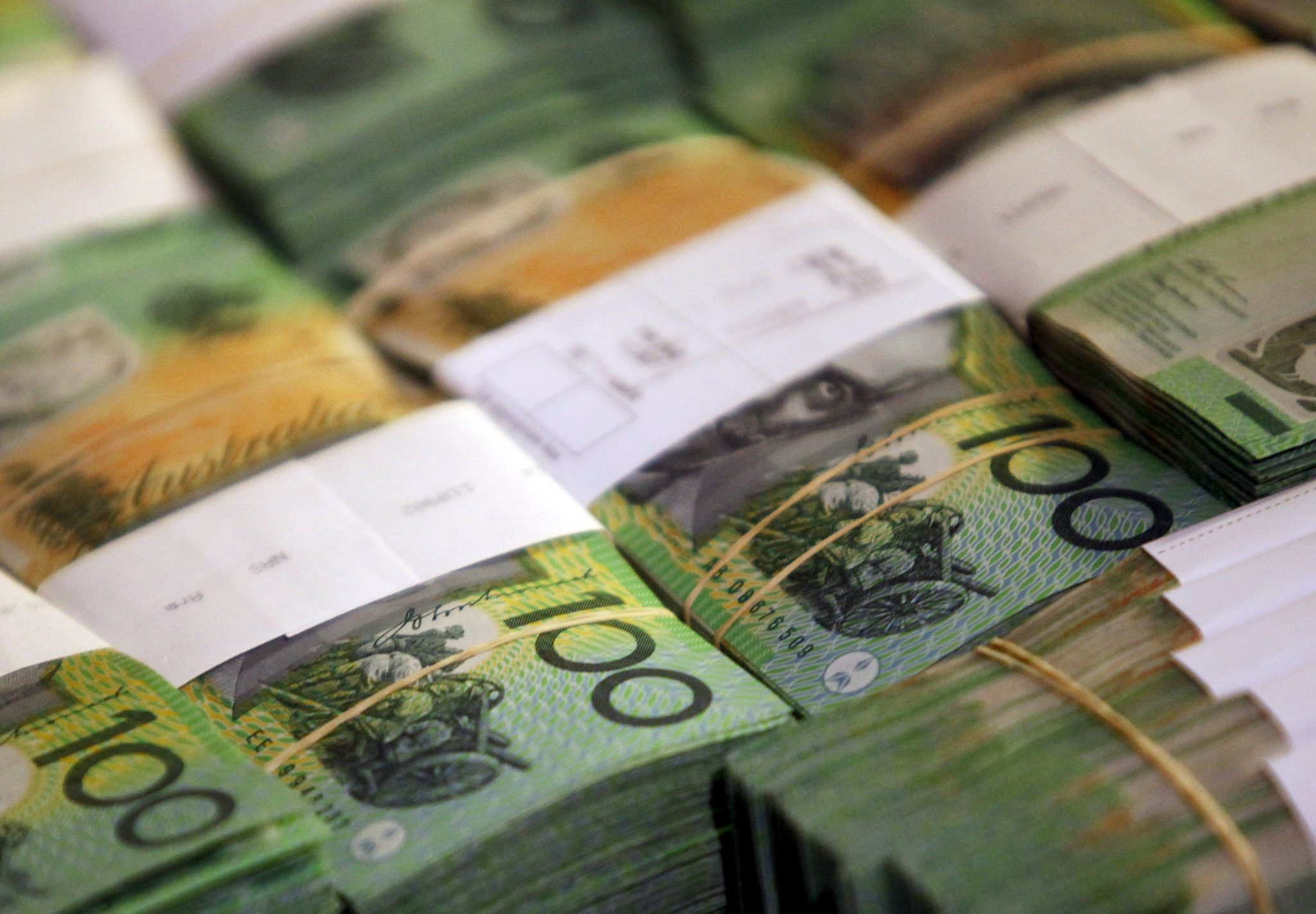
    The Australian dollar has risen Monday, buying 70.42 US cents from 70.25 US cents on Friday.

    Last Friday, the local currency tumbled to a six-week low and three-year bonds rallied to record highs after surprisingly weak inflation data boosted calls for Reserve Bank rate cuts.

    The Australian dollar slid as low as 70.31 US cents on Wednesday, a level not seen since March 11, after first-quarter inflation slowed to the lowest in three years to 0 per cent when analysts were looking for a 0.2 per cent increase.

    Key measures of underlying inflation favoured by the Reserve Bank of Australia (RBA) averaged 1.4 per cent for the year, marking 13 quarters below the central bank’s target range of 2 to 3 per cent.

    In 2016, the last time inflation was this tepid, the RBA reacted with two rate cuts to the current record low of 1.50 per cent. It has since sat on the fence on policy, awaiting a pick-up in prices and a drop in the unemployment rate.

    Wednesday’s data fuelled more calls for a rate cut, with ING Bank, JP Morgan and Citi becoming the latest to predict an easing as early as next month.

    “Australian inflation shows no signs of coming anywhere near the central point of the RBA’s 2-3 per cent range, and we are biting the bullet and changing our ‘on-hold’ call for the RBA to a cut, possibly as early as the 7 May meeting,” ING economists said in a note.

    “We can’t now see how the RBA can ignore such a bad inflation miss, even with last week’s strong employment gains.”

    Wednesday’s weak inflation report set government bond futures on fire, with the three-year bond contract surging to a record high of 98.750 sending yields below the cash rate to 1.25 per cent.

    Interest rate futures sharply narrowed the odds on an easing. The probability of a May 7 cut doubled to 44 per cent and a quarter-point move was fully priced for July, compared to an October timing earlier this week.

    Across the Tasman Sea, the New Zealand dollar was 0.5 per cent down at $0.6627, languishing near its lowest since early January. The kiwi has fallen or stayed almost flat in nine of the last 10 sessions.

    The currency has been in a downward trend since late March after the country’s central bank abandoned its long-standing neutral bias to say its next move in interest rates was likely down.

    That followed underwhelming inflation data that further boosted the probability of a rate cut in New Zealand.

    New Zealand government bonds were slightly higher with yields down about 5 basis points at the long end of the curve.

  • Wearable devices have bright future in China

    Wearable devices have bright future in China

    A latest survey showed that wearable devices will become more popular in the Chinese market in the next five years.

    For wearable health devices, 39 percent of respondents worldwide plan to buy one by 2020, but 65 percent of Chinese consumers surveyed already have an interest in buying one, according to a survey filed to Xinhua Saturday by Accenture, a consulting and technology services company.

    As many as 67 percent of Chinese consumers are likely to buy wearable fitness monitors and 73 percent wants smart watches in the coming five years, more than doubled 32 percent and 27 percent in the United States.