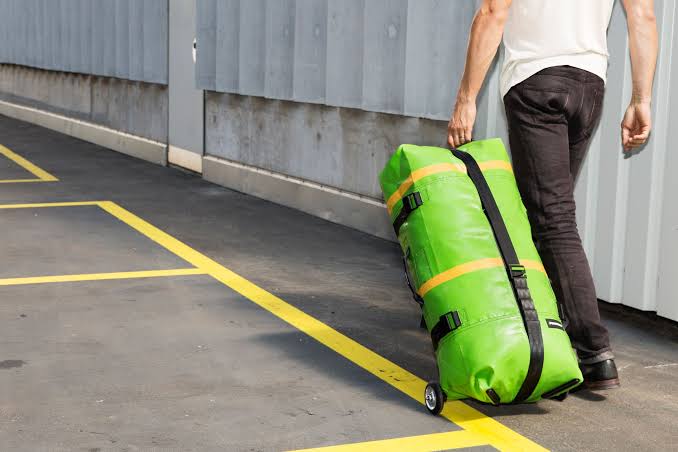
Freitag launched a four-bag collection called Reference on Thursday. The line pushes its upcycled truck-tarp business into higher price tiers across 30 company stores and 200 retail partners worldwide.
The Swiss brand sells its accessories primarily in European and Asian markets. In those regions, its store network also functions as a return, repair and resale ecosystem.
Higher production costs and monochrome sourcing
European manufacturing partners assemble each Reference handbag in small runs using single-color truck tarpaulins. The monochrome look departs from the company’s multi-colored aesthetic to target shoppers seeking minimalist design. Every bag includes a detachable repair kit made with matching tarpaulin, thread and lining to allow repairs decades later.
Circular production economics remain tough. Markus Freitag co-founded the brand with his brother Daniel in 1993. He confirmed that preparing used tarps costs roughly three times more than purchasing new raw material. The company collects tarpaulins across Europe, inspects each piece, strips the material by hand and washes it before cutting begins.
The retail calculation for Asian store networks
For department store landlords and franchise partners across East Asia, the Reference line offers a way to lift average transaction values without increasing volume. Freitag has built concentrated followings in Tokyo, Seoul and Shanghai. The company avoids chasing unit growth, choosing instead to elevate product tiers and protect margins squeezed by labor and cleaning costs.
Consumer willingness to pay luxury prices for industrial waste poses the primary commercial risk during a broader luxury slowdown. Freitag frames monochrome tarps as equal to traditional luxury leathers. Shoppers in key Asian retail hubs may scrutinize whether stripped-back upcycled items command premium price tags when competing against established designer leather goods.
Two decades of architectural and circular retail
The release coincides with the 20th anniversary of Freitag’s flagship store in Zurich, constructed in 2006 from 19 stacked freight containers. Swiss authorities made the temporary structure permanent in 2014. In 2025, the company added a dedicated Repair Kiosk to the site to handle product servicing.
Chief executive Janine Weiz-Bühler said the business aims to broaden its demographic reach without abandoning its environmental mandate. “We prove that upcycling and elegance are not a contradiction,” Weiz-Bühler said. She noted that the company views the elevated collection as an expansion of its existing lineup rather than a structural rebrand.
Road-testing circular tarpaulins and mono-materials
Freitag is also running road tests on prototype circular tarpaulins developed with industrial partners. These materials are engineered to undergo mechanical or chemical recycling into fresh base materials once removed from commercial trucks.
Management is monitoring customer adoption of its Mono backpack. Recyclers can shred the bag directly into nylon granules without disassembly because it is constructed entirely from a single polyamide grade.