Retail News CRM

Tag: usd

  • US Dollar Stumbles Against Vietnamese Dong Amid Market Turbulence

    US Dollar Stumbles Against Vietnamese Dong Amid Market Turbulence

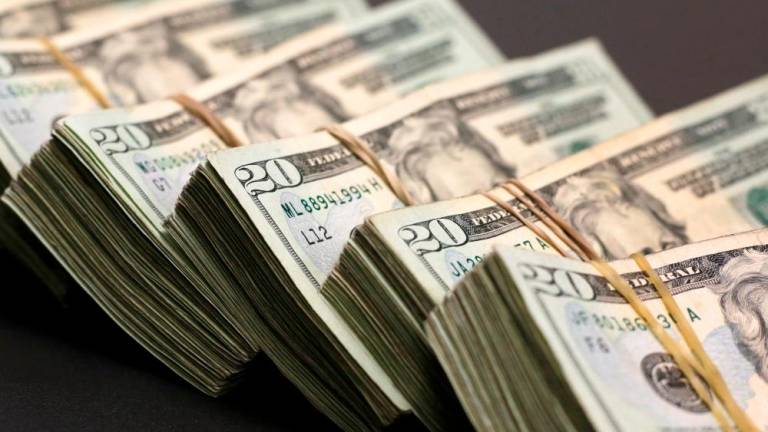
    In the unofficial trading market on Saturday morning, the U.S. dollar experienced a decline against the Vietnamese dong. The greenback was sold 0.04% lower at VND26,410 at these non-official trading spots. Meanwhile, Vietcombank, a significant financial player in the region, maintained its rate at VND26,490.

    A Global Perspective on the Dollar’s Performance

    Worldwide, the performance of the dollar on Friday was relatively stable, but it concluded the week on a lower note. This downtrend was attributable to the moderate U.S. inflation data which resulted in traders reducing their expectations of immediate rate hikes from the Federal Reserve.

    Mounting tension between Iran and the U.S. became a crucial factor impacting the global economy. The recent week-long escalation has significantly undermined the peace agreement established last month. This development has incited investors to seek sanctuary in the dollar and has also contributed to the surge in oil prices to nearly one-month highs.

    The plummeting of the tech-dominated global equity market and the ongoing disturbance to the traffic in the Strait of Hormuz have incited a rush to safety. Elias Haddad, the global head of markets strategy at Brown Brothers Harriman, mentioned this. He also noted the U.S. dollar had recouped some of its losses from this week and that global bond yields had marginally decreased.

    Questions & Answers

    What was the impact of the U.S. inflation data on the dollar?
    The moderate U.S. inflation data led traders to reduce their bets on impending rate hikes from the Federal Reserve, which resulted in the dollar ending the week on a lower note.

    What are the effects of the escalating tension between Iran and the U.S.?
    The escalating tension between Iran and the U.S. has encouraged investors to seek refuge in the dollar and has also pushed oil prices to near one-month highs.

    How did the tech-led global equity market’s performance affect the U.S. dollar?
    The decline in the tech-led global equity market has triggered a flight to safety, helping the U.S. dollar to recover some of its losses from the week.
  • Dollar Dips Against Dong, Soars to Two-Week High Against Yen Amid Global Trade Talks

    Dollar Dips Against Dong, Soars to Two-Week High Against Yen Amid Global Trade Talks

    The US Dollar’s Fluctuating Performance Against Foreign Currencies

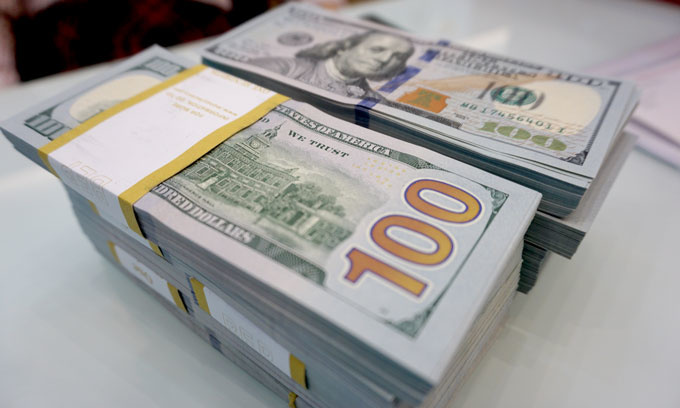
    The US dollar experienced a decline against the Vietnamese dong on Monday morning, while it simultaneously reached its most robust position in over two weeks against the Japanese yen. The greenback was sold by Vietcombank at a rate of VND26,351, marking a 0.004% dip from the weekend. However, the currency witnessed an increase of 0.18% on the black market, bringing it to VND27,750.

    Rate Adjustments by the State Bank of Vietnam

    The State Bank of Vietnam responded to these shifts by lowering its reference rate by 0.004% to VND25,097.

    Global Performance of the US Dollar

    Globally, the US dollar climbed to a high that hasn’t been seen in over two weeks against the yen on Monday, as critical worldwide trade negotiations and central bank meetings commenced. The dollar experienced a 0.15% increase against the yen, bringing it to 153.07 and hitting a peak of 153.17, the highest since October 10th. The dollar index, which assesses the greenback against a select group of peers, rose by 0.05% to reach 98.97.

    Performance Against Other Currencies

    Apart from the yen, the US dollar’s performance against other currencies remained steady. The euro remained at $1.1622 while sterling saw a slight boost of 0.04% to $1.3314. The Australian dollar also gained 0.2% against the greenback, reaching $0.6528.

    Mahjabeen Zaman, head of foreign exchange research at ANZ, suggested in a recent podcast that the strength of the dollar would likely continue in the near term. She stated: “Fed cuts are fully priced in for October and December meetings. So if anything, any cautious communication from the Fed would likely be more supportive for the U.S. dollar.”

    Questions & Answers

    What was the performance of the US dollar against the Vietnamese dong and Japanese yen recently?
    The US dollar declined against the Vietnamese dong, but it reached a more than two-week high against the Japanese yen.

    How did other currencies perform against the US dollar?
    The euro and sterling remained steady against the US dollar, while the Australian dollar saw a slight increase.

    What are the predictions for the near-term performance of the US dollar?
    According to Mahjabeen Zaman, head of foreign exchange research at ANZ, the dollar’s robust performance is expected to persist in the near term.

  • Dollar Gains Momentum Against Dong: What Retailers Need to Know

    Dollar Gains Momentum Against Dong: What Retailers Need to Know

    The U.S. dollar gained slightly against the Vietnamese dong Tuesday morning. Vietcombank listed the U.S. dollar at VND26,400, marking a 0.11% increase. Meanwhile, the State Bank of Vietnam raised its reference rate by 0.09% to VND25,206.

    On the black market, the dollar climbed 0.04% to VND26,460, reflecting a cautious sentiment amid fluctuating global currencies.

    Across Asia, the Indian rupee is poised for a weaker opening, pressured by a rise in the dollar index following a sharp decline in the euro. This reaction comes as traders assess the implications of a fresh U.S.-E.U. trade agreement, according to reports. The one-month non-deliverable forward indicated the rupee would likely debut in the 86.75-86.77 range against the U.S. dollar, a shift from the previous session’s 86.6650.

    As Asian currencies mostly experienced minor declines today, regional equities also felt the weight of this dollar strength, showcasing a broader trend of market caution.

    Questions & Answers

    What was the exchange rate of the U.S. dollar against the Vietnamese dong on Tuesday?
    The U.S. dollar was priced at VND26,400 at Vietcombank, reflecting a 0.11% increase.

    How did the State Bank of Vietnam respond to the rising dollar?
    The State Bank of Vietnam increased its reference rate by 0.09% to VND25,206.

    What external factors influenced the Asian currencies on this day?
    A notable jump in the dollar index, fueled by a steep decline in the euro, along with the reassessment of a recent U.S.-E.U. trade deal, contributed to the modest declines in Asian currencies and equities.

  • Dollar Declines as Vietnamese Dong Strengthens in Currency Market Shuffle

    Dollar Declines as Vietnamese Dong Strengthens in Currency Market Shuffle

    The U.S. dollar weakened against the Vietnamese dong Friday morning, paving the way for a weekly loss against several major currencies. At Vietcombank, the dollar was sold at VND26,310, representing a slight decline of 0.04% from the previous day. Meanwhile, the currency appreciated by 0.06% at unofficial exchange points, trading around VND26,465.

    The State Bank of Vietnam adjusted its reference rate downward by 0.008%, bringing it to VND25,164.

    On the global stage, the dollar edged away from two-week lows but was poised for its most significant weekly drop in a month, as investors awaited developments in U.S. tariff negotiations before the August 1 deadline. Eyes are also on upcoming central bank meetings, according to reports from Reuters.

    The dollar index, which gauges the U.S. currency against six others, stood at 97.448 and is set for a 1% drop this week—the weakest showing in a month. The Japanese yen traded at 147.20 to the dollar, preparing for a weekly gain of nearly 1%.

    The euro held steady at $1.174, lingering not far from its recent peak of $1.183, marking a nearly four-year high from earlier this month. So far this year, the euro has climbed 13.5%, benefiting from tariff policies that tamp down the dollar’s appeal.

    “Market attention is squarely on next week’s Fed meeting. We expect Fed Chair Jerome Powell to reiterate a patient, data-dependent approach, although he is unlikely to signal any immediate cuts,” noted Prashant Newnaha, senior Asia-Pacific rates strategist at TD Securities.

    Questions & Answers

    How has the U.S. dollar performed this week against the Vietnamese dong?
    The U.S. dollar experienced a decline against the Vietnamese dong, being sold at VND26,310, and is anticipated to close the week with and overall loss against major currencies.

    What factors are influencing the dollar’s performance?
    The dollar’s dip is attributed to ongoing U.S. tariff negotiations and anticipation surrounding upcoming central bank meetings that could impact monetary policy.

    What is the outlook for the euro amidst these currency fluctuations?
    The euro remains resilient, holding steady against the dollar and benefiting from strong performance in the face of U.S. tariff policies, which have diminished the dollar’s attractiveness.

  • Dollar Slips as Vietnamese Dong Gains Strength in Currency Markets

    Dollar Slips as Vietnamese Dong Gains Strength in Currency Markets

    The U.S. dollar exhibited a slight decline against the Vietnamese dong on Wednesday morning, while maintaining its stability against other major currencies. In a move that reflects shifting dynamics, Vietcombank reported selling the greenback at VND26,200, marking a 0.07% decrease from the previous day. Meanwhile, on the black market, the dollar dipped 0.04% to VND26,370.

    In a strategic adjustment, the State Bank of Vietnam has lowered its reference rate by a marginal 0.01%, setting it at VND24,982. As eyes turn globally, the dollar and China’s yuan held steady while U.S. and Chinese teams wrapped up trade negotiations in London. These talks hinted at a possible thaw in the long-standing trade tensions between the two economic powerhouses, although specifics remained elusive, as reported by Reuters.

    The agreement among officials focused on a framework conceived from a trade truce brokered last month in Geneva, aiming to address China’s restrictions on the export of rare earth minerals and magnets while easing some of the recently imposed U.S. restrictions.

    In the wake of these talks, the dollar strengthened a bit, nudging the euro down by 0.07% to $1.141 and stabilizing at 144.91 yen. The British pound also saw a slight decline, trading at $1.3483. On the other hand, China’s onshore yuan remained steady at 7.1873 per dollar, with the offshore unit mirroring that stability at 7.1875.

    An index that measures the dollar’s performance against six other currencies edged up by 0.1%, standing at 99.132. This year, however, has been rife with volatility, fueled by investor jitters surrounding Trump’s erratic policies. Despite a rebound in U.S. stocks, there is a noticeable erosion of investor confidence, with the dollar down over 8% from the start of the year.

    And who knew that economic talks between two nations could stir such a rollercoaster of currencies?

    Questions & Answers

    What was the exchange rate of the U.S. dollar against the Vietnamese dong today?
    The dollar was sold at VND26,200 by Vietcombank, down 0.07% from Tuesday.

    What did the State Bank of Vietnam do regarding reference rates?
    The State Bank of Vietnam lowered its reference rate by 0.01% to VND24,982.

    How did global trade talks affect the dollar?
    The dollar showed slight strengthening following positive signals from U.S. and China trade talks, although it remains down over 8% for the year.

  • Dollar Strengthens Against Vietnamese Dong in Currency Market Shift

    Dollar Strengthens Against Vietnamese Dong in Currency Market Shift

    U.S. banknotes shimmered a bit brighter in Hanoi as the dollar edged up against the Vietnamese dong on Wednesday morning, continuing its upward trend against major currencies. With a rate of VND26,120 at Vietcombank, the dollar gained 0.08% compared to Tuesday. However, on the black market, the currency slipped slightly to VND26,360, down 0.04%.

    In a proactive move, the State Bank of Vietnam raised its reference rate by 0.05% to VND24,947, reflecting changes in the market dynamics. Reporting from Reuters highlighted that the dollar retained its strength, buoyed by favorable economic indicators emerging from the United States.

    The financial world greeted news of reduced trade tensions between the U.S. and Europe. Elsewhere, global bond markets began to stabilize after a tense rise in long-term yields, providing some much-needed relief for investors. A surge in U.S. consumer confidence ahead of key employment figures due on Thursday added to the overall optimism.

    The dollar index, which measures the greenback against a host of currencies, ticked up by 0.1%, building on a robust 0.6% jump the previous day. Meanwhile, the greenback also gained a slight edge against the euro, trading at $1.132. In a curious twist, the yen remained relatively stable at 144.345 per dollar after experiencing a 1% drop on Tuesday, attributed to speculation that Japan may reduce the issuance of super-long bonds following recent yield spikes.

    The rising dollar’s influence on various markets certainly adds an interesting dimension to the financial landscape—let’s hope your wallet is ready to keep pace!

    Questions & Answers

    How much did the U.S. dollar rise against the Vietnamese dong?
    The U.S. dollar increased by 0.08% against the Vietnamese dong, reaching VND26,120 at Vietcombank.

    What did the State Bank of Vietnam do in response to market changes?
    The State Bank raised its reference rate by 0.05% to VND24,947 to adapt to the ongoing market conditions.

    What contributed to the dollar’s strength in global markets?
    The dollar’s strength was bolstered by positive economic signals from the U.S., easing trade tensions between the U.S. and Europe, and an unexpected rise in consumer confidence ahead of job reports.

  • Dollar Declines Against Dong: Impacts on Retail Sales and Consumer Demand

    Dollar Declines Against Dong: Impacts on Retail Sales and Consumer Demand

    The U.S. dollar experienced a modest decline against the Vietnamese dong on Tuesday morning, following a drop observed on Monday. This movement reflects the ongoing volatility in the global market, particularly concerning U.S.-China trade negotiations.

    Current Exchange Rates

    According to Vietcombank, the dollar was sold at VND 26,160, representing a 0.04% decrease. Meanwhile, the State Bank of Vietnam has maintained its reference rate at VND 24,956. In unofficial exchange venues, the dollar was priced at VND 26,520, marking a slight 0.11% increase.

    Despite the dip, the U.S. dollar has exhibited a 2.38% rise against the dong since the start of the year, indicating a complex interplay of economic factors.

    Global Context

    On a broader scale, the dollar struggled to regain losses on Tuesday amid persistent ambiguity over the de-escalation of the Sino-U.S. trade dispute. Treasury Secretary Scott Bessent emphasized that the responsibility for initiating negotiations lies with China. Comments like this contribute to mixed signals regarding the progress of talks between the world’s two largest economies, as reported by Reuters.

    In the global market, the dollar saw slight improvements, gaining 0.11% against the yen to reach 142.19, and rising 0.18% against the Swiss franc at 0.8217, rebounding from a steep 1.2% fall the previous day.

    Looking Ahead

    The dynamics of the currency market are likely to continue to shift as investor confidence wavers amidst global economic uncertainties. The fluctuating exchange rates not only affect businesses but also consumers, shaping their purchasing power and overall economic sentiment.

    As the retail sector navigates these changes, staying informed on currency movements could prove vital for businesses and consumers alike, especially in light of ongoing consumer trends and brand expansions that may be influenced by international economic policies.

  • Dollar rises against dong

    Dollar rises against dong

    The U.S. dollar strengthened against the Vietnamese dong Monday morning.

    Vietcombank sold the dollar at VND25,474, up 0.06% from the weekend. The greenback is sold at VND25,740 on the black market, down 0.04%.

    The State Bank of Vietnam (SBV)’s reference rate rose 0.06% to VND24,261.

    The dollar has increased against the dong by 4.32% since the beginning of the year.

    Globally, the dollar eased on Monday in the initial reaction to U.S. President Joe Biden’s decision to end his reelection campaign, clearing the way for another Democrat to challenge Donald Trump.

    The U.S. currency slipped 0.08% to 157.38 yen early in the Asian day, while the euro gained 0.11% to $1.0895.

    Biden announced he was exiting the race on Sunday, and endorsed Vice President Kamala Harris to replace him as the Democratic candidate in the November election.

    Commonwealth Bank of Australia strategist Joseph Capurso warned it was too early to read too much in the dollar’s reaction.

    “The bottom line is what the polls show this week,” Capurso said, explaining that a decline in odds for a Trump win should see the dollar weaken, and vice versa.

  • Dollar gains on black market

    Dollar gains on black market

    The U.S. dollar rose against the Vietnamese dong on the black market Friday afternoon.

    Unofficial exchange points sold the greenback at VND25,750, up 0.53% from Thursday.

    The State Bank of Vietnam kept its rate unchanged at VND24,246.

    The dollar has risen 5.36% to VND25,750 against the dong this year.

    Globally the dollar was poised to snap a two-week losing streak on Friday, as traders pondered the U.S. rates outlook, while the yen was steady after inflation in Japan accelerated for a second month, keeping the prospect of a rate hike there on the table.

    The U.S. dollar was on the front foot in Asian hours after a stormy week that saw the yen, euro and sterling make significant gains against the greenback as investors fully price in a rate cut from the Federal Reserve as soon as September.

    The yen was at 157.72 per dollar after touching a six-week high of 155.375 on Thursday, according to Bank of Japan data. This was in the wake of Tokyo’s suspected interventions last week that could total nearly 6 trillion yen ($38.14 billion).

  • Dollar gains little against dong

    Dollar gains little against dong

    The U.S. dollar rose against the Vietnamese dong Wednesday morning.

    Vietcombank sold the dollar at VND24,450, up 0.08% from Tuesday.

    The State Bank of Vietnam raised its reference rate by 0.10% to VND23,951.

    The greenback went up 0.08% to VND24,700 on the black market.

    It has increased against the dong by 3.03% since the beginning of the year.

    Globally, the dollar was near a two-week high against a basket of currencies on Wednesday as investors assessed U.S. economic data that showed a cooling labour market, while wagering the Federal Reserve will cut rates next year.

    The dollar index, which measures the U.S. currency against six rivals, was 0.019% higher at 103.99, having climbed 0.3% overnight. The index is up 0.5% this month, after sliding 3% in November, its steepest monthly decline in a year.

    The euro was at $1.0795, having dropped to three-week low of $1.07785 on Tuesday.

    Sterling was last at $1.2601, up 0.06% on the day. The Japanese yen strengthened 0.03% to 147.12 per dollar.

  • Standard Chartered cuts Vietnam growth forecast to 6.5%

    Standard Chartered cuts Vietnam growth forecast to 6.5%

    Standard Chartered has reduced Vietnam’s GDP growth forecast for this year by 0.7 percentage points to 6.5%.

    In a release Thursday the British bank said it amended the forecast it had made in January of 7.2% growth after considering external factors more carefully with Vietnam’s macro indicators slowing down in the last four months.

    Exports have declined by 11.8% year-on-year, and the trade surplus is US$6.4 billion. Inflation for April was 2.8%, the third consecutive month of decline, though core inflation – not including food and energy prices — was 4.6% as retail sales jumped by 11.5%.

    FDI fell by 17.9% to $8.9 billion. Imports decreased by 15.4% year-on-year.

    “Vietnam imports a lot, so import indicators going down considerably shows that economic activity is slowing down despite strong domestic consumption”, Tim Leelahaphan, the bank’s economist for Thailand and Vietnam, said.

    Many other international financial institutions have also adjusted their Vietnam growth forecasts downward.

    The IMF has reduced it from 6.2% to 5.8%, the World Bank from 6.7% to 6.3%, and the ADB from 6.7% to 6.5%.

    Vietnam’s economic growth this year is likely to be constrained by the global economic downturn, monetary tightening in developed countries, rising commodity prices, and geopolitical issues.

    The government targets 6.5% growth, but there are challenges ahead with the GDP only growing by an annualized 3.32% in the first quarter.

    Minister of Planning and Investment Nguyen Chi Dung expressed concern about growth at a recent meeting, saying to achieve the target the economy needs to grow at 6.7%, 7.5% and 7.9% in the next three quarters.

    Standard Chartered predicted that the State Bank of Vietnam would reduce the refinancing rate by 0.5 percentage points to 5% by the end of the second quarter and maintain that rate until the end of 2025.

    But it did not rule a hike in rates, especially towards the end of the year, due to the possibility of the central bank focusing more on stability than growth.

    “Since the start of 2023 the SBV has turned to supporting the economy’s recovery,” Leelahaphan said.

    “Besides cutting interest rates, it also helped struggling businesses by giving them more time to deal with illiquidity.”

    Since April loan terms have become easier, with banks rolling over debts for up to 12 months and cutting interest rates.

    But the real estate market needs more support, with all measures taken until now only helping relieve short-term loan repayment pressure, he added.

  • US removes Vietnam from currency monitoring list

    US removes Vietnam from currency monitoring list

    Vietnam has been removed from the currency monitoring list by the U.S. Treasury Department.

    The U.S. Treasury Department remained satisfied with progress made by the Asian country in addressing U.S. concerns about its currency practices, it said in a semi-annual report Thursday.

    India, Italy, Mexico and Thailand were also removed from the list.

    It noted no major U.S. trading partner manipulated its exchange rates to gain unfair competitive advantage through June 2022, but said it would stay in close touch with Switzerland on its currency practices.

    Seven economies kept on the list were Japan, China, Germany, Malaysia, Singapore South Korea and Taiwan.

    The Treasury report again called out China for its failure to publish foreign exchange intervention and the broader lack of transparency around key features of its exchange-rate mechanism.

    A senior Treasury official said efforts by the U.S. Treasury and the International Monetary Fund had failed to make any headway with Beijing on the issue so far.

    Treasury noted that Japan had intervened in the foreign exchange market to stem the pace of depreciation in the yen, its first such move since 1998, and underscored its believe that such actions should be taken only rarely.

    “Treasury’s firm expectation is that in large, freely traded exchange markets, intervention should be reserved only for very exceptional circumstances with appropriate prior consultations,” it said.

  • Vietnamese currency falls to record low against dollar

    Vietnamese currency falls to record low against dollar

    The dong depreciated to a new low against the U.S. dollar Wednesday morning, with state-owned Vietcombank selling the greenback at VND24,620 at 11.30 a.m.

    The Vietnamese currency fell 0.12% from Tuesday and 7.24% since the beginning of the year. Eximbank sold the dollar at VND24,620, 0.24% higher than Tuesday, and Techcombank at VND24,680, 0.33% higher.

    The U.S. Dollar Index, which measures the currency’s strength against six major currencies, is at the highest level since 2002 of around 112.

    Analysts expect the dong to come under more pressure from a surging dollar in the remaining months of this year since the State Bank of Vietnam does not have much reserves left to defend the dong after selling around 20% on it so far this year.

    As up to 70% of all trade contracts in Vietnam are paid in dollars, its continuing strength is bad news for businesses.

  • Tether Switches Auditor

    Tether Switches Auditor

    The issuer of the world’s largest stablecoin has hired a new auditing company and will publish reserve updates on a monthly basis.

    Tether Holdings is partnering BDO Italia to conduct regular reviews and attestations of its foreign exchange reserves and will publish an attestation of its reserves for the second quarter in the coming days, it said in a statement late Thursday.

    BDO Italia is replacing previous auditor Cayman-based MHA Cayman.

    The reports that list the assets that make up stablecoins’ reserves are closely followed by crypto investors. However, they are not certified audits, as they do not require verification of the underlying data confirming whether an issuer’s information about its reserves is materially accurate.

    Tether, the issuer of the world’s largest stablecoin by market capitalization, USDT, has long been embroiled in controversy over the status of its reserves, which are used to back the supply of USDT.

    In February 2021, Tether was banned from operating in New York state. As part of an $18.5 million settlement with the New York State Attorney General’s Office, Tether is required to disclose its reserves each quarter. Last October, the company was fined $41 million by the Commodity Futures Trading Commission (CFTC) for making untrue and misleading statements about the reserves that support the stablecoin.

    Tether has previously faced questions about its holding of commercial papers in its reserves in particular.

    According to the company, this portion has been significantly reduced from $30 billion in previous years to $3.7 billion in July with plans to remove this asset class altogether. Until now, Tether has submitted its attestation reports quarterly and with a large delay.

    Stablecoin competitors such as Circle and Paxos submit monthly reports on their reserves. Both have limited themselves to holding only government bonds or bank deposits.

    In the wake of the collapse of the Terra Luna ecosystem, USDT’s market capitalization has fallen from $83 billion to about $67 billion this year. Circle’s USDC stablecoin, which is also pegged to the U.S. dollar, gained some of those outflows.

  • Vietnamese currency hits 2-year low against dollar

    Vietnamese currency hits 2-year low against dollar

    Vietnamese banks on Monday traded the dong against the U.S. dollar at the lowest rate in two years as the greenback strengthens globally amid economic uncertainty. The Vietnamese dong declined by 0.3 percent from last weekend to VND23,510 per U.S. dollar at state-owned Vietcombank.

    It fell by 0.34 percent at BIDV and 0.26 percent at Vietinbank, also state-owned lenders. Among private lenders, the currency is 0.21 percent weaker at Sacombank, and 0.17 percent weaker at Eximbank. The changes came after the State Bank of Vietnam on Monday let the Vietnamese dong slide by 0.04 percent against the greenback to VND23,121, the lowest this year.

    It has been pumping more U.S. dollar into the market to reduce pressure on the exchange rate.

    RongViet Securities estimates that the central bank has sold over $10 billion to the market this year, or around 10 percent of Vietnam’s foreign exchange reserves, to stabilize the market.

    The U.S. Dollar Index has been hovering around a 20-year high mark since last month amid global economic uncertainty caused by the Russia-Ukraine crisis and supply chain disruptions due to China’s “zero-Covid” policy.

    Concerns of global inflation has urged investors to buy more U.S. dollars as a safe-haven currency.