Tag: used cars

  • Pakistan Used Car Imports Top 2,000 Units in October

    Pakistan Used Car Imports Top 2,000 Units in October

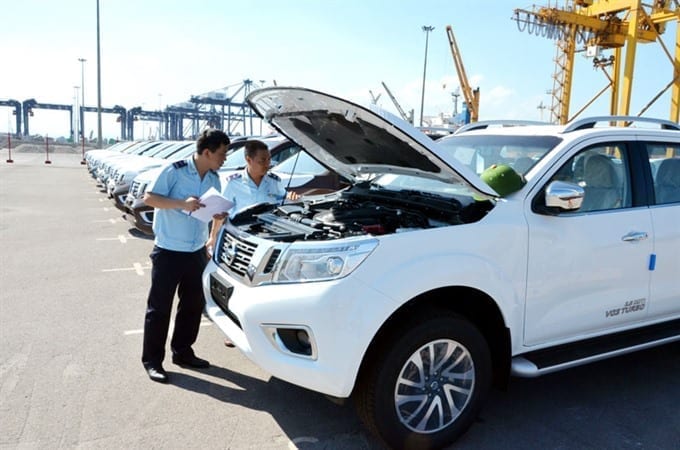
    More than 2,000 used vehicles entered Pakistan under the overseas gift scheme in October, defying state restrictions and accelerating an influx of foreign-built automobiles into the domestic market.

    The arrival volumes represent an aggressive rebound from May this year, when tighter customs oversight had temporarily squeezed monthly gift-scheme imports down to just seven units, according to former Pakistan Association of Automotive Parts and Accessories Manufacturers (PAAPAM) chairman Aamir Allawala.

    By September, shipments had expanded to 2,238 units before holding above the 2,000 mark through October. Domestic automotive parts vendors say these transactions bypass conventional banking channels, relying on payments to Japanese auction houses through informal hawala networks and cash settlement inside Pakistan.

    Surging Influx of Built-Up Vehicles

    Official trade data tracks the broader import trend. Inward shipments of completely built-up units, covering both new and second-hand passenger cars, jumped 40 per cent to $126 million during the first quarter of fiscal year 2026-27, compared with $90 million in the same three months of the prior fiscal year, according to the Pakistan Bureau of Statistics.

    Automakers entering the market account for part of the increase. Brands are bringing fully assembled vehicles into showrooms to test consumer appetite across major urban centers before committing capital to domestic assembly lines.

    The commercial friction deepened following the release of the government’s revised automotive policy in early November. Engineering groups say the framework shifts incentives toward finished imports and complete assembly kits, weakening the 1,200 local manufacturing firms that supply parts to domestic car plants.

    The Breakdown of Local Content

    The domestic parts footprint varies sharply across competing brands operating in Pakistan. Vehicles assembled from Japanese partners currently integrate between 50 per cent and 65 per cent locally produced components. Korean models carry 20 per cent to 25 per cent domestic content, while newly introduced Chinese vehicles operate with zero to 5 per cent local parts.

    Locally assembled vehicles typically absorb between Rs1.5 million and Rs2.5 million worth of parts produced by domestic engineering shops. The Pakistan Association of Automotive Parts and Accessories Manufacturers warned that lowering trade barriers will induce vehicle assemblers to import foreign components rather than procure them from local suppliers.

    The association said the domestic component manufacturing sector directly employs 300,000 workers and supports 1.5 million indirect jobs across the wider automotive value chain.

    Tariff Disparity with Regional Assembly Hubs

    Auto suppliers take particular issue with the proposed application of Pakistan’s National Tariff Policy to the vehicle sector. PAAPAM Chairman Abdul Rehman Aizaz pointed out that the draft auto policy sets duties on completely built-up units at 15 per cent, running counter to the protective tariff walls maintained by regional assembly hubs.

    India levies tariffs of 120 per cent on completely built-up vehicles, while Thailand applies an 80 per cent duty and Indonesia charges 52 per cent to protect domestic plants and supply networks.

    “All these vehicles are imported through payments to Japanese auction houses via hawala channels and unregulated domestic sales through cash transactions,”

    The revised policy also establishes a 5 per cent duty on fully imported small electric vehicles alongside reduced sales tax rates. Parts makers argue that while these tax cuts may lower retail prices for vehicle buyers by 5 per cent to 7 per cent, car purchasers represent barely 0.1 per cent of the national population.

    Shifting Rules from Consultation to Policy

    The standoff follows an abrupt pivot in industrial policy formulation between the middle and end of the calendar year. Component manufacturers stated they took part in formal consultative sessions with the Ministry of Industries through June 2026, agreeing on a localization-focused roadmap.

    That consensus dissolved when the final policy emerged in November with lower barriers for commercial imports, completely built-up electric cars, and 100 per cent completely knocked-down kits. Manufacturers say the resulting import bill will drain foreign exchange reserves at the State Bank of Pakistan while leaving revenue shortfalls at the Federal Board of Revenue.

    Industry groups are now pressing the Ministry of Industries to review the import rules and address the gift scheme trade, with assembly plants monitoring whether government customs enforcement stops the flow of Japanese auction arrivals.
  • Carsome Posts US$8.3 Million Quarterly EBITDA as Retail Shift Widens Margins

    Carsome Posts US$8.3 Million Quarterly EBITDA as Retail Shift Widens Margins

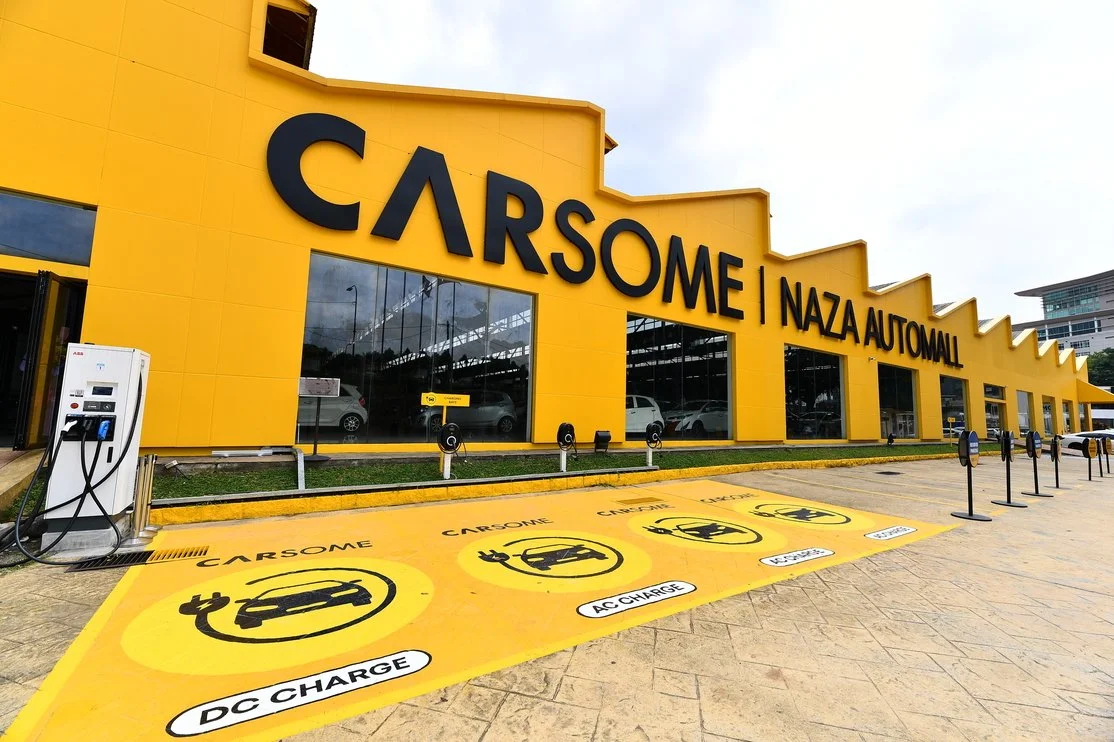
    Malaysian used-car platform Carsome posted an operating EBITDA of US$8.3 million for the second quarter of 2026. That is a 38 per cent increase from the same period a year earlier.

    Sales reached 35,903 vehicles during the three months ended June 30, up 11 per cent. That volume lifted gross profit 15 per cent to US$43.8 million. The result gave Carsome its tenth straight profitable quarter on an EBITDA basis. Consumer retail transactions and auto financing drove the gains.

    Retail and Financing Drive Margin Expansion

    Gross profit outpaced unit sales as the platform shifted volume toward retail buyers. Ancillary products helped widen margins. Financing packages, extended warranties and direct retail margins yield higher earnings per transaction than wholesale dealer auctions.

    Under a new agreement, Carsome will serve as the exclusive official trade-in partner for Suzuki Cars Malaysia. The pact channels structured inventory directly into its inspection network. It secures steady supply while carmakers use trade-in valuations to support new-vehicle sales as borrowing costs pinch consumer budgets.

    Other players across Southeast Asia show a similar pattern. Regional rivals Carro, based in Singapore, and Indonesia’s Moladin have also pivoted away from venture-funded volume acquisition. Both now target unit profitability, credit distribution and ancillary services.

    Showroom Additions in Malaysia and Jakarta

    Physical inspection hubs and retail centres led network growth during the quarter. In Malaysia, Carsome opened three locations in Sungai Petani, Bukit Tinggi in Klang, and Sungai Buloh. That took its domestic network to 55 inspection centres and showrooms.

    Across Indonesia, the company added four locations in Greater Jakarta, expanding its local footprint to 10 sites. Vehicle ownership in Indonesia trails Malaysia and Thailand. Even so, the market offers heavy transaction volume for operators able to resolve fragmented title transfers, vehicle vetting and buyer credit access.

    Looking ahead, management will focus the rest of the financial year on transaction growth, financing attachment rates and fixed-cost efficiency across its 65 combined retail locations.

  • Auto firm links sales of used cars and new vehicles

    Auto firm links sales of used cars and new vehicles

    An auto services firm is riding the internet and technologies such as big data to adopt a new business model that integrates used-car and new-car sales businesses, including features such as financing and after-sales services.

    On Oct 31, Guazi.com, China’s largest used-car dealer, announced its transformation into a car trading company, connecting its used-car business with Maodou.com, its newly developed brand of new-car retail.

    The integrated services span the entire life cycle of a car. Guazi’s user database and technical services would be used by Maodou.com as well.

    Called “CARS”, the new company offers its customers a “one-stop” shop for buying, selling and renting new cars and used cars, said Yang Haoyong, CEO of Maodou.com.

    “On Maodou.com, consumers can choose to rent a new car for up to four years, and then decide whether to buy the car or rent another new car,” he said.

    The used car will later be put up for sale on Guazi. The new car platform is especially welcome for young consumers, as price is a key factor for them, Yang said.

    “The down-payment for a new car is now as low as zero to 10 percent. Four years later, if the user wants, he can return the car and get another brand new one,” he said.

    “The market is now large. But consumers lack confidence in the used-car market in China. Maodou may be a great news for those who prefer a new car but haven’t saved enough money yet.

    “Additionally, the new brand satisfies the needs of those people, especially the millennials, who are constantly pursuing new things.”

    CARS has received funding from global investors such as Capital Today, Bank of China Group Investment Ltd, and Hong Kong-based DST Global.

    It has also teamed up with more than 10 financial institutions such as Bank of China, China Merchants Bank, Industrial and Commercial Bank of China, and Shanghai Pudong Development Bank, to build common digital platforms to push car sales and rentals.

    Zhao Xiang, an auto analyst at Beijing-based research firm Analysys, said: “The new-car service is a wise choice. Those selling used cars on Guazi usually tend to buy a new car, so Maodou would be helpful for them.

    “From this kind of ecosystem, auto companies can expand their business and broaden channels to monetize traffic (to their websites, apps and offline stores).”