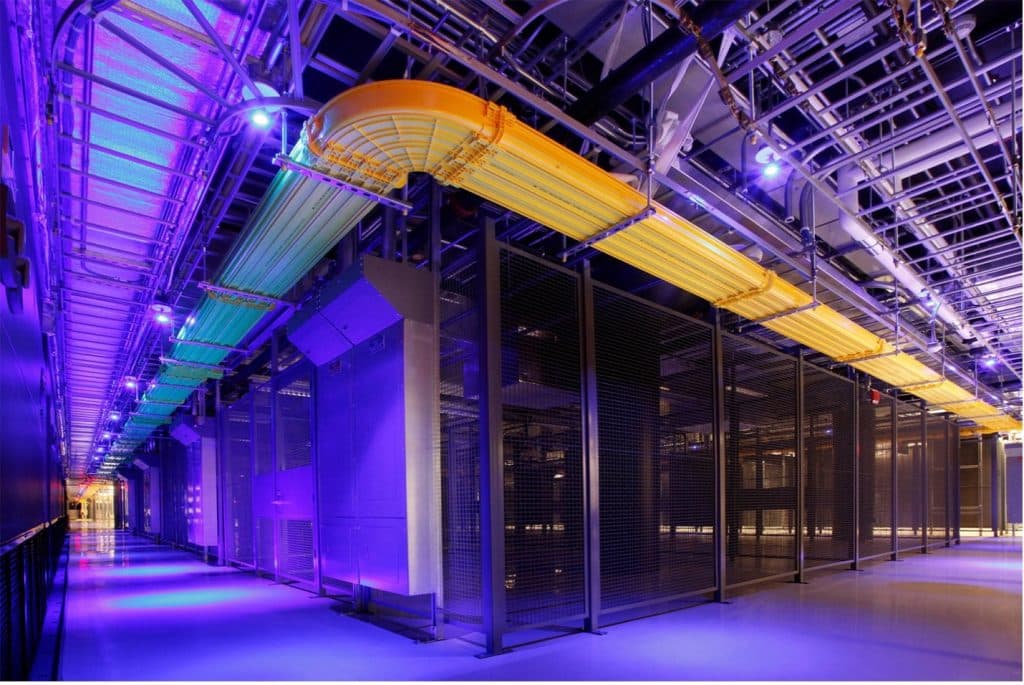
Uzbektelecom has launched two Tier III-certified data centers in Bukhara and Kokand, expanding its national cloud network to support enterprise artificial intelligence workloads and remote computing services.
Both facilities sit more than 300 kilometres from Tashkent, providing disaster recovery connected to Uztelecom’s backbone network and the TAS-IX national internet exchange ahead of a fifth site due in the third quarter of 2026.
Regional Expansion and GPU Deployment
The state-owned operator built the facilities to run under its UzCloud platform, offering infrastructure-as-a-service, platform tools, software hosting, S3 object storage, and automated backups. Uzbekistan’s Ministry of Digital Technologies confirmed the sites feature dedicated graphics processing unit servers designed for training neural networks, running machine learning jobs, video analytics, and rendering digital twins.
Distributing compute power across regional commercial hubs reduces latency for businesses operating outside the capital. Local retail operations, logistics firms, and financial institutions gain access to high-density compute without building proprietary server rooms or relying exclusively on overseas cloud providers.
Decentralised Infrastructure for Enterprise Users
Placing critical hardware in Bukhara and Kokand alters how domestic enterprises handle data sovereignty and operational redundancy. Central Asian businesses face rising compliance pressures to store user records within national borders, creating captive demand for domestic compute capacity.
For enterprise users, leasing GPU hours locally avoids foreign currency outlays tied to global hyperscalers. The primary operational risk shifts to power stability in secondary cities, where grid reliability must match Tier III continuous uptime standards through redundant generation systems.
Uzbekistan’s digital economy is growing rapidly, and with it, the demand for reliable, world-class sovereign infrastructure is increasing. The launch of the new data centers continues the development of the national digital infrastructure.
Integration with National Cloud Services
Uztelecom structured the roll-out as an extension of its sovereign cloud strategy, centralising public sector digital transformation under the UzCloud architecture. Umar Izbasarov, director of Uztelecom’s advanced development and investment projects department, noted that the infrastructure allows commercial tech firms to deploy software products without capital expenditures on hardware.
Connecting the nodes to Uztelecom’s primary optical backbone ensures throughput across the Fergana Valley and central agricultural provinces. The architecture allows regional industrial operations and logistics networks to process sensor telemetry and inventory feeds locally before syncing with central administrative systems.
Next Steps for Tashkent and Advanced Networks
The dual opening marks the company’s third and fourth operational facilities under the program. Earlier phases focused on centralising government databases in the capital district before network planners pushed server farms out to secondary economic zones.
Construction is underway on a fifth Tier III-certified facility in the Zangiata district of the Tashkent region, scheduled for completion in the third quarter of 2026. That upcoming hub will host an all-photonic network pilot based on Japan’s Innovative Optical and Wireless Network architecture, developed alongside Toyota Tsusho, NTT Docomo Business, and NEC.