Tag: V2X

  • Autotalks trials C-V2X on Chinese road

    Autotalks trials C-V2X on Chinese road

    Israeli vehicle-to-everything (V2X) communications solutions provider Autotalks has announced the successful completion of cellular V2X field trials in China.

    The trials on a public road, conducted in collaboration with an unnamed large Chinese technology company, validated Autotalks’ C-V2X capabilities, including a communication range of over 2km with a nominal range of around 1.5km.

    The successful field test involved the use of hardware compliant with standards body 3GPP’s Release 15 for V2C communications improvements.

    Autotalks has been building momentum in China in a bid to target the large local market, growing its partner ecosystem and increasing staff.

    The company is a member of the government’s IMT-2020 (5G) Promotion Group, as well as the China Industry Innovation Alliance for the Intelligent and Connected Vehicles (CAICV) and China ITS (intelligent transport systems) Industry Alliance.

    In November, Autotalks recruited former Ceragon Networks country manager Yang Xiaobing to lead up its Chinese business development efforts out of its branch in Beijing.

    In February, Autotalks partnered with Taiwanese fabless semiconductor company MediaTek for a project focused on cooperating on integrating V2X and telematics technologies.

    Autotalks also recently launched the first global V2X solution supporting both C-V2X and dedicated short range communications (DSRC) technologies, the two main connected vehicle standards being adopted by car manufacturers.

  • V2X apps to drive $1.2b market by 2022

    V2X apps to drive $1.2b market by 2022

    The latest SNS Telecom & IT research, V2X (Vehicle-to-Everything) Communications Ecosystem: 2019 – 2030 – Opportunities, Challenges, Strategies & Forecasts, suggests that global spending on V2X (Vehicle-to-Everything) communications technology – based on both IEEE 802.11p and C-V2X (Cellular V2X) standards – will reach $1.2 billion annually by the end of 2022.

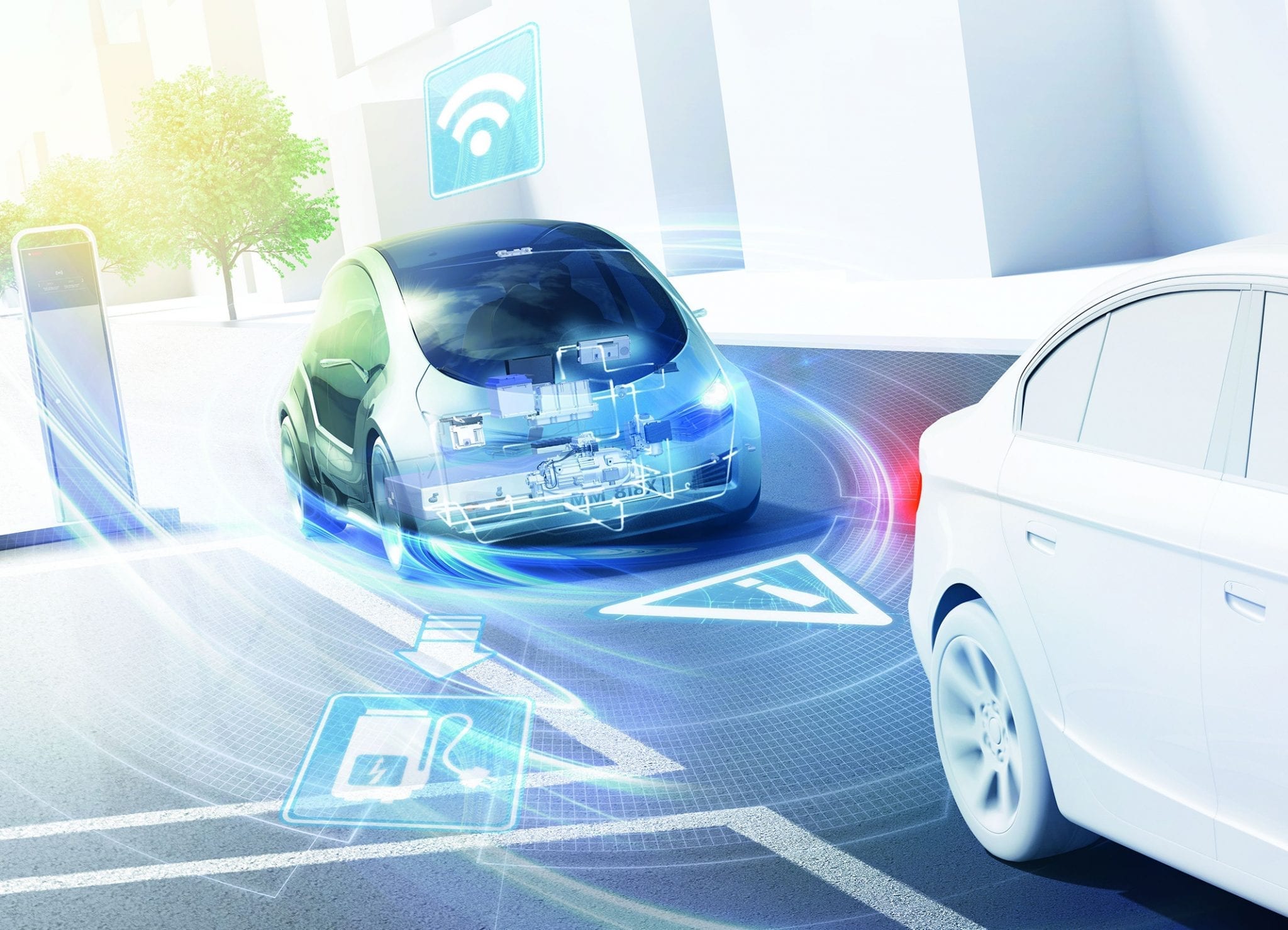
    V2X communications technology allows vehicles to directly communicate with each other, roadside infrastructure, and other road users to deliver an array of benefits in the form of road safety, traffic efficiency, smart mobility, environmental sustainability, and driver convenience.

    V2X is also helping pave the way for fully autonomous driving through its unique non line-of-sight sensing capability which allows vehicles to detect potential hazards, traffic, and road conditions from longer distances and sooner than other in-vehicle sensors such as cameras, radar, and LiDAR (Light Detection and Ranging).

    Adoption on track

    Although legacy V2I (Vehicle-to-Infrastructure) technologies are currently in operational use worldwide for ETC (Electronic Toll Collection) and relatively simple V2I applications, advanced V2X systems – capable of supporting V2V (Vehicle-to-Vehicle), V2I and other forms of V2X communications – are beginning to gain broad commercial acceptance with two competing technologies vying for the attention of automakers and regulators. These are the commercially mature IEEE 802.11p/DSRC (Dedicated Short Range Communications) standard, and the relatively new 3GPP-defined C-V2X (Cellular V2X) technology which has a forward evolutionary path towards 5G.

    With an initial focus on road safety and traffic efficiency applications, Toyota and General Motors (GM) have already equipped some of their vehicle models with IEEE 802.11p-based V2X technology in Japan and North America.

    Volkswagen will begin deploying IEEE 802.11p on volume models in Europe starting from 2019, while Geely and Ford plan to integrate C-V2X in their new vehicles by 2021 and 2022 respectively.

    Luxury automakers – including BMW, Daimler, Volkswagen’s subsidiary Audi, and Volvo Cars – already deliver certain V2X-type applications through wide-area cellular connectivity and supporting infrastructure such as appropriately equipped roadwork trailers.

    Challenges ahead

    Despite the ongoing 802.11p/DSRC versus C-V2X debate, regulatory uncertainty and other challenges, global spending on V2X communications technology is expected to grow at a CAGR of more than 170% between 2019 and 2022. SNS Telecom & IT predicts that by the end of 2022, V2X will account for a market worth $1.2 billion, with an installed base of nearly 6 Million V2X-equipped vehicles worldwide.

    The report noted that despite the ongoing 802.11p/DSRC versus C-V2X debate, regulatory uncertainty and other challenges, global spending on V2X communications technology is expected to grow at a CAGR of more than 170% between 2019 and 2022. SNS Telecom & IT predicts that by the end of 2022, V2X will account for a market worth $1.2 billion, with an installed base of nearly 6 Million V2X-equipped vehicles worldwide.

    While Toyota and other Dedicated Short Range Communications (DSRC) proponents are pushing ahead with their plans to roll out IEEE 802.11p in North America, Europe and Japan, pre-commercial C-V2X deployments have recently gained considerable momentum, spearheaded by cellular industry giants such as Qualcomm and Huawei – with support from automakers including Ford, BMW, Daimler, Groupe PSA, SAIC, Geely, Volkswagen’s luxury brand Audi, and Jaguar Land Rover (JLR).

    Regional markets are also visibly divided with the Chinese Government backing C-V2X, Europe leaning towards IEEE 802.11p through its recently published delegated act on C-ITS (Cooperative Intelligent Transport Systems), and heated debates ensuing in the United States as a result of the 5GAA’s waiver request to allow C-V2X deployments in the 5.9-GHz band.

    Betting on the future

    As a result, a number of automotive OEMs are beginning to adopt a flexible approach by choosing to deploy different technologies in different regions as they commit to V2X. For example, although GM has equipped its Cadillac CTS sedan vehicles with IEEE 802.11p in North America, the automaker is actively working with business partners to prepare for C-V2X deployment in China.

    Besides becoming a standard safety feature on an increasing number of vehicles, V2X communications technology – through its unique non line-of-sight sensing capability – will play a critical role in ensuring the safe and efficient operation of autonomous driving systems, particularly with the commercialization of next-generation V2X standards, specifically 5G-V2X and IEEE 802.11bd.

    The globally harmonized 5.9-GHz band continues to remain the preferred spectrum for V2X communications technology, with the exception of Japan – where the national regulator has allocated a single 9 MHz channel in the frequency range 755.5 – 764.5 MHz for safety-related applications based on V2V and V2I communications.

    Early discussions are ongoing for the potential use of new bands, most notably in the 3.4 – 3.8 GHz and 5.9 – 7.2 GHz frequency ranges, as well as millimeter wave spectrum for LOS (Line-of-Sight) and high data rate V2X applications. Recent field trials using 39-GHz spectrum in the United States have demonstrated that millimeter propagations for V2V communications can work well in the distance range of 100 meters, without advanced beamforming techniques.
  • Smart Mobility Consortium holds C-V2X demo in Hong Kong

    Smart Mobility Consortium holds C-V2X demo in Hong Kong

    Hong Kong’s Smart Mobility Consortium has held the city’s first demonstration of the use of cellular vehicle to everything (C-V2X) technology for connected cars.

    The demonstration was conducted at Hong Kong Science Park as part of the Intelligent Transportation System (ITS) Asia-Pacific Forum 2017.

    It used operator HKT’s C-V2X trial network, using the 2.6-GHz band for vehicle-to-infrastructure communications and 5.9-GHz for vehicle-to-vehicle communications.

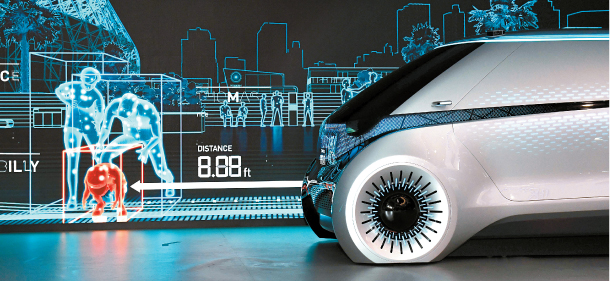
    A vehicle fitted with C-V2X technology demonstrated scenarios including the transmission of vehicle-to-vehicle do not pass, vulnerable road user, blind spot or lane change warnings, alerts sent in cases where vehicles need to make emergency stops and intersection collision warnings.

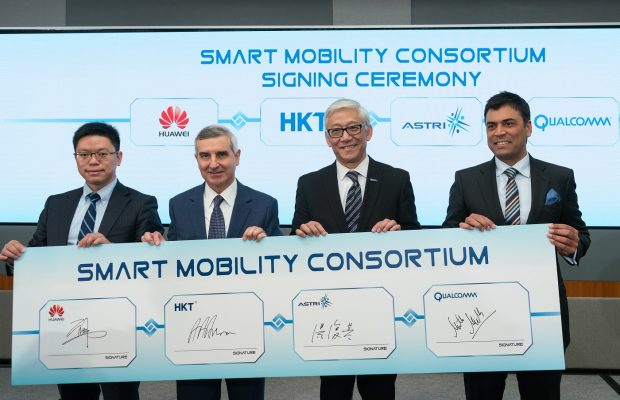
    The Smart Mobility Consortium was founded in March by HKT, Huawei, Qualcomm and the Hong Kong Applied Science and Technology Research Institute (ASTRI).

    “Three months ago, we shook hands and signed the MoU to establish the Smart Mobility Consortium. Today, we are working hand-in-hand to bring the first demonstration of C-V2X technology for pushing safe mobility in Hong Kong,” HKT group managing director Alex Arena said yesterday.

    “The demonstration shows how C-V2X alerts drivers to dangers under different use cases on the road and emergency traffic conditions, which will make the roads safer and Hong Kong a better city to live in. Being the mobile network technology leader in Hong Kong, HKT will continue to push and realize C-V2X technology & applications, in support of the Government’s Smart City vision and strategy.”

  • HKT, Huawei co-found C-V2X consortium

    HKT, Huawei co-found C-V2X consortium

    The Hong Kong Applied Science and Technology Research Institute (ASTRI), operator HKT and vendors Huawei and Qualcomm have formed a consortium aiming to build a smart mobility system for Hong Kong using cellular vehicle-to-everything (C-V2X) technologies.

    The consortium aims to revolutionize Hong Kong’s transportation sector using C-V2X, a standard covering both network-based and direct communications for vehicles.

    A C-V2X powered smart mobility system will therefore enable vehicles to connect to both the cloud and each other, as well as to pedestrians and to traffic infrastructure.

    Vehicles can use the “co-operative awareness” this enables to improve mobility safety as well as autonomous driving, and can help law enforcement and traffic and urban planners to plan and monitor the safety and efficiency of traffic movements.

    The consortium aims to use C-V2X to introduce intelligent transport services including a warning mechanism for collision and control, assistance for cruise control and parking, and alert systems for speed and lane violations.

    It plans to work with government, the automobile industry and other stakeholders to realize this vision. The project is also expected to generate opportunities for other sectors including shipment, ridesharing, home-delivery, insurance, infotainment and mobile healthcare.

    “Hong Kong is a well-connected city with good infrastructure. If we complement these strengths with the latest innovation in science and technology, Hong Kong can become one of the most sophisticated and advanced smart cities in the world,” ASTRI chairman Wong Min-yam commented.

    “This Smart Mobility Consortium is a giant step in that leap. ASTRI is developing state-of-the-art applications, platforms and prototypes which can benefit not just Hong Kong, but potentially other cities in this region too. We, as the SAR’s largest technological R&D institution, are partnering with three eminent organisations to bring revolutionary changes to the way we manage our city’s traffic.”

    The consortium plans to carry out C-V2X pilot in the second quarter of this year. “Our trial sites will likely be at Hong Kong Science Park and the Chinese University of Hong Kong. We hope to extend the pilot to East Kowloon at a later stage,” said Peter Lam, managing director for engineering at HKT.

    “For C-V2X implementation, dedicated spectrum in 5.9GHz is needed. We will try to seek a spectrum testing license from the government to do the pilot,” he added.