Retail News CRM

Tag: vacancy

  • Hong Kong Office Market Revival: Downtown Vacancy Rates Hit 2-Year Low

    Hong Kong Office Market Revival: Downtown Vacancy Rates Hit 2-Year Low

    The prime office space vacancy rates in Hong Kong’s central business district have once again dipped into single figures for the first time in over two years, marking a resurgence in demand within the previously struggling office market.

    A Turnaround in Demand

    The primary business district, situated on the northern coast of the island, saw the vacancy rate for Grade A offices drop to 9.9% in February, a slight decrease from January’s 10.1%. The district last recorded a single-digit vacancy rate in December 2023, standing at the same figure of 9.9%.

    This trend isn’t limited to the central business district. Across Hong Kong, the overall prime office vacancy rate also fell slightly, dropping to 13.4% in February from the 13.5% recorded in the previous month.

    Rising Rents

    In line with the declining vacancy rates, rental costs for Grade A offices in the central district also experienced a rise. The first two months of the year saw rent prices increase by 3.5%.

    Banking remains the main driver for leasing activity, with the demand focusing on newer office buildings within the central business districts. Two districts have begun to show early signs of improvement, a trend that is expected to continue throughout the year. However, non-core districts, such as Kowloon East, are anticipated to remain under strain.

    Increased Optimism

    CK Asset Holdings, a property development company owned by billionaire Li Ka-shing’s family, has also expressed positive expectations for leasing demand this year. The company saw leasing remain under pressure during the previous year, but recent renewals have started to show small increases in rental costs.

    Both rent and sales are projected to see a surge. The overall non-residential property market is expected to continue adjusting and seeking support levels. However, rental and sales prices for offices located in the core districts may stabilize first.

    Uneven Recovery

    According to a report, the recovery within the office market varies across Hong Kong. The premium Grade A buildings in the central district, such as Two IFC, Chater House, and The Henderson, have maintained occupancy rates above 88%. In contrast, older properties within the same district have recorded occupancy rates below 75%. This uneven recovery rate highlights the growing preference for modern, high-specification buildings, reinforcing the “flight-to-quality” trend within Hong Kong’s office sector.

    Questions & Answers

    What is the current vacancy rate for prime office space in Hong Kong’s central business district?
    The vacancy rate for prime office space in Hong Kong’s central business district is currently 9.9%.

    What trends are emerging in Hong Kong’s office sector?
    There is a growing preference for modern, high-specification buildings, and non-core districts like Kowloon East are likely to continue facing pressure.

    What is the forecast for rental and sales prices in the near future?
    Rental and sales prices for overall non-residential properties are expected to continue adjusting, with prices for offices in the core district possibly stabilizing first.


  • Revival on the Horizon: Metro Manila Retail Vacancy Rate Expected to Bounce Back to Pre-Pandemic Figures

    Revival on the Horizon: Metro Manila Retail Vacancy Rate Expected to Bounce Back to Pre-Pandemic Figures

    The retail vacancy rate in Metro Manila is projected to return to pre-pandemic levels by 2022, according to a recent study by Colliers Philippines. The rate of empty retail spaces in Metro Manila eased to 11.4% as of September 30, 2021. By the close of next year, forecasts indicate a reduction to 9.5%, almost matching the 9.3% recorded in the third quarter of 2019.

    Long-Term Forecasts

    The report also offers long-term projections, with a predicted rate of 8.2% by the end of 2027. This figure is notably lower than the pre-pandemic benchmarks, signaling a positive recovery trend for the retail sector in the region.

    The study attributes the anticipated improvement to two main factors. The first is the continuous entry of international retail brands into the Filipino market. The second is the rapid expansion of existing brands.

    The Role of Foreign Brands

    According to Joey Bondoc, Research Director at Colliers, foreign brands play a crucial role in this trend. He noted that many of these brands have previously exited the market but are now making a significant comeback.

    Bondoc further highlighted the attractive refurbishment strategies of major developers in the region, which are drawing in these companies. These refurbishments are focusing more on experiential retail, adding another layer of attraction for both brands and consumers.

    Industries Occupying Retail Spaces

    The report also shed light on the dominant industries in retail space occupancy. The food and beverage sector, fast fashion, and general retail were listed as the primary occupiers of retail spaces. Their continued presence and growth contribute to the overall decreasing trend of retail vacancies.

    Questions & Answers

    What is the anticipated retail vacancy rate in Metro Manila by the end of 2022?
    The retail vacancy rate is expected to decrease to 9.5% by the end of 2022.

    What factors are contributing to the decrease in retail vacancies?
    The entry of foreign retail brands into the Philippines market and the accelerated expansion of existing brands are primarily driving this improvement.

    Which industries are the biggest occupiers of retail space in Metro Manila?
    The food and beverage sector, fast fashion, and general retail industries are the main occupiers of retail spaces.

  • Vietnamese airlines continue to be plagued by pilot shortage

    Vietnamese airlines continue to be plagued by pilot shortage

    With increasing demand for pilots as they expand, Vietnamese airlines have had to raise salaries, spend more on training and hire foreign pilots. Figures from the Civil Aviation Authority of Vietnam show that by 2020 Vietnam will need a total of 2,680 pilots for commercial flights, 1,320 more than now. Vietnam Airlines, the country’s flag carrier, needs to hire 193 more pilots to increase the number on its payroll to 1,293 pilots to meet demand in 2019, according to the carrier’s recent assessment report.

    The assessment forecast the demand to keep rising increasing to 1,340 by 2020 and 1,570 by 2025. This is a challenging number given the increasing shortage of pilots globally, according to industry insiders.

    According to a recent report from Boeing, the global aviation industry will need 790,000 new pilots by 2037, or double the current number, driven by an anticipated doubling of the commercial airplane fleet, record travel demand and tightening labor supply.

    Pilot training has always been extremely expensive, with stringent health and technical knowledge requirements, meaning that the number of pilots qualifying is always limited, according to industry insiders.

    A former Vietnam Airlines pilot revealed that because of the shortage, soon after he gave notice of termination he received many offers from airlines both domestic and foreign.

    He said many other pilots at Vietnam Airlines also constantly offered 15-25 percent higher salaries by head hunters.

    As a result the carrier has been focusing on hiring trainees. Duong Tri Thanh, its general director, said given the global shortage of pilots and carry out its expansion plans in time, Vietnam Airlines has been training internally and recruiting foreign pilots despite high costs.

    Similarly, Jetstar Pacific or Vietjet Air are facing difficulties filling their vacancies with pilots when trying to rapidly expand in South Korea, Japan, and other countries in Southeast Asia. Currently, the number of pilots at these firms is largely foreign due to limited domestic supply. Typically, at Jetstar Pacific, foreign pilots account for 80 percent of their fleet.

    However, foreign pilots can be hard to come by since many other companies in Asia can offer them better remuneration and working conditions.

    An aviation expert said airlines need to combat the pilot shortage by investing in training facilities and recruitment programs and subsidizing training for pilot trainees.

    Vietnam’s aviation industry has been growing rapidly in recent years. There were 12.5 million air passengers last year, up 14.4 percent from 2017.

    The number of flights in the country grew by 16 percent on average between 2010 and 2017, according to official data.

    Vienam’s five airlines are Vietnam Airlines, its low-cost carrier Jetstar Pacific, budget airline Vietjet Aviation, Bamboo Airways and Vietnam Air Services Co.

  • Most Vietnamese graduates interested in startups: survey

    Most Vietnamese graduates interested in startups: survey

    About 75 percent of Vietnamese graduates have either started their own business or are interested in opening one. A survey released Tuesday by Navigos, a leading provider of executive search services in Vietnam, also found hat 52 percent of fresh graduates want to attempt a startup in the near future.

    One in five respondents, or 22 percent, said they have attempted a startup at least once before. Only 26 percent said that they have no plans for a start-up. The survey polled over 1,600 fresh graduates with less than two years of working experience.

    It found that a high number of fresh graduates are not satisfied with their current salaries, incentives and promotion opportunities.

    On a scale of five, they rated their satisfaction with salary at 2.95, and incentives at 2.99. Long-term development opportunities scored lowest at 2.88.

    Salaries and incentives are important factors for graduates in choosing their first jobs. Seventy percent of respondents selected “income and welfare policies” as one of the top criteria for job selection.

    Compatibility with personal strengths came second at 55 percent, while career prospects and opportunities for development come third and fourth at 53 percent and 52 percent respectively.

    The majority of fresh graduates, 34 percent, make VND5-7 million ($215-300) a month. Twenty-nine percent said their monthly salaries were VND7-10 million ($300-430). Only 12 percent made VND10 million ($430) or higher.

    The survey also found that candidates who are proficient in foreign languages have higher salaries. Only five percent of those whose jobs don’t require foreign language skills earn VND10 million ($430) or higher, while this figure is 37 percent among candidates who can speak another language.

    Young employees changed jobs more frequently, posing a retention challenge for employers. Eighty-one percent of the respondents said that “jumping jobs” helps them avoid wasting time on unsuitable or unsatisfactory positions.

    Forty-three percent claimed that switching jobs helped them gain diverse working experience and expand networks.

    Although young candidates value high salaries and benefit packages when choosing jobs, 57 percent said higher earnings was not the motivation for jumping jobs.

    Of the respondents who’d quit their jobs, 45 percent said the reason was personal plans like education or family issues.

    Four out of ten graduates said that they quit because they didn’t like their daily tasks, while almost one in four said they could not fit in with the corporate culture.

  • Mainland companies ease hiring employees in Q1

    Mainland companies ease hiring employees in Q1

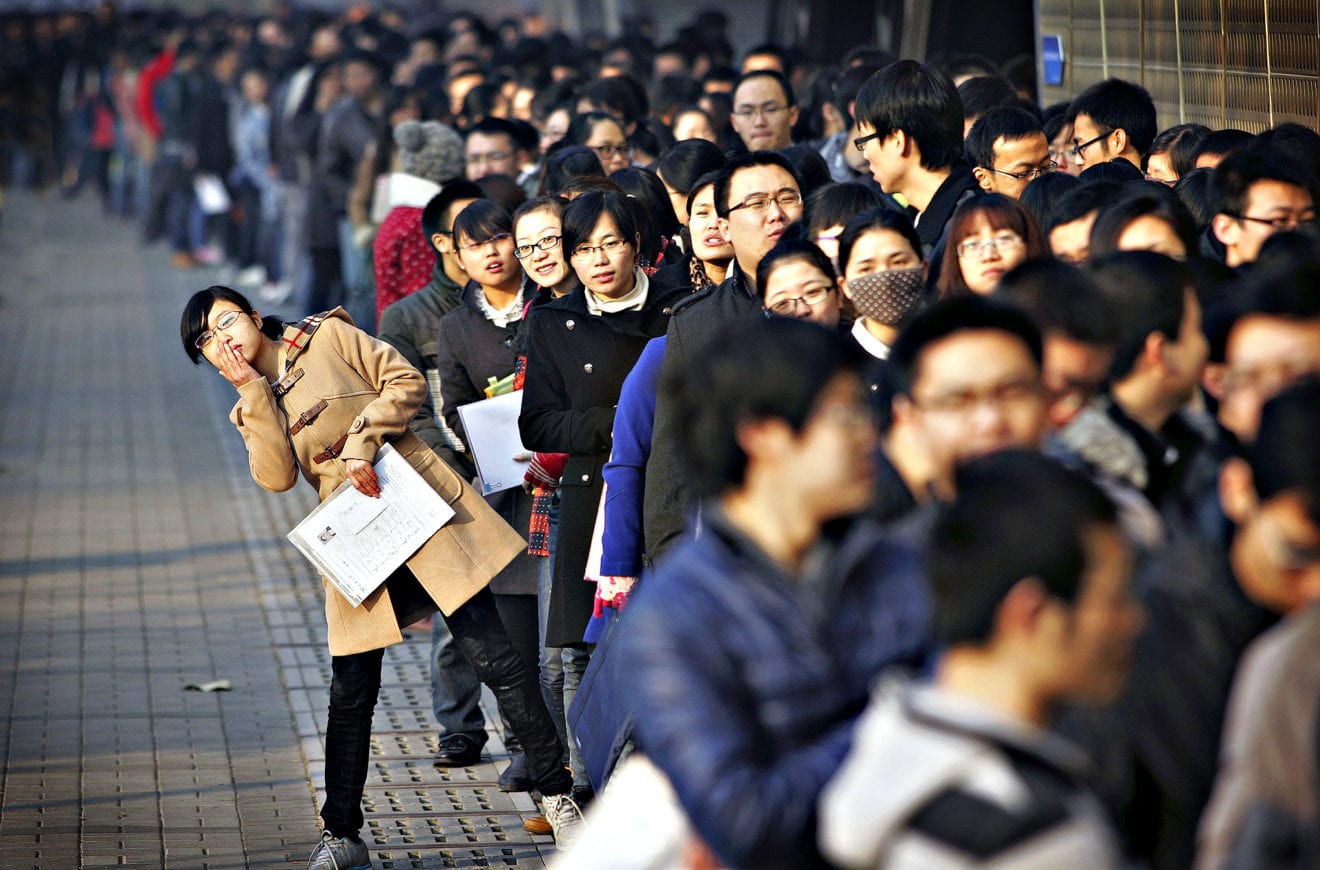
    Employers on China’s mainland have been much less lively in hiring employees within the first quarter, recruitment consultancy Robert Walters stated in a report yesterday.

    The variety of job ads within the mainland print media and main on-line job boards jumped 16 % within the first quarter yr on yr, 9 proportion factors down from the survey carried out in the identical interval of final yr, Robert Walters stated within the report which coated six main economies in Asia.

    However the mainland rose a spot to develop into the second-quickest rising job market after Japan, which surged 33 % pushed by the federal government’s proactive financial insurance policies, the report stated.

    “With the Chinese language authorities setting its GDP goal at 7 % this yr, the job market will possible develop at a secure tempo,” stated Arthur Wang, managing director, Robert Walters China.

    As China shifts its financial system towards consumption-led, “we anticipate to see the creation of extra high-paying jobs inside the shopper and providers sectors so as to encourage spending,” Wang stated.

    The report discovered IT a scorching sector on the mainland because the variety of job ads jumped 53 % yr on yr.

    Advertisements for accounting and finance jobs adopted with a progress of 19 %.