Tag: valentino

  • Valentino And Vans Unveil Ai-driven Campaign For Innovative Capsule Collection

    Valentino And Vans Unveil Ai-driven Campaign For Innovative Capsule Collection

    Luxury fashion house Maison Valentino and popular footwear brand Vans have joined forces to launch an innovative campaign that leverages artificial intelligence (AI) for a new capsule collection. This ingenious blend of physical and digital storytelling is a testament to the evolving frontiers of fashion marketing.

    The AI-Infused Campaign and Collection

    The campaign visuals were produced by AI, utilizing raw footage from Maison Valentino’s Fall/Winter 2025 Paris runway show where the collection was initially showcased. Guided by Maison Valentino’s Alessandro Michele’s vision, the team has imaginatively redefined the classic silhouette of Vans Authentic sneakers. This transformation retains the distinctiveness of Valentino and the originality of Vans through canvas uppers adorned in a spectrum of vibrant prints.

    The novel design features a checkerboard motif, overlapping patterns, and dynamic motion graphics. According to Michele, the product is a surreal and dreamlike fresco where nature erupts.

    The Collection Details

    The collection consists of six styles tailored for both men and women, each distinguished by a unique ‘I Love Valentino x Vans’ print that evokes the style of souvenir typography.

    The collaborative Valentino Garavani and Vans sneakers are available for purchase on both the brands’ official websites. A special edition of the collection will also be presented in Valentino boutiques globally and at the Vans’ London flagship store, with sales commencing this Friday.

    Questions & Answers

    What is unique about the new campaign by Maison Valentino and Vans?
    The campaign is notable for its use of artificial intelligence to generate visuals, blending physical and digital storytelling.

    Who is the creative force behind the redesigned silhouette of Vans Authentic sneakers?
    The redesign was guided by Maison Valentino’s Alessandro Michele, who ensured that the distinctiveness of both brands was preserved in the new design.

    Where can the Valentino Garavani and Vans sneakers be purchased?
    The sneakers are available on both companies’ official websites, as well as in Valentino boutiques worldwide and at the Vans’ London flagship store.

  • Riccardo Bellini Steps In As New CEO Of Valentino Following Venturini’s Departure

    Riccardo Bellini Steps In As New CEO Of Valentino Following Venturini’s Departure

    Valentino, the renowned Italian luxury brand, has announced the appointment of Riccardo Bellini as the company’s new CEO. Bellini’s appointment follows the recent resignation of his predecessor, Jacopo Venturini. Bellini is set to officially assume the CEO role starting September first.

    Riccardo Bellini brings extensive experience in the luxury industry, having held notable leadership positions at prestigious fashion houses like Maison Margiela and Chloe in the past. Moreover, his marketing expertise has been honed at renowned companies such as Diesel and P&G.

    At Valentino, Bellini will collaborate closely with Alessandro Michele, the brand’s creative director. Michele was appointed to his role last year and has since been leading the brand’s creative strategies and campaigns.

    Rachid Mohamed Rachid, chairman of Valentino, expressed his confidence in Bellini’s appointment, stating, “Riccardo’s extensive luxury experience, strategic acumen, and proven leadership, in conjunction with our creative team, are sure to propel the Maison forward and amplify its unique identity.”

    Kering, the French luxury conglomerate, holds a significant stake in Valentino, owning 30% of the Italian luxury company.

    Questions & Answers

    Who has been appointed as the new CEO of Valentino?
    Riccardo Bellini has been appointed as the new CEO of Valentino.

    Who was the previous CEO of Valentino?
    The previous CEO of Valentino was Jacopo Venturini.

    Who does Riccardo Bellini plan to collaborate with at Valentino?
    Riccardo Bellini will be working closely with Alessandro Michele, the brand’s creative director.

  • Valentino names new CEO for Southeast Asia, Australia

    Valentino names new CEO for Southeast Asia, Australia

    Valentino has named Alessandra Andreani their new CEO for Southeast Asia and Australia. Andreani will be based in Singapore, and will report to Marco Giacometti, Valentino’s chief commercial officer. The news was reported by WWD.

    In her new role, Andreani will working on growing Valentino’s presence throughout Singapore, Malaysia, Australia, and Thailand. She takes over the duties of Mika Bailey, who was general manager of Southeast Asia and Australia.

    Andreani’s resume includes stints at Prada, Marc Jacobs, and Loewe. She is just one of many hires under new Valentino CEO Jacopo Venturini who has also appointed Mitchell Bacha CEO of Greater China and Laurent Bergamo as CEO of Americas.

    While most of Valentino’s growth has been driven by China, the U.S., and the Middle East, Southeast Asia and Australia are considered new target markets for growth. E-commerce is also now pivotal to Valentino’s growth as it is for most luxury brands.

  • Alibaba Group sales jumps high

    Alibaba Group sales jumps high

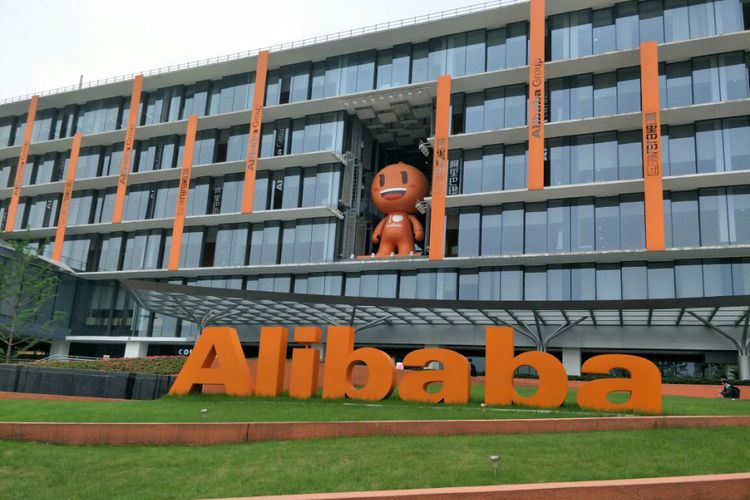
    Alibaba Group sales soared 41 per cent in the December quarter as its customer based neared 700 million. The Chinese company’s turnover for the three months reached US$17.057 billion and its net income attributable to shareholders $4.807 billion. “Our resilient operating and financial performance is a direct reflection of our persistent focus on better serving our growing base of nearly 700 million consumers across retail, digital entertainment and local consumer services,” said CEO Daniel Zhang. “Our growth is also driven by the power of Alibaba’s cloud and data technology that helps expedite the digital transformation of millions of enterprises.”

    Alibaba group sales from core commerce increased 40 per cent to $14.958 billion, while the cloud-computing division posted 84 per cent growth, turning over $962 million. The digital media and entertainment division achieved 20 per cent growth to reach $944 million.

    In a statement, Alibaba said its Taobao platform achieved “robust user growth and enhanced engagement”. Last December, its China retail marketplaces had 699 million mobile monthly average users, representing a quarterly net increase of 33 million. The annual active consumers on its China retail marketplaces was 636 million for the 12 months ended December 31, compared to 601 million for the 12 months ended September 30 last year, “reflecting successful user acquisition programs, such as referrals through the Alipay app”.

    More than 70 per cent of the increase in annual active consumers was from third-and-lower tier cities.

    Tmall thrives

    Alibaba said GMV on its Tmall business grew 29 per cent year on year in the December quarter, outpacing the industry.

    “This robust growth was driven by strength in the fast-moving consumer goods (FMCG), apparel and home furnishing categories,” the company said.

    During the quarter, Tmall signed up new brands to the platform including Valentino, Ermenegildo Zegna, Stuart Weitzman and Sergio Rossi which opened flagship stores and joined the Tmall Luxury Pavilion.

    Meanwhile, Alibaba’s proprietary grocery retail chain Freshippo (formerly Hema) continued to expand its footprint, “optimise its stores and introduce new initiatives that improve customer experience”. As of December 31, there were 109 self-operated Freshippo stores in China, primarily located in tier 1 and tier 2 cities, which continued to achieve “robust same-store sales growth” through the quarter.

    ‘Robust’ Lazada growth

    Alibaba’s Southeast Asian e-commerce platform Lazada achieved what the company described as “robust growth” in GMV. The company upgraded Lazada’s technology, which resulted in boosting the number of active users and achieved greater user engagement on Lazada’s mobile app.

    “We continue to invest resources to integrate Lazada’s business and technology operations into Alibaba with the aim of building a strong foundation for us to extend our offerings in Southeast Asia.”

  • AirPass helps Aussie retailers woo Chinese shoppers

    AirPass helps Aussie retailers woo Chinese shoppers

    Recently, Australia fintech company AirPay Financial Technologies announced its regional collaboration with China leading mobile payment technology company SwiftPass to form a new lifestyle brand “AirPass”. Connecting Australian merchants directly with Chinese consumers, AirPass lets local retailers accept WeChat Pay and Alipay both online and offline, as well as reach overseas markets to make the most of the global Chinese spending boom.

    AirPass is a lifestyle brand backed by Australian fintech startup AirPay Financial Technologies, in partnership with leading Chinese mobile payment provider SwiftPass. The new brand brings China’s most popular ePayment, eStore, eCard, eMarketing and eWallet services to Australia, allowing Chinese tourists, students and migrants to make over the counter purchases by simply scanning a QR code on their smartphone.

    The payment platform can also be integrated into Australian e-commerce websites and mobile apps, taking advantage of AsiaPay’s PayDollar payment gateway. Supporting multiple shopping cart plugins, PayDollar provides a one-stop online payment solution allowing local merchants to accept Alipay, WeChat Pay, Visa, MasterCard, Amex, PayPal and ZipPay

    “AirPass is providing a user-friendly platform for Australian retailers to build their own eStore to facilitate marketing and payment – which is the key to entering the Chinese consumer market,” says SwiftPass Technologies VP Tong Liu.

    Meanwhile, the AirPass app for iOS and Android lets Australian retailers connect directly with Chinese shoppers. AirPass assists Australian retailers and brands with setting up their own WeChat eStore to tap into Chinese social marketing channels. This allows local retailers to sell products via the WeChat ecosystem, reaching new customers in China along with Chinese communities around the globe.

    AirPass’ arrival in Australia comes as Boxing Day saw record high sales to Chinese shoppers across major retailers and shopping centre groups such as Westfield, Chadstone, QVB and Pacific Fair.

    “We are thrilled to announce our regional partnership with SwiftPass and recently launch WeChat Pay and Alipay to Australia’s largest and oldest pearling company Paspaley,” says AirPay Financial Technologies chief executive Jimmy Zhu. “There is huge demand from the market pushing us to deliver more advanced payment and marketing products.”

    Another Australian family-owned luxury retailer, Harrolds recently launched a WeChat Official Account and will soon accept WeChat Pay and Alipay in-store.

    Other luxury brands such as Gucci, Saint Laurent, Bottega Veneta, Balenciaga, Valentino, Mulberry, Givenchy, Off-White, Marais, Furla, Folli Follie and Sneakerboy are also adopting the AirPass platform in order to better reach Chinese shoppers.

  • Valentino joins Tmall Luxury Pavilion

    Valentino joins Tmall Luxury Pavilion

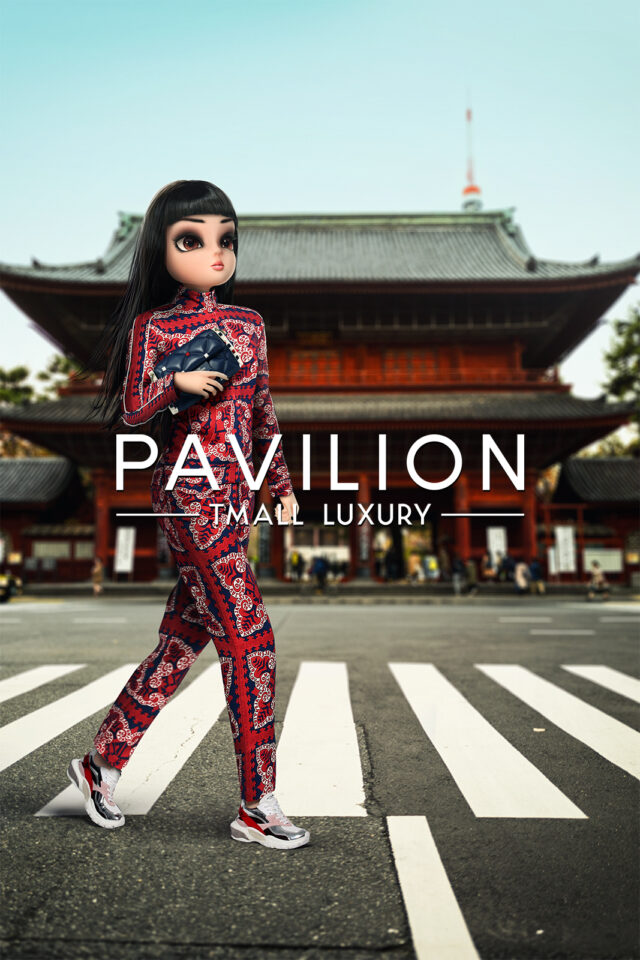
    Valentino, whose name is synonymous with high fashion across the globe, has opened a flagship store on Tmall Luxury Pavilion, Alibaba Group’s dedicated site for premium brands. The online store features selected products from the Rome-based fashion house’s womenswear and menswear lines, as well as five limited-edition items available only to Tmall shoppers including sneakers, pants and shirts.

    The launch late November coincided with Valentino’s 2019 Pre-Fall Runway show in Tokyo, which was livestreamed on the Pavilion.

    China’s Millennial and Generation Z shoppers are on track to make up 46% of purchases in the global personal luxury goods market by 2025, up from 32% in 2017, according to a November report from consulting firm Bain & Co.

    Online sales channels are becoming more critical than ever for luxury brands, with official sites and e-commerce platforms expected to account for 25% of the market’s value in 2025, up from the current 10%, Bain’s research showed.

    To create a shopping experience that stays true to the brand’s heritage and values, Tmall and Valentino worked together to design the storefront’s interface, adjusting the layout to enhance branding, boost audience retention and encourage deeper interaction with consumers.

    Noonoouri, the Pavilion’s new CGI ambassador, also “attended” Valentino’s 2019 Pre-Fall Runway show, posting images of all of the behind-the-scenes action to her Instagram account.

    The digital avatar has already collaborate with luxury brands Chanel, Dior, Gucci and Saint Laurent.

    Before opening the new store, Valentino partnered with the Luxury Pavilion in April to launch a 3D virtual store that mirrors a brick-and-mortar pop-up store the brand has launched in Beijing.

    Shoppers can experience the physical location via the Tmall mobile app and browse a selection of Valentino’s collection.

  • Valentino and Dior Men to run show in Japan?

    Valentino and Dior Men to run show in Japan?

    Pierpaolo Piccioli, creative director of Valentino, was in Tokyo last week to celebrate the brand’s Ginza Six store opening and its Pre-Fall 2019 runway show, titled “Valentino TKY,” of which Japan’s wabi-sabi aesthetic was credited as one inspiration.

    Kim Jones was also in town to present Dior Men’s Pre-Fall 2019 collection and a pop-up store Thursday evening, although his nod to Japan was a fraction subtler, having mined the Dior womenswear archives for Japanese influences to reinterpret as men’s garments.

    It’s not the first time that luxury brands have turned to Japan: Last October, Tokyo was also the site of Valentino’s Resort 2018 pop-up, while Dior’s haute couture Spring/Summer 2017 show bowed in April. In May 2017, Louis Vuitton took their cruise collection a few hours away to Kyoto.

    It’s also not unexpected that most designers who stage their collections in Japan find a way to reference the country on the catwalk, however fleetingly.

    The nation is home to inspiration galore: eclectic street style subcultures, unparalleled artisanship, a thriving beauty industry and icons of design and architecture all makes the country a mecca for creatives of all persuasions.

    But beneath the surface of very real enthusiasm that fashion creatives harbour for Japan, there is of course a carefully calculated business rationale for their choice of locale.

    As Asian markets now account for a disproportionately large share of luxury sales, it is clear that brands need to find ways to launch meaningful marketing activations in the region on a regular basis. Such shows have become a tried-and-tested formula.

    Unlike Korea, whose popularity as a location for pre-collection shows appears to have peaked, Japan is emerging as a perennial favourite. And although China continues to attract many brands looking for a place to present their catwalk shows in the world’s largest luxury market, recent examples tend to be repeats of shows that already had a debut elsewhere like last week’s re-staging of Miu Miu Resort 2019 in Shanghai or Chanel’s Cruise 2018 collection reappearing in Chengdu after also debuting in the French capital.

    Japan, by contrast, is not in the habit of staging re-runs.

    The value that luxury brands gain by using Japan as a staging post between their shows in Europe comes from several sources.

    Logistical efficiency is one not-so-romantic reason for its popularity as a transseasonal show location. By bringing their pre-collection activation to Japan, brands embellish a requisite part of their global marketing strategy while creating an opportunity to meet local partners and management in Asia’s most mature luxury market — and the world’s third largest.

    Piggybacking off the show in this way sends an important message at the consumer level too.

    Having been eclipsed by the Chinese, Japanese consumers are no longer the object of affection and attention to the degree that they once were. Luxury brands are increasingly stretched, unable to devote as much time to Japanese activations as they once were. With so many emerging markets in Asia and around the world to tend to, they are less able to provide Japanese kokyaku (VIP consumers) with intimate access to designers or face time with the press.

    With China consuming a third of the global luxury market, brands have been investing in strategic WeChat campaigns, optimising retail channels and desperately finding new ways of understanding the proverbial Chinese luxury consumer.

    Yet unlike China, where brands are rapidly opening retail and digital storefronts, online luxury sales are less developed in Japan, with only 7 percent penetration, according to McKinsey & Co. With consumers preferring to shop offline, Japan’s department stores remain dominant luxury distributors.

    The icing on the cake is that Japan remains one of the most attractive destinations for other Asians — and Asian fashion industry leaders are no different.

    Whether they be the brands’ joint-venture partners from Vietnam, distributors from Singapore, fashion editors from Indonesia or influencers from Thailand, Japan has the magnetism needed to draw in brand stakeholders in a way that other markets can’t emulate across the continent.

    Omotenashi — the philosophy of Japanese hospitality — usually tips the scales for potential show-goers in the region who may be wavering over an invitation.

    According to the latest report by Bain & Company, luxury purchases in Japan softened slightly this year, pushing brands to find new solutions to bring consumers back to stores. Retail sales in Japan grew at 3 percent at current exchange rates to €22 billion ($25 billion).

    Bringing an olive branch in the form of a pop-up or capsule collection to Japan is a way of balancing out the China-heavy luxury narrative, and assuring local consumers that they are still a priority for foreign brands and retailers. It’s also worth noting that Japan is a favourite holiday destination for Chinese luxury consumers.

    In light of the 2020 Tokyo Olympics, tourists are expected to further boost the luxury market — especially if the Japanese government takes key measures to improve the nation’s attractiveness.

    However, following Beijing’s latest efforts to boost domestic consumption of imports, Chinese shoppers’ holiday purchases may see a drop. How this affects travel hotspots such as Japan remains to be seen.

  • L’Oréal and Valentino announce a worldwide license agreement for fine fragrances and luxury beauty

    L’Oréal and Valentino announce a worldwide license agreement for fine fragrances and luxury beauty

    L’Oréal and Valentino announce the signature of a worldwide long-term license agreement for the creation,  development and distribution of fine fragrances and luxury beauty under the Valentino brand.

    Founded in 1960 in Rome, Maison Valentino holds a unique role in the luxury universe thanks to its long standing tradition in Haute Couture and the innovative contemporary vision of Creative Director Pierpaolo Piccioli. Under the successful direction of CEO Stefano Sassi and Creative Director Pierpaolo Piccioli, Valentino today embodies the image of beauty, of the extraordinary and of modernity, and as such, provides a strong inspiration for fragrance and beauty creation. The top three most popular fragrances today are Valentino Donna, Valentino Uomo and Valentina.

    The agreement will be effective as of 1 January 2019, after customary regulatory approvals, if any.

    Nicolas Hieronimus, Deputy CEO of L’Oréal, said “We are thrilled to have been granted the license of Maison Valentino. With its unique combination of prestige and modernity, Valentino definitely will appeal to millennial consumers around the globe and ideally complements our brand portfolio.”

    Stefano Sassi, CEO of Valentino, said “We are very excited to start this new venture together with L’Oréal to further develop our beauty business. We believe Valentino has great potential within the category and that with L’Oréal’s unparalleled expertise in the sector, we will be able to realize that potential.”

  • Candystud pop-up store for Beijing

    Candystud pop-up store for Beijing

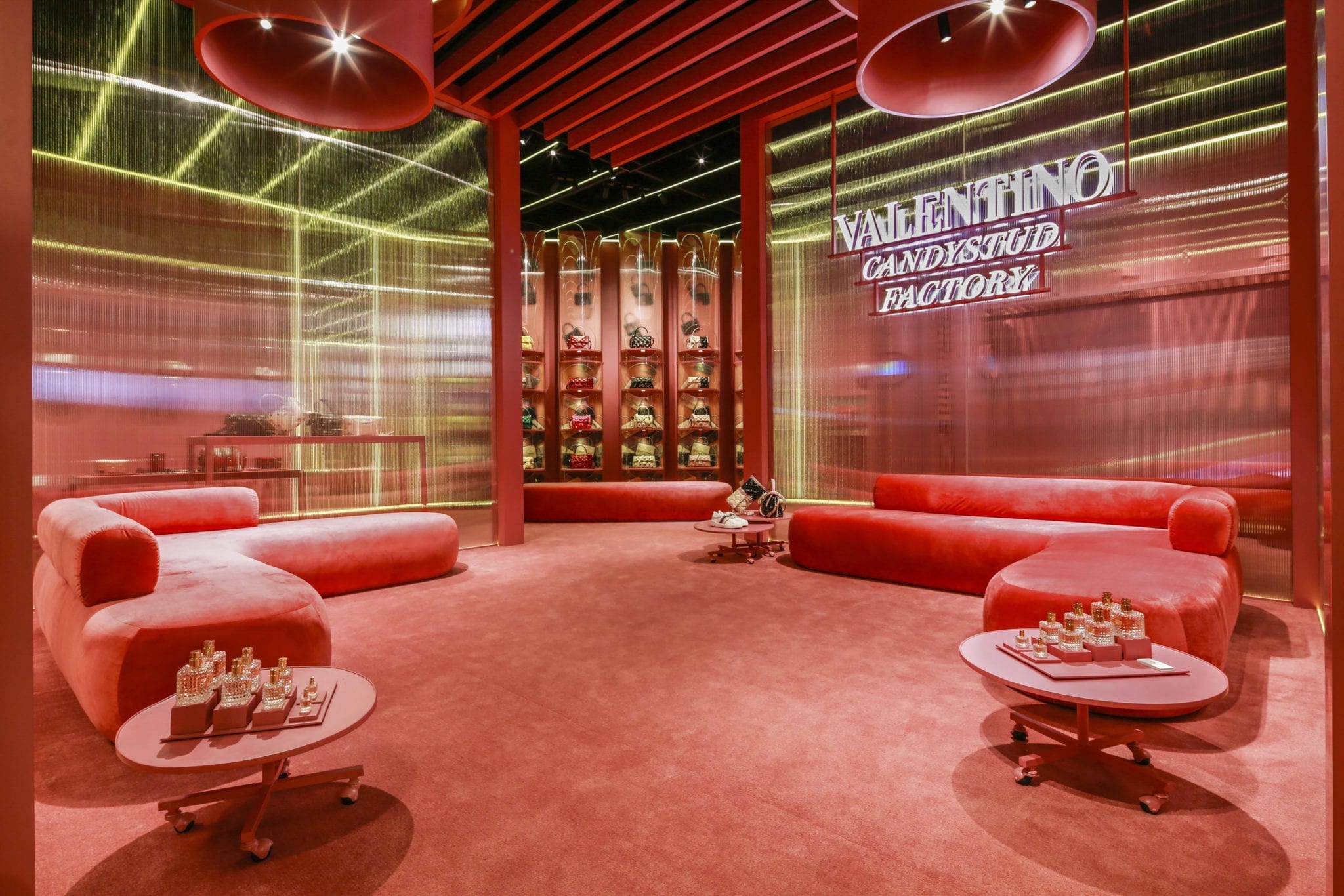
    Fashion brand Valentino aims to create a stylised handbag factory with its Candystud pop-up store in Beijing’s Sanlitun neighbourhood

    Running until May 17, it features two limited-edition Candystud bags as well as four exclusive sneakers and small leather goods such as as smartphone covers, mirror bags and charms.

    The pop-up, decorated in bright pink livery, is designed to look like a candy store – yet will sell customised products. The brand says it is trying to create a “cinematographic atmosphere”.

    Sanlitun attracts consumers from a younger demographic and Valentino sees the pop-up as an opportunity to broaden awareness among millennials and Generation Z customers.

  • Valentino goes red in Indonesia

    Valentino goes red in Indonesia

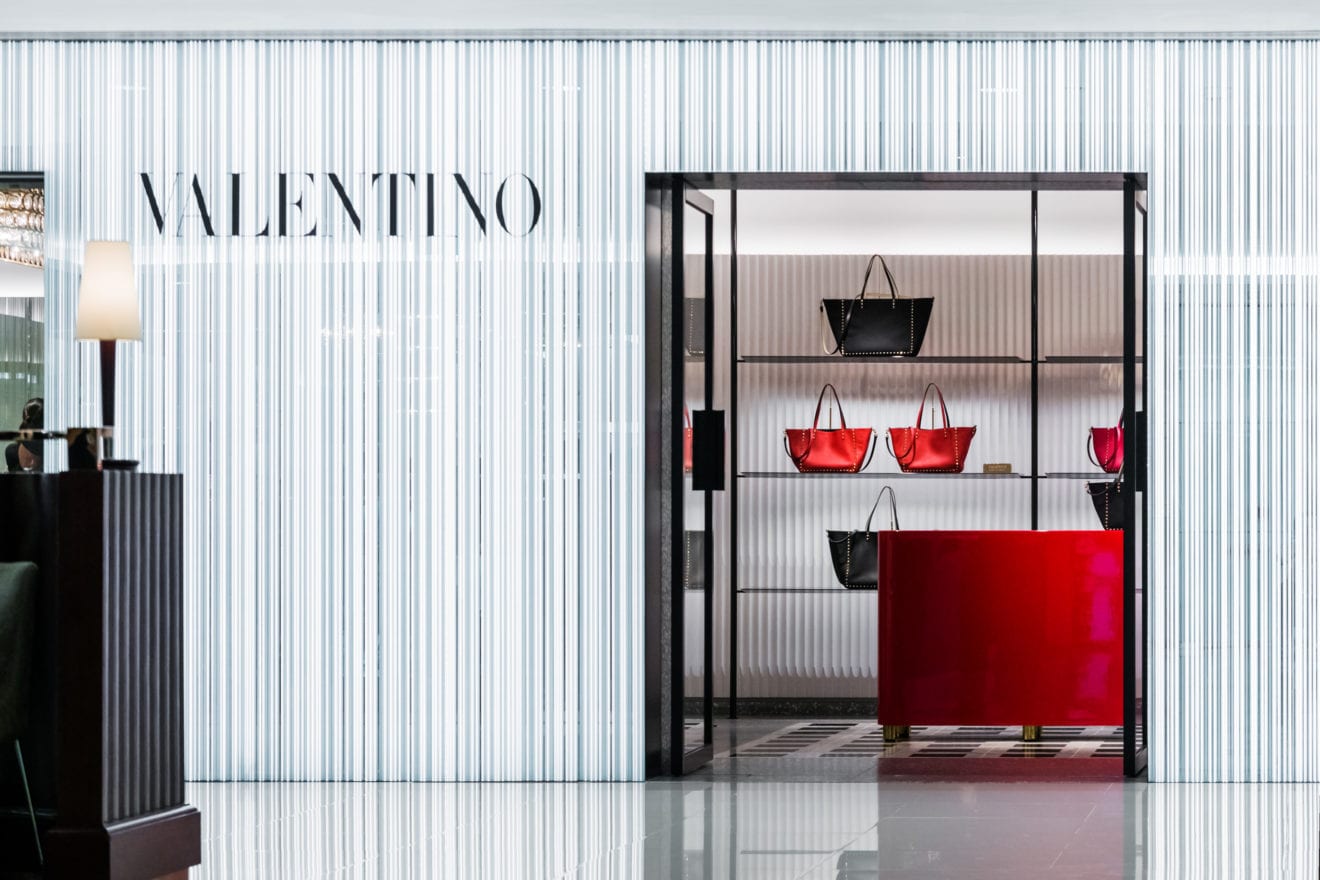
    Fashion brand Valentino Indonesia has opened a RedValentino boutique at Plaza Indonesia in central Jakarta.

    Valentino creative director Pierpaolo Piccioli has developed the store concept together with British architect David Chipperfield.

    Evoking the atmosphere of a traditional Italian palazzo (square), the store has been designed to complement the product displays through the discreet use of opulent materials

  • Candystud Factory: The New Valentino Popup Store in Beijing

    Candystud Factory: The New Valentino Popup Store in Beijing

    Candystud Factory. A handbag factory just like a candy factory. Pink, entertaining, imaginary.

    Valentino will open a Pop Up store in the young and dynamic Sanlitun neighborhood in Beijing that creates a cinematographic atmosphere of a handbag f actory.

    The pop up s tore will open on the 26 th of April 2018 and will run until the 17 th of May 2018.

    For this occasion, two new limited edition Candystud bags will be pr esented.

    Fun, spherical, in the spirit of frivolity, Candystud is a small object of high craftsmanship the blends the excellence and the savoir faire of Maison Valentino with a new desire of pleasure and of joie de vivre. The Candystud Pop Up store translates this idea in a shopping and amusing experience.

    One enters is a colored and ethereal world to discover the beauty and the allure of the Valentino items together with the humanity and the e xcellence of those that cr eated them.

    The Candystud Factory collection also includes four new exclusive sneakers and a series of exclusive small leather goods such as iPhone c overs, mirror bags and charms.

    #CandyStudFactory

  • Valentino Is Opening Sport-Themed Pop-Up Shops Around The World

    Valentino Is Opening Sport-Themed Pop-Up Shops Around The World

    Athleisure cannot stop, will not stop, and probably will never, ever stop, the proof is on the runway.

    More specifically the Valentino Resort 2018 runway, which saw a parade of athletic-inspired looks featuring everything from silk tracksuits to fuzzy slides to cheerleader-inspired midiskirts.

    Pierpaolo Piccioli’s Resort 2018 collection puts a luxurious spin on streetwear and the combination does not feel forced.

    The show, which took place in New York’s Bond Street, drew inspiration from one of the best American exports – hip hop.

    Sporty zip-up hoodies and tracksuits were given a Valentino touch, with the brand’s signature midi-dress silhouette with pleated details.

    Embroidered varsity jackets were paired with feminine calf-length skirts.

    Piccioli worked with graphic designer Zandra Rhodes again on special prints for dresses and jackets in the resort collection.

    Models carried micro versions of Valentino’s iconic “Matelasse” bags as clutches. We also love the heart-shaped novelty bags with iconic Rockstud straps.

    The collection also elevated flip-flops to runway chic, applying duo-tone fur trims on the thongs of the flip flops for a luxury touch.

    The show was attended by celebrities the likes of Olivia Palermo, Maggie Gyllenhaal and Marisa Tomei.

    Needless to say, the collection was a must-see. And now, lucky for us, here’s our chance to finally buy.

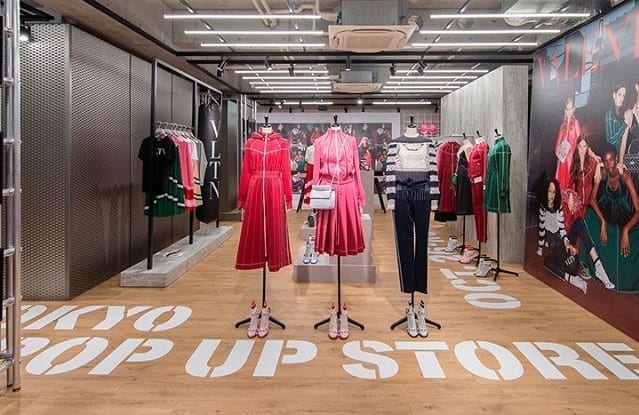
    In a series of pop-up shops in Tokyo, New York, and Hong Kong, Valentino fans will be able to shop the resort 2018 collection  in retail spaces designed to resemble gyms. But, like, chic gyms.

    A release for the new pop-ups even mentions “imaginary metropolitan basketball nets.”

    Aside from the gymnasium aesthetics, expect to be able to shop the resort collection plus more.

    Limited-edition items such as basketballs, yoga mats, and sneakers round out the sport-themed aesthetic.

  • Balenciaga is the hottest fashion label

    Balenciaga is the hottest fashion label

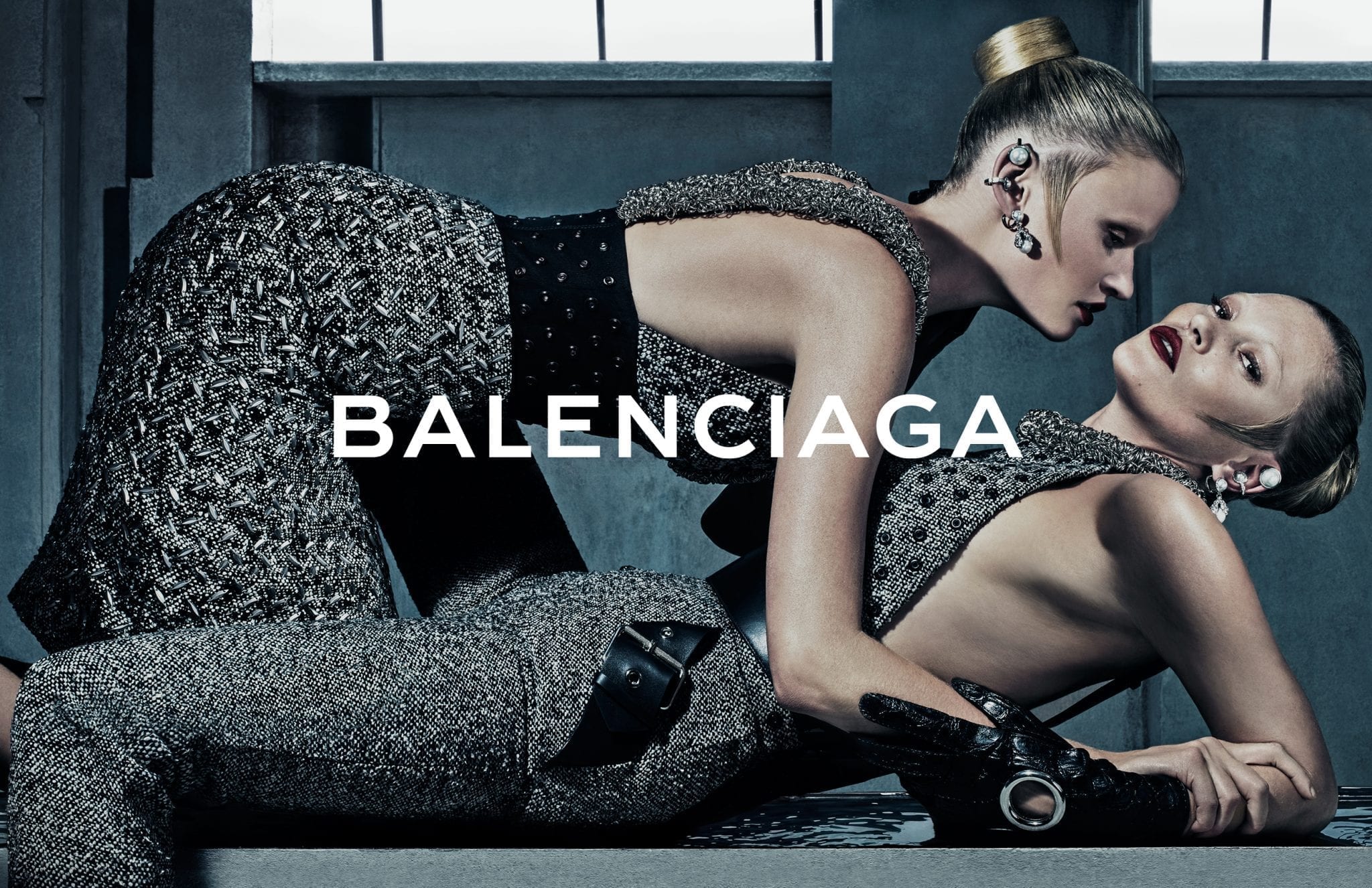
    Balenciaga has overtaken Gucci as the hottest fashion label, according to the latest Lyst Index.

    The index draws on data analysis by fashion-search platform Lyst in conjunction with the Business of Fashion website. The 4.5 million data points analysed include sales, searches and consumer perceptions of 5 million products and 12,000 brands.

    Its result is despite Louis Vuitton, Hermes and Gucci being named best fashion brands globally just last month by Interbrand consultancy.

    Ranking the world’s hottest brands and top-selling products, the Lyst Index ranked Gucci first in this year’s second quarter, followed by Kanye West’s Yeezy and Balenciaga. However, the Spanish fashion brand continued to rise, displacing Gucci in the third quarter, with Virgil Abloh’s Off-White rising to third – a jump of 31 places in three months.

    Lyst says Balenciaga’s rise was because of a new logo and the Colette residency in Paris keeping the brand top of mind “while Demna Gvasalia continues to design products that drive the fashion narrative online”.

    Additionally, the platform praised Gucci for being a “consistent performer”, reports High Snobiety.
    Rounding out the top 10 are Vetements, Givenchy, Valentino then Saint Laurent, while Stone Island leaped from 41st to eighth, followed by Moncler (previously 20th) and finally Raf Simons (previously 21st).

    Lyst Index also looked at the most influential rappers in fashion for the quarter, listing (in order) Kanye West, Nicki Minaj, Pharrell Williams, Cardi B, Drake and A$AP Rocky.

  • Hong Kong first to see Valentino’s VLTN pop-up

    Hong Kong first to see Valentino’s VLTN pop-up

    Italian luxury clothing brand Valentino is launching sport-themed pop-up shops in limited cities internationally to promote its limited-edition resort collection VLTN – starting in Hong Kong.

    Resembling gyms, complete with basketball courts, the VLTN pop-ups will feature limited-edition training shoes, yoga mats, basketballs and tracksuits. The stores also present NYC fashion photographer Terry Richardson’s VLTN campaign images, as well as a painting in homage to Valentino Garavani himself, who founded the brand in Florence in 1960. The brand is now part of Valentino Fashion Group, owned by the State of Qatar through Mayhoola for Investments.

    VLTN debuted at New York Fashion Week in May. Details of Its pop-up stores:

    Hong Kong (October 24-31) IFC Mall
    Tokyo (October 26-November 19) Omotesando, QC Cube Jingumae
    Shanghai (October 30-November 6) Plaza 66
    Seoul (November 8-19) Boon the Shop, Cheongdam

    In its own words

    Valentino explains the VLTN sportif brand in its own distinctive fashion:

    “Within the active spaces, sport, which is the fundamental principle of inspiration of the Valentino Resort 2018 Collection, reveals its pure significance as an ideal space of possibilities and identity. Reinforced concrete, samples in primary colours that recall the functional training box-jump, imaginary metropolitan basketball nets: the active underground enters the magnificence of the Valentino boutiques conquering an unexpected, authentic and distinguished space.

    “It is not an embezzlement of an aesthetic universe nor a contamination: it is more likely an opening toward an aesthetic invasion, something that is able to break a border, the border of the artisanal Valentino culture, in order to look toward new routes, the routes of the self-affirmation and of the unconscious dressing, typical of the new generations.

    “These spaces will have authors, not vendors: dedicated personnel, chosen for their inclination and cultural belonging, and will be wearing as a uniform the white shirt from the Valentino Rockstud Untitled collection, that will act as a surrounding to their personal style.

    “Further to the items and accessories of the Valentino Resort 2018 Collection, the active spaces will also have a limited-edition collection that will include multiple contemporary sports facets: basketballs, yoga mats, sneakers and other objects that unite the maison’s artisanal savoir-faire culture to the urgency of individuality and self-affirmation of the new sport-oriented cultures.”

  • Tokyo boosts Valentino sales

    Tokyo boosts Valentino sales

    Luxury fashion retailer Valentino boosted sales by 12.4 per cent last year, reaching €1.11 billion.

    Following a stunning 47 per cent growth in Valentino sales the previous year, the company has trebled its turnover in the four years since Qatari royal family acquired the business in 2012.

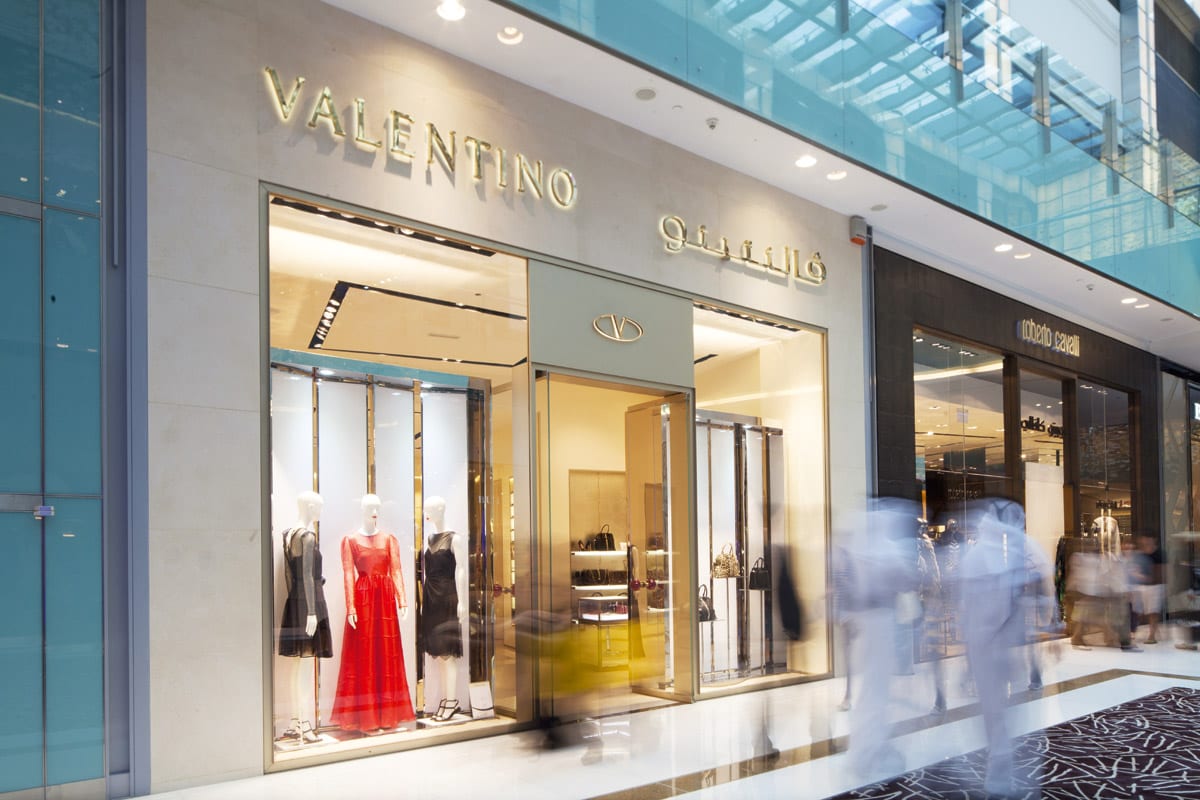
    A major factor in last year’s growth was the expansion into Japan, where it opened a new flagship in Tokyo’s Omotesando district. Two more stores are planned for the city, the first in Ginza and another in a location yet to be disclosed, but possibly Roppongi.

    The US continues to be the brand’s largest market accounting for about 20 per cent of sales.

    Valentino currently operates 175 of its own stores internationally, with retail sales accounting for 55 per cent of sales and the balance wholesaling. The company is on track to open 20 more physical stores this year, along with boosting its online presence and sales through both its own website and those of multibrand retailers.

    Profit for last year was €206 million, up 14.4 per cent on 2015.

    While privately owned Valentino sales and profit results are released due to a mid-term intention to launch an IPO. GM Stefano Sassi said in a press statement there was no decision at this time on timing for the float.

    “There is nothing planned for 2017, and the project will be re-evaluated based on the most favourable market conditions.”